Greatest Game?

One could argue that the Morphy-Count Brunswick+Isouard, Paris, 1858 is the greatest game of chess ever played (see “A Well-Known Game”, Sept. 21 2018).


But this is my favorite, my nomination for the greatest game ever played. As you’ll see this game is full of unknowns and tactical surprises. And it probably sets a record for most queen sacrifices and queen promotions in a single game. Bogoljubov is completely outplayed. This is Alekhine at his best!


Bogoljubov-Alekhine
Hastings, 1922
1.d4 f5

(The Dutch allows many tactical possibilities. Here is another example:

Giampa-Rai. Garcia
AMEBS
La Plata, Argentina, 1998
1.d4 f5 2.Nf3 e6 3.Bg5 Nf6 4.Nbd2 d5 5.e3 Be7 6.Bd3 Nbd7 7.O-O c6 8.Ne5 Nxe5 9.dxe5 Ng4 10.Bf4 g5 11.Bg3 O-O 12.Qe2 Nh6 13.f4 g4 14.Kh1 b6 15.c4 Bb7 16.Rfd1 Qe8 17.Rac1 Rd8 18.Nb1 Qh5 19.cxd5 exd5 20.a3 Nf7 21.b4 Nh8 22.Bb5 Qe8 23.Ba4 Qg6 24.Bb3 Nf7 25.Nc3 b5 26.Qb2 Rc8 27.Ne2 Nd8 28.Rc2 Ne6 29.Rdc1 Rfd8 30.Nd4 Nxd4 31.Qxd4 Ra8 32.a4 a6 33.Be1 Qe6 34.a5 Rd7 35.e4 fxe4 36.Qxe4 Rf8 37.Rf2 Qf5 38.Qd4 Bd8 39.Bc3 Rg7 40.Bc2 Qh5 41.g3 Bc8 42.f5 Bg5 43.Rcf1 Qh6 44.Re2 Qh3 45.Rff2 Rgf7 46.f6 Be6 47.Bf5 Re8 48.Bd2 Bxd2 49.Qxd2 Qh5 50.Qc2 Bxf5 51.Rxf5 Qg6 52.Ref2 Re6 53.Qd2 h6 54.R2f4 Rd7 55.Qd1 h5 56.Qd4 Kf7 57.Rf2 Qh6 58.R2f4 Qg6 59.Kg1 Re8 60.Qb6 Re6 61.Qxa6 Qg8 62.Qb6 Qh7 63.a6 d4 64.a7 d3 65.Qb8 d2 66.a8=Q d1=Q+
2018_11_08_a1
67.Rf1 Qd4+ 68.R5f2 Rxe5 69.Qf8+ Ke6 70.Qxc6+ Qd6 71.Qe8+ 1-0)

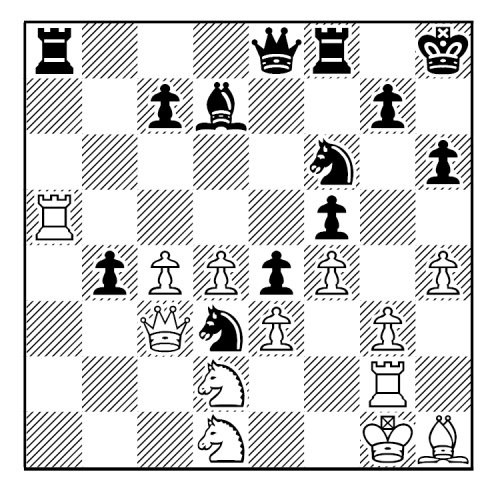
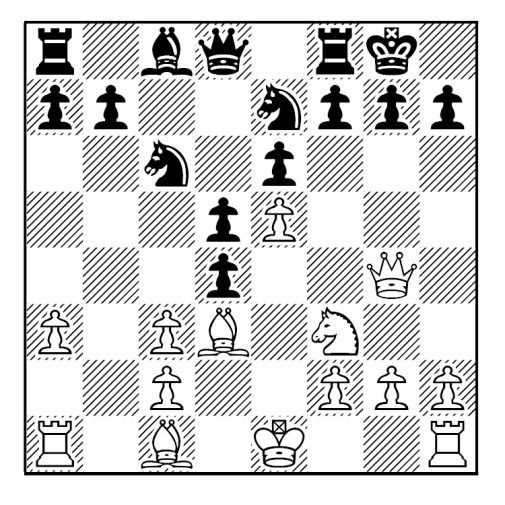
2.c4 [A good move. But 2.g3 and 2.Nf3 are more popular, but for opposite reasons. 2.g3 is played for a small, but certain, advantage, while 2.Nf3 can lead to very wild play (see above.)] 2…Nf6 3.g3 e6 4.Bg2 Bb4+ (A seemingly useless move. But it does eliminate Black’s problem bishop, and more importantly for Alekhine, opens up the board for his tactical talents.) 5.Bd2 Bxd2+ 6.Nxd2 Nc6 7.Ngf3 O-O 8.O-O d6 9.Qb3?! (I don’t like this move as Black has the perfect response with 9…Kh8, getting out of the possible pin, rendering White’s move less effective. 9.Qc2 and 9.Nb3 seem to offer more. ) 9…Kh8 10.Qc3 e5 11.e3 (Pirc-Spielmann, Match, Rogatska Slatina, 1931, continued with 11.dxe5 dxe5 12.Rad1 Qe7 13.Rfe1 e4 14.Nd4 Nxd4 15.Qxd4 c5 16.Qc3 Bd7 17.Nf1 Bc6 18.Ne3 Nd7 19.Bh3 Qg5 20.Rd6 Qh5 21.Kg2 Rae8 22.Nd5 Ne5 23.Nf4 Qf7 24.Nd5 f4 25.Nxf4 g5 26.Be6 Qf6 27.Nh5 Qxf2+ 28.Kh1 Rf6 29.Bd7 Rxd6 30.Bxe8 Rd4 0-1) 11…a5 12.b3 Qe8 13.a3 Qh5 14.h4 Ng4 15.Ng5 Bd7 16.f3 Nf6 17.f4 e4 18.Rfd1 h6 19.Nh3 d5 20.Nf1 Ne7 21.a4 Nc6 22.Rd2 Nb4 23.Bh1 Qe8 24.Rg2 dxc4 25.bxc4 Bxa4 26.Nf2 Bd7 27.Nd2 b5 28.Nd1 Nd3 29.Rxa5 b4
2018_11_08_A
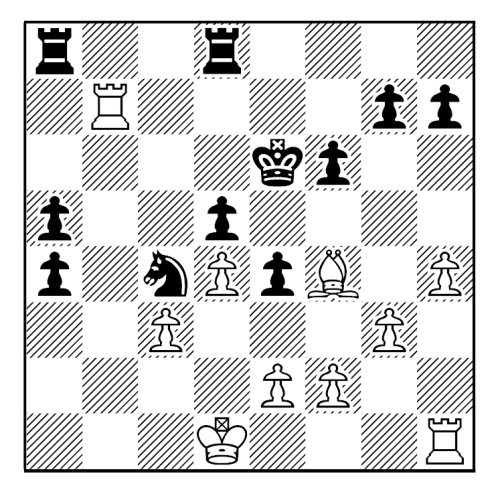
30.Rxa8 bxc3! (Why trade queens while losing the exchange? Well, Black’s pawn can’t be stopped from queening. A good move but even better ones coming later in the game!) 31.Rxe8 c2! 32.Rxf8+ Kh7 33.Nf2 c1=Q+ 34.Nf1 Ne1 35.Rh2 Qxc4 36.Rb8 Bb5 37.Rxb5 Qxb5 38.g4 Nf3+ 39.Bxf3 exf3 40.gxf5 Qe2 41.d5 Kg8 42.h5 Kh7 43.e4 Nxe4 44.Nxe4 Qxe4 45.d6 cxd6 46.f6 gxf6 47.Rd2 Qe2!
2018_11_08_B
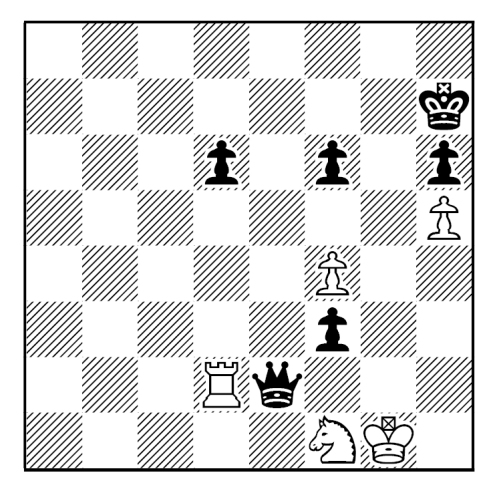
(Again Black can willing give up his queen as another one will be promoted within a few moves.) 48.Rxe2 fxe2 49.Kf2
2018_11_08_C
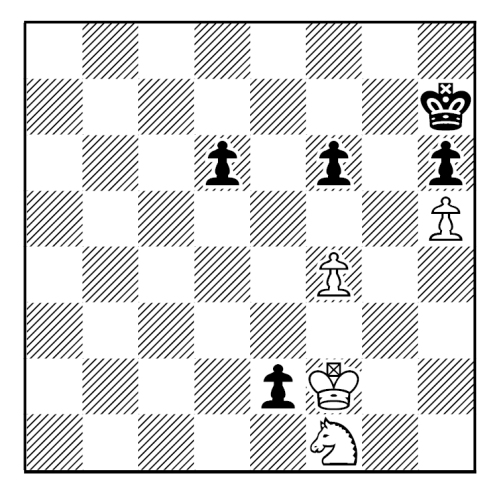
49…exf1=Q+ (Black gives up his third queen to achieve an easily won king and pawn ending.) 50.Kxf1 Kg7 51.Kf2 Kf7 52.Ke3 Ke6 53.Ke4 d5+
2018_11_08_D
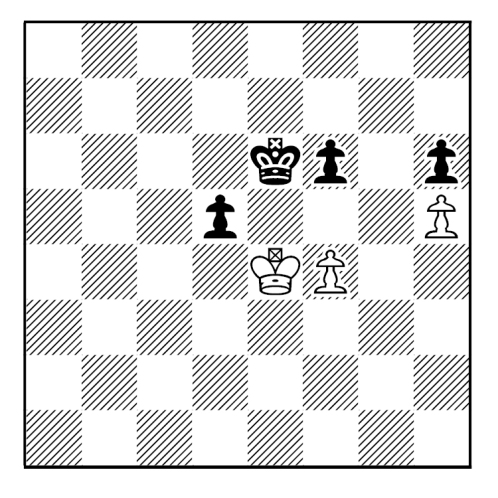
0-1 (After 54.Kd4 Kd6, Black will promote a queen for the fourth time. And he won’t have to sacrifice this one!)

Books I Love

I had a recent discussion with a chess friend of mine. The topic? Chess!, of course.


One interesting topic we covered was answering the question, “What is your favorite chess books you ever read?”


Well, my friend a Dragon junkie, said any book with the Dragon can’t be bad.


I take a slightly different approach about chess books. I love to read and read chess books not so much for instruction, but for enjoyment. So my list is slightly different from most other chess zealots.


First on the list is 1000 Best Short Games of Chess by Chernev, who, with his annotations, make all the miniatures of his book so joyous. One characteristic of Chernev I hope current and future chess writers would seek to emulate is to keep the text and notes to a minimum and let the reader have some space to actually ENJOY the game.


Another book with the same approach is Morphy’s Games of Chess by Sergeant. Notes about the game, and people who played them, are simple and short and they don’t get in the way of the game.


1001 Brilliant Ways to Checkmate by Reinfeld. Isn’t that the preferred goal of playing every game? Also it’s a good primer for Siamese Chess. 

 
Soltis’ Chess to Enjoy, is exactly that. It is at times, hilarious, thought-provoking, and at all times, entertaining.


17140.5f75786a.5000x5000o.0ff78dae4615
The best periodical, IMHO (for all those who don’t speak Internetse, is short for In My Humble Opinion), are the New In Chess Yearbooks. If you ever want to study an opening, or even a minor variation of an opening, in great detail, then these books are for you! The games covered in each opening are plentiful and there is enough space between the games and the individual moves of the game to keep you from getting yourself a major eye strain.


Do you have some favorites in your chess library? Why do you like them? Leave us a message! =)

Winning the Game

How many ways can you, as a player, win a game of chess? Think about it before you read further. We’ll give you the first one, “(1) You can win by checkmate. This is the main, and ultimate, goal of the game.” Now let’s see how many other ways to win you can think of.


s342953680842267289_p397_i1_w1200


~~~~~~~~~~~~~~~~~~~~~~~~~~~~~~~~~~~~


(1) You can win by checkmate. This is the main, and ultimate, goal of the game.


(2) You can win by your opponent resigning. It also shortens the game.


(3) You can win by your opponent exceeding the time limit for specified number of moves. Usually referred to as a time loss.


(4) You can win by your opponent not showing up for the start of the game. This differs from the above as no moves are necessary.


(5) Adjourning a game used to be more popular years ago. It consists of Tournament Director (TD) stopping the game and requesting a player to write down his next move on a card (without his opponent know what the move it is, of course), sealing that card in an envelope, and then sealing that envelope, the scoresheets, and the clock times in a larger envelope. The game is resumed at a later time.

If upon resumption, a player’s sealed move is found to be illegal or missing, then the opponent is awarded the game.


(6) If a correspondence game is in danger of going over a prearranged time limit (e.g. three years), then the game score is to be submitted to an arbitrator for adjudication who will determine the winner of the game. If he decides that with best play you would win the game, then you win the game.


(7) If during a thematic tournament, an opponent refuses to play the specified opening, he can be forfeited. Rarely happens as players who enter a thematic tournament do so because they WANT to play that opening.


(8) Any action that a TD determines to be cheating, disruptive, or anything other action that violates the laws or ethics of the game, can be declared a loss of the game by the player who is guilty of the offence. GM So recently lost a game because he kept writing positive affirmations on his score sheet, even after repeated warnings. The rules of chess state only chess moves (and other necessary items, like the opponent’s name), may be written on the score sheet.


~~~~~~~~~~~~~~~~~~~~~~~~~~~~~~~~~~~~


How many did you get? Do you agree with this list?


Chess in Another Language

To grow in chess, a player might want to learn other languages so he (or she!) can study games and theories that may not be available in his (or her!) native tongue.


And to help with all the monoglot English players, here a list of common German words in chess.


s-l1600 (1)_A


~~~~~~~~~~~~~~~~~~~~~~~~

ANGRIFF [n. attack]

BERECHNEN [v. to calculate]

BRETT [n. board]

DAME [n. queen]

DOPPELBAUERN [n. doubled pawns]

DOPPELSCHACH [n. double check]

ENDSPIEL [n. the endgame]

GAMBIT [n. gambit]

KLEIN [adj. small]

KÖNIG [n. king]

MEISTER [n. champion]

MEISTERSCHAFT [n. championship]

PATZER [n. a low level player, a beginner]

ROCHIEREN [v. to castle]

SCHLAGEN [v. to capture]

SIMULTAN [n. a simul]

SPRINGER (+S) [n. German for Knight. The symbol “S” is used in studies and problems in place of “N” (for Knight).]

TURM [n. rook]

ZEIT [n. time]

ZEITNOT [n. time pressure]

ZWISCHENZUG [n. an “in-between move” which is unexpected and usually changes the evaluation of a combination or position – UK only.]

ZUGZWANG (+S) [n. the compulsion to move in chess where any move would result in loss of position, material, or game.]

ZWISCHENSCHACH (+S) [n. a ZWISCHENZUG that is a check. This word is very rare, so don’t worry if you can’t spell it or pronounce it.]


Calling all Smith-Morra Players

Most players are aware of the Smith-Morra Gambit (1.e4 c5 2.d4 cxd4 3.c3 ). And some of them actually use the gambit. And a few even win their majority of the games with it.


But not too many know about this sideline of the gambit. Here, White insists on giving up third pawn. He can do this by either playing 3.c3 dxc3 4.Bc4 or 3.c3 dxc3 4.Nf3.


Results are mixed; you might want to first try these ideas out on a blitz game.


~~~~ 3.c3 dxc3 4.Bc4 ~~~~


Andrew Cooper (2175)-J.L. Foster (2040)
Barnstaple, England, 1972
1.e4 c5 2.d4 cxd4 3.c3 dxc3 4.Bc4 Nc6 5.Nxc3 d6 6.Nf3 e5 7.O-O Be7 8.b4 Nf6 9.h3 O-O 10.b5 Na5 11.Bd3 Qc7 12.Nd5 Nxd5 13.exd5 b6 14.Be3 Nb7 15.Rc1 Nc5 16.Qc2 f5 17.Be2 Qd8 18.Rfd1 Bd7 19.a4 Rc8 20.Qa2 Bf6 21.Ne1 Qe8 22.Nc2 Kh8 23.Nb4 Qf7 24.Bd3 g5 25.Be2 Rg8 26.Kh1 Ra8 27.Rg1 f4 28.Bd2 g4 29.Qa3 Ne4 30.Be1 gxh3 31.gxh3 Rxg1+ 32.Kxg1 Rg8+ 33.Kf1 Qg6 34.Bf3 Bxh3+ 35.Ke2 Nc5 36.Kd1 Bf5 37.Be2 Qg1 38.Nd3 f3 39.Bxf3 Nxd3 40.Qc3 Rc8 0-1


Gustavo Celis (2379)-Juan Pablo Seminara (2326)
FMDA (A)
Buenos Aires, 1992
1.e4 c5 2.d4 cxd4 3.c3 dxc3 4.Bc4 Nc6 5.Nf3 e6 6.O-O Be7 7.Nxc3 d6 8.Qe2 a6 9.Rd1 Qc7 10.Bf4 Nf6 11.e5 Nh5 12.Bg5 Bxg5 13.Nxg5 Nf4 14.Qf3 Nxe5 15.Qxf4 Qxc4 16.Nce4 O-O 17.Rac1 Qxa2 (White’s two knight are well-placed, but they have do something before Black fully develops.)
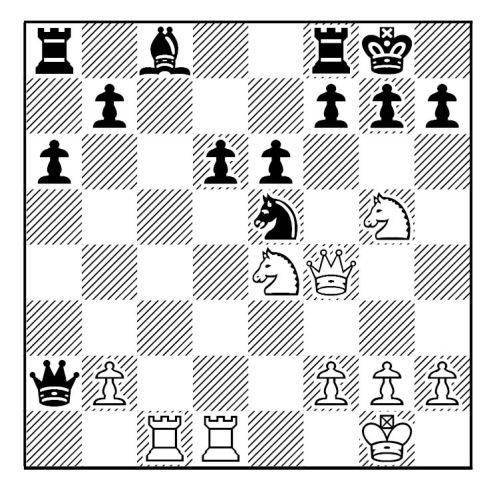
2018_09_27_A

18.Nxh7! Ng6 19.Nhf6+ gxf6 20.Nxf6+ Kg7 21.Nh5+ Kg8 22.Qf6 1-0


Xavier Pinero Fernandez (2277)-Lionel Gachon (2275)
Active Chess, 1992?
1.e4 c5 2.d4 cxd4 3.c3 dxc3 4.Bc4 e6 5.Nf3 Qc7 6.Qe2 Nc6 7.O-O Nf6 8.e5 Ng4 9.Nxc3 a6 10.Bf4 b5 11.Bd3 Bb7 12.h3 Nh6 13.g4 Be7 14.Rac1 Qa5 15.Rfd1 Ng8 16.Ne4 h6 17.Nc5 Bxc5 18.Rxc5 g5 19.Bd2 Qxa2 20.Bc3 h5 21.Nxg5 hxg4 22.Nxf7 Kxf7 23.Bg6+ Kxg6 24.Qxg4+ Kf7 25.Rxd7+ Nge7 26.Kh2 0-1


Francisco Adell Corts (2196)-Alexis Cabrera (2502)
Cullera International
Spain, 2003
1.e4 c5 2.d4 cxd4 3.c3 dxc3 4.Bc4 e6 5.Nxc3 Nc6 6.Nf3 Qc7 7.Qe2 Nf6 8.Nb5 Qb8 9.e5 Ng4 10.Bf4 Bb4+ 11.Kf1 a6 12.Nd6+ Bxd6 13.exd6 b5 14.Bb3 Nf6 15.Rd1 a5 16.Ng5 Nd8 17.Be5 Bb7 18.Bc2 Ra6 19.Bxh7 Kf8 20.Be4 Bd5 0-1


GM T. Gareev (2618)-Scott White
Blindfold Simul, Dec. 3 2016
1.e4 c5 2.d4 cxd4 3.c3 dxc3 4.Bc4 Nc6 5.Nf3 e6 6.Nxc3 a6 7.Bf4 Nge7 8.O-O Ng6 9.Bg3 b5 10.Bb3 Be7 11.Nd5 exd5 12.exd5 O-O 13.dxc6 dxc6 14.Qc2 Qb6 15.h4 c5 16.Bd5 Bb7 17.Bxb7 Qxb7 18.h5 Nh8 19.Rfe1 Rad8 20.a4 c4 21.axb5 axb5 22.Qf5 Bf6 23.Be5 Qd5 24.Rad1 Qe6 25.Rxd8 Qxf5 26.Rxf8+ Kxf8 27.Bd6+ Be7 28.Rxe7 Qd3 29.Re6+ 1-0


“Ziryab” (1940)-“Nomen Nescio” (1978)
Blitz Game
ACS, Mar.5 2018
[“Ziryab”]
1.e4 e5 2.d4 exd4 3.c3 dxc3 4.Bc4 c6 5.Nf3 d6 6.O-O Nf6 7.Qe2 Bg4 8.Rd1 Bxf3 9.Qxf3 Be7 (9…c2 and White is busted.) 10.e5 Ng8 (10…O-O 11.exf6 and White is better ; 10…c2 still works.) 11.Qxf7+ Kd7 12.exd6 Nf6 (12…Kc8 13.Be6+ Nd7 14.dxe7) 13.Be6mate 1-0


~~~~ 3.c3 dxc3 4.Bc4 cxb2 ~~~~


Lukes-Jan Holub (2020)
Czechoslovakia Army Ch.
Prague, Aug. 24 1955
1.e4 c5 2.d4 cxd4 3.c3 dxc3 4.Bc4 cxb2 5.Bxb2 Nc6 6.Ne2 Nf6 7.O-O e6 8.Nbc3 Na5 9.Bd3 d5 10.exd5 Nxd5 11.Nxd5 Qxd5 12.Nf4 Qg5 13.Nh3 Qe7 14.Qh5 Nc6 15.Ng5 g6 16.Qf3 e5 17.Bc4 Be6 18.Nxe6 fxe6 19.Bb5 Qc7 20.Rac1 Rc8 21.Qf6 1-0


Xavier Pinero Fernandez (2277)-Victor Vehi Bach (2365)
Active Chess
Barcelona, 1996
1.e4 c5 2.d4 cxd4 3.c3 dxc3 4.Bc4 e6 5.Nf3 cxb2 6.Bxb2 Qa5+ 7.Nc3 Bb4 8.Rc1 Nf6 9.O-O Nc6 10.e5 Ng4 11.Nb5 O-O 12.Bd3 f5 13.exf6 Nxf6 14.Bxf6 gxf6 15.Rc4 Rf7 16.Rg4+ Kh8 17.Qa1 e5 18.Qb1 d5 19.Rh4 e4 20.Bxe4 dxe4 21.Qxe4 Bd7 22.Qg6 Raf8 23.Rh5 Qxb5 24.Qxf7 Qxf1+ 25.Kxf1 Rxf7 26.Rb5 b6 0-1


Lucio Maurino (2235)-Juan Pablo Hobaica (2368)
Argentina U26 Ch., 1997
1.e4 c5 2.d4 cxd4 3.c3 dxc3 4.Bc4 cxb2 5.Bxb2 e6 6.Nf3 d6 7.O-O Nf6 8.Nc3 Be7 9.Qe2 O-O 10.Rfd1 Qa5 11.Nb5 d5 12.exd5 exd5 13.Qxe7 dxc4 14.Bxf6 Nc6 15.Qd6 Qxb5 16.Rd5 Qb4 17.Qg3 g6 18.Rh5 c3 19.Rh4 Qc5 20.Rxh7 Kxh7 21.Ng5+ 1-0


Handigol (2008)-Chernobilskiy (1883)
Neil Falconer Tournament
Mechanics’ Institute, San Francisco, Sept. 24 2013
1.e4 e5 2.d4 exd4 3.c3 dxc3 4.Bc4 cxb2 5.Bxb2 Bb4+ 6.Nc3 Qe7 7.Nge2 Nf6 8.O-O O-O 9.Qb3 Nc6 10.Nd5 Nxd5 11.Bxd5 Bd6 12.f4 Bc5+ 13.Kh1 Kh8 14.Qg3 f6 15.e5 f5 16.Rac1 Nb4 17.Bb3 d5 18.a3 Nc6 19.Nc3 Nd4 20.Nxd5 Qf7 21.Rxc5 Nxb3 22.Rxc7 1-0


~~~~ 3.c3 dxc3 4.Nf3!? ~~~~


Bernd Oltersdorff-Geyer
corres.
East Germany, 1962
1.d4 c5 2.e4 cxd4 3.Nf3 Qa5+ 4.c3 dxc3 5.Nxc3 Nf6 6.Bc4 Nxe4 7.Qd4 Nxc3 8.b4 Qb6 9.Qxc3 e6 10.a3 Nc6 11.Be3 Qd8 12.O-O-O a6 13.Rhe1 b5 14.Bg5 Ne7 15.Bxe6 fxe6 16.Rxe6 dxe6 17.Rxd8+ Kxd8 18.Qc6 Ra7 19.Ne5 Bd7 20.Qb6+ Rc7+ 21.Kb2 Kc8 22.Qxa6+ Rb7 23.Nxd7 Nd5 24.Qa8+ Kc7 25.Qd8+ 1-0


Rafael Leitao (2360)-Aron Correa (2390)
Brazil Ch.
Americana, 1995
1.d4 c5 2.e4 cxd4 3.Nf3 Qa5+ 4.c3 dxc3 5.Nxc3 Nc6 6.Bc4 d6 7.O-O Nf6 8.Bf4 a6 9.Rc1 Ne5 10.Nxe5 dxe5 11.Bd2 Qd8 12.Nd5 Nxd5 13.exd5 g6 14.Bc3 Bg7 15.f4 Qd6 16.Qe2 f6 17.fxe5 fxe5 18.a3 Bd7 19.Bb4 Qb6+ 20.Kh1 Rc8 21.d6 e6 22.Qg4 Rxc4 23.Qxc4 Qe3 24.Qh4 1-0


Kontra-Slavomir Gulvas
Slovakia Ch.
Bratislava, June 2004
1.e4 c5 2.d4 cxd4 3.c3 dxc3 4.Nf3 Nc6 5.Nxc3 d6 6.Bc4 Nf6 7.h3 a6 8.O-O  b5 9.Bxf7+ Kxf7 10.e5 e6 11.Ng5+ Ke7 12.exf6+ gxf6 13.Nd5+ exd5 14.Qxd5  Kd7 15.Ne6 Qb6 16.Be3 Qb8 17.Qf5 Be7 18.Rac1 Bb7 19.Bb6 Ke8 20.Qh5+ Kd7  21.Qf5 Ke8 22.Rfd1 Kf7 23.Qd5 Ke8 24.Qh5+ Kd7 25.Nc5+ 1-0


~~~~ 3.c3 dxc3 4.Nf3!? e5 ~~~~


Eugenio Szabados-Giovanni Emilio Rottigni
Venice, 1923
1.d4 c5 2.e4 cxd4 3.Nf3 e5 4.c3 dxc3 5.Nxc3 Nc6 6.Bc4 Nf6 7.Ng5 Bb4 8.Nxf7 Qa5 9.Bd2 Rf8 10.a3 Bxc3 11.Bxc3 Qc5 12.b4 Qb6 13.Nd6+ Kd8 14.O-O a6 15.Rb1 Qc7 16.a4 Nd4 17.f4 Qxd6 18.fxe5 Qxe5 19.Bxd4 Qc7 20.Rc1 1-0


Igor Bondarevsky-Genrikh Kasparian
USSR Ch.
Tbilisi, 1937
1.d4 c5 2.e4 cxd4 3.Nf3 e5 4.c3 dxc3 5.Nxc3 Nc6 6.Bc4 d6 7.Ng5 Nh6 8.O-O Bg4 9.Bxf7+ Nxf7 10.Qxg4 Nxg5 11.Bxg5 Be7 12.Bxe7 Qxe7 13.Nd5 Qd7 14.Qh5+ g6 15.Qh4 Qg7 16.Nf6+ Kd8 17.f4 Rc8 18.Nd5+ Ke8 19.Qh3 Ne7 20.Rac1 Rxc1 21.Rxc1 Nc6 22.Qe6+ Kd8 23.Qxd6+ Ke8 24.Nc7+ 1-0


Igor Bondarevsky-Peterson
USSR Ol.
Moscow, 1959
1.d4 c5 2.e4 cxd4 3.Nf3 e5 4.c3 dxc3 5.Nxc3 d6 6.Bc4 Nc6 7.Ng5 Nh6 8.O-O Bg4 9.Bxf7+ Nxf7 10.Qxg4 Nxg5 11.Bxg5 Be7 12.Bxe7 Qxe7 13.Nd5 Qd7 14.Qh5+ g6 15.Qh4 Qd8 16.Qh6 Qa5 17.b4 Nxb4 18.Qg7 O-O-O 19.Rab1 1-0


Fidel Albertoni-Roque Eckenfels
corres.
Argentina, 1977
1.e4 c5 2.d4 cxd4 3.Nf3 e5 4.c3 dxc3 5.Nxc3 Nc6 6.Bc4 d6 7.O-O Be7 8.Nd5 Nf6 9.Ng5 O-O 10.Nxf6+ Bxf6 11.Qh5 Bxg5 12.Bxg5 Qe8 13.f4 Be6 14.f5 Bxc4 15.Bf6 Ne7 16.Rf3 Ng6 17.Bxg7 Qd8 18.Bxf8 Qh4 19.Qxh4 Nxh4 20.Rc3 d5 21.Be7 1-0


Joseph Gallagher (2531)-Jim Plaskett (2450)
Commonwealth Ch.
England, 1986
1.d4 c5 2.e4 cxd4 3.Nf3 e5 4.c3 dxc3 5.Nxc3 d6 6.Bc4 Nc6 7.Qb3 Qd7 8.Ng5 Nh6 9.Bd5 Nd4 10.Qd1 Be7 11.Nf3 Nxf3+ 12.Qxf3 Qg4 13.Nb5 O-O 14.Be3 Qg6 15.Bxa7 Be6 16.Bxb7 Bc4 17.a4 d5 18.b3 Bb4+ 19.Kd1 Rxa7 20.Nxa7 Qb6 21.bxc4 Qxa7 22.Bxd5 Qd4+ 23.Kc2 Qd2+ 24.Kb3 Bc3 0-1


~~~~ 3.c3 dxc3 4.Nf3!? cxb2 ~~~~


Gaudin-de Gency
corres., 1925
1.e4 c5 2.d4 cxd4 3.c3 dxc3 4.Nf3 cxb2 5.Bxb2 e6 6.Bc4 b6?! 7.O-O Ba6 8.Nbd2 Bxc4 9.Nxc4 Nf6 10.Bxf6 Qxf6 11.e5 Qf4 (One can criticize this move as White has more pieces developed than Black. But if the Black queen goes back to d8, then Black has a very cramped game. But after the text move, he still has a very cramped game.) 12.Rc1 Nc6 13.Nd6+ Bxd6 14.Qxd6 (From this point onward, White’s game almost plays itself due to the cramped position of Black’s game.) 14…Rd8 (Not 14…f6, in attempt to flee to f7 or at least break the bind imposed by the e5 pawn, due to 15.Rxc6! dxc6 16.Qxe6+) 15.Rfd1 Qe4 16.Nd4 Nxd4 17.Rxd4 Qe2 18.h4 Qh5 19.a4 1-0


Rothgen-G. Meystre
corres.
Europe Tournament, 1961
1.e4 c5 2.d4 cxd4 3.Nf3 e5 4.c3 dxc3 5.Bc4 cxb2 6.Bxb2 Nc6 7.O-O d6 8.Nc3 Be6 9.Nd5 Nf6 10.Qe2 Be7 11.Ng5 Nd7 12.Nxe6 fxe6 13.Nf4 exf4 14.Bxg7 Nde5 15.Bxh8 f3 16.Qc2 Bf6 17.Bxf6 Qxf6 18.Rfc1 Nd4 19.Qa4+ Kf8 20.g3 Nxc4 21.Qxc4 Ne2+ 22.Kf1 Nxc1 23.Rxc1 Qb2 24.Rc3 Qb1+ 1/2-1/2


Helgren-Soderlung
Uppsala, 1967
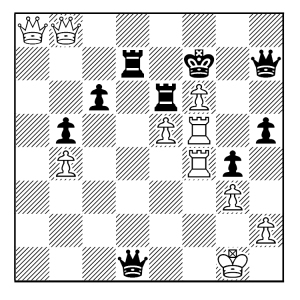
1.e4 c5 2.d4 cxd4 3.c3 dxc3 4.Nf3 cxb2 5.Bxb2 e6 6.Bc4 Qa5+ 7.Nbd2 Nf6 8.O-O Nc6 9.Bb3 Qh5 10.e5 Ng4 11.Nc4 b6 12.Nd6+ Bxd6 13.Qxd6 Bb7 14.Rfd1 Rd8 15.Ba4 Nh6 16.Ba3 Nf5 (Black is dodging mating threats. But this strategy cannot be sustained for long.) 17.Qc7 Ba8

2018_09_27_B

18.Rxd7! Rxd7 19.Qc8+ 1-0 (19…Rd8 20.Bxc6+ Bxc6 21.Qxc6+ Rd7 22.Rd1 +-)


An. Meszaros (2286)-M. Orso (2328)
Caissa IM
Kecskemet, Hungary, Nov. 16 2013
1.e4 c5 2.d4 cxd4 3.c3 dxc3 4.Nf3 cxb2 5.Bxb2 Nc6 6.Bc4 d6 7.O-O Nf6 8.Nc3 e6 9.Re1 Be7 10.Rc1 O-O 11.Ng5 a6 12.Kh1 b5 13.Bb3 Na5 14.Bc2 Nc4 15.Ba1 Bb7 16.f4 h6 17.Nf3 Rc8 18.Re2 Re8 19.Qe1 Bf8 20.Nd4 d5 21.e5 Nh5 22.Qf2 b4 23.Nd1 a5 24.g4 Nxf4 25.Qxf4 Be7 26.Rf2 Rf8 27.Qg3 Bh4 28.Qd3 g6 29.Rxf7 Nxe5 30.Rg7+ Kxg7 31.Nxe6+ Kg8 32.Bxe5 Qe8 33.Nxf8 Qxe5 34.Qxg6+ Qg7 35.Qe6+ Kxf8 36.Bg6 Rd8 37.Nb2 Qf6 38.Qxf6+ Bxf6 39.Rc7 Bxb2 40.Rf7+ Kg8 41.Rxb7 d4 42.Bd3 Bc3 43.h4 a4 44.g5 hxg5 45.hxg5 Rc8 46.Kg2 a3 47.g6 Be1 48.Kf3 Rc6 49.Kg4 Rc3 50.Bf5 Re3 51.Bc2 Rg3+ 52.Kf5 Rc3 53.Bb3+ Rxb3 54.axb3 Bc3 55.g7 Kh7 56.Kf6 d3+ 57.Kf7 Bxg7 58.Rxb4 Kh6 59.Rb6+ Kh7 60.Rb4 Kh6 61.Rb6+ Kh7 1/2-1/2



Beating a Master in 10 Moves

If you want to beat a Master, you have to study chess. If you want to beat a Master in the opening, you have to study the openings.

Here’s what I mean:


Escalante-NM Adaar
Thematic Tournament – Winawer Variation, Round 2
Chess.com, Aug.-Sept. 2018
1.e4 e6 2.d4 d5 3.Nc3 Bb4 (The usual route to the Winawer. All games in the tournament began with this position.) 4.e5 c5 5.a3 Bxc3+ 6.bxc3 Ne7 7.Qg4 O-O (Some years ago Van der Tak wrote an article in NIC 8 titled, “Castling Into It?” where he explored Black’s kingside castling possibilities in the Poisoned Pawn Variation of the Winawer, and if it was a viable option for Black. I don’t think the resulting positions favor Black.) 8.Bd3! (Thanks to GM Van der Tak, and his article, I am convinced this move is stronger, with many ideas not yet explored, than most other books might suggest.) 8…Nbc6 9.Nf3

[If Black does not know the main line, then he (or she) has a problem coming up with a good plan. Here’s an example:

E.H. Al Rufei (2068)-Nebal Al Jelda
Women’s Zonal
Tehran, 2001
1.e4 e6 2.d4 d5 3.Nc3 Bb4 4.e5 c5 5.a3 Bxc3+ 6.bxc3 Ne7 7.Qg4 O-O 8.Nf3 Nbc6 9.Bd3 Nf5 10.Bg5 Qa5 11.O-O c4 12.Bxf5 exf5 13.Qg3 Kh8 14.Qh4 Qxc3 15.Bf6 gxf6 16.exf6 Rg8 17.Ng5 Rxg5 18.Qxg5 1-0

His (or her!) best move is 9…f5 10.exf6 Rxf6 11.Bg5 Rf7, with many books giving this position a “=”. But life, on or off the chessboard, is rarely simple as an equal sign. Back to the game. My opponent decided to try something different in this game.]

9…cxd4?? (This loses the game in a hurry.)

2018_09_13

10.Bxh7+! 1-0 [Black resigns due to 10…Kxh7 11.Qh5+ (stronger than the traditional Ng5+ as the potential escape square, g6, is denied to Black) 11…Kg8 12.Ng5 and White mates.]

The Worst Opening?

The opening move, 1.f3, is  one most Black players would welcomed, if for no other reason that he (or she) might secretly wish for 1.f3 e5! 2.g4?? and 2…Qh4mate.

In fact, this opening almost always leads to a lost game for White.

Almost!


Gedult-Seligann
Blitz Game
Paris, 1966
1.f3 f5 2.e4 fxe4 3.Nc3 exf3 4.Nxf3 Nf6 5.Bc4 e6 6.O-O d5 7.Bb3 c6 8.d4 Bd6 9.Bg5 O-O 10.Ne5 Nbd7 11.Qe1 Nb6?! 12.Ng4! Qe7 13.Nxf6+ gxf6 14.Bh6 Rf7 15.Qh4 e5? 16.Ne4! dxe4 17.Rxf6! Nd5 18.Qg5+ Kh8 19.Rxf7 Qxf7 20.Bxd5 cxd5 21.Qd8+ Bf8 22.Rf1 1-0


Gedult-Selmar
Paris, 1966
1.f3 c5 2.e4 (An unusual way of reaching a Sicilian.) 2…g6 3.d4 cxd4 4.c3 dxc3 5.Nxc3 Bg7 6.Bf4 Qa5 7.Qb3 Nc6 8.O-O-O Nf6 9.Nb5 d6 10.Rxd6?! exd6 (a6) 11.Nxd6+ Kd7 12.Qxf7+ Ne7 13.Bb5+ Kd8 14.Qe8+ Rxe8 15.Nf7mate 1-0


Gedult-Melchior
Trouville, 1968
1.f3 f5 2.e4 fxe4 3.Nc3 exf3 4.Nxf3 Nf6 5.Bc4 d5 6.Bb3 Bg4 7.O-O d4 8.Ne5! Bh5 9.Qxh5+ Nxh5 10.Bf7mate 1-0


CHESS 4.6-Nigel Short
Match, 1978
[For the last game of this match Short had the opportunity to decide what would be the computer’s first move. It didn’t help.]
1.f3 e5 2.Nc3 d5 3.d4 exd4 4.Qxd4 Be6 5.Qa4+ Nd7 6.Be3 c5 7.Bf4 a6 8.Bg3 b5 9.Qf4 Ngf6 10.e3 b4 11.Nce2 Be7 12.Qc7 O-O 13.Qxd8 Rfxd8 14.a3 a5 15.axb4 axb4 16.Rxa8 Rxa8 17.Nc1 Ra1 18.Kd2 c4 19.Nge2 Nc5 20.Nd4 c3+ 21.bxc3 bxc3+ 22.Kd1 Na4 23.Bb5 Ba3 24.Ndb3 Nb2+ 25.Ke2 Nc4 26.Nxa1 1-0


Crawford-Black
corres., 1995
1.f3 d5 2.g3 e6 3.Nh3 c5 4.Nf2 Bd6 5.Bg2 Nf6 6.O-O O-O 7.c3 e5 8.Na3 a6 9.Nc2 Nc6 10.e4 d4 11.d3 b5 12.cxd4 Kh8 13.dxe5 Bxe5 14.f4 Bd4 15.e5 Bxf2+ 16.Rfxf2 Nd5 17.Ne3 Nce7 18.Rc2 Bb7 19.Rxc5 Nxe3 20.Bxe3 Bxg2 21.Kxg2 Nf5 22.Bf2 g6 23.d4 h5 24.d5 h4 25.g4 h3+ 26.Kxh3 Nh6 27.d6 Kg7 28.Bh4 Qd7 29.Rc7 Qe6 30.d7 Rh8 31.Bf6+ Kh7 32.f5 gxf5 33.Bxh8 fxg4+ 34.Kg2 Rd8 35.Bf6 Nf5 36.Qd3 Kh6 37.Bxd8 1-0

A Fascinating Line in the Slav

Most chess players know of Szymon Winawer, the Polish chess player whose name is attached to a popular line in the French Defence (1.e4 e6 2.d4 d5 3.Nc3 Bb4).


However, his name is also attached to a line in the Slav, namely the Winawer Counter Gambit (1.d4 d5 2.d4 c4 3.Nc3 e5!?). The purpose of this move is to free up Black’s pieces as soon as possible, even if it means giving up a pawn.
White can proceed in a number of ways.


First, he can play 4.e4?, but that is ruthlessly refuted by 4..dxc4 5.dxe5+ Qxd1. H.W. Jordan-Redpath Drummond, Canadian Ch., Toronto, 1936, continued with 6.Kxd1 Be6! 7.Nf3 Bc5 8.Ke2 Nd7 9.Be3 O-O-O 10.Rd1 Bxe3 11.Kxe3 Ne7 12.Nd2 b5 13.f4 Bg4 14.Nf3 g5 15.g3 gxf4+ 16.gxf4 Ng6 17.h3 Bxf3 18.Kxf3 Nc5 19.Be2 Ne6 20.Ke3 Nexf4 21.Bg4+ Kc7 22.Rhf1 Rxd1 23.Nxd1 Rd8 24.Be2 Nxe2 25.Rxf7+ Rd7 26.Rxd7+ Kxd7 27.Kxe2 Nf4+ 28.Kf3 Nxh3 29.Kg4 Ng1 30.Kf5 Ke7 31.Ne3 Ne2 32.e6 Nd4+ 33.Ke5 Nxe6 34.Nf5+ Kd7 0-1.


White can also play 4.e3 But that move usually doesn’t preserve the opening advantage.


Alekhine-Llorens
Simul
Barcelona, 1935
1.d4 d5 2.c4 c6 3.Nc3 e5 4.e3 e4 5.Qb3 Nf6 6.f3 Qb6 7.Qc2 Bb4 8.a3 Bxc3+ 9.bxc3 Bf5 10.Ne2 Nbd7 11.Ng3 Bg6 12.f4 Nh5 13.Be2 Nxg3 14.hxg3 f5 15.a4 Nf6 16.Ba3 Bf7 17.cxd5 Nxd5 18.Kf2 O-O-O 19.c4 Nxe3 20.Qc3 Nxc4 21.Bxc4 Rxd4 22.Be2 Bc4 23.a5 Rd3+ 24.axb6 Rxc3 25.Bxc4 1-0


A. Nosenko (2524)-P. Simacek (2474)
Lower Silesia Cup
Legnica, Poland, Nov. 27 2016
1.d4 d5 2.c4 c6 3.Nc3 e5 4.e3 exd4 5.exd4 Nf6 6.Nf3 Be7 7.Qb3 O-O 8.Be3 dxc4 9.Bxc4 b5 10.Bd3 Na6 11.a3 b4 12.Bxa6 bxc3 13.Bxc8 cxb2 14.Qxb2 Rxc8 15.O-O Nd5 16.Qb7 Qa5 17.Ne5 Qa4 18.Rfc1 Rc7 19.Qb2 c5 20.Qc2 Qa6 21.Qd3 Qe6 22.Rc2 Bf6 23.Nf3 c4 24.Qe2 Re8 25.Re1 Qa6 26.Nd2 Bxd4 27.Nxc4 h6 28.Qd3 Bc3 29.Rd1 Qxc4 30.Qxc4 Rxc4 31.Rxd5 Rd4 32.Rxd4 Bxd4 33.Kf1 Bxe3 34.Re2 f5 35.fxe3 Re4 36.Rf2 g6 37.Rf4 Rxf4+ 38.exf4 Kf7 39.Ke2 Ke6 40.h4 Kd5 41.Kd3 h5 42.g3 a6 0-1


Finally, he might try 4.cxd5 cxd5 5.Nf3 e4 6.Ne5, which creates and maintains a dynamic mix of tactics and forceful play.


It is from this line we find the following, fantastic, and ultimately satisfying, variation.


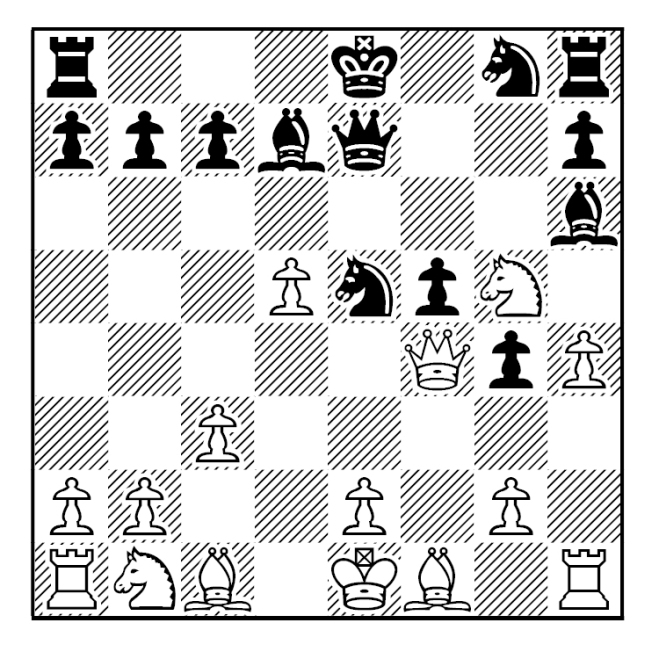
After 1.d4 d5 2.c4 c6 3.Nc3 e5 4.cxd5 cxd5 5.Nf3 e4 6.Ne5 f6 7.Qa4+ Nd7 8.Ng4 (an attempt to weaken Black’s kingside), Black plays his surprise move.

2018_07_12_A

8…Kf7! (or maybe even !!)


This move not only puts the Black king on a more active square, but allows his pieces to occupy more optimal squares without taking out the time to castle and then attempt to put his pieces on better squares, a tempo behind.


Is this a risky more? Yes. But not as much as you might believe. Access to Black’s kingside is checked (oh, I love puns!) by his pawns and the lack of activity on the that side of the board.


Let’s look at some White replies to 8…Kf7


9.Nxd5 has some hidden tactics to it. Black plays 9…Nb6! with the idea of 10.Nxb6 Qxb6 11.Ne3 Bb4+ 12.Bd2 Bxd2+ 13.Kxd2 Qxb2+ 14.Nc2 Be6 15.Qb4 Qxb4+ 16.Nxb4 Ne7! and the game retains its dynamic style. Chances are about even. This line has been pointed out by several masters.


That doesn’t mean that some players won’t play it.


Dmitry Smolin-A. Tsybulnik
300 Years
St. Petersburg, Russia, 2003
1.d4 d5 2.c4 c6 3.Nc3 e5 4.cxd5 cxd5 5.Nf3 e4 6.Ne5 f6 7.Qa4+ Nd7 8.Ng4 Kf7 9.Ne3 Nb6 10.Qb3 Be6 11.a4 a5 (Otherwise, 12.a5 spells trouble for Black.) 12.g3 Ne7 13.h4 Nc6 14.Nc2 Bd6 15.Bh3 Bxh3 16.Rxh3 Nb4 17.Nxe4 Nxc2+ 18.Qxc2 dxe4 19.Qxe4 Bb4+ 20.Kf1 [Black wants to play …Re8 with the idea of a possible …Kg8 (if he wants to play it safe!). But he can’t yet play 20…Re8? as 21.Qxh7 is almost winning for White. So he moves to trade queens, after which White has almost no developed pieces while Black’s active pieces take over the board.] 20…Qd5 21.Qxd5+ Nxd5 22.g4 Rhe8 (Now that Black’s rook can move to e8, he is winning.) 23.Rd3 h5 24.g5 Re4 25.f3 Rxh4 26.Kg2 Bd6 27.e4 Nf4+ 28.Bxf4 Bxf4 29.Rb3 Rc8 30.Rc3 (30.Rxb7+? Kg6, and White can’t prevent …Rc2+.) 30…Rh2+ 31.Kg1 Rd8 32.Rc4 Rxb2 33.Rd1 Bxg5 34.Re1 Bf4 35.e5 fxe5 36.dxe5 Bxe5 37.Rce4 Bf6 38.R1e2 Rxe2 39.Rxe2 Rd4 40.Ra2 Rb4 0-1


E. Goudriaan-P. Ten Vergert
Netherlands U21 Ch.
Venlo, 2008
1.d4 d5 2.c4 c6 3.Nc3 e5 4.cxd5 cxd5 5.Nf3 e4 6.Ne5 f6 7.Qa4+ Nd7 8.Ng4 Kf7 9.Nxd5 Nb6 10.Nxb6 Qxb6 11.Ne3 Bb4+ 12.Bd2 Bxd2+ 13.Kxd2 Qxb2+ 14.Nc2 Be6 15.Qb4 Qxb4+ 16.Nxb4 a5 17.Nc2 b5 18.a3 Ne7 19.e3 Rhb8 20.Rb1 Bd7 21.f3 exf3 22.gxf3 Ra7 23.Bc4+ Kf8 24.Rb2 Rc7 25.Bd3 h6 26.Rhb1 Rcb7 27.Na1 b4 28.axb4 Rxb4 29.Rxb4 Rxb4 30.Rxb4 axb4 31.Nc2 b3 32.Nb4 Ba4 33.Kc3 Ke8 34.Kb2 Nc6 35.Nxc6 Bxc6 36.e4 g5 37.Kxb3 Ke7 38.Kc3 Kd6 39.Kd2 Bd7 40.Ke3 Be8 41.f4 Ke7 42.Be2 Bf7 43.Bg4 Be8 44.Bf3 Bd7 45.Bh5 Bc8 46.Bg6 Bg4 47.Bf5 Bd1 48.h3 Kf7 49.Bg4 Ba4 50.f5 Ke7 51.e5 Bc2 52.h4 Bb1 53.hxg5 hxg5 54.Kd2 Kd7 55.Kc3 fxe5 56.dxe5 Ke7 57.Kd4 Ba2 58.Kc5 Bb3 59.f6+ Kf7 60.Kd6 Kg6 61.Ke7 1-0


Sasa Jovanovic-Milovan Ratkovic
Belgrade Trophy 2010
Obrenovac, 2010
1.d4 d5 2.c4 c6 3.Nc3 e5 4.cxd5 cxd5 5.Nf3 e4 6.Ne5 f6 7.Qa4+ Nd7 8.Ng4 Kf7 9.Nxd5 Nb6 10.Nxb6 Qxb6 11.Ne3 Bb4+ 12.Bd2 Bxd2+ 13.Kxd2 Qxb2+ 14.Nc2= Be6 15.Qb4 Qxb4+ 16.Nxb4 Ne7 17.e3 Rac8 18.Be2 a5 19.Nc2 Rc7 20.Na3 Rhc8 21.Rhc1 Rxc1 22.Rxc1 Rxc1 23.Kxc1 Nd5 24.Kb2 Ke7 25.Nb5 Kd7 26.a3 Kc6 27.Bc4 Nf4 28.Bxe6 Nxe6 29.Nc3 Nc7 30.Nxe4 Kd5 31.Nd2 f5 32.Kb3 b5 33.Nb1 Ke4 34.Nc3+ Kd3 35.d5 Na6 36.Nxb5 Nc5+ 37.Kb2 Ke2 38.Nd4+ Kxf2 39.Nxf5 g6 40.Nh6 Kxe3 41.Kc3 Ke4 42.Kc4 Nd7 43.Nf7 Nb6+ 44.Kb5 Nxd5 45.Ng5+ Ke3 46.Nxh7 Kf2 47.h4 Kxg2 48.Nf8 Kg3 49.Nxg6 Kg4 50.Kxa5 Kh5 51.Nf4+ Nxf4 52.Kb5 Nd5 53.Kc5 Nc3 54.Kc4 Na4 55.Kb4 Nb6 56.Kb5 Nd5 1/2-1/2


A more common reply is 9.Ne3.


Carlsson- Thomas Engqvist
Sweden, 1988
1.d4 d5 2.c4 c6 3.Nc3 e5 4.cxd5 cxd5 5.Nf3 e4 6.Ne5 f6 7.Qa4+ Nd7 8.Ng4 Kf7 9.Ne3 Nb6 10.Qb3 Be6 11.f3 f5 12.fxe4 fxe4 13.g3 Nf6 14.Ng2 Nh5 15.a4 Qd7 16.Nf4 Nxf4 17.Bxf4 Nc4 18.Bg2 Be7 19.O-O Rhf8 20.Rf2 Kg8 (I have not been able to locate the entire game. Perhaps a generous reader can help.)


IM Michael Wiedenkeller (2443)-FM Thomas Engqvist (2366)
Sweden Ch.
Goteborg, 1990
1.d4 d5 2.c4 c6 3.Nc3 e5 4.cxd5 cxd5 5.Nf3 e4 6.Ne5 f6 7.Qa4+ Nd7 8.Ng4 Kf7 9.Ne3 Nb6 10.Qb3 Be6 11.a4 a5 12.g3 Ne7 13.h4 Nc6 14.Nc2 Nb4 15.Bh3 Bxh3 16.Rxh3 Qc8 17.Rh1 Nxc2+ 18.Qxc2 Bb4 19.Qb3 Qc4 20.Qxc4 Nxc4 21.Kd1 Bxc3 22.bxc3 b5 23.Rb1 bxa4 24.Rb7+ Ke6 25.Bf4 Rhd8

2018_07_12_B
26.Kc2 Rd7 27.Rxd7 Kxd7 28.Ra1 Ra7 29.Rxa4 Rb7 30.Bc1 h5 31.f3 exf3 32.exf3 Kc6 33.Kd3 Re7 34.Rxc4+ dxc4+ 35.Kxc4 Re1 36.d5+ Kd7 37.Ba3 Re3 38.Bf8 g5
0-1


Wolfram Von Alvensleben (2235)-Martin Maier (2225)
Oberliga Nord W 9394
Germany, 1994
1.d4 d5 2.c4 c6 3.Nc3 e5 4.cxd5 cxd5 5.Nf3 e4 6.Ne5 f6 7.Qa4+ Nd7 8.Ng4 Kf7 9.Ne3 Nb6 10.Qb3 Be6 11.g3 f5 12.Bh3 g6 13.a4 a5 14.O-O Nf6 15.Ng2 Kg7 16.f3 Bf7 17.Bf4 Bd6 18.Bxd6 Qxd6 19.Nb5 Qe7 20.Rac1 Nc4 21.Qc3 Rhc8 22.b3 Nd6 23.Qd2 Nxb5 24.axb5 b6 25.Rc6 Rxc6 26.bxc6 Rc8 27.Rc1 Rc7 28.Ne3 Qe6 29.b4 axb4 30.Kf2 Rxc6 31.Rb1 Qc8 32.Qxb4 Qd7 33.Ra1 Be6 34.Ra8 Ne8 35.fxe4 fxe4 36.Bxe6 Rxe6 37.Rb8 Rf6+ 38.Kg2 Qf7 39.Ng4 Re6 40.Rxb6 Rxb6 41.Qxb6 Nf6 42.Ne5 Nd7 43.Qd6 Nxe5 44.Qxe5+ Kf8 45.g4 Kg8 46.Kg3 h6 47.Qf4 Kg7 48.Qxf7+ Kxf7 49.Kf4 Ke6 50.h3 g5+ 51.Ke3 Kd6 52.Kd2 1/2-1/2


P. Golubka-V. Stradej
Vsetin Open 2015
Czech Republic, 2015
1.d4 d5 2.c4 c6 3.Nc3 e5 4.cxd5 cxd5 5.Nf3 e4 6.Ne5 f6 7.Qa4+ Nd7 8.Ng4 Kf7 9.Ne3 Nb6 10.Qb3 Be6 11.a4 a5 12.g3 Bb4 13.Bg2 Ne7 14.Nc2 Nc6 15.O-O Re8 16.Nxb4 Nxb4 17.Nb5 Nc4 18.Bf4 g5 19.Bc1 Kg7 20.f3 e3 21.f4 g4 22.f5= Bf7 23.Qd1 Rc8 24.Nc3 Qd7 25.Rf4 Kh8 26.Rxg4 Qxf5 27.Rf4 Qg5 28.b3 Nb6 29.Bb2 Bg6 30.Rc1 Rc6 31.Bh3 Be4 32.Nxe4 Rxe4 33.Rxe4 dxe4 34.d5 N6xd5 35.Rxc6 bxc6 36.Qf1 Kg7 37.Bf5 h5 38.Bxe4 h4 39.Qf5 Qxf5 40.Bxf5 hxg3 41.hxg3 Kh6 42.Kg2 Kg5 43.Be4 f5 44.Bf3 f4 45.Be4 fxg3 46.Kxg3 Kh5 47.Kf3 Kg5 48.Bd4 1-0


Finally, White can play 9.f3, hoping to open the kingside.


Ruslan Sherbakov (2495)-Aleksander Czerwonski (2370)
Katowice Open, 1992
1.d4 d5 2.c4 c6 3.Nc3 e5 4.cxd5 cxd5 5.Nf3 e4 6.Ne5 f6 7.Qa4+ Nd7 8.Ng4 Kf7 9.f3 Nb6 10.Qd1 Bxg4 11.fxg4 Bd6 12.e3 Ne7 13.g3 Qd7 14.Bd2 Rhc8 15.b3 a6 16.Be2 Ba3 17.Rb1 Bb4 18.Nxe4 Bxd2+ 19.Nxd2 Qe6 20.Nf1 Rc3 21.Bd3 Rac8 22.h3 R8c7 23.Rh2 Nbc8 24.Rc2 Rxc2 25.Bxc2 Nd6 26.Bd3 Ne4 27.Rc1 Nc3 28.Qd2 Ne4 29.Bxe4 Rxc1+ 30.Qxc1 Qxe4 31.Kf2 Qd3 32.Nd2 b5 33.Nf3 h6 34.Qd2 Qb1 35.Qa5 Qc2+ 36.Qd2 Qb1 37.Ne1 Qe4 38.Qa5 Qe6 39.Nf3 Qe4 40.Ne1 Qe6 41.Qc7 Qe4 42.Qb6 Qh1 43.h4 Qe4 44.Qxa6 Qxg4 45.Qxb5 Qf5+ 46.Ke2 Qg4+ 47.Kf2 Qf5+ 48.Ke2 Qg4+ 49.Kd2 Qxg3 50.h5 Qh2+ 51.Qe2 Qb8 52.Nd3 Nf5 53.Qf3 Ne7 54.Qg2 Qb5 55.Kc2 g5 56.hxg6+ Nxg6 57.Qh3 Kg7 58.a4 Qe8 59.Nc5 h5 60.Qxh5 Qxe3 61.Qxd5 Qf2+ 62.Kc3 Qe1+ 63.Kc4 Qf1+ 64.Kb4 f5 65.Qd7+ Kf6 66.a5 Qe1+ 67.Kb5 f4 68.a6 Qe2+ 69.Kb6 1-0


Boris Chatalbashev (2524)-Lexy Ortega (2499)
Padova Open
Italy, 1999
1.d4 d5 2.c4 c6 3.Nc3 e5 4.cxd5 cxd5 5.Nf3 e4 6.Ne5 f6 7.Qa4+ Nd7 8.Ng4 Kf7 9.f3 Ne7 10.Qb3 Nb6 11.Nxe4 Nc6 12.Nc3 Nxd4 13.Qd1 Nc6 14.e3 Bc5 15.Bd3 f5 16.Nf2 d4 17.exd4 Re8+ 18.Ne2 Nxd4 19.O-O Nxe2+ 20.Bxe2 Qxd1 21.Bxd1 Be6 22.b3 Rad8 23.Bg5 Rc8 24.Rc1 Nd5 25.Kh1 Be3 26.Rxc8 Rxc8 27.Ne4 Kg6 28.h4 fxe4 29.fxe4 Bxg5 30.exd5 Bxd5 31.hxg5 Kxg5 32.Kh2 Rc1 33.Kg3 h5 34.Re1 Kf6 35.Kf2 Ra1 36.Bxh5 Rxa2+ 37.Ke3 Rxg2 38.b4 g6 39.Be2 Ke5 40.Bf3 Ra2 41.Kd3+ Kd6 42.Bxd5 Kxd5 43.Re7 Ra3+ 44.Kc2 b5 45.Rc7 a6 46.Rc5+ Ke6 47.Kb2 Rd3 48.Kc2 Rd6 49.Rg5 Kf6 50.Rg1 g5 51.Rf1+ Ke5 52.Re1+Kf4 53.Rf1+ Ke3 54.Rg1 Rd2+ 55.Kc3 Rd5 56.Ra1 Rd6 57.Rg1 Rc6+ 58.Kb3 Rg6
0-1


Remember, this is a gambit. And the best way to learn a gambit, or any opening for that matter, is to experiment, both with a partner and by yourself.


Have fun with it!


A Wrong Turn at From’s

I really do enjoy playing the Bird (1.f4). But I fear the From’s Gambit (1.f4 e5 2.fxe5 with the idea of …d6). I say “with the idea of …d6” as Black doesn’t have to play …d6 so soon. He can play 2…Nc6 first and then play 3…d6. Or not at all.

This often puts White off his learned theory and he has to think for himself. It allows him to make an error. Which he often does.


~~~~~~~~~~~~~~~~~~~~~~~~~~~~~~~~~


Fried-Schlechter
Vienna, 1894
1.f4 e5 2.fxe5 Nc6 3.Nf3 d6 4.exd6 Bxd6 5.d4 Nf6 6.Bg5 h6 7.Bh4 g5 8.Bf2 Ne4 9.e3 g4 10.Bh4 gxf3 11.Bxd8 f2+ 12.Ke2 Bg4+ 13.Kd3 Nb4+ 14.Kxe4 f5mate 0-1


F. Lavoisier-E. Schipper
corres., 1989
1.f4 e5 2.fxe5 Nc6 3.Nf3 g5 4.d4 g4 5.Ng5 d5 6.exd6 Qxd6 7.c3 f5 (Schipper also considered 7…Qg6!? 8.d5 h6 9.dxc6 hxg5 10.Qd5 bxc6 11.Qxg5 Qxg5 12.Bxg5 Bd6 – unclear) 8.Qb3 Qe7 9.d5 Nd8 10.h3 Bh6 11.Qa4+? (11.h4) 11…Bd7 12.Qf4 Nf7 13.h4 Ne5!

2018_06_28

14.Qg3 Nf6 15.Ne6? Bxc1 16.Qxe5 (16.Nxc7+ Kf7 17.Nxa8 Qd6! -+) 16…Bxe6 17.dxe6 O-O-O 18.a3? Rd5 19.Qg3 Rhd8 20.e3 Rd1+ 21.Ke2 Qxe6 0-1


Rutzler-Escalante
North American Open, Dec. 30 1993
1.f4 e5 2.fxe5 Nc6 3.Nf3 g5 4.h3 d6 5.d4 dxe5 6.Bxg5? f6 7.Bh4 e4 8.Nfd2 (8.d5 Nce7 Bucker) 8…Qxd4 9.Nc3 (9.c3!?) 9…Bb4 10.Nb3? (10.e3 Qxe3+) 10…Bxc3+ 11.bxc3 Qxc3+ 12.Nd2? (Qd2) 12…e3 -+ 13.Rb1? Nd4 14.Rc1 Bf5 (with the idea of 15…O-O-O) 0-1


Hacker-Escalante
Action Chess
Westminister Chess Club
Mar. 10 1994
1.f4 e5 2.fxe5 Nc6 3.Nf3 g5 4.g4 d6 (4…g4 5.Ng5!? is another way of complicating the position.) 5.d4 Bxg4 6.Bxg5 Be7 7.Bxe7 Qxe7 8.exd6 cxd6!? 9.Bg2 (9.h3? Bxf3 -+) 9…Bxf3 10.Bxf3 Qh4+ 11.Kf1? (Kd2) 11…Nxd4 12.Bxb7 Nf5?! (Nh6!?) 13.Qd3! (White usually has a good game after this thematic move. Black should make every effort to prevent this move.) 13…Ngh6 14.Bxa8? (Qe4+ -+) 14…Ng4!! 15.Bc6+ Ke7 16.Qe4+ Kd8! 17.Qf3 Nfe3+! 18.Qxe3 Nxe3+ 0-1


Hacker-Escalante
Westminster Chess Club, Jan. 19 1995
1.f4 e5 2.fxe5 Nc6 3.e4?? (Mr. Hacker and I talked about this game after its conclusion. I asked him if he remembered our previous game. He said he did and didn’t want to lose in the same way again. I have admit, he was successful.) 3…Qh4+ 4.Ke2 Qxe4+ 5.Kf2 Bc5+ 6.d4 Bxd4+ 7.Kg3 Bxe5+ 8.Kh3? [8.Kf2 Bd4+ 9.Kg3 Nf6!! 10.Bd3 (10.Be2 Be3!! 11.Bxe3 Qxe3+ 12.Bf3 Ne4+ 13.Kh4 Qh6+ 14.Bh5 Qg5+ 15.Kh3 Nf3#!) Nh5+! 11.Qxh5 Qe1+ 12.Kf3 Qf2+ 13.Ke4 Qxg2+ 14.Qf3 (14.Nf3 Qxh1) d5+ 15.Kxd5 Be6+ 16.Ke4 Qg6+ wins!] 8…d5+ 9.g4 h5 -+


Daven-Sharp
corres.
Wisconsin Ch., 1999
1.f4 e5 2.fxe5 Nc6 3.Nf3 g5 4.d4 g4 5.Ng5 d5 6.exd6 (White almost has to take the “d5” pawn as Black has an advantage in the center if the pawn is left alone.) 6…Qxd6 7.c3 f5 8.Na3 h6 9.Nb5 Qe7 10.Bf4 hg5 11.Nc7+ Kd8 12.Na8 gxf4 13.d5 Ne5 14.Qd4 Rh6 15.e3 b6 16.O-O-O fxe3 17.Bb5 Rd6 18.Kb1 Bh6 19.Rhf1 Nf6 20.Kc2 f4 21.Rf4 Bf4 22.Qf4 Bb7 23.Nb6 axb6 0-1


“Tejpsinghr”-Escalante
Blitz Game
AOL, Jan. 18 2003
1.f4 e5 2.fxe5 Nc6 3.Nf3 d6 4.exd6 Bxd6 5.b3 Ne5 6.e3 Bg4 7.Qe2 Qf6 8.d4 Nxf3+ 9.gxf3 Bxf3 10.Qf2 Bxh1 11.Bb2 Qxf2+ 12.Kxf2 Bxh2 13.Nd2 Ne7 14.d5 Nxd5 (14…Bxd5 is better) 15.Bc4 O-O-O 16.Rxh1 Nb4 17.Ne4 Bd6 18.Bxg7 Rhg8 19.Rg1 Bf8 20.Bxf7 Rxg7 21.Rxg7 Bxg7 22.Nc5 Rd2+ 23.Ke1 Rxc2 0-1


“obisb” (1501)-Escalante
Blitz Game
Chess.com, Mar. 5 2017
1.f4 e5 2.fxe5 Nc6 3.Nf3 d6 4.exd6 Bxd6 5.d3 Nf6 6.e4 Ne5 7.Be2 Bg4 8.O-O Qe7 9.Bf4 O-O-O 10.Bxe5 Bxe5 11.Nxe5 Bxe2 12.Qxe2 Qxe5 13.Nc3 h5 14.Rf5 Qd4+ 15.Kh1 g5 16.Rxg5 Ng4 17.Rxh5 Nf2+ 18.Kg1 Rxh5 19.Qxh5 Nh3+ 20.Kh1 Qg1+ 21.Rxg1 Nf2mate 0-1


Three games from the 1970’s.

Recently I bought some old state chess magazines, all from 1970 to 1975. They were all purchased from ebay and I found some wonderful gems in this collection.


Almost all the games had to be translated from Descriptive Notation (DN) into Algebraic Notation (AN) as DN was the most popular method of recording and analyzing games.


Here are three games I found to be enjoyable, and even instructive.


~~~~~~~~~~~~~~~~~~~~~~~~~~


Proll (1998)-Babinski (2157)
US Open
New York, 1974
[Escalante]
1.e4 e5 2.Nf3 Nc6 3.Bc4 Bc5 4.c3 Nf6 5.d4 exd4 6.cxd4 Bb4+ 7.Nc3 Nxe4 8.O-O Bxc3 9.d5 (The Moller Gambit.) 9…Bf6 10.Re1 Ne7 11.Rxe4 d6 12.Bg5 Bxg5 13.Nxg5 h6 14.Qh5!? (Usual is 14.Qe2, followed by 15.Re1 and putting pressure on the “e” file.) 14…g6? (This move just weakens Black’s kingside pawn structure at a time when he needs it the most. White is practically winning here. Black can sidestep many of his troubles with 14…O-O.) 15.Qh4 [Another winning try is 15.Qf3 hxg5 16.Rae1 Rh4 17.Qf6 Rxe4 18.Rxe4 Bf5 19.Bb5+ c6 20.dxc6 Bxe4 21.c7+ Nc6 22.cxd8=Q+ Rxd8 23.Qd4 d5 24.Qxa7 Rd7 25.Bxc6 bxc6 26.Qa8+ Ke7 27.Qxc6 Rd6 28.Qc5 1-0 (Treybel-Engler, Prague, Nov. 28 1908)] 15…Bf5 16.Re3 Kf8 17.Qd4 Kg8

2018_06_21

18.Qxh8+! 1-0


Steve Ellis-Dwight Weaver
Nashville vs. Memphis Match
Tennessee, 1974
[“Nashville – Memphis Match 1974”, Tennessee Chess News, Nov. 1974]
1.e4 c5 2.Nf3 d6 3.d4 cxd4 4.Nxd4 Nf6 5.Nc3 e6 6.Bc4 Be7 7.Be3 O-O 8.Qe2 Nxe4 9.Nxe4 d5 10.O-O-O dxc4 11.Nxe6 Qa5 12.Nxf8 Bxf8 13.Nc5 Qxa2 14.Qf3 Qa1+ 15.Kd2 Qxb2 16.Ke2 Qxc2+ 17.Rd2 Qg6 18.h3 Bf5 19.Qxb7 Na6 20.Qxa8 Nxc5 21.Bxc5 Bd3+ 22.Ke1 Qe6+ 23.Be3 Be4 24.Qxa7 c3 25.Rd8 Qb3 26.Rxf8+! Kxf8 27.Qc5+ Ke8 28.Qe5+ Kd7 29.Qxe4 c2 30.Kd2 Qb2 31.Qd4+ 1-0


Ted Bielbaum (2029)-Stuart Samuel (2016)
Danvers C.C. Ch.
Massachusetts, Aug. 31 1973
[Notes based “Tournament Games”, Chess Horizons, Jan.-Feb. 1975]
1.f4 e5 2.fxe5 d6 3.Nf3 dxe5 4.e4?! (Transposing into a sort of King’s Gambit Declined, but with the addition of the moves “fxe5” and “dxe5” helps Black.) 4…Bc5!? [It appears From’s Gambit, or at least this variation, was a popular opening in the 1970s. Here is another game from the same time period. 4…f5!? 5.d4 fxe4 6.Nxe5 Be6 7.Be2 Nd7 8.Bf4 Nxe5 9.Bxe5 Bd6 10.O-O Nf6 11.Bh5+ Kd7 12.Bxf6 gxf6 13.d5 Bc5+ 14.Kh1 Bg8 15.Qg4+ Kd6 16.Qf4+ Kd7 17.Bg4+ Ke8 18.Qxe4+ Be7 19.Nc3 h5 20.Rxf6 hxg4 21.Qg6+ Kd7 22.Qxg4+ Ke8 23.Re1 Qd7 24.Rf8+ 1-0 (Thompson-Taylor, South Carolina, 1970)] 5.c3 Nc6! (Normal lines are 5…Nf6 6.Nxe5 Qe7 7.d4 Bd6 8.Nf3 and 5…Bb6 6.d4 exd4 7.cxd4 Nf6=. Too risky would be 5…Qe7 6.d4 exd4 7.cxd4 Qxe4+? 8.Kf2! Be7 9.Nc3.) 6.Bb5 Nf6!? (6…Bd7! prevents 7.d4 exd4 8.cxd4? Nxd4! 9.Nxd4) 7.Nxe5 O-O (7…Nxe4? 8.Qf3! O-O 9.Qxe4 +-) 8.Nxc6? (Too dangerous. White should play 8.Bxc6! bxc6 9.d4 Nxe4 10.O-O Qd5 11.Bf4=) 8…bxc6 9.Bxc6 Nxe4!? [Leading to unclear complications. If 9…Qd3!? 10.Qf3 (10.Bxa8? Bg4) Qc2 11.Qd1! Qd3 12.Qe2 (12.Qf3=) 12…Ba6 13.Qxd3 Bxd3 14.Bxa8 Rxa8 15.b4 Bb6 16.Bb2 Nxe4 17.c4 Nf2 18.c5 Nxh1 19.Bd4 Re8+ wins!] 10.d4 (Both 10.Bxa8?? Bf2+ and 10.Bxe4 Qh4+ get mated. 10.Qf3? Nf2! 11.d4 Nxh1 12.dxc5 Qh4+ 13.g3 Qxh2 14.Bxa8 Re8+ 15.Be3 Bg4! -+) 10…Qh4+ 11.g3 Nxg3 12.hxg3 Qxg3+ 13.Kd2 Be7? [A blunder. After 13…Qf4+ 14.Kc2? (14.Kd3? loses to 14…Ba6+ 15.Kc2 Qf5+ 16.Kb3 Rab8+) 14…Bf5+ 15.Kb3 Rab8+ 16.Kc4 Qd6, Black wins. White must permit the draw by 14.Ke1! Qg3+ 15.Kd2 Qf4+.] 14.Qf3 Qg6 15.Be4 f5 16.Bxa8 1-0 (The editor must have had fun annotating this game!)