Isolated Pawns

Like most players I was taught to accept isolated pawns with caution. And to avoid doubled isolated pawns. And forget about tripled isolated pawns as they will lose the game for you 100% of the time.


You might have even been shown the game below to illustrate the of evils of accepting tripled isolated pawns.


Adolf Anderssen-Max Lange
Breslau, Germany, 1859
[C61]
1.e4 e5 2.Nf3 Nc6 3.Bb5 Nd4 4.Nxd4 exd4 5.Bc4 Nf6 6.e5 d5 7.Bb3 Bg4 8.f3 Ne4 9.O-O d3 10.fxg4 Bc5+ 11.Kh1 Ng3+ 12.hxg3
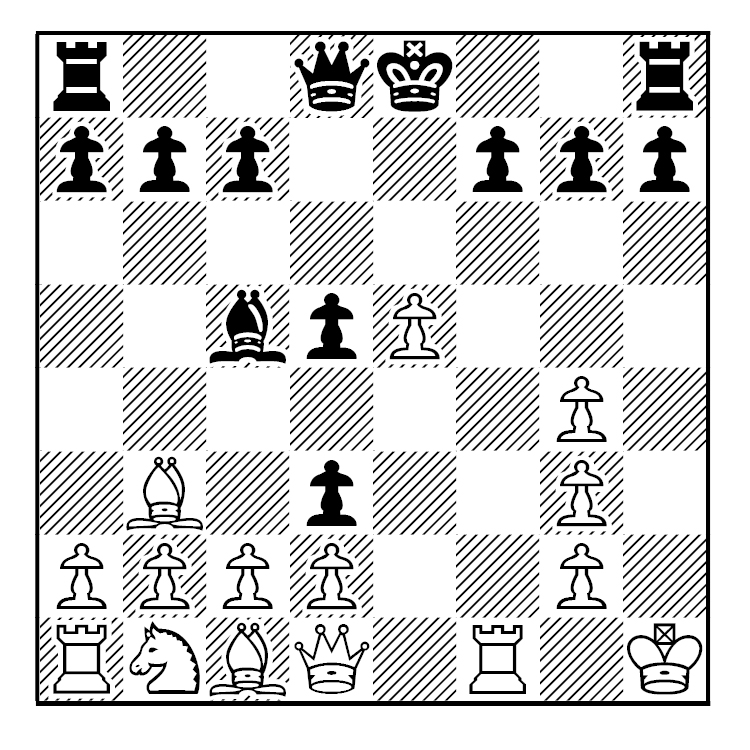
12…Qg5! -+ 13.Rf5 h5 14.gxh5 Qxf5 15.g4 Rxh5+ 16.gxh5 Qe4 17.Qf3 Qh4+ 18.Qh3 Qe1+ 19.Kh2 Bg1+ 0-1


But as I got older, and hopefully wiser, in my learning of the game, it gradually became clear to me that the idea of isolated pawns was not a hard-fast, iron-clad, absolute, rule of the game, solely responsible for a loss.


Let’s take another look at the previous game. White’s development, or rather his lack of it, surely also contributed to his early demise.


I replaced that isolated pawn rule with the idea that a potential weakness is not a weakness if it can’t be attacked.


Our first example is the unforgettable (to put it nicely) Bobby Fischer.


Grossguth-Bobby Fischer
US Jr. Ch.
Franklin Mercantile Chess Club, Philadelphia, July, 1956
[B92]
1.e4 c5 2.Nf3 d6 3.d4 cxd4 4.Nxd4 Nf6 5.Nc3 a6 6.Be2 e5 7.Nb3 Be7 8.Be3 O-O 9.Qd2 b5 10.f3 Be6 11.g4 d5 12.g5 d4 13.gxf6 Bxf6 14.O-O-O dxe3 15.Qxd8 Rxd8 16.Nc5 Nc6 17.Nxe6 fxe6
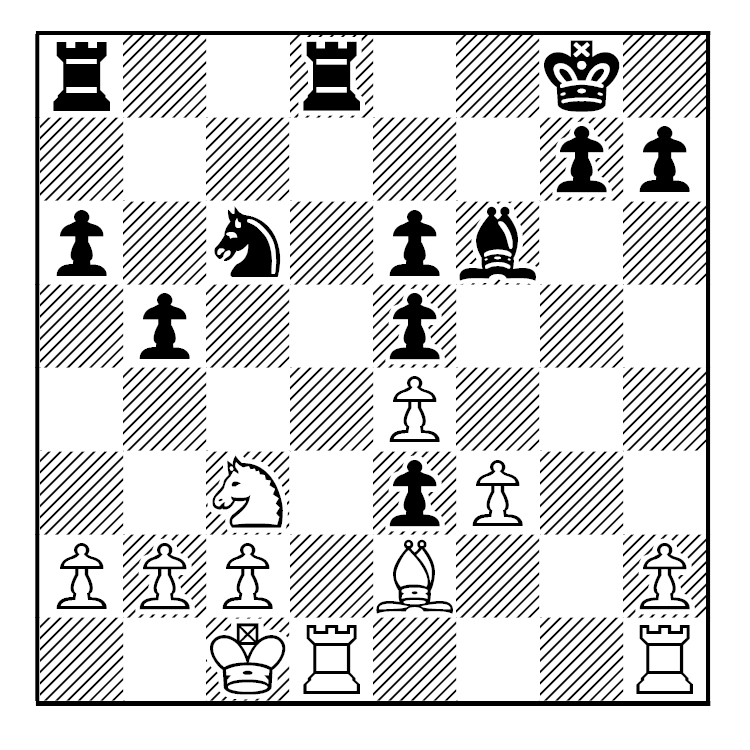
18.Rhf1 b4 19.Na4 Nd4 20.Rxd4 Rxd4 21.Bd3 Rad8 22.Kd1 Bg5 23.Ke2 Bf4 24.h3 Rc8 25.Rd1 Rc6 26.b3 Kf7 27.h4 Kf6 28.h5 a5 29.Nb2? (White can’t do too much with his misplaced knight, but he could survive longer by just leaving it in place.) 29…Rxd3! 0-1


Black loses the following game. But he also has other problems. Like being behind in material, development, and position.


GM A. Yermolinsky-IM W. Shipman (2438)
Reno, 1995
[D52]
1.d4 d5 2.c4 e6 3.Nf3 Nf6 4.Nc3 c6 5.Bg5 Nbd7 6.e3 Qa5 7.cxd5 Nxd5 8.Qd2 Bb4 9.Rc1 O-O 10.a3 Bd6?! (10.Bxc3 is better. The bishop has limited movement and will interfere with the coordination of Black’s pieces. Perhaps Shipman wanted to throw a GM off-stride.

Carsten Hoi (2445)-Lars Bo Hansen (2550)
Denmark Team Ch., 1996
1.d4 d5 2.c4 e6 3.Nc3 Nf6 4.Bg5 Nbd7 5.e3 c6 6.Nf3 Qa5 7.cxd5 Nxd5 8.Qd2 Bb4 9.Rc1 O-O 10.a3 Bxc3 11.bxc3 Qxa3 12.e4 N5f6 13.Bd3 e5 14.O-O Re8 15.Bxf6 gxf6 16.Nh4 Nf8 17.f4 exd4 18.cxd4 Qd6 19.Nf3 Bg4 20.e5 Qd8 21.Kh1 Kh8 22.Qf2 Ng6 23.Nd2 Rg8 24.h3 Bh5 25.Ne4 fxe5 26.fxe5 Nxe5 27.dxe5 Qxd3 28.Nf6 Qe2 29.Qxe2 Bxe2 30.Rf2 Bd3 31.Nxg8 Kxg8 32.Rc3 Bg6 33.g4 a5 34.h4 a4 35.h5 Be4+ 36.Kh2 b5 37.Rf4 Bd5 38.g5 a3 39.g6 hxg6 40.hxg6 0-1

Peter Heine Nielsen (2620)-Curt Hansen (2610)
North Sea Cup
Esbjerg, 2002
1.d4 Nf6 2.c4 e6 3.Nf3 d5 4.Nc3 c6 5.Bg5 Nbd7 6.e3 Qa5 7.cxd5 Nxd5 8.Qd2 Bb4 9.Rc1 O-O 10.a3 Bxc3 11.bxc3 h6 12.Bh4 Qxa3 13.e4 Ne7 14.Bd3 Ng6 15.Bg3 b6 16.O-O Bb7 17.e5 Qe7 18.h4 c5 19.h5 Bxf3 20.gxf3 Nh4 21.Qf4 Nf5 22.Bxf5 exf5 23.Qxf5 Qe6 24.Qe4 f5 25.d5 Qe8 26.Qf4 b5 27.c4 Qxh5 28.e6 g5 29.Qd6 Nb6 30.e7 Rfe8 31.Be5 Kh7 32.cxb5 Qxf3 33.Qe6 Qg4+ 34.Bg3 Qh5 35.Qxf5+ Qg6 36.Qxg6+ Kxg6 37.d6 Nd7 38.Rfe1 Kf7 39.Rc3 Rab8 40.Rf3+ Kg7 41.Be5+ Kg6 42.Bc3 Rxb5 43.Re6+ Kh5 44.Rh3+ Kg4 45.Rexh6 Rb3 46.Kg2 c4 47.Rh8 1-0

M. Ragger (2655)-B. Esen (2536)
Moscow, Feb. 10 2012
1.d4 d5 2.c4 c6 3.Nf3 Nf6 4.Nc3 e6 5.Bg5 Nbd7 6.e3 Qa5 7.cxd5 Nxd5 8.Qd2 Bb4 9.Rc1 O-O 10.a3 Bxc3 11.bxc3 Qxa3 12.e4 Ne7 13.Bd3 e5 14.O-O f6 15.Be3 Ng6 16.h4 Nh8 17.h5 Nf7 18.Nh4 Nb6 19.f4 Qe7 20.Qf2 Nh6 21.Qg3 exd4 22.cxd4 f5 23.Rc5 Ng4 24.Bc1 fxe4 25.Be2 Qf6 26.Kh1 Nh6 27.f5 Nf7 28.Re5 Nd5 29.h6 e3 30.Bxe3 Nxe3 31.hxg7 Nxf1 32.gxf8=Q+ Kxf8 33.Bxf1 Bd7 34.Bc4 Re8 35.Bxf7 Kxf7 36.Qf4 Kg8 37.Rxe8+ Bxe8 38.Nf3 Kg7 39.Qc7+ Bf7 40.Qxb7 Qxf5 41.Qxa7 Kh6 42.Qe7 Bd5 43.Qe3+ Kg7 44.Qe7+ Kh6 45.Qe3+ Kg7 46.Qe7+ 1/2-1/2)

11.e4 Nxc3 12.Rxc3 e5 13.d5 c5 14.Nh4 Nb6 15.Bf6 Qa4 16.Qg5 Qxe4+ 17.Be2 Qb1+ 18.Bd1 Qg6 19.Nxg6 hxg6 20.Bxe5 f6 21.Bxd6 fxg5 22.Bxf8 Kxf8
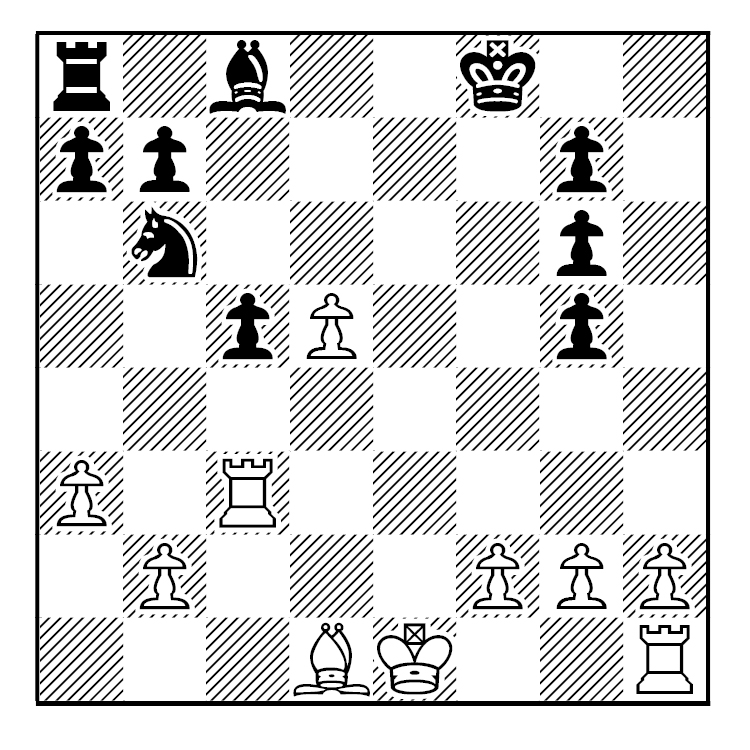
23.Rxc5 +- Bf5 24.Bb3 Re8+ 25.Kd2 Re4 26.Re1 Rd4+ 27.Kc1 Be4 28.d6 Bc6 29.Rd1 1-0


Fair enough. Tripled isolated pawns are not necessarily bad ideas.


Now, how do we categorize the following two games??


Gabor Kovacs-Rainer Barth
Balatonbereny Open
Hungary, Sept. 1994
[B02]
1.e4 Nf6 2.Nc3 d5 (2…e5 naturally leads to the Vienna Game.) 3.exd5 (One interesting game is Robert Jacobs (2222)-GM Shabalov, World Open, Philadelphia, 1997, which continued with 3.e5 Nfd7 4.e6!? fxe6 5.d4 c5 6.Bd3 Nf6 7.dxc5 Nc6 8.Bg5 g6 9.Nh3 Bg7 10.Nf4 d4 11.Ne4 e5 12.Bxf6 exf6 13.Nd6+ Kf8 14.Ne2 Qa5+ 15.Qd2 Qxc5 16.Nxc8 Rxc8 17.O-O Kf7 18.a3 Rhe8 19.f3 Kg8 20.Ng3 f5 21.Rae1 Nd8 22.Qb4 Qxb4 23.axb4 Nc6 24.c3 dxc3 25.bxc3 e4 26.fxe4 Bxc3 27.Rd1 f4 28.Rxf4 Nxb4 29.Bb5 Be5 30.Rf3 Re7 31.Bd7 Rb8 32.Ba4 Kg7 33.Ne2 b5 34.Bb3 a5 35.Nd4 a4 36.Ne6+ Kh8 37.Bd5 Nxd5 38.exd5 Bd6 39.Rc1 Bb4 40.Rc6 Rd7 0-1) 3…Nxd5 4.Bc4 c6 5.d4 g6 6.Nge2 Be6 7.Bb3 Nxc3 8.bxc3 Bxb3 9.axb3 Bg7 10.O-O O-O 11.f4 Na6 12.Ba3 Re8 13.Qd3 Qb6 14.f5 c5 15.fxg6 fxg6 16.Qc4+ e6 17.dxc5 Qc6 18.Rad1 b5 19.Nd4 Qxg2+ 20.Kxg2 bxc4 21.Nb5 Reb8 22.bxc4
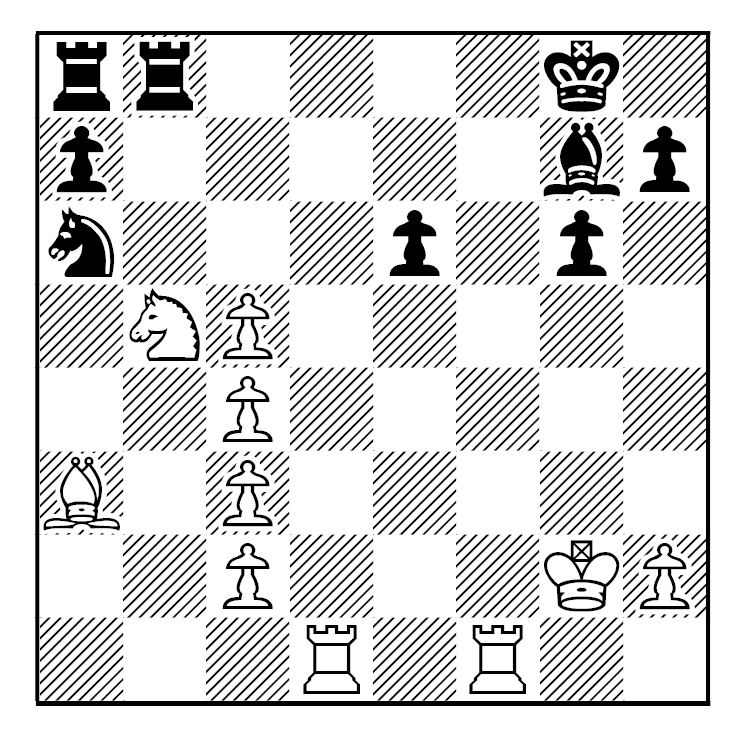
22…Rc8 23.Nd6 Rc6 24.Ne4 Rac8 25.Rd7 R6c7 26.Rd6 Rc6 27.Rfd1 Bf8 28.Rxc6 Rxc6 29.Rd8 Kf7 30.Rd7+ Be7 31.Rxa7 h6 32.Bc1 g5 33.h4 gxh4 34.Bf4 e5 35.Bxe5 Re6 36.Nd6+ Kg6 37.Bd4 Nb8 38.Ra8 Nc6 39.Rg8+ Kh5 40.Nf5 Rg6+ 41.Rxg6 Kxg6 42.Nxe7+ Nxe7 43.Kh3 Nc6 44.Kxh4 1/2-1/2


Thomas Lochte (2225)-Stefan Gross (2330)
Budapest, 1996
[B21]
1.e4 c5 2.d4 cxd4 3.c3 dxc3 4.Nxc3 d6 5.Bc4 Nc6 6.Nf3 e6 7.O-O Bd7 8.Bf4 Qb8 (Jakub Breck-Jiri Zajic, Czechoslovakia U26 Ch., Prague, 1968 continued with 8…Nf6 9.Bxd6 Bxd6 10.Qxd6 Qe7 11.Qg3 O-O 12.e5 Ne8 13.Ne4 f5 14.exf6 Nxf6 15.Rfe1 Na5 16.Bd3 Nh5 17.Qg5 Qxg5 18.Nexg5 h6 19.Nxe6 Bxe6 20.Rxe6 Nf4 21.Rd6 Nxd3 22.Rxd3 Rac8 23.b4 Nc6 24.a3 Rfd8 25.Rxd8+ Nxd8 26.Rd1 Ne6 27.Ne1 Rc3 28.Rd3 Rc1 29.Kf1 Nf4 30.Rd8+ Kf7 31.g3 Ke7 32.Rd2 Ne6 33.Ke2 b6 34.Nc2 Ng5 35.Nd4 Ra1 36.Rd3 Rc1 37.h4 Nf7 38.Kd2 Rc4 39.Re3+ Kf8 40.Kd3 Rc1 41.Ne6+ Kg8 42.Nf4 Nd6 43.Re7 a5 44.Nh5 Nf5 45.Rb7 Ra1 46.Rxb6 Rxa3+ 47.Ke4 Ne7 48.Rb7 Kf8 49.bxa5 Ra4+ 50.Kf3 Rxa5 51.Nxg7 Re5 52.Kf4 Re2 53.Nh5 Rxf2+ 54.Kg4 Rf7 55.Rb8+ 1-0) 9.Nb5 Ne5 10.Nxe5 dxe5 11.Bg3 Nf6 12.Qe2 a6 13.Nd4 Bd6 14.Rad1 Bc7 15.Nf3 Bc6 16.Bh4 h6 17.Bxf6 gxf6 18.Nh4 h5 19.Qf3 Bd8 20.Qg3 Qc7 21.Qg7 Rf8 22.f4 exf4 23.Rfe1 Qe5 24.Bd5 Qg5 25.Bxc6+ bxc6 26.Nf5 Bb6+ 27.Kh1 exf5
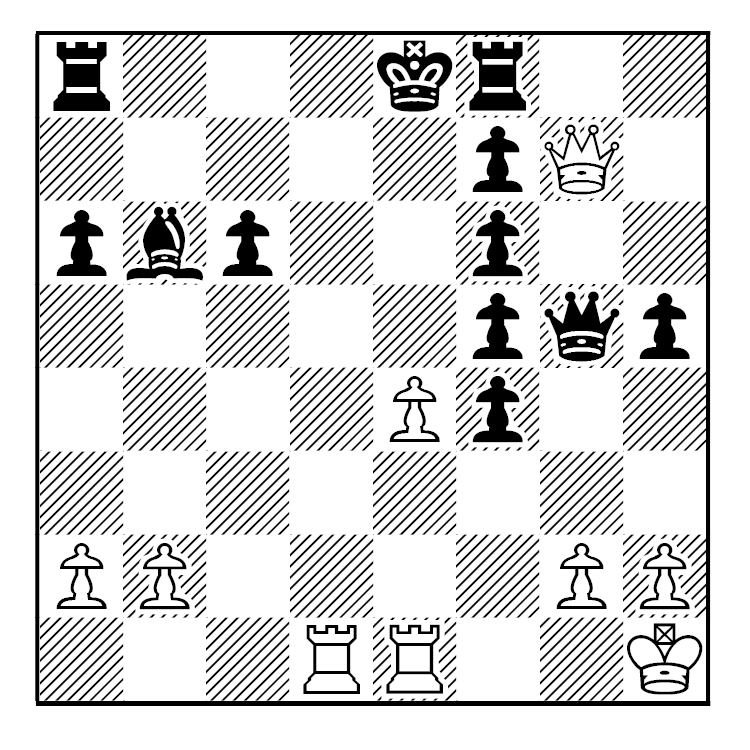

0-1
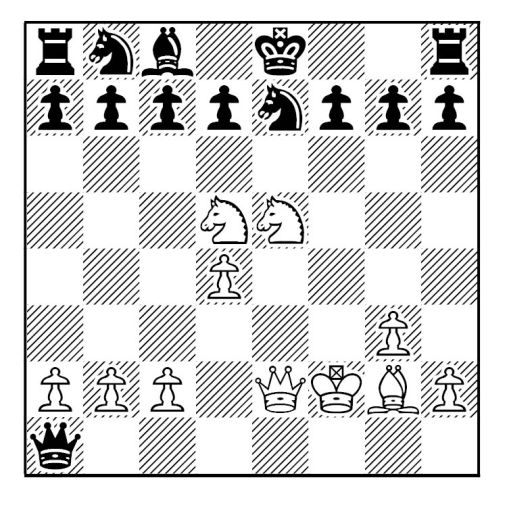


An early example

The Internet is full of new analyses in chess opening. Some good, some very good, some strange, some wonderful, and some awful. This game is an early example of good, but not complete.


Escalante-“lord_kapatasan”, Game 2
Blitz Game
Yahoo, Mar. 14 2004
1.e4 e5 2.Nf3 Bc5 3.Nxe5 Bxf2+


(Anything else loses. Here are some examples.

Pantaleoni-Milicia
corres., Italy, 1980
1.e4 e5 2.Nf3 Bc5 3.Nxe5 Nf6 4.d4 Bb6 5.Nc3 O-O 6.Be3 d5 7.exd5 Nxd5 8.Nxd5 Qxd5 9.Bc4 Qxg2 10.Kd2 Bxd4 11.Bxd4 Nc6 12.Rg1 Qe4 13.Nxc6 g6 14.Qh5 Qxc6 15.Rxg6+ 1-0

Pohl-Andre
corres., 1986
1.e4 e5 2.Nf3 Bc5 3.Nxe5 Nc6 4.Nxc6 dxc6 5.Bd3 Bxf2+ 6.Kxf2 Qd4+ 7.Ke1 Qc4 8.Bxc4 1-0)


4.Kxf2 Qh4+


[Not 4…Qf6+ 5.Nf3! +- (White is still ahead in material and Black’s attack is at an end.) 5…Nh6!? 6.d4 O-O 7.Nc3 d6 8.Nd5 Qd8 9.Bxh6 gxh6 10.Qd2 Kh8 11.Qxh6 c6 12.Nf6 Qxf6 13.Qxf8+ 1-0, Viatge-Mitchell, Email, IECC, 2000]


5.g3 Qxe4


(Now Black, with White’s king out outside his protective shell and Black’s queen dominating the center, looks like he is winning. But Black’s queen is vulnerable and it’s White’s turn.) 6.d4 (6.Qe2 also wins, but Black has to get greedy. Here is why it works: 1.e4 e5 2.Nf3 Bc5 3.Nxe5 Bxf2+ 4.Kxf2 Qh4+ 5.g3 Qxe4 6.Qe2 Qxh1 7.Bg2! 1-0, as in Krejcik-Baumgartner, Troppau, 1914. So, is 6.Qe2 or 6.d4 the better move? It turns out there is also theory on 6.Qe2.)


6…Qxh1 7.Qe2 Ne7


[You’ll see this is game #2 between my opponent and myself. Here is the first game: Escalante-“lord_kapatasan”, Game 1, Blitz Game, Yahoo, Mar. 14 2004, 1.e4 e5 2.Nf3 Bc5 3.Nxe5 Bxf2+ 4.Kxf2 Qh4+ 5.g3 Qxe4 6.d4 Qxh1 7.Qe2 Qxh2+ (This move is reckless. You’ll notice he did make an improvement in game 2.) 8.Bg2 Ne7 9.Ng4 Qxg2+ 10.Kxg2 d5 11.Bf4 c6 12.Bd6 Be6 13.Bxe7 Kxe7 14.Nc3 Nd7 15.Re1 Rae8 16.Ne5 Nf6 17.Na4 Kd6 18.Qe3 h6 19.Qa3+ Kc7 20.Nc5 a6 21.Qa5+ b6 22.Qxa6 bxc5 23.Qa7+ Kd6 24.Qxc5mate 1-0. He’s the one who told me about theory I didn’t know existed. At least he was smart enough NOT to tell me before the games.]

8.Bg2!? Qxc1 9.Nc3! (Apparently this move, and the move that follows, busts this variation – I can’t see a way out for Black) 9…Qxa1 10.Nd5!

2018_10_31


10…Na6 11.Nxe7 Kxe7 12.Nc6+ Kf8 13.Qe7+ 1-0

Beating a Master in 10 Moves

If you want to beat a Master, you have to study chess. If you want to beat a Master in the opening, you have to study the openings.

Here’s what I mean:


Escalante-NM Adaar
Thematic Tournament – Winawer Variation, Round 2
Chess.com, Aug.-Sept. 2018
1.e4 e6 2.d4 d5 3.Nc3 Bb4 (The usual route to the Winawer. All games in the tournament began with this position.) 4.e5 c5 5.a3 Bxc3+ 6.bxc3 Ne7 7.Qg4 O-O (Some years ago Van der Tak wrote an article in NIC 8 titled, “Castling Into It?” where he explored Black’s kingside castling possibilities in the Poisoned Pawn Variation of the Winawer, and if it was a viable option for Black. I don’t think the resulting positions favor Black.) 8.Bd3! (Thanks to GM Van der Tak, and his article, I am convinced this move is stronger, with many ideas not yet explored, than most other books might suggest.) 8…Nbc6 9.Nf3

[If Black does not know the main line, then he (or she) has a problem coming up with a good plan. Here’s an example:

E.H. Al Rufei (2068)-Nebal Al Jelda
Women’s Zonal
Tehran, 2001
1.e4 e6 2.d4 d5 3.Nc3 Bb4 4.e5 c5 5.a3 Bxc3+ 6.bxc3 Ne7 7.Qg4 O-O 8.Nf3 Nbc6 9.Bd3 Nf5 10.Bg5 Qa5 11.O-O c4 12.Bxf5 exf5 13.Qg3 Kh8 14.Qh4 Qxc3 15.Bf6 gxf6 16.exf6 Rg8 17.Ng5 Rxg5 18.Qxg5 1-0

His (or her!) best move is 9…f5 10.exf6 Rxf6 11.Bg5 Rf7, with many books giving this position a “=”. But life, on or off the chessboard, is rarely simple as an equal sign. Back to the game. My opponent decided to try something different in this game.]

9…cxd4?? (This loses the game in a hurry.)

2018_09_13

10.Bxh7+! 1-0 [Black resigns due to 10…Kxh7 11.Qh5+ (stronger than the traditional Ng5+ as the potential escape square, g6, is denied to Black) 11…Kg8 12.Ng5 and White mates.]

The Albin Counter Gambit

After a brief time of not playing or studying this gambit, I’ve returned to this interesting line of play. Here are some games which you might enjoy (esp. if you also experiment with the Albin).


~~~~~~~~~~~~~~~~~

Curt Jones-Doug Ralston
Nashville Invitational
Tennessee, 1974
1.d4 d5 2.c4 e5 3.dxe5 d4 4.Nf3 Nc6 5.e3 Bb4+ 6.Bd2 dxe3 7.Bxb4 exf2+ 8.Ke2 Qxd1+ 9.Kxd1 Nxb4 10.a3 Nc6 11.Nc3 Bg4 12.Be2 O-O-O+ 13.Kc2 Bxf3 14.Bxf3 Nd4+ 0-1

George Murphy-Robert Beacon
SCCA Premiers, 2000
[Robert Beacon]
1.d4 d5 2.c4 e5 3.dxe5 d4 4.Nf3 Nc6 5.Nbd2 (Normal here is 5.g3, but the game soon transposes.) 5…f6 6.exf6 Nxf6 7.g3 Bg4 8.a3 Qe7 (Normal would be 8…Qd7 as mentioned. The text is an idea of Nikolay Minev in Inside Chess. I’m following the game Lignell-Niemela 1941.) 9.Bg2 d3! 10.e3 Nd4 11.O-O (11.h3 was obligatory according to Minev.) 11…Ne2+ 12.Kh1 O-O-O 13.Qa4 [13.b4 was played in the above mentioned game (if 13.h3 h5! ). I’m now on my own!] 13…Kb8 14.b4 h5 15.Bb2 h4 16.Nxh4 Bd7 17.Qa5 Ng4 18.Ndf3 Qe8 19.Ne5 (19.Qg5!? with the idea of 20 Qg6!?) 19…Rh5 20.Nxd7+ Rxd7 21.Qa4 g5 (For me it is “all or nothing” in this position. It is difficult to say what the alternatives are.) 22.Bf3 Qe6 23.Kg2? (The game now swings in Black’s favor. Possibly 23.Qb5 to bring the Queen into the game would be better.) 23…gxh4 24.h3 Nxe3+ (Forced ) 25.fxe3 Rg5 26.Bg4 Qe4+ 27.Rf3 Rf7 (The pressure now builds on White.) 28.Raf1 Nxg3 (With hindsight 28…Rxg4 followed by 29… h3+ looks stronger.) 29. R1f2 Nf5 (Black throws away some of his advantage – 29…Ne2 is the move!) 30.Kg1 Bd6 31.Rxf5 (This is probably the decisive mistake At this point the game was finely balanced. 31.c5!? looks better.) 31…Rfxf5 32.Rxf5 (32.Bd4 prolongs the game.) 32…Qxe3+ (32…Rxg4+ 33.hxg4 Qxg4+ 34.Kh1 Qh3+ 35.Kg1 Qh2+ 36.Kf1 Qh1+ 37.Kf2 Bg3# would be more precise.) 33.Kf1 Rxf5+ 34.Bxf5 Bg3! (In a lot of lines in the Albin White’s Queen goes to a4 to pressure Black’s queenside. In this instance it was his undoing as it remained out of the game The back rank threat was an illusion!) 35.Bd4 (The Bishop threat comes too late.) 35…Qe1+ 36.Kg2 Qe2+ 37.Kg1 Qh2+ 0-1

Solis (1934)-WFM Horn (2012)
Women’s Ol.
Khanty-Mansiysk, Russia, Oct. 3 2010
1.d4 d5 2.c4 e5 3.dxe5 d4 4.g3 Nc6 5.Nf3 Nge7 6.Bg2 Ng6 7.Nbd2 Ngxe5 8.Nxe5 Nxe5 9.Nf3 Bb4+ 10.Bd2 Bxd2+ 11.Nxd2 O-O 12.O-O Be6 13.b3 c6 14.Nf3 Nxf3+ 15.Bxf3 Qb6 16.Qc2 c5 17.Rfe1 Rad8 18.Rad1 g6 19.Rd2 Rfe8 20.Red1 Bf5 21.Qb2 g5 22.Bd5 Rd7 23.Bf3 g4 24.Bg2 Rde7 25.Bd5 a5 26.a4 h5 27.Bg2 h4 28.gxh4 Qh6 29.Re1 Qxh4 30.Qc1 Qg5 31.Qb2 Re6 32.Bxb7 Rh6 33.Kg2 Ree6 34.Rh1 Rh3 35.Qc1 Rxb3 36.Ra2 Qxc1 37.Rxc1 Rxb7 0-1

“sergiydazhura”-Escalante
Blitz Game
chess.com, July 16 2018
[chess.com computer and Escalante]
1.d4 d5 2.c4 e5 3.dxe5 d4 4.Nf3 Nc6 5.Bg5 Bb4+ 6.Nbd2 Nge7 7.a4 (7.g3 is more common and the game could follow many different paths.) 7…h6 (This move allows an escape square just in case an attack gets too hot – I still don’t know what White’s plans are. In addition, the move …h6 also prepares a kingside attack by Black if White was to castle on that side or plays weakly.) 8.Bxe7 Qxe7 9.e3 (The chess.com computer calls this an inaccuracy and claims a better move with 9. Qc2 Nxe5 10.Nxd4 O-O 11.e3 Bg4 12.Be2 Rad8 13.Bxg4 Nxg4. I consider this move a little passive, after all, Black intentions are clear – he wants to attack.) 9…dxe3 10.fxe3 Nxe5 11.Nxe5 Qxe5 12.Qb3 Bxd2+ [Mistake. The best move was 12…Bg4!! (The !! are mine – the move wins outright – RME.) See, computer analysis does have its good points!] 13.Rd1 Qg5 14.h4 Qe5 15.Kf2 Bxd1 16.Qxb4 O-O-O 17.Nf3.) 13.Kxd2 Bf5 (Inaccuracy. A better move was 13…O-O. How true! In general, the more pieces involved in an attack, the better!) 14.Bd3 [The best move was 14.Qb5+ (and blunting Black’s attack.) Qxb5 15.axb5 O-O-O+ 16.Ke1 Rhe8 17.Ra3 Kb8 18.Be2 Be4.] 14…O-O-O 15.Rhd1 Rxd3+ 16.Qxd3 Bxd3 (Inaccuracy. A better move was 16… Qxb2+ 17.Ke1 Bxd3 18.Rxd3 Qxa1+ 19.Kd2 Qb2+ 20.Kd1 Qxg2 21.h3.) 17.Kxd3 Rd8+ (The best move was 17… Qxb2 18.e4 Re8 19.a5 Qb3+ 20.Kd4 Rd8+ 21.Ke5 Rxd1 22.Rxd1.) 18.Ke2 Qxb2+ 0-1

Using a Chess Engine

A chess engine is a computer or a program that can analyze a position or game. Many players believe that a computer is incapable of making a mistake and whatever evaluation an engine makes should be taken with blind faith.


But as Bobby Fischer once said, “This is the start (of an analysis)”.


Below is such a discussion between an engine and myself.


Escalante-“xtibis”
Blitz Game
Chess.com, July 22 2018
[Escalante]
1.e4 d5 2.exd5 Qxd5 3.Nf3 (I’ve been experimenting this move for a couple of years. It certainly takes Black out of book and Black has many chances to go wrong in the opening. Like in this game.) 3…Nf6 (This move is very reasonable. It is safe and fits into many Black plans. It is only later when Black forgets why he played this move and apparently forgets about development. By the way, two other common moves are 3…Qe6 and 3…Bg4 are not a good as the text move.) 4.d4 Qa5+ 5.Bd2 Qb6 6.c3 [The engine at chess.com said this was an error and gives the better 6.Na3 c5 (this is because 6…Na3 Qxb2?? loses to 7.Nc4 Qb5 8.Nd6+ – my analysis) 7.Be3 Qa5+ 8.Bd2 Qb6 9.dxc5 Qxc5 10.Be3 Qa5+] 6…Qxb2 7.Qb3 Qxa1 8.Bc4 b6?! (This is too slow. Black has some compensation for his lack of development – the extra rook. He must quickly catch up on his development to secure his advantage. Better is 8… e6. I didn’t need a computer to tell me this! This move would limit the movement of White’s pieces and allows his bishop to move out.)
2018_07_25

9.O-O (Again the chess.com computer suggests another move, giving 9.Bxf7+ Kd8 10.O-O Nc6 11.Na3 Na5 12.Qc2 Qxf1+ 13.Kxf1 e6. I saw at least part of this but I wanted to safeguard my own king and keep the Black’s queen isolated in the corner.) 9…Be6?? (Blunder says the computer and I agree. Black still has 9… e6.) 10.Bxe6! fxe6 11.Na3 1-0 (Black resigned. He could of course play 11…Qxf1+ 12.Kxf1 but his lack of development is still a major problem and White’s queen is now in charge.)

IM Nino Khurtsidze

It was widely reported today that IM Nino Khurtsidze had lost her battle with cancer today. She won the World Junior Girls Chess Championship in 1993 and 1995, one of the few players who won it more than once.


She also won the women’s Georgian championship five times and earned her IM (not WIM) title in 1999.


She played for the Women’s World title last year in Tehran. The following game below is perhaps the best game she played in that tournament.


GM Natalia Zhukova-IM Nino Khurtsidze
Women’s World Ch.
Tehran, 2017
[Escalante]
1.d4 Nf6 2.c4 e6 3.Nc3 Bb4 4.f3 d5 5.a3 Bd6 (More common is 5.a3 Bxc3+ 6.bxc3 c5) 6.e4 (If White can safely get in .e5, or at least keep her pawn on e4, she will have a significant advantage. In the Nimzo-Indian, and to a certain extent all other Indian defences, this is a thematic idea for White. The “e” pawn has to go!) 6…dxe4 7.fxe4 e5 8.d5 b5!? (A TN. And apparently a good one!) 9.Nf3 bxc4 10.Bxc4 O-O 11.Bg5 h6 12.Bh4 Bg4 13.h3 Bh5 14.g4 Bg6 15.Qe2 Nbd7 16.Rg1 (The white king has no safe haven if the game gets complicated or if Black attacks. Which she does.) 16…Qb8 17.Bb5 Qb6 18.Kf1 Rab8 19.Nd2 a6 20.Nc4 Qa7 21.Nxd6 cxd6 22.Bf2 Qb7 23.Bxa6 Qxb2! (Blowing open the squares around the White king. He is still unsafe.) 24.Qxb2 Rxb2 25.Re1 (White’s king is still more vulnerable than Black’s. And the black pieces are ready to storm White’s position.) 25…Ra8 26.Bb5 Rxa3 27.Bxd7 Rxc3 28.Bf5 Bxf5 29.gxf5 Rxh3 30.Bg3 Rb3 31.Bf2 Rhf3 0-1 (Once White’s “e4” pawn goes, the “d” and “f” pawns are going to fall as well.)


439666.840292a1.630x354o.f0f8b184a284