AN INTRODUCTION TO THE ART OF QUEEN SACRIFICES, Part 1

Perhaps the most popular games ever published are those in which a player sacrifices his Queen. Bravery is required for that player who thrusts his most valuable piece into the fight, usually with no hope of ever recovering her.

 
In the over 500 years of chess, fewer topics have been more exciting, more spectacular, and more aesthetically pleasing to the player than when he freely sacrifices his powerful Queen. In all cases, the desired result, whether immediately or indirectly, is to gain something more valuable; the enemy King.


Basically, there are three types of Queen sacrifices.


The first type is the one made for material gain. Sometimes called a pseudo-sacrifice, the Queen is given up and won back a few moves later.


Doroshkevich-Astashin
USSR, 1967 (D24)
1.d4 d5 2.c4 dxc4 3.Nf3 Nf6 4.Nc3 a6 5.e4 b5 6.e5 Nd5 7.a4 Nxc3 8.bxc3 Bb7 9.e6 fxe6 10.Be2 Qd5 11.Ng5 Qxg2 12.Rf1 Bd5 13.axb5 Qxh2?! 14.Bg4 h5 15.Bxe6 Bxe6 16.Qf3 c6 17.Nxe6 Qd6 18.Qf5 g6 19.Qxg6+ Kd7 20.Nc5+ Kc8 21.Qe8+ Qd8 22.b6! 1-0


The Queen sacrifice for gain may turn into a mate if the opponent tries to hold on the female material.


Muller-Calderone
Compuserve, 1996
(B57)
1.e4 c5 2.Nf3 d6 3.d4 cxd4 4.Nxd4 Nf6 5.Nc3 Nc6 6.Nxc6 bxc6 7.Bc4 g6 8.e5 Nd7 (Certainly not 8…dxe5?? 9.Bxf7+. Best is 8…Ng4.) 9.exd6 exd6 10.O-O Nf6 11.Re1+ Be7 12.Qf3 O-O 13.Qxc6 Bf5 14.Bh6 Re8 15.Nd5 Rc8 16.Qxe8+! Qxe8 17.Nxe7+ Kh8 18.Nxf5 Ne4 19.Nxd6 Qc6 20.Nxf7+ (20…Kg8 21.Ne5+) 1-0


Levitzky-Marshall
Breslau, 1912
(C10)
Chernev says that spectators showered the board with gold pieces after Black’s 23rd move. Soltis says it was bettors who lost the wager on the outcome.
1.d4 e6 2.e4 d5 3.Nc3 c5 (The Marshall Gambit, as played by its inventor.) 4.Nf3 Nc6 5.exd5 exd5 6.Be2 Nf6 7.O-O Be7 8.Bg5 O-O 9.dxc5 Be6 10.Nd4 Bxc5 11.Nxe6 fxe6 12.Bg4 Qd6 13.Bh3 Rae8 14.Qd2 Bb4 15.Bxf6 Rxf6 16.Rad1 Qc5 17.Qe2 Bxc3 18.bxc3 Qxc3 19.Rxd5 Nd4 20.Qh5 Ref8 21.Re5 Rh6 22.Qg5 Rxh3 23.Rc5 Qg3!! [O.K. Here are the variations: 24.Qxg3 Ne2+ 25.Kh1 Nxg3+ 26.Kg1 Nxf1 27.gxh3 Nd2 and extra piece wins. If White tries to hold onto the Queen, he tries loses his King. 24.hxg3 Ne2#, or 24.fxg3 Ne2+ 25.Kh1 Rxf1#.] 0-1


A second popular Queen sacrifice is another form of a pseudo-sacrifice. The sacrifice is made solely for a player to checkmate an opponent. The mate is immediate and happens most frequently in the opening, as these short games show.


Greco-N.N.,
Rome, 1619?
1.e4 b6 (Despite all the players who have invested 400 years to analyze and perfect this opening, this defence has remained on the sidelines of theory.) 2.d4 Bb7 3.Bd3 f5?! 4.exf5 Bxg2 5.Qh5+ g6 6.fxg6 Nf6? 7.gxh7+!! (The Queen is willing offered, an offer that cannot be ignored or declined.) 7…Nxh5 (And now the coup d’état) 8.g6mate 1-0


Teed-Delmar
New York, 1896
1.d4 f5 2.Bg5 h6 3.Bh4 g5 4.Bg3 f4 5.e3 h5 6.Bd3 Rh6 7.Qxh5+! Rxh5 8.Bg6mate 1-0


De Legal-Saint Brie
Paris, 1750? (C40)
1.e4 e5 2.Nf3 d6 3.Bc4 [3.d4 is now considered to be the best move when facing Philidor’s Defence. But then White would miss all the fun of this classical trap!] 3…Bg4? 4.Nc3 g6 5.Nxe5! Bxd1 6.Bxf7+ Ke7 7.Nd5mate 1-0


Paul Morphy-Duke of Brunswick and Count Isouard
Paris, 1858
(C41)
A short classic that displays all the qualities that make up a great game; rapid development, pins, sacrifices, and slightly inferior moves by the opponent.
1.e4 e5 2.Nf3 d6 3.d4 Bg4? 4.dxe5 (Simple enough. White threatens 4…dxe5 5.Qxd8+ Kxd8 6.Nxe5, netting a pawn.) 4…Bxf3 5.Qxf3 dxe5 6.Bc4 Nf6 7.Qb3 Qe7 8.Nc3 c6 9.Bg5 b5 10.Nxb5! (The whole mating sequence begins with a Knight sacrifice.) 10…cxb5 11.Bxb5+ Nbd7 12.O-O-O! Rd8 13.Rxd7 Rxd7 14.Rd1 Qe6 15.Bxd7+ Nxd7 16.Qb8+! (And ends with a Queen deflection sacrifice!) 16…Nxb8 17.Rd8mate 1-0

 
Queen sacrifices for the checkmate may also be more involved and take a few additional moves to execute the mate.

 
Maryasin-Kapengut
Minsk, 1969
(D01)
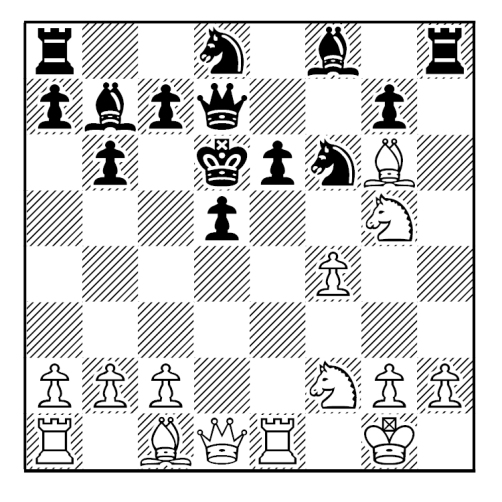
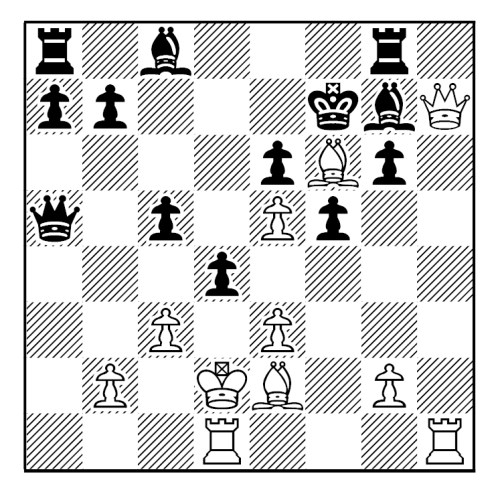
1.d4 Nf6 2.Nc3 d5 3.Bg5 (The often neglected Veresov’s Opening.) 3…Nbd7 4.Nf3 g6 5.e3 Bg7 6.Bd3 c5 7.Ne5 O-O 8.Qf3 Qb6 9.O-O-O e6 10.h4 Nxe5 11.dxe5 Nd7 12.h5 Nxe5 13.Qh3 f5 14.hxg6 hxg6 15.Be2 d4 16.Na4 Qb4 17.f4 Qxa4 18.fxe5 Qxa2 19.Qh7+ Kf7 20.Bf6 Qa1+ 21.Kd2 Qa5+ 22.c3 Rg8
2019_04_25_A
23.Qxg6+! Kxg6 24.Bh5+ Kh7 25.Bf7+ Bh6 26.Rxh6+ (with the unstoppable threat of Rh1#.) 1-0


The third type of Queen sacrifices are those initiating King hunts. The Queen is given up so that the enemy King is brought out into the open. The checkmate, if there, comes many moves later.

 
These sacrifices differ from the mating sacrifices in that, while a mating sacrifice can usually be calculated out to the end, a King Hunt is made on a player’s belief that he can find a mate somewhere down the line. In other words, a King Hunt is made more on intuition rather than calculation.


D. Byrne-Fischer
Rosenwald Memorial
New York, 1956
(D97)
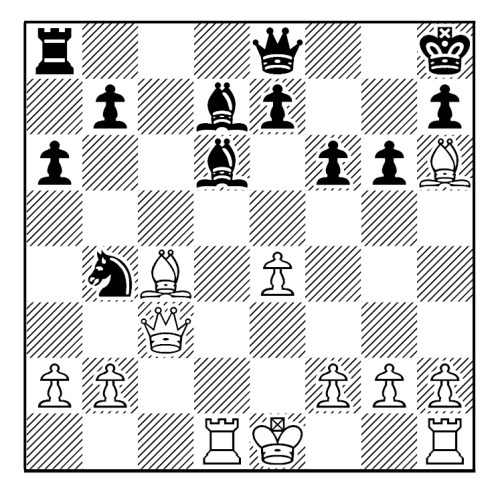
1.Nf3 Nf6 2.c4 g6 3.Nc3 Bg7 4.d4 O-O 5.Bf4 d5 6.Qb3 dxc4 7.Qxc4 c6 8.e4 Nbd7 9.Rd1 Nb6 10.Qc5 Bg4 11.Bg5 Na4 12.Qa3 Nxc3 13.bxc3 Nxe4 14.Bxe7 Qb6 15.Bc4 Nxc3 16.Bc5 Rfe8+ 17.Kf1
2019_04_25_B
17…Be6!! 18.Bxb6 (White almost has to take the Queen. 18.Bxe6? loses to 18…Qb5+! 19.Kg1 Ne2+ 20.Kf1 Ng3+ 21.Kg1 Qf1+! 22.Rxf1 Ne2#. Yes, Black’s position is so overwhelming he can sacrifice his queen more than once. See below for other examples.) 18…Bxc4+ 19.Kg1 Ne2+ 20.Kf1 Nxd4+ (Now Black initiates a “windmill” attack.) 21.Kg1 Ne2+ 22.Kf1 Nc3+ 23.Kg1 axb6 24.Qb4 Ra4 25.Qxb6 Nxd1 26.h3 Rxa2 27.Kh2 Nxf2 28.Re1 Rxe1 29.Qd8+ Bf8 30.Nxe1 Bd5 31.Nf3 Ne4 32.Qb8 b5 33.h4 h5 34.Ne5 Kg7 35.Kg1 Bc5+ 36.Kf1 Ng3+ 37.Ke1 Bb4+ 38.Kd1 Bb3+ 39.Kc1 Ne2+ 40.Kb1 Nc3+ 41.Kc1 Rc2mate 0-1


Averbakh-Kotov
Zurich, 1953
(A55)
1.d4 Nf6 2.c4 d6 3.Nf3 Nbd7 4.Nc3 e5 5.e4 Be7 6.Be2 O-O 7.O-O c6 8.Qc2 Re8 9.Rd1 Bf8 10.Rb1 a5 11.d5 Nc5 12.Be3 Qc7 13.h3 Bd7 14.Rbc1 g6 15.Nd2 Rab8 16.Nb3 Nxb3 17.Qxb3 c5 18.Kh2 Kh8 19.Qc2 Ng8 20.Bg4 Nh6 21.Bxd7 Qxd7 22.Qd2 Ng8 23.g4 f5 24.f3 Be7 25.Rg1 Rf8 26.Rcf1 Rf7 27.gxf5 gxf5 28.Rg2 f4 29.Bf2 Rf6 30.Ne2 Qxh3+!! 31.Kxh3 Rh6+ 32.Kg4 Nf6+ 33.Kf5 Nd7 34.Rg5 Rf8+ 35.Kg4 Nf6+ 36.Kf5 Ng8+ 37.Kg4 Nf6+ 38.Kf5 Nxd5+ 39.Kg4 Nf6+ 40.Kf5 Ng8+ 41.Kg4 Nf6+ 42.Kf5 Ng8+ (These last few moves were apparently played to reach adjournment.) 43.Kg4 Bxg5 44.Kxg5 Rf7 45.Bh4 Rg6+ 46.Kh5 Rfg7 47.Bg5 Rxg5+ 48.Kh4 Nf6 49.Ng3 Rxg3 50.Qxd6 R3g6 51.Qb8+ Rg8 0-1


Mating threats may occur more than once in a game. Which also means a player can sometimes a player can offer his original Queen more than once.


Nigmadzianov-Kaplun
USSR, 1977
(B05)
1.e4 Nf6 2.e5 Nd5 3.d4 d6 4.Nf3 Bg4 5.Be2 c6 6.c4 Nb6 7.Nbd2 N8d7? (ECO suggests 7…dxe5.) 8.Ng5! Bxe2 9.e6!! (White offers his Queen for the first time. This offer can be turned down.) 9…f6 (9…Bxd1? fails to 10.exf7#) 10.Qxe2 fxg5 11.Ne4 +/- Nf6 12.Nxg5 Qc7 13.Nf7 Rg8 14.g4 h6 15.h4 d5 16.c5 Nc8 17.g5 Ne4 18.gxh6 gxh6 19.Qh5 Nf6 20.Nd6+ Kd8 21.Qe8+ (The second offer cannot be refused.) 1-0


Gonssiorovsky-Alekhine
Odessa, 1918
(C24)
1.e4 e5 2.Bc4 Nf6 3.d3 c6 4.Qe2 Be7 5.f4 d5 6.exd5 exf4 7.Bxf4 O-O 8.Nd2 cxd5 9.Bb3 a5 10.c3 a4 11.Bc2 a3 12.b3?! (12.Rb1 is better. Lusin-Morgado, corres. 1968 continued with 12…Bd6 13.Qf2 Ng4 14.Qg3 Re8+ 15.Kd1 Ne3+ 16.Kc1 Nf5 17.Qf2 Bxf4 18.Qxf4 Re1+ 19.Bd1 Ne3 20.Ngf3 Rxh1 21.Qxe3 axb2+ 22.Rxb2 Nc6 23.a4 Rxa4 24.Qe2 Ra1+ 25.Rb1 Rxb1+ 26.Nxb1 h6 27.Nbd2 Qe7 28.Kb2 Qxe2 29.Bxe2 g5 30.Nf1 Bg4 31.Ng3 Bxf3 32.Bxf3 Rxh2 33.Bxd5 h5 34.Kc1 Kg7 35.Kd2 Ne5 36.d4 Ng4 37.Ke2 h4 38.Nf1 Rh1 39.Bxb7 h3 40.gxh3 Rxh3 41.c4 f5 42.c5 Kf6 43.c6 Rc3 1/2-1/2) 12…Re8 13.O-O-O Bb4 14.Qf2 Bxc3 15.Bg5 Nc6 16.Ngf3 d4 17.Rhe1 Bb2+ 18.Kb1 Nd5! (The Queen is offered for the first time.) 19.Rxe8+ (Naturally 19.Bxd8 fails to 19…Nc3#) 19…Qxe8 20.Ne4 Qxe4! (The second offer!) 21.Bd2 Qe3 (The third offer!) 22.Re1 (Now White gets into the act!) 22…Bf5 23.Rxe3 dxe3 24.Qf1 exd2 25.Bd1 Ncb4! (And White finally realizes that he cannot stop Nc3#.) 0-1


E. Z. Adams-C. Torre
New Orleans, 1920 (C62)
1.e4 e5 2.Nf3 d6 3.d4 (Ah!, there is the better move in Philidor’s Defence) 3…exd4 4.Qxd4 Nc6 5.Bb5 Bd7 6.Bxc6 Bxc6 7.Nc3 Nf6 8.O-O Be7 9.Nd5 Bxd5 10.exd5 O-O 11.Bg5 c6 12.c4 cxd5 13.cxd5 Re8 14.Rfe1 a5 15.Re2 Rc8 16.Rae1 Qd7 17.Bxf6 Bxf6 18.Qg4! (The first offer) 18…Qb5 19.Qc4! (The second offer) 19…Qd7 20.Qc7! (The third!) 20…Qb5 21.a4! Qxa4 22.Re4 Qb5 23.Qxb7 (This, the fourth offer, is too much for Black to handle.) 1-0

 
These games are extremely rare. After all, how many Queen sacrifices do you need once you have mated your opponent?

A computer chess tournament


MakingChessComputer1


Chess playing computers are good at several things. They are superb at tactics, discover hidden resources if being attacked, find checkmates, and they don’t get tired.


Earlier today it was reported on chess.com that LCO (LeelaChessZero) won the Chess.com Computer Chess Championship. LCO is a different type of chess playing computer. It does not rely on brute strength, nor a large opening base. Instead, the program is instructed to learn from its mistakes from playing itself in thousands and thousands of games.


LC0 finished with a score of 167.5/300


Below are two games from the event.


LC0-ANTIFISH
Blitz Game (5/2)
CCC 7: Blitz Bonanza Final
Chess.com, Apr.6 2019
[C21]
1.e4 e5 2.d4 exd4 3.c3 dxc3 4.Nxc3 (Hiderland, back in 1970, showed how 4.Bc4 cxb2 5.Bxb2 loses to 5…d5! 6.Bxd5 Bb4+ 7.Kf1 Nf6 8.Qa4+ Nc6 9.Bxc6+ bxc6 10.Qxb4 Qd1+! 11.Qe1 Ba6+ 12.Ne2 Bxe2+ -+.) 4…Bc5 5.Bc4 d6 6.Nf3 Nf6 7.O-O O-O 8.Bg5 Nbd7 9.Nd5 c6 (No player, carbon or silicon based, would want the White knight to remain on d5.) 10.Nxf6+ Nxf6 11.Qc2 Re8 12.Rfe1 Qc7 13.Bxf6 gxf6 14.Qd2 Kg7 15.b4 Bb6 16.Rad1 Be6 17.Bxe6 fxe6 18.Qxd6 Qxd6 19.Rxd6 Red8 20.Red1 (Not 20.Rxe6 because of 20…Kf7!) 20…Rxd6 21.Rxd6 Kf8 22.Kf1 a5 23.Rd7 axb4 24.Rxb7 Ra6 25.e5 fxe5 26.Ng5 h5 27.h4 Bd4 28.Nxe6+ Kg8 29.Rxb4 c5 30.Rb8+ Kf7 31.Nxd4 exd4 32.Rc8 Ra5 33.g4 hxg4 34.h5 Kg7 35.Rc6 Kh7 36.a4 d3 37.Ke1 Rxa4 38.Rxc5 Rd4 39.Rc6 d2+ 40.Kd1 Rf4 41.Kxd2 Rxf2+ (The game is completely even as both kings can’t capture the last pawn. Adjudicated as drawn.) 1/2-1/2


LEELENSTEIN-STOCKFISH
Blitz Game (5/2)
CCC 7: Blitz Bonanza Final
Chess.com, Apr. 6 2019
[C18]
1.e4 e6 2.d4 d5 3.Nc3 Bb4 4.e5 c5 5.a3 Bxc3+ 6.bxc3 Qa5 7.Bd2 Qa4 8.h4 Ne7 9.Qg4!? (More usual is 9.Qb1) 9…Kf8 10.h5 h6 11.Rh3 [An interesting and short game was Frank B. Johnson (2191)-Benedict A. Smail (2120), PRO Chess League (Pacific), chess.com, Jan. 11 2017, which continued with 11.Qd1 Nbc6 12.Nf3 b6 13.Rh4 cxd4 14.Rb1 Ba6 15.Nxd4 Bc4 16.Bxc4 dxc4 17.Qf3 Rc8 18.Nxe6+ Kg8 19.Rg4 fxe6 20.Qf6 g5 21.Bxg5 Nxe5 22.Bxh6+ 1-0] 11…Nbc6 12.Qf4 b6 13.Rf3 Nd8 14.dxc5 Qxf4 15.Bxf4 bxc5 16.Be3 c4 17.Rh3 f6 18.f4 fxe5 19.fxe5 Nf7 20.Nf3 Nc6 21.Bf4 Ke7 22.Be2 [White has a slight advantage due to the better coordination of his pieces.] 22…Rg8 23.O-O-O Bd7 24.Nh4 Kd8 25.Ng6 a5 26.Rf1 Ne7 27.Bg4 Nxg6 28.hxg6 Nh8 29.Bh5 Kc7 30.Be3 Kc6 31.Rf7 a4 32.Rhf3 Nxf7 33.gxf7 Rh8 34.Bf2 Raf8 35.Bh4 g5 36.Bf2 Rh7 37.Bd4 Rhh8 38.Rf6 Kb5 39.Kd2 Kc6 40.Ke3 Kb5 41.Kf3 Kc6 42.Kg4 Bc8 43.Bg6 Bd7 44.Kh5 [White definitely has the advantage now thanks to his advanced pawn on f7. So how does he (it?) press the advantage?]

2019_04_18_A

44…Kb5 45.g3 (Excellent! White just improves his position before starting any type of attack.) 45…Rb8 46.Rf1 Kc6 47.Rf6 Kb5 (Black does not mind repeating moves. But White is not going to let the win slip away with a draw.) 48.Rf1 Kc6 49.g4 Rbf8 50.Rb1 Ra8 51.Rb4 (White continues his to improve his position.) 51…Ra6 52.Bh7! Rf8 53.Kg6 Ra5 54.Rb6+! Kc7 55.Kg7 Raa8 [The win is (relatively) easy now.]
2019_04_18_B
56.Bc5 Rfc8 57.Rd6 (Black’s rook wouldn’t mind moving to h8 and attempt to activate his kingside pawns with …h5, etc. But he can’t immediately move there; 57…Rh8? 58.Bg8! +-.) 57…Rcb8 58.Bg6 Rh8 59.Kf6 Rab8 60.Ra6 Rbc8 61.Ra7+ Kc6 62.Bd6 Rcd8 63.Rxa4 h5 64.gxh5 g4 65.Rb4 g3 66.Rb1 Bc8 67.Rg1 d4 68.Be4+ Kb5 69.a4+! Ka6 (Not 69…Kxa4? due to 70.Bc6+! Ka5 71.Bc5 threatening 72.Ra1#.) 70.Rxg3 d3 71.cxd3 Bd7 72.dxc4 Rc8 73.Rg7 Rcd8 74.c5 Rc8 75.Bd3+ Ka5 76.Rg4 Bc6 77.Rb4 Bd5 78.Rb6 Kxa4 79.c6 Bxc6 80.Rb4+ Ka3 81.Rb6+ Ka2 82.Bb1+ Ka1 83.Bg6 Bf3 84.c4 Ka2 85.Ra6+ Kb2 86.Rb6+ Kc3 87.c5 Ra8 88.c6 Rh6 89.Bb4+ Kd4 90.c7 Rhh8 91.Rd6+ Kc4 92.Rxe6 Kxb4 93.Rd6 Rhc8 94.e6 Kc5 95.Rd3 Be2 96.Rc3+ Kb4 97.Rc2 Bg4 98.e7
2019_04_18_C
(An enviable position. Most players only dream about having three pawns on the seventh rank.) 98…Bd7 99.h6 (Shall we try for a fourth pawn on the seventh?) 99…Kb3 100.Rc5 Rh8 101.h7 (Got it!)
2019_04_18_D
101…Rac8 102.Be4 Kb4 103.Rc1 Ka5 104.Ke5 Bg4 105.Ra1+ Kb6 106.Rb1+ Ka5 107.Rb7 Rce8 108.c8=Q [White doesn’t want to give Black any counterplay (after …Rxe7+), even if it would cost him a queen or two. Still, it seems that 108.Kf6 is better.] 108…Rxc8 109.f8=Q Rcxf8 110.exf8=Q Rxf8 111.Rg7 Re8+ 112.Kf6 Bc8 113.Rg8 Re6+ 114.Kg5 Rxe4 115.h8=Q Rg4+ 116.Kh5 Rxg8 117.Qxg8 Ba6 118.Qb3 Bf1 119.Qa2+ Kb4 120.Qb1+ Ka3 121.Qxf1 Kb4 (White has a forced mate, was not in time trouble with the 2 second delay, and yet Black plays on.) 122.Kg4 Kc5 123.Qd3 Kb4 124.Kf5 Kc5 125.Ke5 Kc6 126.Qd5+ Kc7 127.Qb5 Kd8 128.Kd6 Kc8 129.Qb3 Kd8 130.Qb8mate 1-0

ODDS GAMES

Sometimes between players of unequal strengths, the stronger player offers advantages to the weaker player to make the game more even. These advantages include time odds (such as 5 minutes to 3 minutes in a speed game), draw odds (the weaker player is granted a win if the game was to end in a draw), or the choice of an opening. Even blindfold games and simuls can fall into this category.


But by far the most popular advantage utilized is the odds game. This is a game where the stronger player would take off a pawn, a piece, and even more, before the start of the game.


This advantage for the weaker player is hard to overcome if the game becomes closed. Which is why the stronger player goes for an open game, where tactics predominate, checkmates are sudden and quick, and there is a good chance for a brilliancy.


Enjoy the games below. They are all short, brilliant, and fun (as long as you are not on the losing side).


Remove all pieces inside the parenthesis before playing over the game.


~~~~~~~~~~~~~~~~~~~~~~~~~~


 McDonnell-Popert
England, 1830
(Nb1)
1.e4 e5 2.Nf3 Nc6 3.Bc4 Bc5 4.b4 [The Evans Gambit. Hard to defend with all the open lines even with all the pieces still on the board (an empty square means more movement for the bishops).] 4…Bxb4 5.c3 Bc5 6.O-O d6 7.d4 exd4 8.cxd4 Bb6 9.h3 h6 10.Bb2 Nf6 11.e5 dxe5 12.Ba3 e4 13.Qb3 Qd7 14.Ne5 Nxe5 15.dxe5 Nh5 16.Rad1 Qf5 17.Bxf7+ Qxf7 18.Rd8+ Kxd8 19.Qxf7 1-0


Smith-N.N.
London, 1852
(Nb1)
1.e4 e5 2.Nf3 d6 3.Bc4 c6 4.d4 Be6 5.Bg5 Qd7 6.Qe2 Bg4 7.dxe5 dxe5 8.Rd1 (One of the benefits of playing without the b1-Knight is that the a1-Rook can play to a center file a move earlier. As in this game. And the next two.)  8…Qc7

2019_04_11_A

9.Nxe5! Bxe2 10.Rd8+ Qxd8 11.Bxf7mate 1-0


Morphy-N.N.
New York, 1857
(Nb1)
1.e4 e5 2.Nf3 Nc6 3.d4 Nxd4 4.Nxe5 Ne6 5.Bc4 Nf6 6.Nxf7 Kxf7 7.Bxe6+ Kxe6 8.e5 Bc5 9.O-O Nd5 10.Qg4+ Kxe5 11.Bg5 Qf8 12.Rad1 Kd6 13.Qe4 Qf7 14.c4 Kc6 15.Rxd5 Kb6 16.Rxc5 c6 17.Qe5 Re8 1-0 (Black realizes he can’t stop the mate. After 18.Rb5+, he can only choose between being mated immediately with  18…cxb5 19.Qxb5#, or to prolong the agony with 18…Ka6 19.Ra5+ Kb6 20.Be3+! c5 21.Qxc5# )


 David Janowski-N.N.
Paris, 1895
(Nb1)
1.e4 e5 2.f4 exf4 3.Nf3 g5 4. Bc4 g4 5.O-O gxf3 6.Qxf3 Qf6 7.e5 Qxe5 8.d3 Bh6 9.Bd2 Ne7 10.Bc3 Qc5+ 11.Kh1 O-O 12.Rae1 d5 13.Qh5 f6 14.Rxe7 Qxe7 15.Bxd5+ Kg7 16.Re1 Qc5 17.Re5 Qf2 18.Rg5+ Bxg5 19.Qxg5+! Kh8 20.Qxf6+!! Rxf6 21.Bxf6mate 1-0


Morphy-N.N., 1850
(Ra1)
1.e4 e5 2.Nf3 Nc6 3.Bc4 Nf6 4.Ng5 d5 5.exd5 Nxd5 6.Nxf7 Kxf7 7.Qf3+ Ke6 8.Nc3 Nce7 9.O-O c6 10.d4 exd4 11.Re1+ Kd7 12.Nxd5 Nxd5 13.Bxd5 cxd5 14.Qxd5+ Kc7 15.Bf4+ Bd6 16.Qc5+ Kb8 17.Qxd6+ Qxd6 18.Bxd6mate 1-0


Morphy-N.N.
New Orleans 1858
(Ra1)
1.e4 e5 2.Nf3 Nc6 3.Bc4 Nf6 4.Ng5 d5 5.exd5 Nxd5 6.Nxf7 Kxf7 7.Qf3+ Ke6 8.Nc3 Nd4 9.Bxd5+ Kd6 10.Qf7 ($Ne4#) Be6 11.Bxe6 Nxe6 12.Ne4+ Kd5 13.c4+ Kxe4 14.Qxe6 Qd4 15.Qg4+ Kd3 16.Qe2+ Kc2 17.d3+ Kxc1 18.O-Omate! 1-0 (As far as it is known, this is the first time that a player has mated an opponent by castling. Note that this is the only move possible to mate.)


 Steinitz-N.N.
London, 1863
(Ra1)
1.e4 e5 2.Nc3 Nc6 3.f4 exf4 4.Nf3 Bb4 5.Nd5 Ba5 6.Nxf4 d6 7.c3 Bb6 8.d4 Bg4 9.Bb5 Kf8 10.O-O Ne5 11.Nxe5 Bxd1 12.Neg6+  1-0


Steinitz-N.N.
London, 1863
(Ra1)
1.e5 e5 2.Nf3 Nf6 3.d4 exd4 4.e5 Nd5 5.Qxd4 c6 6.Bc4 Qb6 7.Qe4 Bc5 8.O-O Ne7? 9.Ng5 g6 10.Nxf7 Rf8 11.Nd6+ Kd8 12.Qh4 Qc7

2019_04_11_B

13.Qxe7+! Kxe7 14.Bg5+ Rf6 15.exf6+ Kf8 16.Bh6mate 1-0


Tarrasch-Kelz
Nuremburg, 1890
(Ra1)
1.e4 e5 2.f4 exf4 3.Nf3 g5 4.Bc4 g4 5.O-O (Not satisfied at only being a Rook down, White sacrifices a Knight, This is known as the Muzio Gambit, usually played when White has a full set of pieces.) 5…gxf3 6.Qxf3 Qf6 7.Nc3 Qd4+ 8.Kh1 Qxc4 9.Qxf4 Ne7 10.Nd5 Nxd5 11.Qxf7+ Kd8 12.d3 Qc6 13.Bg5+ Be7 14.Qf8+ Rxf8 15.Rxf8mate 1-0


Morphy-T. Knight
New Orleans, 1856
(Ra1, Nb1)
1.e4 e5 2.f4 exf4 3.Nf3 g5 4.Bc4 Qe7 5.d4 d5 6.Bxd5 c6 7.Bxf7+ Qxf7 8.Ne5 Qf6 9.Qh5+ Ke7 10.h4 gxh4 11.O-O Bh6 12.b3 Nd7 13.Ba3+ c5

2019_04_11_C

14.Rd1! Nxe5 15.Bxc5+ Ke6 16.Qe8+ Ne7 17.d5mate 1-0 (Is this the first time that a Knight has been mated by a pawn?)


Barnes-N.N.
New York, 1877
(Ra1, Nb1)
1.e4 e5 2.d4 exd4 3.c3 dxc3 4.Bc4 Nc6 5.a3 Nce7 6.Nf3 a6 7.O-O b5 8.Ba2 c6 9.Ng5 Nh6 10.Qb3 Qa5 11.Re1 cxb2 12.Rd1 bxc1=Q (Black now has more pieces than at the beginning of the game.)

2019_04_11_D

13.Qxf7+ Nxf7 14.Bxf7+ Kd8 15.Ne6mate 1-0


Cochrane-N.N.
London, 1842
(Qd1)
1.e4 e5 2.f4 exf4 3.Bc4 Qh4+ 4.Kd1!? (This move is probably better than the usual 4.Kf1 in the Bishop’s Gambit. And it’s all possible due to White electing to play without his Queen in first place.)  4…Bc5 5.Nf3 Qd8 6.d4 Bb6 7.Bxf4 f6 8.e5 Ne7 9.exf6 gxf6 10.Nc3 Nbc6 11.Re1 Ba5 12.Ne4 Bxe1 13.Nxf6+ Kf8 14.Bh6mate 1-0


Zuckertort-N.N., 1860
(Qd1)
1.d4 d5 2.Bf4 Bf5 3.Nc3 Bxc2? (A move that only wastes time. Any developing move would have been better than the text.) 4.Rc1 Bg6 5.Nb5 Na6 6.Bxc7 Nxc7?? 7.Nxc7+ Kd7 8.e4 Rc8 9.Bb5+ Kd6 10.e5mate 1-0


Apscheneek-N.N.
Riga, 1934
(Qd1)
1.b3 e5 2.Bb2 d6 3.Nc3 Be7 4.O-O-O Nf6 5.f3 O-O 6.e3 c6 7.g4 h6 8.Nge2 Be6 9.Ng3 Nbd7 10.h4 Nh7 11.g5 hxg5 12.hxg5 Bxg5 13.Bd3 Bh6 14.Rdg1 d5 15.Nf5 Bxf5 16.Bxf5 Qf6 17.Bxd7 d4 18.exd4 exd4 19.Ne2 Qe7 20.Nxd4 Qxd7 21.Rxh6 Rad8 22.Rxg7+! (White is now a Rook and Queen down. But he’s not worried. The pieces may have been free, but he has a mate in three!) Kxg7 23.Nf5+ Kg8 24.Rg6+! fxg6 25.Nh6mate 1-0


E. Hearst-R.E.
Blitz Game, 1955
(Qd1, Ra1, Ng1)
1.b3 g6 2.Bb2 Nf6 3.e4 Bg7 4.h4 h5 5.g4 hxg4 6.h5

2019_04_11_E

6…Nxh5? 7.Bxg7 Nxg7? 8.Rxh8mate 1-0


Diane Savereide

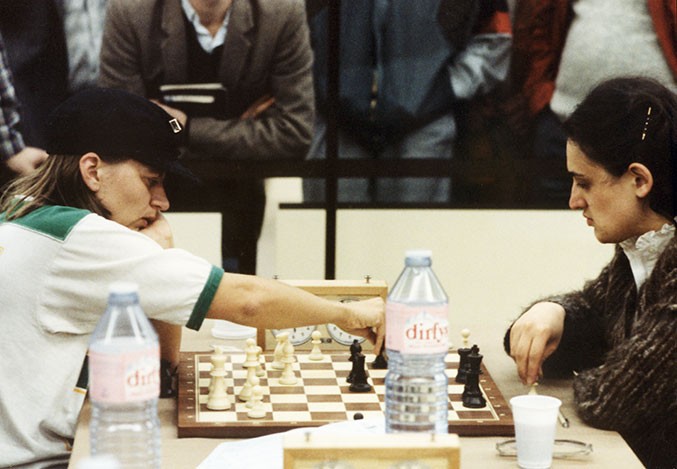
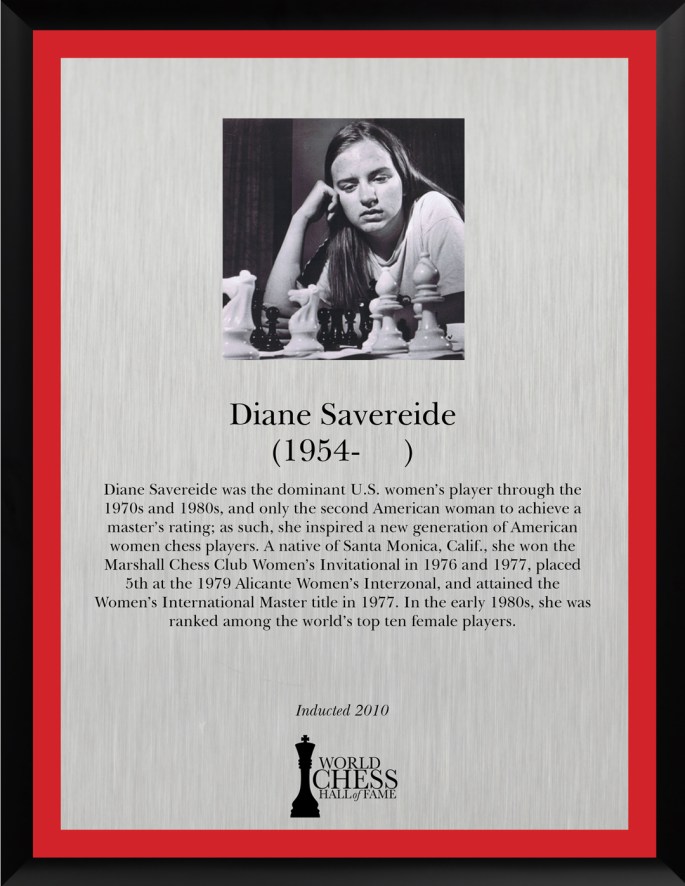
For some reason today, I was thinking of Diane Savereide.


Born on Nov. 25 1954, She is a five-time winner the U.S. Women’s Chess Championship (1975, 1976, 1978, 1981, 1984) and earned her WIM title in 1977 (but awarded in 1978). She was inducted into the U.S. Chess Hall of Fame in 2010.


I had the opportunity to play Diane Savereide in a US Amateur Team Ch., West, in 1994, where we were both playing first board. The game ended in a draw. When I find the game that’s buried in a binder somewhere in my place, I’ll gladly post it here. In any event, she earned my respect as being one of the nicest person I ever met in chess and had an appreciation of the game that’s hard to match. Congratulations Ms. Savereide! – you are one of the best!


Here are some delightful games by Savereide.


Diane Savereide (A)-Gene Veneable (A)
American Open, 1974
1.e4 c5 2.Nf3 e6 3.d4 cxd4 4.Nxd4 a6 5.Bd3 Bc5 6.Nb3 Bb6 7.O-O Ne7 8.Qe2 O-O 9.Be3 Nbc6 10.Nc3 Ng6 11.Rad1 Qc7? 12.f4! Nge7 13.Kh1 Bxe3 14.Qxe3 f5 15.e5 b5 16.a3 Kh8 17.Be2 g5 18.g3 g4 19.Nc5 Na5 20.Kg1 Nb7 21.Nb3 Nc6 22.Rf2 h5 23.h3!? Kg7 24.Rh2 b4?

2019_04_04_A
25.Ne4!! fxe4 (Black might do better to ignore the knight.) 26.hxg4 d5 27.Rxh5 Rh8 28.Kg2 Rxh5 29.gxh5 Nxe5 30.Qd4 bxa3 31.bxa3 a5 32.fxe5 Qxc2 33.Nd2 Qc5 34.Qxc5 Nxc5 35.Rc1 Ba6 36.Bxa6 Nxa6 37.Nb3 a4 38.Nd4 Kh6 39.g4 Rh8 40.Rc6 Kg5? 41.Kg3 1-0


Diane Savereide (2160)-Olivera Prokopovic
Women’s Izt.
Alicante, 1979
[White gives up her queen for three pieces and Black can’t find any good moves.]
1.e4 c5 2.Nf3 d6 3.d4 cxd4 4.Nxd4 Nf6 5.Nc3 a6 6.Bc4 Qc7 7.Bb3 e6 8.O-O  Be7 9.f4 O-O 10.Qf3 Nc6 11.Be3 b5 12.e5 Nxd4 13.Bxd4 Bb7 14.exf6 Bxf3 15.fxe7 Qxe7 16.Rxf3 d5 17.f5 Rad8 18.f6 Qb4 19.Bb6 Rb8 20.fxg7 Kxg7 21.a3  Qd6 22.Bd4+ f6 23.Raf1 e5 24.Bf2 d4 25.Nd5 Rb7 26.Be1 Qd8 27.Bb4 Rff7 28.Rg3+ Kh8 29.Nxf6 Rg7 30.Rgf3 h6 31.Nh5 Qb6 32.Rf6 1-0


Diane Savereide (2280)-Elizabeth Neely (2130)
US Women’s Ch.
Estes Park, 1987
1.e4 c5 2.Nf3 d6 3.d4 cxd4 4.Nxd4 Nf6 5.Nc3 a6 6.Bc4 e6 7.Be3 Nc6 8.Bb3 Na5 9.O-O Be7 10.f4 Qc7 11.Qf3 O-O 12.f5 e5 13.Nde2 Nxb3 14.axb3 b5 15.g4 b4 16.g5 bxc3 17.gxf6 Bxf6 18.bxc3 Bb7 19.c4 Qe7 20.Nc3 Bg5 21.Bxg5  Qxg5+ 22.Kh1 Qd2 23.Rf2 Qd4 24.Rd1 Qc5 25.f6 g6 26.Rg2 Rfe8 27.Nd5 Re6  28.Rf1 Kh8 29.Qh3 Qd4 30.Qh6 Rg8 31.Rg4 g5 32.h4 Ree8 33.hxg5 Rg6 34.Qh2 Kg8 35.Qe2 Re6 36.c3 Qc5 37.Ne7+ Rxe7 38.fxe7 Re6 39.Qf3 Rxe7 40.g6 hxg6  41.Rxg6+ Kf8 42.Qg4 1-0


Diane Savereide (2250)-Jorge Armando Gonzalez Rodriguez (2375)
St. John Open 1, 1988
1.e4 g6 2.d4 Bg7 3.Nc3 d6 4.f4 c6 5.Nf3 Bg4 6.Be3 Qb6?! (This idea doesn’t work as White will use the open g-file for her rooks. Here’s another game with the 4…Qb6 mistake : Azzopardi-Busuttil, Malta 1975, 1.e4 g6 2.d4 Bg7 3.Nc3 d6 4.f4 Nd7 5.Nf3 c5 6.Bc4 Qb6 7.Bxf7+! Kxf7 8.Ng5+ Ke8 9.Nd5 Qc6 10.Ne6 Bxd4 11.Ndc7+ 1-0 Back to the main game.) 7.Qd2 Bxf3 8.gxf3 e6 9.O-O-O +/- d5 10.f5 gxf5 11.Rg1 f4 12.Rxg7 fxe3 13.Qxe3 Kf8 14.Rg3 Qd8 15.Bh3 Nd7 16.Rdg1 h5 17.exd5! cxd5

2019_04_04_B
18.Nxd5! Ngf6 (Black can’t take the Knight due to 18…exd5 19.Bxd7! Qxd7 20.Qe5! and his rook and king are in trouble. The rest of the game can best be described as White crushing Black in a miniature.) 19.Nf4 Qe7 20.Rg7 Qd6 21.Bxe6 fxe6 22.Nxe6+ Ke8 23.R1g6 Rf8 24.Nxf8+ Kxf8 25.Rg8+ 1-0


savereidevchiburdanidzeweb


Savereide

The Daring Damiano

The Petrov (1.e4 e5 2.Nf3 Nf6) has a reputation for being drawish. But that doesn’t mean that there no pitfalls.


Let’s take a look at one of them, sometimes called “The Daring Damiano” (don’t ask me why).


The moves are 1.e4 e5 2.Nf3 Nf6 3.Nxe5 Nxe4. Although White has several moves available to choose from, he almost always chooses 4.Qe2. The main reason is that it activates his queen and he can quickly win the game if Black stumbles.


Let’s take a look at a common (at least among beginners) trap from this position and let’s call it “Ancient Chess Trap” (or ACT). The moves that make this (bad) variation are (in case you need review all the move so far) are : 1.e4 e5 2.Nf3 Nf6 3.Nxe5 Nxe4 4.Qe2, and now Black can lose quickly lose with 4…Nf6??

2019_03_28

5.Nc6+! +-


This trap is one worth remembering as it can come up in other openings and is a nice way to end a rated game early enough so you can enjoy playing blitz chess for the rest of the day.


After the better 4…Qe7, the game can continue with 5.Qxe4 d6 6.d4 dxe5 [Black almost has to take the pawn. After 6.d4 Nd7, White won nicely with 6.d4 Nd7 7.f4!? f6?! 8.Be2 fxe5 9.fxe5 dxe5 10.O-O exd4 11.Bh5+ Kd8 12.Bg5 Nf6 13.Rxf6 Qxe4 14.Rd6# 1-0 (Steinkuehler-Horwitz, Manchester 1961).] 7.Qxe5 Qxe5+ 8.dxe5 Bf5, giving Black a decent chance.

 
This was starting point for Hertan’s article in the February 1990 issue of Chess Life. By the way, his article was titled, “The Daring Damiano”. It may the first time anyone has used the term to describe this variation in the Petrov.


The big question here, is how should White continue? The answer is not clear.


9.Bb5+ doesn’t look so good after the obvious 9…c6. In addition, Sapfirov-Yaroslavsev, USSR 1971, continued with 9.Bb5+ Nd7!? 10.O-O Bxc2 11.Bf4 c6 12.Be2 Bf5 13.Nc3 Be7 = (ECO evaluation). So Black can at least equalize.

 
It turns out that 9.Bd3 is an error as Black can continue with 9.Bd3? Bxd3 10.cxd3 Nc6 and his development is no worse than White and Black may already have the advantage.


9.c3 has possibilities. After 9.c3 Nd7 10.f4 O-O-O 11.Be3 f6 (this move deserves either !? or ?!), Black won after 12.Be2 fxe5 13.O-O exf4 14.Rxf4 Re8 15.Rxf5 Rxe3 16.Bg4 h5 17.Kf2 Re4 18.Bh3 g6 19.Nd2 gxf5 0-1 (R. Oosting (1983)-FM S. Muehlenhaus (2199), HZ Open, Netherlands Aug. 6 2017).

 
Other games with 9.c3


Fridthjofsdottir-Canela
Thessaloniki Ol., 1984
1.e4 e5 2.Nf3 Nf6 3.Nxe5 Nxe4 4.Qe2 Qe7 5.Qxe4 d6 6.d4 dxe5 7.Qxe5 Qxe5+ 8.dxe5 Bf5 9.c3 Nd7 10.Bf4 O-O-O 11.Nd2 Bc5 12.Nb3 Bb6 13.Nd4 Bg6 14.O-O-O Rde8 15.Re1 Nc5 16.Bc4 Rhf8 17.Rd1 Re7 18.f3 Rfe8 19.Rhe1 Nd7 20.e6 fxe6 21.Bxe6 Kb8 22.Bxd7 Rxe1 23.Bxe8 Rxe8 24.Bg3 Kc8 25.Re1 Rxe1+ 26.Bxe1 Bxd4 27.cxd4 Kd7 28.Bg3 Bd3 29.Be5 Bf1 30.g3 Be2 31.Bxg7 Bxf3 32.Kd2 Ke6 33.Ke3 Bd5 34.a3 Kf5 35.Be5 c6 36.Bb8 a6 37.Kd3 Ke6 38.Kc3 Kd7 39.Kb4 b6 40.Kc3 Kc8 41.Be5 Kd7 42.Kd3 Ke6 43.Bc7 b5 44.Kc3 Kd7 45.Bb6 Be6 46.Kb4 Kd6 47.Ka5 Bc8 48.Bc5+ Kc7 49.Kb4 Bf5 50.Kc3 Kd7 51.Kd2 Ke6 52.Ke3 h5 53.Kf4 Kf6 54.Be7+ Kg6 55.Ke5 a5 56.Kd6 Be4 57.a4 bxa4 58.Bd8 Bd5 59.Bxa5 Kg5 60.h3 Kf5 61.g4+ 1/2-1/2


Herbrechtsmeier-Duerr
Badenweiler Open
Germany, 1988
1.e4 e5 2.Nf3 Nf6 3.Nxe5 Nxe4 4.Qe2 Qe7 5.Qxe4 d6 6.d4 dxe5 7.Qxe5 Qxe5+ 8.dxe5 Bf5 9.c3 Nd7 10.Bf4 O-O-O 11.Nd2 Re8 12.Nc4 f6 13.O-O-O fxe5 14.Bg3 g6 15.Bd3 Bg7 16.Bc2 h5 17.h4 Nc5 18.Rhe1 e4 19.Bf4 a6 20.Ne3 Rhf8 21.Bg3 Bh6 22.Kb1 Nd3 23.Nxf5 gxf5 24.Bxd3 exd3 25.Rxe8+ Rxe8 26.Rxd3 Re1+ 27.Kc2 Re2+ 28.Kd1 Rxb2 29.Rf3 Rd2+ 30.Ke1 Rxa2 31.Rxf5 Bd2+ 32.Kd1 Bxc3 33.Rf8+ Kd7 34.Rf7+ Ke6 35.Rxc7 Be5 36.Bxe5 Kxe5 1/2-1/2


Jolanta Zawadzka (243200-Ewa Harazinska (2310)
Polish Women’s Ch.
Poznan, Apr. 1 2016
1.e4 e5 2.Nf3 Nf6 3.Nxe5 Nxe4 4.Qe2 Qe7 5.Qxe4 d6 6.d4 dxe5 7.Qxe5 Qxe5+ 8.dxe5 Bf5 9.c3 Nd7 10.Bf4 O-O-O 11.Bc4 Nxe5 12.Bxe5 Re8 13.f4 f6 14.O-O fxe5 15.fxe5 Bc5+ 16.Kh1 Bxb1 17.Raxb1 Rxe5 18.Bd3 h6 19.b4 Be7 20.Bf5+ Kb8 21.Bg4 Bf6 22.Bf3 Re3 23.c4 Rd8 24.a4 c6 25.a5 Kc7 26.b5 cxb5 27.Rxb5 b6 28.c5 bxc5 29.Rxc5+ Kd6 30.Rc6+ Ke7 31.Rb1 Rd6 32.Rc7+ Rd7 33.Rc4 Rd4 34.Rcc1 Ra3 35.Rb7+ Rd7 36.Re1+ Kd8 37.Rb8+ Kc7 38.Rb7+ Kd8 39.Rb5 Bc3 40.Rb8+ Kc7 41.Rb7+ Kd8 42.Rb8+ Kc7 43.Rb7+ 1/2-1/2
White can offer a pawn with 9.Nc3. Black should not take it and play the most reasonable development move; 9…Nc6. The c-pawn is still vulnerable, and Black is free to castle queenside, giving his king safety and his activity to his rook.


Finally, White can sidestep this variation with 6.d4 dxe5 7.dxe5 Nc6. But that is for another post.

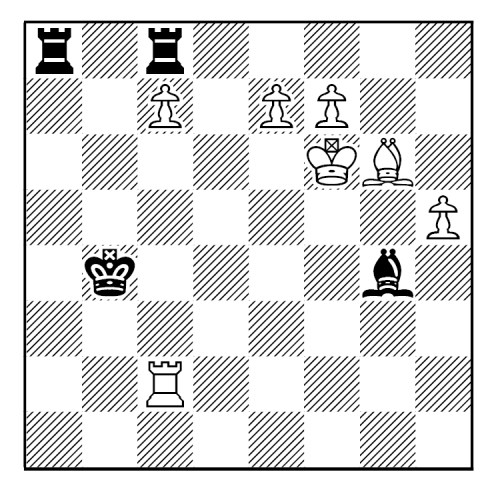
The Joseph Theme

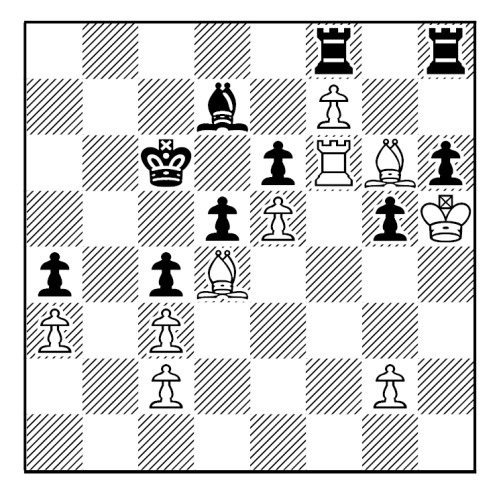
In 1921, David Joseph, then 25 years old, was traveling in a train in England. It was during or about this time (sources differ) that he created a series of chess problems. The one given below appears to be simple to solve, but that is an illusion.


White Wins
[Joseph, 1921; Additional Analysis by Roycroft, The Chess Endgame Study, #145, pg. 104, and Escalante – just to make the notes easier.]


2019_03_21_Joseph


We are going to skip some space here so you can try to solve it yourself.


.

.

(You can write some notes here if you want)

.

.

.

.

.

(It’s more fun to try to solve a problem that just to look at the answer.)

.

.

.

.

.

(The answer is just below.)


.

.

.

.

1.h8=Q (1.h8=B? a1=Q 2.Bxa1 is not stalemate, but it does not win either.) 1…a1=Q 2.Qg8 (Of course not 2.Qxa1?? because it’s stalemate – RME ; 2.Qe8? Qg7 and soon draws, either by exchanging queens or by perpetual check.) 2…Qa2 3.Qe8 (Again, Black seeks a stalemate by offering his queen – RME ;  3.Qf8? Qa3, with, again, a perpetual, or stalemate if the black queen is taken.) 3…Qa4 4.Qe5+ Ka8 5.Qh8 +- (White wins. – RME)


Swiss Gambit

Most players know of Froms’ Gambit [1.f4 e5 2.fxe5 d6 3.exd6 Bxd6 4.Nf3), with continuation of either 4…g5 (to drive away the knight) or 4…Nf6 (to defend and ready to redeploy the knight to g4 or e4)].


But White can also offer a similar gambit after 1.f4 f5 2.e4 fxe4 3.d3. This gambit is known as the Swiss Gambit. Because of its rarity, most players are not aware of it or it’s thematic ideas.


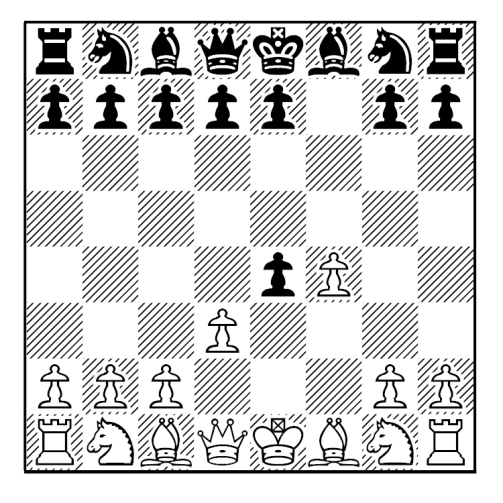
Let’s take a look the gambit after the opening moves (1.f4 f5 2.e4 fxe4 3.d3).

2019_03_14_a

If Black was to take the pawn, he would be a pawn up in the game. However, it would be hazardous to do so as both of White’s bishops (after 3…exd3 4.Bxd3) would be activated and his own kingside would be vulnerable. There are two things that slow down White’s attack. The first is the f-pawn, which unlike in the From’s Gambit (which does not have such an advanced pawn), blocks the bishop from going to f4 or g5. The second thing is that Black usually plays an early 4…Nf6, to stop the h5 checks.

 
Now, lets look at some games.


First, Black does not have to take the pawn. But such a plan can be risky as the d3-pawn can easily capture the e4-pawn and White has a nice center, without having to sacrifice a pawn.


Ranniku-Karakas
Briansk, 1965
1.f4 f5 2.e4 fxe4 3.d3 g6 4.dxe4 e5 5.Nf3 Nf6 6.Bc4 Qe7 7.Nc3 exf4 8.Qe2 d6 9.Bxf4 Be6 10.O-O-O Nc6 11.Bb5 Bd7 12.Bg5 Bg7 13.Nd5 Qd8 14.e5 dxe5 15.Nxe5 Nxe5 16.Qxe5+ Kf7 17.Nxf6 1-0


Priehoda (2404)-Cyprian
Kubin Open, 1978
1.f4 f5 2.e4 fxe4 3.d3 e3 4.Bxe3 Nf6 5.Nc3 d5 6.d4 Bf5 7.Bd3 e6 8.Nf3 c6 9.O-O Bb4 10.Ne2 Nbd7 11.Ng3 g6 12.Qe2 O-O 13.Bd2 Bxd2 14.Qxd2 Qc7 15.Rae1 Rae8 16.h3 b6 17.Nh1 Nh5 18.Ne5 Nxe5 19.fxe5 c5 20.Bb5 Rc8 21.g4 cxd4 22.gxf5 exf5 23.Qxd4 Rcd8 24.e6 Qe7 25.Bd7 Nf6 26.Qh4 Qc5+ 27.Nf2 Qe7 28.Nd3 Kg7 29.Qd4 Kh6 30.Ne5 Ne4 31.Qe3+ Kg7 32.Nc6 Qh4 33.Nxd8 f4 34.e7 Rf6 35.Qf3 Nd2 36.Qg4 1-0


Petran (2341)-Veselsky (2200)
Slovakia Ch.
Dolny Kubin, 1979
1.f4 f5 2.e4 fxe4 3.d3 Nf6 4.Nc3 e3 5.d4 e6 6.Bd3 Bb4 7.Bxe3 Bxc3+ 8.bxc3 O-O 9.Nf3 d6 10.O-O Nbd7 11.Bd2 Qe8 12.Qe2 Rf7 13.Rae1 Nf8 14.f5 h6 15.Nh4 Bd7 16.Qf3 Qc8 17.Qg3 Nh5 18.Qh3 Nf6 19.Ng6 N6h7 20.fxe6 Bxe6 21.Rxf7 Bxh3 22.Ree7 Nxg6 23.Rxg7+ Kf8 24.Ref7+ Ke8 25.Bxg6 1-0

 
If Black wants to decline the pawn offer, he must play an early …d5.


Heinola-Lehtivaara
Tampere Hervanta, 1987
1.f4 f5 2.e4 fxe4 3.d3 d5 4.dxe4 dxe4 5.Qxd8+ Kxd8 6.Nc3 Nf6 7.Be3 c6 8.Nge2 Bf5 9.O-O-O Nbd7 10.Bd4 Kc7 11.Ng3 e6 12.Be5+ Nxe5 13.fxe5 Ng4 14.Ncxe4 Nxe5 15.Be2 g6 16.h3 h5 17.Kb1 h4 18.Nxf5 gxf5 19.Ng5 Re8 20.Rhe1 Rh6 21.Rd2 Bc5 22.Bf1 Nd7 23.Bc4 e5 24.Red1 Nb6 25.Bb3 Be3 0-1


And he must play it accurately.


R. Oberlin-R. Berggren
US Open
Los Angeles, 1991
1.f4 f5 2.e4 fxe4 3.d3 d5 4.Nh3 Nf6 5.Nf2 exd3 6.Bxd3 Nc6 7.O-O b6? (This setup of the knight on c6 and the bishop going to b7 seems too slow and out of touch with a tactical opening such as this one. Black soon finds himself short of moves.) 8.Nd2 Bb7 9.Nf3 Qd7 10.Ng5 Nd8 11.Bxh7 e6 12.Bg6+ Ke7 13.Re1 Kd6 (Let the King Hunt begin!)

2019_03_14_b

4.f5 exf5 15.Nd3 Qa4 16.Bf4+ Kc6 17.Ne5+ Kc5 18.Qd2 d4 19.b4+! Kd5 20.c4+ 1-0


It is only after 1.f4 f5 2.e4 fxe4 3.d3 exd3 4.Bxd3 Nf6 that the real battle begins.

De Groot-Anderssen
Amsterdam, 1875
1.f4 f5 2.e4 fxe4 3.d3 exd3 4.Bxd3 Nf6 5.Nf3 e6 6.Nc3 Be7 7.Ne4 Nc6 8.c3 d6 9.Nfg5 Nxe4 10.Nxe4? (>Bxe4) 10…g6 11.Qe2 e5 12.O-O Bf5 13.Ng5 Bxd3 14.Qxd3 Bxg5 15.fxg5 Qe7 16.Qh3 Qd7 17.Be3 Qxh3 18.gxh3 0-1


After the moves 1.f4 f5 2.e4 fxe4 3.d3 exd3 4.Bxd3 Nf6 5.Nf3 e6, White has three excellent choices of 6.Ng5 (A brazen attempt at an attack, probably best for a blitz game), 6.Ne5 (a more cautious and shy approach to an attack), and 6.Be3 (a developing move that allows White to castle queenside if the need arises).


Bird+Dobell-Gelbfuhs
Vienna, 1873
1.f4 f5 2.e4 fxe4 3.d3 exd3 4.Bxd3 Nf6 5.Nf3 (a very good move as the knight usually finds itself involved in White’s attack.) 5…e6 (this move is the most common as it allows his bishop to develop and bolsters his defense of his weak point on f7.) 6.Ng5!? g6 (not 6…Bc5? because of 7.Bxh7 Kf8 8.Nxe6+, winning) 7.h4 Bh6 8.h5 Bxg5 9.fxg5 Nd5 10.hxg6 Qe7 11.Rxh7 Rxh7 12.gxh7 Qb4+ 13.Kf1 Qh4 14.Bg6+ Ke7 15.Qh5 1-0


Popp-Jørgensen
corres.
IECC, 2000
1.f4 f5 2.e4 fxe4 3.d3 exd3 4.Bxd3 Nf6 5.Nf3 d6 6.Ng5 c6 7.h4 Bg4 8.Be2 Bxe2 9.Qxe2 g6 10.Qe6 Qa5+ 11.Bd2 Qf5 12.Qf7+ Kd7 13.h5 gxh5 14.Rxh5 Qc5 15.Rh1 Qxc2 16.Ne6 Qe4+ 0-1


Christian Maltais (2134)-Daniel J. Freire (2047)
corres.
DE10A /pr 48
ICCF, 2016
1.f4 f5 2.e4 fxe4 3.d3 exd3 4.Bxd3 Nf6 5.Nf3 e6 6.Ng5 d5 7.Qe2 Bc5 8.Nd2 O-O 9.Ndf3 Qd6 10.h4 Nc6 11.c3 h6 12.Ne5 hxg5 13.hxg5 Ne4 14.Bxe4 dxe4 15.g6 Rf5 16.Nf7 Rxf7 17.Qh5 Qf8 18.Qh8mate 1-0


Ivar Jakobsson-Hakan Johansson
Stockholm, 1974
1.f4 f5 2.e4 fxe4 3.d3 exd3 4.Bxd3 Nf6 5.Nf3 e6 6.Ne5 d6 7.O-O b6 8.Ng4 Ba6 9.Nxf6+ Qxf6 10.Re1 Bxd3 11.Qxd3 Nc6 12.Qf3 Kd7 13.Nd2 d5 14.c4 Bc5+ 15.Kh1 Nd4 16.Qh3 Rae8 17.cxd5 Nc2 18.Ne4 Qh6 19.dxe6+ Kc8 20.Qf3 Kb8 21.Nxc5 bxc5 22.Qb3+ Nb4 23.a3 a5 24.axb4 cxb4 25.Rxa5 1-0


Schirmer-Schleipen, 1956
1.f4 f5 2.e4 fxe4 3.d3 exd3 4.Bxd3 Nf6 5.Nf3 e6 6.Be3 Be7 7.O-O O-O 8.Nbd2 Nd5 9.Ng5 Bxg5 10.fxg5 Rxf1+ 11.Nxf1 Nxe3 12.Bxh7+ Kf8 13.Nxe3 Qxg5 14.Qf3+ Qf6 15.Qh5 Ke7 16.Rf1 Qh6 17.Qf7+ Kd6 18.Rd1+ Kc6 19.Be4+ d5 20.Bxd5+ exd5 21.Qxd5+ Kb6 22.Nc4+ 1-0

Bloodless Victories

A bloodless victory in chess is a win for one of the players in which no pieces are taken.


Games of this genre tend to be short as longer games increase the possibility that a piece being taken or exchanged. The knight, with it’s ability to jump over pieces, and thereby avoid taking a piece en route to an attack, is disproportionally used in these types of games. Smothered mates are often seen.

 
A simple example of a bloodless victory is Fool’s Mate (1.f3 e5 2.g4 Qh4#)


Another simple example is Fischer-Panno, Palma de Mallorca Izt., 1970. The entire game went 1.c4 1-0. Panno had a dispute with the organizers and resigned here.

 
There are many more examples. Here is a favorite of mine.

Blackburne-Bonachea
Blindfold game
Havana, 1891
1.e4 e5 2.f4 Nc6 3.Nf3 d6 4.Bc4 Nh6 5.O-O (Interesting to note that the exact sequence of moves also occurred in S. Retout (1808)-S. Burnet, England Open, Charlton 1973 which continued with 5…exf4 6.d4 Qf6 7.Nc3 Bg4 8.Nd5 Qd8 9.Bxf4 Ne7 10.Bxh6 gxh6 11.Nf6# 1-0. But that game had some captures, so let’s get on with this game.) 5…Be7 6.d3 O-O 7.f5 Ng4 8.Nc3 Nb4 9.a3 Nc6 10.h3 Nf6 11.g4 Na5 12.Ba2 b6 13.g5 Ne8 14.h4 Kh8 15.Nh2 f6 16.g6 h6 17.Qh5

2019_03_07_a

(ΔBxh6) 1-0

 
Even rarer is the bloodless mate. Same conditions, but the game ends in checkmate.


This is a recent game played by two amateurs.


“Daveacksh” (1241)-“bandabou” (1212)
Blitz Game
chess.com, Feb. 21 2019
[B20]
1.e4 c5 2.Nf3 Nc6 3.Bc4 e6 4.c3!? Na5 5.Na3 a6 6.d4 b5 7.Be2 c4 8.O-O Bb7 9.e5 Be4 10.Ng5 Bg6 11.Bf3 Rb8 12.Ne4 Ne7? 13.Nd6mate 1-0

 
This type of mate, sans captures, has also occurred in Master (and near-Master) games.

 
Carl Hartlaub-H. H Rosenbaum
Freiburg, Germany, 1892
[C50]
1.e4 e5 2.Bc4 Nc6 3.Nf3 f6 4.Nh4 g5 5.Qh5+ Ke7 6.Nf5mate 1-0

 
Chris W. Baker-Bernard Cafferty
British Chess Ch., Qualification Tournament
Clacton-on-Sea, 1974
[B02]
1.e4 Nf6 2.Nc3 d5 3.e5 Ne4 4.Nce2 Nc5 5.c3 Nd3mate 0-1


Juan Antonio Palmisano-Guillermo Llanos
Buenos Aires, 1995
[E80]
1.d4 Nf6 2.c4 g6 3.Nc3 Bg7 4.e4 d6 5.f3 O-O 6.Bg5 c5 7.d5 Qa5 8.a4 Na6 9.Ra3 Nb4 10.Nge2 e5 (Black has the advantage so White wants to defend. But his move, while well-intended, allows Black to increase his advantage to a -+.) 11.Bd2?? Nd3# 0-1


Emi Hasegawa-Mi Yen Fong (1885)
Women’s Ol.
Istanbul, Aug. 28 2012
[E90]
1.d4 Nf6 2.c4 g6 3.Nf3 Bg7 4.Nc3 d6 5.e4 O-O 6.Bd3 e5 7.d5 Nbd7 8.b4 Nh5!? (8…a5 is more popular. The text move deserves to be investigated more.) 9.O-O Qe7 10.Ne2 c5 11.b5 f5! (The main point of 8…Nh5!?) 12.Rb1 f4 (Black obviously has the advantage.) 13.Kh1 g5 14.Neg1 g4 15.Nd2 Qh4 16.f3 Ng3#
2019_03_07_b
0-1

PAWNING AND MORE

The Word of the Day on Monday, Feb. 25th 2019, for Words With Friends (a popular Scrabble-like game for smart phones), was PAWN. Now Words With Friends (WWF) usually give a brief definition, and sometimes no definition, for their Word of the Day. This time they gave a lengthy definition, or rather several definitions, for PAWN.

Here it is.


48555_XXX_v1


PAWN

NOUN
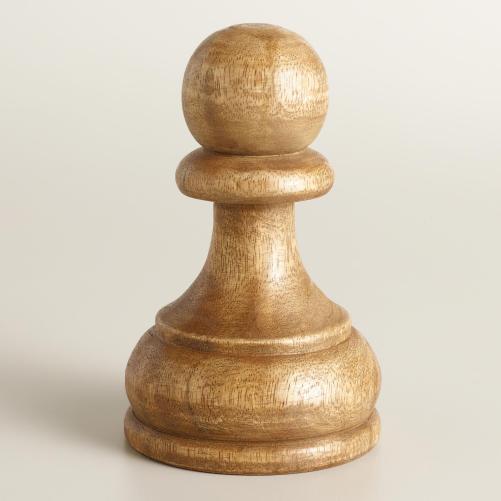
1. a chess piece of the smallest size and value, that moves one square forward along its file if unobstructed (or two on the first move), or one square diagonally forwards when making a capture. Each player begins with eight pawns on the second rank, and can promote to become any other piece (typically a queen) if it reaches the opponent’s end of the board.

2. a person used by others for their own purposes.

3. an object left as security for money lent

 
VERB
1. to deposit (an object) with a pawn broker as security for money lent.

 
No surprise here. After all, chess is popular game!


But it got me thinking. How many of the pieces, usually given as nouns, can also be used as verbs. The list may surprise you.

 
We have PAWN (+ED, +ING, +S) as shown above.


We  also have QUEEN (+ED, +ING, +S)
v.
1. to promote a pawn in a chess game to a queen.


And KNIGHT (+ED, +ING, +S)
v.
1. to raise one to the level of knighthood, esp. by a queen or king.


Here are three more pieces.

KING (+ED, +ING, +S)
v.
1. to reign as king.
2. to promote a checkers piece to a king (in checkers you can only promote to a king).

 
BISHOP (+ED, +ING, +S)
v.
to appoint as a bishop (the head of a diocese)


ROOK (+ED, +ING, +S)
v.
1. to deprive of by deceit.
2. to take money or property from by fraudulent means.

 
… and a bonus piece

Some non-chess players claim that CASTLE is the word for the pieces in the corners at the start of the game. Technically, the word CASTLE is only used as verb among the chess players, publications and lexicon.

 
But if we grant the non-players the permission to use CASTLE as a noun, then we would have another noun-verb.
In case you need a reminder, here is the definition.

 
CASTLE
v.
1. a move involving a player’s unmoved king and one of the player’s original unmoved rooks. It consists of moving the king two squares towards a rook on the player’s first rank, then moving the rook to the square over which the king crossed. It is considered a king move.


A Remarkable Move in the Gruenfeld.

There is a remarkable opening move which looks like a White blunder in the Gruenfeld.


And it goes like this:


1.d4 Nf6 2.c4 g6 3.Nc3 d5 4.cxd5 Nxd5 5.Na4!?


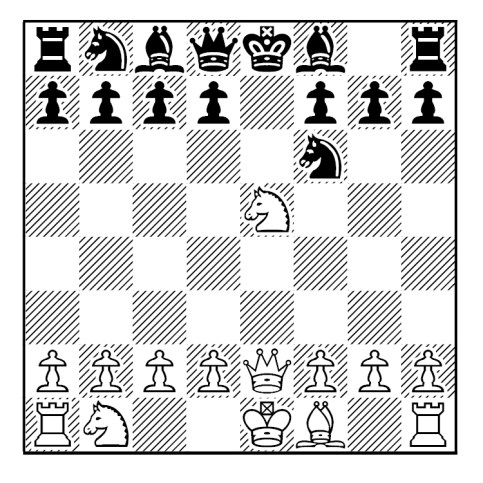
Here’s a diagram.

2019_02_21_A

Bringing up the question, “What benefit(s) does White attain with his knight sitting idly and alone on a4?”


Well, for one, after White gets around with .e4, the Black’s knight has to move. His usual move of …Nxc3 is out of the question as White has no piece or pawn on c3. So where does Black’s knight then move? If …Nf6, then he invites .e5. And …Nb4 puts his knight out of play and is subject to .c3. So …Nb6 is practically forced, where it is partly out of play and but no pawn is threatening it.


The second benefit White has is that with the knight out of the way, his queenside is open for his other pieces, not to mention he can now play .c4 at some point. In fact, most of the action that originates from this bizarre knight move is of a queenside nature.


The earliest master game with this move can be found in the following game.


Ashot Nadanian (2325)-Varuzhan Akobian (2270)
Armenia, 1996
1.d4 Nf6 2.c4 g6 3.Nc3 d5 4.cxd5 Nxd5 5.Na4 e5 6.dxe5 Bb4+ 7.Bd2 Ne3 8.fxe3 Bxd2+ 9.Qxd2 Qh4+ 10.g3 Qxa4 11.Qd4 Qa5+ 12.b4 Qb6 13.Bg2 O-O 14.Rc1 Be6 15.a4 c6 16.Nf3 Rd8 17.Qf4 Na6 18.Rb1 c5 19.b5 Nb4 20.Qh6 Nc2+ 21.Kf2 c4 22.Rbc1 Bf5 23.Rxc2 Bxc2 24.Ng5 Qc7 25.Qxh7+ Kf8 26.Ne6+ 1-0


Here’s some later games showing White’s attacking possibilities.


Alexander Naumann (2385)-Alexander Lytchak (2390)
German U20 Ch.
Apolda, 1997
1.d4 Nf6 2.c4 g6 3.Nc3 d5 4.cxd5 Nxd5 5.Na4 Bg7 6.e4 Nb6 7.Be3 O-O 8.Rc1 f5 9.exf5 Bxf5 10.Nc5 Qd5 11.a4 Nc6 12.Ne2 Nc4 13.Nf4 Nxe3 14.fxe3 Qd6 15.Bc4+ Kh8 16.O-O e5 17.Nfe6 Bh6 18.Rc3 Bxe6 19.Nxe6 Rxf1+ 20.Qxf1 Qe7 21.Ba2 Rc8 22.d5 Nd8 23.d6 1-0


Stepan Lobanov-Leonid Sharikov
Novokuznetsk Open, 1998
1.d4 Nf6 2.c4 g6 3.Nc3 d5 4.cxd5 Nxd5 5.Na4 Bg7 6.e4 Nb6 7.Be3 O-O 8.Nf3 Nxa4 9.Qxa4 c5 10.Rd1 cxd4 11.Nxd4 Qe8 12.Qa3 a6 13.Nb5 Be5 14.Bh6  Bd7 15.Bxf8 Nc6 16.Nc7 Bxc7 17.Bh6 Bd6 18.Qd3 Nb4 19.Qc3 f6 20.Bc4+ +/- Kh8

2019_02_21_B

21.Rxd6! Nc2+ 22.Kd2! b5 23.Rxf6 1-0


Szabolcs Laza, (2173)-Anita Gara (2385)
Hungary Team Ch., Dec. 17 2017
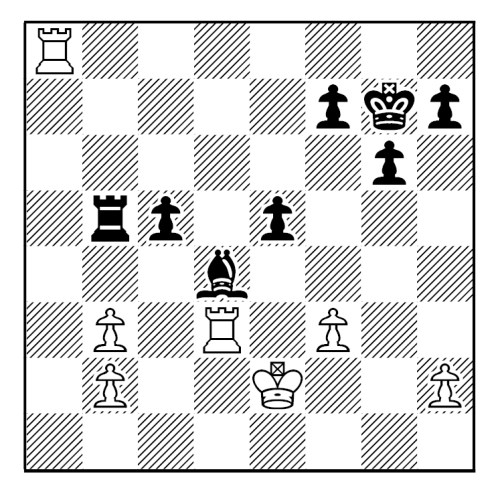
1.d4 Nf6 2.c4 g6 3.Nc3 d5 4.cxd5 Nxd5 5.Na4 Bg7 6.e4 Nb6 7.Be3 O-O 8.Nf3 Bg4 9.Nc5 Nc6 10.Nxb7 Qb8 11.Ba6 e5 12.d5 Nb4 13.Nc5 N6xd5 14.Bb7 Nxe3 15.fxe3 Bxf3 16.gxf3 Rd8 17.Qb3 Bf8 18.Bxa8 Bxc5 19.Bd5 Nxd5 20.exd5 Qxb3 21.axb3 Bxe3 22.Ke2 Bd4 23.Rhd1 Rxd5 24.Rxa7 Rb5 25.Ra8+ Kg7 26.Rd3 c5?! (Black’s bishop is on an overwhelming square overlooking everything in front of it, and because it is supported by two black pawns means it is not forced off going to be driven off its awesome square. Unfortunately, it also means the Bishop can’t move backwards, which make a difference in this endgame.)

2019_02_21_C
27.Ra6 h5 28.h3 Rb7 29.Rc6 Kh6 30.h4 Kg7 31.Rc8 f6 32.Rc6 g5 33.hxg5 fxg5 34.Re6 h4 35.Kf1 Ra7 36.b4 cxb4 37.Rb3 h3 38.Rxb4 g4 39.fxg4 Ra1+ 40.Ke2 h2 41.Rb7+ Kf8 42.Rf6+ Ke8 43.Re6+ Kd8 44.Rg6 Re1+ 45.Kd2 Rd1+ 46.Kc2 Rc1+ 47.Kb3 Rc7 48.Rg8+ Kd7 49.Rxc7+ Kxc7 50.Rh8 Bg1 51.g5 e4 52.g6 e3 53.Kc2 e2 54.Kd2 Bd4 55.Rxh2 Bxb2 56.g7 1-0


However, the move 5.Na4 remained under the radar for years. Until it was played by a three-time challenger of the World Championship who played it a European Zonal Tournament.


GM Korchnoi (2625)-GM Emil Sutovsky (2575)
European Zonal
Dresden, Germany, 1998
1.d4 Nf6 2.c4 g6 3.Nc3 d5 4.cxd5 Nxd5 5.Na4!? Bg7 6.e4 Nb6 7.Be3 O-O 8.Nf3 Nxa4 9.Qxa4 c5 10.Rd1 Qb6 11.Rd2! (This TN is such a good move that it became part of theory.) 12…Bd7 12.Qa3 cxd4 13.Nxd4 Qc7 14.Be2 e5?! 15.Rc2 Qd8 16.Nb5 Nc6(16…Bc6 17.O-O Bxe4 18.Rd2!) 17.Nd6 Qb8 18.Bc4 Nd4 19.Bxd4 exd4 20.O-O Be6 (20…Be5? 21.Nxf7! and White’s attack comes first and fast.) 21.Bxe6 fxe6 22.Rfc1 Be5 23.Rc7 Bxd6 24.Qxd6 Rf7 25.Qxe6 1-0


And now everyone seemed to take notice.


GM T. Gareev (2614)-Ge. Antal (2519)
US Open
Irvine, CA, Aug. 2 2010
1.d4 Nf6 2.c4 g6 3.Nc3 d5 4.cxd5 Nxd5 5.Na4 Bg7 6.e4 Nb6 7.Be3 O-O 8.Nf3 Nxa4 9.Qxa4 c5 10.Rd1 Qb6 11.Rd2 Bd7 12.Qa3 cxd4 13.Nxd4 Qc7 14.Be2 Bc6 15.f3 Be5 16.g3 Bd6 17.Qc3 Rc8 18.Kf2 Na6 19.Nxc6 Qxc6 20.Qxc6 Rxc6 21.Bb5 Rc7 22.a3 Bc5 23.b4 Bxe3+ 24.Kxe3 Rac8 25.Rhd1 Nb8 26.Rd8+ Kg7 27.f4 f6 28.e5 fxe5 29.fxe5 a6 30.Ba4 a5 31.bxa5 Rc3+ 32.Kd2 Rxd8+ 33.Kxc3 Rc8+ 34.Kb4 Na6+ 35.Kb5 Rc6 36.Bb3 Nc7+ 37.Ka4 Rc5 38.Rd7 Kf8 39.Rd8+ Kg7 40.Rc8 g5 41.Bd5 Rxd5 42.Rxc7 Rxe5 43.Rxb7 Re4+ 44.Rb4 Re6 45.Kb5 Re3 46.a4 1-0


GM Hao Wang (2736)-GM F. Caruana (2779)
FIDE GP
Paris, Sept. 23 2013
1.d4 Nf6 2.c4 g6 3.Nc3 d5 4.Nf3 Bg7 5.cxd5 Nxd5 6.Na4 O-O 7.e4 Nb6 8.Be3 Nxa4 9.Qxa4 c5 10.Rd1 Qb6 11.Rd2 Bd7 12.Qa3 cxd4 13.Nxd4 Qc7 14.Be2 Bc6 15.O-O Bxe4 16.Nb5 Qc6 17.f3 Bd5 18.Qxe7 Re8 19.Qg5 Na6 20.Qxd5 Qxd5 21.Rxd5 Rxe3 22.Bc4 Re7 23.Rd2 Bh6 24.f4 Nc5 25.g3 a5 26.Rd5 Ne4 27.Rfd1 Bf8 28.Rd8 Rxd8 29.Rxd8 Kg7 30.Kg2 Nf6 31.Kf3 Rd7 32.Rxd7 Nxd7 33.Nc7 Bc5 34.Bb5 Nf6 35.Ne8+ Nxe8 36.Bxe8 Kf8 37.Bb5 Kg7 38.Be8 Kf8 39.Bb5 Kg7 40.Ke4 1/2-1/2


Saric (2425)-Bo Vujacic (2269)
Serbian Team Ch.
Palic, Sept. 4 2014
1.d4 Nf6 2.c4 g6 3.Nc3 d5 4.cxd5 Nxd5 5.Na4 Bg7 6.e4 Nb6 7.Be3 O-O 8.Nf3 Nxa4 9.Qxa4 c5 10.Rd1 Qb6 11.Rd2 Bd7 12.Qa3 cxd4 13.Nxd4 Qc7 14.Be2 Bc6 15.O-O e5 16.Nb5 Bxb5 17.Bxb5 Nc6 18.Rc1 Rfd8 19.Rdc2 Bf8 20.Qa4 Qd6 21.Bc5 Qf6 22.Bxc6 Bxc5 23.Rxc5 Rd2 24.Rf1 bxc6 25.Rxc6 Qg5 26.Rc2 Rd4 27.Qa5 Qf4 28.Re2 Rxe4 29.Rxe4 Qxe4 30.Re1 Qc4 31.b3 Qc2 32.Rxe5 Rc8 33.h3 Qb2 34.g3 h5 35.Re1 h4 36.g4 Qd4 37.Qe5 Qd2 38.Qe2 Qc3 39.Qe3 Qa5 40.Re2 Rc3 41.Qe8+ Kg7 42.Qe5+ Qxe5 43.Rxe5 Rxh3 44.Ra5 Rf3 45.Kg2 Rf4 46.g5 a6 47.Rxa6 Rg4+ 48.Kh3 Rxg5 49.Kxh4 Rg2 50.f3 f5 51.Kh3 Rg1 52.Kh2 Rb1 53.Kg3 g5 54.Kf2 f4 55.Ke2 Kf7 56.Rd6 Ke7 57.Rd1 Rb2+ 58.Rd2 Rb1 59.Rd1 Rb2+ 60.Rd2 Rb1 61.Kd3 Ke6 62.Ke4 Re1+ 63.Kd4 Rf1 64.Rd3 Kf5 65.a4 Ra1 66.Kc5 g4 67.fxg4+ Kxg4 68.Rd8 f3 69.Rf8 Kg3 70.Rg8+ Kh3 71.Kb5 f2 72.Rf8 Kg2 73.a5 f1=Q+ 74.Rxf1 Kxf1 75.a6 Ke2 76.b4 Kd3 77.Kb6 Kc4 78.b5 Ra2 1/2-1/2


It may be that Black can force a draw. But he has to work for it. Maybe you can find some improvements for White.