A Queen Study

Wan Yunguo (2472)-P. Kotenko (2359)
Moscow Open
Russia, Feb. 1 2015
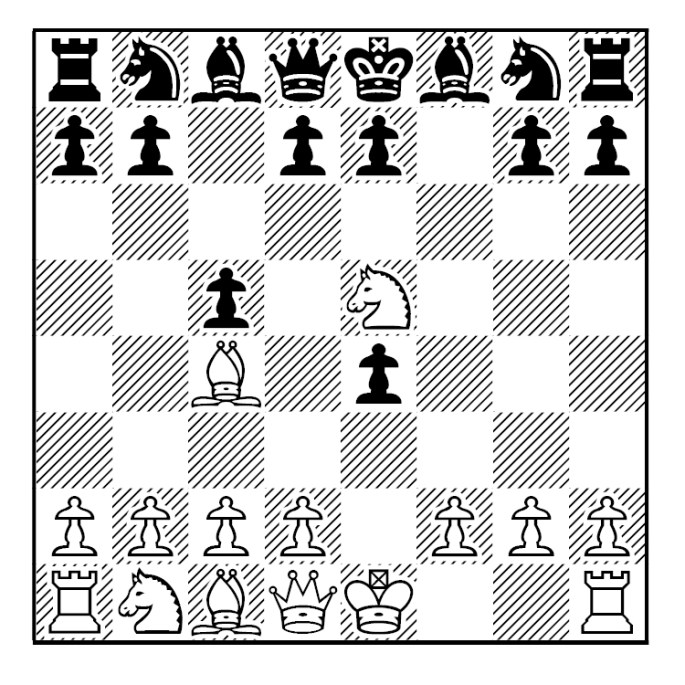
1.e4 e5 2.Nf3 Nc6 3.Bb5 a6 4.Ba4 d6 5.c4!? [This variation of the Ruy Lopez is quite rare. Its main purpose is to have a strong point at d5 and limit Black’s responses. Here is another game: 5.c4!? Nf6 6.Nc3 Bd7 7.d4 exd4 8.Nxd4 Be7 9.Nxc6 bxc6 10.O-O O-O 11.h3 Re8 12.Qf3 c5 13.Bc2 Bc6 14.Bd2 Nd7 15.Nd5 Bf6 16.Bc3 Bxc3 17.Qxc3 Nf8 18.Rfe1 Ne6 19.b4 a5 20.bxc5 Nxc5 21.Rad1 Qb8 22.Rb1 Qa7 23.e5 Rad8 24.Nf6+ gxf6 25.Qg3+ Kf8 26.exf6 Re5 27.Rxe5 dxe5 28.Qg7+ Ke8 29.Qg8+ Kd7 30.Bf5+ 1-0 (Ilia Smirin (2480)-Janis Klovans (2420), Baltic Republics Ch., Kuldiga, Latvia, 1987)] 5…Nf6 6.d3 Be7 7.h3 O-O 8.Be3 Nd7 9.Nc3 Bf6 10.Ne2 Re8 11.O-O Nf8 12.d4 exd4 13.Nfxd4 Nxd4 14.Bxd4 Rxe4 15.Qd3 Bf5 16.Bxf6 Qxf6 17.Ng3 Re5 18.Qf3 c6 19.Rad1 Qe6 20.Qc3 Rd8 21.Rfe1 Re8 22.Rxe5 dxe5 23.Qb4 b5 24.cxb5 axb5 25.Bb3 Qc8 26.Nxf5 Qxf5 27.Rd6 Rc8 28.Qc5 Qb1+ 29.Kh2 Qxb2 30.Qa7 Ng6 31.Bxf7+ Kh8 32.Bxg6 hxg6 33.Rxg6 e4 34.Qe7 Ra8 35.Rg4 Qf6 36.Qxe4 Kg8 37.Rf4 Qd6 38.g3 Rf8 39.Rxf8+ Kxf8 (The last two moves were played so White would reach a winning queen endgame. However, having a winning advantage does not mean an easy-to-win advantage.)

2018_07_05

40.Kg2 b4 (With both queens controlling the center the game is almost equal. Except White has an extra pawn.) 41.h4 c5 42.g4 g6 43.g5 Kg7 44.Kh3 Qc7 45.Qc4 Qe5 46.Kg2 Qc3 47.Qe4 c4 48.Qe7+ Kg8 49.Qe8+ Kg7 50.Qe7+ Kg8 (White of course could force a draw here. But he wants more. And advancing his pawns is the best way to increase his advantage.) 51.h5! gxh5 52.g6 Qg7 53.Qe6+ Kf8 54.Qd6+ Ke8 55.Qb8+ Ke7 56.Qxb4+ (If this move was not a check Black would have reasonable chances for a draw with …Qxg6+. This should be White’s method; willing to jostle for position and make a number of threats until it is safe for him to press his advantage.) 56…Kf6 57.Qxc4 Qxg6+ (Every pawn trade makes the position clearer to understand.) 58.Kh2 Qf5 59.Qd4+ Kg6 60.a4 Qa5 61.Qd3+ Kh6 62.Qe3+ Kg6 63.Qf4 Qd5 64.Qc7 Qf5 65.Qd6+ Kh7 66.Qd4 Qa5 67.Qd7+ Kh6 68.Qc6+ Kg7 69.Qb5 Qc7+ (Naturally White would win after a queen trade.) 70.Kg2 Qf4 71.Qd7+ Kh6 72.Qc6+ Kh7 73.Kf1 Qd4 74.Qc7+ Kh6 75.a5 Qd3+ 76.Kg1 h4 77.Qc6+ Kh5 78.a6 Qd4 79.Qe8+ Kg4 80.Qe6+ Kh5 81.Kg2 Qa1 82.Kh2 Qd4 83.Qe8+ Kg4 84.Qe2+ Kf5 85.Qf3+ Kg6 86.Kh3 Qa4 87.Qg4+ 1-0


A Wrong Turn at From’s

I really do enjoy playing the Bird (1.f4). But I fear the From’s Gambit (1.f4 e5 2.fxe5 with the idea of …d6). I say “with the idea of …d6” as Black doesn’t have to play …d6 so soon. He can play 2…Nc6 first and then play 3…d6. Or not at all.

This often puts White off his learned theory and he has to think for himself. It allows him to make an error. Which he often does.


~~~~~~~~~~~~~~~~~~~~~~~~~~~~~~~~~


Fried-Schlechter
Vienna, 1894
1.f4 e5 2.fxe5 Nc6 3.Nf3 d6 4.exd6 Bxd6 5.d4 Nf6 6.Bg5 h6 7.Bh4 g5 8.Bf2 Ne4 9.e3 g4 10.Bh4 gxf3 11.Bxd8 f2+ 12.Ke2 Bg4+ 13.Kd3 Nb4+ 14.Kxe4 f5mate 0-1


F. Lavoisier-E. Schipper
corres., 1989
1.f4 e5 2.fxe5 Nc6 3.Nf3 g5 4.d4 g4 5.Ng5 d5 6.exd6 Qxd6 7.c3 f5 (Schipper also considered 7…Qg6!? 8.d5 h6 9.dxc6 hxg5 10.Qd5 bxc6 11.Qxg5 Qxg5 12.Bxg5 Bd6 – unclear) 8.Qb3 Qe7 9.d5 Nd8 10.h3 Bh6 11.Qa4+? (11.h4) 11…Bd7 12.Qf4 Nf7 13.h4 Ne5!

2018_06_28

14.Qg3 Nf6 15.Ne6? Bxc1 16.Qxe5 (16.Nxc7+ Kf7 17.Nxa8 Qd6! -+) 16…Bxe6 17.dxe6 O-O-O 18.a3? Rd5 19.Qg3 Rhd8 20.e3 Rd1+ 21.Ke2 Qxe6 0-1


Rutzler-Escalante
North American Open, Dec. 30 1993
1.f4 e5 2.fxe5 Nc6 3.Nf3 g5 4.h3 d6 5.d4 dxe5 6.Bxg5? f6 7.Bh4 e4 8.Nfd2 (8.d5 Nce7 Bucker) 8…Qxd4 9.Nc3 (9.c3!?) 9…Bb4 10.Nb3? (10.e3 Qxe3+) 10…Bxc3+ 11.bxc3 Qxc3+ 12.Nd2? (Qd2) 12…e3 -+ 13.Rb1? Nd4 14.Rc1 Bf5 (with the idea of 15…O-O-O) 0-1


Hacker-Escalante
Action Chess
Westminister Chess Club
Mar. 10 1994
1.f4 e5 2.fxe5 Nc6 3.Nf3 g5 4.g4 d6 (4…g4 5.Ng5!? is another way of complicating the position.) 5.d4 Bxg4 6.Bxg5 Be7 7.Bxe7 Qxe7 8.exd6 cxd6!? 9.Bg2 (9.h3? Bxf3 -+) 9…Bxf3 10.Bxf3 Qh4+ 11.Kf1? (Kd2) 11…Nxd4 12.Bxb7 Nf5?! (Nh6!?) 13.Qd3! (White usually has a good game after this thematic move. Black should make every effort to prevent this move.) 13…Ngh6 14.Bxa8? (Qe4+ -+) 14…Ng4!! 15.Bc6+ Ke7 16.Qe4+ Kd8! 17.Qf3 Nfe3+! 18.Qxe3 Nxe3+ 0-1


Hacker-Escalante
Westminster Chess Club, Jan. 19 1995
1.f4 e5 2.fxe5 Nc6 3.e4?? (Mr. Hacker and I talked about this game after its conclusion. I asked him if he remembered our previous game. He said he did and didn’t want to lose in the same way again. I have admit, he was successful.) 3…Qh4+ 4.Ke2 Qxe4+ 5.Kf2 Bc5+ 6.d4 Bxd4+ 7.Kg3 Bxe5+ 8.Kh3? [8.Kf2 Bd4+ 9.Kg3 Nf6!! 10.Bd3 (10.Be2 Be3!! 11.Bxe3 Qxe3+ 12.Bf3 Ne4+ 13.Kh4 Qh6+ 14.Bh5 Qg5+ 15.Kh3 Nf3#!) Nh5+! 11.Qxh5 Qe1+ 12.Kf3 Qf2+ 13.Ke4 Qxg2+ 14.Qf3 (14.Nf3 Qxh1) d5+ 15.Kxd5 Be6+ 16.Ke4 Qg6+ wins!] 8…d5+ 9.g4 h5 -+


Daven-Sharp
corres.
Wisconsin Ch., 1999
1.f4 e5 2.fxe5 Nc6 3.Nf3 g5 4.d4 g4 5.Ng5 d5 6.exd6 (White almost has to take the “d5” pawn as Black has an advantage in the center if the pawn is left alone.) 6…Qxd6 7.c3 f5 8.Na3 h6 9.Nb5 Qe7 10.Bf4 hg5 11.Nc7+ Kd8 12.Na8 gxf4 13.d5 Ne5 14.Qd4 Rh6 15.e3 b6 16.O-O-O fxe3 17.Bb5 Rd6 18.Kb1 Bh6 19.Rhf1 Nf6 20.Kc2 f4 21.Rf4 Bf4 22.Qf4 Bb7 23.Nb6 axb6 0-1


“Tejpsinghr”-Escalante
Blitz Game
AOL, Jan. 18 2003
1.f4 e5 2.fxe5 Nc6 3.Nf3 d6 4.exd6 Bxd6 5.b3 Ne5 6.e3 Bg4 7.Qe2 Qf6 8.d4 Nxf3+ 9.gxf3 Bxf3 10.Qf2 Bxh1 11.Bb2 Qxf2+ 12.Kxf2 Bxh2 13.Nd2 Ne7 14.d5 Nxd5 (14…Bxd5 is better) 15.Bc4 O-O-O 16.Rxh1 Nb4 17.Ne4 Bd6 18.Bxg7 Rhg8 19.Rg1 Bf8 20.Bxf7 Rxg7 21.Rxg7 Bxg7 22.Nc5 Rd2+ 23.Ke1 Rxc2 0-1


“obisb” (1501)-Escalante
Blitz Game
Chess.com, Mar. 5 2017
1.f4 e5 2.fxe5 Nc6 3.Nf3 d6 4.exd6 Bxd6 5.d3 Nf6 6.e4 Ne5 7.Be2 Bg4 8.O-O Qe7 9.Bf4 O-O-O 10.Bxe5 Bxe5 11.Nxe5 Bxe2 12.Qxe2 Qxe5 13.Nc3 h5 14.Rf5 Qd4+ 15.Kh1 g5 16.Rxg5 Ng4 17.Rxh5 Nf2+ 18.Kg1 Rxh5 19.Qxh5 Nh3+ 20.Kh1 Qg1+ 21.Rxg1 Nf2mate 0-1


Three games from the 1970’s.

Recently I bought some old state chess magazines, all from 1970 to 1975. They were all purchased from ebay and I found some wonderful gems in this collection.


Almost all the games had to be translated from Descriptive Notation (DN) into Algebraic Notation (AN) as DN was the most popular method of recording and analyzing games.


Here are three games I found to be enjoyable, and even instructive.


~~~~~~~~~~~~~~~~~~~~~~~~~~


Proll (1998)-Babinski (2157)
US Open
New York, 1974
[Escalante]
1.e4 e5 2.Nf3 Nc6 3.Bc4 Bc5 4.c3 Nf6 5.d4 exd4 6.cxd4 Bb4+ 7.Nc3 Nxe4 8.O-O Bxc3 9.d5 (The Moller Gambit.) 9…Bf6 10.Re1 Ne7 11.Rxe4 d6 12.Bg5 Bxg5 13.Nxg5 h6 14.Qh5!? (Usual is 14.Qe2, followed by 15.Re1 and putting pressure on the “e” file.) 14…g6? (This move just weakens Black’s kingside pawn structure at a time when he needs it the most. White is practically winning here. Black can sidestep many of his troubles with 14…O-O.) 15.Qh4 [Another winning try is 15.Qf3 hxg5 16.Rae1 Rh4 17.Qf6 Rxe4 18.Rxe4 Bf5 19.Bb5+ c6 20.dxc6 Bxe4 21.c7+ Nc6 22.cxd8=Q+ Rxd8 23.Qd4 d5 24.Qxa7 Rd7 25.Bxc6 bxc6 26.Qa8+ Ke7 27.Qxc6 Rd6 28.Qc5 1-0 (Treybel-Engler, Prague, Nov. 28 1908)] 15…Bf5 16.Re3 Kf8 17.Qd4 Kg8

2018_06_21

18.Qxh8+! 1-0


Steve Ellis-Dwight Weaver
Nashville vs. Memphis Match
Tennessee, 1974
[“Nashville – Memphis Match 1974”, Tennessee Chess News, Nov. 1974]
1.e4 c5 2.Nf3 d6 3.d4 cxd4 4.Nxd4 Nf6 5.Nc3 e6 6.Bc4 Be7 7.Be3 O-O 8.Qe2 Nxe4 9.Nxe4 d5 10.O-O-O dxc4 11.Nxe6 Qa5 12.Nxf8 Bxf8 13.Nc5 Qxa2 14.Qf3 Qa1+ 15.Kd2 Qxb2 16.Ke2 Qxc2+ 17.Rd2 Qg6 18.h3 Bf5 19.Qxb7 Na6 20.Qxa8 Nxc5 21.Bxc5 Bd3+ 22.Ke1 Qe6+ 23.Be3 Be4 24.Qxa7 c3 25.Rd8 Qb3 26.Rxf8+! Kxf8 27.Qc5+ Ke8 28.Qe5+ Kd7 29.Qxe4 c2 30.Kd2 Qb2 31.Qd4+ 1-0


Ted Bielbaum (2029)-Stuart Samuel (2016)
Danvers C.C. Ch.
Massachusetts, Aug. 31 1973
[Notes based “Tournament Games”, Chess Horizons, Jan.-Feb. 1975]
1.f4 e5 2.fxe5 d6 3.Nf3 dxe5 4.e4?! (Transposing into a sort of King’s Gambit Declined, but with the addition of the moves “fxe5” and “dxe5” helps Black.) 4…Bc5!? [It appears From’s Gambit, or at least this variation, was a popular opening in the 1970s. Here is another game from the same time period. 4…f5!? 5.d4 fxe4 6.Nxe5 Be6 7.Be2 Nd7 8.Bf4 Nxe5 9.Bxe5 Bd6 10.O-O Nf6 11.Bh5+ Kd7 12.Bxf6 gxf6 13.d5 Bc5+ 14.Kh1 Bg8 15.Qg4+ Kd6 16.Qf4+ Kd7 17.Bg4+ Ke8 18.Qxe4+ Be7 19.Nc3 h5 20.Rxf6 hxg4 21.Qg6+ Kd7 22.Qxg4+ Ke8 23.Re1 Qd7 24.Rf8+ 1-0 (Thompson-Taylor, South Carolina, 1970)] 5.c3 Nc6! (Normal lines are 5…Nf6 6.Nxe5 Qe7 7.d4 Bd6 8.Nf3 and 5…Bb6 6.d4 exd4 7.cxd4 Nf6=. Too risky would be 5…Qe7 6.d4 exd4 7.cxd4 Qxe4+? 8.Kf2! Be7 9.Nc3.) 6.Bb5 Nf6!? (6…Bd7! prevents 7.d4 exd4 8.cxd4? Nxd4! 9.Nxd4) 7.Nxe5 O-O (7…Nxe4? 8.Qf3! O-O 9.Qxe4 +-) 8.Nxc6? (Too dangerous. White should play 8.Bxc6! bxc6 9.d4 Nxe4 10.O-O Qd5 11.Bf4=) 8…bxc6 9.Bxc6 Nxe4!? [Leading to unclear complications. If 9…Qd3!? 10.Qf3 (10.Bxa8? Bg4) Qc2 11.Qd1! Qd3 12.Qe2 (12.Qf3=) 12…Ba6 13.Qxd3 Bxd3 14.Bxa8 Rxa8 15.b4 Bb6 16.Bb2 Nxe4 17.c4 Nf2 18.c5 Nxh1 19.Bd4 Re8+ wins!] 10.d4 (Both 10.Bxa8?? Bf2+ and 10.Bxe4 Qh4+ get mated. 10.Qf3? Nf2! 11.d4 Nxh1 12.dxc5 Qh4+ 13.g3 Qxh2 14.Bxa8 Re8+ 15.Be3 Bg4! -+) 10…Qh4+ 11.g3 Nxg3 12.hxg3 Qxg3+ 13.Kd2 Be7? [A blunder. After 13…Qf4+ 14.Kc2? (14.Kd3? loses to 14…Ba6+ 15.Kc2 Qf5+ 16.Kb3 Rab8+) 14…Bf5+ 15.Kb3 Rab8+ 16.Kc4 Qd6, Black wins. White must permit the draw by 14.Ke1! Qg3+ 15.Kd2 Qf4+.] 14.Qf3 Qg6 15.Be4 f5 16.Bxa8 1-0 (The editor must have had fun annotating this game!)


More Than a Chess Game

Most of my friends know I love to play chess. And I actually do play a (very) good game.


But there are other aspects of chess that one can enjoy that go way beyond than just moving the white and black pieces.


It is a pursuit into the unknown, and possibly the unknowable.


It can be a discipline, even a definition. For the egotist, it is a way demonstrate (or at least to brag about) their own, self-proclaimed, intelligence.


Governments have used it as a propaganda tool to push forward their agenda, with various degrees of success.


In art, literature, and music, it is often used a metaphor; something to celebrate, wonder, or ponder. It can expand the mind, making a work of art something even better.


The last area is one I love to indulge myself.


Three of the most popular songs recorded in the numerous decades since the beginning of the pop culture (circa 1950’s) are the following:


[Chess to further illustrate a literacy piece (or as some suggested, a drug experience)]


“White Rabbit”

By The Jefferson Airplane


One pill makes you larger
And one pill makes you small
And the ones that mother gives you
Don’t do anything at all
Go ask Alice
When she’s ten feet tall

And if you go chasing rabbits
And you know you’re going to fall
Tell ’em a hookah-smoking caterpillar
Has given you the call
Call Alice
When she was just small

When the men on the chessboard
Get up and tell you where to go
And you’ve just had some kind of mushroom
And your mind is moving low
Go ask Alice
I think she’ll know

When logic and proportion
Have fallen sloppy dead
And the White Knight is talking backwards
And the Red Queen’s off with her head
Remember what the dormouse said
Feed your head
Feed your head


[Chess as a metaphor for the complexities of loving relationship]


“I’ve Seen All Good People”

by Yes


(Part I – Your Move)

I’ve seen all good people turn their heads each day
So satisfied I’m on my way
I’ve seen all good people turn their heads each day
So satisfied I’m on my way

Take a straight and stronger course
to the corner of your life
Make the white queen run so fast
she hasn’t got time to make you a wife

‘Cause it’s time, it’s time in time with your time
and its news is captured
for the queen to use!
Move me on to any black square
Use me anytime you want
Just remember that the goal
Is for us all to capture all we want
(Move me on to any black square)

Don’t surround yourself with yourself
Move on back two squares
Send an instant karma to me
Initial it with loving care
(Don’t surround yourself)

‘Cause it’s time, it’s time in time with your time
and its news is captured
for the queen to use!

Diddit diddit diddit diddit diddit diddit diddit didda
(Don’t surround yourself with yourself)

Don’t surround yourself with yourself
(Don’t surround yourself)
Move on back two squares
Send an instant karma to me
(Send an instant karma to me)
Initial it with loving care
(Don’t surround yourself)

‘Cause it’s time, it’s time in time with your time
and its news is captured
for the queen to use!

Diddit diddit diddit diddit diddit diddit diddit didda (All we are saying)
Diddit diddit diddit diddit diddit diddit diddit didda (Is give peace a chance)
Diddit diddit diddit diddit diddit diddit diddit didda (All we are saying)
Diddit diddit diddit diddit diddit diddit diddit didda (Is give peace a chance

‘Cause it’s time, it’s time in time with your time
and it’s news is captured…


(Part II – All Good People)

I’ve seen all good people turn their heads each day
So satisfied I’m on my way

I’ve seen all good people turn their heads each day
So satisfied I’m on my way…


[Chess as a metaphor for the internal conflict of an individual or the conflicts between an individual and society. This song has both.]


“One Night in Bangkok”

by Murray Head


Bangkok!, Oriental setting.
And the city don’t know that the city is getting
The creme de la creme of the chess world in a
Show with everything but Yul Brynner

Time flies, doesn’t seem a minute
Since the Tirolean spa had the chess boys in it
All change, don’t you know that when you
Play at this level there’s no ordinary venue
It’s Iceland or the Philippines or Hastings or, or this place!

One night in Bangkok and the world’s your oyster
The bars are temples but the pearls ain’t free
You’ll find a god in every golden cloister
And if you’re lucky then the god’s a she
I can feel an angel sliding up to me

One town’s very like another
When your head’s down over your pieces, brother
It’s a drag, it’s a bore, it’s really such a pity
To be looking at the board, not looking at the city

Whaddya mean? Ya seen one crowded, polluted, stinking town
Tea, girls, warm and sweet
Some are set up in the Somerset Maugham suite

Get Thai’d! You’re talking to a tourist
Whose every move’s among the purest
I get my kicks above the waistline, sunshine

One night in Bangkok makes a hard man humble
Not much between despair and ecstasy
One night in Bangkok and the tough guys tumble
Can’t be too careful with your company
I can feel the devil walking next to me

Siam’s gonna be the witness
To the ultimate test of cerebral fitness
This grips me more than would a
Muddy old river or reclining Buddha
And thank God I’m only watching the game, controlling it

I don’t see you guys rating
The kind of mate I’m contemplating
I’d let you watch, I would invite you
But the queens we use would not excite you
So you better go back to your bars
Your temples, your massage parlors

One night in Bangkok and the world’s your oyster
The bars are temples but the pearls ain’t free
You’ll find a god in every golden cloister
A little flesh, a little history
I can feel an angel sliding up to me

One night in Bangkok makes a hard man humble
Not much between despair and ecstasy
One night in Bangkok and the tough guys tumble
Can’t be too careful with your company
I can feel the devil walking next to me.


blinky

Do you know of any more? I would love to hear from you! =)


An Underpromotion Story

I enjoy games with underpromotions. 

Here is one of my favorite games. You’ll see that not all underpromotions are necessary, or even good.


A GM learns this lesson the hard way.


~~~~~~~~~~~~~~~~~~

GM Shakhriyar Mamedyarov (2784)-
GM Hikaru Nakamura (2792)
Blitz Game
Paris Grand Chess Tour
France, June 25 2017
1.d4 Nf6 2.c4 e6 3.Nc3 Bb4 4.Nf3 O-O 5.Bg5 c5 6.e3 cxd4 7.exd4 d5 8.cxd5 exd5 9.Be2 h6

[This position has occurred a few times before in Grandmaster chess, the latest two being, surprisingly, other blitz games. (1) 9.Be2 h6 10.Bh4 g5 11.Bg3 Ne4 12.Rc1 Nc6 13.O-O Bxc3 14.bxc3 Bf5 15.Ne5 Rc8 16.f4 Nxe5 17.fxe5 Qd7 18.Bd3 Kg7 19.Qf3 Bg6 20.c4 dxc4 21.Bxe4 Qxd4+ 22.Kh1 Qxe4 23.Qf6+ Kh7 24.Rce1 Qd4 25.Rd1 Bd3 26.Qe7 Qd5 27.Rf6 c3 28.Rd6 c2 29.Rc1 Qe4 30.Qf6 Kg8 31.Qxh6 Qf5 32.Rf6 Rc6 33.h3 Rxf6 34.exf6 Qg6 35.Qxg6+ Bxg6 36.Kg1 Rd8 0-1 [GM A. Tari (2584)-GM Wei Yi (2707), World Blitz, Doha, Qayar, Dec. 29 2016], and (2) 9.Be2 h6 10.Bxf6 Qxf6 11.O-O Bxc3 12.bxc3 Nc6 13.Re1 b6 14.Nd2 Be6 15.Nf1 Na5 16.Ne3 Rac8 17.Rc1 Rfd8 18.Bd3 Rc7 19.g3 g6 20.Ng2 Nc4 21.Rc2 Re7 22.Qc1 Bf5 23.Rxe7 Bxd3 24.Rxa7 g5 25.Rd2 Nxd2 26.Qxd2 Be4 27.Ne1 Re8 28.a4 Bf3! 0-1 (White loses fastest with 29.Nxf3? Qxf3, with the idea of 30…Rd2. But even with the better 29.h3 Re2 30.Qd1 g4 31.hxg4 Bxg4 32.Nd3 Qf3 33.Ra8+ Kg7 34.Ra7 Qe4 35.Kh2 Qf3 36.Kg1 Qe4, he is quite lost.) [GM Shakhriyar Mamedyarov (2784)-GM Carlsen (2832), Blitz Game, Paris Grand Chess Tour, France, June 21 2017]. Yes, the last game was played in the same event, just four days before the current game! Speaking of the current game, let’s now return to it.]

10.Bxf6 Qxf6 11.O-O Bxc3 12.bxc3 Nc6 13.Re1 b6!? 14.Nd2 Be6 15.Nf1 Rac8 16.Ne3 Ne7 17.Rc1 Ng6 18.g3 Rc7 19.f4 Ne7 20.Bd3 Rfc8 21.Qd2 Bd7 22.Ba6 Rd8 23.Bd3 Qd6 24.f5 Kh8 25.Rf1 Ng8 26.Ng4 b5 27.Ne5 Be8 28.Rce1 Rdc8 29.Qf4 Rd8 30.Re3 f6 31.Ng6+ Bxg6 32.Qxd6 Rxd6 33.fxg6 Rd8 34.Bxb5 Ne7 35.Bd3 Rxc3 36.Rxe7 Rxd3 37.Rfe1 Rf8 38.Rf7 Rg8 39.Rxa7 Rxd4 40.a4 Rg4 41.Rd1 Rxg6 42.Rxd5 Rg4 43.Rdd7 Rb8 44.Kg2 Rb2+ 45.Kf3 h5 46.Rd5 Rb3+ 47.Kg2 Rb2+ 48.Kh3 Rg5 49.Raa5 Rxd5 50.Rxd5 g5 51.g4 Rb3+ 52.Kg2 hxg4 53.Rd4 Kg7 54.Rxg4 Kg6 55.Rc4 Kh5 56.h3 f5 57.Rc8 Rb2+ 58.Kf3 Rb3+ 59.Kg2 Ra3 60.Rh8+ Kg6 61.Ra8 Kf6 62.a5 Ke5 63.a6 Kf4 64.a7 Ra2+ 65.Kf1 Kf3 66.Ke1 f4 67.Rg8 Rxa7 68.Rxg5 Ra1+ 69.Kd2 Kf2 70.h4 Ra3 71.h5 Rh3! 72.Rf5 f3 73.Kd3 Ke1 74.Re5+ Kf1 75.Rf5 Kg2 76.Ke3 f2+ 77.Ke2

2018_06_07
77…f1=N [77…f1=B+ and 77…f1=Q+ 78.Rxf1 Rxh5 are obvious draws. Reportably Nakamura couldn’t find a bishop and didn’t want to promote to a queen, so he made the promotion to a knight (presumeably there was an available knight) to try to secure a draw. He almost made it.] 78.Rf2+ Kg1 79.Rxf1+ Kg2 80.Rf2+ Kg1 81.Rf5 Ra3 82.h6 Rh3 83.Rf6 Kh2 84.Kf2 Rh4 85.Kf3 Kh3 86.Rg6 Ra4? (The problem-like move, 86…Kh2!, is the draw. But how many players would find the move in a blitz game?) 87.h7? (And White missed 87.Rg1 and 87.Rg3+, both winning. Suffice to say Black missed some draws and White missed a few wins.) 87…Rh4 88.Rg7 Rh6? 89.Kf4 Kh4 90.Kf5 Rh5+ 91.Kg6 Kg4 92.Kf7+ 1-0


A Deviation in the Sicilian

Many chess players, not wanting to venture into the thorny and complicated main lines of the Sicilian, often adopt an offbeat system. Examples include the Smith-Morra Gambit, the Grand Prix, and the Alapin.


Some of these lines turn out to be good and a player can actually pull off an upset. And there are great differences in the effectiveness of these offbeat lines.


Black, of course, can deviate from the main lines as well. However, being a move behind of White at the start of the game, these deviations often turn out to be worse for Black. Here is an example.


Marina Zaitseva-Elena Bugorkova (1840) X25
Kimry Women’s Ch., 2004
1.e4 c5 2.Nf3 f5!? (Or perhaps ?! This is a new move to the author.) 3.exf5 Nf6 4.d4 cxd4 5.Nxd4 Qa5+ 6.Qd2 Qe5+ 7.Qe3 Qxe3+  8.Bxe3 Nc6 9.Nc3 g6 10.fxg6 hxg6 11.Bd3 Kf7 12.h3 e5 13.Ndb5 Bb4 14.O-O-O Bxc3 15.Nxc3 d5 16.Nxd5 Nxd5 17.Bc4 Be6 18.Bxd5 Rad8 19.c4 Bxd5 20.cxd5 1-0

 
Jevgenyij Boguszlavszkij (2130)-FM Marton Prorok (2332)
First Saturday
Budapest, Sept. 2017
[For those who love tactical games, here is one you will enjoy.]
1.e4 c5 2.Nf3 f5  3.Bc4 (3.exf5!? also seems to give White the advantage. See previous game with this bizarre version of the Open Sicilian.) 3…fxe4 4.Ne5!? (It’s hard to find fault with this move. Here we go with the tactics.)
 
2018_05_31
 
4…d5 5.Bb5+ Nd7 6.Qh5+ g6 7.Nxg6 Nf6 8.Qh3 Qb6 9.Nxh8 Qxb5 10.Qe6 d4 11.Nf7 Qa5 12.Ng5 Ne5 13.Qxe5 e3 14.fxe3 Ng4 15.Qd5 Nxe3 16.Qf7+ Kd7 17.Na3 c4 18.Qxf8 Nxg2+ 19.Kf2 Qxg5 20.Qf3 Nh4 21.d3 Nxf3 22.Bxg5 Nxg5 23.h4 1-0

 
GM Robert Hovhannisyan (2560)-IM Kamran Shirazi (2403)
European Ch.
Aix-les-Bains, France, Mar. 27 2011
[IM Shirazi is well-known for his offbeat openings.]
1.e4 c5 2.Nf3 f5 3.exf5 Nh6!? (Here is a more sensible reply. Black protects his main weakness on f7. But in doing so he loses some time while his other minor weaknesses are neglected.) 4.d4 Nxf5 5.Bd3 cxd4 6.O-O d6 7.Bxf5 Bxf5 8.Nxd4 Qd7 9.Nxf5 Qxf5 10.Re1 Nc6 11.Qxd6 Rd8 12.Qf4 Qxf4 13.Bxf4 Nd4 14.Na3 e6 15.c3 Bxa3 16.cxd4 Bxb2 17.Rxe6+ Kf7 18.Rae1 Rd7 19.d5 Bc3 20.R1e3 Rc8 21.d6 Bf6 22.g4 Rc4 23.R6e4 Rxe4 24.Rxe4 g5 25.Bg3 Bg7 26.Kg2 h6 27.Ra4 b6 28.f4 gxf4 29.Rxf4+ Ke6 30.Re4+ Kd5 31.Kf3 Bf8 32.Re5+ Kc6 33.Rf5 Bxd6 34.Rf6 Kd5 35.Rxh6 Rf7+ 36.Kg2 Bc5 37.h4 Re7 38.Rh5+ Ke4 39.Rf5 Be3 40.h5 a6 41.Rf6 a5 42.Bd6 Re8 43.h6 Rh8 44.Bf8 Bg5 45.Rg6 Kf4 46.Bg7 Re8 47.h7 Re2+ 48.Kg1 1-0


IM Nino Khurtsidze

It was widely reported today that IM Nino Khurtsidze had lost her battle with cancer today. She won the World Junior Girls Chess Championship in 1993 and 1995, one of the few players who won it more than once.


She also won the women’s Georgian championship five times and earned her IM (not WIM) title in 1999.


She played for the Women’s World title last year in Tehran. The following game below is perhaps the best game she played in that tournament.


GM Natalia Zhukova-IM Nino Khurtsidze
Women’s World Ch.
Tehran, 2017
[Escalante]
1.d4 Nf6 2.c4 e6 3.Nc3 Bb4 4.f3 d5 5.a3 Bd6 (More common is 5.a3 Bxc3+ 6.bxc3 c5) 6.e4 (If White can safely get in .e5, or at least keep her pawn on e4, she will have a significant advantage. In the Nimzo-Indian, and to a certain extent all other Indian defences, this is a thematic idea for White. The “e” pawn has to go!) 6…dxe4 7.fxe4 e5 8.d5 b5!? (A TN. And apparently a good one!) 9.Nf3 bxc4 10.Bxc4 O-O 11.Bg5 h6 12.Bh4 Bg4 13.h3 Bh5 14.g4 Bg6 15.Qe2 Nbd7 16.Rg1 (The white king has no safe haven if the game gets complicated or if Black attacks. Which she does.) 16…Qb8 17.Bb5 Qb6 18.Kf1 Rab8 19.Nd2 a6 20.Nc4 Qa7 21.Nxd6 cxd6 22.Bf2 Qb7 23.Bxa6 Qxb2! (Blowing open the squares around the White king. He is still unsafe.) 24.Qxb2 Rxb2 25.Re1 (White’s king is still more vulnerable than Black’s. And the black pieces are ready to storm White’s position.) 25…Ra8 26.Bb5 Rxa3 27.Bxd7 Rxc3 28.Bf5 Bxf5 29.gxf5 Rxh3 30.Bg3 Rb3 31.Bf2 Rhf3 0-1 (Once White’s “e4” pawn goes, the “d” and “f” pawns are going to fall as well.)


439666.840292a1.630x354o.f0f8b184a284

A “Tal”ented player

A great game by the Magician from Riga.

GM Tal (2625)-Mukhin (2420)
USSR Ch.
Baku, 1972
[There are some games worth playing over and over again. This is one of them.]
1.e4 c5 2.Nf3 d6 3.d4 cxd4 4.Nxd4 Nf6 5.Nc3 a6 6.Bc4 e6 7.Bb3 b5 8.O-O Bb7 9.Re1! +/= Nbd7 10.Bg5 Nc5?? 11.Bd5! +/- b4 (ECO gives 11.Bd5 h6 12.Bxb7 Nxb7 13.Bh4 Rc8 14.a4 b4 15.Nd5 +/-, citing Honfi-Tatai, Monte Carlo, 1967. 11…exd5 also runs into problems after 11…exd5 12.exd5+ Kd7 13.b4 Na4 14.Nxa4 bxa4 15.c4 +-) 12.Bxb7 Nxb7 13.Nd5! (White is determined to open the “e” file!) 13…exd5 14.exd5+ Kd7 (If 14…Be7, then 15.Nf5 +-) 15.c3! +- b3 16.Qxb3 Nc5 17.Qc4 Qc8 (17…Rc8 18.b4 Nce4 19.Nc6 Nxg5 20.Nb8+ Rxb8 21.Qc6#) 18.Nc6 h6 19.Bxf6 gxf6 20.Re3 Kc7 21.b4 (With the idea of 22.Na7+ or 22.Ne7+, if the black knight should move.) 21…Rg8 1-0


tal_1960


King’s Gambit Game

The King’s Gambit has the reputation of being a wild, attacking, tactical opening. Of the many variations, perhaps the most violent of them all is the Muzio, where White freely gives up a piece and launches a fierce attack on the Black.

Sometimes the effort is successful, sometimes Black, despite having been under constant pressure for almost the entire game, wins it.

But it’s always entertaining.


During the summer I participated in a thematic team match. The opening chosen was the King’s Gambit. I, however, decided to make it into a Muzio.

Here is the game!


Escalante-“Timeup40”
Live Wire vs. King’s Gambit Thematic Team Match
http://www.chess.com, Aug. 2017
[Escalante and the chess.com computer]
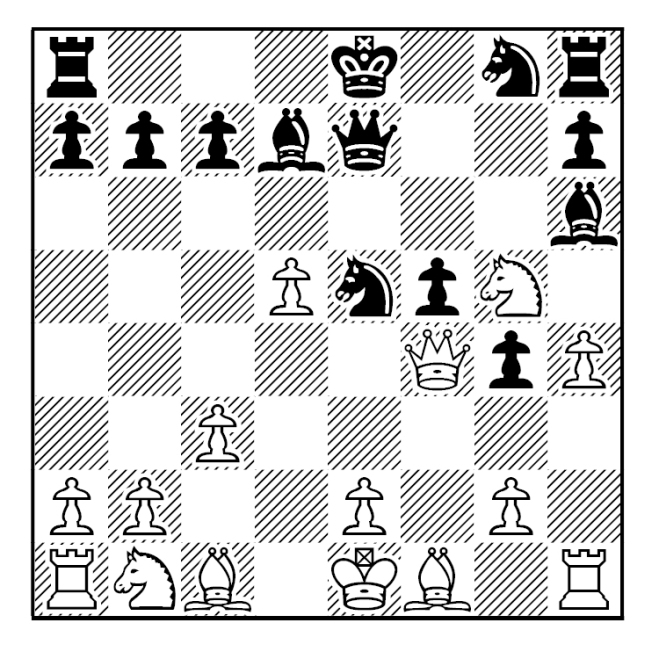
1.e4 e5 2.f4 exf4 3.Nf3 g5 4.Bc4 g4 5.O-O (This is the Muzio Gambit) 5…gxf3 6.Qxf3 Bc5+ 7.Kh1 d5 8.Qxf4 f6!? [After 8…Qf6, White has the advantage after 9.Qxc7. Worse are 8…Nf6 9.Bxd5 O-O (or 9…Be7 10.e5 O-O 11.exf6 Qxd5 12.Qg3+ +-) 10.Qg5+, 8…Nh6 9.Qxh6 dxc4 10.Qg7 Bd4 11.e5, and 8…Be6 9.Bxd5 Bxd5 10.exd5 Qxd5 11.Nc3 Qe6 12.d4 Bxd4 13.Nb5 Bb6 14.Bd2 Qf6 15.Qe4+ Qe6 16.Qxb7, all winning. The chess.com computer suggests 8…Qe7 9.exd5 f5 10.d4 Bd6 11.Qf2 11…Qg7 12.Bf4 Ne7 13.Nc3] 9.exd5 Bd6 10.Qh4 Nd7?! (The knight turns out to be misplaced here. White threatens 11.Qh5+ and gain a significant advantage. Best 10… Qd7 to lessen the appeal of the check.) 11.Qh5+ Kf8 12.d4 Nb6 13.Bb3 Qe8 14.Qh4 (Chess.com suggests this is a mistake., giving 14.Qxe8+ Kxe8 15.c4 Ne7 16.c5 Nf5 17.cxd6 cxd6 18.Nc3 Kf7. But I wanted to keep the queens on the board as it is easier to attack with a queen than without one. And I am playing a human, a person, a mistake-maker, not a computer. So let’s keep up the pressure.) 14…Qg6 (This move may be a mistake. Chess.com gives 14…Qe2 as being better and gives the continuation of 15.Re1 Qg4 16.Qxg4 Bxg4 17.c4 Bb4 18.Nc3 Rd8 19.a3. But White can vary with 15.Bxh6+ Nxh6 16.Qxh6+ and now 17.Nc3 seems to be in White’s favor.) 15.c4 Nd7 16.c5 Be7 17.Nc3 f5 18.Qf4 Ndf6 19.Qxc7?! (Somehow this doesn’t look right!) 19…Ne8 20.Qf4 h6 (White’s past pawns in the center certainly gives him the advantage in the area of the board. But they also function as a blockade to any further White attacks in the center. Meanwhile, there is activity in the kingside and he should pay attention to that part of the board.) 21.g4 Bg5 22.gxf5 Qf6 (Here is an agreement with chess.com computer and myself. Best was 22… Qh5. And after 23.Qg3 Ngf6 24.d6 Rh7 25.Be6 Rg7 26.Bxg5 Qxg5 27.Qf2, White has some problems. Perhaps 19.Qxc7 was a mistake after all. Maybe the idea of establishing a strong pawn center is a mistake and White should keep open all the attacking files, ranks, and diagonals.) 23.Qe5 [23.Ne4 only works if Black decides to pawn grabbing adventure; 23…Qxd4?! 24.Nxg5 Qxd5 (Better, of course, is 24…hxg5) 25.Bb3 Qxc5 26.Ne4 Qe7 27.Bf4 fxe4 28.Bxh6+ +-] 23…Ng7 24.Bxg5 hxg5 25.Ne4 Qh6 (25…Qxe5 26.dxe5 Bxf5 27.Ng3 Nh6 28.Nxf5 Ngxf5 29.Bc2 Ng4 30.Rxf5+ and I don’t know who exactly has the advantage.)

Game_Position_4

26.f6! Nf5 27.d6 Bd7 28.f7! (A Black defensive knight is lost – White is winning.) 28…Nge7 29.dxe7+ Nxe7 30.Nf6 Rd8 (Chess.com computer declares a mate in nine moves. How do these silicon monsters find such mates in such a short time? Meanwhile, the same beastly monster suggests 30…Bc6+. But in this line too, Black has some serious problems; 31.d5 Bb5 32.Ng4 Qh5 33.Rae1 Ng6 34.Qd6+ Kg7 35.Qf6+ Kh7 36.f8=Q Rhxf8 37.Re7+ Nxe7 38.Qxe7+ Kh8 39.Rxf8+ Rxf8 40.Qxf8+ Kh7 41.Nf6+) 31.Nxd7+ Rxd7 32.Qb8+ Kg7 33.f8=Q+ 1-0

PETS PLAYING CHESS

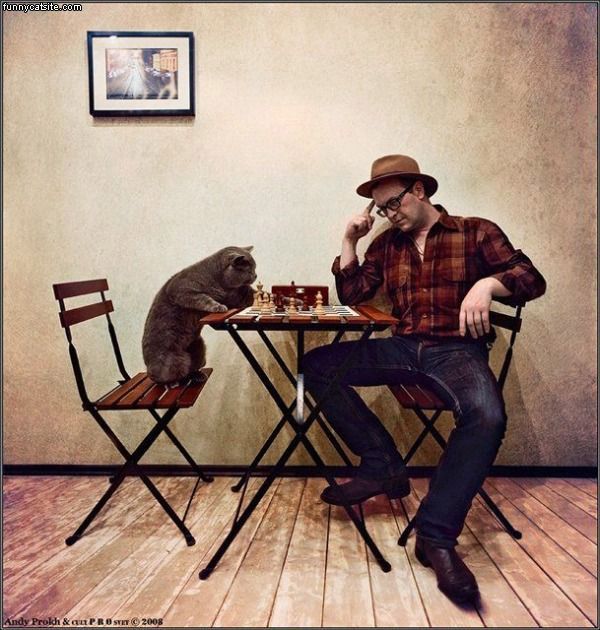
Pets are loveably, cute, cuddly, and can play a tough game of chess.


You might not believe it, but they actually do play chess. Here are some photos showing what I mean.

Chess_Cat682


cat


565400_l


1e0679j7e49240hachpobhc9l1529ea8fdc8fc8


It’s been noted that pets tend to win more than 80% of the games played to completion. Of the 20% that they did not win occurred when the pet got bored with the game when the losing human player didn’t finish the game, and they walked away from the board on all four paws.


Remember that next time you hear a stupid pet joke.