GM Daniel King will have a bunny on the chess board if he has his way.
~~~~~~~~~~~~~
FIDE, the world governing body of chess, announced a new version of the game today.
The new version would make chess more popular for TV audiences if the pace of the game was speeded up.
The popular Netflix show, “The Queen’s Gambit” may have something to do with it, officials say.
The originator of this new game was Grandmaster Daniel King of England, who was of the opinion that chess was too slow of a game to ever become popular on TV.
His FIDE page, with his titles, can be found here.
The new version would leave the 8 x 8 board and pieces intact. The only change is for each player to secretly select a file, write it down, fold it the paper so no one else can see it, and then place the paper next to the clock so it is in full view, but not the content, to everyone.
At any time during the game which a player who wishes to move a pawn on that file, and that pawn is blocked by a single Piece or Pawn (POP), can jump over that POP and land on the square just behind the POP.
At this stage, according to GM King, this pawn becomes a bunny, ready to keep jumping until it becomes a new queen.
If the player who makes such a move is challenged by an opponent, he can unfold and show his paper that had previously been kept next to the clock.
Questions were raised by some members of the press. Mr. King answered them all with pride and confidence. Here are a select few.
Q: What if two pawns of the same color are on the same file?
A: If a pawn is directly behind another, then that one can jump over the other pawn. The pawn that is now behind, can now leap over the other one on the player’s next turn. If left alone, these two pawns can leap-frog over each other and two queens can come at a quicker pace.
Q: This proposal sounds like typical British humor; even more like a Monty Python skit.
A: Is that a question? The term “bunny” comes from the fact that bunnies and rabbits do jump. The knight already leaps so we couldn’t really use the word “horse”. Frogs also leap, but I think you might have more problems with that word. This announcement also comes close to Easter. So, “bunny” is it.
Q: What benefits does this version offer over the classical, non-bunny, chess?
A: One the biggest problem we have selling chess to the television audience is when the position is locked with pawns, each of them facing another pawn of the opposite color. Have one of those pawns with the ability to jump over will open the position in which at least one of the players may need to scramble. That will be good for ratings.
Another advantage is that since the file that supports “bunnies”, is unknown to everyone except the player, it creates a mystery. And of course, a player may choose to never use this bunny feature, in which case the mystery may never be answered. That also would be good for TV ratings.
We are still working on a symbol for the bunny jump that would be easy to write, understand, and use. We could use an Easter egg, but I really think “bh”, for “bunny hop” would suffice.
With that, GM King had to answer a phone call from England. He promised that this variation was expected to make it’s first appearance at a FIDE event sometime this Spring.
I briefly touched on the Hennig-Schara Gambit in my last post (an opening named after two players).
But after I reviewed it, I thought it might be a fascinating subject to share. So here are some surprising opening moves for you, the good reader.
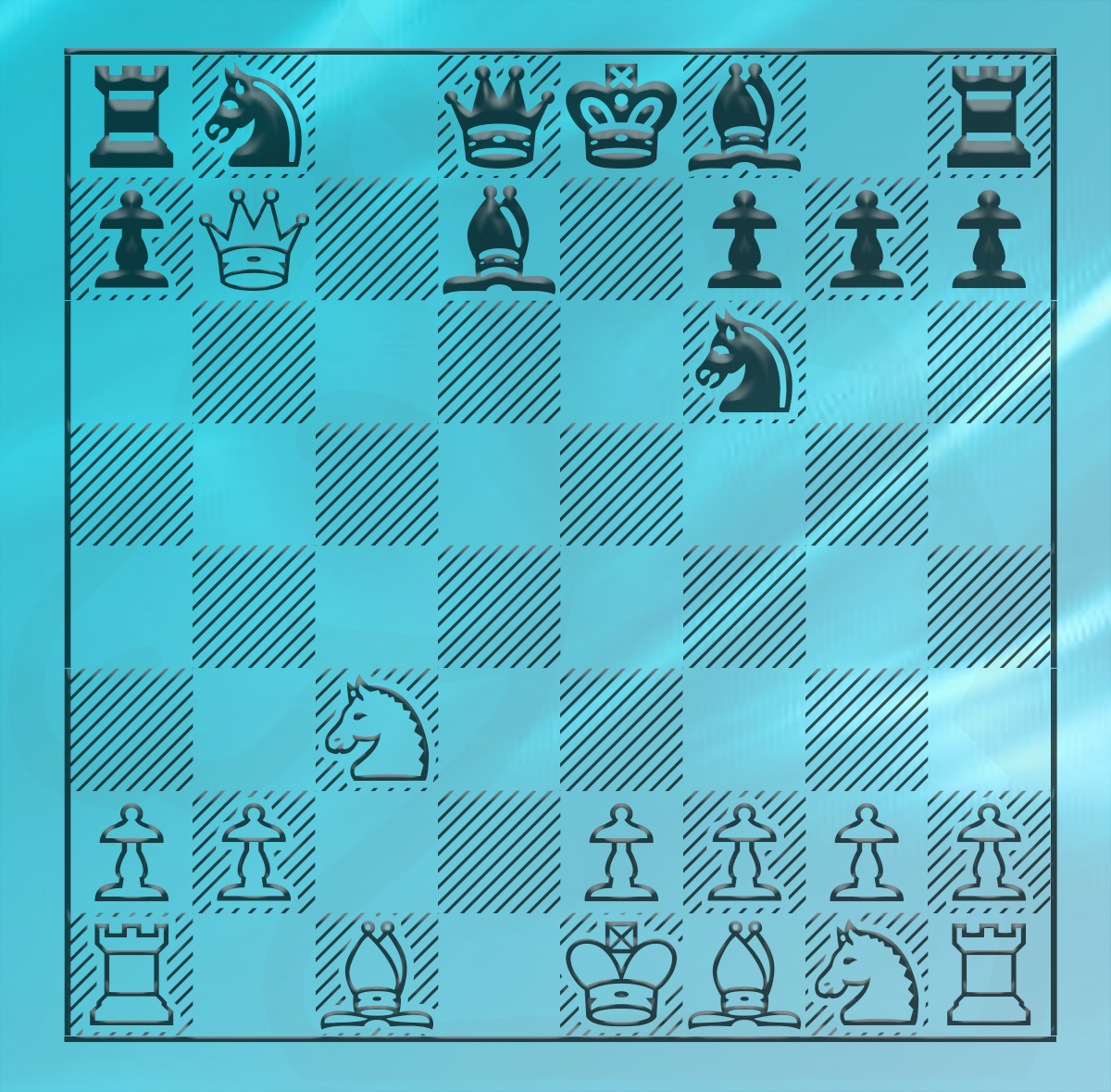
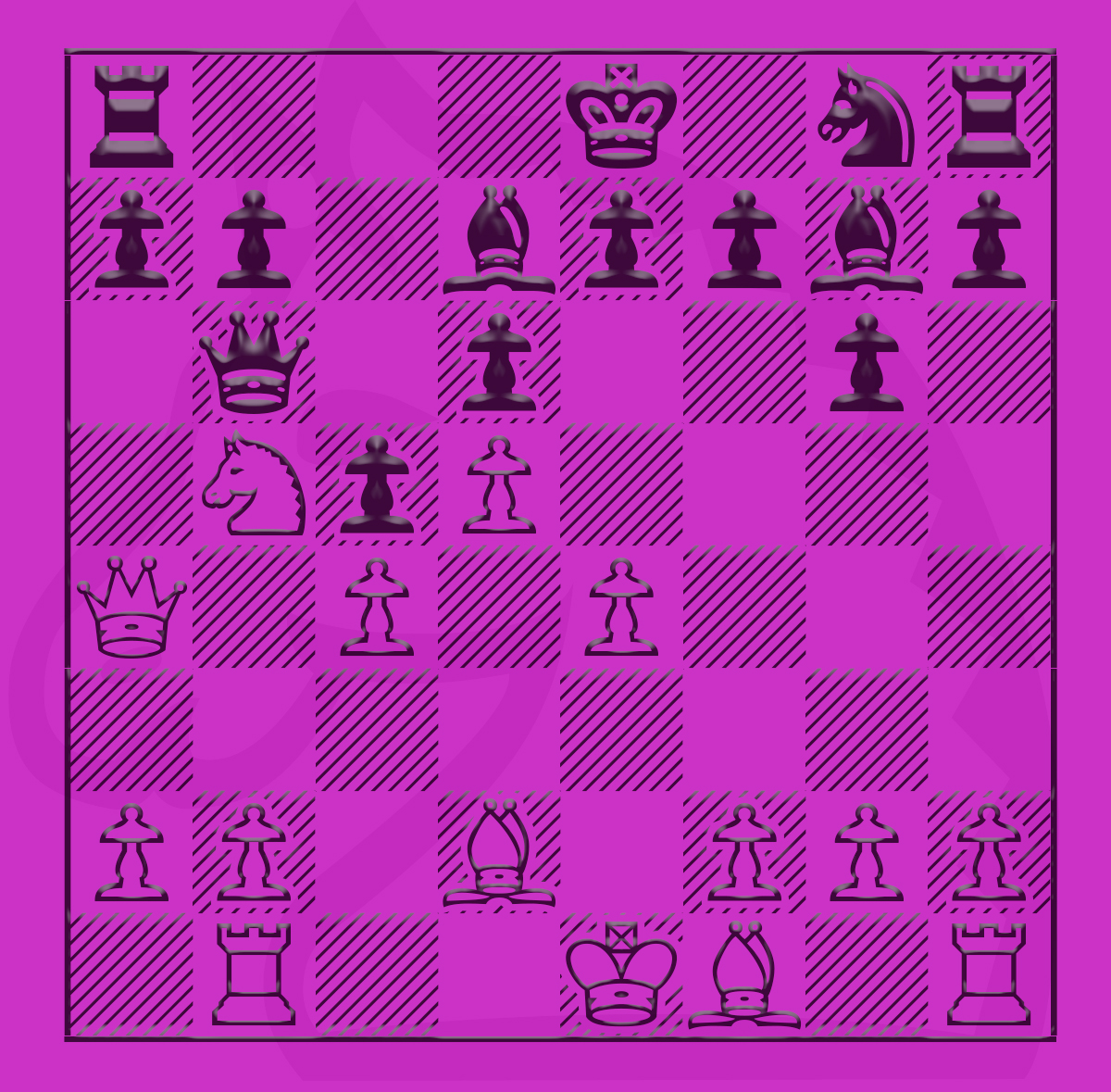
The gambit starts with the moves, 1.d4 d5 2.c4 e6 3.Nc3 c5 4.cxd5 cxd4. White gets an early advantage while Black develops. The game can easily enter lines where tactics and unclear continuations come into play.
Basically, with the c-file and d-file open, Black’s dream position would be one that he would castle queenside and have the enemy king stuck in the center. This obviously cannot happen in all games as can White castle kingside and Black often has a problem developing his b8-bishop, necessary for him to castle queenside.
But before going over the main lines, let’s first take a look at well-known trap that many Black players fall into, especially in speed chess.
Which leaves White with taking the pawn. He can either take it immediately with 5.Qxd4 or the move after with 5.Qa4+ Bd7 (played to disrupt Black’s development and close the d-file, at least for the moment).
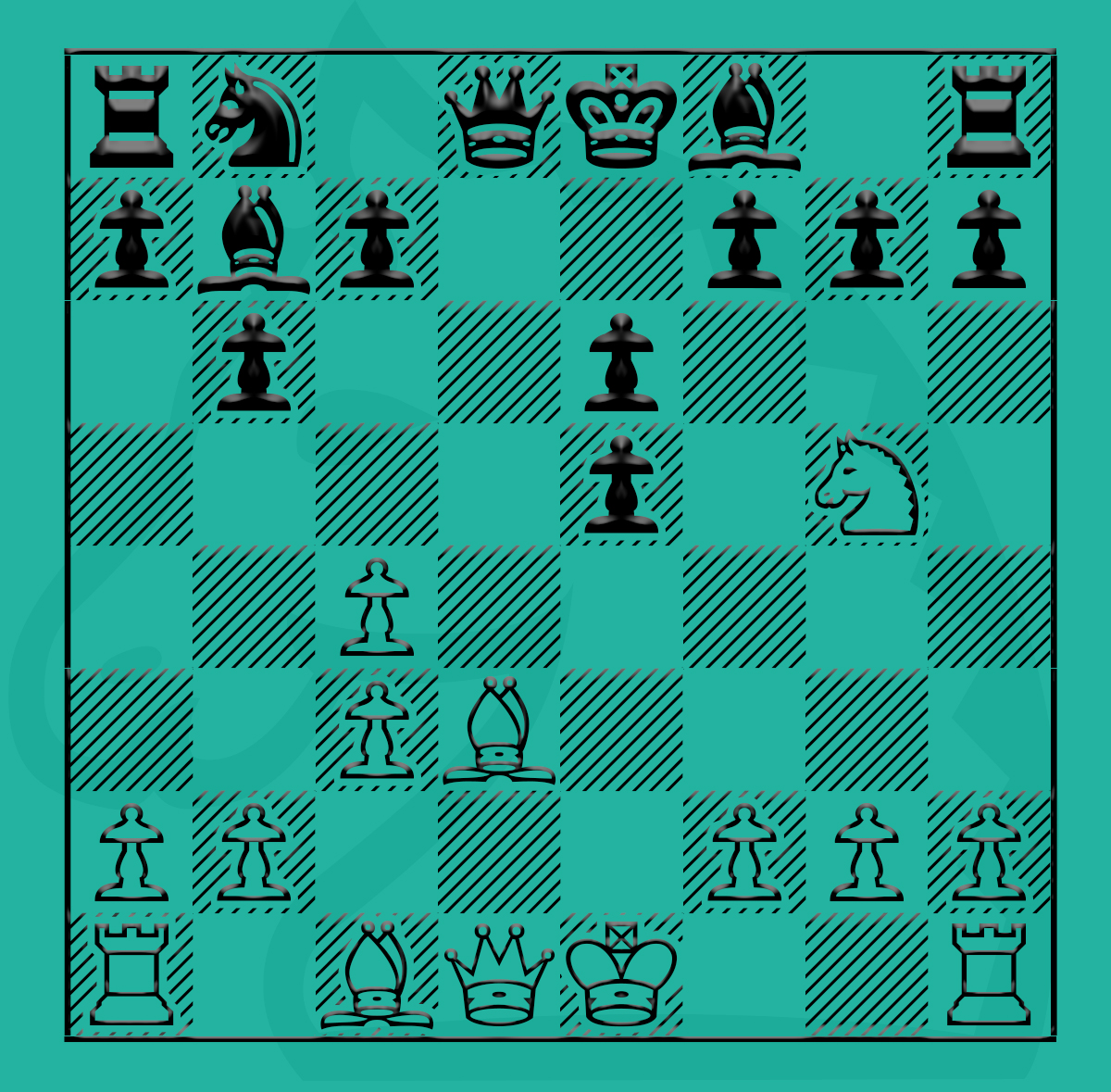
White’s first plan, 5.Qxd4 is an obvious move. Black’s response is overwhelmingly in favor of 5…Nc6, if only because 5…Nf6 fails.
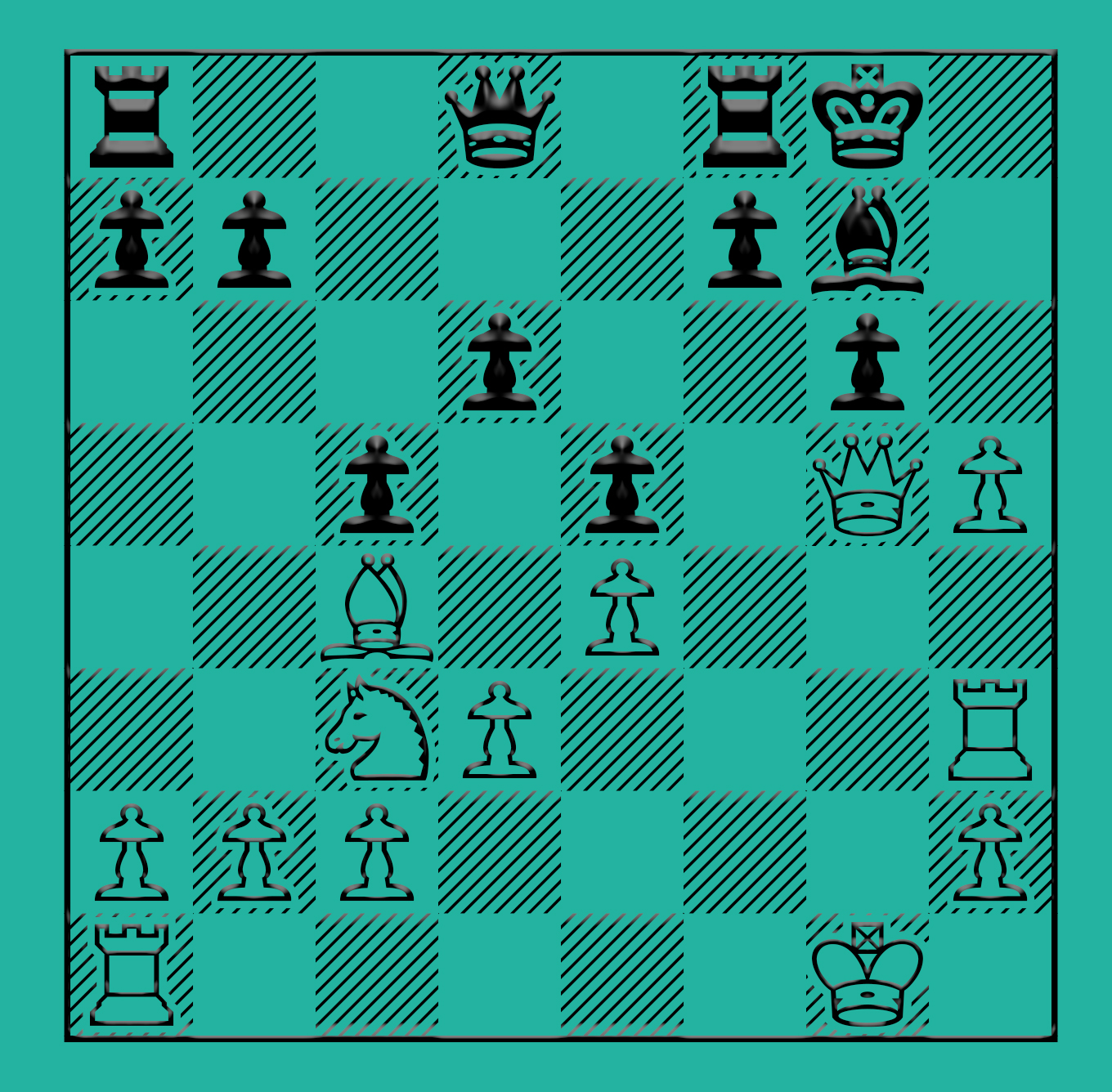
One line which we DO NOT recommend for White is: 6.Qd1 exd5 7.Qxd5 Bd7 8.Nf3 Nf6 9.Qd1 Bc5 10.e3? Qe7 11.a3 O-O-O 12.Be2? Bh3!
The following games demonstrate the reasons why.
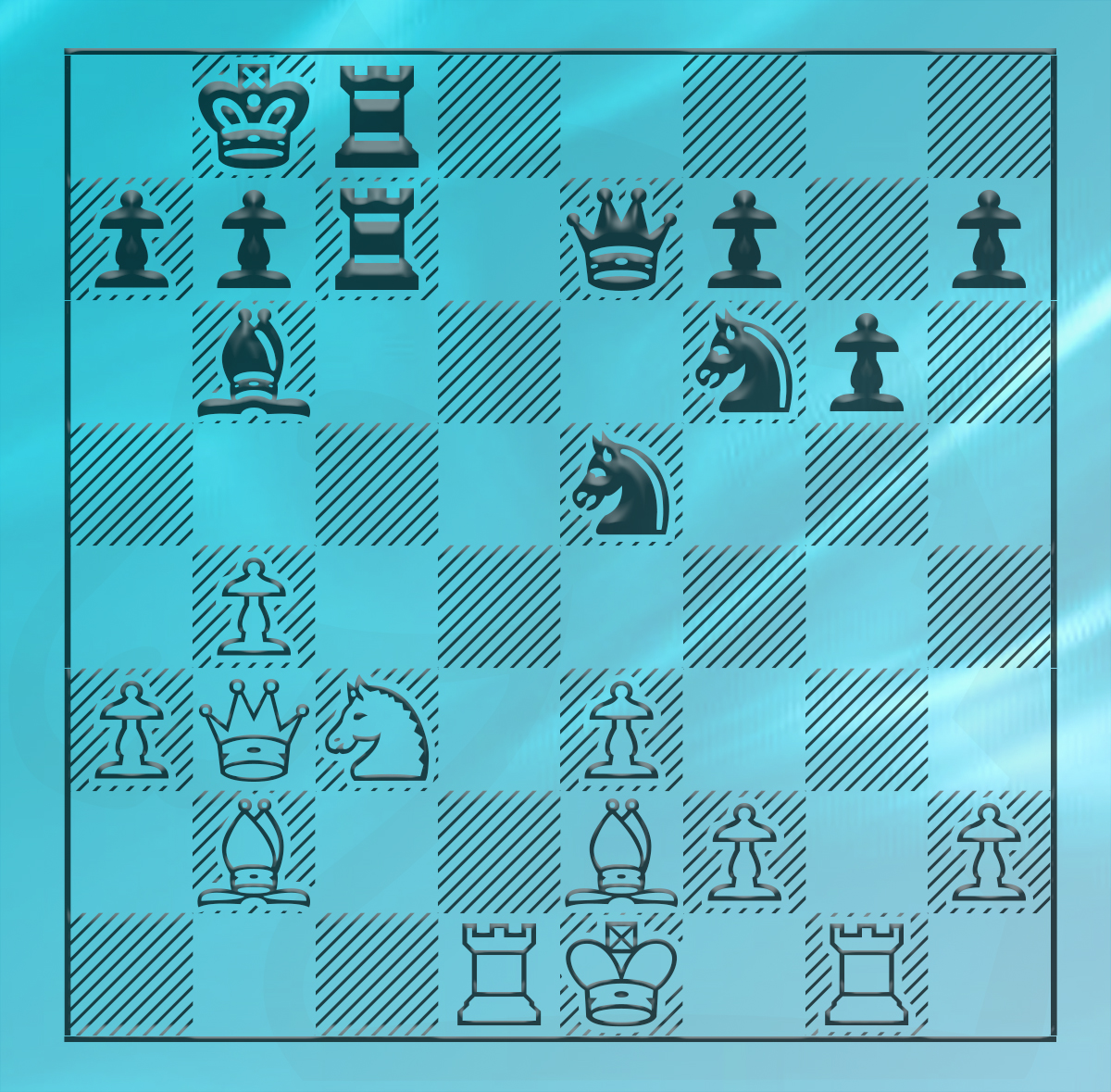
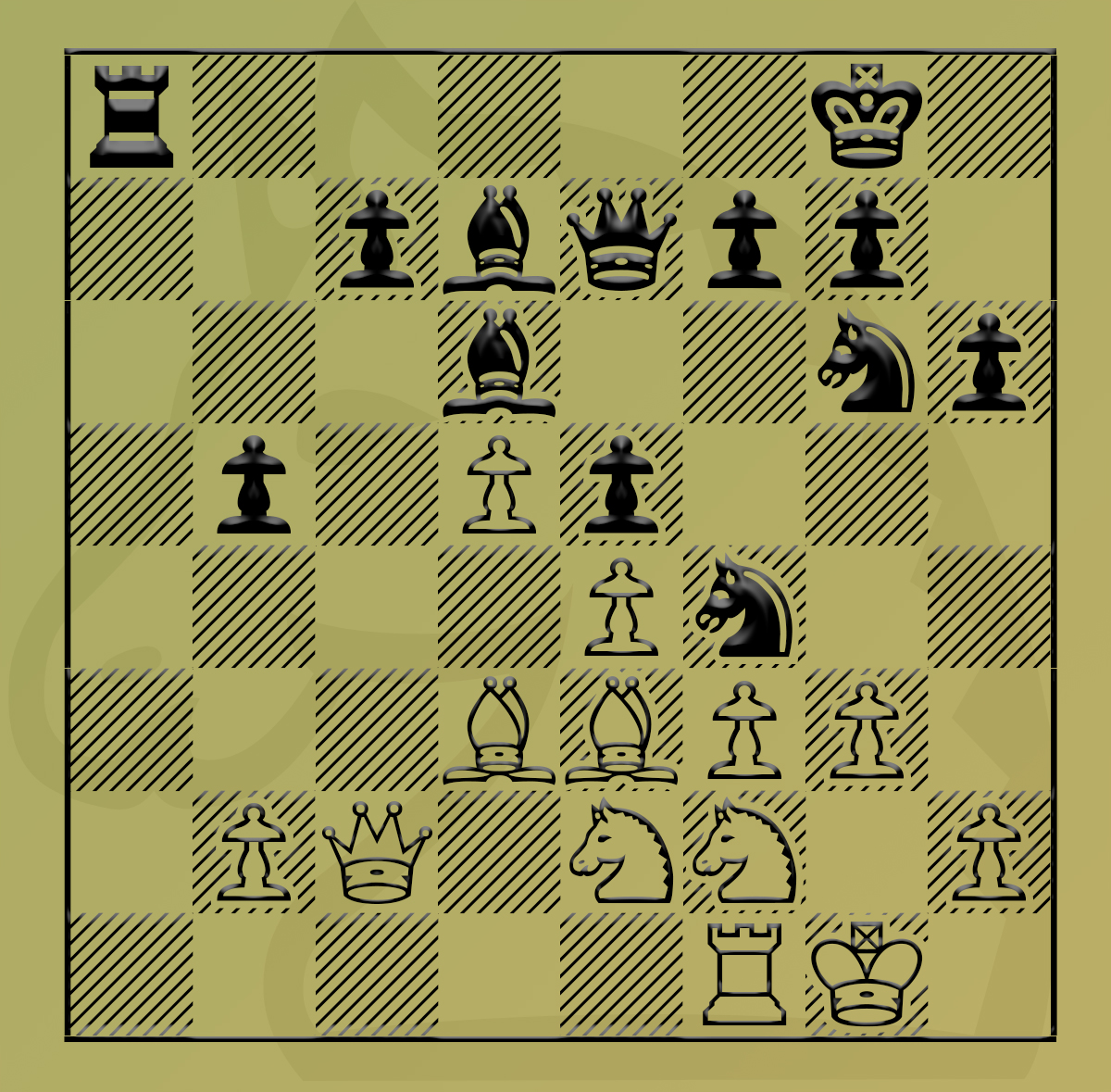
Dr. A. A. Mengarini-M. Radoicic Third Forum Open New York, 1967 [Hans Kmoch, “Games from Recent Events”, Chess Review, July 1967] 1.d4 d5 2.c4 e6 3.Nc3 c5 4.cxd5 cxd4 5.Qxd4 Nc6 6.Qd1 exd5 7.Qxd5 Bd7 8.Nf3 Nf6 9.Qd1 Bc5 10.e3 Qe7 11.a3 (11.Be2 is urgent.) 11…O-O-O 12.Be2 (Now White returns the Pawn for no obvious reason. 12.Bd2 is indicated. White has a difficult job then but does after the text move also.) 12…Bh3 13.Qc2 Bxg2 14.Rg1 Bxf3 15.Qf5+ Kb8 16.Qxf3 Ne5 17.Qf5 g6 18.Qc2 Rd7 19.b4 Bb6 20.Bb2 Rc8 21.Rd1 Rdc7 22.Qb3
22…Bxe3!! (This brilliant breakthrough destroys whatever dreams of safety White has.) 23.fxe3 (On 23.Nb5, Black probably continues with 23…Bxf2+ 24.Kxf2 Ne4+) 23…Nf3+! 24.Bxf3 (Or 24.Kf2 Rxc3! 25.Bxc3 Rxc3 26.Qxc3 Ne4+, etc.) 24…Qxe3+ 25.Be2 (White has nothing better.) 25…Qxg1+ 26.Kd2 Qg5+ 27.Kc2 (Or 27.Ke1 Qh4+ 28.Kd2 Rxc3! or 28.Kf1 Qh3+ 29.Ke1 Ne4 30.Rd3 Qh4+ with a winning attack.) 27…Ne4 28.Rd3 Rxc3+! 29.Bxc3 Rxc3+! 30.Rxc3 Qd2+ 0-1
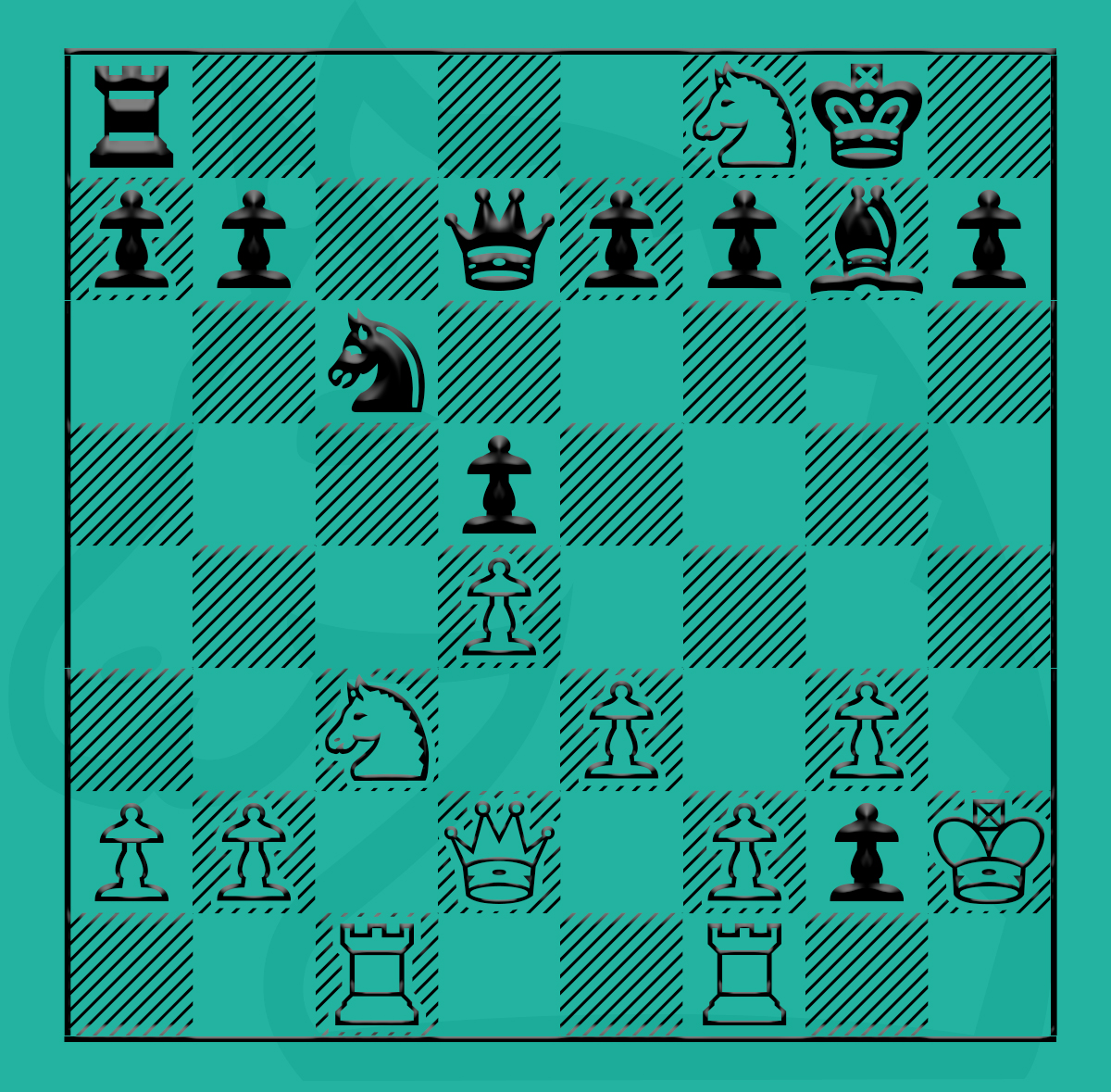
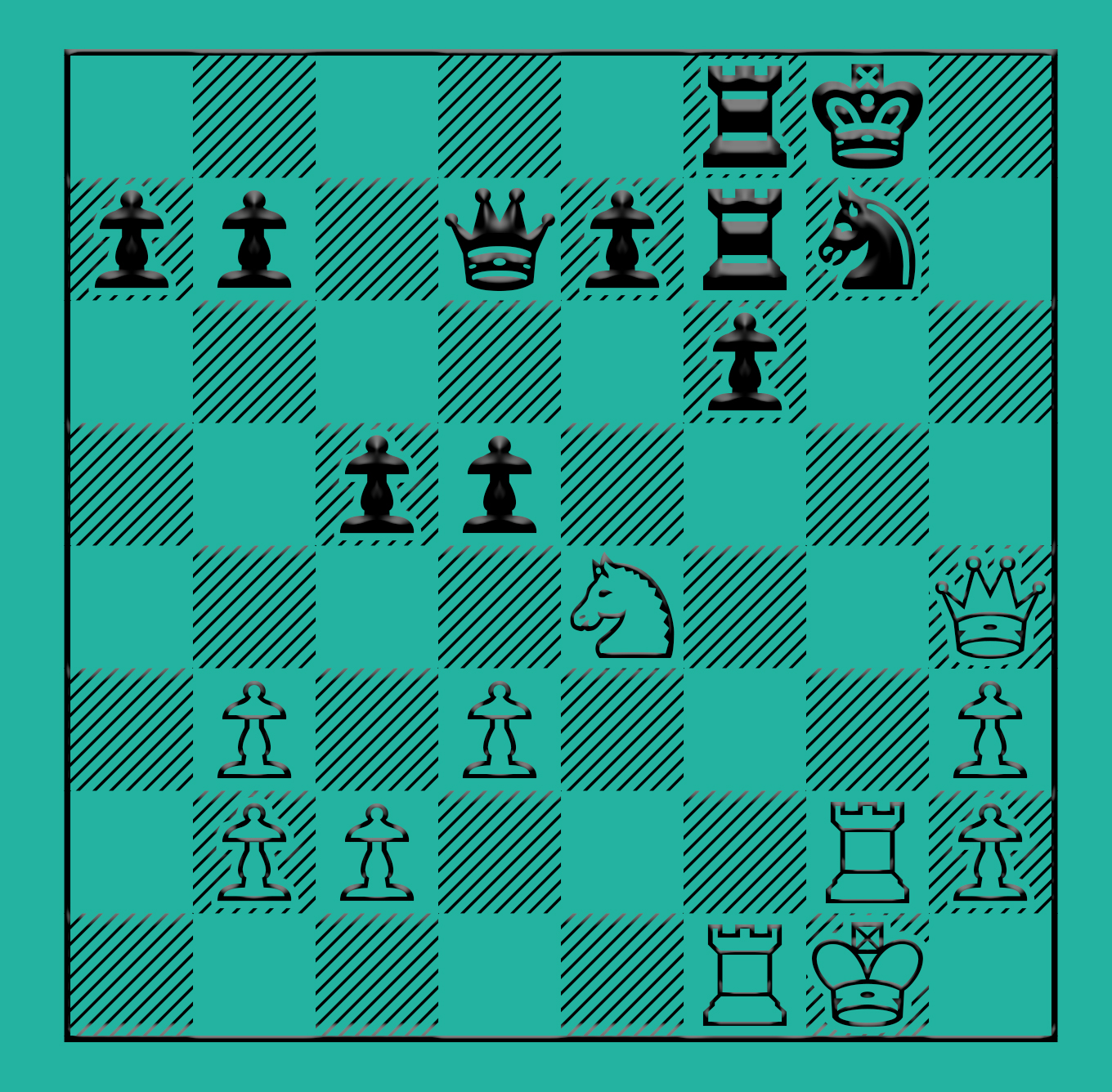
Eric Marathee (2068)-Herve Daurelle (2230) Paris Ch. France, July 24 1999 1.d4 d5 2.c4 e6 3.Nc3 c5 4.cxd5 cxd4 5.Qa4+ Bd7 6.Qxd4 exd5 7.Qxd5 Nc6 8.a3 Nf6 9.Qd1 Bc5 10.e3 Qe7 11.Be2 O-O-O 12.Nf3 Bh3 13.Qb3 (13.Qa4 may be the only move here – RME.) 13…Bxg2 14.Rg1 Bxf3 15.Bxf3 Ne5 16.Bh1 Rhe8 17.Na4 Nd3+ 18.Ke2 Ne4 19.Bxe4 Qxe4 20.Bd2 Nf4+ 21.Ke1 Qf3 22.Qd1 Nd3+ 0-1
White has better luck with 5.Qa4+ Bd7 6.Qxd4 as Black’s counter attack is slowed down by his bishop on d7.
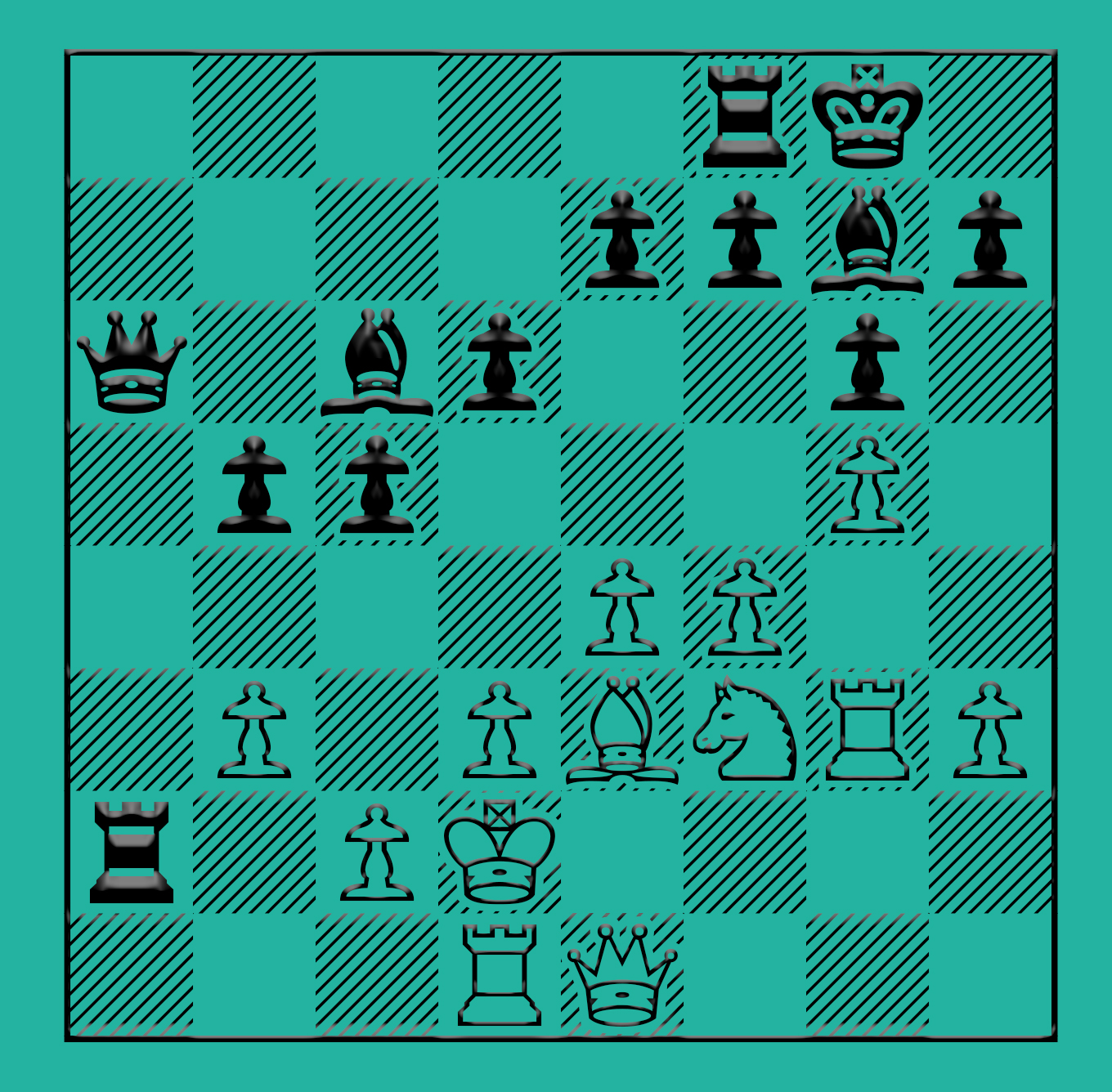
“weiran” (1775)-“mrjoker” (1778) Blitz Game ICC, September 6, 2008 [The reason not to grab the “b” pawn, part 2. Louis Morin is presumably “mrjoker”.] 1.d4 d5 2.c4 e6 3.Nc3 c5 4.cxd5 cxd4 5.Qa4+ Bd7 6.Qxd4 exd5 7.Qxd5 Nf6 8.Qxb7 Nc6 9.Bf4 Nb4 10.O-O-O (10.Rc1! was much better.) 10…Rc8 11.Kb1 Rxc3 (A little too fancy. I saw 11…Bf5+! 12.e4, but simply missed 12…Qxd1+! 13.Nxd1 Bxe4+.) 12.bxc3 (I was expecting 12.Rxd7. Even with the help of Fritz I cannot find anything better than a perpetual check after 12…Qa5 13.a3 Qf5+ 14.e4 Nxe4 15.Ka1 Nc2+ 16.Ka2 Rc5 17.Bb5 Nc3+ 18.bxc3 Nb4+ 19.axb4 Qc2+ etc.) 12…Bf5+ 13.Kb2 Qxd1 14.Qb8+ Kd7 15.Qxa7+ Kc6 16.Qc7+ Kb5 17.c4+ (Again it seems as if a perpetual check should be the logical outcome after 17.Qb7+ Kc4 18.e4+ Qxf1 19.Nf3 Nd3+ 20.Kc2 Nb4+ 21.cxb4 Qd3+ 22.Kc1 Qc3+ 23.Kd1 Nxe4 24.Nd2+ Nxd2 25.Qxf7+ Kd3 26.Qxf5+ Ne4 27.Qh3+ etc.) 17…Ka6 (Sorry, no more checks.) 18.Kc3 Qc2+ 19.Kd4 Qb2+ 20.Ke3 Qc3mate 0-1
Sometimes the opening is named after the pieces. The King’s Gambit (1.e4 e5 2.f4), the Queen’s Gambit (1.d4 d5 2.c4), the Two Knights Defence (1.e4 e5 2.Nf3 Nc6 3.Bc4 Nf6), the Three Knights Defence (1.e4 e5 2.Nf3 Nc6 3.Nc3 g6), the Four Knights Opening (1.e4 e5 2.Nf3 Nc6 3.Nc3 Nf6), the Bishop Opening (1.e4 e5 2.Bc4), and the Bishop Gambit (1.e4 e5 2.f4 exf4 3.Bc4).
Pawns are featured in the Two Knights Variation of the Caro-Kann (1.e4 c6 2.Nc3 d5 3.Nf3), the Three Pawns Gambit (1.e4 e5 2.f4 exf4 3.Nf3 Be7 4.Bc4 Bh4+ 5.g3 fxg3 6.O-O), and the Four Pawns Variation in the King’s Indian Defence (1.d4 Nf6 2.c4 g6 3.Nc3 Bg7 4.e4 d6 5.f4) and the Four Pawns Attack in the Alekhine’s Defence (1.e4 Nf6 2.e5 Nd5 3.d4 d6 4.c4 Nb6 5.f4).
1-0 (White has a piece, two pins, and all the attacking chances; Black has nothing.)
But this, the opening names – not the opening play – can get boring.
So …
Some openings are named after the first person who was successful with the opening moves. Others are named after a player or student of the game who first published the analysis.
Opening names such as Alekhine’s Defence (1.e4 Nf6), Fischer’s Defence in the King’s Gambit (1.e4 e5 2.f4 exf4 3.Nf3 and now 3…d6 instead of the usual 3…g5), Larsen’s Opening (1.b3), the Ruy Lopez (1.e4 e5 2.Nf3 Nc6 Bb5), the Marshall Attack (a variation of the Ruy Lopez going 1.e4 e5 2.Nf3 Nc6 3.Bb5 a6 4.Ba4 Nf6 5.O-O Be7 6.Re1 b5 7.Bb3 O-O 8.c3 d5), the Albin Counter- Gambit (1.d4 d5 2.c4 e5), Anderssen’s Opening (1.a3), the Najdorf (1.e4 c5 2.Nf3 d6 3.d4 cxd4 4.Nxd4 Nf6 5.Nc3 a6), and the Benko Gambit (1.d4 Nf6 2.c4 c5 3.d5 b5).
And that’s just for starters.
We also have the Smith-Morra (1.e4 c5 2.d4 cxd4 3.c3 – actually named after two players), the Caro-Kann (1. e4 c6, another opening named after two players), the von Hennig-Schara Gambit (yet another opening named after two players):
The Greco-Counter Gambit, by the way, is named after Greco who the first known person to write about the openings. The opening moves are 1.e4 e5 2.Nf3 f5!?. And the opening is also known as the Latvian Gambit.
This is a good time to segue into another area where chess openings are named after not just one or two players, but after a group of localized players who studied and popularized these openings. Not only do we have the Latvian, but also the Budapest (1.d4 Nf6 2.c4 e5), the French (1.e4 e6), and the English (1.c4).
Making things interesting is that some openings are named after cities and countries. We have the Catalan (1.d4 Nf6 2.c4 e6 3.g3), the Saragossa (1.c3), the Italian (1.e4 e5 2.Nf3 Nc6 3.Bc4), the Berlin Defence (1.e4 e5 2.Nf3 Nc6 3.Bb5 Nf6), the Vienna (1.e4 e5 2.Nc3), and the London (1.d4 Nf6 and White will play an early .Bf4).
Openings are also named after animals. Most players know of the Dragon (1.e4 c5 2.Nf3 and Black will soon play …g6, …Bg7, and usually …Nf6).
And some might even know the Chameleon (1.e4 c5 2.Nc3 Nc6 3.Nce2, and now White can continue with the Closed Sicilian with .d3 and .g3, or the Open Sicilian with .d4 cxd4 .Nxd4).
But how many players are familiar with the Elephant Gambit (1.e4 e5 2.Nf3 d5), the Orangutan (1.b4), the Pterodactyl Variation (1.d4 g6 2.c4 Bg7 3.Nc3 d6 4.e4 c5 5.Nf3 Qa5), or the Vulture Defence (1.d4 c5 2.d5 Nf6 3.c4 Ne4)?
Some players would mistakenly add the Bird (1.f4). But this opening was named after the English player, Henry Edward Bird (1830–1908).
But there are some opening names that are mysterious.
For example, the opening moves 1.d4 Nf6 are collectively known as the Indian Defences, such as the King’s Indian Defence, the Queen’s Indian, the Nimzo-Indian, the Old Indian. But why? We don’t know either.
And who knows where the Fried Liver Attack (1.e4 e5 2.Nf3 Nc6 3.Bc4 Nf6 4.Ng5 d5 5.exd5 Nxd5 6.Nxf7)? It is said that Black, playing this variation, is dead as a piece of fried liver But, why Fried Liver and not, say, Fried Chicken or even Fried Zucchini? Surely, more people know what chicken and zucchini than Fried Liver? Maybe Fried Liver is less desirable or digestible? And Black is surely not dead after taking the knight on f7 – there are ways for him to fight on, and even to win. Ok, back to tropic.
We also have the Benoni (1.d4 Nf6 2.c4 c5 3.d5). Where did that name come from and how did it become popular? We know the latter comes from “a Hebrew term meaning “son of my sorrow” (cf. Genesis 35:18) – the name of an 1825 book by Aaron Reinganum about several defenses against the King’s Gambit and the Queen’s Gambit”, as least according to Wikipedia. But why and how did it become popular if it concerns itself with the Queen’s Gambit?
Finally, we have the Halloween Gambit (1.e4 e5 2.Nf3 Nc6 3.Nc3 Nf6 4.Nxe5), where it is said that this gambit is scary. We agree – but to which side?
No, we are not talking about tiny replicas of various English manors or of small red-coated toy soldiers.
What we mean are chess games lasting twenty-five moves or less and that begin with the move 1.c4 (the English Opening).
The English opening can be an independent opening but it can also easily transpose into other openings such as the myriad of Indian Defences (1.d4 Nf6 2.c4), the Marcozy Bind in the Sicilian (1.e4 c5 2.Nf3 Nc6 3.d4 cxd4 4.Nxd4 g6 5.c4), and the Reti (1.Nf3 d5 2.c4).
But we’ll keep to independent lines for this miniatures post. These lines include, after 1.c4, 1…Nf6, 1…e5, and 1…c5.
Now, sit back and enjoy the games!
1.c4 (Various replies)
Arndt-Schulze Bisping corres., 1987 1.c4 b5 2.cxb5 e5 3.e4 d5 4.exd5 Qxd5 5.Nc3 Qe6 6.Qf3 c6 7.bxc6 Nxc6 8.Nb5 Qd7 9.Bd3 Bb7 10.Be4 Nf6 11.Ne2 Nd4 12.Nbxd4 Nxe4 13.Qf5 exd4 14.Qe5+ (Black gets a lot of play after 14.Qxd7+ Kxd7) 14…Kd8 15.f3 Nc5 16.Qxd4 Qxd4 17.Nxd4 Nd3+ 18.Ke2 Ba6 0-1
Lautier-Bologan Enghien 1999 [IM Peters, LA Times] 1.c4 c6 2.e4 d5 3.cxd5 cxd5 4.exd5 Nf6 5.Nc3 Nbd7 6.Nf3 a6 7.d4 Nb6 8.Ne5 Nbxd5?? (Black stands only a shade worse after 8…Nfxd5 9.Bd3, while 8…g6 9.Be2 Bg7 10.Bf3 O-O 11.Qb3 e6 12.dxe6 Bxe6 13.Qd1 Nfd5 gives him some compensation for his pawn.) 9.Qa4+! Bd7 10.Nxd7 (If 10…Qxd7, White wins material by 11.Bb5 axb5 12. Qxa8) 1-0
Irina Krush-Krupkova Women’s Ol. Elista, 1998 [Notes by Chess Life] 1.c4 g6 2.Nf3 Nf6 3.Nc3 d5 4.cxd5 Nxd5 5.Qa4+ Bd7 6.Qh4 Nxc3 7.Qd4 f6 8.Qxc3 Nc6?! (Best is 8…e5!, and if White likes material then 9.Nxe5 fxe5 10.Qxe5+ Qe7 11.Qxh8 Nc6 is the way to go.)9.b4 e5? (9…a6)10.b5 Nd4 11.Nxd4 exd4 12.Qc4 b6 13.g3 Bc5 14.Bg2 Rc8 15.O-O Qe7 16.Bb2 Qe6 17.Bd5 Qd6 18.e3 Bxb5?? 19.Qxb5+ c6 20.Qa6 1-0
1.c4 Nf6
“bigt111210” (1346)-Escalante (1978) “Let’s Play!” www.chess.com, Jan. 2014 1.c4 Nf6 2.f3? e5! 3.e4 Nxe4! 4.fxe4 Qh4+ 5.Ke2 (Better is 5.g3 Qxe4+ 6.Qe2 Qxh1 7.Qxe5+ and White has some counterplay.) 5…Qxe4+ 6.Kf2 Bc5+ 7.Kg3 (Even after 7.d4, Black still has a forced mate after 7…Bxd4+)7…Qf4+ 8.Kh3 d5+ 9.g4 h5 10.Be2 (10.Kh4 g5+ 11.Kh3 hxg4+ 12.Kg2 Qf2+) 10…hxg4+ 11.Kg2 12.Qf2mate 1-0
Stegmann-Kari Nuremburg, 1988 1.c4 Nf6 2.Nc3 d6 3.g3 g6 4.Bg2 Bg7 5.Nf3 O-O 6.O-O Nbd7 7.b3 Re8 8.Bb2 e5 9.Qc2 c6 10.d4 Qc7 11.Rfd1 Nh5 12.dxe5 dxe5 13.Ne4 c5 14.Nd6 Re7 15.Ng5 Nb6 16.Nb5 1-0 (White has an overwhelming position. One line is 16…Qb8 17.Rd8+ Bf8 18.Rad1 a6 19.Qd3, with the idea of 20.Rxf8+.)
Rudnev-Kopylov Russia 1939 [You’ll find this one in Chernev’s 1000 Best Short Games (game #115).] 1.c4 Nf6 2.Nc3 d5 3.cxd5 Nxd5 4.e4 Nb4 5.Qa4+ N8c6 6.d4 Bd7 7.Bb5 Nxd4 8.Kf1 Nxb5 9.Qxb4 e5 10.Qc4 Nxc3 11.bxc3 (11.Qxc3 Bb5+ 12.Ke1 Bb4! 13.Qxb4 Qd3 -+) 11…a6 12.a4 Bb5 0-1
Mueller-Drenchev World Jr. Ch. Romania 1991 1.c4 Nf6 2.Nc3 g6 3.g3 Bg74.Bg2 O-O 5.d3 d6 6.Rb1 e57.Nf3 Nc6 8.O-O a59.a3 h6 10.b4 axb4 11.axb4 Nh5 12.b5 Ne7 13.Bd2 f5 14.Qc2 f4 15.Rfc1 g5 16.Nd5 Nf6 17.Nxe7+ Qxe7 18.Bc3 Qf7 (So far Black has only the tiniest advantage. But now White makes three lemon moves.) 19.Rf1?! Qh5 20.Bb2? Bh3 21.c5? (But then, what else?) 21…Ng4 0-1
GM Karl Robatsch-IM Silvino Garcia Martinez Chigorin Memorial Sochi, 1974 [Escalante] 1.c4 c5 2.Nf3 g6 3.d4 Bg7 4.e4 Qa5+ 5.Nc3 Nc6? (Black would do better with 5…d6 or 5…e6. In any case, Black is lacking in development.) 6.d5 Nd4?! (Perhaps Black would do better with 6…Ne5. But things are already looking dismal.) 7.Bd2 Qb6 8.Nxd4 Bxd4 9.Rb1 d6 10.Nb5 Bg7 11.Qa4 Bd7
John Moriarty (1941)-Donald Reithel (2087) corres. CCLA, 2002 1.c4 c5 2.g3 Nf6 3.Bg2 Nc6 4.Nc3 g6 5.a3 e6!? (Correspondence players love to try out novelties. Here, the more common move is 5…d6.) 6.Rb1 (A reasonable reply.) 6…d5 (There is ample opportunity for independent study.) 7.Nh3 d4 8.Ne4 Nxe4 9.Bxe4 a5 10.Nf4 Qc7 11.O-O Bd7 12.b3 Ra6 13.e3 Bg7 14.Bb2 O-O 15.Qc2 Ne7 16.Kg2 f5 17.Bf3 Rd6 18.h4 Bc6 19.e4 fxe4 20.Bxe4 d3! 0-1 (The bishop can’t take the pawn, the queen could take it but it loses immediately to 21…Bxd3, and the queen is also lost after 21.Qc3.)
This situation happens to all chess players. We are winning the game, but our opponent, who is material down refuses to give up the fight. I’m not talking about being down an exchange, or even just down a few pawns. But rather down a rook or a queen or both or more.
Maybe I’m not lost yet.
And yet, they still refuse to concede the game. Let’s look at some reasons, although only the first few have any legitimate reason.
But before we do, here’s a side note. Many a scholastic chess instructor would say, “Never resign”. When pressed for the reason why, their reply is usually, “Because you opponent might blunder”. Which in the case of scholastic chess, this is common enough to warrant such an action. The more enlightened teachers would also add, “…and you might learn a little more about your endgame skills.”
The listing below represents not just scholastic players, but adults as well.
1) In a game with sudden death, or a short time limit such as a blitz game, time becomes a weapon. The game becomes a battle between good moves and speed.
If you do not complete all your moves in a certain amount of time, you can’t win. And if your opponent has a pawn, or a rook, or both a bishop and a knight, you lose the game.
So, if one is down material and up on time, you can’t win by overwhelming him with material and it makes sense to keep playing (and faster) than your opponent.
The problem arises when a player is not only down in material, but also down in time. Here there is no reason to keep playing. Unless, of course, you have other reasons.
2) Every chess player needs to become more proficient in endgame play. Being the exchange is not totally a bad thing – you gain the needed practice in holding the game. Imagine, your endgame skill is going against the ultimate test – another chess player who will challenge your moves and your skill level. And who knows – you might get lucky. Instead of a loss, you might get a draw.
3) Massive material is chance for a draw. By stalemate. This a flip side of the above reason. Instead of being tested for one’s skill, the player’s opponent is being tested NOT to make mistake (or several mistakes) or him forgetting all about stalemates.
4) When playing in a team tournament, sometimes the Team Captain (TC) will suggest to a team member to draw his game as a draw will win the match for the team. Some players keep playing on despite being major material down, hoping his opponent will yield to his TC request to draw the game.
The four preceding reasons are legal, but borderline sportsmanlike. But the remaining ones definitely cross that line.
5) Playing on because of spite. Sometimes a player, having a winning position blunders and finds himself with a losing position. He’s suddenly behind a rook and a few pawns, and his emotions emerge. And instead of acknowledging his errors and blunders, tell himself, “I can’t win or even draw this game. But I make my opponent work for it. He deserves to be punished as he is beating me. I’m upset so he to be upset as well.” He might even add, ”I’m not immature. I’m not immature (and so on).”
6) Sometimes we have our priorities mixed up. There have been cases of players continuing the game with the intent of keeping the opponent from fulfilling other promises and commitments. His opponent may have to go to his daughter’s birthday, his son’s baseball game, a date with his girlfriend, a taxi, bus, or plane to catch, all later in the day so he can play in the tournament.
A player who knows this can use this information against his opponent. They reason, my opponent must know to keep the whole day, and part of the next day, to finish his game. So, they refuse a faster time limit or to start at earlier time. Instead, they play slowly, and once they are down material, play even slower. They keep playing on and on, sometimes looking for an easy draw, or even worse, spurring a draw offer to win the game.
But players, please don’t resign if you have a reasonable chance to change the outcome (to your benefit). But before you push ahead with your stubbornness and obstinacy about not resigning, ask yourself, why am still playing to the mate?
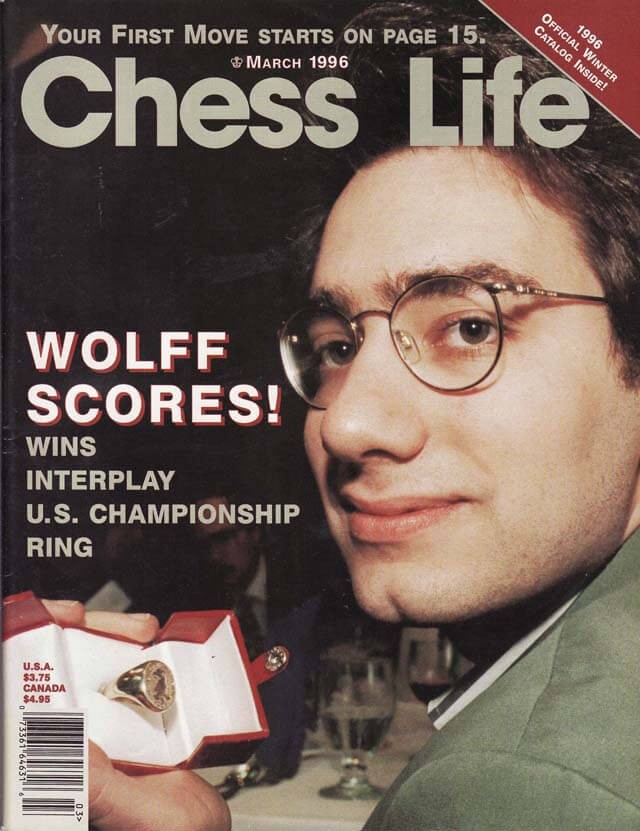
Patrick Gideon Wolff is an American Grandmaster born this day in 1968.
He earned his IM title 1988 and his GM title in 1990.
But even before receiving his IM title he was already making news by winning the 1983 US National High School Championship and the 1987 U.S. Junior Championship.
He also participated in the World Junior Championships 1987. But Anand, who eventually gained the World Championship, won this event.
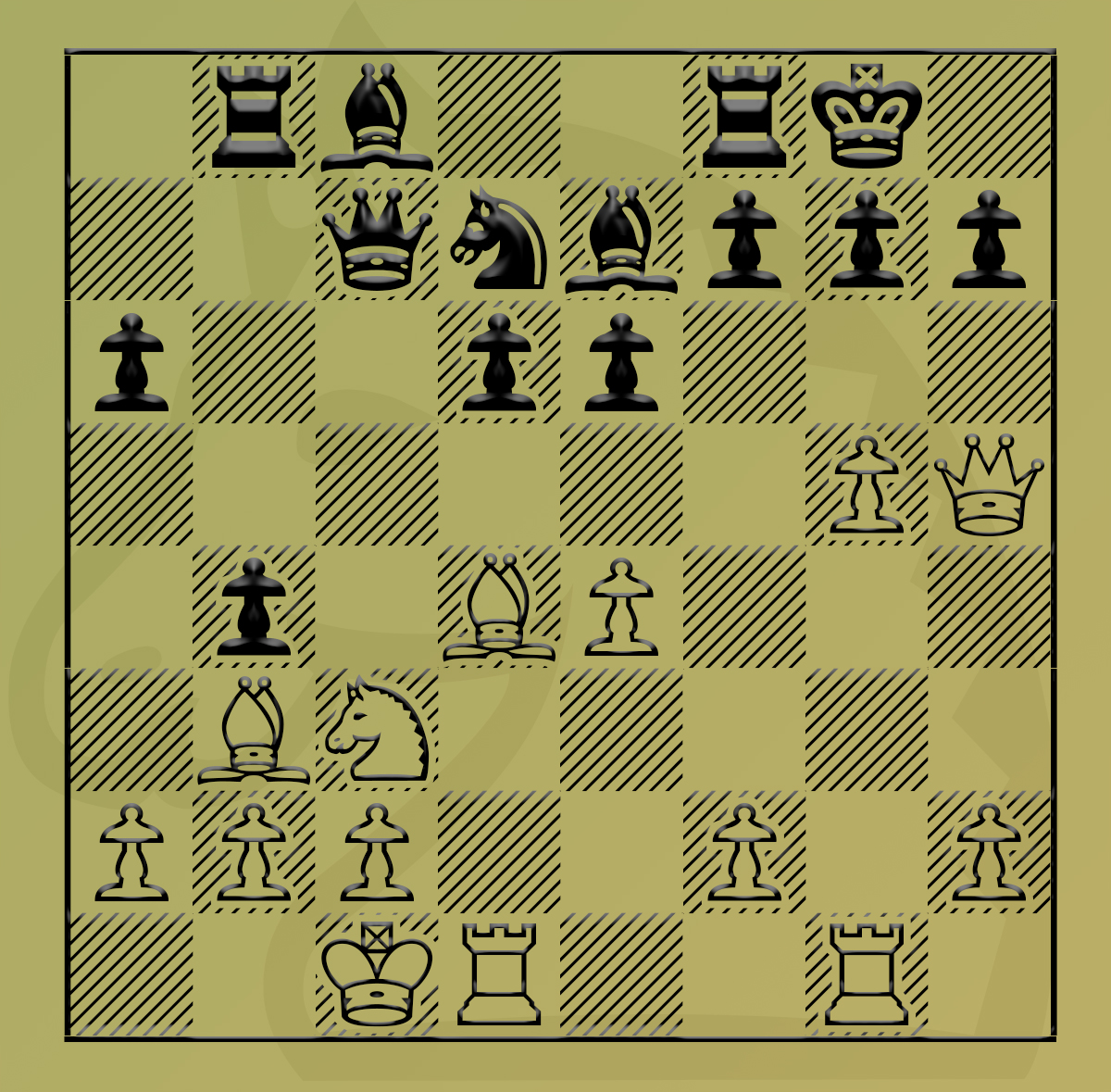
IM Wolff (2370)-IM Sokolov (2525) World Jr. Ch. Baguio, July 1987 [Notes by IM Wolff, in “Anand Wins World Junior Championship”, Chess Horizons, Oct.-Nov., 1987, pg. 18] 1.e4 c5 2.Nf3 e6 3.d4 cxd4 4.Nxd4 Nc6 5.Nc3 d6 6.Be3 Nf6 7.Bc4 Be7 8.Qe2 a6 9.O-O-O Qc7 10.Bb3 O-O? (Now Black is clearly worse. Best is 10…Na5 with unclear complications.) 11.Rhg1 b5 12.g4 Na5 13.g5 Nxb3+ 14.axb3 Nd7 15.f4 b4 16.Nf5 exf5 17.Nd5 Qd8 18.exf5 Re8 19.Bd4! (A suggestion of Andy Soltis. ECO gives 19.g6 with complications.) 19…Bf8 (If 19…Bf6, Sokolov pointed out 20.Qxe8+ Qxe8 21.gxf6, which wins.) 20.Qh5 Re4 21.Bf6 Qe8 22.Nc7 Nxf6 23.gxf6 Qd8 24.Nd5!? (Or 24.fxg7 Be7 25.Nxa8 Bb7 26.Nb6 Qxb6? 27.Qxh7+ +-) 24…Bb7 25.fxg7 Be7 26.Rg3 Bf6 27.Rh3 Bxg7 28.Qxh7+ Kf8 29.f6? (29.Qxg7+ mates in four.) 29…Bxf6 30.Qxe4 Qa5 31.Qf5 Bg7 32.Qd7 1-0
Here is another event from 1988, noted for the tactical attack.
I enjoy researching chess openings. There are many opening positions where the other side may falter, fall into a trap, or even just find himself in bad position. Knowing how to take advantage of these mistakes is essential in correspondence. So, yeah theory and knowing well-researched lines are important.
But occasionally, a player may want to venture into the unknown, or create a new line. There are many reasons for this.
One is that the competing players may eventually know what lines a player excels in and try to learn his favorite lines. For example, a dedicated Najdorf player may avoid playing in the Sicilian, just to throw one player out of sync. Another is that sometimes a player can get tired playing the same lines, even if he does well with them. Just how many times can one play the Euwe variation of the Advance French? Or perhaps he wants to enjoy a game, fresh and unburden with theory. He may study this new thought with analysis or not, depending on his confidence.
One quick and easy way to try out a novelty is a blitz game. There is less stress, and one does not have to worry about losing some well-earned rating points.
Escalante-“Avila83″ (1643) Blitz Game chess.com, Feb. 17 2021 1.e4 d5 2.exd5 Qxd5 3.Nf3 (A move I have been experimenting.) 3…a6 (3…Qe4+? 4.Be2 and White has a small lead in development.) 4.Be2 b5?! (Flanking in a Center Counter game!? Doesn’t seem consistent.) 5.d4 Bb7 6.Nc3 Qd8 7.Be3 [White has an interesting gambit here: 7.Ne5!? Bxg2 8.Rg1 Bb7 9.Bf3 c6 (not 9…Bxf3? 10.Qxf3 +-) 10.Ne4 and his development outweighs his pawn minus. This is something to research!] 7…Nf6 8.O-O g6 (> 9…e6.) 9.Qd2 Bg7 10.Rad1 O-O 11.Bh6 Re8 12.Bxg7 Kxg7 13.Rfe1 (13.Qe3!?) 13…Nbd7 14.Ne5 Qc8 15.Ng4?! (With the idea of 15..Nxg4? 16.Bxg4 with a pin on the d7-knight. But White has no good continuation. Only if the f6-knight moves does White have anything positive. Better is 15.b4 which blocks any queenside expansion with …c5.) 17…Nd5?? (Incredibly the f6-knight moves!) 16.Qh6+ Kg8 17.Nxd5 Bxd5 (Please forgive the next few moves. It was blitz game.) 18.Ne5 (18.Rd3! with the idea of Rh3 is hard to stop. In fact, it wins!) 18…Nf6 19.h3 (Bad, as it stops a future Rd3, Rh3. White can try a later Re4, Rh4. But why should he wait?) 19…e6 20.Bf3 Bxf3 21.Nxf3 Nh5 22.Ng5 Qd8?? 23.Qxh7+ 1-0
Escalante-“chessNrun” Practice the French Thematic Tournament, Round 2 chess.com, 2020/1 1.e4 e6 2.d4 d5 3.Nc3 dxe4 4.Nxe4 g6 5.Bg5 Be7
[White got a very good game in Kvick-Thuring, Sweden, 1978, which reached this position by transposition: 1.d4 d5 2.e4 dxe4 3.Nc3 e6 4.Nxe4 g6 5.Bg5 Ne7? (Black makes the best move by blocking, but with the wrong piece.) 6.Nf6# 1-0.]
6.h4
[White 5…Be7 has been seen before, this move, 6.h4 is a true, almost untested gambit. Previous moves included the tempo wasting 6.Be3?!, which doesn’t give White anything to cheer about. I should be honest here. While preparing this game for this week’s post, I came across this game.
Imagine, my gambit idea was tried and tested in tournament 18 years before I ventured it. And by someone who is less than 16 years old! Ah, chess is hard enough even if you do not come up with original ideas!]
6…Bxg5 7.hxg5 Nc6 8.Nf3 Nge7? 9.Nf6+! (This is again a natural move. Black is in trouble, although it is hard to see to the end.) 9…Kf8 10.Qd2 Nd5 11.Ne4 Kg7 12.O-O-O a5 [Black, who can’t castle (on either side), has a blocked h8-rook, and doesn’t want to open the center, makes for a break on the queenside.] 13.c4! (If Black is not going to open the center, then White must.) 13…Ndb4 14.a3 Bd7 15.d5 exd5 [White is winning, but still has to be careful. 16.Nf6? Bf5! 17.Qc3 (or 17.axb4? axb4 and Black threatens 18…b3 and 19.Ra1#) 17…Na2+ and Black wins.] 16.cxd5 [Now two Black pieces are under attack, White has all the attacking possibilities, will win material, and Black is lost. 16…Bf5 is Black’s best. But he still loses after 17.axb4! (White gets rid of Black’s biggest threat) 16…Bxe4 (17…Nxb4 18.Qd4+ Kg8 19.Nf6+ Kf8 20.Nxh7+! Rxh7 21.Rxh7 Na2+ 22.Kd2 Qe7 23.Rh8#) 18.Qc3+ f6 (18…Kg8 19.dxc6 Qe7 20.Rd7 axb4 21.Qxh8+! Kxh8 22.Rxe7 Ra1+ 23.Kd2) 19.dxc6 Qe7 20.Rd7. Consider this position a +-.]
One of the joys of reading old chess magazines is to enjoy the games from old tournaments as if they were new. One can also find many obscure games that many players may have overlooked, forgot, or have never seen.
An example of this is the 3rd Annual Women’s Tournament in Belgrade, 1967. This account was covered by Dr. Petar Trifunovich in the June 1967 issue of Chess Review.
Unfortunately, his article has a disparaging remark at the end of his otherwise excellent article. Writing about the older chess champions who must eventually yield their championships and glory to younger players, and the usual fluctuations in performance in tournament play, he states, “… : today, a woman player puts up a good game; the next day, she hands out gifts. But that phenomenon is easy to understand: the female is more subject to physiological mutations than the male.”
Today, we would like think that the male has more acceptance of the female than ever before. They have, and for the better of both. Is there more work to be done here? Yes, and quite a bit more.
Now it is time to get off the soapbox and back to the article.
This tournament seems to have vanished from history. I have tried to locate other games from this tournament to add to this week’s blog, but I cannot locate the tournament nor any additional games.
If you, the gentle reader, can find this tournament, or games from this tournament, online, please let me know, or email a link or a PGN or text of the games.
Right now, this blog would be only known place to find these games. Unless you have a copy of the June 1967 issue of Chess Review.
Alexandra Nicolau-Edith Bilek Women’s Tournament Belgrade, 1967 [Dr. Petar Trifunovich, “3d Annual Women’s Tournament”, Chess Review, June 1967] 1.e4 g6 2.d4 Bg7 3.Bc4 c5 4.dxc5 Qa5+ 5.c3 Qxc5 6.Qb3 (Here White begins collecting tempi.) 5…e6 7.Be3 Qc7 8.Na3! (She wins a tempo at this juncture by virtue of the threat of 9.Nb5.) 5…a6 (The text does prevent 9.Nb5 but permits 9.Bb6, which mortifies Black’s whole Queen flank.) 9.Bb6 Qf4 10.Ne2! (Black may well not have expected this move; but of course, this is a position in which one does not count Pawns!)
10…Qxe4 11.O-O! Nc6 (Black cannot win a piece by 11…d5 because of 12.Rad1 dxc4 13.Rd8+ Ke7 14.Qb4+ winning.) 12.f4! (White is threatening to snare the Queen with 13.Ng3.) 12…d5 13.Ng3 dxc4 14.Nxc4 Qd5 15.Rad1 Nd4 (Black lacks any better choice. 15…Qb5 collapses before 16.Nd6+.) 16.Bxd4 Bxd4+ 17.Rxd4 Qc6 18.Rfd1 Kf8 19.Nb6 Rb8 20.Rc4 Qe8 21.Qb4+ Kg7 22.Qd6 Qb5 23.Rb4 1-0
The best way to describe the Grand Prix attack is White’s attempt to apply the themes found in a King’s Gambit to the Sicilian. After 1.e4 c5 2.f4, White’s f-pawn temporarily blocks opening the f-file and in particular, access to the f7-square. White naturally tries to trade off this pawn, or sacrifice it, depending how aggressive he may be.
The Sicilian Dragon is common set up in the Sicilian. The thematic moves by Black are …g6, …Bg7, …Nf6, and …O-O, with a reasonably safe king. However, in the Grand Prix Black usually does not have enough time to play all these moves; White’s f-pawn can become a problem very quickly.
DRAGON vs Grand Prix-1 2.f4 g6 3.d4 cxd4 4.Qxd4 Nf6 5.e5
This variation shares much in common with a main line of Hyper-Accelerated Dragon (1.e4 c5 2.Nf3 g6 3.d4 cxd4 4.Qxd4 Nf6 5.e5.) But White’s pawn on f4 is a liability.
N.N. (2221)-GM Julio Becerra (2610) 3 minute game ICC, Mar. 24 2010 1.f4 g6 2.e4 c5 3.d4 cxd4 4.Qxd4 Nf6 5.e5 Nc6 6.Qd1 Ng8 7.Nf3 Bg7 8.Bc4 Nh6 9.Be3 (White would love to castle here. But if he plays O-O, then that puts an end to his kingside expansion. So, he’s left with trying O-O-O. And that takes one more tempo that he can afford.) 9…O-O 10.Nc3 Ng4 11.Bg1 d6 12.h3 Nh6 13.exd6 exd6 14.Qd2 Re8+ 15.Be2 Nf5 16.O-O-O (16.g4 Bxc3 17.Qxc3 Rxe2+ 18.Kxe2 Ng3+) 16…Ng3 17.Rh2 Bxc3 0-1
DRAGON vs. Grand Prix-2 2.f4 g6 3.Nc3
This is a common line. And this variation has enough tactical play to interest any player.
If White play d2-d3, g2-g3, Bg2, f2-f4, Nf3, and O-O, the opening becomes the Big Clamp.
18…Bxg2+ (18…dxe6!? leads to another set of complex lines. The reader may want to spend time here to discover some of the beautiful lines.) 19.Kxg2 Qb7+ 20.Kg1 Rxg5 21.exd7+ Qxd7 22.Bxg5 h6 23.fxe7 Bg7 24.Nb5! [A fantastic move to end such an engaging game. But 24.Ng5! is a better (and more beautiful) move.] 1-0
DRAGON vs. Grand Prix-4 2.f4 g6 3.Nf3 Bg7 4.Nc3 Nf6
Here, with Black’s bishop already on g7, White can reasonably play .Bc4 as Black is more likely to castle kingside. These lines resemble more of the Dragon than the Grand Prix.
I have some older chess playing friends. Some of them are now looking forward to retirement. And like so many soon-to-be-retirees they are thinking of moving to places where they can enjoy their hobbies and skills full time.
So, here is a list of potential retirement locations for my older, chess playing friends:
First the easy ones to locate.
QUEENS [n. a borough in the city of New York. After all, having more than one queen is usually better than having just one.]
If that location is not big enough, then one can choose the following:
QUEENSLAND [n. a state comprising the northeastern part of Australia.]
Of course, many players would prefer the king.
KINGSTOWN [n. the capital, chief port, and main commercial center of Saint Vincent and the Grenadines.]
KING’S CANYON [n. a National park in the Sierra Nevada mountains in California, US.]
KINGS CROSS [n. a district in Central London, England.]
KING CITY [n. a city in California.]
And if a chess player really enjoys a king hunt, then this might be the place:
KINGSBURY [n. a district of northwest London in the borough of Brent.]
or even
KINGSBURY [n. a suburb in Victoria, Melbourne, Australia.]
Interesting that some players really, really like their bishops. In which case, they may decide on moving to:
BISHOP [n. a city in Inyo County, California, and Nueces County, Texas. If you decide to live both, you may want to have different colored houses, say one being White, and the other Black. But that’s up to you!]
Now, here are the harder ones.
Finding a city named simply Knight has proven impossible to find. But the German word for Knight is Springer.
And there are many Springer Streets in the United States Most of them are in residential areas where one can rent or buy.
If that is not enough for a player who loves putting his knight on e5 (or K5 in descriptive), he may enjoy living here:
KNIGHTS LANDING [n. a city of Yolo County, California.]
Finding a city simply named ROOK has also been impossible to find. But a ROOK DRIVE exists in Huntington Beach.
For more than a street, one might try CASTLE CITY MOBILE HOME PARK, a Senior Retirement living location in Newcastle, CA. It sounds like a perfect fit for elderly and still active chess players.
And one can still live in a castle in Europe. If he is willing to travel a bit and spend a lot more.
In Green Bay, WI, there is a PAWN DRIVE,
and a PAWN AVENUE in Quincy, IL,
but strangely, there doesn’t seem to be a pawn shop on those streets.
*************************
A fun game to play over. More fun if you are White!












 The Gambit Chess Player