The Thematic Pawn Move – Pushing the “e” Pawn

Generally, in an Indian Defence, if White can get his king pawn to e4, he gains the advantage. Preventing that should be one of Black’s chief concerns.

 
We’ll start with the Nimzo-Indian to illustrate some ideas with short games.

 
In the Classical Variation of the Nimzo-Indian (1.d4 Nf6 2.c4 e6 3.Nc3 Bb4 4.Qc2) Black sometimes plays …b6. This move allows Black to play …Bb7, preventing White’s pawn from moving to e4. Unfortunately, he is a move too slow.

 
Rubinstein-Chwojnik
Lodz, 1927
1.d4 Nf6 2.c4 e6 3.Nc3 Bb4 4.Qc2 b6 5.e4 Bxc3+ 6.bxc3 d6 7.f4 Bb7 8.e5 Ne4 9.Nf3 f5 10.exf6 Nxf6 11.Ng5 Qe7 12.Bd3 Nbd7 13.O-O O-O-O 14.Re1 e5 15.Bf5 Kb8 16.Ba3 g6 17.dxe5 gxf5 18.exd6 Qxe1+ 19.Rxe1 cxd6 20.Bxd6+ Ka8 21.Qxf5 1-0


Euwe-Colle
Amsterdam, 1928
1.d4 Nf6 2.c4 e6 3.Nc3 Bb4 4.Qc2 b6 5.e4 Bb7 6.Bd3 (White’s bishop is on a great diagonal and is supported by the Queen on c2. Black should be wary of castling kingside as the h7 pawn is vulnerable.) 6…Bxc3+?! 7.bxc3 d6 8.Ne2 h6 9.O-O O-O 10.f4 Nbd7 11.e5 Ne8 12.Ng3 c5 13.Qe2 Qh4 14.f5 cxd4 15.Rf4 Qd8 16.cxd4 dxe5 17.dxe5 Nc7 18.Rg4 Qe7 19.Rxg7+ 1-0


Noteboom-Flohr, 1930
[ECO, E32]
1.d4 Nf6 2.c4 e6 3.Nc3 Bb4 4.Qc2 b6 5.e4 Bxc3+ 6.bxc3 d6 7.f4 e5 8.Bd3 Qe7 9.Nf3 Nc6 10.O-O Bb7 11.Re1 +/- (Of course White wants the “e” file to be opened soon.)


Dunne (2183)-R. Hughes (2046)
corres.
Golden Knights, 1996
1.d4 Nf6 2.c4 e6 3.Nc3 Bb4 4.Qc2 b6 5.e4 Bb7 6.Bd3 O-O 7.e5 Bxg2 8.exf6 Bxh1 9.Bxh7+ (Of course, this is the main reason White plays .Bd3 in the first place!) 9…Kh8 10.Be4 Bxe4 11.Qxe4 Bxc3+ 12.bxc3 Nc6 13.Bg5 Kg8 14.Qh4 Re8 15.fxg7 f6 16.Bxf6 1-0


We’ll now take a look at the Queen’s Gambit Declined.


Eugenio Torre (2520)-Yukio Miyasaki (2200)
Malta Ol., Nov. 1980
[D61]
1.c4 Nf6 2.Nc3 e6 3.Nf3 d5 4.d4 Be7 5.Bg5 O-O 6.e3 (Black is doing quite well here in stopping .e4.) 6…Nbd7 7.Qc2 c6 8.Bd3 h6 9.Bh4 Re8 10.O-O Nf8 11.Rad1

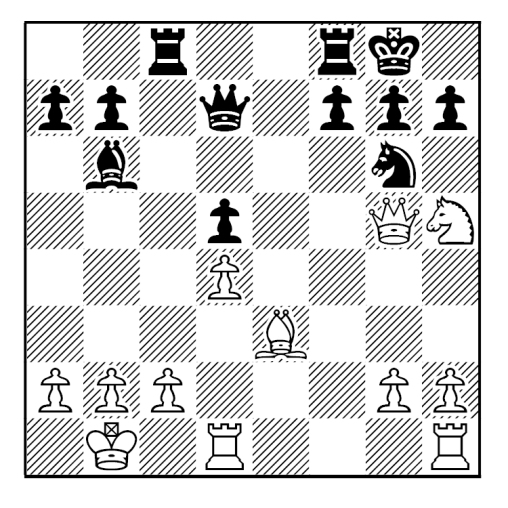
[11.Ne5 also worked well in Belen Miguel Fernandez-Esteban Ignacio Gonzalez de Cima, Asturias Ch. Primera B, Norena, Apr. 7 2001: 11…N6d7 12.Bxe7 Qxe7 13.f4 f6 14.Ng4 Nb6 15. c5 Nbd7 16.Rf3 e5 (On deciding on a candidate move or threat, a player should also ask if his proposed move has depth (long-term gain), a follow up plan, or if such a move also provides defense as well as attacking possibilities. Black’s threat of 17…e4 is obvious, but this move has no depth, does not provide any type of defense, and as far as we know, Black had no follow up plan.)

2019_07_18_A

17.Rg3! e4 (Black’s idea of getting HIS pawn to e4, should make equal sense as White getting his to e4. But chess is not that simple.) 18.Nxh6+! +- Kh7 19.Nf5 Qe6 20.Nxg7 Qe7 21.Nxe8 (And now White can play 22.Nxe4 and more tactics will follow.) 1-0]


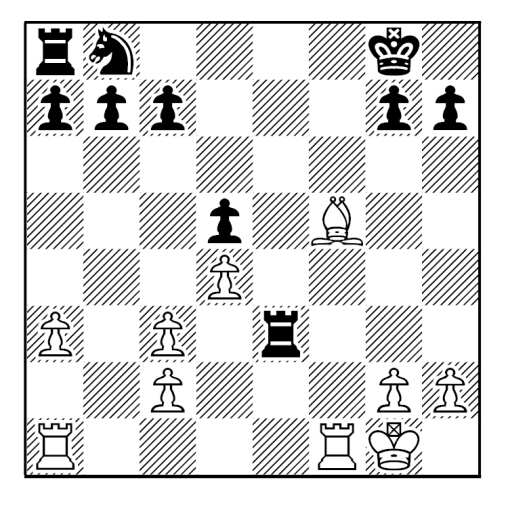
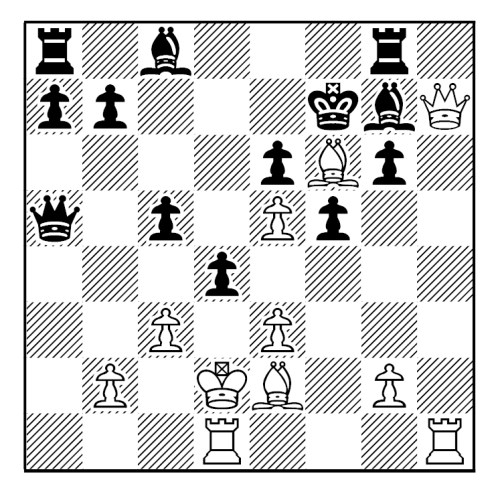
11…Nh5 12.Bxe7 Qxe7 13.e4 (Didn’t we tell Black not to allow this move a few games back?) 13…Nf4 14.Rfe1 Nxd3 15.Qxd3 dxc4 (Just about forced as …exd5 opens lines in White’s favor.) 16.Qxc4 Bd7 17.e5 (Now if e4 is a good move for White, then e5 is even stronger.) 17…Red8 18.Nd2 b5 19.Qe2 c5 20.d5 exd5 21.Nxd5 Qh4 22.Ne4 (We’ve going to give the position a +/-, but White’s advantage is probably stronger than that evaluation.) 22…c4 23.Nd6 Ng6 24.Nxf7! Bg4?

2019_07_18_B

25.Qxg4!! (Black is lost. The game could have continued with 25…Qxg4 26.Nxh6+ gxh6 27.Nf6, but you probably figured it out.) 1-0


Interesting enough, in the Queen’s Gambit Accepted, White can also get the advantage with .e3 instead of .e4. An old trap goes like this: 1.d4 d5 2.c4 dxc4 3.e3 b5 4.a4 (White could also play 4.Qf3 c6 5.a4, and merely get his pawn back with the advantage.) 4…c6 (or 4…a6 5.axb5!) 5.axb5 cxb5 6.Qf3!, winning.

This trap will catch beginners and even computers.

GM Kasparov-ELITE A/S EXPERIMENTAL
Simul
Hamburg, 1985
1.d4 d5 2.c4 dxc4 3.e3 b5 4.a4 Ba6 5.axb5 Bxb5 6.Nc3 c6 7.b3 e6 8.bxc4 Ba6 9.Nf3 Nf6 10.Bd3 Bd6 11.O-O O-O 12.e4 Bb4 13.Qc2 Nh5 14.e5 f5 15.exf6 Nxf6 16.Re1 Bc8 17.Bb2 a5 18.Rad1 Ra7 19.Ne5 a4 20.Re3 a3 21.Ba1 Bb7 22.Ne2 Nbd7 23.Nf4 Re8 24.Rh3 Nf8 25.g4 h6 26.g5 hxg5 27.Nfg6 N8h7 28.Nh8 g6 29.Bxg6 Nf8 30.Nhf7 Qe7 31.d5 cxd5 32.Nh6+ Kg7 33.Bxe8 Qxe8 34.Neg4 Be7 35.Ng8 Kxg8 36.Bxf6 Ng6 37.Bxe7 1-0

Black, even with a better third move, still lost in this game:

Tarrasch-Kurschner
Nuremburg, 1889
1.d4 d5 2.c4 dxc4 3.e3 Bf5!? 4.Bxc4 e6 5.Qb3 Be4 6.f3 Bc6 7.Ne2 Nf6 8.e4 Be7 9.Nbc3 Qc8 10.d5 exd5 11.exd5 Bd7 12.d6 Bxd6 13.Bxf7+ Kd8 14.Bg5 Nc6 15.Ne4 Be7 16.Bxf6 gxf6 17.O-O-O Ne5 18.Nf4 Qb8 19.Qe6 Rf8 20.Nxf6 Bd6 21.Nxd7 Nxd7 22.Rhe1 1-0


Maybe someone will get the bright idea, of when playing Black against a known 1.d4 player, to glue the e4 pawn to the board before the start of the game, so White can’t play his king pawn to e3, e4, e5, or any other square!

A Four Queen Opening.

Many players dream of playing with four queens on the board. They admire the complications and the overall tactical possibilities.


Most of the know that endgames produce the most four-queen games. And yet, it is still not that common and the tactically-gifted usually don’t have their dreams transformed into reality.

 
But is there an opening that will let the players have the four queens.


The opening is from a Semi-Slav and the Encyclopedia of Chess Openings (ECO) classifies it as D47.


The opening moves to this multi-queen game are 1.d4 d5 2.c4 e6 3.Nc3 Nf6 4.Nf3 c6 (In case you are interested, these moves define the Semi-Slav), 5.e3 Nbd7 6.Bd3 dxc4 7.Bxc4 b5. Now White’s bishop is under attack, so he moves to e2. Now after 8.Be2 a6 9.e4 b4 10.e5! bxc3 11.exf6 cxb2 12.fxg7 bxa1=Q 13.gxh8=Q, we have four queens, with two of them on their original squares and the other two are far off on corner squares.


Here are all the moves and a diagram to help you.

 
1.d4 d5 2.c4 e6 3.Nc3 Nf6 4.Nf3 c6 5.e3 Nbd7 6.Bd3 dxc4 7.Bxc4 b5 8.Be2 a6 9.e4 b4 10.e5! bxc3 11.exf6 cxb2 12.fxg7 bxa1=Q 13.gxh8=Q.
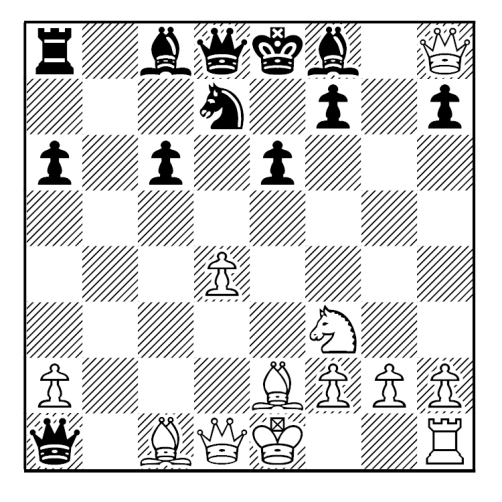
 

2019_06_05_A


Now let’s get to some games and analysis.


~~~~~~~~~~~~~~~~~~~~~~~~~~~~~

 
Black best response, after 13.gxh8=Q is to activate his second queen with 13…Qa5+. Anything else puts his game into jeopardy.


J. Kjeldsen-T. Christensen
Arhus, 1995
1.d4 d5 2.c4 e6 3.Nc3 Nf6 4.Nf3 c6 5.e3 Nbd7 6.Bd3 dxc4 7.Bxc4 b5 8.Be2 a6 9.e4 b4 10.e5 bxc3 11.exf6 cxb2 12.fxg7 bxa1=Q 13.gxh8=Q c5?! 14.O-O Bb7 15.Qxh7 Qxa2 16.Ng5 Qf6 17.Nxf7 Qg7 18.Qxg7 1-0


CM Asmund Hammerstad (2205)-Pavol Sedlacek (2233)
European Club Cup
Rogaska Slatina, Slovenia, Sept. 28 2011
1.d4 Nf6 2.Nf3 d5 3.c4 c6 4.Nc3 e6 5.e3 Nbd7 6.Bd3 dxc4 7.Bxc4 b5 8.Be2 a6 9.e4 b4 10.e5 bxc3 11.exf6 cxb2 12.fxg7 bxa1=Q 13.gxh8=Q Qxa2 (A little more active than 13…c5, but not by much.) 14.O-O Qf6 15.Qxh7 Qg7 16.Qhc2 Qd5 17.Ng5 Bb7 18.Bf3 Qb5 19.Bh5 O-O-O 20.Be2 Qa5 21.Bd2 Qa3 22.Bf3 Nb8 23.Be3 Be7 24.Ne4 f5 25.Nd2 Qb4 26.Qe2 Qb5 27.Nc4 a5 28.Rb1 Bb4 29.Nd6+ Rxd6 30.Qxb5 Qd7 31.Qe5 Qe8 32.Rxb4 1-0


After Black’s 13…Qa5+, White must block the check and he has two main ways to do so. One is 14.Bd2, the other 14.Nd2. The move 14.Bd2 would seem to be the best, but only superficially. 14.Nd2 allows for more freedom for White’s pieces. That’s why White wants to enter these complications – to use his tactical abilities.


Here are a few games with 14.Bd2.


Benko-Pytel
Hastings, 1973
[ECO]
1.d4 d5 2.c4 e6 3.Nc3 Nf6 4.Nf3 c6 5.e3 Nbd7 6.Bd3 dxc4 7.Bxc4 b5 8.Be2 a6 9.e4 b4 10.e5 bxc3 11.exf6 cxb2 12.fxg7 bxa1=Q? 13.gxh8=Q Qa5+ 14.Bd2 Qxd1+ 15.Bxd1 Qf5 (15…Qb5 16.Qxh7 +/-) 16.O-O Bb7 17.d5 Qxd5 18.Qxh7 c5 19.Ba4 O-O-O 20.Bg5 Ne5 21.Ne1 c4 22.Bxd8 Qxd8 23.Qh8 f6 24.Qg8 Qd6 25.Nc2 Kc7 26.Ne3 Be7 27.Rd1 Qb6 28.Qe8 Bc5 29.Qd8mate 1-0


Lauber (2380)-Mosquera
World U20 Ch.
Medellin, 1996
1.d4 d5 2.c4 e6 3.Nc3 Nf6 4.Nf3 c6 5.e3 Nbd7 6.Bd3 dxc4 7.Bxc4 b5 8.Be2 a6 9.e4 b4 10.e5 bxc3 11.exf6 cxb2 12.fxg7 bxa1=Q 13.gxh8=Q Qa5+ 14.Bd2 Qxd1+ 15.Bxd1 Qxa2 16.O-O c5 17.dxc5 Bb7 18.Bg5 h6 19.Bxh6 O-O-O 20.c6 Bxc6 21.Bxf8 Qa5 22.Be2 Rxf8 23.Qb2 Bb5 24.Rc1+ Kd8 25.Ne5 Nxe5 26.Qxe5 Qb4 27.Qc7+ Ke8 28.Qb7 Qd6 29.Rc8+ Qd8 30.Rxd8+ Kxd8 31.Bxb5 axb5 32.Qxb5 1-0


Fletcher Baragar (2305)-Daniel Fernandez (2057)
Financial Concept Open
North Bay, Canada, Aug. 7 1999
1.d4 d5 2.c4 e6 3.Nc3 Nf6 4.Nf3 c6 5.e3 Nbd7 6.Bd3 dxc4 7.Bxc4 b5 8.Be2 a6 9.e4 b4 10.e5 bxc3 11.exf6 cxb2 12.fxg7 bxa1=Q 13.gxh8=Q Qa5+ 14.Bd2 Q5xa2 15.O-O Qxd1 16.Rxd1 h6 17.Ne5 Nxe5 18.dxe5 Bd7 19.Qf6 Be7 20.Qh8+ Bf8 21.Qf6 Be7 22.Qxh6 O-O-O 23.Qe3 c5 24.Qf3 Kb8 25.Be3 Bb5 26.Rxd8+ Bxd8 27.Bxb5 axb5 28.g3 b4 29.Qc6 b3 30.Bxc5 b2 31.Bd6+ Ka7 32.Bc5+ Kb8 1/2-1/2


Kamil Klim (2108)-Krzysztof Bulski (2396)
Lasker Memorial
Barlinek, June 2 2007
1.d4 d5 2.c4 c6 3.Nf3 Nf6 4.Nc3 e6 5.e3 Nbd7 6.Bd3 dxc4 7.Bxc4 b5 8.Be2 a6 9.e4 b4 10.e5 bxc3 11.exf6 cxb2 12.fxg7 bxa1=Q 13.gxh8=Q Qa5+ 14.Bd2 Qxd1+ 15.Bxd1 Qf5 16.O-O Bb7 17.d5 Qxd5 18.Qxh7 c5 19.Ba5 Bc6 20.Nh4 Qe4 21.Qxe4 Bxe4 22.Re1 Bd3 23.Nf3 Bg7 24.Ng5 Bf6 25.Ne4 Bd4 26.Bc7 Nf6 27.Ba4+ Bb5 28.Bc2 Kd7 29.Bb6 Nxe4 30.Bxe4 Bc6 31.Rd1 Bd5 32.Bc2 Rb8 33.Ba4+ Kd6 34.Ba5 Rb2 35.Rd2 Rb1+ 36.Rd1 Bxa2 37.h4 Rxd1+ 38.Bxd1 c4 0-1

 
Now for the stronger, and more fluid, 14.Nd2.


Krogius-Kamyshov
USSR, 1949
[ECO]
1.d4 d5 2.c4 e6 3.Nc3 Nf6 4.Nf3 c6 5.e3 Nbd7 6.Bd3 dxc4 7.Bxc4 b5 8.Be2 a6 9.e4 b4 10.e5 bxc3 11.exf6 cxb2 12.fxg7 bxa1=Q? 13.gxh8=Q Qa5+ 14.Nd2 Qf5 15.O-O Bb7 16.Qb3 Nc5 17.Ba3 Nxb3 18.Qxf8+ Kd7 19.Qe7+ Kc8 20.Nxb3 +- Qxf1+ 21.Bxf1 Qd5 22.Bd6 1-0


Krogius-Shvedchikov
Calimanesti, 1993
1.d4 d5 2.c4 e6 3.Nc3 Nf6 4.Nf3 c6 5.e3 Nbd7 6.Bd3 dxc4 7.Bxc4 b5 8.Be2 a6 9.e4 b4 10.e5 bxc3 11.exf6 cxb2 12.fxg7 bxa1=Q 13.gxh8=Q Qa5+ 14.Nd2 Bb7 15.O-O Q1xa2 16.Nc4 Qd5 17.Bh6 O-O-O 18.Bxf8 c5 19.Nd6+ Qxd6 20.Bxd6 Rxh8 21.dxc5 Qd5 22.Qxd5 exd5 23.Rc1 1-0


De Guzman (2407)-Bhat (2410)
Michael Franett Memorial
San Francisco, 2005
1.d4 d5 2.c4 e6 3.Nf3 c6 4.e3 Nf6 5.Nc3 Nbd7 6.Bd3 dxc4 7.Bxc4 b5 8.Be2 Bb7 9.e4 b4 10.e5 bxc3 11.exf6 cxb2 12.fxg7 bxa1=Q 13.gxh8=Q Qa5+ 14.Nd2 Qf5 15.O-O O-O-O 16.Qb3 Nc5 17.Qb4 Nd7 18.Qb3 Nc5 19.Qb4 Be7 20.Qg7 Bf8 21.Qh8 Be7 1/2-1/2


Emil Klemanic (2257)-Peter Palecek (2254)
Slovakia Team Ch.
Košice, Jan. 16 2011
1.d4 d5 2.Nf3 Nf6 3.c4 c6 4.e3 e6 5.Nc3 Nbd7 6.Bd3 dxc4 7.Bxc4 b5 8.Be2 a6 9.e4 b4 10.e5 bxc3 11.exf6 cxb2 12.fxg7 bxa1=Q 13.gxh8=Q Qa5+ 14.Nd2 c5 15.O-O Qxd4 16.Qxh7 Qxa2 17.Bc4 Nf6 18.Qh8 Qa5 19.Qf3 Nd5 20.Qhh5 Qc7 21.Re1 Nf4 22.Qh7 Bb7 23.Ne4 Qa5 24.Rd1 O-O-O 25.Rxd4 Qe1+ 26.Bf1 Rxd4 27.Qxf4 Bxe4 28.Qhxf7 Bd6 29.Q4f6 Bc7 30.Q6xe6+ Kb7 31.Qxa6+ Kb8 32.Qe8+ Rd8 33.Qeb5+ 1-0

 
If 14.Nd2 Q5xa2?!, then White gets an advantage after the simple 15.O-O.


Shumiakina-Mihai
Timisoara, 1994
1.d4 d5 2.c4 e6 3.Nc3 Nf6 4.Nf3 c6 5.e3 Nbd7 6.Bd3 dxc4 7.Bxc4 b5 8.Be2 a6 9.e4 b4 10.e5 bxc3 11.exf6 cxb2 12.fxg7 bxa1=Q 13.gxh8=Q Qa5+ 14.Nd2 Q5xa2 15.O-O Bb7 16.Bc4 Qa4 17.Nb3 Qc3 18.Bxe6 fxe6 19.Bg5 Nf6 20.Qxf6 1-0


Fernando Peralta (2315)-Carlos Gonzalez
Villa Ballester Open, 1996
1.d4 d5 2.c4 e6 3.Nc3 Nf6 4.Nf3 c6 5.e3 Nbd7 6.Bd3 dxc4 7.Bxc4 b5 8.Be2 a6 9.e4 b4 10.e5 bxc3 11.exf6 cxb2 12.fxg7 bxa1=Q 13.gxh8=Q Qa5+ 14.Nd2 Q5xa2 15.O-O Qa4 16.Ne4 Qb4 17.Bd2 Qaxd4 18.Nf6+ Qxf6 19.Qxf6 Nxf6 20.Bxb4 Bxb4 21.Qa4 1-0

 
~~~~~~~~~~~~~~~~~~~~~~~~~~~~~

 
There is a sister variation with 8…Bb7 instead of 8…a6. And although there are similarities between the two variations, Black is more active and scores better in this variation.

 
Again, here are the opening moves and a diagram to help.

 
1.d4 d5 2.c4 e6 3.Nc3 Nf6 4.Nf3 c6 8.Be2 Bb7 9.e4 b4 10.e5! bxc3 11.exf6 cxb2 12.fxg7 bxa1=Q 13.gxh8=Q.
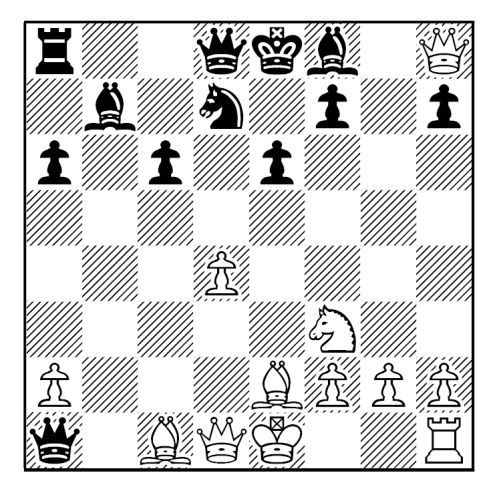
2019_06_05_B

 
And again, Black does best to activate his second queen with 13…Qa5+. Two games in which he does not and loses the game.


Z. Polgar-V. Dimitrov
Bulgaria, 1984
1.d4 d5 2.c4 e6 3.Nc3 Nf6 4.Nf3 c6 5.e3 Nbd7 6.Bd3 dxc4 7.Bxc4 b5 8.Be2 Bb7 9.e4 b4 10.e5 bxc3 11.exf6 cxb2 12.fxg7 bxa1=Q 13.gxh8=Q Qb1 14.O-O (White’s best.) 14…Qf6 15.Qxf6 Nxf6 16.Ne5 Qxa2 17.Bc4 Qa5 18.Qf3 Be7 19.Bg5 Qd8 20.Bxe6! fxe6 21.Bxf6 +- Qxd4 22.Qh5+ 1-0


Rassmussen-Domosud, 1984
[I am not sure who annotated this game. If the reader knows, please email me with the information. Thanks!]
1.d4 d5 2.c4 e6 3.Nc3 Nf6 4.Nf3 c6 5.e3 Nbd7 6.Bd3 dxc4 7.Bxc4 b5 8.Be2 Bb7 9.e4 b4 10.e5 bxc3 11.exf6 cxb2 12.fxg7 bxa1=Q 13.gxh8=Q Qb1 14.O-O Qf6 15.Qxf6 Nxf6 16.Ne5 Qxa2 17.Bc4 (17.Bh5 Qd5 18.Bxf7+ Kd8 19.Bh5) 17…Qa5 (Qb1) 18.Qf3 Be7 19.Bg5 [19.Nxc6 Qb6 20.d5 exd5 21.Nxe7 dxc4 (21…Kxe7 22.Re1+ Kd7 23.Qf5+ Kd8 24.Bg5)] 19…Qd8 20.Bxe6 [20.Nxc6 Qb6 21.d5 Bxc6 (21…Nxd5 22.Bxd5 <22.Nxe7 Nxe7 23.Qf6 Ng6> 22…Bxg5 23.Ne5) 22.dxc6 Nd5 23.Bxd5 Bxg5] 20…fxe6 21.Bxf6 Qxd4 (21…Qc8 22.Rb1 Bxf6 23.Qxf6 Qc7 24.Qh8+ Ke7 25.Qxh7+ Kd6 26.Nc4+ Kd5 27.Qxc7 Kxc4 28.Qe5 Kc3 29.Qc5+ Kd2 30.Rc1 Kd3 31.Rd1+ Ke4 32.Qe5#) 22.Qh5+ (22…Kd8 23.Nf7+ Kc8 24.Bxd4) 1-0

 
And here is the 14.Bd2 block. Not as good as 14.Nd2, but you probably already knew that already.


Chekover-Suetin
Leningrad, 1951
[ECO]
1.d4 d5 2.c4 e6 3.Nc3 Nf6 4.Nf3 c6 5.e3 Nbd7 6.Bd3 dxc4 7.Bxc4 b5 8.Be2 Bb7 9.e4 b4 10.e5 bxc3 11.exf6 cxb2 12.fxg7 bxa1=Q 13.gxh8=Q Qa5+ 14.Bd2 Qxd1+ 15.Bxd1 Qf5 16.O-O O-O-O 17.Qg8 Be7 18.Qg7 Qg6 19.Qxg6 hxg6=


Pliester-Dreev
New York Open, 1989
1.d4 d5 2.c4 e6 3.Nc3 Nf6 4.Nf3 c6 5.e3 Nbd7 6.Bd3 dxc4 7.Bxc4 b5 8.Be2 Bb7 9.e4 b4 10.e5 bxc3 11.exf6 cxb2 12.fxg7 bxa1=Q 13.gxh8=Q Qa5+ 14.Bd2 Qxd1+ 15.Bxd1 Qf5 16.O-O O-O-O 17.d5 Bd6 18.Qd4 c5 19.Qa4 Qxd5 20.Be2 Rg8 21.Rd1 Qe4 22.Qxe4 Bxe4 23.Ng5 Bd5 24.f3 f5 25.Nxh7 Be7 26.Ba6+ Kc7 27.Bf4+ Kd8 28.h4 Bxh4 29.g3 Bxg3 30.Bg5+ Kc7 31.Kg2 Bf4 0-1

 
After 13.gxh8=Q Qa5+ 14.Nd2, Black has three reasonable tries. Here are some minor ones just to lay some ground work.


Barshauskas-Kholmov
Latvian Ch., 1955
1.d4 d5 2.c4 e6 3.Nc3 Nf6 4.Nf3 c6 5.e3 Nbd7 6.Bd3 dxc4 7.Bxc4 b5 8.Be2 Bb7 9.e4 b4 10.e5 bxc3 11.exf6 cxb2 12.fxg7 bxa1=Q 13.gxh8=Q Qa5+ 14.Nd2 Q5xa2 15.O-O Ba6 (unclear – ECO) 16.Bxa6 Qxa6 17.Nb3 Qb1 18.Nc5 Qab5 19.Bh6 Qxd1 20.Rxd1 O-O-O 21.Nxd7 Bxh6 22.Qxh7 Qh5 23.Rb1 Kxd7 24.Rb7+ Kc8 25.Qb1 Bf4 26.g3 Rxd4 (with the idea of Rd1+) 0-1


Blackstock-Crouch
London, 1980
1.d4 d5 2.c4 e6 3.Nc3 Nf6 4.Nf3 c6 5.e3 Nbd7 6.Bd3 dxc4 7.Bxc4 b5 8.Be2 Bb7 9.e4 b4 10.e5 bxc3 11.exf6 cxb2 12.fxg7 bxa1=Q 13.gxh8=Q Qa5+ 14.Nd2 Qd5 15.O-O Qaxd4 16.Qxh7 Nf6 17.Qb1 Qb6 18.Bb2 Be7 19.Nc4 Qc7 20.Be5 Qcd7 21.Bxf6 Bxf6 22.Bf3 Qd4 23.Qa4 (+- ECO ; 23…Qf4!?)


Hansen-Muir
Aarus, 1990
1.d4 d5 2.c4 e6 3.Nc3 Nf6 4.Nf3 c6 5.e3 Nbd7 6.Bd3 dxc4 7.Bxc4 b5 8.Be2 Bb7 9.e4 b4 10.e5 bxc3 11.exf6 cxb2 12.fxg7 bxa1=Q 13.gxh8=Q Qa5+ 14.Nd2 Ba6 15.O-O Bxe2 16.Qxe2 Q5xa2 17.Qxh7 Qxd4 18.Qeh5 O-O-O 19.Q5xf7 Bc5 20.Qe4 Rf8 21.Qxd4 Bxd4 22.Qh7 Qd5 23.Nf3 Rxf3 24.gxf3 Ne5 25.Qg8+ Kb7 26.Qg7+ Kb6 27.Qg2 Nxf3+ 28.Kh1 a5 29.Be3 c5 30.Rb1+ Kc6 31.Rc1 a4 32.Bxd4 Nxd4 33.Qxd5+ exd5 34.h4 c4 35.h5 Nf5 36.Kg2 Kc5 37.Kf3 d4 38.Kf4 Nd6 39.h6 c3 40.h7 Nf7 41.Ra1 Kc4 0-1


Sadler-Neverov
Hastings, 1991
1.d4 d5 2.c4 e6 3.Nc3 Nf6 4.Nf3 c6 5.e3 Nbd7 6.Bd3 dxc4 7.Bxc4 b5 8.Be2 Bb7 9.e4 b4 10.e5 bxc3 11.exf6 cxb2 12.fxg7 bxa1=Q 13.gxh8=Q Qa5+ 14.Nd2 O-O-O 15.O-O Qf5 16.Qb3 Nc5 17.Qb4 Nd7 18.Qb3 1-0


Now for the main lines.


Black’s main choices here;


(1) 13.gxh8=Q Qa5+ 14.Nd2 Q5c3


(2) 13.gxh8=Q Qa5+ 14.Nd2 c5 15.O-O Qxd4


The next two originate from 14.Nd2 Qf5, one with 15.O-O O-O-O 16.Qb3, the other without all these moves.


(3) 13.gxh8=Q Qa5+ 14.Nd2 Qf5


(4) 13.gxh8=Q Qa5+ 14.Nd2 Qf5 15.O-O O-O-O 16.Qb3

 
~~~~~~~~~~~~~~~~~~~~~~~~~~~~~

 
(1) 13.gxh8=Q Qa5+ 14.Nd2 Q5c3


Lazarev-Goldstein
USSR Ch., 1962
1.d4 d5 2.c4 e6 3.Nc3 Nf6 4.Nf3 c6 5.e3 Nbd7 6.Bd3 dxc4 7.Bxc4 b5 8.Be2 Bb7 9.e4 b4 10.e5 bxc3 11.exf6 cxb2 12.fxg7 bxa1=Q 13.gxh8=Q Qa5+ 14.Nd2 Q5c3 15.O-O Qxd4 16.Qxh7 Qxa2 17.Bc4 Qa5 18.Bxe6 O-O-O 19.Qxf7 Qg7 20.Qxg7 Bxg7 21.Nc4 Qc7 22.Qg4 Be5 23.Bxd7+ Rxd7 24.Qg8+ Rd8 25.Qe6+ 1-0


Bikov-Filipenko
Moscow, 1983
1.d4 d5 2.c4 e6 3.Nc3 Nf6 4.Nf3 c6 5.e3 Nbd7 6.Bd3 dxc4 7.Bxc4 b5 8.Be2 Bb7 9.e4 b4 10.e5 bxc3 11.exf6 cxb2 12.fxg7 bxa1=Q 13.gxh8=Q Qa5+ 14.Nd2 Q5c3 15.Bc2 Ba6 16.h4 Qxd4 17.Qxd4 Qxd4 18.Rh3 O-O-O 19.Qf3 Ne5 20.Qc3 Bb4 21.Qxd4 Rxd4 22.h5 Nd3+ 23.Bxd3 Bxd3 24.h6 c5 25.a3 Ba5 26.Rh5 Rd5 27.Rxd5 exd5 28.Kd1 Bg6 29.Nb3 Bb6 30.a4 c4 31.a5 Bxf2 32.Ke2 Bg1 33.Kf1 Bh2 34.Nd4 Kd7 35.Bb2 Bf4 36.Bc3 a6 37.Ke2 Bxh6 0-1

 
(2) 13.gxh8=Q Qa5+ 14.Nd2 c5 15.O-O Qxd4


Lukov-Conquest
Tbilisi, 1988
1.d4 d5 2.c4 e6 3.Nc3 Nf6 4.Nf3 c6 5.e3 Nbd7 6.Bd3 dxc4 7.Bxc4 b5 8.Be2 Bb7 9.e4 b4 10.e5 bxc3 11.exf6 cxb2 12.fxg7 bxa1=Q 13.gxh8=Q Qa5+14.Nd2 c5 15.O-O Qxd4 16.Qxh7 Qc7 17.Bf3 Nf6 18.Qh3 Nd5 19.Ne4 Qxd1 20.Rxd1 O-O-O 21.Bg5 Be7 22.Bxe7 Qxe7 23.Qh6 Kb8 24.Rc1 Rc8 25.Qg7 e5 26.Bg4 f5 27.Qxe7 Nxe7 28.Nd6 fxg4 29.Nxc8 Bxc8 30.Rxc5 Ng6 31.f3 gxf3 32.gxf3 Be6 33.a3 Kb7 34.Kf2 Kb6 35.Rc3 Bf5 36.Kg3 e4 37.Re3 exf3 38.Rxf3 Ne7 39.Kf4 Bc8 40.Kg5 Kc5 41.h4 Bb7 42.Rf7 Kd6 43.Kf6 Nd5+ 44.Kg7 Nc7 45.h5 Be4 46.h6 a5 47.Rf1 Ke5 48.Rc1 Ne6+ 49.Kg8 Kd4 50.Rg1 Nc5 51.Kf7 Bc2 52.Kf6 Nd7+ 53.Kg7 Nc5 54.Kf7 Bh7 55.Ke7 Bf5 56.Rg5 Bc2 57.Rh5 Bh7 58.Kd6 Nb3 59.Kc6 Kc3 60.Kb5 Bd3+ 61.Ka4 1-0


Sadler-Payen
Hastings, 1990
1.d4 d5 2.c4 e6 3.Nc3 Nf6 4.Nf3 c6 5.e3 Nbd7 6.Bd3 dxc4 7.Bxc4 b5 8.Be2 Bb7 9.e4 b4 10.e5 bxc3 11.exf6 cxb2 12.fxg7 bxa1=Q 13.gxh8=Q Qa5+14.Nd2 c5 15.O-O Qxd4 16.Qxh7 Qxa2 17.Bc4 Qaa1 18.Bxe6 O-O-O 19.Qxf7 Bd6 20.Nc4 Bc7 21.Bd5 Ba6 22.Qxd4 Qxd4 23.Bb2 Qd3 24.Qe6 Bb5 25.Re1 Kb8 26.Ne3 Qd2 27.Rb1 Nb6 28.Be5 Qd3 29.Be4 Qe2 30.Bxc7+ Kxc7 31.Qe5+ Kc8 1-0


Chatalbashev-Sveshnikov
USSR, 1991
1.d4 d5 2.c4 e6 3.Nc3 Nf6 4.Nf3 c6 5.e3 Nbd7 6.Bd3 dxc4 7.Bxc4 b5 8.Be2 Bb7 9.e4 b4 10.e5 bxc3 11.exf6 cxb2 12.fxg7 bxa1=Q 13.gxh8=Q Qa5+14.Nd2 c5 15.O-O Qxd4 16.Nb3 Qxh8 (16…Qxd1 17.Rxd1 Qa4 18.Qxh7) 17.Nxa5 Bd5 18.Qc2 (18.Bf3!? Qd4 19.Qxd4 cxd4 20.Bxd5 exd5 21.Re1+ Kd8 22.Nc6+) 18…Qe5 19.Bd3 Bg7 20.Nc4 Qc3 21.Qe2 Ne5 22.Nxe5 Qxe5 23.Be3 Rc8 24.Ba6 Rc7 25.Qb5+ Ke7 26.Bxc5+ Kf6 27.Qb4 Qg5 28.f3 Kg6 29.Bd3+ f5 30.a3 Be5 31.Bd4 a5 32.Qb6 Rb7 33.Qc5 Qe7 34.Bf2 Qxc5 35.Bxc5 Rc7 36.Rc1 Rxc5 0-1

 
(3) 13.gxh8=Q Qa5+ 14.Nd2 Qf5


Pliester-Nikolic
Purmerend, 1993
1.d4 d5 2.c4 e6 3.Nc3 Nf6 4.Nf3 c6 5.e3 Nbd7 6.Bd3 dxc4 7.Bxc4 b5 8.Be2 Bb7 9.e4 b4 10.e5 bxc3 11.exf6 cxb2 12.fxg7 bxa1=Q 13.gxh8=Q Qa5+ 14.Nd2 Qf5 15.Nc4 O-O-O 16.O-O Qxa2 17.Bd3 Qd5 18.Ne3 Qg5 19.Qxh7 Qg7 20.Qdh5 Qxh7 21.Qxh7 e5 22.Bc4 Qa5 23.Qxf7 exd4 24.Nf5 Bc5 25.Bg5 Rf8 26.Qe6 Qc7 27.g3 Qe5 28.Qxe5 Nxe5 29.Be6+ Nd7 30.Rb1 Ba6 31.Rc1 Re8 32.Ng7 Rxe6 33.Nxe6 Bb6 34.h4 Kb7 35.h5 c5 36.Be7 d3 37.h6 c4 38.h7 d2 39.Ra1 c3 40.h8=Q c2 41.Qh1+ Kc8 42.Qc6+ 1-0


Carnic-Vlatkovic, 1995
1.d4 d5 2.c4 e6 3.Nc3 Nf6 4.Nf3 c6 5.e3 Nbd7 6.Bd3 dxc4 7.Bxc4 b5 8.Be2 Bb7 9.e4 b4 10.e5 bxc3 11.exf6 cxb2 12.fxg7 bxa1=Q 13.gxh8=Q Qa5+ 14.Nd2 Qf5 15.O-O O-O-O 16.Nc4 Be7 17.Qg7 Qxa2 18.Bd3 Qf6 19.Qg3 Nb6 20.Nxb6+ axb6 21.Be3 Qd5 22.Qc2 Bd6 23.Qh3 c5 24.f3 Bf4 25.Bf2 Qd6 26.Rd1 Kb8 27.dxc5 bxc5 28.Bxc5 Qc7 29.Qh5 Rd5 30.Qxd5 exd5 31.g3 0-1


Shumiakina-Zakurdjaeva
Moscow, 1999
1.d4 d5 2.c4 e6 3.Nc3 Nf6 4.Nf3 c6 5.e3 Nbd7 6.Bd3 dxc4 7.Bxc4 b5 8.Be2 Bb7 9.e4 b4 10.e5 bxc3 11.exf6 cxb2 12.fxg7 bxa1=Q 13.gxh8=Q Qa5+ 14.Nd2 Qf5 15.O-O O-O-O 16.Nc4 Qxa2 17.Bd3 Qf6 18.Qxh7 Nb6 19.Nxb6+ axb6 20.Be3 Bd6 21.Qdh5 Rd7 22.Be4 Qd8 23.Q7h6 Qa4 24.Bf3 Kc7 25.Qh8 Qxh8 26.Qxh8 Qa5 27.Qf6 Qa8 28.Rb1 b5 29.Rc1 Qd8 30.Qh6 Qf8 31.Qh5 f5 32.Bd2 b4 33.Qg6 Qh8 34.g3 Qxd4 35.Be3 Qe5 36.Rd1 Rg7 37.Qh6 Rd7 38.Bd4 Qb5 39.Qxe6 f4 40.Be2 Qg5 41.Bb6+ Kxb6 42.Qxd7 Bc7 43.Bf3 fxg3 44.hxg3 Qc5 45.Kg2 Qc3 46.Rh1 b3 47.Rh7 Qe5 48.Re7 Qd6 49.Qxd6 Bxd6 50.Re3 Kb5 51.Rxb3+ Bb4 52.Rb1 Kc4 53.Be4 1-0

 
(4) 13.gxh8=Q Qa5+ 14.Nd2 Qf5 15.O-O O-O-O 16.Qb3


Koziak-Vidoniak
Russia, 1991
1.d4 d5 2.c4 e6 3.Nc3 Nf6 4.Nf3 c6 5.e3 Nbd7 6.Bd3 dxc4 7.Bxc4 b5 8.Be2 Bb7 9.e4 b4 10.e5 bxc3 11.exf6 cxb2 12.fxg7 bxa1=Q 13.gxh8=Q Qa5+ 14.Nd2 Qf5 15.O-O O-O-O 16.Qb3 Bd6 17.Nc4 Be7 18.Qg7 Nc5 19.Qb4 Bh4 20.Be3 Qxa2 21.dxc5 Qxe2 22.Nd6+ Rxd6 23.cxd6 Qxf1+ 24.Kxf1 Qd3+ 25.Ke1 Qxe3+ 26.Kd1 Qd3+ 27.Kc1 Qf1+ 28.Kb2 Qxf2+ 29.Ka3 Qe3+ 30.Ka4 Qd3 31.Qxh4 Qd1+ 32.Ka3 Qd3+ 33.Ka2 Qa6+ 34.Kb3 1-0


Sadler-Kaidanov
Andorra, 1991
1.d4 d5 2.c4 e6 3.Nc3 Nf6 4.Nf3 c6 5.e3 Nbd7 6.Bd3 dxc4 7.Bxc4 b5 8.Be2 Bb7 9.e4 b4 10.e5 bxc3 11.exf6 cxb2 12.fxg7 bxa1=Q 13.gxh8=Q Qa5+ 14.Nd2 Qf5 15.O-O O-O-O 16.Qb3 Nc5 17.Qb4 Qc2 18.Qf6 Qcc3 19.Qxc3 Qxc3 20.Nf3 Ne4 21.Qxf7 c5 22.Bf4 Bd6 23.Qxe6+ Kb8 24.Bxd6+ Nxd6 25.Qe7 Qa5 26.dxc5 Nc8 27.Qe5+ Qc7 28.Qxc7+ Kxc7 29.Rd1 Re8 30.Bb5 Rg8 31.Rd7+ Kb8 32.c6 Ba8 33.Ne5 a5 34.Rxh7 1-0


Gil Capape-San Segundo
Saragossa, 1992
1.d4 d5 2.c4 e6 3.Nc3 Nf6 4.Nf3 c6 5.e3 Nbd7 6.Bd3 dxc4 7.Bxc4 b5 8.Be2 Bb7 9.e4 b4 10.e5 bxc3 11.exf6 cxb2 12.fxg7 bxa1=Q 13.gxh8=Q Qa5+ 14.Nd2 Qf5 15.O-O O-O-O 16.Qb3 Nc5 17.Qa3 Qxd4 18.Qxd4 Rxd4 19.Nc4 Qc2 20.Qf3 Nd7 21.Be3 c5 22.Qxf7 Qxe2 23.Bxd4 Qe4 24.Qxf8+ 1-0


~~~~~~~~~~~~~~~~~~~~~~~~~~~~~~~


And now you, the extremely tactically inclined player, can analyze these preceding games, and perhaps even use the ideas you can find, for your future games.

A Neglected Move

The Velimirović Attack, an opening system in the Open Sicilian, has been studied for decades. It is a system full of tactics, suspense, missed opportunities, and White wins more often than not.


To begin, let’s first define what opening moves make up the Velimirović Attack:


1.e4 c5 2.Nf3 Nc6 3.d4 cxd4 4.Nxd4 Nf6 5.Nc3 d6 6.Bc4 e6 7.Be3 Be7 8.Qe2 O-O 9.O-O-O a6 10.Bb3 Qc7, and now either 11.Rhg1 or 11.g4.


Both main lines require memorization in the opening and preparations for the middle game.


But there exists a third option, one that is relatively unexplored. This move, the neglected one, is 11.Kb1.


Why should this move be studied?


First of all, it forces Black to start thinking on his own, as his hours of research and development of the two main lines probably did not include this sub-variation. Also, in many of the main lines, Black plays Nc6-a5-Nxb3, exchanging his knight for White’s bishop. White usually recaptures with axb3, as cxb3 is almost suicide as it opens a file straight to White king. And after axb3, Black can move his queen from d8 to a5 and give an unwelcomed check on a1. With the king on b1, this threat is nullified.

 
So, let’s see a game.

 
Manfred Scherfke-Uwe Kunsztowicz (2234)
corres.
BRD Ch., 1976
1.e4 c5 2.Nf3 d6 3.d4 cxd4 4.Nxd4 Nf6 5.Nc3 Nc6 6.Bc4 e6 7.Be3 Be7 8.Qe2 O-O 9.O-O-O Qc7 10.Bb3 a6 11.Kb1 b5 12.Nxc6


[Probably even better is 12.g4!? as in IM A. Suarez Uriel (2391)-FM Adrian Galiana Fernandez (2291), Spanish Ch., Linares, Aug. 24 2018. The game continued with 12.g4!? b4 13.Na4 Bb7 14.Nxe6! fxe6 15.Bxe6+ Kh8 16.g5 Nxe4 17.Bb6 Qb8 18.Qxe4 Ne5 19.Bd5 Bxd5 20.Qxd5 Bxg5 21.Rhg1 Bf4 22.Qg2 Ng6 23.Bd4 Be5 24.Bxe5 dxe5 25.Nc5 Qc7 26.Ne6 Qa7 27.Nxf8 Rxf8 28.Qh3 1-0 (Black could try 28…Nf4. But after 29.Qg4, with the idea of Rd7, it’s all over.]


12…Qxc6 13.Bd4


[Not 13.f3?!, as Black is able to get in …Rb8! with impunity. Gregory Pitl (2243)-Stefan Bromberger (2399), Kecskemet, Hungary, 2001 went 13.f3?! Rb8! 14.a4 Nd7 15.axb5 axb5 16.Na2 Qa8 17.Nb4 d5 18.exd5 Bxb4 19.dxe6 fxe6 20.Bxe6+ Rf7 21.Bf4 Rb6 22.Bd5 Qxd5 23.Rxd5 Rxf4 24.Rhd1 Nf8 25.Qe3 Rbf6 26.c3 Ba5 27.Rxb5 Bc7 28.b4 Re6 29.Qa7 Rf7 30.Qa8 Re8 31.Qa2 Be6 32.c4 Rf4 33.Rc1 Rd4 34.Qa7 Rd7 35.Qa2 Bf7 36.Qf2 Bf4 0-1.]


13…Bb7 14.Rhe1 Qc7


[14…Rfe8 is more defensive than aggressive.


(1) Fernand Gobet (2415)-Fabio Bruno (2409), Banco di Roma, Rome, Italy, 1983: 14.Rhe1 Rfe8 15.f4 Rad8 16.a3 h6 17.g4 e5 18.fxe5 dxe5 19.Bxe5 Nxe4 20.Nd5 Bd6 21.Qxe4 Rxe5 22.Qxe5 Bxe5 23.Ne7+ Kf8 24.Nxc6 Rxd1+ 25.Rxd1 Bxc6 26.h4 Ke7 27.Bd5 Bd7 28.Bf3 Be6 29.h5 Bc7 30.c3 f5 31.Re1 Kf6 32.gxf5 Bxf5+ 33.Be4 Bg4 34.Bg6 Bd6 35.b4 Kg5 36.Rg1 Be5 37.Kb2 Kf4 38.Re1 Bf6 39.Kc2 Kg5 40.Rg1 Kf4 41.Kd3 Be6 1-0.]


(2) Joachim Walther-G. Hammerling, corres., East Germany, 1977: 14.Rhe1 Rfe8 15.a3 Qc7 16.f4 Bc6 17.g4 Nd7 18.g5 g6 19.h4 Nc5 20.Ba2 Rad8 21.h5 d5 22.hxg6 fxg6 23.Rh1 Bf8 24.Bf6 Qb7 25.Bxd8 Rxd8 26.exd5 exd5 27.Nxd5 Bxd5 28.Rxd5 Rxd5 29.Rd1 Qe7 30.Qxe7 Bxe7 31.Rxd5 Kf8 32.f5 gxf5 33.Rxf5+ Ke8 34.Rf7 Bxg5 35.Rxh7 Nd7 36.b4 1-0]

 
15.a3 Bc6


[GM Velimirović-GM Csom, IBM I, Amsterdam, 1974 continued instead with 15…Rac8 16.f4! e5 17.fxe5 dxe5 18.Nd5 Bxd5 +- 19.exd5 exd4 20.Qxe7 Qxh2 21.d6 Rce8

2019_05_29_A
22.Bxf7+ Rxf7 23.Qxe8+ Nxe8 24.Rxe8+ Rf8 25.d7 Qd6 26.Rf1 1-0]


16.f4 Qb8 17.f5 e5 18.Bf2 a5 19.Nd5 Bxd5 20.Rxd5 Nxd5 21.Bxd5 b4 22.a4 Bd8 23.Qh5 b3 24.cxb3 Ra6 25.Re3

2019_05_29_B


[Black now has a number of ways to lose.

Here are two sample lines.

25.Re3 g6 26.Qh6 Bf6 (26…Re8 also loses to 27.fxg6 hxg6 28.Qxg6+ +-) 27.Rh3 +-

25.Re3 h6 26.Rg3 Kh7 (26…Bg5 seems good, but after 27.Rxg5! hxg5 28.Qxg5, with the idea of f6, Black is losing big time.) 27.Be3 wins.

So Black takes the honorable way to end the game – he resigns.]


1-0

A Rarely Used Opening

The moves defining Alapin’s Opening are 1.e4 e5 2.Ne2. It is an opening not regularly seen in tournament play. In fact, I have seen only one book that covers this exclusively cover this opening, Alapin’s Opening by Denis Druash, published in 1984.


This rarity of this opening is due to its several shortcomings. One is the inability of the King’s Knight to threaten, or even take a pawn or piece, on e5. Whites’ King Bishop also cannot immediately travel to e2, d3, c4, or b5 Instead White must lose a tempo (usually Ng3), in order to free his bishop. Finally, a personal observation. This move, for an artist, of which I do part-time work, looks atheistically unpleasing, and lacking in both tension and drama. You don’t want to use this diagram if you wish to promote chess with awe-inspiring images.

Let’s get back to the opening.
Black has at least two reasonable (and good) responses to 2.Ne2.


One is the simple 2…d5, a move that both occupies and threatens the center. After all, the reasoning goes, if White doesn’t want to control the center, then perhaps Black should do it.


Black could also try 2…Nf6, which often gives Black the advantage. But Black still has to be careful; White seems to do very well with a very weird King’s Gambit after 1.e4 e5 2.Ne2 Nf6 3.f4.


We’ll take a brief look at other Black responses before proceeding with 2…d5 and 2…Nf6 just to whet your appetite.


ALAPIN
1.e4 e5 2.Ne2

 
1) 2.Ne2
2) 2.Ne2 d5
3) 2.Ne2 Nf6
4) 2.Ne2 Nf6 3.f4


~~~~~~~~~~~~~~~~~~~~~~~~~~~~~~~~~~~~~~~~~~~~

Alapin – 1
2.Ne2


Mieses-Janowski
Match
Paris, 1895
1.e4 e5 2.Ne2 Bc5 3.d4 exd4 4.Nxd4 Nf6 5.Nc3 O-O 6.Be3 Re8 7.Bc4 Bb4 8.f3 d5 9.Bd3 c5 10.O-O cxd4 11.Bxd4 dxe4 12.Bxf6 Qxf6 13.fxe4 Qh6 14.e5 Nc6 15.Nd5 Bc5+ 16.Kh1 Rxe5 17.Nc7 Rb8 18.Bc4 Bf5 19.Qf3 Bd6 20.Rae1 Rxe1 21.Rxe1 Qxh2mate 0-1


Alapin-Albin
Berlin International
Germany, 1897
1.e4 e5 2.Ne2 Qh4 3.Nbc3 Bc5 4.g3 Qf6 5.d4 exd4 6.Nd5 Qe5 7.Bg2 Na6 8.Bf4 Qh5 9.Nxd4 Qxd1+ 10.Rxd1 Bxd4 11.Rxd4 d6 12.Bf1 Ne7 13.Bxa6 Nxd5 14.Bb5+ c6 15.Rxd5 cxb5 16.Rxb5 O-O 17.O-O b6 18.Rd1 Bg4 19.Rd2 Bf3 20.Bxd6 Rfe8 21.e5 g5 22.h3 h5 23.Rb3 g4 24.Rxf3 gxf3 25.Rd3 f6 26.Rxf3 fxe5 27.Rf5 e4 28.Rg5+ Kf7 29.Rxh5 e3 30.fxe3 Rxe3 31.Kf2 Rae8 32.Rh7+ Kg6 33.Rxa7 Re2+ 34.Kf3 Rxc2 35.b3 Kf5 36.Rc7 Rd2 37.Bf4 Rd3+ 38.Kf2 Ra8 39.Ke2 Rd5 40.Rc2 Rh8 41.h4 Kg4 42.Rd2 Re8+ 43.Kd1 Rc5 44.Rd6 b5 45.Rd4 Kf3 46.b4 Rc3 47.Kd2 Rc6 48.Rd3+ Kg4 49.Rd5 Kf3 50.Rc5 Ra6 51.Rxb5 Ra3 52.Re5 Rd8+ 53.Kc2 Rxa2+ 54.Kb3 Rh2 55.h5 1-0


City of London C.C.-Anthenaeum
corres., 1897
1.e4 e5 2.Ne2 Nc6 3.Nbc3 Bc5 4.Ng3 d6 5.d3 Nf6 6.Bg5 Be6 7.Nh5 O-O 8.Nd5 Nxe4 9.Bxd8 Bxf2+ 10.Ke2 Bg4mate 0-1


Manko-Jankovic
Germany, 1900
1.e4 e5 2.Ne2 Bc5 3.f4 Qf6 4.c3 Nc6 5.g3 Nh6 6.Bg2 Ng4 7.Rf1 Nxh2 8.fxe5 Qxf1+ 9.Bxf1 Nf3mate 0-1


Hannes Reinup-D. Ross (2291)
NATO Ch.
Rynia, Poland, Aug. 16 2013
1.e4 e5 2.Ne2 Nc6 3.Nbc3 Nf6 4.g3 Bc5 5.f3 a6 6.a4 d6 7.b3 Be6 8.Ba3 Ba7 9.h3 h5 10.f4 exf4 11.Nxf4 Nd4 12.d3 Qd7 13.Bg2 O-O-O 14.Bb2 h4 15.g4 Rde8 16.Nce2 Nxe2 17.Qxe2 Nd5 18.Nxd5 Bxd5 19.O-O-O f6 20.Rhf1 Rhf8 21.Rf5! Bc6 22.Qf3 Qe6 (One big problem in Black’s position are his bishops. They are on ineffective diagonals. Better for him, for his bishop placement and other problems, is 22…Qe7 with the idea of Bd7 and advancing his queen-side pawns as he has enabled his c7-pawn to also move forward and his queen can invade White’s castled position in the future.) 23.g5 Re7 24.gxf6 gxf6 25.Qh5 Be3+ 26.Kb1 Bg5 27.Rg1 Be8 28.Qf3 Bc6 29.c4 b5?! 30.Bc1 bxa4? 31.Bxg5 axb3 32.Rxf6 1-0


M. Alihodzic (2074)-A. Hadzovic (2212)
Sarajevo, June 19 2013
1.e4 e5 2.g3 Nc6 3.Bg2 Bc5 4.Ne2 d6 5.h3 f5 6.d3 Nf6 7.Nbc3 O-O 8.O-O Qe8 9.exf5 Bxf5 10.Be3 Qh5 11.Bxc5 dxc5 12.Nc1 Qg6 13.g4 Bxg4 14.hxg4 Nxg4 15.f3 Ne3 16.Qe2 Nxf1 17.Kxf1 Nd4 18.Qe4 Qh5 19.N3e2 Nxf3 20.Ng3 Nd4+ 21.Kg1 Qd1+ 22.Kh2 Nxc2 23.Rb1 Rf2 24.Nge2 Ne1 25.Nc3 Qh5+ 0-1


Jens Ove Fries Nielsen (2359)-Adrien Demuth (2551)
GRENKE Chess Open
Karlsruhe, Germany, Mar. 31 2018
1.e4 e5 2.Ne2 d6 3.f4 Nc6 4.d4 Nf6 5.Nbc3 exd4 6.Nxd4 Nxe4 7.Nxe4 Qe7 8.Bb5 Qxe4+ 9.Kf2 Bg4 10.Qxg4 Qxd4+ 11.Be3 Qxb2 12.Rab1 Qxc2+ 13.Be2 f5 14.Qf3 O-O-O 15.Rhc1 Qe4 16.Qxe4 fxe4 17.Bg4+ Rd7 18.a4 a5 19.Rb5 Be7 20.Rcb1 b6 21.Bxb6 Rf8 22.Ba7 Bh4+ 23.g3 Kd8 24.Rb8+ Ke7 25.Rxf8 1-0


Alapin – 2
2.Ne2 d5

Gratzsch,Tanicaud, Schellenberg – Hennenberg, Scholl
Dresden Chess Club, 1893
1.e4 e5 2.Ne2 Bc5 3.c3 Nf6 4.d4 exd4 5.cxd4 Bb4+ 6.Bd2 Qe7 7.e5 Ne4 8.Nbc3 Nxd2 9.Qxd2 O-O 10.a3 Bxc3 11.bxc3 d6 12.exd6 Qxd6 13.Ng3 Nd7 14.Be2 Nf6 15.O-O c5 16.Bd3 Be6 17.Be4 Rab8 18.f4 Rfd8 19.f5 Bd5 20.Bc2 Qc6 21.Rae1 Rbc8 22.Rf2 cxd4 23.cxd4 Qa6 24.a4 Bc6 25.Qd1 Rd7 26.Rd2 Rcd8 27.Qa1 Qc4 28.Red1 Nd5 29.Be4 Qxa4 30.Ra2 Qb4 31.Rxa7 Nc3 32.Bxc6 Nxd1 33.Qxd1 (33.Bxd7 Qe1+ 34.Nf1 Qf2+) 33…Rxd4 0-1


Alapin-Caro
Berlin, 1895
1.e4 e5 2.Ne2 Bc5 3.f4 d6 4.c3 Bg4 5.d4 exd4 6.cxd4 Bb6 7.Nbc3 Nf6 8.h3 Bxe2 9.Bxe2 d5 10.exd5 (10.e5 Ne4) 10…Nxd5 11.Nxd5 Qxd5 12.Bf3 Qb5 13.a4 Qb4+ 14.Bd2 Qxd4 15.Qe2+ Kd8 16.O-O-O Nd7 17.Rhe1 c6 18.Qe7+ Kc7 19.Bc3! Qxf4+ 20.Kb1 Qf5+ 21.Be4 Qe6 22.Bc2! Qxe7 23.Rxe7 Rad8 24.Bf5 1-0


N.N.-Canal
Blindfold Game
New York, 1935
1.e4 e5 2.Ne2 d5 3.exd5 Qxd5 4.Nbc3 Qa5 5.d4 Nc6 6.d5 Nb4 7.Bd2 Bf5 8.Rc1 Bxc2 9.Rxc2 Nd3mate 0-1


J. Phillips-S.P. Johnston
Chicago, n.d.
1.e4 e5 2.Ne2 d5 3.exd5 Nf6 4.c4 c6 5.dxc6 Nxc6 6.a3 Bc5 7.b4 Bd4 8.Nxd4 Nxd4 9.Be2 Bf5 10.d3 O-O 11.O-O Nxe2+ 12.Qxe2 Bxd3 13.Qxe5 Re8 (14.Qc3 Bxf1 15.Kxf1 Qd1+) 0-1


Bo Jacobsen (2269)-IM Ljubomir Ljubojevic (2565)
Groningen
Netherlands, 1970
1.g3 e5 2.Bg2 Nc6 3.e4 Bc5 4.Ne2 (A roundabout way of reaching the Alapin.) 4…Nf6 5.c3?! d5 6.b4 Bb6 7.exd5 Nxd5 8.Ba3 Bg4 9.O-O Nf4! 10.gxf4 Qd3! 11.Re1 O-O-O! 12.b5 Na5 13.Bb4 Nc4 14.a4 exf4 15.a5 Bxf2+ 16.Kxf2 Ne3 17.Na3 Nxd1+ 18.Raxd1 f3 19.Nc1 Qf5 20.Bh1 Qf4 0-1


Robert G. Hartoch-Gert Ligterink
IBM II
Amsterdam, July 19 1975
1.g3 e5 2.Bg2 Nf6 3.e4 Bc5 4.Ne2 Nc6 5.c3 d5 6.exd5 Nxd5 7.d4 exd4 8.cxd4 Bb6 9.Nbc3 Be6 =/+ 10.O-O O-O 11.Na4 Re8 12.h3 Qf6 13.Nxb6 axb6 14.b3 Ndb4 15.Bb2 Bd5 16.Nf4 Bxg2 17.Kxg2 Rad8 18.Qf3 Nc2 19.Rad1 N2xd4 20.Bxd4 Rxd4 21.Rxd4 Qxd4 22.Rd1 Qf6 23.Nd5 Qxf3+ 24.Kxf3 Rd8 25.Ke2 Rc8 26.Ne3 Kf8 27.f4 b5 28.Nd5 Re8+ 29.Kd3 Rd8 30.Kc3 Ne7 31.Ne3 Rxd1 32.Nxd1 Nc6 33.Ne3 Ke7 34.g4 Ke6 35.Nf5 g6 36.Ne3 Ne7 37.Kd4 b6 38.b4 f5 39.a3 c5+ 40.bxc5 Nc6+ 41.Kd3 bxc5 42.gxf5+ gxf5 43.a4 Nb4+ 44.Kc3 bxa4 45.Kc4 a3 46.Kb3 a2 47.Kb2 Nd3+ 48.Kxa2 Nxf4 49.h4 0-1


Jason S. Davies (2048)-Shaun R. Willenberg
Commonwealth and South African Open
South Africa, June 25 2011
1.e4 e5 2.g3 Nc6 3.Bg2 Nf6 4.Ne2 Bc5 5.O-O d6 6.c3 Bg4 7.d3 Qd7 8.a4 a5 9.Na3 Bh3 10.Nc4 h5 11.Bg5 Nh7 12.Be3 h4 13.f4 Bxe3+ 14.Nxe3 hxg3 15.hxg3 Nf6 16.f5 Ng4 17.Nxg4 Bxg4 18.Qd2 f6 19.Rad1 Qf7 20.Kf2 Qb3 21.Rh1 O-O-O 22.Ra1 Qb6+ 23.Qe3 Qxb2 24.Bf3 Bxf3 25.Qxf3 Rxh1 26.Rxh1 Qa2 27.Qg4 Qf7 28.Rh7 Rg8 29.Ke3 Ne7 30.d4 c6 31.Kd3 b5 32.axb5 cxb5 33.d5 Kb7 34.Kc2 Nc8 35.Nc1 Nb6 36.Qe2 Ka6 37.g4 0-1


GM V. Ivanchuk (2738)-GM M. Carlsen (2832)
Blitz Game, July 2 2017
GCT Blitz YourNextMove
Leuven, Belgium, July 2 2017
1.e4 e5 2.Ne2 d5 3.exd5 Nf6 4.d4 exd4 5.Qxd4 Qxd5 6.Nbc3 Qxd4 7.Nxd4 Bc5 8.Ndb5 Na6 9.Bf4 O-O 10.f3 Re8+ 11.Be2 Be6 12.O-O-O Bxa2 13.Rhe1 Nh5 14.Bd2 Be6 15.Ne4 Be7 16.Nd4 Bd7 17.Bxa6 bxa6 18.Bg5 Bxg5+ 19.Nxg5 Nf6 20.Nb3 h6 21.Ne4 Nxe4 22.Rxd7 Nf6 23.Rdd1 Kf8 24.Nc5 Rxe1 25.Rxe1 Re8 26.Rxe8+ Kxe8 27.Nxa6 Kd7 28.Nc5+ Kd6 29.Nd3 c5 30.Kd2 c4 31.Nf4 Kc5 32.h4 a5 33.g4 Nd5 34.Ne2 g6 35.c3 Kd6 36.f4 h5 37.g5 a4 38.Ke1 Ne3 39.Ng3 Ng2+ 0-1 (And yes, Black is the current World Champion.)


Alapin – 3
2.Ne2 Nf6

Taubenhaus-Hanham
New York, 1893
1.e4 e5 2.Ne2 Nf6 3.Ng3 Bc5 4.Bc4 d6 5.c3 Qe7 6.O-O Nc6 7.d3O-O 8.Nd2 Bb6 9.Nf3 Nd8 10.Nh4 g6 11.Bg5 Ne6 12.Qd2 Nxg5 13.Qxg5 Nd5 14.Qh6 Nf4 15.Ngf5 gxf5 16.exf5 Rd8 17.Rae1 Rd7 18.Ng6 Qd8 19.Nxf4 Qf8 20.Qxf8+ Kxf8 21.Nd5 Rd8 22.g4 c6 23.Nxb6 axb6 24.Bb3 Kg7 25.d4 exd4 26.cxd4 Kf6 27.Kg2 Rg8 28.Kf3 Bd7 29.Kf4 h6 30.Re3 Rae8 31.Rfe1 Rxe3 32.fxe3 d5 33.e4 dxe4 34.Rxe4 b5 35.h4 b6 36.Re1 Rg7 37.d5 c5 38.d6 c4 39.Bc2 Rg8 40.Re7 Bc6 41.g5+ hxg5+ 42.hxg5+ Rxg5 43.Rxf7+ Kxf7 44.Kxg5 b4 45.Bd1 b5 46.Bh5+ Kf8 47.Kf4 Bd5 48.Bd1 c3 49.bxc3 bxc3 50.a3 Ke8 51.Bc2 Kd7 52.Ke5 1/2-1/2


H.G. Daniel-John Levi Clark
New York State Chess Association
Rochester, Aug. 24 1910
1.e4 e5 2.Ne2 Nc6 3.Ng3 Nf6 4.Nc3 d5 5.exd5 Nxd5 6.Be2 Nxc3 7.bxc3 Be7 8.O-O O-O 9.Bb2 Be6 10.d4 f5 11.f4 exf4 12.Rxf4 Bg5 13.Rf3 Na5 14.Qf1 Qd5 15.c4 Nxc4 16.Bxc4 Qxc4 17.Qxc4 Bxc4 18.Rxf5 Rxf5 19.Nxf5 Re8 20.h4 Bf6 21.g4 Re4 22.g5 Bd8 23.d5 g6 24.Nh6+ Kf8 25.Kh2 Rxh4+ 26.Kg3 Re4 27.Kf3 Bxd5 28.Kg3 Bxg5 29.Rf1+ Ke8 30.Ng4 Ke7 31.Bf6+ Bxf6 32.Nxf6 Re5 33.Nxh7 Bxa2 34.Nf8 Bf7 35.Nh7 Rf5 36.Re1+ Be6 37.Re4 Rh5 38.Nf8 Kxf8 39.Rxe6 Kf7 40.Re4 Rc5 0-1


U. Nicolas-Pomar Salamanca (2345)
Madrid, 1943
1.e4 e5 2.Ne2 Nf6 3.Nbc3 Bc5 4.d4 exd4 5.Na4 Bb4+ 6.c3 dxc3 7.bxc3 Be7 8.Ng3 d6 9.Bd3 Nc6 10.O-O O-O 11.f4 Re8 12.Bb2 Bf8 13.Qd2 Ng4 14.Rf3 Bd7 15.c4 Ne7 16.Nc3 Ng6 17.Nd5 c6 18.h3 cxd5 19.hxg4 Bxg4 20.cxd5 Bxf3 21.gxf3 Qh4 22.Ne2 Qh3 23.Rf1 Be7 24.Nd4 Qg3+ 25.Kh1 Qh4+ 26.Kg1 Nxf4 27.Nf5 Qg5+ 28.Kh1 g6 29.Qh2 Qh5 30.Nh6+ Kf8 31.Qxh5 Nxh5 32.f4 Ng3+ 33.Kg2 Nxf1 34.Bxf1 f6 35.Kf2 Kg7 36.Ng4 h5 37.Ne3 Rac8 38.Kf3 Kh6 39.e5 fxe5 40.fxe5 dxe5 41.Bxe5 Bg5 42.Bd4 Bxe3 43.Bxe3+ g5 44.Bb5 Rxe3+ 45.Kxe3 Rc5 46.d6 Rxb5 47.Kd4 Rb1 0-1


Bakonyi-Benko
Budapest, 1948
1.e4 e5 2.Ne2 Nf6 3.Nbc3 d5 4.exd5 Nxd5 5.Nxd5 Qxd5 6.Nc3 Qd8 7.Bc4 Be7 8.O-O O-O 9.d3 Nc6 10.f4 exf4 11.Bxf4 Nd4 12.Nd5 Bd6 13.c3 Nf5 14.Qf3 Be6 15.Rae1 c6 16.Ne3 Nxe3 17.Qxe3 Re8 18.Bxd6 Qxd6 19.d4 Qd7 20.Bxe6 Rxe6 21.Qh3 Rae8 22.Rxe6 Qxe6 23.Qxe6 Rxe6 24.Kf2 f5 25.Re1 Rxe1 26.Kxe1 g5 27.Ke2 Kf7 28.Ke3 Ke6 29.c4 Kd6 30.Kd3 h6 31.Ke3 1/2-1/2


Alapin – 4
2.Ne2 Nf6 3.f4

Charousek-Englander
Kaschau, Apr. 1894
1.e4 e5 2.Ne2 Nf6 3.f4 d6 4.Nbc3 Bg4 5.h3 Bxe2 6.Bxe2 Nc6 7.O-O Be7 8.Bc4 Nd4 9.d3 c6 10.Be3 Ne6 11.Ne2 a6 12.Ng3 exf4 13.Bxf4 d5 14.exd5 Nxd5 15.Be5 O-O 16.Qh5 Bc5+ 17.Kh2 g6 18.Qg4 Ne3 19.Qxe6 Nxf1+ 20.Rxf1 fxe6 21.Bxe6+ Rf7 22.Rxf7 Qe8 23.Rf6+ Kg7 24.Rf4+ Kh6 25.Rh4+ Kg5 26.Rg4+ Kh6 27.Nf5+ gxf5 28.Bf4+ Kh5 29.Rg5+ Kh6 30.Rg8+ Kh5 31.g4+ fxg4 32.Bxg4+ Kh4 33.Bg5mate 1-0


Alapin-Chigorin
Vienna International
Austria, 1898
1.e4 e5 2.Ne2 Nf6 3.Nbc3 Nc6 4.f4 exf4 5.d4 Bb4 6.d5 Nxe4 7.Bxf4 Bxc3+ 8.bxc3 Ne7 9.Qd4 Nf6 10.c4 d6 11.Ng3 Nf5 12.Nxf5 Bxf5 13.Be2 O-O 14.O-O Qd7 15.Bd3 Bxd3 16.cxd3 Rfe8 17.h3 Nh5 18.g4 Nxf4 19.Rxf4 Re2 20.Rf2 Qe7 21.Raf1 f6 22.Rxe2 Qxe2 23.Rf2 Qe5 24.Qxe5 fxe5 25.Rb2 b6 26.Kf2 Rf8+ 27.Ke2 Rf4 28.Rb1 Kf7 29.Rg1 Kf6 30.Rg3 Kg5 31.a3 h6 32.Re3 Kh4 33.Kd2 Rf2+ 34.Kc3 Kg5 35.Kb3 Kf4 36.Re4+ Kf3 37.c5 bxc5 38.Ra4 Ke2 39.Rxa7 Kxd3 40.Rxc7 e4 41.a4 e3 42.a5 e2 43.Re7 Rf1 0-1


Alapin-Leonhardt
Ostend International
Belgium, 1905
1.e4 e5 2.Ne2 Nf6 3.f4 d5 4.fxe5 Nxe4 5.d3 Nc5 6.d4 Ne4 7.Nd2 f5 8.Nxe4 fxe4 9.Nf4 Bf5 10.c3 c6 11.Be2 Be7 12.Bg4 Qc8 13.Bxf5 Qxf5 14.Qb3 g5 15.Nh5 O-O 16.Be3 b5 17.a4 b4 18.Ng3 Qg4 19.c4 dxc4 20.Qxc4+ Kh8 21.Qc2 b3 22.Qe2 Bb4+ 23.Kd1 Qe6 24.Nxe4 c5 25.Nxg5 Qg6 26.h4 cxd4 27.h5 Qc2+ 28.Qxc2 bxc2+ 29.Kxc2 dxe3 30.Kd3 Nc6 31.Kxe3 Nxe5 32.Rh4 Be7 0-1


Alapin-Leonhardt
Vienna International
Austria, 1908
1.e4 e5 2.Ne2 Nc6 3.Nbc3 Nf6 4.f4 d5 5.exd5 Nxd5 6.fxe5 Nxe5 7.Nxd5 Qxd5 8.d4 Nc6 9.c3 Bd6 10.Nf4 Qg5 11.Qe2+ Ne7 12.Qb5+ Qxb5 13.Bxb5+ Bd7 14.Bxd7+ Kxd7 15.O-O g6 16.Nd3 f5 17.Bf4 Bxf4 18.Nxf4 Rae8 19.Rfe1 Nc8 20.Nd5 Rxe1+ 21.Rxe1 Rf8 22.Kf1 c6 23.Nf4 Nd6 24.Ne6 Rf7 25.Ng5 Rg7 26.Re3 Nc4 27.Re2 Re7 28.g3 Rxe2 29.Kxe2 Nxb2 30.Nxh7 Ke7 31.Ng5 Nc4 32.Nf3 Ke6 33.Kd3 b5 34.Ng5+ Kf6 35.Nf3 a6 36.Ke2 Ke6 37.Kd3 a5 38.Ng5+ Kf6 39.Nf3 a4 40.Ke2 Ke7 41.Kd3 Ke6 42.Ng5+ Kf6 43.Nf3 g5 44.Ke2 g4 45.Nh4 Nd6 46.Kd3 Ne4 47.Ng2 Ng5 48.Ne1 Ke6 49.c4 Nf3 50.Nxf3 gxf3 51.h4 bxc4+ 0-1


Alapin-Suechting
Vienna International
Austria, 1908
1.e4 e5 2.Ne2 Nf6 3.f4 d5 4.fxe5 Nxe4 5.d3 Nc5 6.d4 Ne4 7.Nd2 Bf5 8.Nxe4 Bxe4 9.Ng3 Qh4 10.Be3 Nc6 11.Qd2 Nb4 12.Bb5+ c6 13.Ba4 Bg6 14.O-O Qg4 15.c3 Na6 16.Bd1 Qd7 17.Nh5 Nc7 18.h3 Ne6 19.Bg4 O-O-O 20.Rf2 Bxh5 21.Bxh5 g6 22.Be2 h5 23.Raf1 Rh7 24.b4 Re8 25.Bd3 Qe7 26.Rf6 Nd8 27.Bg5 Ne6 28.Rxf7 Qxg5 29.Qxg5 Nxg5 30.Rxf8 1-0


Kurt Pahl-Friedrich Saemisch (2200)
Swinemunde, Poland, 1930
1.e4 e5 2.Ne2 Nf6 3.f4 d5 4.fxe5 Nxe4 5.d3 Nc5 6.d4 Ne4 7.Nd2 Ng5 8.Nf4 Nc6 9.c3 Ne6 10.Nf3 Be7 11.Bd3 Nxf4 12.Bxf4 Be6 13.Qb3 Na5 14.Qa4+ c6 15.Qc2 h6 16.Nd2 Qd7 17.a4 Bh4+ 18.g3 Be7 19.h4 O-O-O 20.h5 Nc4 21.Nf1 f6 22.a5 fxe5 23.dxe5 Qc7 24.b3 Nxe5 25.Bf5 Qd7 26.Ne3 Bd6 27.O-O Rhf8 28.Qf2 Bxf5 29.Nxf5 Rxf5 30.Qxa7 Bb8 31.Qd4 Rxh5 32.a6 Qh3 33.a7 Qh2mate 0-1


Jose Fernando Cubas (2438)-Helgi Ass Gretarsson (2514)
Bled Ol.
Slovenia, 2002
1.e4 e5 2.Ne2 Nf6 3.f4 Nxe4 4.d3 Nc5 5.fxe5 d5 6.d4 Ne6 7.Nf4 c6 8.Nc3 Be7 9.Be3 Nxf4 10.Bxf4 Bf5 11.Bd3 Bxd3 12.Qxd3 Nd7 13.O-O Nf8 14.Rf3 Qd7 15.Raf1 Ng6 16.Nd1 O-O 17.Ne3 f6 18.Qf5 Qe8 19.Qe6+ Rf7 20.Bg3 Kh8 21.h4 Nf8 22.Qg4 Bd8 23.h5 h6 24.Bh4 Nh7 25.e6 Rc7 26.Bg3 Ng5 27.Bxc7 Bxc7 28.Rxf6 gxf6 29.Rxf6 Qg8 30.Rxh6+ Nh7 31.Rg6 Qf8 32.Nf5 Qb4 33.Qe2 Qxb2 34.g3 Re8 35.Kg2 Qb5 36.Qe3 Qc4 37.Nh6 Qxc2+ 38.Kh3 Qxg6 39.hxg6 Rxe6 40.Nf7+ 1-0


Jose Fernando Cubas (2197)-Martin Herrera (2425)
Argentina Open
Mar del Plata, Apr. 14 2006
1.e4 e5 2.Ne2 Nf6 3.f4 Bc5 4.fxe5 Nxe4 5.d4 Bb6 6.Be3 Nc6 7.Nd2 Nxd2 8.Qxd2 d6 9.exd6 cxd6 10.O-O-O O-O 11.Nf4 Bf5 12.Bd3 Bxd3 13.Qxd3 d5 14.Qf5 Ne7 15.Qg5 Rc8 16.Kb1 Qd7 17.Nh5 Ng6
2019_05_22_A
18.Qf6! 1-0 (White is threatening mate. If 18… gxf6, then 19.Nxf6+ Kg7 20.Nxd7 Rfe8 21.Nxb6 Rxe3 22.Nxd5 and White, with two extra pawns, has a won game.)


Jo Cubas (2486)-Man Latorre (2308)
Paraguay Ch.
Asuncion, Nov. 25 2013
1.e4 e5 2.Ne2 Nf6 3.f4 Nxe4 4.d3 Nc5 5.fxe5 d5 6.d4 Ne4 7.Nbc3 Bb4 8.Be3 O-O 9.a3 Bxc3+ 10.Nxc3 Nxc3 11.bxc3 f6 12.exf6 Qxf6 13.Bd3 Bf5 14.O-O Qe6 15.Qf3 Re8 16.Bxf5 Qxe3+ 17.Qxe3 Rxe3
2019_05_22_B
18.Bc8! 1-0


J. Ask (2209)-O. Von Bahr (2298)
Rilton Cup
Stockholm, Dec. 30 2013
1.e4 e5 2.Ne2 Nf6 3.f4 Nxe4 4.d3 Nc5 5.fxe5 d6 6.d4 Ne4 7.Qd3 Bf5 8.Qf3 Bg6 9.Nf4 d5 10.Bd3 c5 11.O-O Qd7 12.Nc3 Nxc3 13.e6 Qc6 14.Nxg6 fxg6 15.Qf7+ Kd8 16.Bg5+ Kc8 17.bxc3 Bd6 18.Qxg7 Qe8 19.dxc5 Bxc5+ 20.Kh1 Nc6 21.Rf7 Bd6 22.Rxb7 Be5 23.Ba6 1-0

AN INTRODUCTION TO THE ART OF QUEEN SACRIFICES, Part 1

Perhaps the most popular games ever published are those in which a player sacrifices his Queen. Bravery is required for that player who thrusts his most valuable piece into the fight, usually with no hope of ever recovering her.

 
In the over 500 years of chess, fewer topics have been more exciting, more spectacular, and more aesthetically pleasing to the player than when he freely sacrifices his powerful Queen. In all cases, the desired result, whether immediately or indirectly, is to gain something more valuable; the enemy King.


Basically, there are three types of Queen sacrifices.


The first type is the one made for material gain. Sometimes called a pseudo-sacrifice, the Queen is given up and won back a few moves later.


Doroshkevich-Astashin
USSR, 1967 (D24)
1.d4 d5 2.c4 dxc4 3.Nf3 Nf6 4.Nc3 a6 5.e4 b5 6.e5 Nd5 7.a4 Nxc3 8.bxc3 Bb7 9.e6 fxe6 10.Be2 Qd5 11.Ng5 Qxg2 12.Rf1 Bd5 13.axb5 Qxh2?! 14.Bg4 h5 15.Bxe6 Bxe6 16.Qf3 c6 17.Nxe6 Qd6 18.Qf5 g6 19.Qxg6+ Kd7 20.Nc5+ Kc8 21.Qe8+ Qd8 22.b6! 1-0


The Queen sacrifice for gain may turn into a mate if the opponent tries to hold on the female material.


Muller-Calderone
Compuserve, 1996
(B57)
1.e4 c5 2.Nf3 d6 3.d4 cxd4 4.Nxd4 Nf6 5.Nc3 Nc6 6.Nxc6 bxc6 7.Bc4 g6 8.e5 Nd7 (Certainly not 8…dxe5?? 9.Bxf7+. Best is 8…Ng4.) 9.exd6 exd6 10.O-O Nf6 11.Re1+ Be7 12.Qf3 O-O 13.Qxc6 Bf5 14.Bh6 Re8 15.Nd5 Rc8 16.Qxe8+! Qxe8 17.Nxe7+ Kh8 18.Nxf5 Ne4 19.Nxd6 Qc6 20.Nxf7+ (20…Kg8 21.Ne5+) 1-0


Levitzky-Marshall
Breslau, 1912
(C10)
Chernev says that spectators showered the board with gold pieces after Black’s 23rd move. Soltis says it was bettors who lost the wager on the outcome.
1.d4 e6 2.e4 d5 3.Nc3 c5 (The Marshall Gambit, as played by its inventor.) 4.Nf3 Nc6 5.exd5 exd5 6.Be2 Nf6 7.O-O Be7 8.Bg5 O-O 9.dxc5 Be6 10.Nd4 Bxc5 11.Nxe6 fxe6 12.Bg4 Qd6 13.Bh3 Rae8 14.Qd2 Bb4 15.Bxf6 Rxf6 16.Rad1 Qc5 17.Qe2 Bxc3 18.bxc3 Qxc3 19.Rxd5 Nd4 20.Qh5 Ref8 21.Re5 Rh6 22.Qg5 Rxh3 23.Rc5 Qg3!! [O.K. Here are the variations: 24.Qxg3 Ne2+ 25.Kh1 Nxg3+ 26.Kg1 Nxf1 27.gxh3 Nd2 and extra piece wins. If White tries to hold onto the Queen, he tries loses his King. 24.hxg3 Ne2#, or 24.fxg3 Ne2+ 25.Kh1 Rxf1#.] 0-1


A second popular Queen sacrifice is another form of a pseudo-sacrifice. The sacrifice is made solely for a player to checkmate an opponent. The mate is immediate and happens most frequently in the opening, as these short games show.


Greco-N.N.,
Rome, 1619?
1.e4 b6 (Despite all the players who have invested 400 years to analyze and perfect this opening, this defence has remained on the sidelines of theory.) 2.d4 Bb7 3.Bd3 f5?! 4.exf5 Bxg2 5.Qh5+ g6 6.fxg6 Nf6? 7.gxh7+!! (The Queen is willing offered, an offer that cannot be ignored or declined.) 7…Nxh5 (And now the coup d’état) 8.g6mate 1-0


Teed-Delmar
New York, 1896
1.d4 f5 2.Bg5 h6 3.Bh4 g5 4.Bg3 f4 5.e3 h5 6.Bd3 Rh6 7.Qxh5+! Rxh5 8.Bg6mate 1-0


De Legal-Saint Brie
Paris, 1750? (C40)
1.e4 e5 2.Nf3 d6 3.Bc4 [3.d4 is now considered to be the best move when facing Philidor’s Defence. But then White would miss all the fun of this classical trap!] 3…Bg4? 4.Nc3 g6 5.Nxe5! Bxd1 6.Bxf7+ Ke7 7.Nd5mate 1-0


Paul Morphy-Duke of Brunswick and Count Isouard
Paris, 1858
(C41)
A short classic that displays all the qualities that make up a great game; rapid development, pins, sacrifices, and slightly inferior moves by the opponent.
1.e4 e5 2.Nf3 d6 3.d4 Bg4? 4.dxe5 (Simple enough. White threatens 4…dxe5 5.Qxd8+ Kxd8 6.Nxe5, netting a pawn.) 4…Bxf3 5.Qxf3 dxe5 6.Bc4 Nf6 7.Qb3 Qe7 8.Nc3 c6 9.Bg5 b5 10.Nxb5! (The whole mating sequence begins with a Knight sacrifice.) 10…cxb5 11.Bxb5+ Nbd7 12.O-O-O! Rd8 13.Rxd7 Rxd7 14.Rd1 Qe6 15.Bxd7+ Nxd7 16.Qb8+! (And ends with a Queen deflection sacrifice!) 16…Nxb8 17.Rd8mate 1-0

 
Queen sacrifices for the checkmate may also be more involved and take a few additional moves to execute the mate.

 
Maryasin-Kapengut
Minsk, 1969
(D01)
1.d4 Nf6 2.Nc3 d5 3.Bg5 (The often neglected Veresov’s Opening.) 3…Nbd7 4.Nf3 g6 5.e3 Bg7 6.Bd3 c5 7.Ne5 O-O 8.Qf3 Qb6 9.O-O-O e6 10.h4 Nxe5 11.dxe5 Nd7 12.h5 Nxe5 13.Qh3 f5 14.hxg6 hxg6 15.Be2 d4 16.Na4 Qb4 17.f4 Qxa4 18.fxe5 Qxa2 19.Qh7+ Kf7 20.Bf6 Qa1+ 21.Kd2 Qa5+ 22.c3 Rg8
2019_04_25_A
23.Qxg6+! Kxg6 24.Bh5+ Kh7 25.Bf7+ Bh6 26.Rxh6+ (with the unstoppable threat of Rh1#.) 1-0


The third type of Queen sacrifices are those initiating King hunts. The Queen is given up so that the enemy King is brought out into the open. The checkmate, if there, comes many moves later.

 
These sacrifices differ from the mating sacrifices in that, while a mating sacrifice can usually be calculated out to the end, a King Hunt is made on a player’s belief that he can find a mate somewhere down the line. In other words, a King Hunt is made more on intuition rather than calculation.


D. Byrne-Fischer
Rosenwald Memorial
New York, 1956
(D97)
1.Nf3 Nf6 2.c4 g6 3.Nc3 Bg7 4.d4 O-O 5.Bf4 d5 6.Qb3 dxc4 7.Qxc4 c6 8.e4 Nbd7 9.Rd1 Nb6 10.Qc5 Bg4 11.Bg5 Na4 12.Qa3 Nxc3 13.bxc3 Nxe4 14.Bxe7 Qb6 15.Bc4 Nxc3 16.Bc5 Rfe8+ 17.Kf1
2019_04_25_B
17…Be6!! 18.Bxb6 (White almost has to take the Queen. 18.Bxe6? loses to 18…Qb5+! 19.Kg1 Ne2+ 20.Kf1 Ng3+ 21.Kg1 Qf1+! 22.Rxf1 Ne2#. Yes, Black’s position is so overwhelming he can sacrifice his queen more than once. See below for other examples.) 18…Bxc4+ 19.Kg1 Ne2+ 20.Kf1 Nxd4+ (Now Black initiates a “windmill” attack.) 21.Kg1 Ne2+ 22.Kf1 Nc3+ 23.Kg1 axb6 24.Qb4 Ra4 25.Qxb6 Nxd1 26.h3 Rxa2 27.Kh2 Nxf2 28.Re1 Rxe1 29.Qd8+ Bf8 30.Nxe1 Bd5 31.Nf3 Ne4 32.Qb8 b5 33.h4 h5 34.Ne5 Kg7 35.Kg1 Bc5+ 36.Kf1 Ng3+ 37.Ke1 Bb4+ 38.Kd1 Bb3+ 39.Kc1 Ne2+ 40.Kb1 Nc3+ 41.Kc1 Rc2mate 0-1


Averbakh-Kotov
Zurich, 1953
(A55)
1.d4 Nf6 2.c4 d6 3.Nf3 Nbd7 4.Nc3 e5 5.e4 Be7 6.Be2 O-O 7.O-O c6 8.Qc2 Re8 9.Rd1 Bf8 10.Rb1 a5 11.d5 Nc5 12.Be3 Qc7 13.h3 Bd7 14.Rbc1 g6 15.Nd2 Rab8 16.Nb3 Nxb3 17.Qxb3 c5 18.Kh2 Kh8 19.Qc2 Ng8 20.Bg4 Nh6 21.Bxd7 Qxd7 22.Qd2 Ng8 23.g4 f5 24.f3 Be7 25.Rg1 Rf8 26.Rcf1 Rf7 27.gxf5 gxf5 28.Rg2 f4 29.Bf2 Rf6 30.Ne2 Qxh3+!! 31.Kxh3 Rh6+ 32.Kg4 Nf6+ 33.Kf5 Nd7 34.Rg5 Rf8+ 35.Kg4 Nf6+ 36.Kf5 Ng8+ 37.Kg4 Nf6+ 38.Kf5 Nxd5+ 39.Kg4 Nf6+ 40.Kf5 Ng8+ 41.Kg4 Nf6+ 42.Kf5 Ng8+ (These last few moves were apparently played to reach adjournment.) 43.Kg4 Bxg5 44.Kxg5 Rf7 45.Bh4 Rg6+ 46.Kh5 Rfg7 47.Bg5 Rxg5+ 48.Kh4 Nf6 49.Ng3 Rxg3 50.Qxd6 R3g6 51.Qb8+ Rg8 0-1


Mating threats may occur more than once in a game. Which also means a player can sometimes a player can offer his original Queen more than once.


Nigmadzianov-Kaplun
USSR, 1977
(B05)
1.e4 Nf6 2.e5 Nd5 3.d4 d6 4.Nf3 Bg4 5.Be2 c6 6.c4 Nb6 7.Nbd2 N8d7? (ECO suggests 7…dxe5.) 8.Ng5! Bxe2 9.e6!! (White offers his Queen for the first time. This offer can be turned down.) 9…f6 (9…Bxd1? fails to 10.exf7#) 10.Qxe2 fxg5 11.Ne4 +/- Nf6 12.Nxg5 Qc7 13.Nf7 Rg8 14.g4 h6 15.h4 d5 16.c5 Nc8 17.g5 Ne4 18.gxh6 gxh6 19.Qh5 Nf6 20.Nd6+ Kd8 21.Qe8+ (The second offer cannot be refused.) 1-0


Gonssiorovsky-Alekhine
Odessa, 1918
(C24)
1.e4 e5 2.Bc4 Nf6 3.d3 c6 4.Qe2 Be7 5.f4 d5 6.exd5 exf4 7.Bxf4 O-O 8.Nd2 cxd5 9.Bb3 a5 10.c3 a4 11.Bc2 a3 12.b3?! (12.Rb1 is better. Lusin-Morgado, corres. 1968 continued with 12…Bd6 13.Qf2 Ng4 14.Qg3 Re8+ 15.Kd1 Ne3+ 16.Kc1 Nf5 17.Qf2 Bxf4 18.Qxf4 Re1+ 19.Bd1 Ne3 20.Ngf3 Rxh1 21.Qxe3 axb2+ 22.Rxb2 Nc6 23.a4 Rxa4 24.Qe2 Ra1+ 25.Rb1 Rxb1+ 26.Nxb1 h6 27.Nbd2 Qe7 28.Kb2 Qxe2 29.Bxe2 g5 30.Nf1 Bg4 31.Ng3 Bxf3 32.Bxf3 Rxh2 33.Bxd5 h5 34.Kc1 Kg7 35.Kd2 Ne5 36.d4 Ng4 37.Ke2 h4 38.Nf1 Rh1 39.Bxb7 h3 40.gxh3 Rxh3 41.c4 f5 42.c5 Kf6 43.c6 Rc3 1/2-1/2) 12…Re8 13.O-O-O Bb4 14.Qf2 Bxc3 15.Bg5 Nc6 16.Ngf3 d4 17.Rhe1 Bb2+ 18.Kb1 Nd5! (The Queen is offered for the first time.) 19.Rxe8+ (Naturally 19.Bxd8 fails to 19…Nc3#) 19…Qxe8 20.Ne4 Qxe4! (The second offer!) 21.Bd2 Qe3 (The third offer!) 22.Re1 (Now White gets into the act!) 22…Bf5 23.Rxe3 dxe3 24.Qf1 exd2 25.Bd1 Ncb4! (And White finally realizes that he cannot stop Nc3#.) 0-1


E. Z. Adams-C. Torre
New Orleans, 1920 (C62)
1.e4 e5 2.Nf3 d6 3.d4 (Ah!, there is the better move in Philidor’s Defence) 3…exd4 4.Qxd4 Nc6 5.Bb5 Bd7 6.Bxc6 Bxc6 7.Nc3 Nf6 8.O-O Be7 9.Nd5 Bxd5 10.exd5 O-O 11.Bg5 c6 12.c4 cxd5 13.cxd5 Re8 14.Rfe1 a5 15.Re2 Rc8 16.Rae1 Qd7 17.Bxf6 Bxf6 18.Qg4! (The first offer) 18…Qb5 19.Qc4! (The second offer) 19…Qd7 20.Qc7! (The third!) 20…Qb5 21.a4! Qxa4 22.Re4 Qb5 23.Qxb7 (This, the fourth offer, is too much for Black to handle.) 1-0

 
These games are extremely rare. After all, how many Queen sacrifices do you need once you have mated your opponent?

The Daring Damiano

The Petrov (1.e4 e5 2.Nf3 Nf6) has a reputation for being drawish. But that doesn’t mean that there no pitfalls.


Let’s take a look at one of them, sometimes called “The Daring Damiano” (don’t ask me why).


The moves are 1.e4 e5 2.Nf3 Nf6 3.Nxe5 Nxe4. Although White has several moves available to choose from, he almost always chooses 4.Qe2. The main reason is that it activates his queen and he can quickly win the game if Black stumbles.


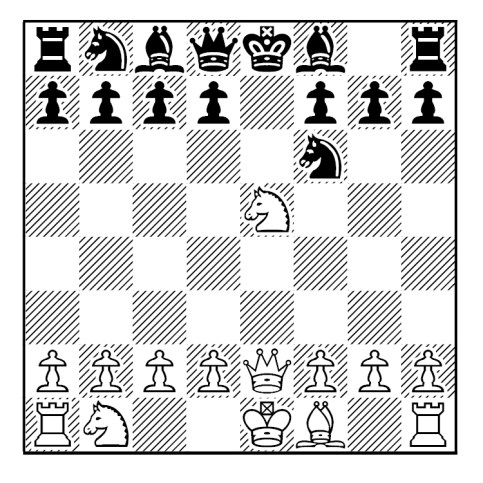
Let’s take a look at a common (at least among beginners) trap from this position and let’s call it “Ancient Chess Trap” (or ACT). The moves that make this (bad) variation are (in case you need review all the move so far) are : 1.e4 e5 2.Nf3 Nf6 3.Nxe5 Nxe4 4.Qe2, and now Black can lose quickly lose with 4…Nf6??

2019_03_28

5.Nc6+! +-


This trap is one worth remembering as it can come up in other openings and is a nice way to end a rated game early enough so you can enjoy playing blitz chess for the rest of the day.


After the better 4…Qe7, the game can continue with 5.Qxe4 d6 6.d4 dxe5 [Black almost has to take the pawn. After 6.d4 Nd7, White won nicely with 6.d4 Nd7 7.f4!? f6?! 8.Be2 fxe5 9.fxe5 dxe5 10.O-O exd4 11.Bh5+ Kd8 12.Bg5 Nf6 13.Rxf6 Qxe4 14.Rd6# 1-0 (Steinkuehler-Horwitz, Manchester 1961).] 7.Qxe5 Qxe5+ 8.dxe5 Bf5, giving Black a decent chance.

 
This was starting point for Hertan’s article in the February 1990 issue of Chess Life. By the way, his article was titled, “The Daring Damiano”. It may the first time anyone has used the term to describe this variation in the Petrov.


The big question here, is how should White continue? The answer is not clear.


9.Bb5+ doesn’t look so good after the obvious 9…c6. In addition, Sapfirov-Yaroslavsev, USSR 1971, continued with 9.Bb5+ Nd7!? 10.O-O Bxc2 11.Bf4 c6 12.Be2 Bf5 13.Nc3 Be7 = (ECO evaluation). So Black can at least equalize.

 
It turns out that 9.Bd3 is an error as Black can continue with 9.Bd3? Bxd3 10.cxd3 Nc6 and his development is no worse than White and Black may already have the advantage.


9.c3 has possibilities. After 9.c3 Nd7 10.f4 O-O-O 11.Be3 f6 (this move deserves either !? or ?!), Black won after 12.Be2 fxe5 13.O-O exf4 14.Rxf4 Re8 15.Rxf5 Rxe3 16.Bg4 h5 17.Kf2 Re4 18.Bh3 g6 19.Nd2 gxf5 0-1 (R. Oosting (1983)-FM S. Muehlenhaus (2199), HZ Open, Netherlands Aug. 6 2017).

 
Other games with 9.c3


Fridthjofsdottir-Canela
Thessaloniki Ol., 1984
1.e4 e5 2.Nf3 Nf6 3.Nxe5 Nxe4 4.Qe2 Qe7 5.Qxe4 d6 6.d4 dxe5 7.Qxe5 Qxe5+ 8.dxe5 Bf5 9.c3 Nd7 10.Bf4 O-O-O 11.Nd2 Bc5 12.Nb3 Bb6 13.Nd4 Bg6 14.O-O-O Rde8 15.Re1 Nc5 16.Bc4 Rhf8 17.Rd1 Re7 18.f3 Rfe8 19.Rhe1 Nd7 20.e6 fxe6 21.Bxe6 Kb8 22.Bxd7 Rxe1 23.Bxe8 Rxe8 24.Bg3 Kc8 25.Re1 Rxe1+ 26.Bxe1 Bxd4 27.cxd4 Kd7 28.Bg3 Bd3 29.Be5 Bf1 30.g3 Be2 31.Bxg7 Bxf3 32.Kd2 Ke6 33.Ke3 Bd5 34.a3 Kf5 35.Be5 c6 36.Bb8 a6 37.Kd3 Ke6 38.Kc3 Kd7 39.Kb4 b6 40.Kc3 Kc8 41.Be5 Kd7 42.Kd3 Ke6 43.Bc7 b5 44.Kc3 Kd7 45.Bb6 Be6 46.Kb4 Kd6 47.Ka5 Bc8 48.Bc5+ Kc7 49.Kb4 Bf5 50.Kc3 Kd7 51.Kd2 Ke6 52.Ke3 h5 53.Kf4 Kf6 54.Be7+ Kg6 55.Ke5 a5 56.Kd6 Be4 57.a4 bxa4 58.Bd8 Bd5 59.Bxa5 Kg5 60.h3 Kf5 61.g4+ 1/2-1/2


Herbrechtsmeier-Duerr
Badenweiler Open
Germany, 1988
1.e4 e5 2.Nf3 Nf6 3.Nxe5 Nxe4 4.Qe2 Qe7 5.Qxe4 d6 6.d4 dxe5 7.Qxe5 Qxe5+ 8.dxe5 Bf5 9.c3 Nd7 10.Bf4 O-O-O 11.Nd2 Re8 12.Nc4 f6 13.O-O-O fxe5 14.Bg3 g6 15.Bd3 Bg7 16.Bc2 h5 17.h4 Nc5 18.Rhe1 e4 19.Bf4 a6 20.Ne3 Rhf8 21.Bg3 Bh6 22.Kb1 Nd3 23.Nxf5 gxf5 24.Bxd3 exd3 25.Rxe8+ Rxe8 26.Rxd3 Re1+ 27.Kc2 Re2+ 28.Kd1 Rxb2 29.Rf3 Rd2+ 30.Ke1 Rxa2 31.Rxf5 Bd2+ 32.Kd1 Bxc3 33.Rf8+ Kd7 34.Rf7+ Ke6 35.Rxc7 Be5 36.Bxe5 Kxe5 1/2-1/2


Jolanta Zawadzka (243200-Ewa Harazinska (2310)
Polish Women’s Ch.
Poznan, Apr. 1 2016
1.e4 e5 2.Nf3 Nf6 3.Nxe5 Nxe4 4.Qe2 Qe7 5.Qxe4 d6 6.d4 dxe5 7.Qxe5 Qxe5+ 8.dxe5 Bf5 9.c3 Nd7 10.Bf4 O-O-O 11.Bc4 Nxe5 12.Bxe5 Re8 13.f4 f6 14.O-O fxe5 15.fxe5 Bc5+ 16.Kh1 Bxb1 17.Raxb1 Rxe5 18.Bd3 h6 19.b4 Be7 20.Bf5+ Kb8 21.Bg4 Bf6 22.Bf3 Re3 23.c4 Rd8 24.a4 c6 25.a5 Kc7 26.b5 cxb5 27.Rxb5 b6 28.c5 bxc5 29.Rxc5+ Kd6 30.Rc6+ Ke7 31.Rb1 Rd6 32.Rc7+ Rd7 33.Rc4 Rd4 34.Rcc1 Ra3 35.Rb7+ Rd7 36.Re1+ Kd8 37.Rb8+ Kc7 38.Rb7+ Kd8 39.Rb5 Bc3 40.Rb8+ Kc7 41.Rb7+ Kd8 42.Rb8+ Kc7 43.Rb7+ 1/2-1/2
White can offer a pawn with 9.Nc3. Black should not take it and play the most reasonable development move; 9…Nc6. The c-pawn is still vulnerable, and Black is free to castle queenside, giving his king safety and his activity to his rook.


Finally, White can sidestep this variation with 6.d4 dxe5 7.dxe5 Nc6. But that is for another post.

A Remarkable Move in the Gruenfeld.

There is a remarkable opening move which looks like a White blunder in the Gruenfeld.


And it goes like this:


1.d4 Nf6 2.c4 g6 3.Nc3 d5 4.cxd5 Nxd5 5.Na4!?


Here’s a diagram.

2019_02_21_A

Bringing up the question, “What benefit(s) does White attain with his knight sitting idly and alone on a4?”


Well, for one, after White gets around with .e4, the Black’s knight has to move. His usual move of …Nxc3 is out of the question as White has no piece or pawn on c3. So where does Black’s knight then move? If …Nf6, then he invites .e5. And …Nb4 puts his knight out of play and is subject to .c3. So …Nb6 is practically forced, where it is partly out of play and but no pawn is threatening it.


The second benefit White has is that with the knight out of the way, his queenside is open for his other pieces, not to mention he can now play .c4 at some point. In fact, most of the action that originates from this bizarre knight move is of a queenside nature.


The earliest master game with this move can be found in the following game.


Ashot Nadanian (2325)-Varuzhan Akobian (2270)
Armenia, 1996
1.d4 Nf6 2.c4 g6 3.Nc3 d5 4.cxd5 Nxd5 5.Na4 e5 6.dxe5 Bb4+ 7.Bd2 Ne3 8.fxe3 Bxd2+ 9.Qxd2 Qh4+ 10.g3 Qxa4 11.Qd4 Qa5+ 12.b4 Qb6 13.Bg2 O-O 14.Rc1 Be6 15.a4 c6 16.Nf3 Rd8 17.Qf4 Na6 18.Rb1 c5 19.b5 Nb4 20.Qh6 Nc2+ 21.Kf2 c4 22.Rbc1 Bf5 23.Rxc2 Bxc2 24.Ng5 Qc7 25.Qxh7+ Kf8 26.Ne6+ 1-0


Here’s some later games showing White’s attacking possibilities.


Alexander Naumann (2385)-Alexander Lytchak (2390)
German U20 Ch.
Apolda, 1997
1.d4 Nf6 2.c4 g6 3.Nc3 d5 4.cxd5 Nxd5 5.Na4 Bg7 6.e4 Nb6 7.Be3 O-O 8.Rc1 f5 9.exf5 Bxf5 10.Nc5 Qd5 11.a4 Nc6 12.Ne2 Nc4 13.Nf4 Nxe3 14.fxe3 Qd6 15.Bc4+ Kh8 16.O-O e5 17.Nfe6 Bh6 18.Rc3 Bxe6 19.Nxe6 Rxf1+ 20.Qxf1 Qe7 21.Ba2 Rc8 22.d5 Nd8 23.d6 1-0


Stepan Lobanov-Leonid Sharikov
Novokuznetsk Open, 1998
1.d4 Nf6 2.c4 g6 3.Nc3 d5 4.cxd5 Nxd5 5.Na4 Bg7 6.e4 Nb6 7.Be3 O-O 8.Nf3 Nxa4 9.Qxa4 c5 10.Rd1 cxd4 11.Nxd4 Qe8 12.Qa3 a6 13.Nb5 Be5 14.Bh6  Bd7 15.Bxf8 Nc6 16.Nc7 Bxc7 17.Bh6 Bd6 18.Qd3 Nb4 19.Qc3 f6 20.Bc4+ +/- Kh8

2019_02_21_B

21.Rxd6! Nc2+ 22.Kd2! b5 23.Rxf6 1-0


Szabolcs Laza, (2173)-Anita Gara (2385)
Hungary Team Ch., Dec. 17 2017
1.d4 Nf6 2.c4 g6 3.Nc3 d5 4.cxd5 Nxd5 5.Na4 Bg7 6.e4 Nb6 7.Be3 O-O 8.Nf3 Bg4 9.Nc5 Nc6 10.Nxb7 Qb8 11.Ba6 e5 12.d5 Nb4 13.Nc5 N6xd5 14.Bb7 Nxe3 15.fxe3 Bxf3 16.gxf3 Rd8 17.Qb3 Bf8 18.Bxa8 Bxc5 19.Bd5 Nxd5 20.exd5 Qxb3 21.axb3 Bxe3 22.Ke2 Bd4 23.Rhd1 Rxd5 24.Rxa7 Rb5 25.Ra8+ Kg7 26.Rd3 c5?! (Black’s bishop is on an overwhelming square overlooking everything in front of it, and because it is supported by two black pawns means it is not forced off going to be driven off its awesome square. Unfortunately, it also means the Bishop can’t move backwards, which make a difference in this endgame.)

2019_02_21_C
27.Ra6 h5 28.h3 Rb7 29.Rc6 Kh6 30.h4 Kg7 31.Rc8 f6 32.Rc6 g5 33.hxg5 fxg5 34.Re6 h4 35.Kf1 Ra7 36.b4 cxb4 37.Rb3 h3 38.Rxb4 g4 39.fxg4 Ra1+ 40.Ke2 h2 41.Rb7+ Kf8 42.Rf6+ Ke8 43.Re6+ Kd8 44.Rg6 Re1+ 45.Kd2 Rd1+ 46.Kc2 Rc1+ 47.Kb3 Rc7 48.Rg8+ Kd7 49.Rxc7+ Kxc7 50.Rh8 Bg1 51.g5 e4 52.g6 e3 53.Kc2 e2 54.Kd2 Bd4 55.Rxh2 Bxb2 56.g7 1-0


However, the move 5.Na4 remained under the radar for years. Until it was played by a three-time challenger of the World Championship who played it a European Zonal Tournament.


GM Korchnoi (2625)-GM Emil Sutovsky (2575)
European Zonal
Dresden, Germany, 1998
1.d4 Nf6 2.c4 g6 3.Nc3 d5 4.cxd5 Nxd5 5.Na4!? Bg7 6.e4 Nb6 7.Be3 O-O 8.Nf3 Nxa4 9.Qxa4 c5 10.Rd1 Qb6 11.Rd2! (This TN is such a good move that it became part of theory.) 12…Bd7 12.Qa3 cxd4 13.Nxd4 Qc7 14.Be2 e5?! 15.Rc2 Qd8 16.Nb5 Nc6(16…Bc6 17.O-O Bxe4 18.Rd2!) 17.Nd6 Qb8 18.Bc4 Nd4 19.Bxd4 exd4 20.O-O Be6 (20…Be5? 21.Nxf7! and White’s attack comes first and fast.) 21.Bxe6 fxe6 22.Rfc1 Be5 23.Rc7 Bxd6 24.Qxd6 Rf7 25.Qxe6 1-0


And now everyone seemed to take notice.


GM T. Gareev (2614)-Ge. Antal (2519)
US Open
Irvine, CA, Aug. 2 2010
1.d4 Nf6 2.c4 g6 3.Nc3 d5 4.cxd5 Nxd5 5.Na4 Bg7 6.e4 Nb6 7.Be3 O-O 8.Nf3 Nxa4 9.Qxa4 c5 10.Rd1 Qb6 11.Rd2 Bd7 12.Qa3 cxd4 13.Nxd4 Qc7 14.Be2 Bc6 15.f3 Be5 16.g3 Bd6 17.Qc3 Rc8 18.Kf2 Na6 19.Nxc6 Qxc6 20.Qxc6 Rxc6 21.Bb5 Rc7 22.a3 Bc5 23.b4 Bxe3+ 24.Kxe3 Rac8 25.Rhd1 Nb8 26.Rd8+ Kg7 27.f4 f6 28.e5 fxe5 29.fxe5 a6 30.Ba4 a5 31.bxa5 Rc3+ 32.Kd2 Rxd8+ 33.Kxc3 Rc8+ 34.Kb4 Na6+ 35.Kb5 Rc6 36.Bb3 Nc7+ 37.Ka4 Rc5 38.Rd7 Kf8 39.Rd8+ Kg7 40.Rc8 g5 41.Bd5 Rxd5 42.Rxc7 Rxe5 43.Rxb7 Re4+ 44.Rb4 Re6 45.Kb5 Re3 46.a4 1-0


GM Hao Wang (2736)-GM F. Caruana (2779)
FIDE GP
Paris, Sept. 23 2013
1.d4 Nf6 2.c4 g6 3.Nc3 d5 4.Nf3 Bg7 5.cxd5 Nxd5 6.Na4 O-O 7.e4 Nb6 8.Be3 Nxa4 9.Qxa4 c5 10.Rd1 Qb6 11.Rd2 Bd7 12.Qa3 cxd4 13.Nxd4 Qc7 14.Be2 Bc6 15.O-O Bxe4 16.Nb5 Qc6 17.f3 Bd5 18.Qxe7 Re8 19.Qg5 Na6 20.Qxd5 Qxd5 21.Rxd5 Rxe3 22.Bc4 Re7 23.Rd2 Bh6 24.f4 Nc5 25.g3 a5 26.Rd5 Ne4 27.Rfd1 Bf8 28.Rd8 Rxd8 29.Rxd8 Kg7 30.Kg2 Nf6 31.Kf3 Rd7 32.Rxd7 Nxd7 33.Nc7 Bc5 34.Bb5 Nf6 35.Ne8+ Nxe8 36.Bxe8 Kf8 37.Bb5 Kg7 38.Be8 Kf8 39.Bb5 Kg7 40.Ke4 1/2-1/2


Saric (2425)-Bo Vujacic (2269)
Serbian Team Ch.
Palic, Sept. 4 2014
1.d4 Nf6 2.c4 g6 3.Nc3 d5 4.cxd5 Nxd5 5.Na4 Bg7 6.e4 Nb6 7.Be3 O-O 8.Nf3 Nxa4 9.Qxa4 c5 10.Rd1 Qb6 11.Rd2 Bd7 12.Qa3 cxd4 13.Nxd4 Qc7 14.Be2 Bc6 15.O-O e5 16.Nb5 Bxb5 17.Bxb5 Nc6 18.Rc1 Rfd8 19.Rdc2 Bf8 20.Qa4 Qd6 21.Bc5 Qf6 22.Bxc6 Bxc5 23.Rxc5 Rd2 24.Rf1 bxc6 25.Rxc6 Qg5 26.Rc2 Rd4 27.Qa5 Qf4 28.Re2 Rxe4 29.Rxe4 Qxe4 30.Re1 Qc4 31.b3 Qc2 32.Rxe5 Rc8 33.h3 Qb2 34.g3 h5 35.Re1 h4 36.g4 Qd4 37.Qe5 Qd2 38.Qe2 Qc3 39.Qe3 Qa5 40.Re2 Rc3 41.Qe8+ Kg7 42.Qe5+ Qxe5 43.Rxe5 Rxh3 44.Ra5 Rf3 45.Kg2 Rf4 46.g5 a6 47.Rxa6 Rg4+ 48.Kh3 Rxg5 49.Kxh4 Rg2 50.f3 f5 51.Kh3 Rg1 52.Kh2 Rb1 53.Kg3 g5 54.Kf2 f4 55.Ke2 Kf7 56.Rd6 Ke7 57.Rd1 Rb2+ 58.Rd2 Rb1 59.Rd1 Rb2+ 60.Rd2 Rb1 61.Kd3 Ke6 62.Ke4 Re1+ 63.Kd4 Rf1 64.Rd3 Kf5 65.a4 Ra1 66.Kc5 g4 67.fxg4+ Kxg4 68.Rd8 f3 69.Rf8 Kg3 70.Rg8+ Kh3 71.Kb5 f2 72.Rf8 Kg2 73.a5 f1=Q+ 74.Rxf1 Kxf1 75.a6 Ke2 76.b4 Kd3 77.Kb6 Kc4 78.b5 Ra2 1/2-1/2


It may be that Black can force a draw. But he has to work for it. Maybe you can find some improvements for White.


Dutch Treats

The Dutch is an aggressive response to 1.d4. It is also extremely risky.

Here are some miniatures showing how White (and Black!) can win quickly.


Sorensen-Mortensen
Copenhagen, 1994
1.d4 f5 2.Qd3!? d5 3.g4! (White does well if he can get this move in.) 3…fxg4 4.h3 g3 5.fxg3 Nf6 6.Nc3 c6 7.e4 dxe4 8.Nxe4 Nxe4 9.Qxe4 Qa5+ 10.Bd2 Qd5 11.Bg2 Be6 12.Qe2 Qc4 13.Qe3 Bd5 14.Bxd5 Qxd5 15.Nf3 Nd7 16.b3 O-O-O 17.c4 Qd6 18.Ng5 e5 19.Nf7 Qxd4 20.Qxd4 exd4 21.Nxh8 Ne5 22.O-O 1-0

 
GM W. Browne-GM R. Byrne
US Ch.
Mentor, 1977
1.d4 f5 2.Nc3 Nf6 3.Bg5 (One purpose of this bishop move is to cripple Black’s kingside pawn structure. As in this game.) 3…d5 4.Bxf6 exf6 5.e3 Be6 6.Bd3 g6 7.Qf3 c6 8.Nge2 Nd7 9.h3 Qb6 10.g4 Qxb2 11.Rb1 Qa3 12.gxf5 Bf7 13.Rxb7 Bb4 14.O-O O-O-O 15.Rxb4 Qxb4 16.Ba6+ Kc7 17.Rb1 Qd6 18.Rb7+ Kc8 19.Rb3+ Kc7 20.Rb7+ Kc8 21.e4 Nb8 22.Nb5 cxb5 23.Qc3+ Nc6 24.e5 Qc7 25.e6 1-0


Pomar Salamanca-GM Bent Larsen
Spain, 1975
[GM Larsen was noted for doing well in off-beat openings.]
1.d4 f5 2.Nc3 d5 3.f3 c5 4.e4 e5 5.Bb5+ Bd7 6.Bxd7+ Nxd7 7.Nxd5 cxd4 8.Ne2 fxe4 9.fxe4 Ngf6 10.Bg5 Qa5+ 11.Bd2 Qc5 12.Nxf6+ Nxf6 13.Ng3 h5 14.Qf3 h4 15.Ne2 Qxc2 16.Qf5 Qxe4 17.Qe6+ Be7 18.Bb4 Nd5 19.Bxe7 Nf4 20.Qc4 Kxe7 0-1


Sakaev-Kobalija
Chigorin Memorial
Saint Petersburg, Russia, 1994
1.d4 f5 2.Nc3 d5 3.Bf4 c6 4.e3 Nf6 5.Bd3 g6 6.h4 Be6 7.Nf3 Bg7 8.h5 Nbd7 9.Ng5 Bg8 10.h6 Bf8 11.Qd2 e6 12.O-O-O Qe7 13.f3 e5 14.dxe5 Nxe5 15.Be2 Ned7 16.e4 fxe4 17.fxe4 O-O-O 18.exd5 Bxd5 19.Nxd5 Nxd5 20.Bg4 Qf6 21.Ne6 Ba3 22.Qd4 Qe7 23.bxa3 Qxa3+ 24.Qb2 Qa4 25.Rd4 1-0


Hamilton-J. Scheider
Georgia Ch., 1981
1.d4 f5 2.Nc3 e6 3.e4 fxe4 4.Nxe4 Nf6 5.Bd3 Nc6 6.Nf3 Be7 7.Ne5 O-O 8.Nxf6+! Bxf6 9.Qh5 Nxe5 10.Bxh7+ Kh8 11.Bg6+ 1-0

 
Kupka-Kohout
USSR, 1975
1.d4 f5 2.Nf3 Nf6 3.g3 d6 4.Bg2 c6 5.O-O Qc7 6.Nbd2 e5 7.dxe5 dxe5 8.e4 fxe4 9.Ng5 e3 10.Nde4 Nxe4 11.Bxe4 exf2+ 12.Rxf2 Bc5 13.Qh5+ Ke7 14.Nxh7 Bxf2+ 15.Kxf2 Qa5 16.Bg5+ Kd6 17.Qg6+ Kc5 18.Be3+ Kc4 19.Bd3+ Kd5 20.c4mate 1-0

 
IM Heinz Wirthensohn-IM Lin Ta
Novi Sad. Ol.
Yugoslavia, 1990
1.Nf3 f5 2.g3 Nf6 3.Bg2 d6 4.d4 g6 5.b3 Bg7 6.Bb2 O-O 7.O-O c6 8.Nbd2 Kh8 9.c4 Ne4 10.Qc2 d5 11.Ne5 Nxd2 12.Qxd2 Be6 13.Qb4 b6 14.Rfd1 a5 15.Qd2 Ra7 16.Rac1 dxc4 17.d5 cxd5 18.Nxg6+! 1-0


Hjorth (2502)-A. Wang (2206)
US Open, 1995
1.d4 e6 2.Nf3 f5 3.g3 Nf6 4.Bg2 Be7 5.c4 d5 6.O-O O-O 7.b3 c6 8.Bb2 Ne4 9.Nbd2 Nd7 10.Ne1 Qa5 11.Nxe4 fxe4 12.f3 exf3 13.Nxf3 dxc4 14.bxc4 e5 15.e3 exd4 16.exd4 Nb6 17.c5 Nc4 18.Qe2 Nxb2 19.Qxe7 Rf7 20.Qe2 Qc3 21.Rac1 Qa3 22.Ng5 Rxf1+ 23.Rxf1 Bd7 24.Qe7 h6 25.Qf7+ 1-0


Monacell (2473)-Elburg (2306)
corres.
ICCF, 2002
1.d4 f5 2.g3 Nf6 3.Bg2 g6 4.Nh3 Bg7 5.Nf4 Nc6 6.Nc3 O-O 7.h4 d6 8.d5 Ne5 9.h5 Bd7 10.e4 fxe4 11.Nxe4 Nxh5 12.Ng5 Nxf4 13.gxf4 Nf7 14.Nxh7 Re8 15.Be3 Bxb2 16.Be4 c6 17.Rg1 Bc3+ 18.Bd2 Bg7 19.Rxg6 e5 20.Qh5 exf4 21.O-O-O Re5 22.Rxg7+ 1-0


Krasnov (1955)-Manvelyan (2293) X25
Mechanics’ Summer Tournament
Mechanics’ Institute, San Francisco, June 4 2013
1.d4 g6 2.Nf3 Bg7 3.g3 f5 4.c4 Nf6 5.Nc3 O-O 6.Bg2 d6 7.O-O Qe8 8.e4 fxe4 9.Ng5 Bg4 10.Qb3 Nc6 11.Be3 h6 12.Ngxe4 Nxe4 13.Nxe4? (>13.Bxe4 Bf5 14.Bxf5 Rxf5 15.Nd5) 13…Nxd4 14.Qxb7 Nf3+ 15.Kh1 c5 16.h3 Bd7 17.Nxd6 $4 exd6 18.Bxf3 Rxf3 19.Qxf3 Bc6 0-1


Katt-Emminger
1.d4 f5 2.c4 Nf6 3.Nc3 e5 4.dxe5 Ng4 5.Nf3 Bb4 6.Bd2 Qe7 7.Nd5 Bxd2+ 8.Qxd2 Qc5 9.e3 O-O 10.b4 1-0


Greber (1740)-Curdo (2405)
US Open
Concord, 1995
1.d4 f5 2.c4 Nf6 3.Nc3 g6 4.Nf3 Bg7 5.g3 O-O 6.Bg2 d6 7.O-O c6 8.Re1 Nh5 9.e4 f4 10.Ne2 fxg3 11.fxg3 Na6 12.a3 Bg4 13.Qd3 e5 14.d5 Nc5 15.Qe3 cxd5 16.cxd5 Qb6 17.Nd2 Bh6!
2019_01_02
18.Qxh6 Nd3+ 0-1


A Najdorf Tournament

I am playing in a Najdorf Thematic tournament at chess.com.

 
The tournament is organized into several sections with the winners of each round advancing to the next.

 
I won my preliminary section with a perfect score of 8-0. I didn’t think I would so well, but here I am being advanced to the next round with the other winners of their sections.

 
Here are a couple of games from this tournament.


“Leatherneck”-Escalante
Sicilian Najdorf Invitational
chess.com, 2018
1.e4 c5 2.Nf3 d6 3.d4 cxd4 4.Nxd4 Nf6 5.Nc3 a6 (This position defines the Najdorf, the theme of this tournament.) 6.Bc4 e6 7.O-O Be7 8.Re1 O-O 9.Bg5!? (A move rarely seen in this variation.) 9…Qc7 10.Qe2 Qc5 11.Rad1? Qxg5 12.g3 Bd7 13.f4 Qg6 14.f5 Qg5 15.Qe3 Qxe3+ 16.Rxe3 e5 17.Nd5 Nxd5 18.Bxd5 Bc6 19.Ne6 fxe6 20.Bxe6+ Kh8 21.Bd5 Bxd5 22.exd5 Nd7 23.b4 Nb6 24.g4 Rac8 25.Rd2 Nc4 26.Rc3 Nxd2 0-1


Escalante-“MiddlegamerUmesh” (1531)
Sicilian Najdorf Invitational
chess.com, 2018
1.e4 c5 2.Nf3 d6 3.d4 cxd4 4.Nxd4 Nf6 5.Nc3 a6 6.Bc4 (The move constitutes the Sozin variation, a favorite of Fischer’s and the variation which I played exclusively in round one. Having a perfect score makes me want to try it again in round two. We’ll see.)  6…e6 7.Bb3 Qc7 8.Be3 Be7 9.g4 b5 (9…Nc6 10.g5, with the possibility of the same sacrifice.) 10.g5 Nfd7? 11.Bxe6! 1-0 (Black didn’t want to face 11…fxe6 12.Nxe6 Qa5 13.Nxg7+ Kf8, and White with three pieces for the piece, plus the attack, should win.)


Since I have not included any diagrams in my games, here is some artwork of Fischer, the (in)famous prodigy and world chess champion.


123_back_1

An early example

The Internet is full of new analyses in chess opening. Some good, some very good, some strange, some wonderful, and some awful. This game is an early example of good, but not complete.


Escalante-“lord_kapatasan”, Game 2
Blitz Game
Yahoo, Mar. 14 2004
1.e4 e5 2.Nf3 Bc5 3.Nxe5 Bxf2+


(Anything else loses. Here are some examples.

Pantaleoni-Milicia
corres., Italy, 1980
1.e4 e5 2.Nf3 Bc5 3.Nxe5 Nf6 4.d4 Bb6 5.Nc3 O-O 6.Be3 d5 7.exd5 Nxd5 8.Nxd5 Qxd5 9.Bc4 Qxg2 10.Kd2 Bxd4 11.Bxd4 Nc6 12.Rg1 Qe4 13.Nxc6 g6 14.Qh5 Qxc6 15.Rxg6+ 1-0

Pohl-Andre
corres., 1986
1.e4 e5 2.Nf3 Bc5 3.Nxe5 Nc6 4.Nxc6 dxc6 5.Bd3 Bxf2+ 6.Kxf2 Qd4+ 7.Ke1 Qc4 8.Bxc4 1-0)


4.Kxf2 Qh4+


[Not 4…Qf6+ 5.Nf3! +- (White is still ahead in material and Black’s attack is at an end.) 5…Nh6!? 6.d4 O-O 7.Nc3 d6 8.Nd5 Qd8 9.Bxh6 gxh6 10.Qd2 Kh8 11.Qxh6 c6 12.Nf6 Qxf6 13.Qxf8+ 1-0, Viatge-Mitchell, Email, IECC, 2000]


5.g3 Qxe4


(Now Black, with White’s king out outside his protective shell and Black’s queen dominating the center, looks like he is winning. But Black’s queen is vulnerable and it’s White’s turn.) 6.d4 (6.Qe2 also wins, but Black has to get greedy. Here is why it works: 1.e4 e5 2.Nf3 Bc5 3.Nxe5 Bxf2+ 4.Kxf2 Qh4+ 5.g3 Qxe4 6.Qe2 Qxh1 7.Bg2! 1-0, as in Krejcik-Baumgartner, Troppau, 1914. So, is 6.Qe2 or 6.d4 the better move? It turns out there is also theory on 6.Qe2.)


6…Qxh1 7.Qe2 Ne7


[You’ll see this is game #2 between my opponent and myself. Here is the first game: Escalante-“lord_kapatasan”, Game 1, Blitz Game, Yahoo, Mar. 14 2004, 1.e4 e5 2.Nf3 Bc5 3.Nxe5 Bxf2+ 4.Kxf2 Qh4+ 5.g3 Qxe4 6.d4 Qxh1 7.Qe2 Qxh2+ (This move is reckless. You’ll notice he did make an improvement in game 2.) 8.Bg2 Ne7 9.Ng4 Qxg2+ 10.Kxg2 d5 11.Bf4 c6 12.Bd6 Be6 13.Bxe7 Kxe7 14.Nc3 Nd7 15.Re1 Rae8 16.Ne5 Nf6 17.Na4 Kd6 18.Qe3 h6 19.Qa3+ Kc7 20.Nc5 a6 21.Qa5+ b6 22.Qxa6 bxc5 23.Qa7+ Kd6 24.Qxc5mate 1-0. He’s the one who told me about theory I didn’t know existed. At least he was smart enough NOT to tell me before the games.]

8.Bg2!? Qxc1 9.Nc3! (Apparently this move, and the move that follows, busts this variation – I can’t see a way out for Black) 9…Qxa1 10.Nd5!

2018_10_31


10…Na6 11.Nxe7 Kxe7 12.Nc6+ Kf8 13.Qe7+ 1-0