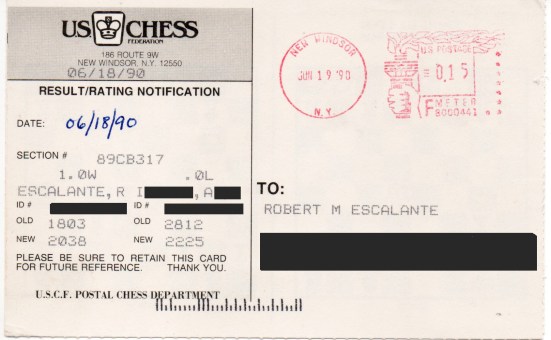
I Beat A 2812!

Yes, this is true.


And this is the story.


In order to gain an established rating, you must play events obviously. During the time you start playing tournament games and your rating more or stabilizes, you are issued a provisional rating. This rating can wildly swing as you win and lose games.


In 1988 my correspondence rating was settling into a stable one. My opponent’s rating was still in wild flux before he and I started our game.


And this is the game.


A.I.-Escalante
corres. 1990
1.e4 e5 2.Nf3 Nc6 3.Bc4 Nf6 4.Ng5 Bc5 (This is the Wilkes-Barre Variation, an extremely tactical and popular opening in the 1980s.  It was my favorite opening at this time as well. And it also seems to have been a favorite of my opponent as he made book move almost to the end of the game. Kenneth Williams’s pamphlet, The Real American Wilkes-Barre, published in 1979, was probably the reason for its popularity.) 5.Nxf7 (An alternate move is 5.Bxf7+. But if tactical is your M.O., then you can’t beat 5.Nxf7 for the pins, forks, checks, and sacrifices.) 5…Bxf2+ 6.Kxf2 Nxe4+ 7.Ke3!? [7.Kg1 is another move. But boldly (or maybe even recklessly) moving one’s king to the center in this variation is stronger than it appears (IMHO) as Black doesn’t have too many pieces developed and White is ahead materially.]

7…Qh4

[Black has the choice of the text move and 7…Qe7. I chose 7…Qh4 as I felt the queen was more active on this square.

Remember I mentioned this was popular opening back in the 1980s? Here two very strong players trying out 7…Qe7!? Notes are from NIC Yearbook #4.

Van de Loo-Hesslin
Netherlands, 1985
1.e4 e5 2.Nf3 Nc6 3.Bc4 Nf6 4.Ng5 Bc5 5.Nxf7 Bxf2+ 6.Kxf2 Nxe4+ 7.Ke3 Qe7 8.c3 Nd4 9.Kxe4 Qh4+ 10.Ke3 Qf4+ 11.Kd3 d5 12.Bxd5 Bf5+ 13.Kc4 b5+ 14.Kc5 Qh4 15.Nxe5 O-O-O 16.c4 Rxd5+ 17.cxd5 Rd8 18.Nc3 Nc6 19.Qa4!! Qe7+ (19…bxa4 20.Nc6 -/+) 20.Kxb5 Qxe5 21.Qc4?! (21.Qa6+!? Kb8 22.Qc6 Bd7) 21…Nd4+ 22.Ka4 Bd7+ 23.Ka5?! (Ka3!?) 23…Nc6+ 24.Ka6? (Ka4) 24…Nb8+ 25.Kxa7 (unclear) c6? (Qd6! -+) 26.Nb5! (with the idea of Kb6, Na7#) 26…Bf5 27.d4 Rd7+ 28.Ka8 (Kb6!) 27…Qe7 29.dxc6 Be4 30.d5 Bxd5 31.Qxd5 Rxd5 32.Na7+ Kd8 33.Kxb8?! (33.Bf4 with the idea of c7) 33…Qc7+? [33…Qe5 34.Kb7 (34.Ka8? Kc6!) Rb5 35.Nxb5 Qxb5=] 34.Ka8 Ra5 (Ke8!?) 35.Bg5+!! Rxg5 (35…Ke8 36.Rae1 Kf7 37.Re7+ -+) 36.Rad1+ Ke8 37.Rhe1+ Kf8 38.Rd7 Qxh2 39.Ree7 Qxg2 40.Rb7 Rc5 41.c7 Qg4 42.Rf7+! Ke8 43.b4 Rc2 44.a4 h5 45.a5 h4 46.b5 h3 47.Nc6! h2 48.Rxg7!! 1-0 Back to the game!]

8.g3 Nxg3 9.hxg3 Qd4+ 10.Kf3 d5!

[Black has the option of 10…O-O, letting his rook into play. However, again IMHO, the text move is stronger as it allows Black’s c8-bishop to come into play AND lay claim to the center.

Oleksenko-Malksirits, corres., 1984, continued with 11.Rh4!? e2+ 12.Kg2 d5 13.Rf4 dxc4 14.Qf1 Rxf7 15.Rxf7 Bg4 16.Nc3 Ne5 17.Qf2! Bf3+ 18.Rxf3 exf3+ 19.Kg1 Qd7 20.d4 cxd3 21.Bf4 Ng6 22.Qxf3 dxc2 23.Rc1 Nxf4 24.Qxf4 Rf8 25.Qc4+ Kh8 26.Rxc2 c6 27.Qc5 Rf5 28.Rf2+ 1-0]

11.Be2

[All this studying for correspondence can pay off. Here is another game by the author.

Escalante-Tym Belanger, US Amateur Team Ch., Feb., 20 2006, 11.Rh4 e4+ 12.Kg2 Rf8 13.Bxd5 Qxd5 14.Qh5 Qxh5 15.Rxh5 Rxf7 16.Rxh7 Nd4 17.Na3 Bg4 -/+ 18.Rh8+ Rf8 19.Rxf8+ Kxf8 20.c3 Bf3+ 21.Kf2 Nf5 22.d3 Rd8 23.dxe4 Bxe4 24.Bg5? (>24.Bf4 c6 25.Nc4) 24…Rd3 25.Bf4 Rf3+ 26.Ke2 Nxg3+ 27.Bxg3 Rxg3 28.Rf1+ Ke7 29.Kd2 Rd3+?! (>29…Rg2+ 30.Ke3 Bc6 31.Nc4? Bb5) 30.Ke2 Rg3 31.Kd2 g5 32.Re1 Kf6 33.Rxe4 Kf5 34.Re2 Kf4 35.Nb5 Kf3 36.Nd4+ Kg4 37.Rf2 Kh3 38.Ke2 Rg4 39.a4 Re4+ 40.Kd3 Re1 41.Rf3+ Kg2 42.Rf7! +- (White wins with a windmill.) 42…g4 43.Rxc7 Kf2 44.Rf7+ Kg1 45.Rxb7 Rf1 46.Rg7 g3 47.Rxg3+ Kh1 48.Rg7 Rb1 49.b4 Rd1+ 50.Kc2 Rf1 51.Rxa7 Rf2+ 52.Kd3 Rf8 53.Rg7 Rf3+ 54.Kc4 (Of course not Nxf3, stalemate!) 54…Rf8 55.b5 Rc8+ 56.Kb4 Rf8 57.a5 Rf3 (Another attempt at stalemate.) 58.a6 Rf2 59.c4 Rf1 60.a7 Ra1 61.b6 Rb1+ 62.Kc5 Ra1 63.b7 Rxa7 64.b8=Q Rc7+ (Yet another try at stalemate; the third of the game. 65.Qxc7 is a draw, so…) 65.Rxc7 1-0]

11…O-O (11…Bxe2 Bg4 12.Kg2 Qe4 13.Bf3! +-) 12.Rf1? (Kg2! – K. Williams)

2019_07_25

12…Bh3!! 0-1 (This is stronger than 12…Qe4+ 13.Kf2 Rxf7+ and either 14.Ke1 or 14.Kg1 and the White king lives. But after 12…Bh3!!, White has a choice between …Rxf7# or losing a massive amount of material with 13.Bd3 Rxf7+ 14.Ke2 Bg4+ 15.Ke1 Rxf1+ 16.Kxf1 Bxd1.)


correspondence_AI_1

The Thematic Pawn Move – Pushing the “e” Pawn

Generally, in an Indian Defence, if White can get his king pawn to e4, he gains the advantage. Preventing that should be one of Black’s chief concerns.

 
We’ll start with the Nimzo-Indian to illustrate some ideas with short games.

 
In the Classical Variation of the Nimzo-Indian (1.d4 Nf6 2.c4 e6 3.Nc3 Bb4 4.Qc2) Black sometimes plays …b6. This move allows Black to play …Bb7, preventing White’s pawn from moving to e4. Unfortunately, he is a move too slow.

 
Rubinstein-Chwojnik
Lodz, 1927
1.d4 Nf6 2.c4 e6 3.Nc3 Bb4 4.Qc2 b6 5.e4 Bxc3+ 6.bxc3 d6 7.f4 Bb7 8.e5 Ne4 9.Nf3 f5 10.exf6 Nxf6 11.Ng5 Qe7 12.Bd3 Nbd7 13.O-O O-O-O 14.Re1 e5 15.Bf5 Kb8 16.Ba3 g6 17.dxe5 gxf5 18.exd6 Qxe1+ 19.Rxe1 cxd6 20.Bxd6+ Ka8 21.Qxf5 1-0


Euwe-Colle
Amsterdam, 1928
1.d4 Nf6 2.c4 e6 3.Nc3 Bb4 4.Qc2 b6 5.e4 Bb7 6.Bd3 (White’s bishop is on a great diagonal and is supported by the Queen on c2. Black should be wary of castling kingside as the h7 pawn is vulnerable.) 6…Bxc3+?! 7.bxc3 d6 8.Ne2 h6 9.O-O O-O 10.f4 Nbd7 11.e5 Ne8 12.Ng3 c5 13.Qe2 Qh4 14.f5 cxd4 15.Rf4 Qd8 16.cxd4 dxe5 17.dxe5 Nc7 18.Rg4 Qe7 19.Rxg7+ 1-0


Noteboom-Flohr, 1930
[ECO, E32]
1.d4 Nf6 2.c4 e6 3.Nc3 Bb4 4.Qc2 b6 5.e4 Bxc3+ 6.bxc3 d6 7.f4 e5 8.Bd3 Qe7 9.Nf3 Nc6 10.O-O Bb7 11.Re1 +/- (Of course White wants the “e” file to be opened soon.)


Dunne (2183)-R. Hughes (2046)
corres.
Golden Knights, 1996
1.d4 Nf6 2.c4 e6 3.Nc3 Bb4 4.Qc2 b6 5.e4 Bb7 6.Bd3 O-O 7.e5 Bxg2 8.exf6 Bxh1 9.Bxh7+ (Of course, this is the main reason White plays .Bd3 in the first place!) 9…Kh8 10.Be4 Bxe4 11.Qxe4 Bxc3+ 12.bxc3 Nc6 13.Bg5 Kg8 14.Qh4 Re8 15.fxg7 f6 16.Bxf6 1-0


We’ll now take a look at the Queen’s Gambit Declined.


Eugenio Torre (2520)-Yukio Miyasaki (2200)
Malta Ol., Nov. 1980
[D61]
1.c4 Nf6 2.Nc3 e6 3.Nf3 d5 4.d4 Be7 5.Bg5 O-O 6.e3 (Black is doing quite well here in stopping .e4.) 6…Nbd7 7.Qc2 c6 8.Bd3 h6 9.Bh4 Re8 10.O-O Nf8 11.Rad1

[11.Ne5 also worked well in Belen Miguel Fernandez-Esteban Ignacio Gonzalez de Cima, Asturias Ch. Primera B, Norena, Apr. 7 2001: 11…N6d7 12.Bxe7 Qxe7 13.f4 f6 14.Ng4 Nb6 15. c5 Nbd7 16.Rf3 e5 (On deciding on a candidate move or threat, a player should also ask if his proposed move has depth (long-term gain), a follow up plan, or if such a move also provides defense as well as attacking possibilities. Black’s threat of 17…e4 is obvious, but this move has no depth, does not provide any type of defense, and as far as we know, Black had no follow up plan.)

2019_07_18_A

17.Rg3! e4 (Black’s idea of getting HIS pawn to e4, should make equal sense as White getting his to e4. But chess is not that simple.) 18.Nxh6+! +- Kh7 19.Nf5 Qe6 20.Nxg7 Qe7 21.Nxe8 (And now White can play 22.Nxe4 and more tactics will follow.) 1-0]


11…Nh5 12.Bxe7 Qxe7 13.e4 (Didn’t we tell Black not to allow this move a few games back?) 13…Nf4 14.Rfe1 Nxd3 15.Qxd3 dxc4 (Just about forced as …exd5 opens lines in White’s favor.) 16.Qxc4 Bd7 17.e5 (Now if e4 is a good move for White, then e5 is even stronger.) 17…Red8 18.Nd2 b5 19.Qe2 c5 20.d5 exd5 21.Nxd5 Qh4 22.Ne4 (We’ve going to give the position a +/-, but White’s advantage is probably stronger than that evaluation.) 22…c4 23.Nd6 Ng6 24.Nxf7! Bg4?

2019_07_18_B

25.Qxg4!! (Black is lost. The game could have continued with 25…Qxg4 26.Nxh6+ gxh6 27.Nf6, but you probably figured it out.) 1-0


Interesting enough, in the Queen’s Gambit Accepted, White can also get the advantage with .e3 instead of .e4. An old trap goes like this: 1.d4 d5 2.c4 dxc4 3.e3 b5 4.a4 (White could also play 4.Qf3 c6 5.a4, and merely get his pawn back with the advantage.) 4…c6 (or 4…a6 5.axb5!) 5.axb5 cxb5 6.Qf3!, winning.

This trap will catch beginners and even computers.

GM Kasparov-ELITE A/S EXPERIMENTAL
Simul
Hamburg, 1985
1.d4 d5 2.c4 dxc4 3.e3 b5 4.a4 Ba6 5.axb5 Bxb5 6.Nc3 c6 7.b3 e6 8.bxc4 Ba6 9.Nf3 Nf6 10.Bd3 Bd6 11.O-O O-O 12.e4 Bb4 13.Qc2 Nh5 14.e5 f5 15.exf6 Nxf6 16.Re1 Bc8 17.Bb2 a5 18.Rad1 Ra7 19.Ne5 a4 20.Re3 a3 21.Ba1 Bb7 22.Ne2 Nbd7 23.Nf4 Re8 24.Rh3 Nf8 25.g4 h6 26.g5 hxg5 27.Nfg6 N8h7 28.Nh8 g6 29.Bxg6 Nf8 30.Nhf7 Qe7 31.d5 cxd5 32.Nh6+ Kg7 33.Bxe8 Qxe8 34.Neg4 Be7 35.Ng8 Kxg8 36.Bxf6 Ng6 37.Bxe7 1-0

Black, even with a better third move, still lost in this game:

Tarrasch-Kurschner
Nuremburg, 1889
1.d4 d5 2.c4 dxc4 3.e3 Bf5!? 4.Bxc4 e6 5.Qb3 Be4 6.f3 Bc6 7.Ne2 Nf6 8.e4 Be7 9.Nbc3 Qc8 10.d5 exd5 11.exd5 Bd7 12.d6 Bxd6 13.Bxf7+ Kd8 14.Bg5 Nc6 15.Ne4 Be7 16.Bxf6 gxf6 17.O-O-O Ne5 18.Nf4 Qb8 19.Qe6 Rf8 20.Nxf6 Bd6 21.Nxd7 Nxd7 22.Rhe1 1-0


Maybe someone will get the bright idea, of when playing Black against a known 1.d4 player, to glue the e4 pawn to the board before the start of the game, so White can’t play his king pawn to e3, e4, e5, or any other square!

FIREWORKS

Fireworks-pastel-colors-jpg


Fourth of July in the US is considered our Independence Day. A day we love to celebrate with parades, hot dogs, ball games, barbeques, and fireworks.


We can’t provide the parades, ball games, barbeques, and our hot dogs are reserved. But we can give you fireworks. Check out these games.


Keres-Siitam
Estonia Jr. Ch.
Parnu, 1933
1.e4 e5 2.f4 exf4 3.Nc3 (This opening is known as the Mason or Keres Gambit. By either name, it leads to many tactical games.) 3…Nc6 4.d4 Bb4!? 5.Bxf4 Qh4+ 6.g3 Bxc3+ 7.bxc3 Qe7 8.Bg2 d6 9.Nf3 Qxe4+ 10.Kf2 Bf5 11.Re1 Qxe1+ 12.Qxe1+ Nge7 13.d5 O-O 14.dxc6 Bxc2 15.Qxe7 Rae8 16.Qxc7 Re4 17.cxb7 Rfe8 18.b8=Q Re2+ 19.Kg1 Rxg2+ 20.Kxg2 Rxb8 21.Qxb8mate 1-0


Here are is another Keres/Mason Game. Black has the advantage after 6.…Ba6+. Now try to find Black’s best moves from this point.


N.N.-Chadwick
corres.
PCCA Gambit Tournament, 1911
1.e4 e5 2.f4 exf4 3.Nc3 Nc6 4.d4 Qh4+ 5.Ke2 b6! 6.Nf3 Ba6+ 7.Kd2 Qf2+ 8.Ne2 Nb4 9.a3 Nf6 10.Qe1 d5 11.Kc3 Nxe4+ 12.Kb3 Bc4+ 13.Ka4

2019_07_04_A

13…b5+ (Alex Dunne, writing in the Dec. 2000 issue of Chess Life, notes that 13…a5 14.Nc3 Qxc2+ 15.b3 Qxb3# wins faster. Would you have found that idea?) 14.Ka5 Nc6+ 15.Ka6 b4+ 16.Kb7 Rb8+ 17.Kxc6 Rb6+ 18.Kxc7 Bd6+ 19.Kc8 Ke7mate 0-1


Victor Knox (2320)-Krzysztof Pytel (2381)
Manchester, 1981
1.e4 e6 2.d4 d5 3.Nc3 Bb4 4.e5 c5 5.Bd2 Ne7 6.Nb5 O-O 7.c3 (7.Bxb4 doesn’t seem to fare too well. Vasiliev (1703)-Lysakov (2032) Petr Izmailov Memorial, Tomsk, Russia, June 13 2013, continued with 7…cxb4 8.Nd6 Nbc6 9.Nf3 f6 10.Bd3 fxe5 11.dxe5 Nxe5 12.Nxc8 Nxd3+ 13.Qxd3 Rxc8 14.O-O-O Ng6 15.h4 Nf4 16.Qe3 Qf6 17.Qxa7 Ra8 18.Qd4 Ne2+ 0-1) 7…Ba5 8.dxc5 Bc7 (> 8…Ng6) 9.f4 Nd7 10.b4 b6 11.cxb6 Nxb6 12.Nf3 Bb7 (Black is coming close to equality, or at least an unclear position. However, he needs to either active his kingside or defend it. He does neither.) 13.Bd3 Nc4? (Now comes the thematic Bxh7+ and subsequent king walk.)

2019_07_04_B

14.Bxh7+! Kxh7 15.Ng5+ Kg6 16.Qg4 f5 17.Qg3 Qd7 (17…Qc8 18.Nc7) 18.Nxe6+ Kf7 19.Qxg7+ Kxe6 20.Nd4mate 1-0


Escalante-“Me4ok” (1846)
corres.
http://www.chess.com, 2019
[B57]
1.e4 c5 2.Nf3 Nc6 3.d4 cxd4 4.Nxd4 d6 5.Bc4 Nf6 6.Nc3 g6 7.Nxc6 bxc6 8.e5 Nh5 9.e6?


(This is what sometimes happens when I analyze a game in my head. Most of the time, this is not problem. But this time I thought he had played 8…Ng4, and 9.e6 works well in that variation.


By the way, after 8…Nh5, 9.Qf3 is considered the best move here. A few games illustrate the possibilities.


GM Fischer-N.N.
Simul
New York, 1963
1.e4 c5 2.Nf3 Nc6 3.d4 cxd4 4.Nxd4 Nf6 5.Nc3 d6 6.Bc4 g6 7.Nxc6 bxc6 8.e5 Nh5 9.Qf3 e6 (9…d5? 10.Nxd5! cxd5 11.Bxd5) 10.g4 Ng7 11.Ne4 Qa5+ (11…d5? 12.Nf6+ Ke7 13.Qa3+ Qd6 14.Qxd6#) 12.Bd2 Qxe5 13.Bc3 (The black queen is trapped.)
2019_07_04_C
1-0


Sarapu-Cornford
New Zealand Ch.
Christchurch, 1967
1.e4 c5 2.Nf3 Nc6 3.d4 cxd4 4.Nxd4 Nf6 5.Nc3 d6 6.Bc4 g6 7.Nxc6 bxc6 8.e5 Nh5 9.Qf3 e6 10.exd6 Qxd6 11.g4 Ng7 12.Bf4 e5 13.Bxf7+ Kd7 14.Rd1 exf4 15.O-O Ba6 16.Ne4 Bxf1 17.Nxd6 Bxd6 18.Qxf4 1-0


Mayerhofer (2203)-Klimes (2365)
IPCA World Cup
Czech Republic, 2003
1.e4 c5 2.Nf3 Nc6 3.d4 cxd4 4.Nxd4 Nf6 5.Nc3 d6 6.Bc4 g6 7.Nxc6 bxc6 8.e5 Nh5 9.Qf3 d5 10.Nxd5 e6 11.Nc3 Bb7 12.O-O Be7 13.Bh6 Bg5 14.Rad1 Qe7 15.Bxg5 Qxg5 16.Ne4 Qe7 17.Nd6+ Kf8 18.Nxf7 Qxf7 19.Qxf7+ Kxf7 20.Rd7+ Kf8 21.Rxb7 Ng7 22.Rd1 a5 23.Rdd7 Nf5 24.Bxe6 1-0


De Haas (2171)-Bakker
Nova Open
Haarlem, July 2 2004
1.e4 c5 2.Nf3 Nc6 3.d4 cxd4 4.Nxd4 Nf6 5.Nc3 d6 6.Bc4 g6 7.Nxc6 bxc6 8.e5 Nh5 9.Qf3 d5 10.Nxd5 cxd5 11.Bxd5 Rb8
2019_07_04_D

12.Bxf7+ Kd7 13.Qd5+ Kc7 14.Qc5+ Kb7 15.Bd5+ Ka6 16.Qc6+ 1-0


Now let’s get back to the original game.)


9…fxe6! (Oops! Black definitely has the advantage.) 10.Qf3 (Trying to keep Black from castling.) 10…d5! (Another good move. This bolsters his pawn structure.) 11.Bb3 (Forced. White wants to keep the bishop on the diagonal.) 11…Bg7 12.Bg5 Nf6? (Black could have tried 12.Rf8, and forgo castling to use the open “f” file.) 13.O-O-O O-O!? [Seems safe. But White’s bishop is still on the diagonal. If Black’s plan is king safety (always important), then he probably should hide his king on h8.] 14.Qg3 c5? (Again, …Kh8 is called for. All this move does is loosen his pawn structure. Perhaps he wanted to push …c4, getting rid of the bishop. But this approach is too slow.) 15.Rhe1 (White’s development is now superior, for the cost of a pawn. His bishop is about to become very active.) 16…Bd7? 16.Bxf6! (The start of a combination to open lines against the enemy king.) 16…exf6
2019_07_04_E
17.Nxd5! Kh8 [Now he moves his king to safer square. But he loses a critical tempo in the process. By the way, taking the knight leads to immediate disaster. I’ll let the reader figure it out the moves (it’s more fun that way!)] 18.Nc7 +- Qe7 19.Nxa8 Rxa8 20.Qc7 Rd8 21.Rxe6 Bh6+ 22.Kb1 Bxe6 23.Rxd8+ 1-0


GM Fabiano Caruna (2652)-GM Konstantin Landa (2664)
Torneo di Capodanno
Reggio Emilia, Italy, June 1 2010
[C42]
1.e4 e5 2.Nf3 Nf6 3.Nxe5 d6 4.Nf3 Nxe4 5.Nc3 Nxc3 6.dxc3 Be7 7.Be3 Nc6 8.Qd2 Be6 9.O-O-O Qd7 10.Kb1 Bf6 11.h4 h6 12.Nd4 Nxd4 13.Bxd4 Bxd4 14.Qxd4 O-O (So far, we are still in “book”.) 15.Rg1 [White played 15.Be2 in GM R. Ponomariov (2751)-GM Hao Wang (27433), Kings Tournament, Bucharest, Oct. 11 2013, with the continuation of 15…Rae8 16.Bf3 b6 17.g4 Qb5 18.g5 Qc4 19.gxh6 Qxd4 20.Rxd4 gxh6 21.Bc6 Rd8 22.Ra4 a5 23.b4 axb4 24.cxb4 Bd7 25.Bxd7 Rxd7 26.Re1 Kg7 27.Kb2 Kg6 28.Ra3 Kh5 29.Rg3 f5 30.Re6 b5 31.Kb3 f4 32.Rgg6 Rh7 33.f3 Rf5 34.c4 bxc4+ 35.Kxc4 Re5 36.Ref6 Kxh4 37.Rxf4+ Kh3 38.Rfg4 h5 39.Rg3+ Kh2 40.Rg2+ Kh1 41.Rg1+ Kh2 42.R6g2+ Kh3 43.Rg7 Rxg7 44.Rxg7 Re3 45.a4 Ra3 46.Kb5 c5 47.bxc5 1/2-1/2. Caruna’s move seems clearer and stronger.] 15…Rae8 16.g4 Qc6 17.Bg2 Qa6 18.b3 Bd7 19.g5 h5 20.g6 Re7 21.Bd5 Be6 22.Rde1 c5 23.Qd1 Rfe8 24.Qxh5! +- fxg6
2019_07_04_F
25.Rxe6! (Black resigned as he gets checkmated after 25…Rxe6 26.Qxg6. Or he could play on by taking the queen first, and then still get mated after 25…gxh5 26.Rxe7+ Kh7 27.Be4+ Kg8 28.Rgxg7+ Kh8 29.Rh7+ Kg8 30.Rxe8# .) 1-0


“jovialdick” (2178)-“blueemu” (2297)
Match
Team Malaysia vs The Canadian Team
chess.com, Aug. 2018
[This game can be found in a forum titled, “A Heroic Defense in the Sicilian Najdorf – Kids, don’t try this at home!” on chess.com. Notes in green are by Escalante, those in red by “blueemu”. I hesitate to include any diagrams, since virtually every move after White 10th would necessitate a diagram.]
1.e4 c5 2.Nf3 d6 3.d4 cxd4 4.Nxd4 Nf6 5.Nc3 a6 6.Bc4 e6 7.Bb3 b5 8.O-O Be7 9.f4 (Another common move here is 9.Qf3, with the idea of activating pieces over using the kingside pawns to cramp and attack Black’s position.) 9…Bb7 (Black’s only good idea with his white bishop is to fianchetto it. He has play it soon anyway.) 10.e5 (This move is the direct result of White’s previous move. The attack, however, is double-edged as White’s king is not exactly safe if his attack should fail.) 10…dxe5 11.fxe5 Bc5 12.Be3 Nc6 13.exf6 Bxd4 14.fxg7 [Another crazy possibility (pointed out by one of the Master-strength players who was drawn by the carnage) was 14 Nd5!? instead of the piece sacrifice 14. fxg7 that White actually played.] 14…Bxe3+ 15.Kh1 Rg8 16.Bxe6 Rxg7 17.Bxf7+ Rxf7 18.Qh5 Ne5 [Florian, writing in Informant 19, game 453, gives this move “!!” and a -+. The game, Cervenka (2190)-A. Schneider (2266), Czechoslovakia, 1974, continued after 18…Ne5!! -+, with 19.Qxe5+ (19.Rae1 Qg5! -+ ; 19.Rf5 Qd2, are again Florian’s notes to the game.) 19…Qe7 20.Qh8+ Kd7 21.Rad1+ (or 21.Rxf7 Qxf7 22.Qe5 Bxg2+ 23.Kxg2 Rg8+ 24.Kh3 Qf3+ 0-1, as in Kaleb-Sostra, corres., Keres Memorial, 1982) 21… Ke6 0-1. Back to original game. ; Black is indeed winning after 18. … Ne5!! but I messed up on move 20 with 20. … Rd8?! allowing White to head into a very drawish position by swapping everything off on f7 after 21. Rae1 Kf8 and White takes on f7 then recovers his piece on e3.] 19.Qxe5+ Qe7 20.Qh5 Rd8 [20…b4?! is too slow. Miranda Rodriguez (2167)-Ruiz Sanchez (2392), Capablanca Memorial, Havana, May 11 2010 continued with 21.Rae1 bxc3 22.Rxf7 Qxf7 23.Rxe3+ Kf8 24.Qc5+ Kg7 25.Rg3+ Kf6 26.Qd4+ Kf5 27.Qf2+ 1-0 ; Black had a much better 20th move, playing 20. … Kf8! (instead of playing it one move later, as I actually did) 21. Rae1 Re8! and White is lost because he cannot recover his piece, while the Black King is now safe (for a given value of “safe”).] 21.Rae1 Kf8 22.Qxh7 Bd4 23.h3 Rd7 24.Qg6 Qh4 25.Re8+ Kxe8 26.Qg8+ Ke7 27.Rxf7+ Kd6 28.Qb8+ Kc5 29.Rf5+ Kb6 30.Kh2 Qe1 31.Nd5+ Rxd5 32.Rxd5 Bg1+ 0-1

BODEN’S MATE

Boden’s Mate, also known as a Criss-Cross Mate, occurs when the two bishops mate the enemy king, with each bishop coming from an opposite diagonal from the other. What makes this sacrifice even more delightful is that is frequently preceded by a queen sacrifice.

 
The name Boden is used as he is the first player of master strength to have used this mating pattern. Or at the first to have it well-known.


Schulder-Samuel Standidge Boden
London, 1860
1.e4 e5 2.Nf3 d6 3.c3 f5 4.Bc4 Nf6 5.d4 fxe4 6.dxe5 exf3 7.exf6 Qxf6 8.gxf3 Nc6 9.f4 Bd7 10.Be3 O-O-O 11.Nd2 Re8 12.Qf3 Bf5 13.O-O-O d5 14.Bxd5 Qxc3+! (There’s the queen sacrifice.) 15.bxc3 Ba3mate

2019_06_26_A

 
But he is not the first. Both Morphy and Horwitz predate him.


Paul Morphy-James Thompson
New York, 1859
1.e4 e5 2.Nf3 Nc6 3.Bc4 Bc5 4.b4 Bxb4 5.c3 Ba5 6.O-O Bb6 7.d4 d6 8.dxe5 Nxe5 9.Nxe5 dxe5 10.Bxf7+ Ke7 11.Qb3 Nf6 12.Ba3+ c5 13.Rad1 Qc7 14.f4 Rf8 15.Bc4 Rd8 16.Rde1 Bd7 17.Bc1 Rf8 18.fxe5 Qxe5 19.Bf4 Qh5 20.Rd1 Kd8 21.e5 Ne8 22.Qa4 Qg4 23.e6 Nf6 24.Rxd7+ Kc8 25.Qc6+! bxc6 26.Ba6mate 1-0


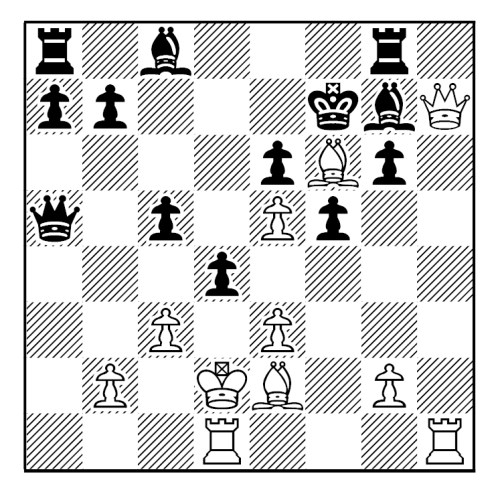
And now the ending of one of Horwitz’s games.


cn7364_chess3_A


It has proven fruitless to discover the complete score of Horwitz’s game. Can someone find the moves leading up to the mate?


~~~~~~~~~~~~~~~~~~~~~~~~~~

 
A Center Counter victory by Canal is perhaps the best well-known game of Boden’s Mate.


Canal-N.N.
Simul
Budapest, 1934
1.e4 d5 2.exd5 Qxd5 3.Nc3 Qa5 4.d4 c6 5.Nf3 Bg4 6.Bf4 e6 7.h3 Bxf3 8.Qxf3 Bb4 9.Be2 Nd7 10.a3 O-O-O

2019_06_26_B
11.axb4! Qxa1+ 12.Kd2 Qxh1 13.Qxc6+! bxc6 14.Ba6mate 1-0


Other famous games include the following:


Alekhine–Vasic
Banja Luka, 1931
1.e4 e6 2.d4 d5 3.Nc3 Bb4 4.Bd3 Bxc3+? 5.bxc3 h6? 6.Ba3 Nd7 7.Qe2 dxe4 8.Bxe4 Ngf6 9.Bd3 b6?? 10.Qxe6+! fxe6 11.Bg6mate 1-0


Elyashov–N.N.
Paris, 1948
1.f4 e5 (From’s Gambit – a good opening to discover many miniatures.) 2.fxe5 d6 3.exd6 Bxd6 4.Nf3 g5 5.d4 g4 6.Ng5?! f5 7.e4 Be7? 8.Nh3! gxh3 9.Qh5+ Kf8 10.Bc4 Qe8 11.Qh6+! Nxh6 12.Bxh6mate 1-0

 
This one should be better known. White sacrifices his queen AND his rook.


Philip Corbin-Othneil Harewood
Friendly Game
Barbados, 1979
1.e4 c5 2.d4 cxd4 3.c3 (The Smith-Morra, another good opening to find miniatures.) 3…dxc3 4.Nxc3 Nc6 5.Nf3 e6 6.Bc4 Bb4!? (A relatively new move. Black doesn’t seem to get much from this move. More common are 6…a6, 6…e6 and 6..Nf6.) 7.O-O Bxc3 8.bxc3 Na5 9.Bd3 Qc7 10.Qe2 Nc6 11.Ba3 Ne5 12.Nxe5 Qxe5 13.f4 Qc7 14.e5 Qxc3 15.Bd6 Ne7 16.Rac1 Qd4+ 17.Kh1 Nc6 18.f5 h5 19.fxe6 dxe6 20.Rxf7! Bd7 21.Qf3 O-O-O

2019_06_26_C
22.Qxc6+! Bxc6 23.Rxc6+ 1-0


~~~~~~~~~~~~~~~~~~~~

 
But as you might have expected, a queen sacrifice is not needed to effect the mate.


Zukertort–Anderssen
Breslau, 1865
1.e4 e5 2.Nf3 Nc6 3.Bb5 Nge7 4.c3 d6 5.d4 Bd7 6.0-0 Ng6 7.Ng5 h6 8.Nxf7 Kxf7 9.Bc4+ Ke7 10.Qh5 Qe8 11.Qg5+! (11.Bg5+ hxg5 12.Qxg5# would work just as well.) 11…hxg5 12.Bxg5mate 1-0


Reshevsky-Duncan
Simul
Nugent’s Dept. Store, St Louis, Aug. 25 1921
[C40]
1.e4 e5 2.Nf3 d5 3.exd5 e4 4.Qe2 Nf6 5.Nc3 Bc5 6.Nxe4 O-O 7.Nxf6+ Qxf6 8.c3 Bd7 9.d4 Bd6 10.Be3 Bf5 11.Nd2 Nd7 12.g3 Rfe8 13.Bg2 Qg6 14.O-O-O c5 15.dxc6 bxc6 16.Bxc6 Rac8 17.Bxd7 Rxc3+ (Only the rook is given up.) 0-1


And on rare occasions, no sacrifice is needed.


Pandolfini – N.N., 1970
1.e4 e5 2.Nf3 Nc6 3.Bb5 a6 4.Ba4 Nf6 5.0-0 Nxe4 6.d4 exd4 7.Re1 d5 8.Nxd4 Bd6 9.Nxc6 Bxh2+ 10.Kh1 Qh4 11.Rxe4+ dxe4 12.Qd8+ Qxd8 13.Nxd8+ Kxd8 14.Kxh2 f5?? 15.Bg5mate 1–0

Chess in Another Game

Not only do I enjoy chess, but most board games in general (but to a lesser extent, of course).


One of these games is Dixit, a party game in which players try to guess which your card by is using a clue that you provided. Similar to Apples to Apples or Card Against Humanity (an adult version of Apples to Apples).


You can’t make your clue too easy, else everyone will solve it and you get no points. And if you make your clue too difficult and no one solves it, then again you get no points. Best strategy is having one or two people solve it and you earn three points.


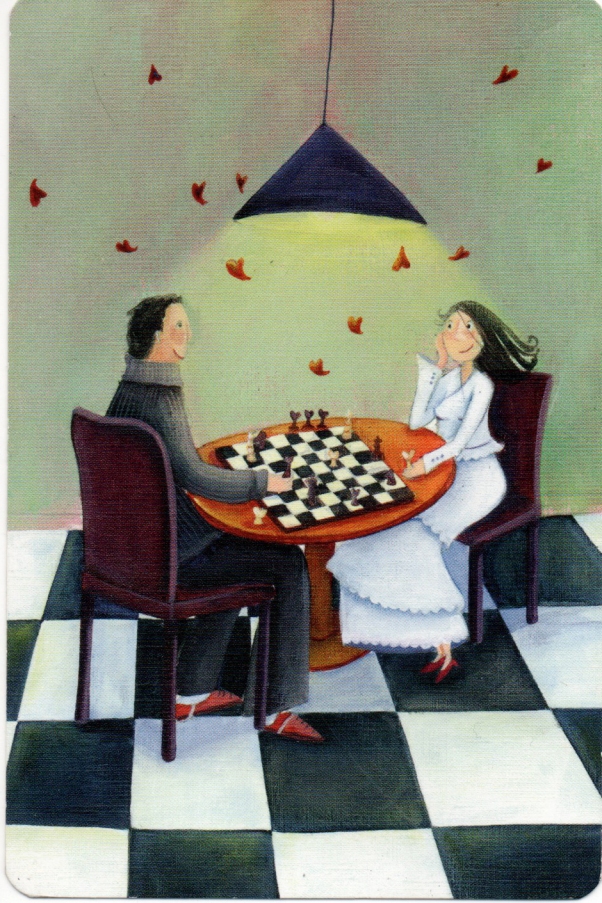
So, what does this have to do with chess? Glad you asked! Two of the cards have chess themes in their image. See below.

Dixit_1_A

Dixit_2_A


Let’s take the first image. I’ve played this card before, in fact twice. The first time I gave the clue, it was “Berlin, Italian, French, Swiss”. All of these are chess openings, of which one person got it. I’m proud of that clue!


Another time I used the clue, “Peace”, as it referred to the dove. But since the clue was spoken, it also referred to “Piece”, as something one would expect to be on a chessboard. I didn’t do as well on that image.


The second image is harder to find a clue that doesn’t give it immediately away. Maybe “Bobby and Lisa”, a reference to strongest female and male American players of the 1960’s. Or perhaps, “What does Alice in Wonderland and One Night in Bangkok have in common?” (they both feature chess).


Here I digress. If the reader wishes to use chess themes found in a movie, he (or she!) may want to watch this YouTube video, https://video.search.yahoo.com/search/video?fr=mcafee&p=chess+movie#id=2&vid=998433ab7997d2e286c6412590eef4e3&action=click


A few pet peeves here. One is the five-minute game of Sherlock Holmes.  Players at that time did not play five- minute games; the chess clocks could not handle the rapid oscillations of fast moving players. Players would instead use a set time of 5 seconds per move, called out by an independent arbitrator. In “Searching for Bobby Fischer”, the clocks are set for five minutes, not two minutes. The chess sets used in the movies tend not to be the sets preferred by most players – too hard to determine pieces and/or the pieces are too fragile to grab and gather them, esp. in speed chess. And finally, most of the movies use Descriptive Notation (DN), such as “Queen takes Knight”, instead of more common, and easier to use, Algebraic Notation (AN). Only Harry Potter gets it right!  


But back to the original post!


Readers! Do you have any suggestions for these two cards? Would love to hear your opinion!

A TD Story

To become a Tournament Director (TD) in chess, it is advisable first become an Assistant Tournament Director (ATD). I’ve been both. And while I found the experience to be both interesting and enjoyable, I also knew that I didn’t have time to pursue everything in chess, so I had to concentrate more on writing (which is a BIG reason for this blog).


Here is a story from that experience.


I was working as an Assistant Tournament Director (ATD) at a National JHS Championship. My job was to walk around the tournament hall and solving small problems on the games as necessary. The players were instructed to raise their hand if they needed some help.


young_girl


Sure enough, about half-hour after they games had started, I saw a hand go up. I jogged to the board where two kids were playing. To be more accurate, there was only one kid playing; he was ahead a queen, a rook, a bishop, and several pawns. His opponent had his head on the table, and not really doing anything else other than breathing.


The kid who was winning said, “My opponent is asleep. Can you help?”. The rules, by the way, forbid anyone disturbing any of the players while the game is still going on. That rule appears to cover players who are awake, asleep, or in deep meditation. And I wasn’t even sure if his opponent was asleep or not (my gut feeling told me he wasn’t).


Now, one thing almost all kids in common is impatience. It didn’t seem fair to have the winning player have to sit there until his opponent’s clock run out (the clock indicated it would be at least another hour – they apparently started the game late).

clock_s-l1000

So, the onus was on me to solve the problem.


I came up with a unique solution. I spoke to the kid who was winning, and loud enough so his opponent could hear me. I told him (both of them!), “If your opponent does not wake up in the next 10 seconds, I will award the game to you.” And I started counting: “10”, “9”, “8”, and then suddenly, and miraculously, his opponent “woke up”.


The kid who was winning had a beaming smile while his opponent feigned waking up.


I told them to keep playing and wished them both good luck in their continuing game.

A Fun Story and Ending.

A few decades ago, before the invention of laptops and chess engines, I used to study chess on a large tournament-sized set.

 
During the warm summer nights California is known for, I would set up a playing board, along with notes and books, in the backyard.

 
This particular night I had just set up the board when I noticed a bright light zigzagging in the night. My eyes followed it and for some strange reason it noticed me. And it sped towards my backyard.


UFO_1


I wasn’t frightened, more curious than anything else. It’s not every day a strange, bright, flying, object settles in my backyard.


It was small thing and when the door opened a tiny being emerged. It (it could have been a male, female, or animal, or robot) began to talk with me. Now since I’m not a polyglot, nor do I know any extra-terrestrial languages, I didn’t understand everything this otherly-world being was trying to say.


But with some hand movements I got a general idea what this entity wanted to know. It (again, I’m sure what gender this being was or if it had a gender) wanted to know what I was doing with the tablecloth (the chessboard), and the little figurines (the pieces).

 
As I am happy to share the game with others, with adults, children, pets, and now aliens, I started to teach the game to it.

 
But this visitor, like so many other beginners, was impatient, and soon fell behind in material, key squares, position, and was on the wrong end of possible checkmates.

 
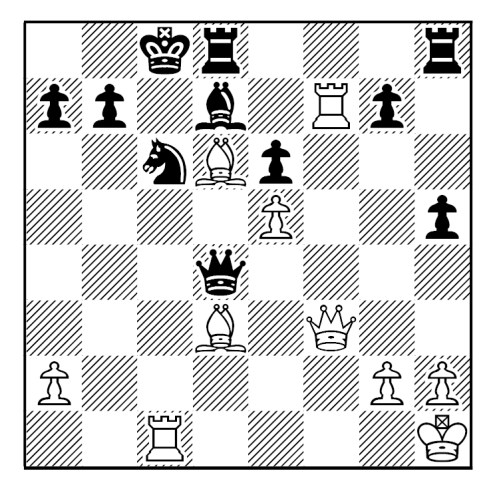
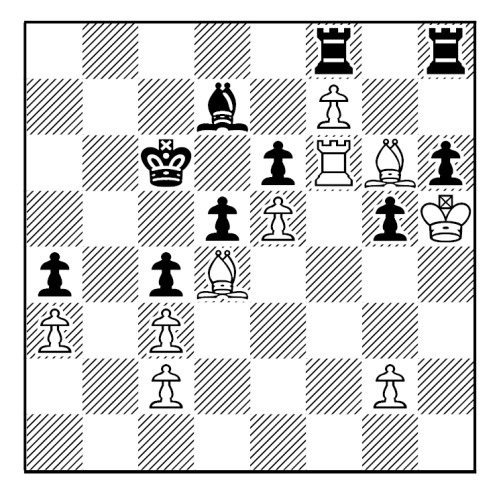
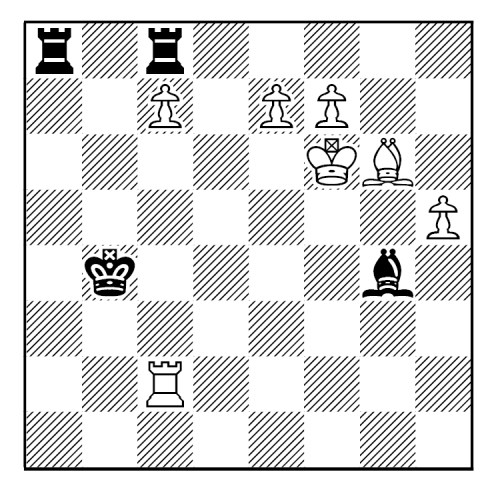
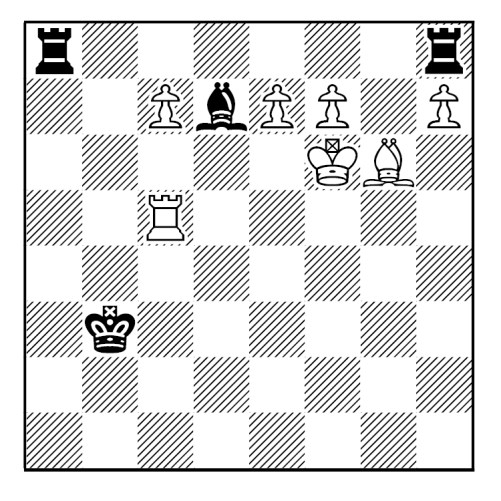
So here is the diagram which we eventually reached.

2019_05_15

1.Qa1+ Kxa1 (Obviously not 1…Ka3 due to 2.Qc3+ Ka4 3.Bb5+! Kxb5 4.Qc5+ Ka4 5.a8=Q+. My space-traveling friend, being a quick learner, figured this out and avoided it. Besides, there was another point to his move.)


2.Kc2 (with the idea of Bd4#) 2…h1=K!

(Whoa! I started to tell him that was an illegal move. To which he replied, “Didn’t you tell me that a pawn reaching the last rank, could become any piece? And I want another king”.

I had to admit he was right. What to do now? If I leave both kings on the board, it would seem likely I would stalemate one of them, and possibly both. I looked at his smug expression. It knew the problems I faced. But then I had moment of inspiration.)

 
3.a8=K! (Now he had at least one move that didn’t result in stalemate.) 3…Kb8 (forced.)

 
4.h7 Ka8 (again forced.)

5.h8=Q mate, mate, mate!

Boring Queen’s Gambit? Try the Slav!

Many players, especially beginners, dislike the Queen’s Gambit. They call it boring, positional, and not fun to play, from either side! Some even wonder why this opening is not banned (due it being boing, etc.).


Maybe they should try the Slav. It’s tactical, full of tension and a single misstep can be fatal.


Here is a list of miniatures to play when you are feeling sluggish.


And a final game, which is not a miniature, but belongs here. You’ll see why at the end.


Meanwhile …  enjoy!


~~~~~~~~~~~~~~~~~~~~~~~~~~~~~~~~~~~~~


Jensen (1873)-Fries (2038)
US Open
Los Angeles, 1991
1.d4 d5 2.c4 c6 3.Nc3 dxc4 4.e4 b5 5.a4 e5 6.Nge2 b4 7.Nb1 Nf6 8.Bg5 h6 9.Bxf6 Qxf6 10.d5 Bb7 11.Ng3 Bc5 12.Nf5 cxd5 13.Ne3 Bxe3 14.fxe3 Qh4+ 15.g3 Qxe4 16.Rg1 Qxe3+ 17.Qe2 Qxg1 18.Qxe5+ Kd8 0-1


GM Agdestein (2600)-Zsuzsa Polgar (2565)
Active Chess
Exhibition Match
Oslo, 1996
1.d4 d5 2.c4 e6 3.Nc3 c6 4.e3 Nf6 5.b3 Nbd7 6.Bb2 Bd6 7.Qc2 O-O 8.O-O-O?! (Premature. Better is 8.Nf3 and try to castle kingside.)  8…a5 9.Nf3 a4 10.Nxa4 dxc4 11.bxc4 b5! (Using her queenside pawns Zsuzsa opens up the queenside with her pawns.) 12.cxb5 cxb5 13.Bxb5 Ba6 14.Bxa6 Rxa6 15.Nd2 Qa8 16.Nc3 Rc8 17.Ndb1 Rxa2 18.Rd3 Nd5 19.Qb3 Nb4 20.Rd2 Qxg2 21.Rhd1 Qb7! 0-1 (Black threatens 22…Nd3+.)


Riedel-Zurek
Berlin, 1987
1.d4 d5 2.c4 c6 3.Nf3 Nf6 4.Nc3 Bf5 5.cxd5 Nxd5 6.Qb3 Qb6 7.Nxd5 Qxb3 8.Nc7+ Kd8 9.axb3 Kxc7 10.Bf4+ Kc8 11.Ne5 f6 12.Nc4 Nd7 13.f3 Bc2 14.e4 Bxb3 15.Na5 Bf7 16.Nxc6 e5 17.Nxa7+ Kb8 18.dxe5 fxe5 19.Be3 Bc5 20.Rd1 Bxe3 21.Rxd7 Be8 22.Rd3 Bd4 0-1


Jelena Popovic-Elena Stotskaja
Rimavska Sobota, 1992
[D15]
1.d4 d5 2.c4 c6 3.Nf3 Nf6 4.Nc3 Bf5 5.Bg5 e6 6.e3 Be7 7.Ne5 h6 8.Bh4 g5 9.Bg3 Nbd7 10.Bd3 Bxd3 11.Qxd3 Nh5 12.cxd5 exd5 13.Qf5 f6 14.Qg6+ Kf8 15.Qf7mate 1-0


Dias (2295)-Gillford
World Jr. Ch.
Calcutta, 1998
1.d4 d5 2.c4 c6 3.Nc3 Nf6 4.Nf3 Bf5 5.Qb3 Qb6 6.Bf4 Nbd7 7.e3 e6 8.Qxb6 axb6 9.Nh4 Bg4 10.f3 Bh5 11.Bd3 Bg6 12.Nxg6 hxg6 13.O-O Nh5 14.Bg5 Bd6 15.Rfb1? Bxh2+! 16.Kxh2 Nf4+ 17.Kg3 Nxd3 18.cxd5 exd5 19.e4 f6 20.Bd2 dxe4 21.Nxe4 f5 22.Ng5 Nf6 23.b4 f4+ 0-1


Kuzubov (2535)-Wademark (2182)
Port Erin Open
Isle Of Man, Sept. 24 2005
1.d4 d5 2.c4 c6 3.Nf3 Nf6 4.Nc3 Na6 5.cxd5 cxd5 6.Bf4 Qa5 7.e3 e6 8.a3 Bd7 9.Bd3 Be7 10.Ne5 Nb8 11.O-O O-O 12.Bg5 Qd8 13.f4 Nc6 14.Rf3 Nxe5 15.fxe5 Ng4 16.Bxh7+ Kxh7 17.Rh3+ Nh6 18.Qd3+ Kg8 19.Bxh6 f5 20.exf6 Bxf6 21.Bxg7 Kxg7 22.Qh7mate 1-0


 Technically, the next three games constitute the Tolush-Geller Gambit (1.d4 d5 2.c4 c6 3.Nf3 Nf6 4.Nc3 dxc4 5.e4).


Hoshino-Hori
corres.
JCCA Webchess Open
ICCF, 2007
1.d4 d5 2.c4 c6 3.Nf3 Nf6 4.Nc3 dxc4 5.e4 b5 6.Be2 e6 7.O-O Be7 8.a4 b4 9.e5 Nd5 10.Ne4 c3 11.bxc3 Nxc3 12.Nxc3 bxc3 13.Ba3 c5 14.Qc2 Ba6 15.Bb5+ Bxb5 16.axb5 O-O 17.dxc5 Qa5 18.Rfb1 Nd7 19.c6 Bxa3 20.cxd7 1-0


Bosboom (2471)-Stellwagen (2621)
Netherlands Ch.
Hilversum, Apr. 4 2008
1.d4 d5 2.Nf3 Nf6 3.c4 c6 4.Nc3 dxc4 5.e4 b5 6.Qc2 e6 7.g4 Bb7 8.g5 Nfd7 9.h4 Na6 10.a3 Be7 11.Be3 Qa5 12.Nd2 c5 13.d5 Ne5 14.Ra2 exd5 15.exd5 O-O 16.Qf5 Bd6 17.h5 Rae8 18.h6 g6 19.Qb1 Ng4 20.Nde4 Bxd5 21.Bd2 Bf4 22.Kd1 Bxe4 23.Nxe4 Nxf2+ 0-1


GM Gaprindashvili-Z. Polgar
FIDE Women’s Candidates Tournament
Shanghai, 1992
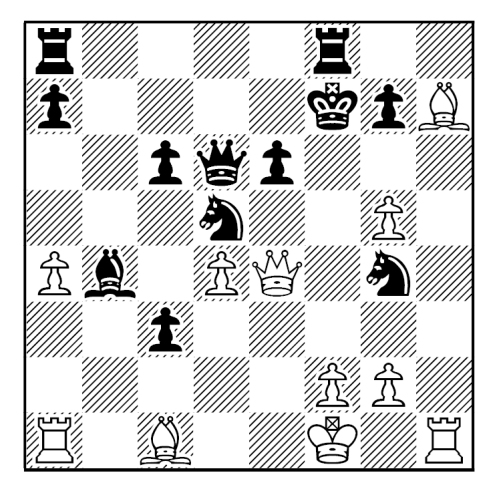
1.d4 d5 2.c4 dxc4 3.Nf3 Nf6 4.Nc3 c6 5.e4 b5 6.e5 Nd5 7.a4 Bf5 8.Be2 b4 9.Nh4 bxc3 10.Nxf5 e6 11.Ng3 cxb2 12.Bxb2 Bb4+ 13.Kf1 c3 14.Bc1 O-O 15.Ne4 Nd7 16.Bd3 f5 17.exf6 N7xf6 18.Ng5 Qd6 19.Qc2 h6 20.h4 hxg5 21.hxg5 Ng4 22.Bh7+ Kf7 23.Qe4
2019_05_08_A

23…Nxf2 24.Kxf2 Ke7+ 25.Ke2 Qg3 0-1


Sulava (2531)-Abolianin (2385)
Imperia Open
Italy, 2001
1.d4 d5 2.Nf3 c6 3.c4 Nf6 4.Nc3 a6 5.a4 g6 6.e3 Bg7 7.Bd3 O-O 8.O-O c5 9.Nxd5 Nxd5 10.cxd5 cxd4 11.e4 e6 12.dxe6 Bxe6 13.Ng5 Bc8 14.f4 Nc6 15.Bd2 h6 16.Nf3 Be6 17.Qe1 Re8 18.Qg3 Qd6 19.h4 Kh8 20.Rae1 Rad8 21.h5 g5 22.e5 gxf4 23.Qxg7+ 1-0


Krueger-Seepe
German Northwest League, 1988
1.d4 d5 2.c4 c6 3.Nf3 Nf6 4.Nc3 a6 5.e3 e6 6.Bd3 dxc4 7.Bxc4 b5 8.Bd3 c5 9.e4 cxd4 10.Nxd4 Bd6 11.Be3 O-O 12.e5 Bxe5 13.Qf3 Bxd4 14.Qxa8 Bxc3+ 15.bxc3 Qxd3 16.Qxb8 e5 17.Qa7 Qxc3+ 18.Ke2 Be6 19.f3 Qb2+ 20.Bd2 Bc4+ 0-1


Miller (2180)-Stephen Jones (2359)
Southern California Open, 1995
[I first annotated this game in Rank and File.]
1.d4 d5 2.c4 c6 3.Nf3 Nf6 4.Nc3 a6 5.e3 b5!? 6.cxd5 cxd5 7.Bd3 Bb7?! (Unless Black gets a Knight on e4 to exchange off and open the diagonal, the Bishop will merely be an onlooker to the proceedings.) 8.O-O Nbd7 9.Ne5 e6 10.f4 Be7 11.Qf3 O-O 12.g4! b4 (Black has little counterplay, and cannot come up with a good play to organize his forces.) 13.Ne2 Ne4 14.Ng3 Nd6 15.Bd2 (To connect both Rooks.) 15…Nb6 (The Black Knights are still trying to find good squares. Meanwhile White continues to build his attack.) 16.g5 a5 17.Qh5 Ne4 18.Rf3 Qe8 19.Nxe4 dxe4 20.Rh3 (White’s Bishop is, of course, immune from capture.) 20…h6 21.Ng4 (D Nxh6+) 1-0


Fang (2355)-Nichols (2046)
New Hampshire Open, 1997
1.d4 d5 2.Nf3 Nf6 3.c4 c6 4.Nc3 a6 5.c5 g6 6.Bf4 Bg7 7.h3 Nbd7 8.e3 O-O 9.Be2 Re8 10.O-O Ne4 11.Nxe4 dxe4 12.Nd2 e5 13.dxe5 Nxc5 14.Rc1 Nd3 15.Bxd3 exd3 16.Nc4 Re6 17.Rc3 Re8 18.Rxd3 Qh4 19.Nb6 Ra7 20.Nxc8 Rxc8 21.Rd7 g5 22.Rd8+ Rxd8 23.Qxd8+ Bf8 24.Bxg5 1-0


GM Kamsky-GM Kramnik
Candidate’s Match, 1994
1.d4 d5 2.c4 c6 3.Nc3 Nf6 4.Nf3 e6 5.Bg5 dxc4 6.e4 b5 7.e5 h6 8.Bh4 g5 9.Nxg5 hxg5 10.Bxg5 Nbd7 11.exf6 Bb7 12.g3 c5 13.d5 Qb6 14.Bg2 O-O-O 15.O-O b4 16.Na4 Qb5 17.a3 Ne5 18.axb4 cxb4 19.Qd4 Nc6 20.dxc6 Rxd4 21.cxb7+ Kc7 22.Be3 e5 23.Nc3 bxc3 24.bxc3 Bc5 25.cxd4 1-0


R. Hungaski (2366)-A. Nasri (2227)
World Jr. Ch.
Yerevan, 2006
1.Nf3 d5 2.d4 e6 3.c4 c6 4.Nc3 Nf6 5.Bg5 h6 6.Bh4 dxc4 7.e4 g5 8.Bg3 b5 9.Be2 Bb7 10.h4 g4 11.Ne5 h5 12.O-O Nbd7 13.Qc2 a6 14.Rad1 Be7 15.f3 Rg8 16.fxg4 hxg4 17.Nxf7 Kxf7 18.e5 c5 19.d5 Qb6 20.exf6 Bxf6 21.Ne4 1-0


GM Loek Van Wely-GM Alexander Morozevich
Wijk aan Zee, 2001
[D16]
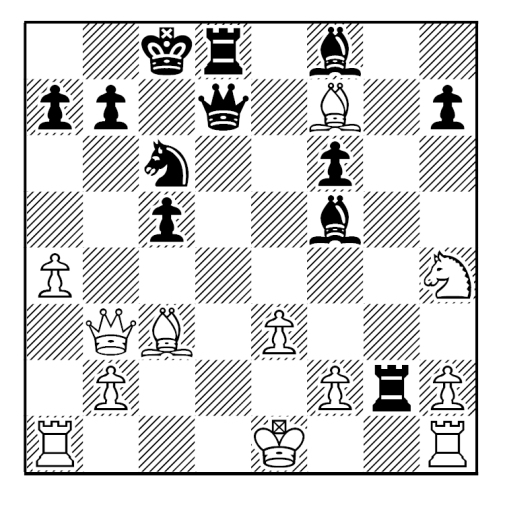
1.d4 d5 2.c4 c6 3.Nf3 Nf6 4.Nc3 dxc4 5.a4 c5 6.d5 Bf5 7.e3 e6 8.Bxc4 exd5 9.Nxd5 Nc6 10.Qb3 Qd7 11.Nxf6+ gxf6 12.Bd2 Rg8 13.Bc3!?  O-O-O 14.Bxf7 Rxg2! 15.Nh4
2019_05_08_B
15…Ne5! 16.Nxf5 Nd3+ 17.Kf1 Rxf2+ 18.Kg1 Kb8 19.Qe6?! Rxf5 20.h4 Bd6 21.Rf1? Rg8+ 0-1 (In view of …Qg7#)


Ikonnikov (2560)-Vitoux (2264)
Port Erin Open
Isle Of Man, Sept. 24 005
1.d4 d5 2.Nf3 Nf6 3.c4 c6 4.Nc3 dxc4 5.a4 c5 6.d5 Bf5 7.e4 Nxe4 8.Nxe4 Bxe4 9.Bxc4 Qd6 10.O-O Nd7 11.Re1 Nf6 12.Bb5+ Kd8 13.Bc4 h6 14.Bd2 a6 15.Bc3 Qf4 16.Ne5 Kc8 17.f3 Bg6 18.g3 Qg5 19.f4 Qh5 20.Be2 1-0


Alan Fichaud-Robert Jacobs (2415)
corres.
ATB 2, 1998
1.c4 c6 2.d4 d5 3.Nf3 Nf6 4.Nc3 dxc4 5.a4 Na6 6.e4 Be6 7.Ne5 Qa5 8.f3 Rd8 9.Be3 Qb4 10.Qe2 g6 11.Nxc4 Bg7 12.a5 O-O 13.Ne5 Rxd4 14.Nxc6 bxc6 15.Bxd4 Qxd4 16.Qxa6 Rb8 17.Qe2 Nd7 18.Nd1 Nc5 19.Qc2 Nb3 20.Ra3 Qb4+ 21.Nc3 Nd4 22.Qc1 Qxb2 23.Qxb2 Rxb2 24.Bd3 Rxg2 0-1


Eduardo Ortiz-Matthew Ho
Pacific Southwest Open
Los Angeles 2003
1.d4 d5 2.c4 c6 3.Nf3 Nf6 4.Nc3 dxc4 5.a4 Na6 6.e4 Bg4 7.Bxc4 Bxf3 8.gxf3 e6 9.Be3 Be7 10.Rg1 O-O 11.f4 Qa5 12.Kf1 Qb4 cxd4 15.Bxd4 Nc5 16.Rg5! h6 17.Rxc5! Bxc5 18.Bxf6 Be7 (18…gxf6 19.Ra4 snares the Queen.) 19.Be5 Bf6 20.Bxf6 gxf6 21.f5 Qd6 22.Qg4+ Kh8 23.fxe6 fxe6 24.Rd1 Qe7 25.Bxe6 1-0


GM Polugaevsky (2585)-Drasko (2465)
Sarajevo, 1987
1.d4 d5 2.c4 c6 3.Nf3 Nf6 4.Nc3 dxc4 5.a4 Bf5 6.e3 e6 7.Bxc4 Bb4 8.O-O O-O 9.Nh4 Nbd7 10.f3 Bg6 11.Nxg6 hxg6 12.Qc2 Rc8 13.Rd1 Qb6 14.Kh1 c5 15.d5 Ne5 16.Be2 Rfe8 17.dxe6 Qxe6 18.Nb5 Nc6 19.Bc4 Qf5 20.Bxf7+ 1-0


Vandenburg (1979)-Blechar (2237)
corres.
CCLA Team Ch., 1999
1.d4 d5 2.c4 c6 3.Nf3 Nf6 4.Nc3 dxc4 5.a4 Bf5 6.Ne5 e6 7.Bg5 Bb4 8.Nxc4 Qd5 9.Bxf6 Qxc4 10.Qd2 Qb3 11.Bxg7 Rg8 12.Be5 c5 13.Bxb8 cxd4 14.Be5 O-O-O 15.Bxd4 Rxd4! (16.Qxd4 Qxb2) 0-1


Waxman-Wes White
Jay Chemical, 1981?
1.d4 Nf6 2.Nf3 d5 3.c4 c6 4.Qc2 Ne4 5.Bf4 Bf5 6.Qb3 Qa5+ 7.Nbd2 e5 8.dxe5 Bc5 9.e3 Bb4 10.Rd1 Nc5 0-1


C. Gabriel (2531)-GM Huebner (2636)
Bundesliga
Germany, Jan. 28 2006
1.d4 d5 2.c4 c6 3.Nf3 Nf6 4.Qb3 dxc4 5.Qxc4 Bf5 6.g3 e6 7.Bg2 Be7 8.O-O O-O 9.Qb3 Qb6 10.Nbd2 Rd8 11.Nc4 Qxb3 12.axb3 Rd5?? (13.Nb6 axb6 14.Rxa8 +-) 1-0


 GM Gelfand (2733)-GM Van Wely (2683)
Blindfold Game
Melody Amber
Monaco, 2007
1.d4 d5 2.c4 c6 3.Nf3 Nf6 4.Qb3 e6 5.Bg5 h6 6.Bh4 Nbd7 7.e3 Be7 8.Nc3 O-O 9.Bd3 b6 10.cxd5 cxd5 11.O-O Bb7 12.Rfc1 a6 13.Na4 b5 14.Nc5 Nxc5 15.dxc5 Ne4 16.Bxe7 Qxe7 17.c6 Bc8 18.a4 bxa4 19.Rxa4 Nd6 20.Qa3 Qc7 21.b4 Qb6 22.b5 Nxb5 23.Bxb5 Qxb5 24.Rb4 Qe2 25.Rb2 1-0


And the last game, as promised. It’s a game full of Queens, and appropriately quite tactical.


Zawadski-Peyrat
Metz-Chess1, 1991
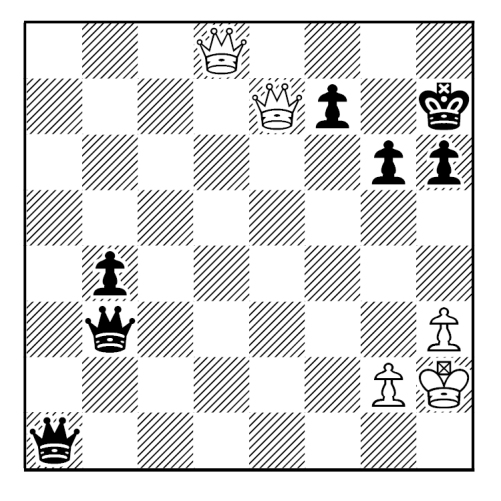
1.d4 d5 2.c4 c6 3.Nf3 Nf6 4.Nc3 e6 5.e3 Nbd7 6.Bd3 dxc4 7.Bxc4 b5 8.Be2 Bb7 9.O-O b4 10.Na4 Be7 11.Qc2 Rc8 12.Rd1 O-O 13.Bd2 a5 14.Be1 c5 15.dxc5 Qc7 16.Rac1 Nxc5 17.Rd4 Qb8 18.Nb6 Rcd8 19.Nc4 Be4 20.Qd2 Qa7 21.Nce5 h6 22.h3 Ba8 23.Bc4 Nfe4 24.Qe2 Qb8 25.Rcd1 Bf6 26.Nd7 Nxd7 27.Rxd7 Rxd7 28.Rxd7 Bc6 29.Rd1 Rd8 30.Nd4 Ba8 31.f3 Nc5 32.Rc1 Qb6 33.Bf2 g6 34.Nb3 Nxb3 35.Bxb3 Bb7 36.Rd1 Rxd1+ 37.Bxd1 Ba6 38.Qd2 Be7 39.Bb3 Bc5 40.Bd1 Kg7 41.e4 e5 42.Bxc5 Qxc5+ 43.Kh2 Bb5 44.Bb3 Bc6 45.Qd8 a4 46.Bd5 Qd4 47.b3 a3 48.Qd6 Bb7 49.Qd7 Bxd5 50.exd5 Qf4+ 51.Kh1 Qc1+ 52.Kh2 Qf4+ 53.Kh1 e4 54.fxe4 Qf1+ 55.Kh2 Qf4+ 56.Kh1 Qf1+ 57.Kh2 Qf4+ 58.Kh1 Qxe4 59.d6 Qe1+ -/+ 60.Kh2 Qe5+ 61.Kh1 Qa1+ 62.Kh2 Qxa2 63.Qe7 Qd2 64.Qe5+ Kh7 65.Qf6 Qd5 66.Qe7 a2 67.d7 a1=Q 68.d8=Q Qxb3
2019_05_08_C
69.Qdf8 (69.Qef8? Qe5+ -+) 69…Qg7! -+ 70.Qb8 h5 71.Qbxb4 Qd5 72.Qbe4 Qb3 73.Q7e5 Qxe5+ 74.Qxe5 Qe6 75.Qc7 g5 76.Qc2+ Kh6 77.Qc3 f6 78.Qb4 Qe5+ 79.Kg1 Qe3+ 80.Kf1 Qf4+ 81.Qxf4 gxf4 82.Ke2 Kg5 83.Kd3 Kh4 84.Ke4 Kg3 85.Kf5 h4 86.Ke4 Kxg2 87.Kxf4 Kxh3 88.Kf3 f5 0-1

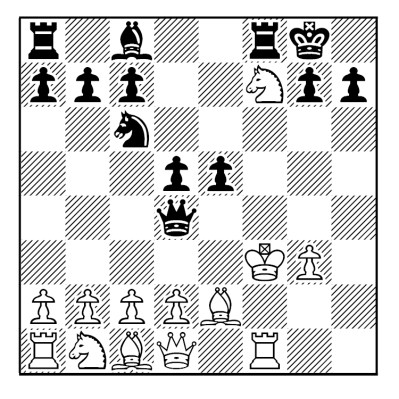


AN INTRODUCTION TO THE ART OF QUEEN SACRIFICES, Part 1

Perhaps the most popular games ever published are those in which a player sacrifices his Queen. Bravery is required for that player who thrusts his most valuable piece into the fight, usually with no hope of ever recovering her.

 
In the over 500 years of chess, fewer topics have been more exciting, more spectacular, and more aesthetically pleasing to the player than when he freely sacrifices his powerful Queen. In all cases, the desired result, whether immediately or indirectly, is to gain something more valuable; the enemy King.


Basically, there are three types of Queen sacrifices.


The first type is the one made for material gain. Sometimes called a pseudo-sacrifice, the Queen is given up and won back a few moves later.


Doroshkevich-Astashin
USSR, 1967 (D24)
1.d4 d5 2.c4 dxc4 3.Nf3 Nf6 4.Nc3 a6 5.e4 b5 6.e5 Nd5 7.a4 Nxc3 8.bxc3 Bb7 9.e6 fxe6 10.Be2 Qd5 11.Ng5 Qxg2 12.Rf1 Bd5 13.axb5 Qxh2?! 14.Bg4 h5 15.Bxe6 Bxe6 16.Qf3 c6 17.Nxe6 Qd6 18.Qf5 g6 19.Qxg6+ Kd7 20.Nc5+ Kc8 21.Qe8+ Qd8 22.b6! 1-0


The Queen sacrifice for gain may turn into a mate if the opponent tries to hold on the female material.


Muller-Calderone
Compuserve, 1996
(B57)
1.e4 c5 2.Nf3 d6 3.d4 cxd4 4.Nxd4 Nf6 5.Nc3 Nc6 6.Nxc6 bxc6 7.Bc4 g6 8.e5 Nd7 (Certainly not 8…dxe5?? 9.Bxf7+. Best is 8…Ng4.) 9.exd6 exd6 10.O-O Nf6 11.Re1+ Be7 12.Qf3 O-O 13.Qxc6 Bf5 14.Bh6 Re8 15.Nd5 Rc8 16.Qxe8+! Qxe8 17.Nxe7+ Kh8 18.Nxf5 Ne4 19.Nxd6 Qc6 20.Nxf7+ (20…Kg8 21.Ne5+) 1-0


Levitzky-Marshall
Breslau, 1912
(C10)
Chernev says that spectators showered the board with gold pieces after Black’s 23rd move. Soltis says it was bettors who lost the wager on the outcome.
1.d4 e6 2.e4 d5 3.Nc3 c5 (The Marshall Gambit, as played by its inventor.) 4.Nf3 Nc6 5.exd5 exd5 6.Be2 Nf6 7.O-O Be7 8.Bg5 O-O 9.dxc5 Be6 10.Nd4 Bxc5 11.Nxe6 fxe6 12.Bg4 Qd6 13.Bh3 Rae8 14.Qd2 Bb4 15.Bxf6 Rxf6 16.Rad1 Qc5 17.Qe2 Bxc3 18.bxc3 Qxc3 19.Rxd5 Nd4 20.Qh5 Ref8 21.Re5 Rh6 22.Qg5 Rxh3 23.Rc5 Qg3!! [O.K. Here are the variations: 24.Qxg3 Ne2+ 25.Kh1 Nxg3+ 26.Kg1 Nxf1 27.gxh3 Nd2 and extra piece wins. If White tries to hold onto the Queen, he tries loses his King. 24.hxg3 Ne2#, or 24.fxg3 Ne2+ 25.Kh1 Rxf1#.] 0-1


A second popular Queen sacrifice is another form of a pseudo-sacrifice. The sacrifice is made solely for a player to checkmate an opponent. The mate is immediate and happens most frequently in the opening, as these short games show.


Greco-N.N.,
Rome, 1619?
1.e4 b6 (Despite all the players who have invested 400 years to analyze and perfect this opening, this defence has remained on the sidelines of theory.) 2.d4 Bb7 3.Bd3 f5?! 4.exf5 Bxg2 5.Qh5+ g6 6.fxg6 Nf6? 7.gxh7+!! (The Queen is willing offered, an offer that cannot be ignored or declined.) 7…Nxh5 (And now the coup d’état) 8.g6mate 1-0


Teed-Delmar
New York, 1896
1.d4 f5 2.Bg5 h6 3.Bh4 g5 4.Bg3 f4 5.e3 h5 6.Bd3 Rh6 7.Qxh5+! Rxh5 8.Bg6mate 1-0


De Legal-Saint Brie
Paris, 1750? (C40)
1.e4 e5 2.Nf3 d6 3.Bc4 [3.d4 is now considered to be the best move when facing Philidor’s Defence. But then White would miss all the fun of this classical trap!] 3…Bg4? 4.Nc3 g6 5.Nxe5! Bxd1 6.Bxf7+ Ke7 7.Nd5mate 1-0


Paul Morphy-Duke of Brunswick and Count Isouard
Paris, 1858
(C41)
A short classic that displays all the qualities that make up a great game; rapid development, pins, sacrifices, and slightly inferior moves by the opponent.
1.e4 e5 2.Nf3 d6 3.d4 Bg4? 4.dxe5 (Simple enough. White threatens 4…dxe5 5.Qxd8+ Kxd8 6.Nxe5, netting a pawn.) 4…Bxf3 5.Qxf3 dxe5 6.Bc4 Nf6 7.Qb3 Qe7 8.Nc3 c6 9.Bg5 b5 10.Nxb5! (The whole mating sequence begins with a Knight sacrifice.) 10…cxb5 11.Bxb5+ Nbd7 12.O-O-O! Rd8 13.Rxd7 Rxd7 14.Rd1 Qe6 15.Bxd7+ Nxd7 16.Qb8+! (And ends with a Queen deflection sacrifice!) 16…Nxb8 17.Rd8mate 1-0

 
Queen sacrifices for the checkmate may also be more involved and take a few additional moves to execute the mate.

 
Maryasin-Kapengut
Minsk, 1969
(D01)
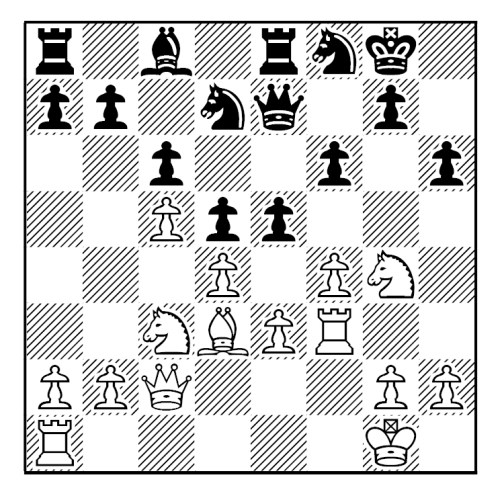
1.d4 Nf6 2.Nc3 d5 3.Bg5 (The often neglected Veresov’s Opening.) 3…Nbd7 4.Nf3 g6 5.e3 Bg7 6.Bd3 c5 7.Ne5 O-O 8.Qf3 Qb6 9.O-O-O e6 10.h4 Nxe5 11.dxe5 Nd7 12.h5 Nxe5 13.Qh3 f5 14.hxg6 hxg6 15.Be2 d4 16.Na4 Qb4 17.f4 Qxa4 18.fxe5 Qxa2 19.Qh7+ Kf7 20.Bf6 Qa1+ 21.Kd2 Qa5+ 22.c3 Rg8
2019_04_25_A
23.Qxg6+! Kxg6 24.Bh5+ Kh7 25.Bf7+ Bh6 26.Rxh6+ (with the unstoppable threat of Rh1#.) 1-0


The third type of Queen sacrifices are those initiating King hunts. The Queen is given up so that the enemy King is brought out into the open. The checkmate, if there, comes many moves later.

 
These sacrifices differ from the mating sacrifices in that, while a mating sacrifice can usually be calculated out to the end, a King Hunt is made on a player’s belief that he can find a mate somewhere down the line. In other words, a King Hunt is made more on intuition rather than calculation.


D. Byrne-Fischer
Rosenwald Memorial
New York, 1956
(D97)
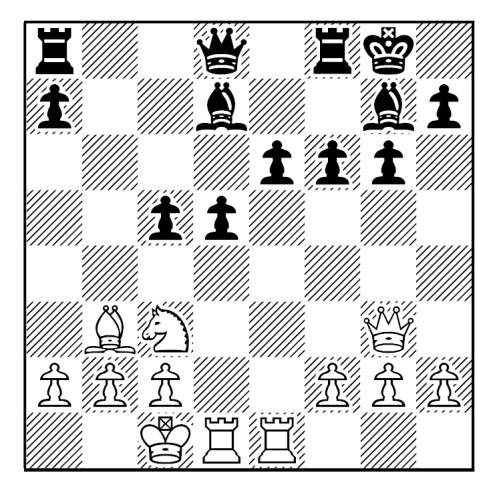
1.Nf3 Nf6 2.c4 g6 3.Nc3 Bg7 4.d4 O-O 5.Bf4 d5 6.Qb3 dxc4 7.Qxc4 c6 8.e4 Nbd7 9.Rd1 Nb6 10.Qc5 Bg4 11.Bg5 Na4 12.Qa3 Nxc3 13.bxc3 Nxe4 14.Bxe7 Qb6 15.Bc4 Nxc3 16.Bc5 Rfe8+ 17.Kf1
2019_04_25_B
17…Be6!! 18.Bxb6 (White almost has to take the Queen. 18.Bxe6? loses to 18…Qb5+! 19.Kg1 Ne2+ 20.Kf1 Ng3+ 21.Kg1 Qf1+! 22.Rxf1 Ne2#. Yes, Black’s position is so overwhelming he can sacrifice his queen more than once. See below for other examples.) 18…Bxc4+ 19.Kg1 Ne2+ 20.Kf1 Nxd4+ (Now Black initiates a “windmill” attack.) 21.Kg1 Ne2+ 22.Kf1 Nc3+ 23.Kg1 axb6 24.Qb4 Ra4 25.Qxb6 Nxd1 26.h3 Rxa2 27.Kh2 Nxf2 28.Re1 Rxe1 29.Qd8+ Bf8 30.Nxe1 Bd5 31.Nf3 Ne4 32.Qb8 b5 33.h4 h5 34.Ne5 Kg7 35.Kg1 Bc5+ 36.Kf1 Ng3+ 37.Ke1 Bb4+ 38.Kd1 Bb3+ 39.Kc1 Ne2+ 40.Kb1 Nc3+ 41.Kc1 Rc2mate 0-1


Averbakh-Kotov
Zurich, 1953
(A55)
1.d4 Nf6 2.c4 d6 3.Nf3 Nbd7 4.Nc3 e5 5.e4 Be7 6.Be2 O-O 7.O-O c6 8.Qc2 Re8 9.Rd1 Bf8 10.Rb1 a5 11.d5 Nc5 12.Be3 Qc7 13.h3 Bd7 14.Rbc1 g6 15.Nd2 Rab8 16.Nb3 Nxb3 17.Qxb3 c5 18.Kh2 Kh8 19.Qc2 Ng8 20.Bg4 Nh6 21.Bxd7 Qxd7 22.Qd2 Ng8 23.g4 f5 24.f3 Be7 25.Rg1 Rf8 26.Rcf1 Rf7 27.gxf5 gxf5 28.Rg2 f4 29.Bf2 Rf6 30.Ne2 Qxh3+!! 31.Kxh3 Rh6+ 32.Kg4 Nf6+ 33.Kf5 Nd7 34.Rg5 Rf8+ 35.Kg4 Nf6+ 36.Kf5 Ng8+ 37.Kg4 Nf6+ 38.Kf5 Nxd5+ 39.Kg4 Nf6+ 40.Kf5 Ng8+ 41.Kg4 Nf6+ 42.Kf5 Ng8+ (These last few moves were apparently played to reach adjournment.) 43.Kg4 Bxg5 44.Kxg5 Rf7 45.Bh4 Rg6+ 46.Kh5 Rfg7 47.Bg5 Rxg5+ 48.Kh4 Nf6 49.Ng3 Rxg3 50.Qxd6 R3g6 51.Qb8+ Rg8 0-1


Mating threats may occur more than once in a game. Which also means a player can sometimes a player can offer his original Queen more than once.


Nigmadzianov-Kaplun
USSR, 1977
(B05)
1.e4 Nf6 2.e5 Nd5 3.d4 d6 4.Nf3 Bg4 5.Be2 c6 6.c4 Nb6 7.Nbd2 N8d7? (ECO suggests 7…dxe5.) 8.Ng5! Bxe2 9.e6!! (White offers his Queen for the first time. This offer can be turned down.) 9…f6 (9…Bxd1? fails to 10.exf7#) 10.Qxe2 fxg5 11.Ne4 +/- Nf6 12.Nxg5 Qc7 13.Nf7 Rg8 14.g4 h6 15.h4 d5 16.c5 Nc8 17.g5 Ne4 18.gxh6 gxh6 19.Qh5 Nf6 20.Nd6+ Kd8 21.Qe8+ (The second offer cannot be refused.) 1-0


Gonssiorovsky-Alekhine
Odessa, 1918
(C24)
1.e4 e5 2.Bc4 Nf6 3.d3 c6 4.Qe2 Be7 5.f4 d5 6.exd5 exf4 7.Bxf4 O-O 8.Nd2 cxd5 9.Bb3 a5 10.c3 a4 11.Bc2 a3 12.b3?! (12.Rb1 is better. Lusin-Morgado, corres. 1968 continued with 12…Bd6 13.Qf2 Ng4 14.Qg3 Re8+ 15.Kd1 Ne3+ 16.Kc1 Nf5 17.Qf2 Bxf4 18.Qxf4 Re1+ 19.Bd1 Ne3 20.Ngf3 Rxh1 21.Qxe3 axb2+ 22.Rxb2 Nc6 23.a4 Rxa4 24.Qe2 Ra1+ 25.Rb1 Rxb1+ 26.Nxb1 h6 27.Nbd2 Qe7 28.Kb2 Qxe2 29.Bxe2 g5 30.Nf1 Bg4 31.Ng3 Bxf3 32.Bxf3 Rxh2 33.Bxd5 h5 34.Kc1 Kg7 35.Kd2 Ne5 36.d4 Ng4 37.Ke2 h4 38.Nf1 Rh1 39.Bxb7 h3 40.gxh3 Rxh3 41.c4 f5 42.c5 Kf6 43.c6 Rc3 1/2-1/2) 12…Re8 13.O-O-O Bb4 14.Qf2 Bxc3 15.Bg5 Nc6 16.Ngf3 d4 17.Rhe1 Bb2+ 18.Kb1 Nd5! (The Queen is offered for the first time.) 19.Rxe8+ (Naturally 19.Bxd8 fails to 19…Nc3#) 19…Qxe8 20.Ne4 Qxe4! (The second offer!) 21.Bd2 Qe3 (The third offer!) 22.Re1 (Now White gets into the act!) 22…Bf5 23.Rxe3 dxe3 24.Qf1 exd2 25.Bd1 Ncb4! (And White finally realizes that he cannot stop Nc3#.) 0-1


E. Z. Adams-C. Torre
New Orleans, 1920 (C62)
1.e4 e5 2.Nf3 d6 3.d4 (Ah!, there is the better move in Philidor’s Defence) 3…exd4 4.Qxd4 Nc6 5.Bb5 Bd7 6.Bxc6 Bxc6 7.Nc3 Nf6 8.O-O Be7 9.Nd5 Bxd5 10.exd5 O-O 11.Bg5 c6 12.c4 cxd5 13.cxd5 Re8 14.Rfe1 a5 15.Re2 Rc8 16.Rae1 Qd7 17.Bxf6 Bxf6 18.Qg4! (The first offer) 18…Qb5 19.Qc4! (The second offer) 19…Qd7 20.Qc7! (The third!) 20…Qb5 21.a4! Qxa4 22.Re4 Qb5 23.Qxb7 (This, the fourth offer, is too much for Black to handle.) 1-0

 
These games are extremely rare. After all, how many Queen sacrifices do you need once you have mated your opponent?

A computer chess tournament


MakingChessComputer1


Chess playing computers are good at several things. They are superb at tactics, discover hidden resources if being attacked, find checkmates, and they don’t get tired.


Earlier today it was reported on chess.com that LCO (LeelaChessZero) won the Chess.com Computer Chess Championship. LCO is a different type of chess playing computer. It does not rely on brute strength, nor a large opening base. Instead, the program is instructed to learn from its mistakes from playing itself in thousands and thousands of games.


LC0 finished with a score of 167.5/300


Below are two games from the event.


LC0-ANTIFISH
Blitz Game (5/2)
CCC 7: Blitz Bonanza Final
Chess.com, Apr.6 2019
[C21]
1.e4 e5 2.d4 exd4 3.c3 dxc3 4.Nxc3 (Hiderland, back in 1970, showed how 4.Bc4 cxb2 5.Bxb2 loses to 5…d5! 6.Bxd5 Bb4+ 7.Kf1 Nf6 8.Qa4+ Nc6 9.Bxc6+ bxc6 10.Qxb4 Qd1+! 11.Qe1 Ba6+ 12.Ne2 Bxe2+ -+.) 4…Bc5 5.Bc4 d6 6.Nf3 Nf6 7.O-O O-O 8.Bg5 Nbd7 9.Nd5 c6 (No player, carbon or silicon based, would want the White knight to remain on d5.) 10.Nxf6+ Nxf6 11.Qc2 Re8 12.Rfe1 Qc7 13.Bxf6 gxf6 14.Qd2 Kg7 15.b4 Bb6 16.Rad1 Be6 17.Bxe6 fxe6 18.Qxd6 Qxd6 19.Rxd6 Red8 20.Red1 (Not 20.Rxe6 because of 20…Kf7!) 20…Rxd6 21.Rxd6 Kf8 22.Kf1 a5 23.Rd7 axb4 24.Rxb7 Ra6 25.e5 fxe5 26.Ng5 h5 27.h4 Bd4 28.Nxe6+ Kg8 29.Rxb4 c5 30.Rb8+ Kf7 31.Nxd4 exd4 32.Rc8 Ra5 33.g4 hxg4 34.h5 Kg7 35.Rc6 Kh7 36.a4 d3 37.Ke1 Rxa4 38.Rxc5 Rd4 39.Rc6 d2+ 40.Kd1 Rf4 41.Kxd2 Rxf2+ (The game is completely even as both kings can’t capture the last pawn. Adjudicated as drawn.) 1/2-1/2


LEELENSTEIN-STOCKFISH
Blitz Game (5/2)
CCC 7: Blitz Bonanza Final
Chess.com, Apr. 6 2019
[C18]
1.e4 e6 2.d4 d5 3.Nc3 Bb4 4.e5 c5 5.a3 Bxc3+ 6.bxc3 Qa5 7.Bd2 Qa4 8.h4 Ne7 9.Qg4!? (More usual is 9.Qb1) 9…Kf8 10.h5 h6 11.Rh3 [An interesting and short game was Frank B. Johnson (2191)-Benedict A. Smail (2120), PRO Chess League (Pacific), chess.com, Jan. 11 2017, which continued with 11.Qd1 Nbc6 12.Nf3 b6 13.Rh4 cxd4 14.Rb1 Ba6 15.Nxd4 Bc4 16.Bxc4 dxc4 17.Qf3 Rc8 18.Nxe6+ Kg8 19.Rg4 fxe6 20.Qf6 g5 21.Bxg5 Nxe5 22.Bxh6+ 1-0] 11…Nbc6 12.Qf4 b6 13.Rf3 Nd8 14.dxc5 Qxf4 15.Bxf4 bxc5 16.Be3 c4 17.Rh3 f6 18.f4 fxe5 19.fxe5 Nf7 20.Nf3 Nc6 21.Bf4 Ke7 22.Be2 [White has a slight advantage due to the better coordination of his pieces.] 22…Rg8 23.O-O-O Bd7 24.Nh4 Kd8 25.Ng6 a5 26.Rf1 Ne7 27.Bg4 Nxg6 28.hxg6 Nh8 29.Bh5 Kc7 30.Be3 Kc6 31.Rf7 a4 32.Rhf3 Nxf7 33.gxf7 Rh8 34.Bf2 Raf8 35.Bh4 g5 36.Bf2 Rh7 37.Bd4 Rhh8 38.Rf6 Kb5 39.Kd2 Kc6 40.Ke3 Kb5 41.Kf3 Kc6 42.Kg4 Bc8 43.Bg6 Bd7 44.Kh5 [White definitely has the advantage now thanks to his advanced pawn on f7. So how does he (it?) press the advantage?]

2019_04_18_A

44…Kb5 45.g3 (Excellent! White just improves his position before starting any type of attack.) 45…Rb8 46.Rf1 Kc6 47.Rf6 Kb5 (Black does not mind repeating moves. But White is not going to let the win slip away with a draw.) 48.Rf1 Kc6 49.g4 Rbf8 50.Rb1 Ra8 51.Rb4 (White continues his to improve his position.) 51…Ra6 52.Bh7! Rf8 53.Kg6 Ra5 54.Rb6+! Kc7 55.Kg7 Raa8 [The win is (relatively) easy now.]
2019_04_18_B
56.Bc5 Rfc8 57.Rd6 (Black’s rook wouldn’t mind moving to h8 and attempt to activate his kingside pawns with …h5, etc. But he can’t immediately move there; 57…Rh8? 58.Bg8! +-.) 57…Rcb8 58.Bg6 Rh8 59.Kf6 Rab8 60.Ra6 Rbc8 61.Ra7+ Kc6 62.Bd6 Rcd8 63.Rxa4 h5 64.gxh5 g4 65.Rb4 g3 66.Rb1 Bc8 67.Rg1 d4 68.Be4+ Kb5 69.a4+! Ka6 (Not 69…Kxa4? due to 70.Bc6+! Ka5 71.Bc5 threatening 72.Ra1#.) 70.Rxg3 d3 71.cxd3 Bd7 72.dxc4 Rc8 73.Rg7 Rcd8 74.c5 Rc8 75.Bd3+ Ka5 76.Rg4 Bc6 77.Rb4 Bd5 78.Rb6 Kxa4 79.c6 Bxc6 80.Rb4+ Ka3 81.Rb6+ Ka2 82.Bb1+ Ka1 83.Bg6 Bf3 84.c4 Ka2 85.Ra6+ Kb2 86.Rb6+ Kc3 87.c5 Ra8 88.c6 Rh6 89.Bb4+ Kd4 90.c7 Rhh8 91.Rd6+ Kc4 92.Rxe6 Kxb4 93.Rd6 Rhc8 94.e6 Kc5 95.Rd3 Be2 96.Rc3+ Kb4 97.Rc2 Bg4 98.e7
2019_04_18_C
(An enviable position. Most players only dream about having three pawns on the seventh rank.) 98…Bd7 99.h6 (Shall we try for a fourth pawn on the seventh?) 99…Kb3 100.Rc5 Rh8 101.h7 (Got it!)
2019_04_18_D
101…Rac8 102.Be4 Kb4 103.Rc1 Ka5 104.Ke5 Bg4 105.Ra1+ Kb6 106.Rb1+ Ka5 107.Rb7 Rce8 108.c8=Q [White doesn’t want to give Black any counterplay (after …Rxe7+), even if it would cost him a queen or two. Still, it seems that 108.Kf6 is better.] 108…Rxc8 109.f8=Q Rcxf8 110.exf8=Q Rxf8 111.Rg7 Re8+ 112.Kf6 Bc8 113.Rg8 Re6+ 114.Kg5 Rxe4 115.h8=Q Rg4+ 116.Kh5 Rxg8 117.Qxg8 Ba6 118.Qb3 Bf1 119.Qa2+ Kb4 120.Qb1+ Ka3 121.Qxf1 Kb4 (White has a forced mate, was not in time trouble with the 2 second delay, and yet Black plays on.) 122.Kg4 Kc5 123.Qd3 Kb4 124.Kf5 Kc5 125.Ke5 Kc6 126.Qd5+ Kc7 127.Qb5 Kd8 128.Kd6 Kc8 129.Qb3 Kd8 130.Qb8mate 1-0