Back in 1993, when correspondence chess was played on postcards, Alina Markowski (a well-practiced organizer) set up a correspondence team to compete in the Correspondence Chess League of America (CCLA) team championship.
The team was known as the Kalifornia Kings. Jeff Arnold (an extremely likeable young man) took first board. I took second board, and the team finished third (if my memory is correct).
Jeff was not only a Master in correspondence chess, but also one in OTB.
This is perhaps his most famous game. Unfortunately, there is a little confusion about the exact date and location. NM Jerry Hanken suggests it was played in the Southern California Open, which means the game must have been played in Los Angeles in September of that year. Mr. Hanken has since passed away.
The account given in the Chess Correspondent (the magazine of the CCLA) of the same year (1997) claims the game was played at a North County Open, which would put that game in Oceanside, California. Personally I think the game was probably played in Oceanside, but I don’t know.
Does any reader know the details of the game? Please share your insights here.
Thank you!
And now the game (hold on to your seatbelts – it’s quite a ride! 🙂
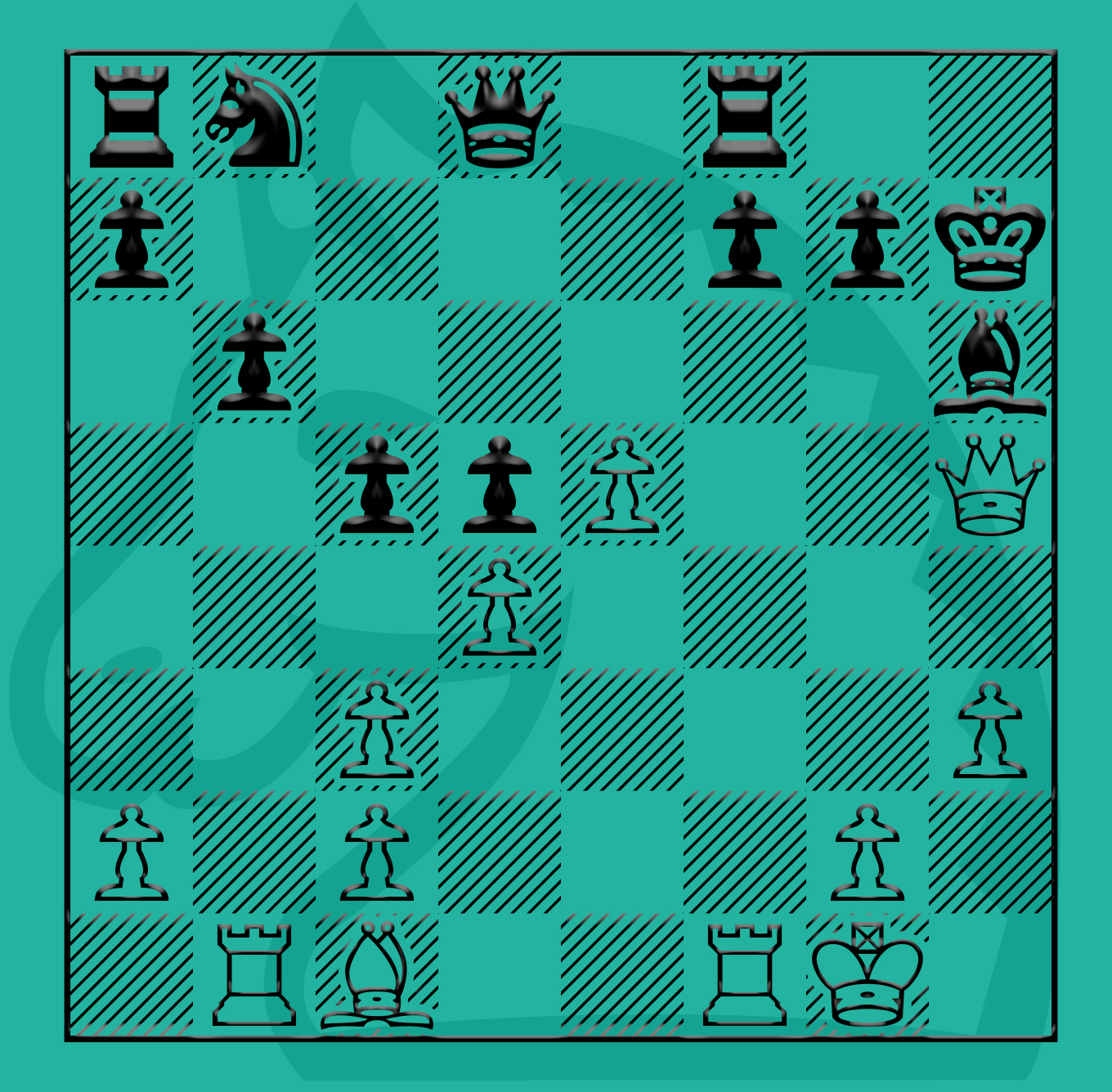
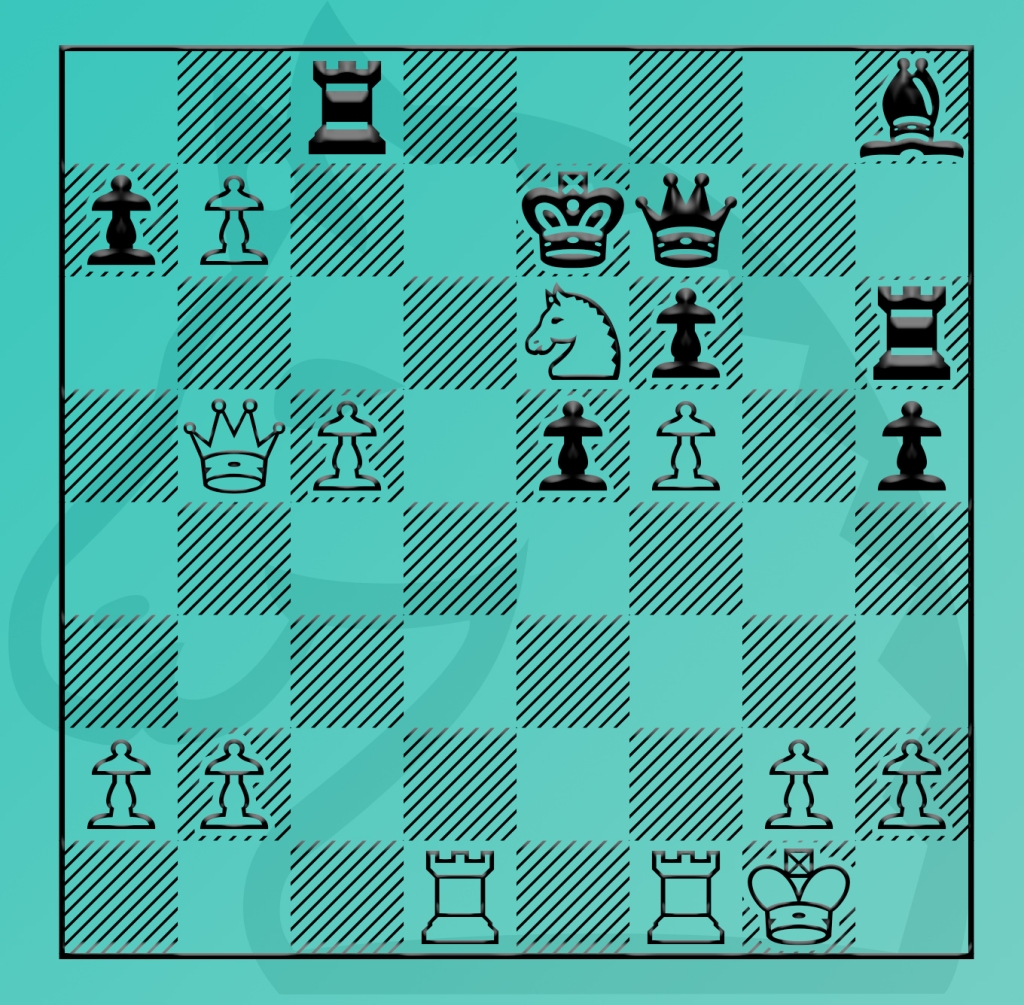
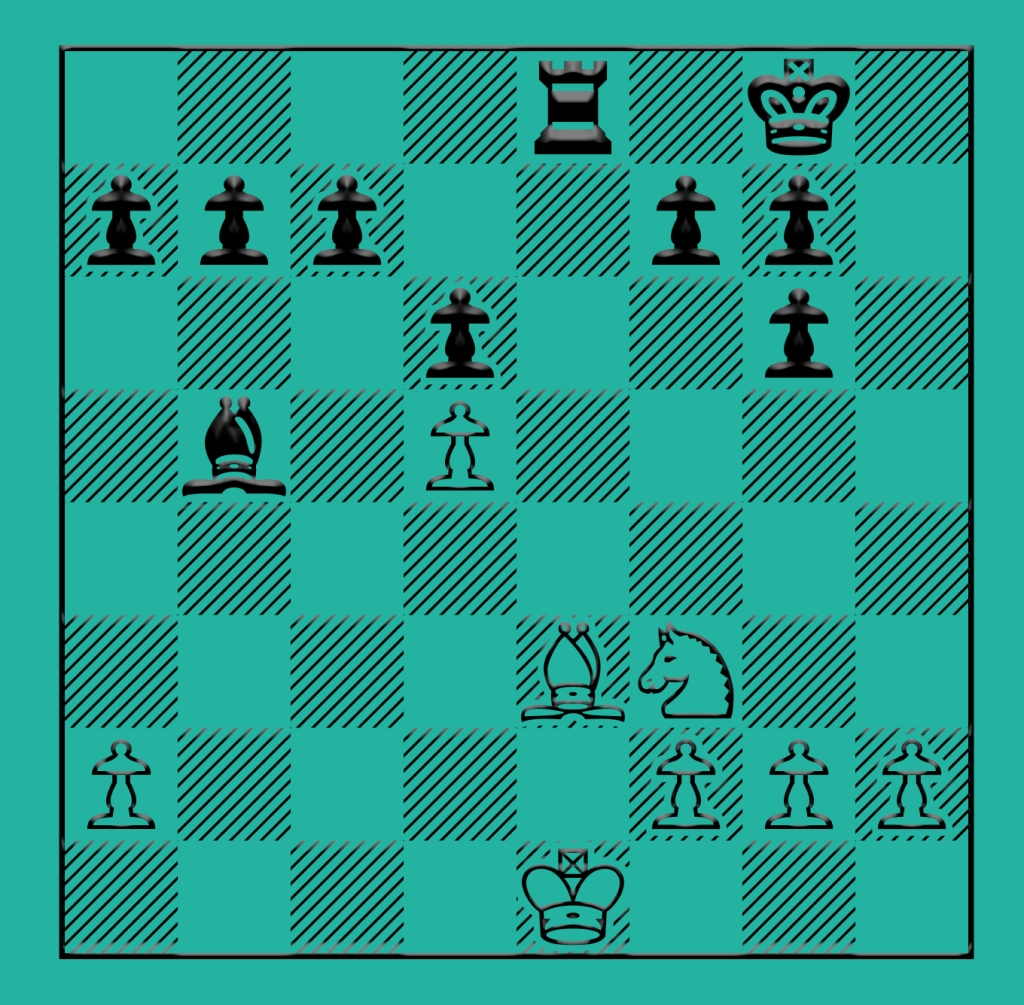
NM Jeff Arnold-Harish (1975) California, 1993 [Jerry Hanken, Rank and File, March/Apr. 1997 (JH) ; The Chess Correspondent, 1997 (CC)] 1.e4 e5 2.Nf3 Nc6 3.Bb5 a6 4.Ba4 Nf6 5.O-O Be7 6.Re1 b5 7.Bb3 O-O 8.a4 Bb7 9.d3 d6 10.Nc3 b4 11.Ne2 Nb8 (11…Na5 12.Ba2 would return to the more usual continuations in this variation. – CC) 12.Ng3 (Considering the problems Black is likely to face before he can get his bishop to g7, namely a knight settling on g5, he probably would have done better to regroup with 12…Nfd7 only playing …g6 after his bishop was sitting on f6. – CC) 12…g6 (? Up to now, Back’s moves, though not the best, have been reasonable.12…Nbd7, followed by 13…Nc5 allows White only a tiny edge. – JH) 13.Bh6 [!? 13.c3!? (Arnold). I like 13.Bh6 better, although it will involve some hazardous sacrifices. 13.Bh6 lets Black know that his f7 also requires defending. – CC] 13…Re8 14.Ng5 d5 (What else can Black do? White now wins the pawn on e5. – JH) 15.exd5 Nxd5 [? “15…Bxd5 is better.” (Arnold) True, although Black hasn’t escaped all his problems. After 16.c4 bxc3 (also 16…Bb7 doesn’t quite work. 17.Rxe5 Nfd7 18.Re3 Bxg5 19.Rxe8+ Qxe8 20.Bxg5 just nets a pawn although it is bit backward!) 17.bxc3 Bf8 18.Bxf8 Kxf8 (or 18…Rxf8 19.Rxe5 Bxb3 20.Qxb3 the pawn on d3 is taboo: 20…Qxd3 21.Rd1) 19.N3e4, Black’s position is still under considerable pressure. – CC] 16.Rxe5 f6 (Black does not believe White has won a pawn and avoids 16…c6 in what now becomes a classic attack! – JH) 17.Qf3 (! – JH) 17…c6 (Too late! – JH.)
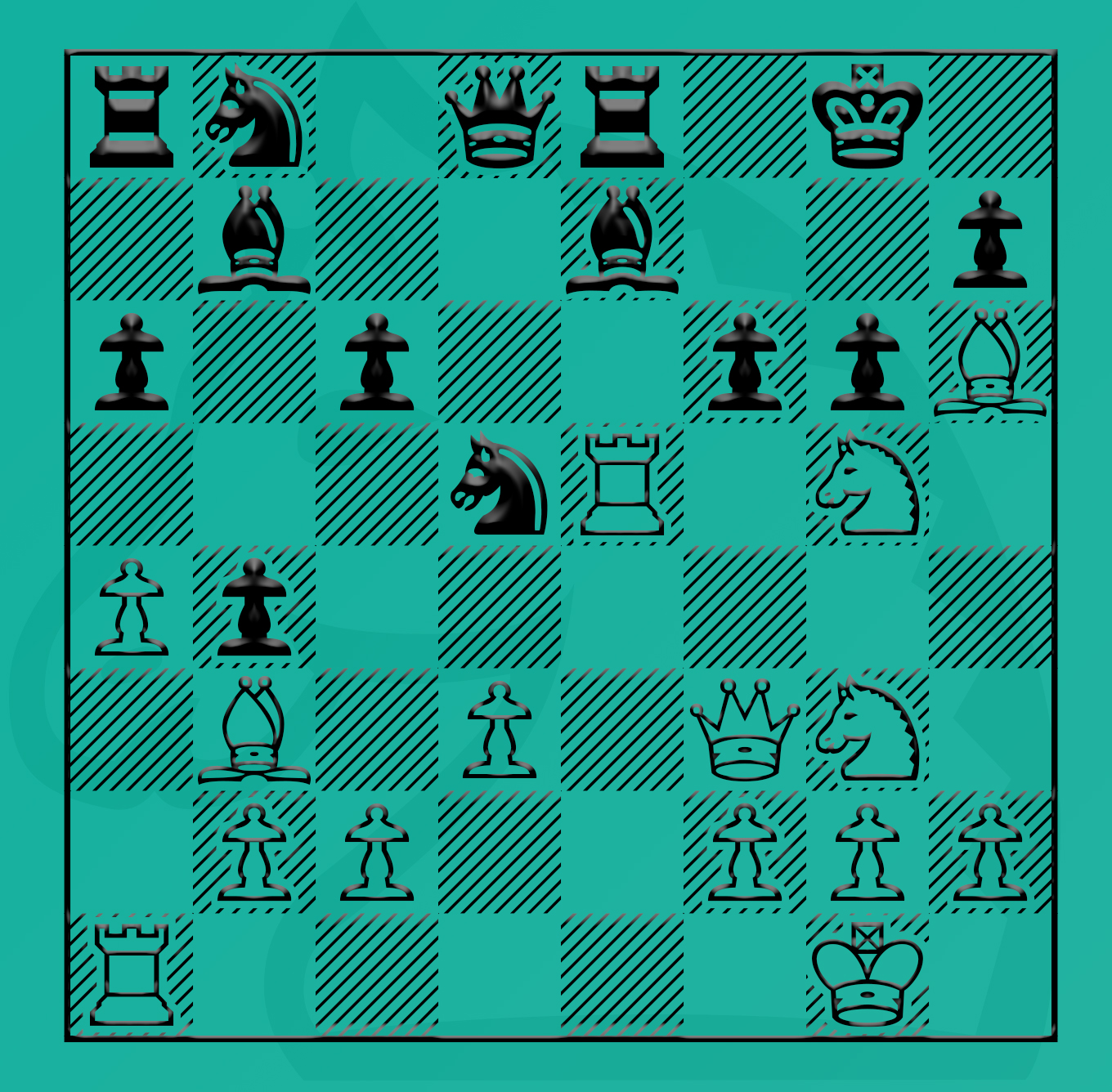
18.Nh5 [! “Good Knight!” (Arnold) – CC ; ! White has two pieces en prise. So, of course, he puts a third one into the pot! If 18…fxe5 19.Qf7+ and if 18…gxh5 19.Ne6 decides quickly. So …- JH] 18…fxg5 [If 18…gxh5 I had planned 19.Bxd5+ (Here Chess Life’s Jerry Hanken analyzed wrong. 19.Ne6 does not decide quickly. What about 19…fxe5 20.Nxd8 or 20.Qg3+ Kf7? Although this looks winning it is a lot slower.) 19…cxd5 20.Qf5 fxg5 21.Qe6+ Kh8 22.Qf7 Rg8 23.Rxe7 +- (Arnold)] 19.Nf6+ (! – CC) 19…Kh8 (If 19…Bxf6 20.Rxe8+ Qxe8 21.Qxf6 then it’s mate on g7 or f8. – JH) 20.Nxd5 Nd7 (If 20…cxd5 21.Qf7 and crunch! – JH) 21.Qf7 (Crunch anyway! – JH) 21…Bf8 22.Nf6 (Mate threat on g8! – JH ; ! Of course, the knight can’t be taken. If 19…Bxf6 20.Rxe8+ Qxe8 21.Qxf6 Black can’t defend the threatened mate on g7 without allowing an equally unpleasant fate on f8. – CC) 22…Nxf6 23.Rxe8 Qd7 24.Bg7mate 1-0
The same game in PGN
[Site “California”] [Date “1993”] [White “NM Jeff Arnold”] [Black “Harish (1975)”] [Result “1-0”] [Source “Jerry Hanken, Rank and File, March/Apr. 1997 (JH) ; The Chess Correspondent, 1997 (CC)”] {Jerry Hanken, Rank and File, March/Apr. 1997 (JH) ; The Chess Correspondent, 1997 (CC)} 1.e4 e5 2.Nf3 Nc6 3.Bb5 a6 4.Ba4 Nf6 5.O-O Be7 6.Re1 b5 7.Bb3 O-O 8.a4 Bb7 9.d3 d6 10.Nc3 b4 11.Ne2 Nb8 {11…Na5 12.Ba2 would return to the more usual continuations in this variation. – CC} 12.Ng3 {Considering the problems Black is likely to face before he can get his bishop to g7, namely a knight settling on g5, he probably would have done better to regroup with 12…Nfd7 only playing …g6 after his bishop was sitting on f6. – CC} g6 {? Up to now, Back’s moves, though not the best, have been reasonable.12…Nbd7, followed by 13…Nc5 allows White only a tiny edge. – JH} 13.Bh6 {!? 13.c3!? (Arnold). I like 13.Bh6 better, although it will involve some hazardous sacrifices. 13.Bh6 lets Black know that his f7 also requires defending. – CC} 13…Re8 14.Ng5 d5 {What else can Black do? White now wins the pawn on e5. – JH} 15.exd5 Nxd5 {? “15…Bxd5 is better.” (Arnold) True, although Black hasn’t escaped all his problems. After 16.c4 bxc3 (also 16…Bb7 doesn’t quite work. 17.Rxe5 Nfd7 18.Re3 Bxg5 19.Rxe8+ Qxe8 20.Bxg5 just nets a pawn although it is bit backward!) 17.bxc3 Bf8 18.Bxf8 Kxf8 (or 18…Rxf8 19.Rxe5 Bxb3 20.Qxb3 the pawn on d3 is taboo: 20…Qxd3 21.Rd1) 19.N3e4, Black’s position is still under considerable pressure. – CC} 16.Rxe5 f6 {Black does not believe White has won a pawn and avoids 16…c6 in what now becomes a classic attack! – JH} 17.Qf3 {! – JH} 17…c6 {Too late! – JH.} 18.Nh5 {! “Good Knight!” (Arnold) – CC ; ! White has two pieces en prise. So, of course, he puts a third one into the pot! If 18…fxe5 19.Qf7+ and if 18…gxh5 19.Ne6 decides quickly. So …- JH} 18…fxg5 {If 18…gxh5 I had planned 19.Bxd5+ (Here Chess Life’s Jerry Hanken analyzed wrong. 19.Ne6 does not decide quickly. What about 19…fxe5 20.Nxd8 or 20.Qg3+ Kf7? Although this looks winning it is a lot slower.) 19…cxd5 20.Qf5 fxg5 21.Qe6+ Kh8 22.Qf7 Rg8 23.Rxe7 +- (Arnold)} 19.Nf6+ {! – CC} Kh8 {If 19…Bxf6 20.Rxe8+ Qxe8 21.Qxf6 then it’s mate on g7 or f8. – JH} 20.Nxd5 Nd7 {If 20…cxd5 21.Qf7 and crunch! – JH} 21.Qf7 {Crunch anyway! – JH} 21…Bf8 22.Nf6 {Mate threat on g8! – JH ; ! Of course, the knight can’t be taken. If 19…Bxf6 20.Rxe8+ Qxe8 21.Qxf6 Black can’t defend the threatened mate on g7 without allowing an equally unpleasant fate on f8. – CC} 22…Nxf6 23.Rxe8 Qd7 24.Bg7# 1-0
You might not find it in a magazine. And you might not find it in a book. But there is a gambit that seems appropriate for Halloween. It is known as the Frankenstein-Dracula Variation (or FDV for short).
In this gambit (perhaps attack would be more descriptive), Black gives up a rook and a few pawns and then proceeds to gain control over a large portion of the board and threatens White’s queen in numerous ways.
Is it any good? Let’s check it (sorry, bad pun) out.
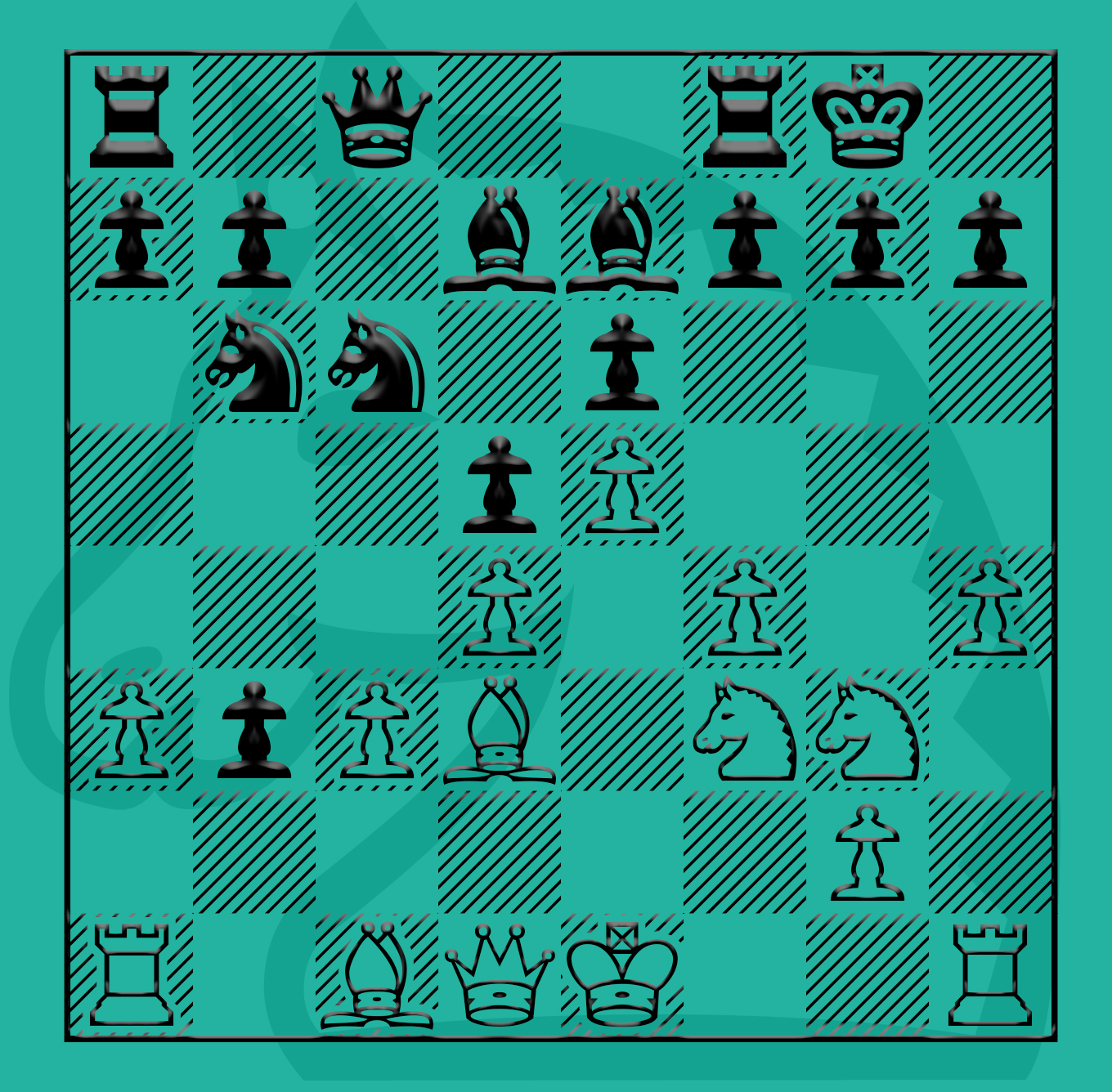
L. Janse-GM J. Hector Paskturneringen Open Sweden, Apr 20 2019 1.e4 e5 2.Nc3 Nf6 3.Bc4 Nxe4 4.Qh5 Nd6 5.Bb3 Nc6 6.Nb5 g6 7.Qf3 f5 8.Qd5 Qe7 9.Nxc7+ Kd8 10.Nxa8 b6 11.Nxb6 axb6 12.d3 (White wants to develop his Bc1. As events will show White will not have the time to develop this bishop. 12.Ne2 is the better choice.) 12…f4 13.Qf3 Nd4 14.Qd1 Bb7 15.Nf3 Nxf3+ 16.gxf3 Nf5 17.h4 Nxh4 18.Rh3 Qg5 19.Qe2 Bc5 20.Kd2 Qh5 21.Rxh4 Qxh4 22.Qxe5 Re8 23.Qb8+ Bc8 24.Bc4 Bb4+ 0-1
Ray Bott-Roger D de Coverly Match, Game 7 London, 1988 1.e4 e5 2.Nc3 Nf6 3.Bc4 Nxe4 4.Qh5 Nd6 5.Bb3 Nc6 6.Nb5 g6 7.Qf3 f5 8.Qd5 Qe7 9.Nxc7+ Kd8 10.Nxa8 b6 11.Qf3 Bb7 12.Qh3 Nd4 13.c3 Bg7?!
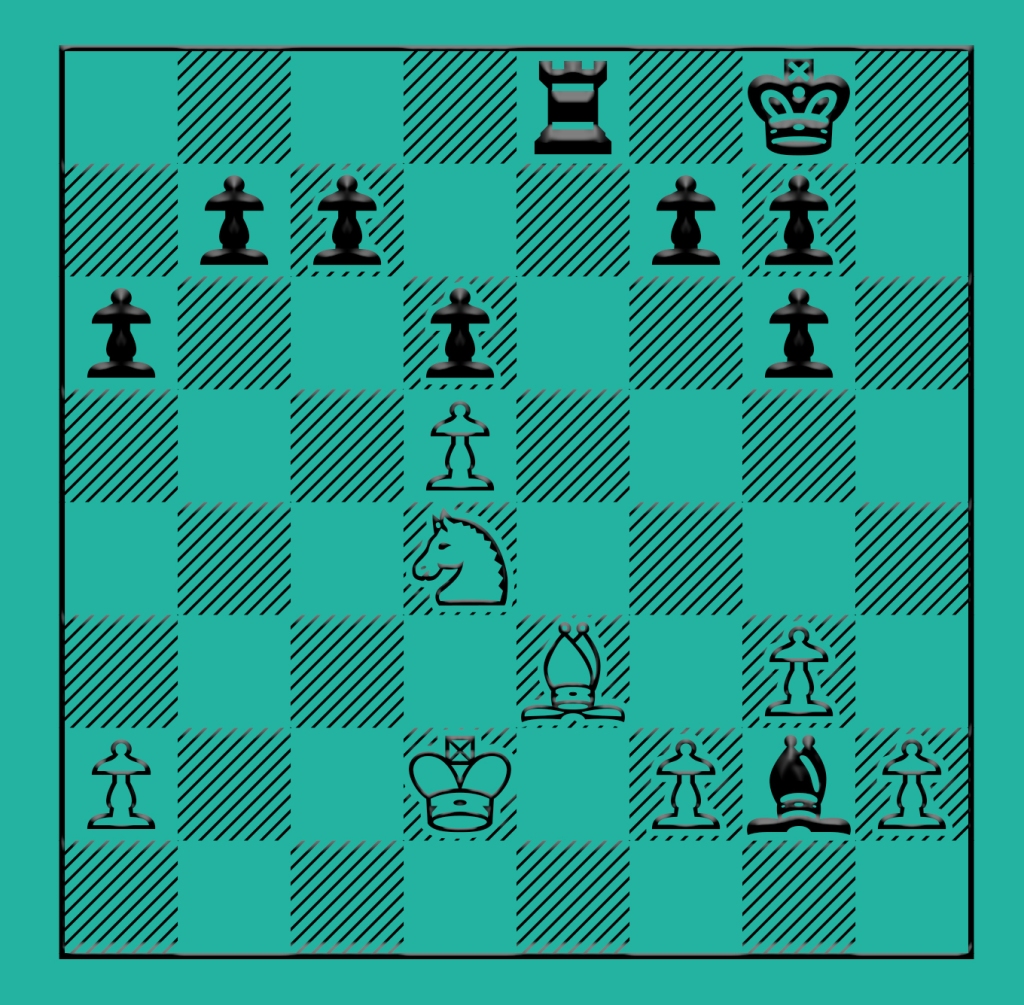
14.Bd1? (White has to play 14.cxd4 and while Black runs wild over the board with his pieces, he is doing so with one less piece. White’s sole developed piece, his queen, is stuck in the open and becomes a target. The end is swift.) 14…Ne6! 15.d3 Bxa8 16.Ne2 f4 17.Kf1 Ng5 18.Qh4 Nf5 0-1
I errored in stating that you might not be able to find this opening in a book. But here is a link to such a book. The book is a few years old, and yet still relevant.
Carlo Cozio was an 18th century Italian player was the first to explore 3…Nge7 in the Ruy Lopez. It has never been as popular as the main Ruy Lopez lines as Black often faces multiple weaknesses.
Nevertheless, it still remains on the radar of things to know when studying the Ruy Lopez.
This can be due to many factors. Players may want to avoid the main lines (too much to study they say), or people make a finger (or mouse) slip (right knight, wrong square), or maybe a strong player once suggested this move in a book titled, “HOW TO BEAT THE RUY LOPEZ USING WITH THE CORIZO!”.
The question then, how to deal with it?
First of all, it is also nice to have a copy of ECO around when analyzing your game. Such as this line.
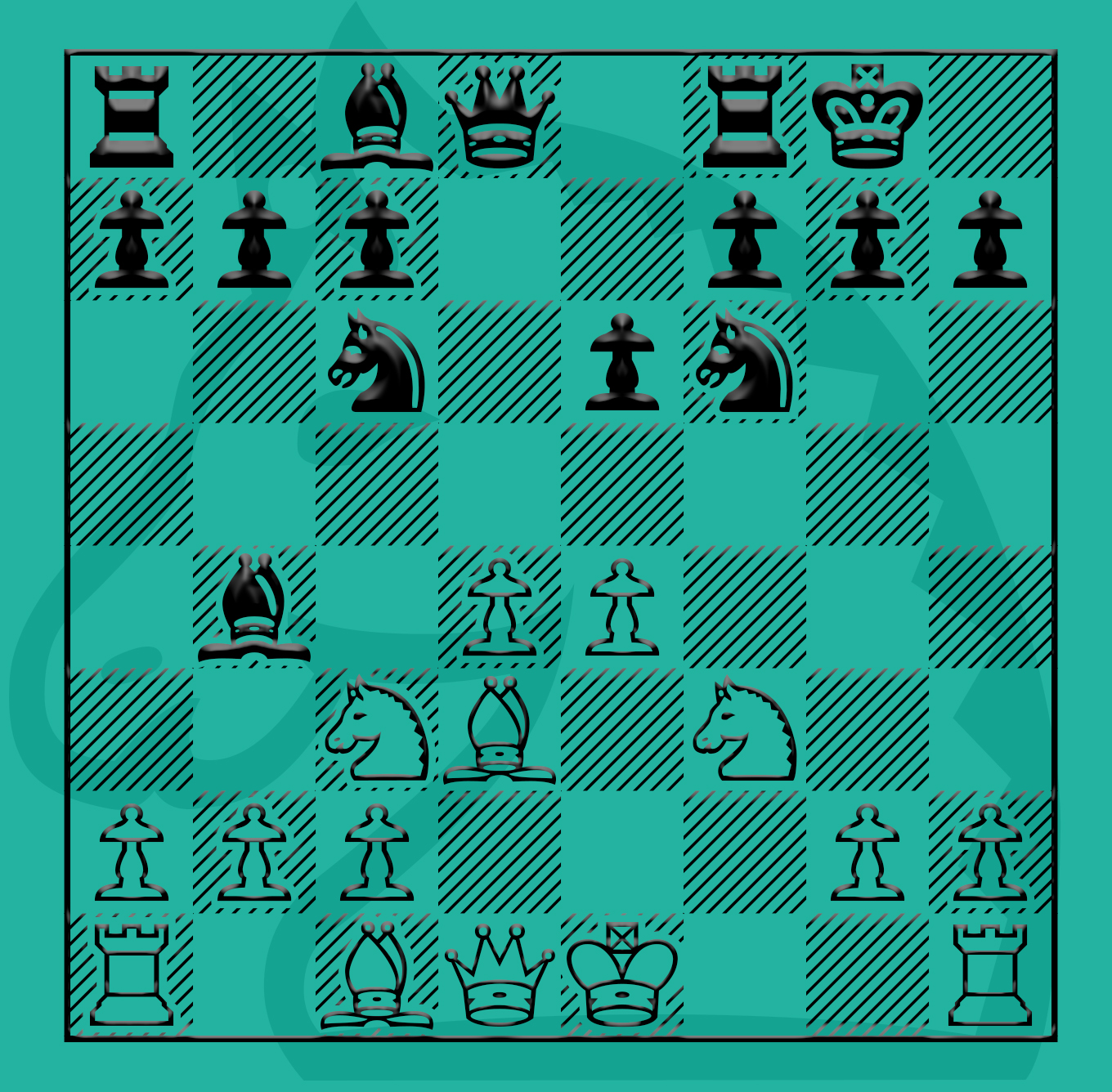
Escalante-“rosti_k” Blitz Game chess.com, Oct. 18 2020 1.e4 e5 2.Nf3 Nc6 3.Bb5 Nge7 4.d4 [Both this and 4.O-O are good moves here. Luke McShane-James Cobb, British Ch., Wales 1995, continued with 4.O-O g6 5.d4 exd4 6.Nxd4 Bg7 7.Be3 O-O 8.Re1 d6 9.Nc3 f5? (Bjarke Kristensen, writing in the Jan. 1996 issue of Chess Life noted, “Mr. Cobb needs to develop a stronger sense of danger. The move 9…Ne5 would have been better than the text.”) 10.exf5 Bxd4 11.Bxd4 Nxd4 12.Qxd4 c6 13.fxg6 cxb5 14.gxh7+ Kf7 15.Rxe7+! Kxe7 16.Qg7+ Ke6 17.Re1+ Kf5 18.g4+ Kf4 19.Nd5+ Kf3 20.Re3#.] 4…exd4 5.Nxd4 a6 6.Ba4 b5 7.Bb3 Nxd4 8.Qxd4 Nc6 (Black can’t try 8…c5?!, hoping for 9.Qd1? c4!, with a variation on the Noah’s Ark trap. Instead, White can simply play 9.Qxc5, with an advantage.) 9.Qd5 Qe7 10.Nc3 Bb7 11.O-O O-O-O 12.Be3 (12.Bf4!?) 12…Qe6 (White doesn’t want to trade queens – his is better placed than Black’s.) 13.Qd3 Qd6 14.Qe2 Qg6 (14…Nd4!? 15.Bxd4 Qxd4 16.Rad1, with the idea of 17.Bxf7, leads to a complicated position, but White is obviously better.) 15.Rfd1 Bd6 16.f3 h5 17.a4 (I wanted to open the queenside, but 17.Nd5 is better.) 14…b4 18.Nd5 h4 19.Bc4 h3 20.g4 (White could probably get away with 20.Bxa6. The text move would normally be considered weakening. But Black’s pieces are not in a position to do anything about it.) 30…Rde8 21.Bxa6 f5 (Black gives up attacking on the kingside and strikes in the center. It’s a good move – White can’t play 22.gxf5 because it is illegal and 22.exf5 fatally opens the e-file for White. White, however, doesn’t need to respond to this threat – he has one himself!) 22.Bxb7+ Kxb7 23.Qb5+ (This position deserves a diagram.)
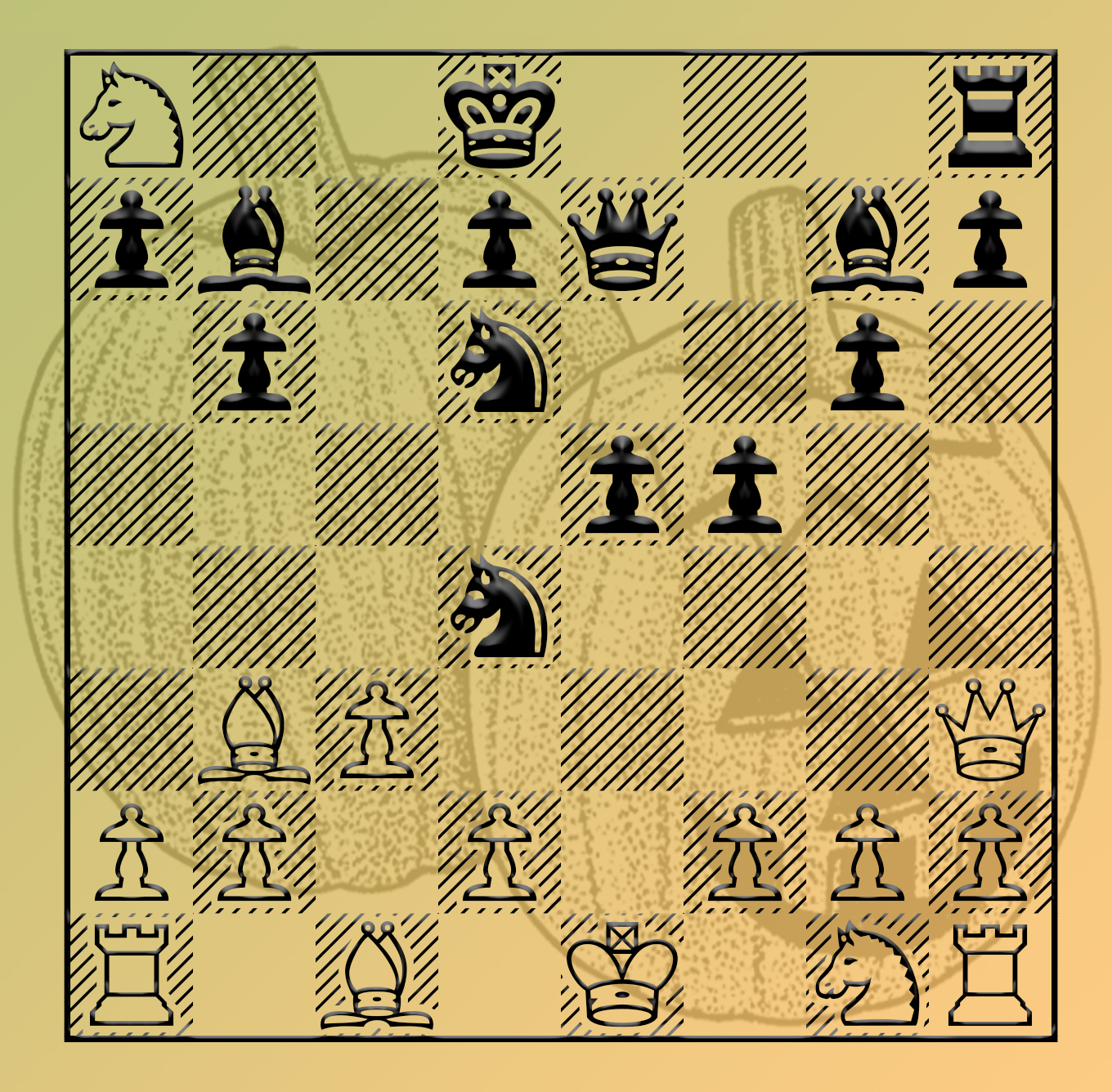
23…Kc8 [This move seems, at least on this surface, to be Black’s best move as his pieces and pawns offer protection. In fact, it is a blunder as his defenders keep him locked inside a box. Better is the counter-intuitive 23…Ka8! and White must work to find the win; 24.Nxc7+! (the key move) 24…Bxc7 25.Qa6+ Kb8 26.Rd5! fxg4 27.Rb5+ Bb6 (only move!) 28.Qxb6+ Kc8 29.Bg5!! +-.] 24.Qa6+ Kd8 25.Qa8+ 1-0
So, what brought up this interest in the Cozio?
The correspondence game, Escalante-N.N., Team Match, chess.com, 2020 just started. The opening moves were:
Greco-Roman [adj. of or having both ancient Greek and Roman characteristics.]
Many players refer to the traditional Bxh7+ sacrifice against Black’s castled position as “The Greek Gift”.
This, they proudly claim, pays homage to the giant wooden horse left at outside of the city of Troy. When the Trojans pulled it inside their gates, the Greek soldiers inside the wooden horse remained hidden until nightfall. They then emerged during the night and massacred the inhabitants.
They also opened the gates so more Greek soldiers could take part in the slaughter. Not a pinnacle of military might, but an underhanded and shrewd tactic.
Others point out the term Greco-Roman also pays homage to the ancient civilizations.
Both explanations are wrong. First, the sacrificial material left at the city of Troy, was a horse, not a bishop. And “Greco” refers to the Italian player/promoter, who was born about 3,000 years after the fall of Troy.
I prefer to call the underhanded and shred tactic, the “Greco sacrifice” or simply the “Bxh7+ tactic”.
Let’s go to the first example of this sacrifice. First of all, it does seem to be a manufactured game, or rather study material, as there are subtleties involved that would seem out of place during Greco’s time (the game was more of either that of a slow crawl, or attacking like a demon.)
Greco-N.N. Rome, 1619? 1.e4 e6 2.d4 Nf6 3.Bd3 Nc6 4.Nf3 Be7 5.h4 (Here’s where the subtly occurs. White is not castling to make eventual use of the h-file. Most players then, as now, would castle in this position. How do we know that White can castle in a time a time when castling was not widely known? Well, Black castles the next move. So we know White could also castle, if he wanted to do so.) 5…O-O (To make the Bxh7+ sacrifice possible, or at least playable, the knight on f6 needs to move. So…)
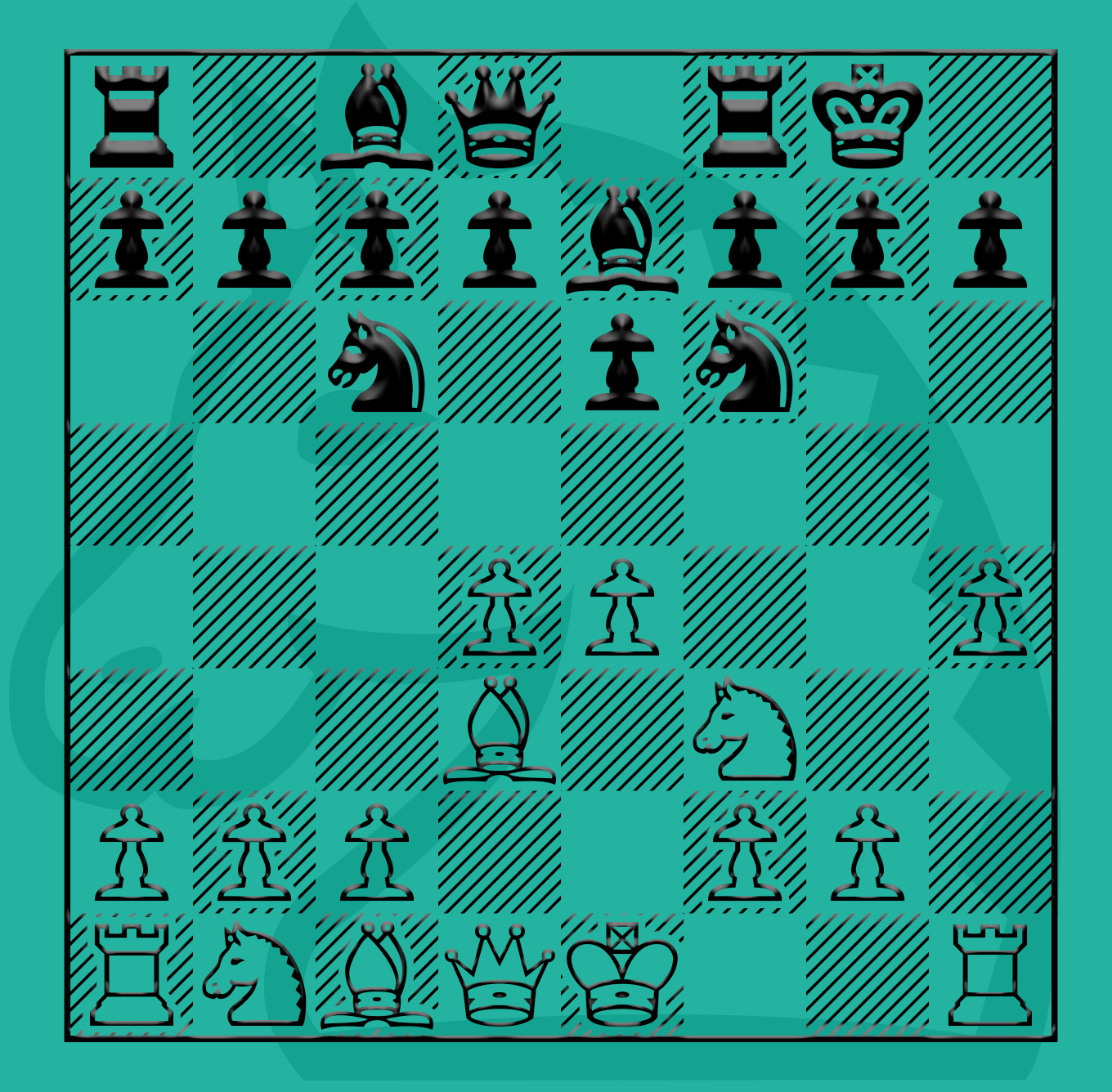
“erikido23” (1728)-“april1973” (1671) 10 minute game http://www.chess.com, July 17 2015 1.e4 e6 2.d4 d5 3.Nc3 Nf6 4.e5 Nfd7 5.Nf3 c5 6.dxc5 Bxc5 (This move I consider suspect as the bishop seems better placed on e7. To make matters worse, Black’s pawn grab on b2 by his queen loses valuable tempi.) 7.Bd3 Nc6 8.Bf4 Qb6 (This move forces White to castle. But it also forces Black to justify this queen move. For after White castles, his knight threatens to move to a4. Another possibility is 8…f6?!, as in Curdo-Tabell, corres., 1959. That game continued as 8.Bf4 f6 9.Qe2 a6 10.O-O-O Ndxe5 11.Nxe5 fxe5 12.Qh5+ g6 13.Bxg6+ Kd7 14.Nxd5 Bd6 15.Nb6+! Qxb6 16.Rxd6+ Kxd6 17.Rd1+ 1-0) 9.O-O Qxb2 10.Nb5 (The knight goes to a better square and threatens to invade Black’s defences.) 10…O-O 11.Rb1 Qxa2
12.Bxh7+ Kh8
[Of course not 12…Kxh7? 13.Ng5+ Kg6 14.Qg4 f5 15.Qg3, and White wins.
(B) 15…Nf6 16.Ne4+ Kh7 17.Qh4+ Kg8 18.exf6 dxe4 19.fxg7 Kxg7 20.Bh6+ Kg8 (20…Kf7 21.Qh5+ Ke7 22.Bg5+ Kd7 23.Rfd1+ Bd4 24.Qh7+ and mate next move) 21.Qg5+ and mate next move. Even worse, at least for Black, is 12…Kxh7 13.Ng5+ Kh6 14.Qd3 f5 15.Qh3+ Kg6 16.Qh7#.]
Since Greco’s time the theory of this tactical theme has been greatly enhanced. White, to achieve his goal of mating the enemy king, would sometimes have to sacrifice, trade, or give additional material to make this tactic work.
14.Bxh7+ Kxh7 15.Ng5+ Kg8 16.Qh5 Bxg5 17.hxg5 1-0 (White mates on the h-file.)
Engler-Wiese corres. BRD, 1971 [Black forgets that most of the time in the French …Nc6 is a mistake. This game also illustrates that point as it leads to a disaster.] 1.d4 Nf6 2.f3 d5 3.e4 dxe4 4.Nc3 e6 5.fxe4 Bb4 6.Bd3 Nc6? 7.Nf3 O-O? (11…e5 would prevent the catastrophe that is about to unfold.)
8.e5! Nd5 9.Bxh7+ Kh8 10.Ng5 g6 11.Qd3 (While 11.Qg4 would also work, it is also a bit slower.) 11…Kg7 12.O-O f5 13.Qh3 Qe8 14.Nxd5!? (14.Nxe6, with the idea of Qh6 seems better.) 14…exd5 15.c3 Ba5 16.Ne4 f4 17.Qh4 dxe4 18.Bxf4 Rxf4 19.Rxf4 Qd8 20.Rf6! Bf5 21.Rf1 Nxd4 22.cxd4 Bb6 23.Kh1 Qxd4 (Better is 23…Qd7.But White still wins after 24.Bxg6! Rh825.Qg5 +-.) 24.Rf7+ 1-0
Not all Bxh7+ tactics need to end in mate. Winning back the material, with interest, or simply having an overwhelming attack, can also win the game.
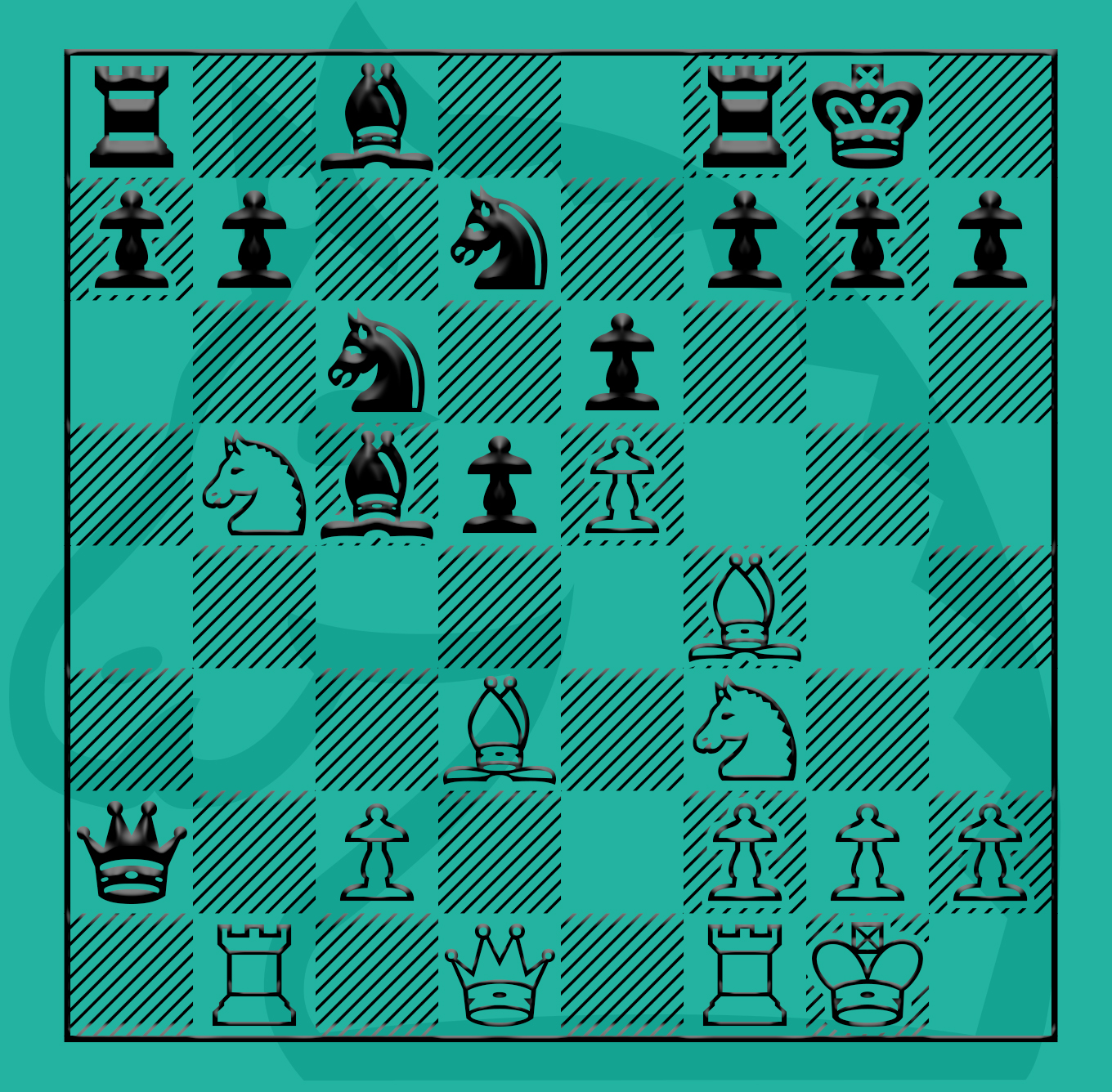
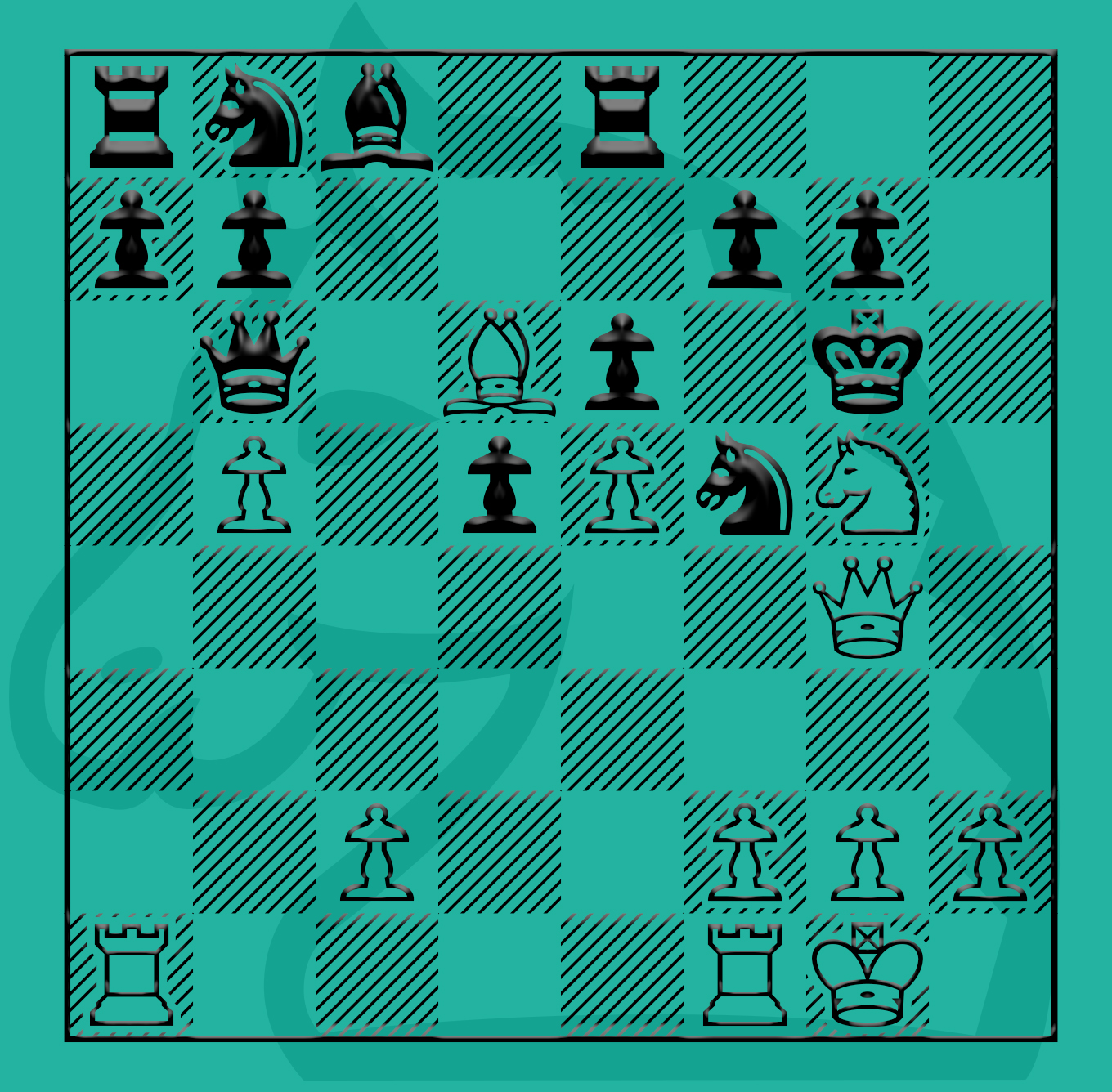
Stopa (2462)-Vanloon US Open Irvine, CA, Aug. 5 2010 1.e4 e6 2.d4 d5 3.Nc3 Bb4 4.e5 c5 5.a3 cxd4 6.axb4 dxc3 7.bxc3 Qc7 8.Nf3 Qxc3+ 9.Bd2 Qc7 10.Bd3 Nc6 (This certainly invites the Bxh7+ sacrifice. But White wants to improve his position and gain a few tempi before attacking the h7-pawn.) 11.Qe2 Nge7 12.b5 Nb8 13.O-O O-O 14.Bb4 Re8 15.Bd6 Qb6 16.Bxh7+! (There we go! ) 16…Kxh7 17.Ng5+ Kg6 18.Qg4 Nf5
19.Ra3! (The threat is strong, and Black will find it impossible to stop all the threats.) 19…Qd4 (19… Nxd6? 20.Ne4+ Kh7 21.Nf6+ mates.) 20.Ne4+ Kh7 21.Rh3+ Nh6 22.Ng5+ (If not the king, then the queen with an overwhelming position!) 1-0
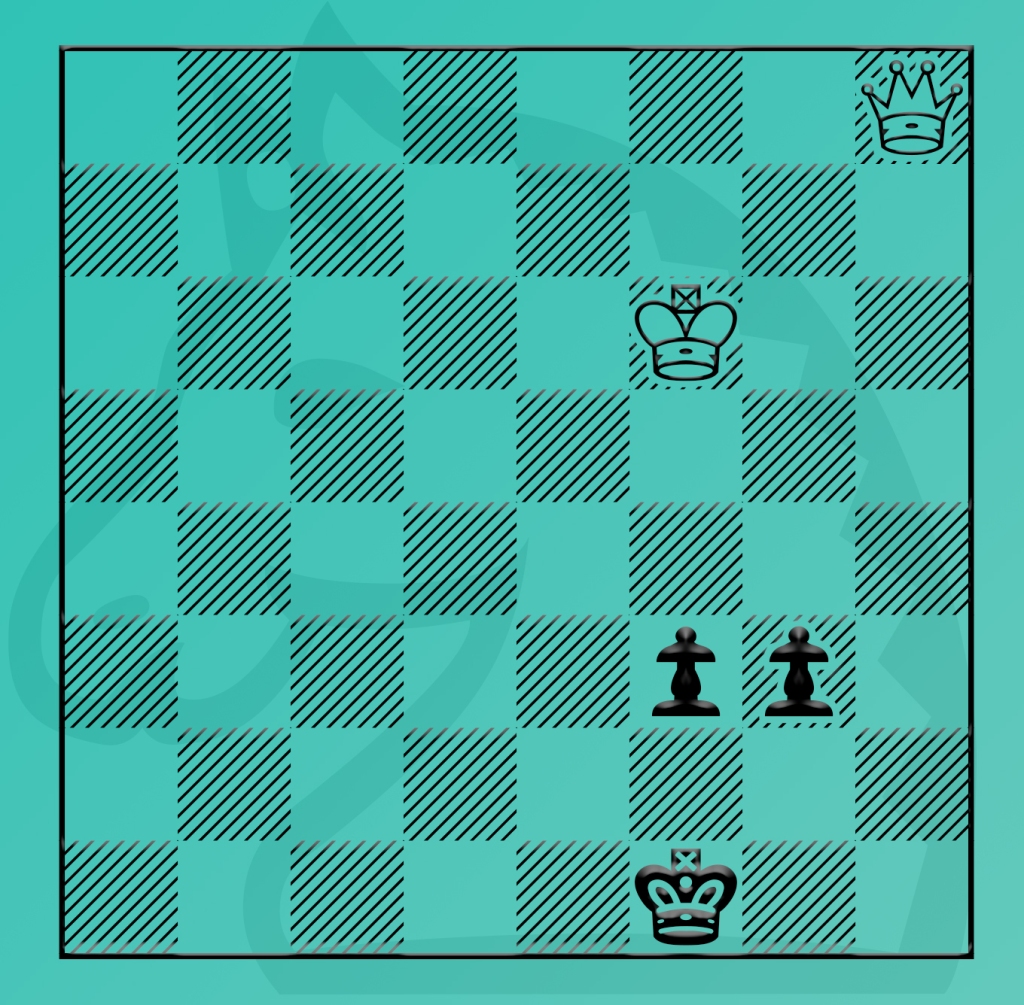
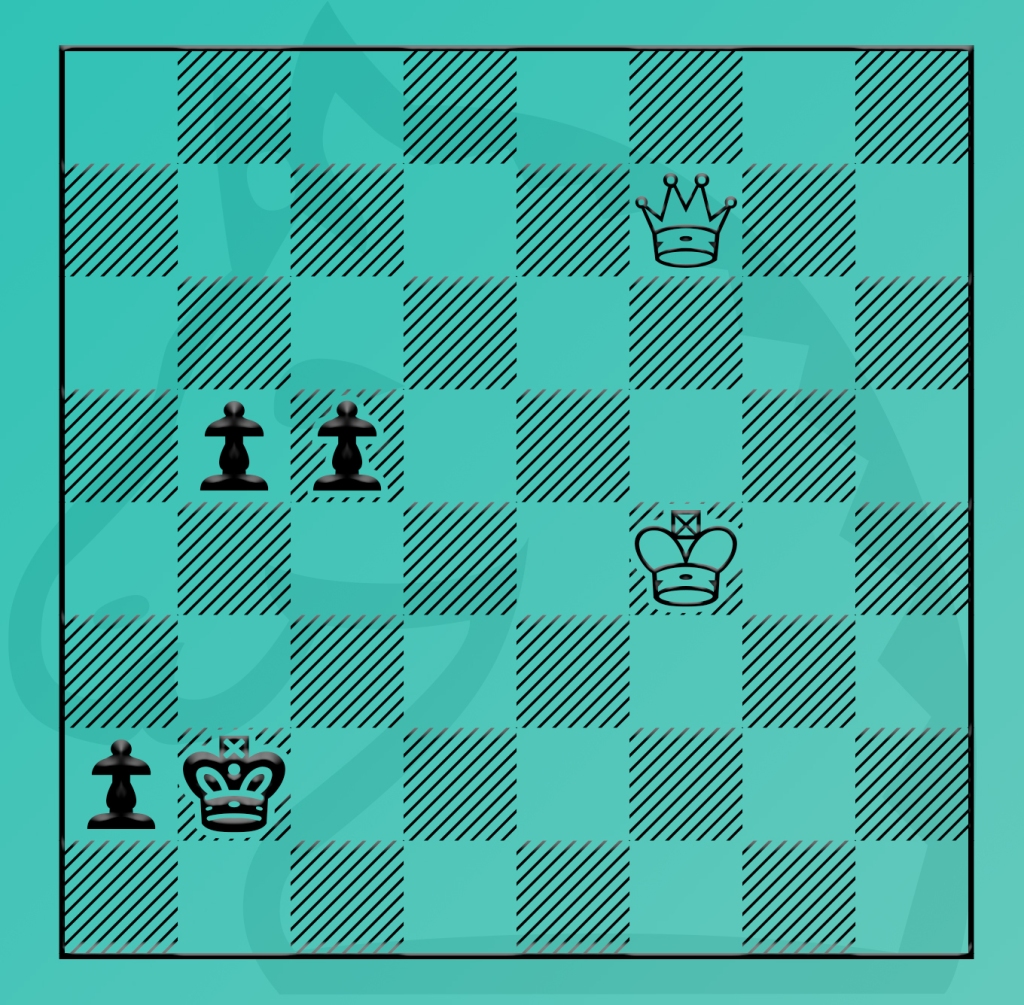
Most of you know how to win a Queen versus a single pawn in the endgame. Some of you may also know how to do the same if your opponent has, not one, but two pawns in the endgame.
But I assume no one has faced, with his sole queen, an endgame where your opponent has three pawns, all connected. It is extremely rare endgame and not too much research has been done on it.
Nevertheless, we can adopt some strategies and good ideas from other endings.
1) Do not expect an easy ending. While it is true that a queen versus three connected pawns has the advantage, maybe even a winning one, it does not always mean the victory will be an easy one.
2) Stalemates and draws are possible, and sometimes unavoidable. Still this is better than losing.
3) The win for the single Queen side is much easier when the pawns are not passed the fourth rank. The win, if still possible, is much harder when pawns are on the fifth to the seventh rank.
4) Keep, or get, your queen to position herself in front of the pawns.
5) Try to get your king close to the pawns. He can always pick up the stragglers.
6) The corollary of the above strategy is to keep the enemy king away from his own pawns. He can protect them or use his pawns to block a check.
7) If you are going to check, make sure your check moves the enemy king away from his pawn or your queen closer to the front of the pawns.
8) Assuming everything else is equal, try to win the middle pawn first. That way, the remaining pawns are now isolated.
Here, Black has is ready to promote. White uses a staircase sequence to get his queen in front of the pawns. Note that all three pawns are on or past the fourth rank.
It has been said that high ranking (say, Expert and above), resign too soon. This means that the high-ranking player (H-RP), finding that he is two pawns down (and sometimes even less than that), realizes that he cannot save his game against another H-RP and rather than waste two hours trying to save the game, or be the object of embarrassment or ridicule, he gently tips his king over, shakes the hand of his opponent, and gracefully resigns.
But there are times when the spectators want to see the rest of the game. They may have paid to see the tournament or match and they want the full value for their money.
Some want to root for the underdog, the one would not give up. After all, there is some romantic aspect about a fighter who refuses to give up.
Some spectators want to see blood spilled. They want the winner to effect the eventual mate by the most forceful, brutal way.
Finally, in case of a potentially brilliant game, many spectators they want to see the full display of sparking moves and crafty play from beginning to end. And maybe tell their grandchildren about it.
To be sure, these resignations, where spectators might reasonably want the game to continue, happen more than you might think. Let me give you an example.
6.d5 Nb8 7.Qe2 f5?! (This move creates a weakness after the bishops are traded.) 8.Bxd7+ Nxd7 9.c4 Nf6 10.Nc3 Rc8 11.Bg5 (11.Ng5! is quicker in disrupting Black’s position and plans.) 11…Ng6 12.exf5 Ne7 13.Bxf6 (13.Rae1 is another strong plan. But as mentioned before, I prefer direct and simple moves.) 13…gxf6 14.Nh4 (14.Nxe5!? should be analyzed more.) 14…h5 15.f4 Qd7 16.fxe5 dxe5 (16…fxe5? and now 17.Ne4! is much stronger.) 17.Ne4 Bg7 18.Ng6 (The immediate 18.Rae1 is stronger.) 18…Rh6 19.Nc5! (After causing chaos on the kingside, White attacks on the queenside and center.) 19…Qd6 20.Ne6 Bh8 21.Nxe7 (21.Qd2!) 21…Qxe7 22.c5! Kd7? (> 22…Bg7) 23.Rad1 (While the text move is good, 23.Qb5+! is decisive. But I wanted to push my d5-pawn.) 23…Qf7 24.Qb5+ c6 25.dxc6+ Ke8 26.cxb7+ Ke7
1-0 (Black resigned before White could play 27.bxc8=N#!!. This is a move I would be proud to show off. And not just to any future grandkids.)
Recently GM Simon Williams recently wrote an article for chess.com titled, “Name Your Pawns”, in which he provided proper names for the files of his chess board.
And I thought …what a great idea!
Here are my submissions to this theme.
Let’s start with the divine.
If I were a fundamentalist Christian (I am not – just go with idea),
I would first rename my files from White’s side.
a=ANGEL (or ABEL) b = BIBLE c = CHRIST (or CAIN, CHOIR, or CHORUS – the last two referring a collection of ANGELS) d=DAVID, DANIEL, DECALOG (the Ten Commandments.) e=ELIJAH, EDEN, EXODUS, EPISTLE f=FAITH (and the FLOOD) g=GENESIS, GOSPEL h=HEAVEN
And if we were to play on a 10 x 10 board, then ISIAH and JESUS.
But that only takes care of the files on the White side. Here are the newly named files for the Dark side.
a=ARCHFIEND (another name for the Devil) b= BAAL, BEELZEBUB, BABEL c=CALLICANTZAROS (Greek vampires that would feed on children born around Christmas time.) d=DEMON, DEVIL, DEMONESS, and DELILAH (she’s the one who had a servant cut off Samson’s hair, rendering him vulnerable.) e=EVIL f=(the) FALL (of Adam and Eve, mankind, and Satan) g=GOLGOTHA (hill where Christ was supposedly crucified) and GAGA (a minor Babylonian deity.) h=HELL
And if we were to play on a 10 x 10 board, then INCUBUS and JUDAS.
Of course, one may also choose other themes for renaming their files. For example, Baseball!
a=ANGELS, ATHLETICS b= BRAVES, BREWERS (one could also consider the BOSTON Red Sox and BROOKLYN Dodgers) c=CHICAGO CUBS, CARDINALS d=DODGERS (this time, the Los Angeles team) or the DRAGONS (it is both the name of Japanese major league team and a minor league team of Dayton, Ohio.) e=EXPOS f=FIREFLIES (a minor league team of Columbia, South Carolina) g=GIANTS h=HOUSTON Astros
And, of course, the Indians and the (Blue) Jays would follow.
So, be creative. Find what interests you might (other than chess) and see if you are willing to change names of the files on your board!
We have historians for war, fine art, films, mathematics, astronomy, and of nations. But we don’t, as far as I know, have an expert, who specialty is chess history.
Most of the history we can find on Internet is a brief overview of the game.
Here is an example, from The History Guy, who certainly knows his stuff and usually provides a well-rounded and complete video on many historical subjects.
A little more of Queen Isabella of Spain that is referenced in the video. These notes help complete the profile of the noble Queen.
She took the throne in 1474 and instituted many legal, economic, and political reforms. She is also the one who financed Christopher Columbus to find an alternate route to China (he failed of course).
By most accounts, she was a capable queen and more of a reformer and leader than King Ferdinand (her husband).
Chess was known in the kingdom of Ferdinand and Isabella.
In fact, Isabella learned chess along with her other studies while she was growing up.
And special note here. At the end of the video, the speaker makes the comment how the original board game was played on an “8 inch by 8 inch board”. If chess was first developed in about 500 AD as most accounts claim, then the British had not yet introduced their Imperial units of measures, which included the inch. Probably he meant, “8 squares by 8 squares board”.
While I learned a few tidbits, I wanted more. More than an overview. Much more.
Most of the information of players, opening theory, changes in tournaments (clocks, formats, etc.), players histories, and even many GM games, are scattered among many collectors and museums. There is no clearing house, no attempt to collect and format all the data for reference, or at least to provide an easy timeline.
I challenge you to discover which year 10 GMs earned their title. The only restriction is none of your 10 GMs can be a World Champion.
Indeed, there are several people online who, with abundant amount of time, can help fill some of the gaps and occasionally overturn many assumptions about the history of chess.
One of my favorites is “batgirl” on chess.com.
Here is a series of posts that generated a lot of responses.
Well, last year (2019) a movie was being made. It was titled, “The Opera Game” and was to be a film about Paul Morphy.
It failed to come out this year. One reason might be because of the Corona-19 virus that forced the postponement or cancellation of many new movies in production.
Another reason might be is there are many gross errors both the main character (Paul Morphy) and the use of chess notation.
Here is what I wrote on the forum. Please know we only saw the trailer, a short film which is supposed to highlight the film (instead this trailer sank it).
In watching the trailer for the “The Opera Game”, I noticed several glaring errors that could have been resolved by resorting to the Internet (no books needed). I also did not know what century this movie was set.
First, Algebraic Notation (AN) was used by the Europeans, except for the British, who used DN. The United States also practiced DN. Morphy would have certainly used DN, and not AN as the movie alleges.
I am old enough to remember DN – I used it for a while in beginning years of chess. I changed to AN when it became popular in the 1980s.
It was a glaring error in the movie.
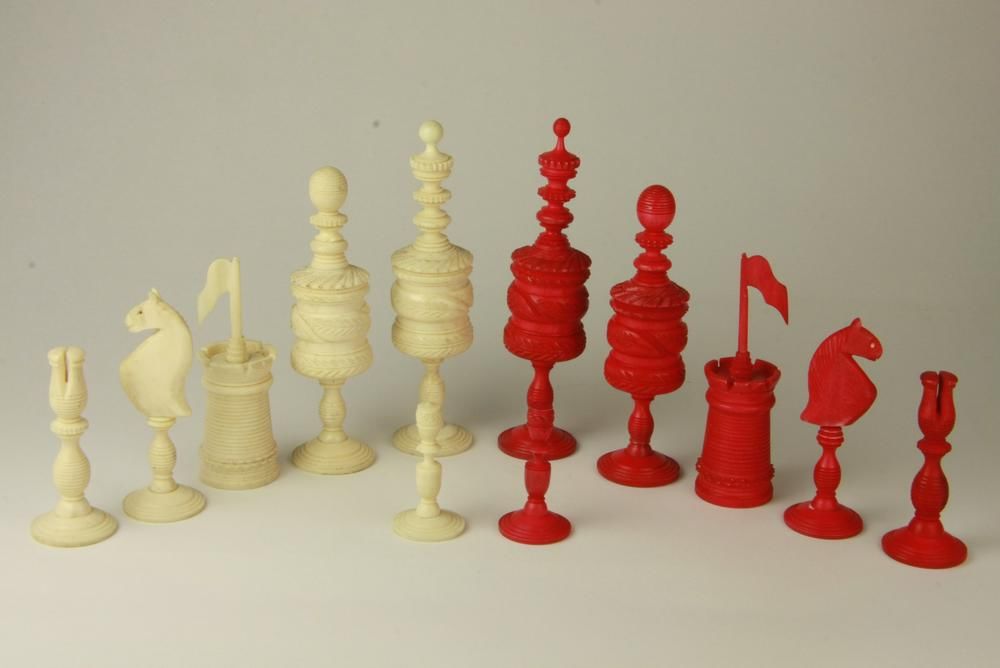
The chess sets were another problem. The sets displayed in the movie were not generally used by 19th century Southern aristocrats. I did a little research on the Internet. Here are the pieces Morphy would more likely to have used. I took me less than five minutes to find the images.
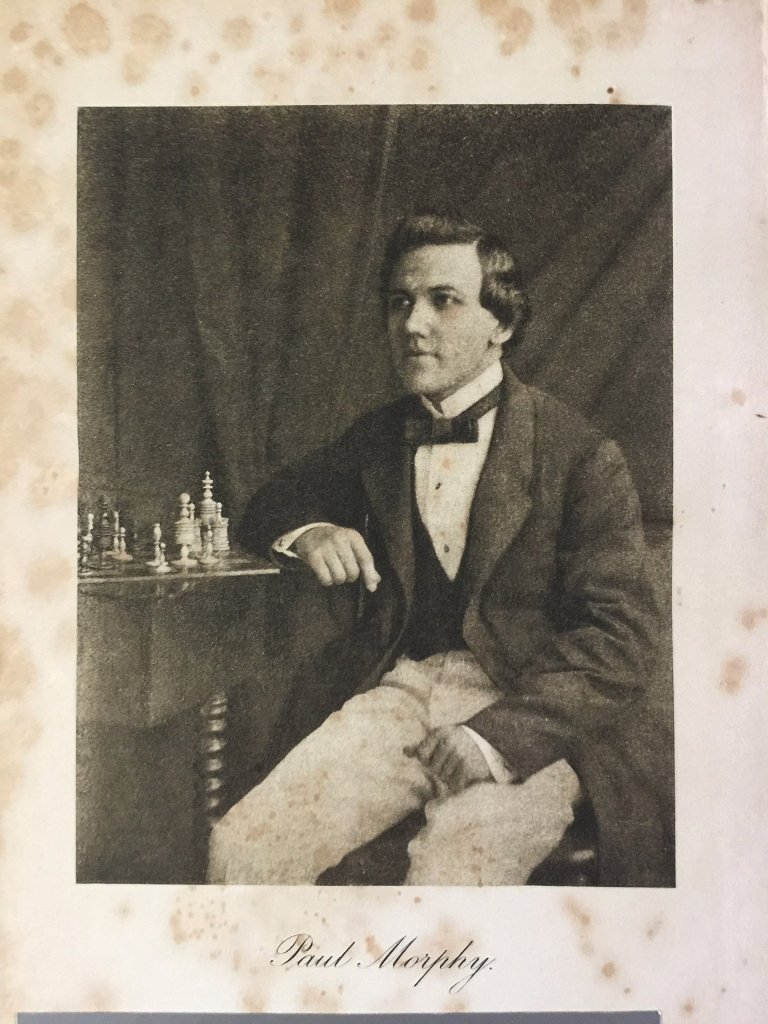
In fact, I found another photo of Morphy with a chess board on the Internet. It took slightly longer: about 5 minutes this time.
Finally, the dialog is again from the 20th or 21st century. People at that time were much more reserved and polite, especially in the South.
Morphy was shown to be young, when he played his uncle blindfolded, which the movie got correct. He was also frail, quiet, inquisitive, and probably introspective. But nothing like that was shown in the movie. What we got instead is snarky kid who didn’t show respect to his uncle. Unthinkable in the South.
A consultant or chess historian would have proven to be useful and essential to improving the quality of the movie.
This movie about our favorite board game would be greatly improved if they had paid a consultant who knew the history of the game. Instead, this movie, if it ever comes out, might give some potential players an inaccurate portrayal of chess and impede the growth of the game.
The worse is trying to convince the non-player that the movie is inaccurate, and he should ask an expert on chess history. But where is the expert?
He was born on this day, Sept. 10 1892. And for those of you who might not know, Balogh is on of those rare players who excelled at both Over The Board (OTB) chess and Correspondence Chess (CC).
He won the Romanian Championship in 1930 and played in numerous Hungarian Championships. In addition, he played in the Olympiads for both of these countries.
His playing strength is hard to determine precisely as World War 2 interrupted much of his play. But he was likely of as least of IM strength and probably never received the IM title for two reasons. One that The International Federation of Chess (Fédération Internationale des Échecs, or FIDE for short) didn’t start awarding International titles until 1950 and around that time, Balogh started correspondence chess.
He was awarded the International Master of Correspondence title in 1953 by the International Correspondence Chess Federation (ICCF).
János Balogh was an expert in the openings as the following games show. He even had an opening named after him, although it is now considered unsound.
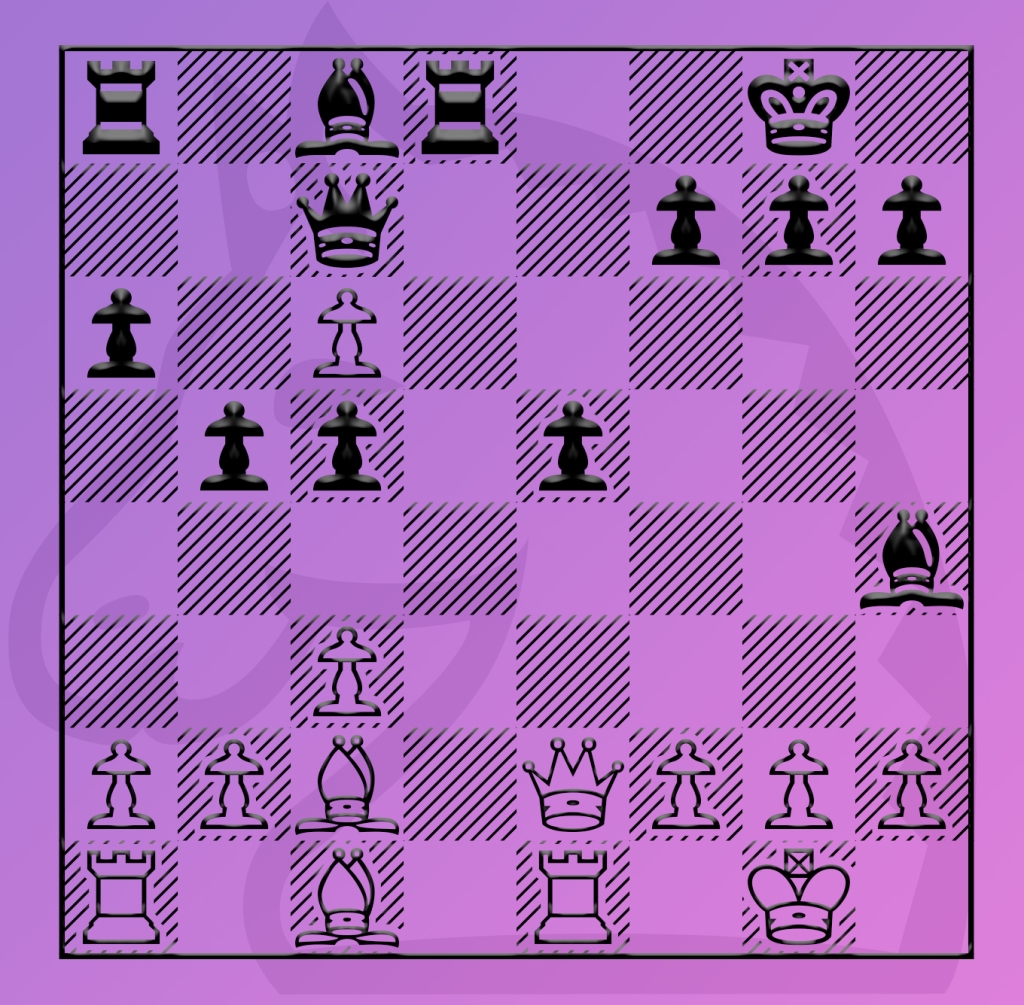
11.Nbd2 Qc7 12.Nf1 d5 13.Ng3 O-O 14.Nh4 (14.exd5!?) 14…Rd8 15.Qe2 Nxe4 16.dxe4 Bxh4 (16…d4!!? with the idea of securing a pawn, or even a knight, to d4.) 17.exd5 Bxg3 18.dxc6 Bh4?
Which would make a king pawn opening. The position, however, may also arise by transposition from the Staunton Gambit against the Dutch Defense, 1.d4 f5 2.e4!? (which would make it a queen pawn opening).
The main drawback to this opening, however it may be labeled is weak e6-square, with or without a black pawn on it.
There are at least two good reasons why cell phones are not allowed in tournaments.
One is that, with the readily available chess programs/engines and texting availability on almost all cell phones, text messages can be sent with computer engineered moves either from the computer or from a co-conspirator (such as “play 10.Rae1, idiot!).
Back around 1990 I was participating in an OTB tournament and had a cassette player with earphones and listening to some inspiring music. I easily won the game.
But immediately after the game my opponent strolled over to the tournament director (TD) and told him that he suspected I was cheating. He complained that I could be listening to pre-recoded moves coming from my cassette player. I looked at my former opponent, and gave him a look that very much suggested, “you’ve got to be kidding”.
In the presence of both the ex-opponent and the TD, I took out the cassette and showed it to the TD. The TD was satisfied about the label on the cassette and was about to rule in favor. But my ever suspicious opponent claimed I could have erased the content of the tape and replaced with my voice saying, “1.e4 e5 2.Nf3 ..”.
I put back the cassette in the player and showed the TD how to play it. He did so and briefly listened to The Grand Illusion album by Styx. The TD smiled and then handed back the player back to me. And while I walked away, cleared of any wrongdoing, I noticed the TD slowly shaking his head.
Now let’s go to the second reason why cell phones are not allowed in tournament halls. The game was played on-line as there is a nasty virus going around.
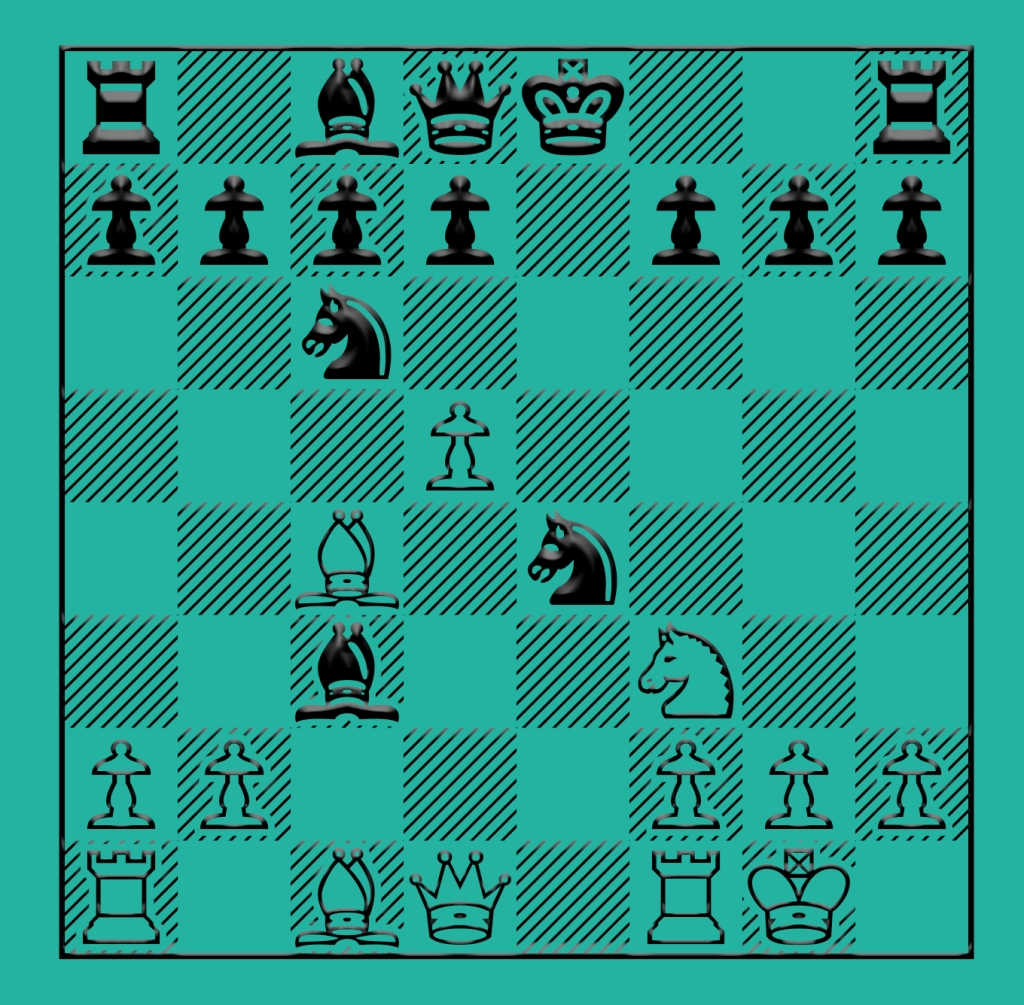
(This is Moller Attack. The main line goes 9…Bf6 10.Re1 Ne7 11.Rxe4 d6, reaching a well-known position. And too drawish in my opinion. I therefore played an offbeat and interesting move and found out after the game there is theory on it.) 9…Na5!? 10.bxc3 Nxc4 11.Re1
11…Nd6![A more-or-less thematic move in this variation. It (temporarily) puts a stop to White’s plans and Black doesn’t mind giving back some material, as long as he stays ahead. Side note: It’s nice while checking the game against a database to find out that a move that you found OTB is identical to one that a GM played. But let’s get back the game – I have yet to win the game.] 12.Qc2 O-O 13.Rxe4 Nxe4 14.Qxe4 Re8(White has a lead in development for some material. But he wastes tempi in his next few moves by trying for a quick mate.)15.Qg4?! d6 16.Qg3 Qf6 17.Bb2 Bd7 18.Rb1(Attempting to gain the momentum after 19.c4. But Black is ahead of him.)18…Qg6 19.Qxg6 hxg6 20.c4 Re2 21.Kf1 Rc2 22.c5 Rxc5 23.Rc1 Rxc1+ 24.Bxc1 Re8 25.Be3 Bb5+ 26.Ke1 (I’m contemplating about White’s possibility of taking the a6-pawn. Oh wait! Is the bishop pinned? I don’t think I need to worry about my a-pawn just yet. Is there a good move for Black here?)
(Ring!! The cell phone goes off!! Do I need to check the phone? And I know I must make a move as this is a speed game. I quickly figure that any move that doesn’t immediately lose should be OK.) 26…a6?(And I fell back into thinking my a-pawn is under attack. Black has the much better 26…Bc4! 27.Kd2 Bxd5 28.Bxa7? b6, which might let me finish the game and answer the call at the same time. But I missed this golden opportunity. So I decided to say, “hello”, keep my eye on the game, and tell the caller I will call her back in a few minutes – but not tell her I’m playing blitz chess.)27.Kd2 Bf1 28.g3 Bg2 29.Nd4(Back on track and everything going good so far. Then my caller asks me a question.)
29…Bh3? (Eek! Loss of concentration and loss of a free pawn and a tempo. Black has the better and obvious 29.Bxd5! I tell myself that at least I took some squares away from the knight, but I know that’s not the reason or issue. I had let my concentration drift again.)30.Nc2 Bg2 31.Nb4 a5 32.Nc2 Bxd5(Finally! Now White is lost. And I realize I have more time. Maybe Black also has a phone call??)33.a4 Bc6 0-1











 The Gambit Chess Player