The Quiet Bishop Move

A quiet bishop move is one that does not deliver a check, does not fork, and usually it doesn’t even attack a piece directly. Indeed, it appears to do nothing.


But it does.

 
The forcefulness of the Quiet Bishop Move can be seen best from the following examples.


Reti-Bogoljubov
New York, 1924
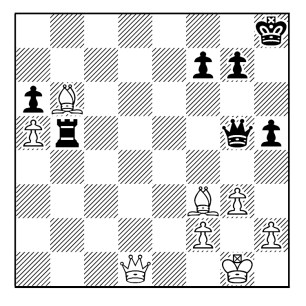
1.Nf3 d5 2.c4 e6 3.g3 Nf6 (The text move is a little passive. Black has several options here including 3…c6, 3…dxc4, and 3…g6.) 4.Bg2 Bd6 5.O-O O-O 6.b3 Re8 7.Bb2 Nbd7 8.d4 c6 9.Nbd2 Ne4 10.Nxe4 dxe4 11.Ne5 f5 12.f3 exf3 13.Bxf3 Qc7 14.Nxd7 Bxd7 15.e4 e5 16.c5 Bf8 17.Qc2 exd4 18.exf5 Rad8 19.Bh5 Re5 20.Bxd4 Rxf5 21.Rxf5 Bxf5 22.Qxf5 Rxd4 23.Rf1! Rd8 24.Bf7+ Kh8

2020_04_09_A

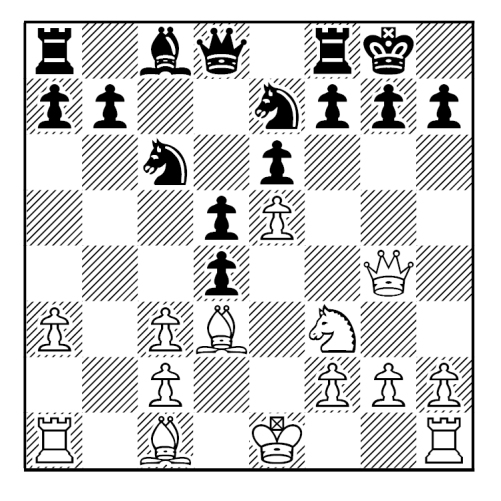
25.Be8! (The bishop does nothing except to isolate the enemy king. But now White has several forced mates. First, he threatens 26.Qxf8#. Black can try 25…Rxe8, but after 26.Qxf8+, White has the well-known back rank mate. And Black is still mated after 25…h6 26.Qxf8+ Kh7 27.Bg6+! Kxg6 28.Qf5#. Black resigns.) 1-0

 
Zoltan Ribli-Andras Adorjan
Hungary, 1983
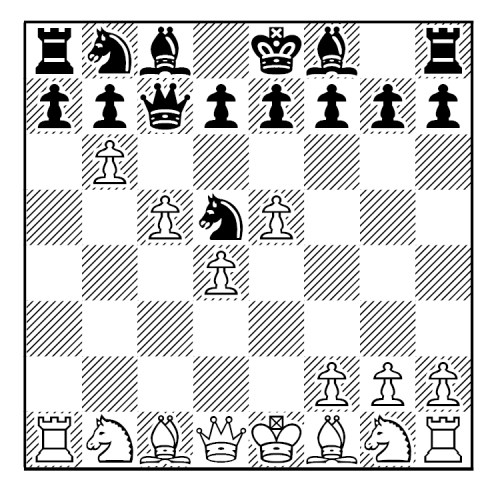
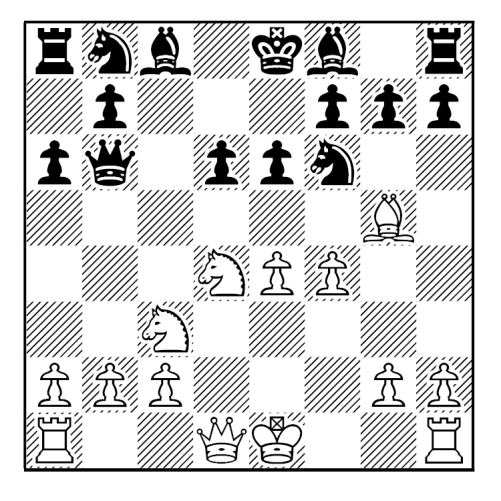
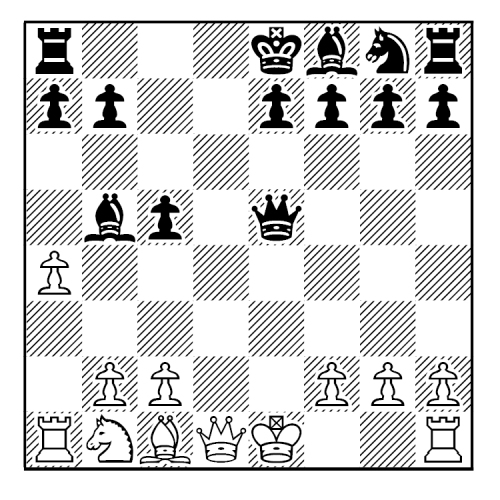
1.Nf3 c5 2.c4 Nf6 3.Nc3 b6 4.e3 e6 5.d4 cxd4 6.exd4 Bb7 7.a3 d5! 8.cxd5 Nxd5= 9.Ne5 a6 10.Qa4+ Nd7 11.Nxd5 b5! 12.Qb3 Bxd5 =/+ 13.Qg3 Nxe5 14.dxe5 h5! 15.h4 Rc8 -/+ 16.b4 g6 17.Bg5 Be7 18.Bxe7 Qxe7 19.Be2 Bc4! 20.Rc1 O-O! 21.Bxh5 a5! 22.bxa5 Qa7! 23.Bd1 Qxa5+ 24.Qc3 Qa8! 25.Qe3 Rfd8 26.Bf3? Qa5+ 27.Qc3

2020_04_09_B
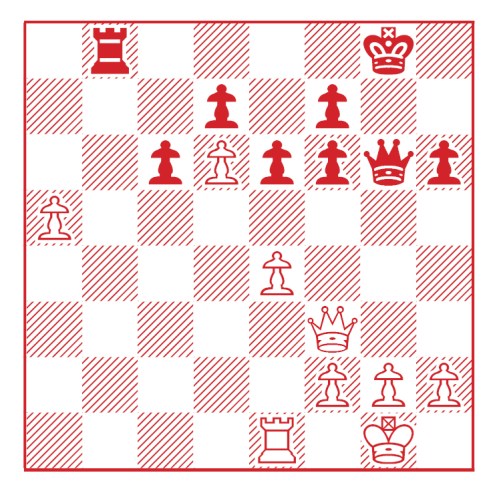
27…Bf1!! (The bishop does nothing except to isolate the enemy king. As an added bonus White’s queen is now being attacked by the Rook. Even here the bishop is also quiet, allowing another piece to potentially capture the queen. I’ll let you figure out why White can’t play 28.Qxa5?) 0-1

 
A bishop move that is a little louder.

 
Walter Harris-Anthony Cantone
US Open
Omaha, Nebraska, July 24 1959
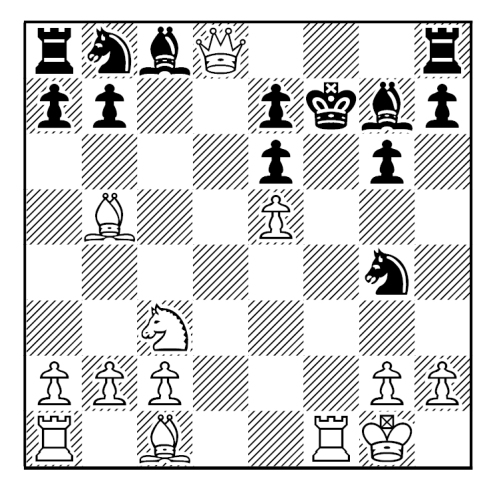
1.e4 e5 2.Nf3 Nc6 3.Bb5 a6 4.Ba4 Nf6 5.O-O Be7 6.Re1 b5 7.Bb3 d6 8.c3 O-O 9.h3 Na5 10.Bc2 c5 11.d4 Qc7 12.Nbd2 Nc6 13.dxc5 dxc5 14.Nf1 Rd8 15.Qe2 Be6

(So far this is all theory.

GM Fischer-GM Erich Eliskases, Mar del Plata, Argentina, 1960 continued instead with the alternate 15…Nh5!?. White played the simple, and yet strong, 16.a4 Rb8 17.axb5 axb5 18.g3 g6 19.h4 Be6 20.Ne3 c4 21.Ng5 Bxg5 22.hxg5 Na5 23.Ng4 Bxg4 24.Qxg4 Nb3 25.Bxb3 cxb3 26.Be3 Ra8 27.Rxa8 Rxa8 28.Rd1 Qc6 29.Rd5 f5 30.Qd1 f4 31.gxf4 exf4 32.Qxb3 Qc4 33.Qxc4 bxc4 34.Bd4 f3 35.Be3 h6 36.gxh6 Nf6 37.Rd6 Kf7 38.Rxf6+ Kxf6 39.Bd4+ Kg5 40.h7 Kf4 41.Kh2 g5 42.h8=Q Rxh8+ 43.Bxh8 g4 44.e5 1-0.)

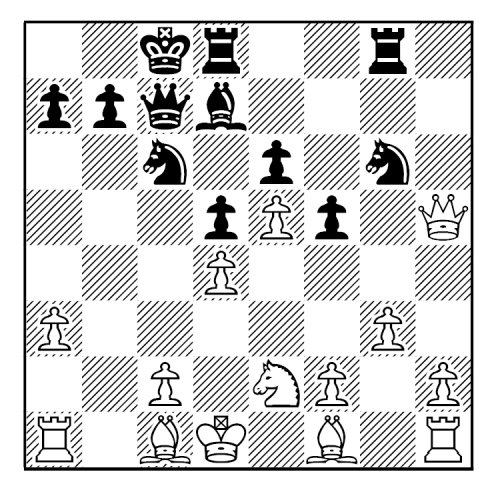
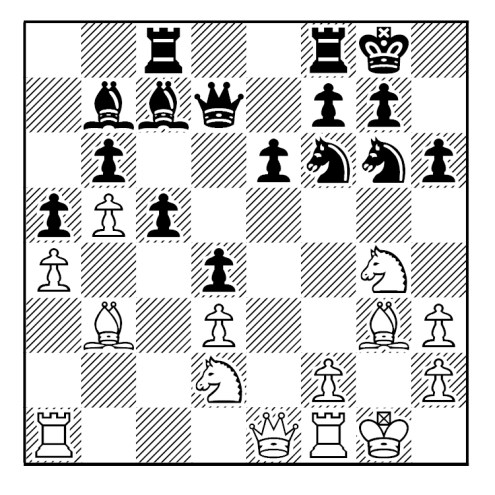
16.Ne3 h6 17.Nh2 Rac8 18.Nf5!? Bxf5 19.exf5 c4 20.Ng4! Re8 21.Qf3 Rcd8 22.Qg3! Kh8 23.Nxh6! gxh6 24.Bxh6 Rg8 25.Qh4 Nh7? 26.f6! Bxf6

2020_04_09_C


27.Bg5! 1-0

Pawn Pusher!

Sometimes beginners are referred, somewhat in jest, as being mere “pawn-pushers”. Try telling that to these Grandmasters.


Typically, most pawns are pushed towards the end of the game with the goal of eventually promoting. But pawns don’t need to promote and pawn pushing can happen at any stage of the game. In fact, it is possible to win a game with pawn moves only.

 
R. Kujoth – Fashing-Bauer
Milwaukee, 1950
1.e4 c5 2.b4 cxb4 3.a3 Nc6 4.axb4 Nf6 5.b5 Nb8

[The (in?)famous game, Frank Marshall-Viacheslav Ragosin, New York, 1940, continued instead with 5…Nd4 6.c3 Ne6 7.e5 Nd5 8.c4 Ndf4 9.g3 Ng6 10.f4 Ngxf4 11.gxf4 Nxf4 12.d4 Ng6 13.h4 e6 14.h5 Bb4+ (And now, after 14 moves, Marshall had to finally move a piece.) 15.Bd2 Bxd2+ 16.Nxd2 Ne7 17.Ne4 Nf5 18.h6 g6 19.Nf6+ Kf8 20.Nf3 d6 21.Ng5 dxe5 22.dxe5 Qxd1+ 23.Rxd1 Ke7 24.Rh3 b6 25.Bg2 Rb8 26.Ngxh7 1-0.]


6.e5 Qc7 7.d4 Nd5 8.c4 Nb6 9.c5 Nd5 10.b6!
2020_04_01_A

1-0


John Hurt (1831)-Morris Busby
Bluff City Open, February 17, 1979
1.e4 c5 2.b4 cxb4 3.a3 Nc6 4.axb4 Nf6 5.b5 Nd4 6.c3 Ne6 7.e5 Ne4 8.d4 d5 9.f3 N4g5 10.h4 1-0


Pawn pushing can be used in the middle game. To good effect.


GM Vassily Ivanchuk (2740)-GM Veselin Topalov (2670)
Investbanka
Belgrade, 1995
1.e4 c5 2.Nf3 d6 3.d4 cxd4 4.Nxd4 Nf6 5.Nc3 g6 6.Be3 Bg7 7.f3 Nc6 8.Qd2 O-O 9.Bc4 Bd7 10.h4 Rc8 11.Bb3 h5 12.O-O-O Ne5 (The Soltis Variation of the Dragon.) 13.Bg5 Rc5 14.g4 hxg4 15.f4 Nc4 16.Qe2 Qc8

[This appear to be Black’s best move. Sarunas Sulskis (2505)-Dr. Evarth Kahn (2350), Budapest 1995 continued with 16…b5!? 17.h5 Nxh5 18.f5 a5 19.Qxg4 a4 20.Bxc4 Rxc4 21.Rxh5 gxh5 22.Qxh5 Rxd4 23.Rh1 f6 24.Qh7+ Kf7 25.Bh6 Bxf5 26.Qxg7+ Ke6 27.exf5+ 1-0.]

17.Bxf6 Bxf6 18.Nd5 Rxd5!! (This move certainly looks like it gives the initiative to Black. Can it be sustained? Or is it an illusion? White several plans to try to counter Black’s threats. But first, the most obvious move.) 19.exd5 b5 20.h5 (Now here is where it starts to get complicated.) 20…g5!? (It’s obvious Black intends to push his kingside pawns. Doing so will put a cramp on both White’s attack on the kingside and more importantly, the coordination of his pieces.) 21.fxg5 Bxg5+! (Black will use the extra tempo to push another pawn.) 22.Kb1 f5 23.Rd3 (It’s been recommended that 23.h6, pushing White’s pawns to counter Black’s advancing pawns, is the better move.) 23…f4 24.Bxc4 Qxc4 0-1

2020_04_01_B

[Ivanchuk was criticized for resigning here. It’s not an easy position to hold. Some sample lines: (1) 25.Qd2 Kh7 26.Qg2 Kh8 27.b3 Qc8! Black’s king is hiding and his queen can reposition herself., (2) 25.Qg2 Kh8 26.Re1 b4 and Black’s queenside pawns start advancing, (3) 25.Rc3?! Qxd4 26.Rc7 Bf5 (a “fantasy” position for Black). In addition to Black’s dangerous kingside pawns he now has both bishops aiming for White’s castled position, (4) 25.Ne6?! fails to 25….f3! 26.Qd1 Bxe6. Maybe Ivanchuk saw all of this.]


Obviously, one has to be careful pushing pawns. When a pawn is advances it leaves holes where the enemy pieces can hold or attack.


The following games illustrates this point. And features some serious pawn pushing.


GM Boris Spassky-GM Bobby Fischer
World Ch., Game #13
Reykjavik, July 11 1972
1.e4 Nf6 2.e5 Nd5 3.d4 d6 4.Nf3 g6 5.Bc4 Nb6 6.Bb3 Bg7 7.Nbd2 (ECO gives this move a “?!”, suggesting 8.Ng5.) 7…O-O 8.h3!? (8.O-O!?) 8…a5! (To create space and threaten …a4.) 9.a4 dxe5 10.dxe5 Na6 11.O-O Nc5 (-/+ ECO) 12.Qe2 Qe8 13.Ne4 Nbxa4 14.Bxa4 Nxa4 15.Re1 Nb6 16.Bd2 a4 17.Bg5 h6 18.Bh4 Bf5 19.g4 Be6 20.Nd4 Bc4 21.Qd2 Qd7 22.Rad1 Rfe8 23.f4 Bd5 24.Nc5 Qc8 25.Qc3 e6 26.Kh2 Nd7 27.Nd3? c5! 28.Nb5 Qc6 29.Nd6 Qxd6 30.exd6 Bxc3 31.bxc3 f6 32.g5 hxg5 33.fxg5 f5 34.Bg3 Kf7 35.Ne5+ Nxe5 36.Bxe5 b5 37.Rf1 Rh8 38.Bf6 a3 39.Rf4 a2 40.c4 Bxc4 41.d7 Bd5 42.Kg3 Ra3+ 43.c3 Rha8 44.Rh4 e5 45.Rh7+ Ke6 46.Re7+ Kd6 47.Rxe5 Rxc3+ 48.Kf2 Rc2+ 49.Ke1 Kxd7 50.Rexd5+ Kc6 51.Rd6+ Kb7 52.Rd7+ Ka6 53.R7d2 Rxd2 54.Kxd2 b4 55.h4 Kb5 56.h5 c4 57.Ra1 gxh5 58.g6 h4 59.g7 h3 60.Be7 Rg8 61.Bf8! (Locking in the rook.)

2020_04_01_C

61…h2 62.Kc2 Kc6 63.Rd1 b3+ 64.Kc3 h1=Q 65.Rxh1 Kd5 66.Kb2 f4 67.Rd1+ Ke4 68.Rc1 Kd3 69.Rd1+ [Gligorić, writing in Informant 14, (Game #165) give this move a ??, claiming that 69.Rc3+! Kd4 70.Rf3 c3+ 71.Ka1 c2 72.Rxf4+ Kc3 73.Rf3+ Kd2 74.Ba3! is equal. He appears to be correct.] 69…Ke2 70.Rc1 f3 71.Bc5 Rxg7 72.Rxc4 Rd7 73.Re4+ Kf1 74.Bd4 f2 0-1

Corona Problems? No problem!

I haven’t been to a tournament or even a club for some time now.


Mostly this is due with the “Stay Home” initiative.


The gym is closed. So is the local college, the library, the mall, bookstores, movie houses, amusement parks, coffee houses, fast food restaurants, churches, and various work places. The beach is still open here in Huntington Beach. But city and county officials are talking about closing that too.


So, what do if you really want to play chess?


Naturally, there is the Internet. I play on chess.com. But you can find many other sites to play Blitz, Bughouse, and even tournament games.


s-l1600 (1)

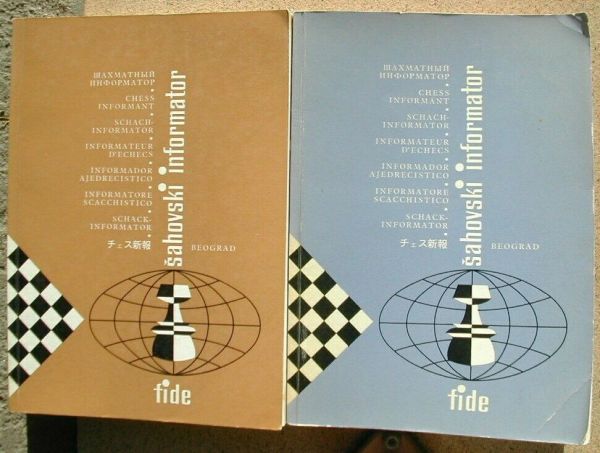
And get out those old Informants! The books you acquired some time ago, and just didn’t have the time to read or study from it. Go ahead, grab an issue, a pen, a highlighter and a notepad. Mark up the book, write your notes on the paper, and have some fun!


If you have a word processor, you might enter your favorite games and your notes right onto your laptop.


But what to do if you don’t have any Informants? Well, any chess book will do! Even if it is written by Reinfeld and annotated in Descriptive Notation (DN). Hint! – his best book is 1001 Winning Chess Sacrifices and Combinations.


s-l500 (3) BCF_Yearbook_Cover_1995_2s-l500 (2)


And then proceed as above.

 
And if you are one of those rare chess players who doesn’t own a single book on chess, then you still have options to enjoy the game.


You can always read and study various chess magazines. Even old ones.

BCM_2001_June


They can be ordered on ebay.com And available in different languages.

 
You can also download games from the Internet in PDF, PGN, http, or text fashion.

 
If you want human interaction, you can email a friend. Request games to enjoy or study. Offer to play games via email. Or even by telephone.

Old-fashioned blue telephone on a white background.
I did that, pre-Internet. Just be sure to have a pen and notepad or scoresheet – you might want a copy of the game (another hint here!)


Most important of all, during this time of self-isolation and possible mass paranoia and hysteria, keep busy. Don’t miss an opportunity to enjoy the one thing that a virus can’t block you from doing; that is to enjoy your game, your life.


David Cummings-Yura Ochkoos
Kitchener Octoberfest Open
Ontario, Canada, 2002
[This game can be found in “Across Canada”, in the December, 1992 issue of “En Passant”, published by Chess Federation of Canada. Notes by Escalante (who is stuck at home).]
1.c4 e6 2.g3 d5 3.Bg2 c5 4.Nf3 Nf6 5.d4 Nc6 6.cxd5 exd5 7.O-O Be7 8.Be3 c4 9.Ne5 O-O 10.b3 cxb3 11.Qxb3 Na5 (ECO gives 11…Bd6 as being equal. But now it appears that the text move is slightly stronger. Meanwhile, we are still in “book”.) 12.Qa4 a6 13.Bd2 Nc4 14.Nxc4 b5 15.Qc2

[Egon Brestian (2475)-Reinhard Lendwai (2405), Austria Ch., 1991, continued instead with 15.Ba5 Qe8 16.Qc2 bxc4 17.Nc3 Be6 18.e4 dxe4 (Qd7!?) 19.Nxe4 Nd5 20.Nc5 Bxc5 21.dxc5 Qe7 22.Bb6 Rab8 23.Rab1 Qf6 24.a4 Rfc8 25.a5 Nc3 26.Rbc1 Nb5 27.Rfd1 Nd4 28.Qe4 Nb3 29.Rxc4 Bxc4 30.Qxc4 Nxc5 31.Bxc5 Qg5 32.Bd5 Kh8 33.Qd4 Rb5 34.Bb6 Rc1 35.Bf3 Rxd1+ 36.Qxd1 h5

2020_03_26_A

37.Qd8+! (Simplifying into a winning 2B vs. R endgame.) 37…Qxd8 (37…Kh7? 38.Qxg5 Rxg5 39.Bb7 wins.) 38.Bxd8 Kh7 39.Bb6 Kg6 40.Be2 1-0]

 
15…bxc4 16.Nc3 Be6 17.Bg5 Rb8 18.e3 Qa5 19.Rab1 Bb4?! 20.Bxf6 Bxc3 21.Be5 Rb5 22.e4 Rd8 23.a4! Rxb1 24.Rxb1 dxe4 25.Bxe4 Bxd4? 26.Bxd4 Rxd4

2020_03_26_B

27.Qc3!! 1-0

Poisoned Pawn?

The term “Poisoned Pawn” appears twice in the opening naming lexicons. It can also be used in a more broader sense.


In general, the pawn on b2 is attacked by Black’s queen. If he does, he sure to face a massive, and sometimes very long, attack by the White’s pieces.


The question is, not can he take the pawn. But rather, can he withstand the attack? If he can, then he’ll be up a pawn in the endgame.

 
In a more literary sense, can Black eat the pawn without suffering indigestion? Now you know where the word, “poisoned” comes from.

 
Let’s get started.


~~~~~~~~~~~~~~~~~~~~~~~~~~~~~


The Poisoned Pawn in the Najdorf is defined by the moves; 1.e4 c5 2.Nf3 d6 3.d4 cxd4 4.Nxd4 Nf6 5.Nc3 a6 6.Bg5 e6 7.f4 Qb6.


2020_03_19_A

White usually continues with 8.Qd2, allowing Black to take his b2 pawn. He knows that if nothing else, he’ll be one attacking. But how best to attack? And what to do when Black, as he typically does, counterattack?


Fischer was the main advocate of this Najdorf version, who played it from the mid 1960s to the early 1970s. Here is Fischer in his prime.


GM Bruno Parma-GM Fischer
Rovinj/Zagreb, Croatia, Apr. 12, 1970
1.e4 c5 2.Nf3 d6 3.d4 cxd4 4.Nxd4 Nf6 5.Nc3 a6 6.Bg5 e6 7.f4 Qb6 8.Qd2 Qxb2 9.Rb1 Qa3 10.Bxf6 gxf6 11.Be2 Bg7 12.O-O f5 13.Rfd1 O-O 14.exf5 exf5 15.Nd5 Nc6 16.Nxc6 bxc6 17.Ne7+ Kh8 18.Nxc8 Rfxc8 19.Qd3? (>19.Qxd6 Qxa2 20.Qc5, with the idea of Bd3) 19…Qc5+ 20.Kh1 Re8 -/+ 21.Qc4 Qxc4 22.Bxc4 Re4 23.Bxf7 Rf8 24.Bh5 Rxf4 25.Rb6 (>25.Rxd6 Rh4 with the idea of Be5 -/+. With the text move, White falls further behind.) 25…Be5 26.Rxa6 Rh4 27.Bf3 Rxh2+ 28.Kg1 c5 29.Ra8 Rxa8 30.Bxa8 Rh4 31.Bc6 Rb4 32.a4 Rb2 33.c4 Kg7 34.Rd3 Ra2 35.Kf1 Kg6 36.Re3 h5 37.Re2 Ra3 38.Rd2 h4 39.Ke2 Bf4 40.Rd3 Ra2+ 41.Kd1 Kf6 42.Rf3 Be5 43.Rd3 Ke7 44.Rd2 Ra3 45.Ke2 Bc3 46.Rd3 Ra2+ 47.Kd1 Bd4 48.Rh3 Bf6 49.Re3+ Be5 50.Rd3 Kd8 51.Rd2 Ra1+ 52.Ke2 Kc7 53.Bd5 Bf4 54.Rc2 Ra3 55.Rb2 Be5 56.Rd2 Rg3 57.Kd1 f4 0-1

 
It wasn’t until Fischer played in the World Championship that he met his equal, at least in this variation.


GM Spassky-GM Fischer
World Ch. Game #11
Reykjavik, 1972
1.e4 c5 2.Nf3 d6 3.d4 cxd4 4.Nxd4 Nf6 5.Nc3 a6 6.Bg5 e6 7.f4 Qb6 8.Qd2 Qxb2 9.Nb3 Qa3 10.Bxf6 gxf6 11.Be2 h5 12.O-O Nc6 13.Kh1 Bd7 14.Nb1 Qb4 15.Qe3 d5 16.exd5 Ne7 17.c4 Nf5 18.Qd3 h4 19.Bg4 Nd6 20.N1d2 f5 21.a3 Qb6 22.c5 Qb5 23.Qc3 fxg4 24.a4 h3 25.axb5 hxg2+ 26.Kxg2 Rh3 27.Qf6 Nf5 28.c6 Bc8 29.dxe6 fxe6 30.Rfe1 Be7 31.Rxe6 1-0

 
To be sure, the response was cooked up by Spassky’s team both before and during the match. It was a quick defeat, and it’s no wonder that Fischer didn’t again in the match. Or ever again.


After winning the World Championship, Fischer disappeared for a couple of decades. During his absence several improvements were found for both sides. But without it’s chief proponent the variation is played by only a few top players.


~~~~~~~~~~~~~~~~~~~~~~~~~~~~~

 
Black can also offer a poisoned pawn. In  this case the pawn is on g7.


The Poisoned Pawn Variation of the Winawer, offers a richer variation of play than the Najdorf. And it is played often.

 
The variation is triggered by the moves; 1.e4 e6 2.d4 d5 3.Nc3 Bb4 4.e5 c5 5.a3 Bxc3+ 6.bxc3 Qc7 7.Qg4. Black has a number of ways to attempt to gain the upper hand.


Haritonenko-Gorin
USSR, 1965
1.e4 e6 2.d4 d5 3.Nc3 Bb4 4.e5 c5 5.a3 Bxc3+ 6.bxc3 Qc7 7.Qg4 f5!? 8.Qg3 Ne7 9.Qxg7 Rg8 10.Qxh7 cxd4 11.Kd1 Bd7 12.Qh5+ Ng6 13.Ne2 Nc6 14.cxd4 O-O-O 15.g3

2020_03_19_B
15…Ncxe5! 16.dxe5 Ba4 17.Ra2 d4 18.Bg5 d3 0-1

 
White gets even here.


Escalante-NM Adaar
Thematic Tournament – Winawer Variation, Round 2
chess.com, Aug.-Sept. 2018
1.e4 e6 2.d4 d5 3.Nc3 Bb4 (The usual route to the Winawer. All games in the tournament began with this position.) 4.e5 c5 5.a3 Bxc3+ 6.bxc3 Ne7 7.Qg4 O-O (Some years ago Van der Tak wrote an article in NIC 8 titled, “Castling Into It?” where he explored Black’s kingside castling possibilities in the Poisoned Pawn Variation of the Winawer, and if it was a viable option for Black. I don’t think the resulting positions favor Black.) 8.Bd3 (Thanks to GM Van der Tak, and his article, I am convinced this is best move for White.) 8…Nbc6 9.Nf3 cxd4?? (This loses the game in a hurry.)
2020_03_19_C
10.Bxh7+! 1-0 [Black resigns due to 10…Kxh7 11.Qh5+ (stronger than the traditional Ng5+ as the potential escape square, g6, is denied to Black) 11…Kg8 12.Ng5 and White mates.]

~~~~~~~~~~~~~~~~~~~~~~~~~~~~~


The term “Poisoned Pawn”, in a more general term, can be defined as a pawn on the b2 or g7 square that is offered to the enemy queen to lure her out of defending her king or deflecting her to an irrelevant area of the board.


The term can be used in the general sense.

 
GM Bent Larsen-IM Bela Berger
Amsterdam Izt.
Netherlands, 1964
1.e4 e5 2.Bc4 Nf6 3.d3 d5?! 4.exd5 Nxd5 5.Nf3 Nc6 6.O-O Bg4?! 7.Re1 Be7 (Not 7…f6? because of 8.Nxe5! and Black is in a lot of trouble,) 8.h3 Bxf3 9.Qxf3 Nd4!? 10.Qg4!

2020_03_19_D

11…O-O [Castling into the same area as the enemy queen is already attacking is usually not a good idea (see above). One has to think about self-preservation in addition to attacking factors. But in this case, Black is forced into it. White’s queen breaks in on both the center and kingside after 10…Nxc2 11.Rxe5 Nxa1 (hopeless is 11…Nf6 12.Qxg7 Kd7 13.Qxf7) 12.Qxg7 Rf8 13.Rxd5 Qc8 14.Qxh7 c6 15.Rf5. Even worse is 10…Bf6? The move is not only passive but it also loses a piece after 11.Qxd4. So Black has to risk it.] 11.Rxe5 Nf6 12.Qd1 (White has the extra pawn and better position.) 12…Bd6 13.Re1 Re8 14.Be3 c5 15.Nd2 Bc7 16.Nf3 Qd6 17.Bxd4 cxd4 18.Rxe8+ Rxe8 19.c3 dxc3 20.bxc3 Nh5 21.Qa4 Re7 22.Qxa7 Nf4 23.Qxb7 h5 24.Qc8+ Kh7 25.h4 1-0


Here, each side can offer their poisoned pawns, but don’t as they have nothing to compensate for their lost material. Material and and tempi are the requisites for giving up the pawn.


Ashraf Salimov-Vadim Razin
Ukraine U16 Ch., ½ Finals
Dnipropetrovsk, Nov. 11 2004
1.e4 e6 2.d4 d5 3.e5 c5 4.Nf3 Nc6 5.Bb5 Qb6 6.Bxc6+ bxc6 7.O-O Ba6 8.Re1 cxd4 9.Nxd4 Bc5 10.Be3 Bxd4 11.Qxd4 Rb8 12.b3 Ne7 13.Qc5 Nf5 14.g4 Nxe3 15.Qxe3 c5 16.Qg5 O-O 17.Nd2 Qb4 18.Nf1 f5 19.exf6 Rxf6 20.h3 Rbf8 21.Qe5 Rxf2 22.Qxe6+ Kh8 23.Qxa6 Qd4 24.Ne3 (24.Qe6 Rxf1+ 25.Kg2 Qf2+) 24…Qf4 25.Nf1 Qf3 (Black has too much pressure on White’s weak point and she has to concede the point.) 0-1

When you see a good move …

“When you see a good move, look for a better one.”


Often attributed to Emanuel Lasker.


But this quote predates him, going back at least to 1878.

“Still flying at high game, in accordance to with the rule, ‘When you see a good move look out for a better’. ” – The Chess Player’s Chronicle, January 1878, pg. 31.


Nevertheless, this is still a good rule to follow, and not just in chess.


But, since this a chess blog, we’ll stick with chess.


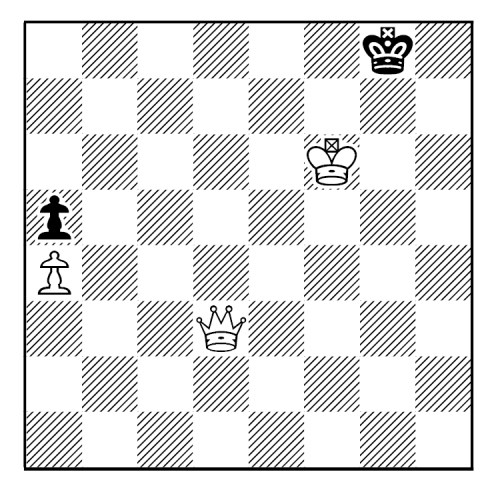
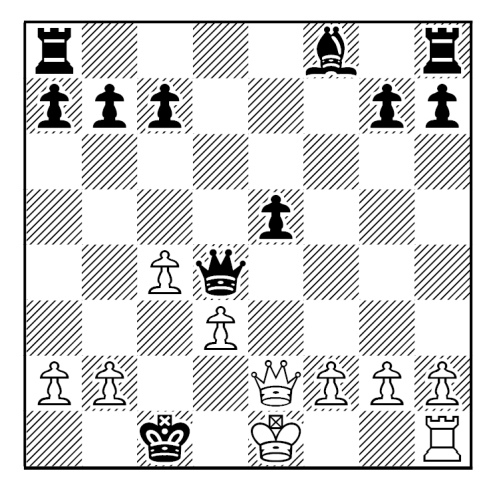
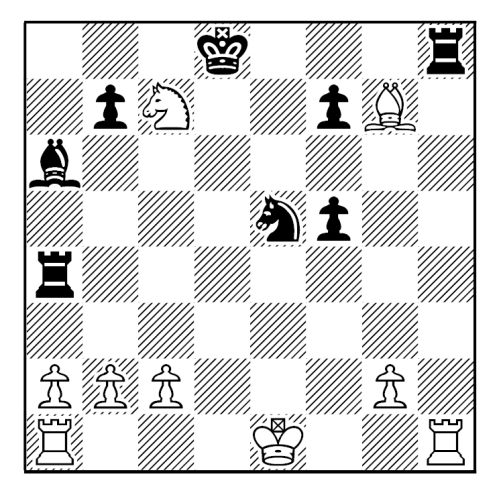
Years ago, I was watching a young person playing a tournament game. He was White and had an overwhelming position. The following diagram is a close approximation of the position I recollect.


It is White to move.

2020_03_12_A


Now this young person played 1.Qd5+ and Black responded with his best move; 1…Kh8. White continued with 2.Qxa5.


After the game ended, I asked this young person why he took the pawn. He asked me if what he played was a bad move. I told him it was not a bad move; I was just curious. He replied that he knew that a Rook and Queen would mate the Black.


I then asked him if he could mate with just a Queen. He said he could, but he saw the win with the Rook and Queen, and seeing nothing wrong with it, went with the idea.


White, of course, could win the game outright with 1.Qg6+. If Black plays 1…Kf8, then White mates with 2.Qf7#. And if Black moves his king to h8, then White mates with 2.Qg7#.


It’s a malady we all seem to have.


Let’s jump ahead a few decades.
Escalante-“kosaszabolcs”
Blitz Game
Chess.com, Mar. 8 2020


White just played 21.Bb4 and Black’s queen is in trouble.


2020_03_12_B


Black apparently panicked and played 21…Qxa2? (he would have lessened the danger by playing 21…Rxd1).


And White, seeing a win and a possible mate, responded instantly with 22.Rxd8! Rxd8 23.Qxd8+ Kg7 24.Bf8+ Kg8 25.Bh6#. 1-0 But this is not the end of the story. For White could have played the mate a move earlier with 24.Qf8#. Why didn’t I play that move? Well, you see I saw the mate, and then stopped looking.

ROB’S NOT-SO-BASIC CHESS QUIZ (AKA Is There a Problem?)

For the “basic”, and maybe easier, chess quiz, please go to: “Back to School!” (August 29, 2019), and scroll down to “ROB’S BASIC CHESS QUIZ”.


~~~~~~~~~~~~~~~~~~~~~~~~~~~~~~~


I like quizzes. They can be tough but enjoyable. Sort of like watching a magic act and trying to figure out how it’s down.


This quiz is slightly different than the previous one. There are two complete games and two game fragments.


Your job is to figure out if there is anything wrong with these four selections. They can be illegal, impossible or a have a dose of too much imagination.


There is at least one selection which has at least one thing wrong with it, and at least one selection that has no problems.


Each correct answer is worth 10 points. Half correct answers gain half credit (5 points) and totally unexpected answers, that also answer the question, will gain an additional 10 points.

 
Let’s play “Is There a Problem?


~~~~~~~~~~~~~~~~~~~~~~~~~~~~~~~

 
This tournament game was apparently played between two Masters.


Is there a problem here?


Heidenfeld-Kerins
Dublin 1973
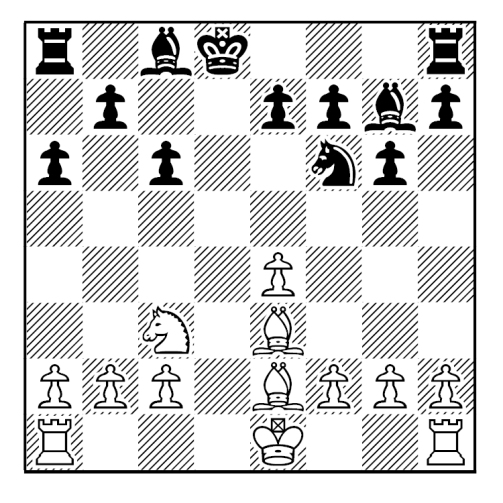
1.e4 e6 2.d4 d5 3.Be3 Nf6!? [The Alapin variation in the French Defense. Theory considers 3.Be3 dxe4, and now either 4.f3 (the gambit line) or 4.Nd2.] 4.e5 (The obvious move.) 4…Nfd7 5.f4 c5 6.c3 Nc6 7.Nf3 Qb6!? (Alapin-Von Gottschall, Dresden 1892, continued with 7…Be7 8.Bd3 cxd4 9.cxd4 Qb6 10.Qd2 Nb4 11.Be2 O-O 12.Nc3 f6 13.O-O Nc6 14.Bd3 Nb4 15.Be2 Nc6 16.Rac1 f5 17.Kh1 Qd8 18.Bd3 Nb6 19.b3 Bd7 20.Rg1 Ba3 21.Rcf1 Bb4 22.Qe1 Bc8 23.g4 Ne7 24.gxf5 Nxf5 25.Bxf5 Rxf5 26.Qg3 Qf8 27.Ne2 Be7 28.Qh3 1/2-1/2. The text move seems stronger.) 8.Qd2 c4 9.Be2 Na5 10.O-O f5 11.Ng5 Be7 12.g4 Bxg5 13.fxg5 Nf8 14.gxf5 exf5 15.Bf3 Be6 16.Qg2 O-O-O 17.Na3 Ng6 18.Qd2 f4 19.Bf2 Bh3 20.Rfb1 Bf5 21.Nc2 h6 22.gxh6 Rxh6 23.Nb4 Qe6 24.Qe2 Ne7 25.b3 Qg6+ 26.Kf1 Bxb1 27.bxc4 dxc4 28.Qb2 Bd3+ 29.Ke1 Be4 30.Qe2 Bxf3 31.Qxf3 Rxh2 32.d5 Qf5 33.O-O-O Rh3 34.Qe2 Rxc3+ 35.Kb2 Rh3 36.d6 Nec6 37.Nxc6 Nxc6 38.e6 Qe5+ 39.Qxe5 Nxe5 40.d7+ Nxd7 0-1


***************

This game fragment is from an Internet game.


I don’t know the names of these two beginners. But they play with imagination!


Is there a problem here?


N.N.-“ChessIsEasy”
Internet Game, 1997

2020_03_04_A


White played 1.Rh1 to activate his rook and to threaten 2.h5. But Black responded with 1…Nh5, trapping the queen in the middle of the board!


***************


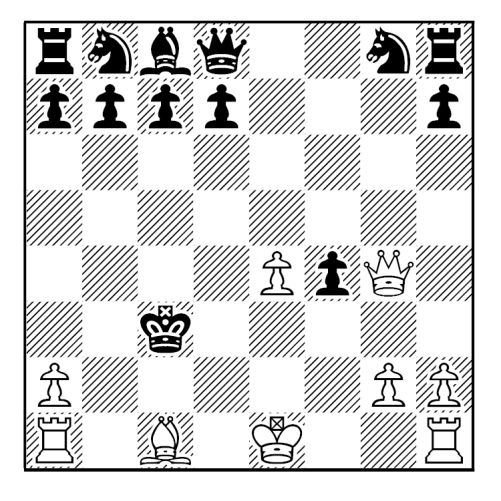
Capablanca was known for many great things in chess. Among them was his play in simuls.


Is there a problem here?


McIntyre-Capablanca
Simul
England, Date Unknown

2020_03_04_B


On the previous move Black played 1…d4, attacking the knight that was on e3. White then erred with 2.Ng4? to reach the diagrammed position.


Capablanca obviously has the advantage in material. He simplifies with 2…Nxg4! and his opponent responded with 3.hxg4 to undouble his pawns. But it is only a temporary positional improvement as the great Cuban continued with 3…Bxg3 to again double his opponent’s pawns.


Black later wins by attacking and then capturing White’s weak d3-pawn. And Black’s d4-pawn subsequently transforms into a strong and healthy passer.


***************


Irina Krush is one of my favorite American female players. Here she is at an important game.


Is there a problem here?


IM Irina Krush (2437)-WIM Viktoria Baškite (2205)
Women’s Ol.
Turin, 2006
1.d4 Nf6 2.c4 e6 3.Nc3 Bb4 4.Qc2 c5 (Black also has 4…d5, 4…O-O-O, 4…Nc6 and even 4…b6.) 5.dxc5 Qc7 6.a3 Bxc5 7.b4 [7.Bg5? lead to White’s grief after 7…Bxf2+! 8.Kxf2 Qc5+ 9.Ke1 Qxg5 10.Nb5 O-O 11.Nf3 Qh5 12.e4 Nc6 13.Nd6 Ne8 14.Qd2 b6 15.Rd1 Nxd6 16.Qxd6 f6 17.b4 Ne5 18.Be2 Nf7 19.Qf4 Rd8 20.Kf2 Bb7 21.Rhe1 Qh6 22.Qe3 Rac8 23.h3 Kf8 24.Qxh6 Nxh6 25.Bd3 Nf7 26.Rc1 d6 27.Ke3 Ke7 28.Rc2 g6 29.Rec1 f5 30.g4 Rf8 31.exf5 Bxf3 32.Kxf3 Ne5+ 33.Ke3 gxf5 34.Be2 Rg8 35.gxf5 Rcf8 36.c5 Rg3+ 37.Kf2 Rxa3 38.cxd6 Kxd6 39.Rd1+ Ke7 40.Rc7+ Kf6 41.Rxh7 Kxf5 42.Kg1 Kg6 43.Re7 Rg3+ 44.Kh2 Re3 45.Bg4 Nxg4+ 46.hxg4 Rf2+ 47.Kg1 Rf4 48.Rxa7 Rxg4+ 49.Kf2 Re5 50.Rd8 Rf5+ 51.Ke3 Rxb4 52.Rb7 Rfb5 53.Rf8 Rb3+ 54.Ke4 R3b4+ 55.Kd3 Rf5 56.Rg8+ Kf6 57.Rf8+ Ke5 58.Rfb8 Rf3+ 59.Ke2 Rfb3 60.Kd2 Rb2+ 61.Kc1 R4b3 62.Re8 Rh2 63.Rc8 Kd6 64.Rd8+ Kc6 65.Rdd7 Re3 66.Rbc7+ Kb5+ 67.Rd1 Kb4 68.Kb1 Rhe2 0-1 (Bagirov-Csom, Frunze, 1983).] 7…Be7 8.Nb5 (Leading to complications.) 8…Qc6 9.Nf3 a6 10.Nfd4 Qb6 11.c5 Qd8 12.Nd6+ Bxd6 13.cxd6 Nc6 14.Bb2 O-O 15.Nxc6 bxc6 16.e4 a5 17.Bd3 Ba6 18.O-O h6 19.Rfe1 Bxd3 20.Qxd3 Nh5 21.Qf3 Qg5 22.Rac1 axb4 23.axb4 Qg6 24.Rc5 Nf6 25.Ra5 Rfb8 26.Bxf6! (Simplifying into a won endgame.) 26…Rxa5 27.bxa5 gxf6

2020_03_04_C
28.a6 +- (The passed pawn ties down Black’s rook, allowing White to create more problems for Black.) 28…Ra8 29.Ra1 f5 30.e5 f4 31.h3 Qf5 32.Ra5 Qb1+ 33.Kh2 Qb6 34.Ra4 Qb5 35.Qg4+ Kh7 36.Qxf4 Rg8 37.a7 1-0


Answers next week!

The French Problem

Many years ago. I was playing a tournament. Sometime between my morning game and afternoon game I met a young guy.


He was asking for help against the French Defence, saying he had a problem trying to figure it out so he could win as White.


He didn’t have a board or a set. I set up my pieces on my board so I can both see the moves. By the way, if you ever attend a tournament, ALWAYS bring a set with you. You want to show off you are making some investment in learning more about the game.


Anyway, I set up the board.

1


I then asked if he knew the Advanced Variation (1.e4 e6 2.d4 d5 3.e5).


He said, “It’s been analyzed to death and the only way for White to try to gain an advantage was to play the Milner-Barry.” “But,” he continued, “White still loses”.


I don’t completely understand what he was trying to tell me. It sounded like he was repeating someone who knew the names of the variations, but little else. Maybe I’ll unravel it.


I figured we both have the time. Let’s keep the conversation going.


I replied, “Ok, how about the Classical Variation (1.e4 e6 2.d4 d5 3.Nc3 Nf6 4.Bg5)?”


He answered me, “But it’s even more drawish than the Advanced Variation!”


“Ok. So what do you think of the Winawer (1.e4 e6 2.d4 d5 3.Nc3 Bb4)?”


“Too much stuff to remember! And I don’t have the time to study all the lines.”


It turns out he didn’t want an improvement it the main lines. He wanted a brand-new way to counter 1.e4 e6.


I told him the French Defence got its name from a correspondence game between the cities of London and Paris in 1834.


London Chess Club-Paris Chess Club
corres. 1834
1.e4 e6 2.d4 d5 3.exd5 exd5 4.Nf3 Nf6 5.Bd3 c5 6.Qe2+ Be7 7.dxc5 O-O 8.Be3 Re8 9.Bb5 Nc6 10.Nd4 Bxc5 11.Bxc6 bxc6 12.c3 Bxd4 13.cxd4 c5 14.Qd3 Qb6 15.O-O Ba6 16.Qb3 Qxb3 17.axb3 Bxf1 18.Kxf1 Ng4 19.dxc5 Nxe3+ 20.fxe3 Rxe3 21.Nd2 Rae8 22.b4 Rd3 23.Rxa7 Rxd2 24.b5 Rxb2 25.b6 d4 26.b7 d3 27.Ra8 Kf8 0-1


But the basic ideas go way back to Greco.


Greco-N.N.
Rome, 1620?
1.e4 e6 2.d4 Nf6 3.Bd3 Nc6 4.Nf3Be7 5.h4 O-O 6.e5 Nd5 7.Bxh7+! (yes, this famous sacrifice originated with Greco.) 7…Kxh7 8.Ng5+ Bxg5 9.hxg5+ Kg8 10.Qh5 f5 11.g6 Re8 12.Qh8mate 1-0


And I concluded, “To find a new way to combat the French may not be possible.”


“Please anything! Even if it might be bad for White. I want something to at least try.”


OK, the opened the door a little.


The Schlechter Variation is defined by the moves 1.e4 e6 2.d4 d5 3.Bd3. White’s bishop gets an early start in the game. However, it can be almost immediately challenged by Black’s knight.


But let’s not get too far ahead. Black can quickly lose the game (which is what my friend wanted to hear) if he falters.


Tarrasch-Kuerschner
Nuremburg, 1893
1.e4 e6 2.d4 d5 3.Bd3 Nf6 4.e5! Nfd7 5.Nf3 c5 6.c3 Nc6 7.O-O f6 8.Re1 f5 9.Be3 c4?!(9…Be7, with the idea of 10…O-O is definitely better.) 10.Bc2 Be7 (Black plays this move a bit late and it doesn’t coordinate well with his previous move.) 11.b3 b5 12.a4 bxa4 13.bxc4 dxc4 14.d5 Ncxe5 15.dxe6 Nxf3+ 16.Qxf3 Nb6 17.Qxf5 Bf6 [Black has serious problems here. If 17…Rf8, then 18.Qh5+ g6 19.Bxg6+ hxg6 (or 19…Rf7 20.Bxf7+ Kf8 21.Bh6#) 20.Qxg6+ Rf7 21.Qxf7#.] 18.Bc5 Bb7 19.Qg6+! hxg6 20.Bxg6mate 1-0


Vega Gutierrez (2236)-Korneev (1630)
La Laguna Open
Spain, May 6 2009
1.e4 e6 2.d4 d5 3.Bd3 c5? 4.exd5 Qxd5 5.Nc3 Qd6 6.Nb5 Qb6 7.Bf4 Na6 8.Nf3 Nf6 9.Ne5 Qa5+ 10.c3 Nd5 11.Bg5 Qb6 12.Qa4 Bd7 13.Nd6+ Qxd6 14.Nxd7 Be7 15.dxc5 Nxc3 16.bxc3 Qxd3 17.Ne5+ b5 18.cxb6 1-0


Whitfield-Belson
Toronto, 1934
1.e4 e6 2.d4 d5 3.Bd3 dxe4 4.Bxe4 Nf6 5.Bd3 c5 6.dxc5 Bxc5 7.Nf3 O-O 8.O-O Nc6 9.c3 (Seems solid and reasonable.) 9…e5?! (There are not too many games with this position. But even with lack of games, this move seems to weaken Black too much for further consideration by other French players.) 10.Bg5 Re8 11.Qc2 h6 12.Bxf6 Qxf6 13.Nbd2 Bb6 14.Ne4 Qe7 15.Ng3 g6 16.Bxg6 fxg6 17.Qxg6+ Kf8 18.Nh5 Qf7 19.Qxh6+ Ke7 20.Ng5 Qf5 21.Rad1 Bd7 22.Qd6+ Kd8 23.Ng7 Qg4 24.N5e6+ 1-0


But Black can equalize in the main line after 1.e4 e6 2.d4 d5 3.Bd3 dxe4 4.Bxe4 Nf6 5.Bd3 c5 6.dxc5 Bxc5 7.Nf3 Nc6.


Tartakower-Torre
Moscow, 1925
1.e4 e6 2.d4 d5 3.Bd3 dxe4 4.Bxe4 Nf6 5.Bd3 c5 6.dxc5 Bxc5 7.Nf3 Nc6 8.O-O Qc7 9.Nc3 Bd7 10.Bg5!? (A move that may be slightly too aggressive.) 10…O-O-O 11.Qe2 e5 (ECO evaluates this position as equal. Personally, I think if any player has the advantage, it is Black.) 12.Be4 Bg4 13.Bxc6  Qxc6 14.h3 Bxf3 15.Qxf3 Qxf3 16.gxf3 Bd4 17.Nd1 Rd6 18.c3 Bb6 19.Ne3 Nh5 20.Nf5 Rd3 21.Rad1 Rxf3 22.Nd6+ Kc7 23.Kg2 e4 24.Nxe4 Rf5 25.Be3 Re5 26.Ng3 Nxg3 27.Bxb6+ Kxb6 28.fxg3 Re2+ 29.Rf2 Rhe8 30.Rd2 1/2-1/2


Ruiz Sanchez (2455)-Gallego Alcaraz (2448)
Guillermo Garcia Elite
Santa Clara, Cuba, May 17 2017
1.e4 e6 2.d4 d5 3.Bd3 c5 4.Nf3 dxe4 5.Bxe4 Nf6 6.Bd3 Nc6 7.dxc5 Bxc5 8.O-O Qc7 9.Nc3 Bd7 10.a3?!  (A move that may be slightly too passive.) 10…a6 11.Ne4 Ba7 12.Qe1 Ng4 13.h3 h5 14.Qc3 Bd4 15.Qd2 f5 16.Neg5 Ba7 17.hxg4 hxg4 18.Qf4 Qxf4 19.Bxf4 gxf3 20.Nxf3 O-O-O 21.Rfe1 Rh5 22.Bc4 Rdh8 23.Kf1 g5 24.Bxg5 e5 25.Be3 e4 -/+ 26.Ng1 Bb8 27.f4 Rh2 28.b4 R8h4 29.g3 Rg4 30.Re2 Rh7 31.Bf2 Ne7 32.Rd1 Bc7 33.Red2 Bc6 34.Be6+ Kb8 35.Re1 Rh1 36.c4 Ba4 37.Re3 Bb6 38.c5 Bc7 39.Bd7 Bc6 40.Bxc6 bxc6 41.Rb3 Nd5 42.Re2 Kb7 43.Kg2 Rh7 44.Kf1 Rg6 45.a4 Nf6 46.b5 a5 47.b6 Bd8 48.Rd2 Nd5 49.Ne2 Bf6 50.Bd4 Bxd4 51.Rxd4 Rh1+ 52.Kf2 Rgh6 53.Rxd5 cxd5 54.Ke3 Rc6 55.Rb5 Rd1 56.Rxa5 d4+ 57.Kf2 Rd2 58.Ra7+ Kb8 59.a5 d3 60.Ke3 Rxe2+ 61.Kd4 d2 62.Kd5 Rxc5+ 0-1


Here’s a game which shows my suggestion to my friend is not so unique after all.


IM Yan Teplitsky instructed his women team competing in the 35th Chess Olympiad in Bled to play this variation. Maybe there is something more about this opening.


Dina Kagramanov-Elenoara Ambrosi
Women’s Ol.
Bled, 2002
[IM Yan Teplitsky, “35th Chess Olympiad – Bled, Slovenia”, En Passant (Canada’s leading chess magazine), Apr. 2003]
1.e4 e6 2.d4 d5 3.Bd3 (A rare line that does not have a very good reputation.)3…dxe4 4.Bxe4 Nf6 5.Bf3 c5 6.Ne2 Nc6 7.Be3 Qb6 8.b3 cxd4?![Now White gets to untangle her pieces. Much better is 8…Nxd4 (also for Black is to develop her queenside with 8…Bd7) 9.Nxd4 e5 10.Ne2 e4.] 9.Nxd4 Qa5+(While 9…Ne5 10.O-O Bc5 11.c3 Bd7 12.b4 Nxf3+ 13.Qxf3 Bxd4 14.Bxd4 Qc6 15.Qg3 is just as bad for Black, here 9…Bc5 10.Nxc6 Bxe3 11.fxe3 bxc6 12.Kf2 led to comfortable position for Black in Sirlett-Benggawanm Bled ol f (2) 2002, from the same match.) 10.Qd2 Qxd2+ (A funny continuation is 10…Nxd4 11.Qxa5 Bb4+ but White can just recapture the knight.) 11.Nxd2


2020_02_27
11…Nxd4?[Black is behind in development, and has a much better way of playing by depriving White of the bishop pair with 11…Ne5! 12.Nb5 Nxf3+ 13.Nxf3 Nd5 14.c4 (but not 14.Bxa7? Bd7 15.a4 Bxb5 16.axb5 Bc5 and Black wins.) 14…Nxe3 15.fxe3 Bb4+ and Black is better.]12.Bxd4 Bd6 13.Nc4 Be7 14.O-O O-O 15.Na5! Nd5 16.c4 Nb4?(Black now loses a pawn. Much better is 16…Bb4 although Black still isn’t happy after  17.cxd5 Bxa5 18.dxe6 fxe6 19.Rac1.)17.Nxb7 Nc2 18.Na5 Nxd4 19.Bxa8 Bd7 20.Rad1 e5 21.Bd5 Rb8 22.Rfe1 Bd6 23.Nb7 Bc7 24.Nc5 Bg4 25.f3 Bc8 26.Rxd4 1-0


A Review of Chernev’s “1000 Best Short Games of Chess”

The full title of this well-known chess book is “The 1000 Best Short Games of Chess: A Treasury of Masterpieces in Miniature”, but it is usually shortened to “1000 Best Short Games of Chess”.

 
The book was first published in 1955 and has been reprinted many times (see below for different front covers).


1000_Best_Short_Games_1 1000_Best_Short_Games_2


1000_Best_Short_Games_3_A1000_Best_Short_Games_4

 
But why is this book so popular?

 
First, it is written for the club player.

 
This means the moves are in Descriptive Notation (DN) rather than in Algebraic Notation (AN). DN was popular in England and the United States during this time. And those countries stayed DN until the 1980s.

 
It also means the notation is kept brief. Even so, this short and simple notation brings the number of pages to 555. But it still easy to bring along to a tournament or to read while waiting for a bus or a college class to begin. Consider Bilguer’s “Handbuch des Schachpiels” runs 1040 pages and is hard bound. It is big, heavy and more appropriate for a library.

 
Secondly, there is ample space for the reader to add his own notes, provided of course, he is willing to write small. Personally, I prefer to put everything into a word processor and the I can always update the game. But, of course, this book was written well before anyone had laptops and word processors.

 
The manuscript was written on a typewriter, which is evident as the text and diagrams are not sharp (as one might expect on computer designed material) and there are blemishes and imperfections that occasionally appear in the book that only can come from using a typewriter.

 
So why doesn’t anyone offer an improvement or upgrade to this book?

 
It is extremely costly to rewrite a book from DN to AN. And the book still sells quite well 65 years after it was first printed. It is worthwhile to learn DN just to read and enjoy this book.

 
Last night I searched Amazon for another copy (mine is falling apart from decades of use), and it can still be bought there.

 
But you came here for short games. Here are some of my favorites from the book. Please know I’ve used other annotations than what Chernev provided when I found them more interesting or complete. I don’t have the space restrictions as Chernev struggled with.


~~~~~~~~~~~~~~~~~~~~~~~~~~~~~~~~~~~~~~~~~~~~~~~~~~


Game #23
Greco-N.N.,
Rome 1620?
[Escalante]
1.e4 b6 2.d4 Bb7 3.Bd3 f5 4.exf5 (White is willing to give up his rook to get the king.) 4…Bxg2 5.Qh5+ g6 6.fxg6 Nf6 (This is a huge error. Black has to play 6…Bg7 7.gxh7+ Kf8 8.hxg8=Q+ Kxg8 and while White’s rook may fall, Black has to worry about his very exposed king. Amusing by the way, is 6.fxg6 e5? 7.g7+ Ke7 8.Qxe5+ Kf7 9.gxh8=N#.) 7.gxh7+ [White is now willing to give up his queen for the forced mate. King safety is more important than safety for the rook or queen, and even both. Note: While 7.g7+ Nxh5 8.gxh8=Q Bxh1 9.Qxh7 would eventually win, the text move is faster, and fast attacks are always better for winning the game (less mistakes possible) and for one’s own ego.] 7…Nxh5 8.Bg6mate 1-0
 
Game #212
Canal-N.N.
Simul
Budapest, 1934
1.e4 d5 2.exd5 Qxd5 3.Nc3 Qa5 4.d4 c6 5.Nf3 Bg4 6.Bf4 e6 7.h3 Bxf3 8.Qxf3 Bb4 9.Be2 Nd7 10.a3 O-O-O

2020_02_20_A
11.axb4! Qxa1+ 12.Kd2 Qxh1 (And now we have a Boden’s mate.) 13.Qxc6+! bxc6 14.Ba6mate 1-0
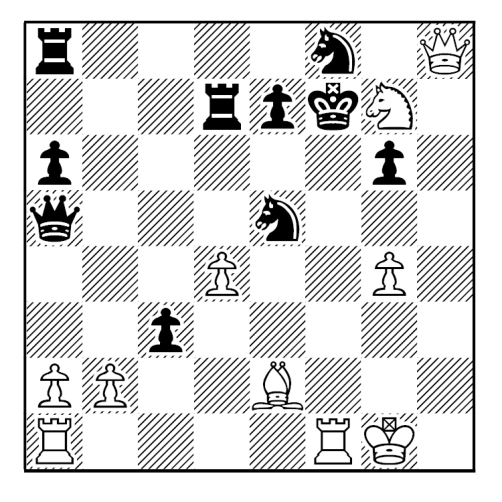
 

Game #222
F. Gobl-Jonas
Augsburg, Germany, 1926
1.e4 Nf6 2.Nc3 d5 3.e5 Nfd7 4.e6 fxe6 5.d4 Nf6 6.Bf4 c6 7.Nf3 Nbd7 8.Bd3 c5 9.Ng5 Qb6 10.Nb5 e5 11.dxe5 c4 12.exf6 Qxb5 13.f7+ Kd8 14.Ne6mate 1-0
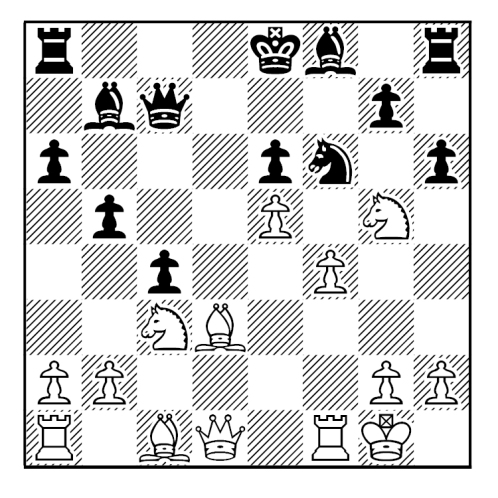
 

Game #227
Nielsen-Ottosen
Copenhagen, 1941
1.e4 e5 2.Nf3 d6 3.d4 exd4 4.Nxd4 Bd7 5.Nc3 g6 6.Bc4 Nc6 7.Nd5 Bg7 8.Be3 Nge7 9.Bg5 Bxd4 10.Qxd4 O-O (Has to defend his rook. He can’t take the attacking queen as 10…Nxd4? loses to 11.Nf6+ Kf8 12.Bh6#.) 11.Nf6+ Kh8 12.Ng4+ Nxd4 (Definitely not 12…f6?? 13.Bxf6+ winning.) 13.Bf6+ Kg8 14.Nh6mate 1-0
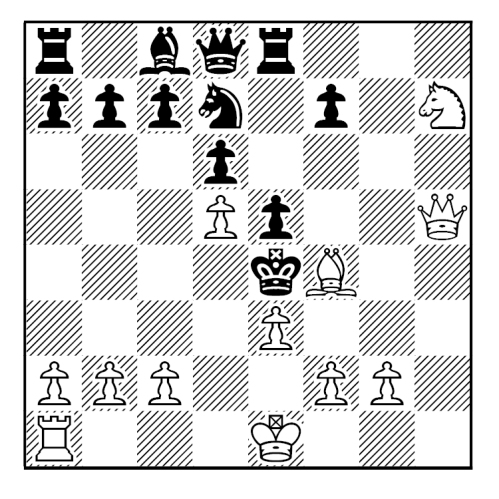
 

Game #780
Blackburne-West
Blindfold Game
Hamilton, Victoria, 1885
[Blackburne, “Mr. Blackburne’s Games of Chess”, #360, pgs. 286/7]
1.e4 e6 2.d4 d5 3.Nc3 Bb4 4.exd5 exd5 5.Bd3 Nc6 6.Nf3 Nf6 7.O-O Bxc3 8.bxc3 O-O 9.Ne5 Be6 10.f4 Ne4 11.f5 Nxe5 (Bad now, though the Knight might have been taken at move 9 if Black were playing for a majority of Pawns on the Queen’s side.) 12.dxe5 Bd7 13.f6 g6 14.Ba3 (Better than Bh6.) 14…Re8 15.Bxe4 dxe4 16.Qd2 Kh8
2020_02_20_B
17.Qg5 (Qh6 is not so good as it looks. Black would have replied with Rg8 and then and then have been able to wiggle out of his difficulties by g5.) 17…c6 18.Rf4 Qa5 19.Qh6 Rg8 20.Qxh7+ Kxh7 21.Rh4mate 1-0

Attacking by Castling, Part 2

You probably want to again read the first part of this series. I have greatly updated and enlarged Part 1 to cover more games and ideas. I hope you enjoy the additions.


And now onto Part 2.


~~~~~~~~~~~~~~~~~~~~~~~~


Perhaps the best well-known, as well as the first known case of mating, while is this game.

 
Please remove the R on a1 as the combination at the end does not work with the extra rook.


Morphy-N.N.
New Orleans, 1858
[Ra1]
1.e4 e5 2.Nf3 Nc6 3.Bc4 Nf6 4.Ng5 d5 5.exd5 Nxd5 6.Nxf7 (The Fried Liver Attack was more popular in the 19th century. It’s largely due to the idea that the sacrifice is too strong for Black to survive. But strangely, it now appears that Black is doing O.K.) 6…Kxf7 7.Qf3+ Ke6 8.Nc3 Nd4 9.Bxd5+ Kd6 10.Qf7 (with the idea of Ne4#) 10…Be6 11.Bxe6 Nxe6 12.Ne4+ (White has a large advantage here. The only question is whether position is a +/- or a +-.) Kd5 13.c4+ Kxe4 14.Qxe6 Qd4 15.Qg4+ Kd3 16.Qe2+ Kc2 17.d3+ Kxc1 18.O-Omate! 1-0


2020_02_13_A


George B. Spencer-N.N.
Minneapolis Chess Club, 1893
1.e4 e5 2.f4 exf4 3.Nf3 g5 4.Bc4 g4 5.Bxf7+ (The Lolli Gambit. It’s unclear if Black should play 5…Ke7 or the text move. In this case, Black can expect little respite from the checks.) 5…Kxf7 6.Ne5+ Ke6 7.Qxg4+ Kxe5 8.d4+!?


[Greco-N.N., Italy, 1620?, continued with 8.Qf5+ Kd6 9.d4 Bg7 10.Bxf4+ Ke7 11.Bg5+ Bf6 12.e5 Bxg5 13.Qxg5+ Ke8 14.Qh5+ Ke7 15.O-O Qe8 16.Qg5+ Ke6 17.Rf6+ Nxf6 18.Qxf6+ Kd5 19.Nc3+ Kxd4 20.Qf4+ Kc5 21.b4+ Kc6 22.Qc4+ Kb6 23.Na4mate 1-0. Both moves seem good enough to win the game.]

 
8…Kxd4 9.b4 Bxb4+ 10.c3+ Bxc3+ 11.Nxc3 Kxc3

2020_02_13_B

12.Bb2+! Kxb2 (If Black was to play 12…Kd3!?, then White would castle queenside to continue the attack.) 13.Qe2+ Kxa1 14.O-Omate 1-0
Black get his revenge in these games.


N.N.-C. Meyer
Ansbach, Germany, 1931
1.b3 d5 2.Bb2 Bg4 3.h3 Bh5 4.Qc1 Nd7 5.e3 e5 6.Be2 Ngf6 7.Bxh5 Nxh5 8.Qd1 g6 9.f4 Qh4+ 10.Ke2 Ng3+ 11.Kd3 Nc5+ 12.Kc3 Nge4+ 13.Kb4 Nd3+ 14.Ka4 b5+ 15.Ka5 Bb4+ 16.Ka6 Qf6+ 17.Kb7 Qb6+ 18.Kxa8 O-Omate 0-1


Lodewijk Prins-Lawrence Day
1968 Lugano Olympiad
Switzerland, 1968
1.e4 c5 2.Nf3 e6 3.c4 a6 4.Be2 Nc6 5.O-O Nf6 6.Nc3 Qc7 7.a3 b6 8.d4 cxd4 9.Nxd4 Bb7 10.Be3 Bd6 11.h3 Be5 12.Qd3 h5 13.Rfc1 Bh2+ 14.Kf1 Ne5 15.Qd1 Nxe4 16.Na4 Nc5 17.Nxb6 Qxb6 18.Nf3 Qc6 19.Bxc5 Bf4 20.Be3 Bxe3 21.fxe3 Ng4 22.hxg4 hxg4 23.Ne1 Rh1+ 24.Kf2 g3 25.Kxg3 Rxe1 26.Qxe1 Qxg2+ 27.Kf4 g5 28.Ke5 Qe4+ (There are some sources which claim that White resigned here. Personally, I prefer that the game continued to the mate.) 29.Kf6 Qf5+ 30.Kg7 Qg6+ 31.Kh8 O-O-Omate 0-1


Now you might believe that mating by castling can only happen when the enemy king is on your first rank. But that isn’t true.


Antonin Kvicala-N.N.
[B20]
1.e4 c5 2.Bc4 Nc6 3.Nf3 e6 4.Nc3 a6 5.d4 b5 6.d5 bxc4 7.dxc6 d6 8.e5 d5 9.Bg5 f6 10.exf6 Nxf6 11.Ne5 h6 12.c7 Qxc7 13.Bxf6 gxf6 14.Qh5+ Ke7 15.Qf7+ Kd6 16.Qxf6 Be7 17.Ne4+ dxe4 18.O-O-Omate 1-0


N.N.-Ryan Marcelonis
Internet Game, Sept. 15 2015
[Believed to be the fastest game ending in a castling mate.]
1.e4 c5 2.Bc4 Nc6 3.Nf3 d6 4.e5 Qc7 5.Bb5 Bd7 6.d4 dxe5 7.Nxe5 Nxe5 8.dxe5 Bxb5 9.a4 Qxe5+
2020_02_13_C

10.Kd2? (White has the better 10.Be3 Qxb2 11.axb5 Qxa1 12.O-O e6, and while he is losing, he is not completely lost.) 10…O-O-Omate 0-1

Attacking by Castling, Part 1

Most players know that castling is usually considered a defensive move as it tucks the king into a corner where it is harder to attack. Experienced players also know that castling also places a rook on a file that is closer to center, where it can more easily participate in an attack against the enemy king.


And those who really understand the game, or at least get lucky, can find positions where the rook, far from being a bystander, is the main piece in a king attack.


So how does a rook attack? Mostly by checking.
Let’s take a look from the Levenfish variation of the Dragon (see also, “A Dragon Trap” from the December 19, 2019 posting on this blog for other ideas of this almost bad variation of the Sicilian).
Kalinchenko-Chekhov
Moscow, 1971
1.e4 c5 2.Nf3 d6 3.d4 cxd4 4.Nxd4 Nf6 5.Nc3 g6 6.f4 Bg7 7.e5 dxe5 8.fxe5 Ng4 9.Bb5+ Kf8 10.Ne6+ fxe6 11.Qxd8+ Kf7 12.O-O+

2020_02_06_A

1-0

Black is obviously busted here. But he can still fight on. The only question is, “How many moves must occur before he gives up?”


Glenn Cornwell-Jerry Gray
Southern Amateur
Tennessee, 1972
12.O-O+ Nf6 13.Rxf6+ Bxf6 14.Qd4 Bg7 15.Bg5 Nc6 16.Bxc6 bxc6 17.Rf1+ Kg8 18.Qc5 1-0


B. Probola-A. Plicner
Polish U16 Ch.
Zakopane, Jan. 21 2001
12.O-O+ Bf6 13.Rxf6+ Nxf6 14.Qxh8 a6 15.exf6 exf6 16.Bh6 1-0


The Dragon seems to have many examples of checking from castling.


Alexander Thomson-Francisco Prieto Azuar
Munich Ol.
Germany, 1958
[B34]
1.e4 c5 2.Nf3 Nc6 3.d4 cxd4 4.Nxd4 Nf6 5.Nc3 g6 6.Be2 Bg7 7.Be3 a6 8.Nxc6 dxc6 9.Qxd8+ Kxd8

2020_02_06_B

10.O-O-O+ Nd7 11.Na4! Ke8 12.Nb6 Nxb6 13.Bxb6 Be6 (Castling would have been preferable. But Black has already moved his king and his monarch is now stuck in the middle.) 14.f4 f5 15.exf5 gxf5 16.Bh5+ Bf7 17.Bxf7+ Kxf7 18.Rd7 Ke6 19.Rxb7 Rhb8 20.Re1+ 1-0


K. Njili (2305)-Said Medjkouh
Zonal Tournament, 4.1, Africa
Tipaza, Algeria, May 26 2011
[B27]
1.e4 c5 2.Nf3 g6 3.h4 Bg7 4.h5 d5 5.exd5 gxh5 6.Nc3 Nf6 7.Bb5+ Nbd7 8.d4 Qa5 9.Bd2 a6 10.Bd3 cxd4 11.Nxd4 Ne5 12.Qe2 Nxd5 13.Bb5+! axb5 14.Nxd5 Qd8 15.Nxb5 Kf8 16.Nf4 Ra4 17.Nxh5 Qd5 18.Nxg7 Bg4 19.f3 Bxf3 20.Nc3 Bxe2 21.Nxd5 Ba6 22.Nf5 e6 23.Bh6+ Ke8 24.Nc7+ Kd8 25.Bg7 exf5

2020_02_06_C
26.O-O-O+ Kc8 (Not 26…Kxc7? 27.Bxe5+ and 28.Bxh8 and White wins with less fuss.) 27.Bxh8 Rxa2 28.Kb1 1-0


There is no reason why a player must engage in a Dragon to castle and check.


GM Viswanathan Anand-GM Peter Svidler
Linares
Spain, Feb. 27 1999
[D97]
1.d4 Nf6 2.c4 g6 3.Nc3 d5 4.Nf3 Bg7 5.Qb3 dxc4 6.Qxc4 O-O 7.e4 a6 (Black has a number of good responses here: 7…Bg4, 7…Nc6 and the text move.) 8.e5 b5 9.Qb3 Nfd7 10.h4 c5 11.e6 c4 12.Qd1 Nb6 13.exf7+ Rxf7 14.h5 Nc6 15.hxg6 hxg6 16.Be3 Bf5 17.Ng5 Rf6 18.g4 Be6 19.Nce4 Bd5 20.Qd2 Rd6 21.f3 Bxe4 22.fxe4 Nd7 23.Qh2 Nf8 24.e5 Rd7 25.Ne6 Qa5+ 26.Bd2 Nxe5 27.Be2 c3 28.Bxc3 b4 29.Nxg7 bxc3 30.Qh8+ Kf7

2020_02_06_D

31.O-O+ 1-0


Most players are aware of this tactical motif.

 
Dunbar-Chawkin
US, 1925
[C45]
1.e4 e5 2.Nf3 Nc6 3.d4 exd4 4.Nxd4 Bc5 5.Be3 d6 6.Nxc6 bxc6 7.Bxc5 dxc5 8.Qxd8+ Kxd8 9.c4 Rb8 10.Nc3 Rxb2 11.O-O-O+ 1-0


N.N.-Gerald Abrahams
England, 1929
[D31]
1.d4 d5 2.c4 e6 3.Nc3 c6 4.e4 Bb4 5.Bd3 e5 6.dxe5 dxe4 7.Bxe4 Bxc3+ 8.bxc3 Qxd1+ 9.Kxd1 Be6 10.Rb1 Na6 11.Rxb7? O-O-O+ 0-1


Ivan Feuer-Albéric O’Kelly de Galway
Liege, Belgium, 1934
[C68]
1.e4 e5 2.Nf3 Nc6 3.Bb5 a6 4.Ba4 d6 5.Bxc6+ bxc6 6.d4 f6 7.Nc3 Rb8 8.Qd3 Ne7 9.h4 h5 10.Be3 Rxb2? 11.dxe5 dxe5 12.Qxd8+ Kxd8 13.O-O-O+ 1-0


And finally, some of the best castling moves do not involve checks.


GM Gligoric-GM Yusupov
Yugoslavia, 1980
[D48]
1.d4 d5 2.c4 c6 3.Nf3 Nf6 4.Nc3 e6 5.e3 Nbd7 6.Bd3 dxc4 7.Bxc4 b5 8.Bd3 a6 9.e4 c5 10.d5 c4 11.dxe6 fxe6 12.Bc2 Bb7 13.O-O Qc7 14.Ng5 Nc5 15.f4 h6 16.e5?! (16.Nh3) 16…Nd3! 17.Bxd3

2020_02_06_D2
17…O-O-O! -/+ 18.Nf3 Rxd3 (Yusupov, writing in Informator 30, notes that even stronger is 18…Bc5+ 19.Kh1 Ng4.) 19.Qe2 Bc5+ 20.Kh1 Nd5 21.Ne4 Rf8 22.Ne1 Rd4 23.Nxc5 Qxc5 24.Qg4 Qe7 25.Nf3 Rdxf4 26.Bxf4 Rxf4 27.Qg3 g5 28.Rae1 Qb4 29.Rf2 Ne7 30.a3 Qc5 31.Rd2 Nf5 32.Qh3 g4 33.Qh5 Kb8 34.Nh4 Qxe5 35.Qe8+ Ka7 36.Rdd1 Re4 37.Rxe4 Qxe4 38.Qf8 Qc6 39.Rd2 c3 40.bxc3 Qxc3 41.Rd1 Qc2 42.Qd8 Qf2 0-1


Marshall-Burn
Ostend Ch.
Belgium, June 3 1907
[A46]
1.d4 Nf6 2.Nf3 d6 3.Bf4 Nbd7?! (Black finds himself in a weak variation of the London System.) 4.e3 g6 5.Bd3 Bg7 6.Nbd2 O-O 7.h4 Re8 8.h5 Nxh5 9.Rxh5 gxh5 10.Bxh7+ Kxh7 11.Ng5+ Kg6 12.Ndf3 e5 13.Nh4+ Kf6 14.Nh7+ Ke7 15.Nf5+ Ke6 16.Nxg7+ Ke7 17.Nf5+ Ke6 18.d5 Kxf5 19.Qxh5+ Ke4

2020_02_06_E

20.O-O-O! 1-0 (21.f3# cannot be avoided. Notice the Rook on d1 closes the last escape square for the Black king.)

 
Which brings us to Part 2.  See you next week!