A computer chess tournament


MakingChessComputer1


Chess playing computers are good at several things. They are superb at tactics, discover hidden resources if being attacked, find checkmates, and they don’t get tired.


Earlier today it was reported on chess.com that LCO (LeelaChessZero) won the Chess.com Computer Chess Championship. LCO is a different type of chess playing computer. It does not rely on brute strength, nor a large opening base. Instead, the program is instructed to learn from its mistakes from playing itself in thousands and thousands of games.


LC0 finished with a score of 167.5/300


Below are two games from the event.


LC0-ANTIFISH
Blitz Game (5/2)
CCC 7: Blitz Bonanza Final
Chess.com, Apr.6 2019
[C21]
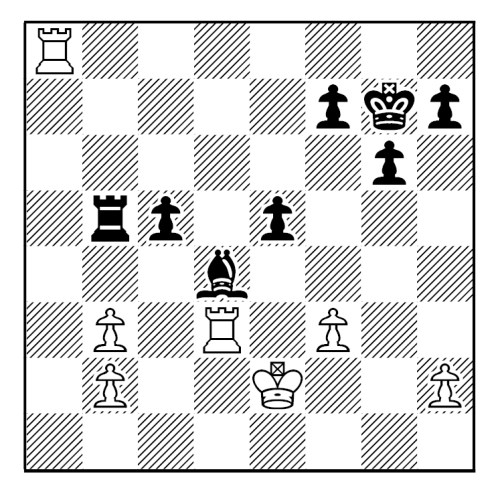
1.e4 e5 2.d4 exd4 3.c3 dxc3 4.Nxc3 (Hiderland, back in 1970, showed how 4.Bc4 cxb2 5.Bxb2 loses to 5…d5! 6.Bxd5 Bb4+ 7.Kf1 Nf6 8.Qa4+ Nc6 9.Bxc6+ bxc6 10.Qxb4 Qd1+! 11.Qe1 Ba6+ 12.Ne2 Bxe2+ -+.) 4…Bc5 5.Bc4 d6 6.Nf3 Nf6 7.O-O O-O 8.Bg5 Nbd7 9.Nd5 c6 (No player, carbon or silicon based, would want the White knight to remain on d5.) 10.Nxf6+ Nxf6 11.Qc2 Re8 12.Rfe1 Qc7 13.Bxf6 gxf6 14.Qd2 Kg7 15.b4 Bb6 16.Rad1 Be6 17.Bxe6 fxe6 18.Qxd6 Qxd6 19.Rxd6 Red8 20.Red1 (Not 20.Rxe6 because of 20…Kf7!) 20…Rxd6 21.Rxd6 Kf8 22.Kf1 a5 23.Rd7 axb4 24.Rxb7 Ra6 25.e5 fxe5 26.Ng5 h5 27.h4 Bd4 28.Nxe6+ Kg8 29.Rxb4 c5 30.Rb8+ Kf7 31.Nxd4 exd4 32.Rc8 Ra5 33.g4 hxg4 34.h5 Kg7 35.Rc6 Kh7 36.a4 d3 37.Ke1 Rxa4 38.Rxc5 Rd4 39.Rc6 d2+ 40.Kd1 Rf4 41.Kxd2 Rxf2+ (The game is completely even as both kings can’t capture the last pawn. Adjudicated as drawn.) 1/2-1/2


LEELENSTEIN-STOCKFISH
Blitz Game (5/2)
CCC 7: Blitz Bonanza Final
Chess.com, Apr. 6 2019
[C18]
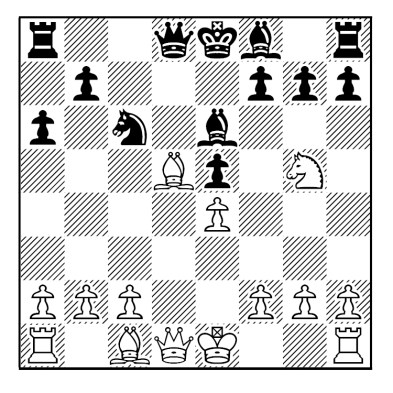
1.e4 e6 2.d4 d5 3.Nc3 Bb4 4.e5 c5 5.a3 Bxc3+ 6.bxc3 Qa5 7.Bd2 Qa4 8.h4 Ne7 9.Qg4!? (More usual is 9.Qb1) 9…Kf8 10.h5 h6 11.Rh3 [An interesting and short game was Frank B. Johnson (2191)-Benedict A. Smail (2120), PRO Chess League (Pacific), chess.com, Jan. 11 2017, which continued with 11.Qd1 Nbc6 12.Nf3 b6 13.Rh4 cxd4 14.Rb1 Ba6 15.Nxd4 Bc4 16.Bxc4 dxc4 17.Qf3 Rc8 18.Nxe6+ Kg8 19.Rg4 fxe6 20.Qf6 g5 21.Bxg5 Nxe5 22.Bxh6+ 1-0] 11…Nbc6 12.Qf4 b6 13.Rf3 Nd8 14.dxc5 Qxf4 15.Bxf4 bxc5 16.Be3 c4 17.Rh3 f6 18.f4 fxe5 19.fxe5 Nf7 20.Nf3 Nc6 21.Bf4 Ke7 22.Be2 [White has a slight advantage due to the better coordination of his pieces.] 22…Rg8 23.O-O-O Bd7 24.Nh4 Kd8 25.Ng6 a5 26.Rf1 Ne7 27.Bg4 Nxg6 28.hxg6 Nh8 29.Bh5 Kc7 30.Be3 Kc6 31.Rf7 a4 32.Rhf3 Nxf7 33.gxf7 Rh8 34.Bf2 Raf8 35.Bh4 g5 36.Bf2 Rh7 37.Bd4 Rhh8 38.Rf6 Kb5 39.Kd2 Kc6 40.Ke3 Kb5 41.Kf3 Kc6 42.Kg4 Bc8 43.Bg6 Bd7 44.Kh5 [White definitely has the advantage now thanks to his advanced pawn on f7. So how does he (it?) press the advantage?]
2019_04_18_A

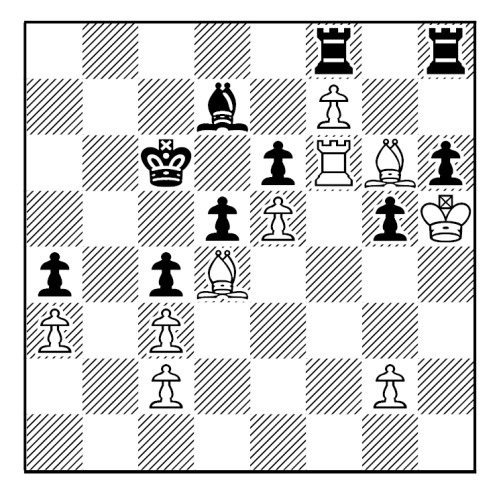
44…Kb5 45.g3 (Excellent! White just improves his position before starting any type of attack.) 45…Rb8 46.Rf1 Kc6 47.Rf6 Kb5 (Black does not mind repeating moves. But White is not going to let the win slip away with a draw.) 48.Rf1 Kc6 49.g4 Rbf8 50.Rb1 Ra8 51.Rb4 (White continues his to improve his position.) 51…Ra6 52.Bh7! Rf8 53.Kg6 Ra5 54.Rb6+! Kc7 55.Kg7 Raa8 [The win is (relatively) easy now.]
2019_04_18_B
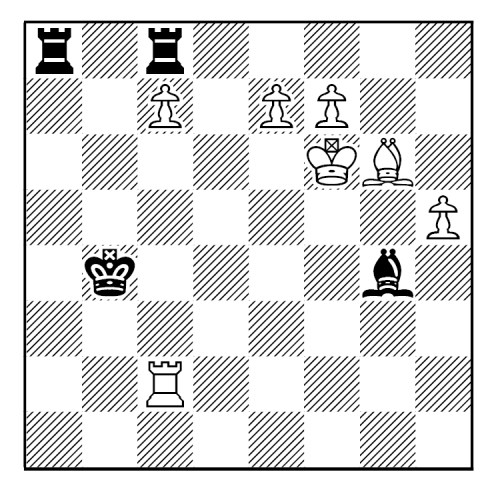
56.Bc5 Rfc8 57.Rd6 (Black’s rook wouldn’t mind moving to h8 and attempt to activate his kingside pawns with …h5, etc. But he can’t immediately move there; 57…Rh8? 58.Bg8! +-.) 57…Rcb8 58.Bg6 Rh8 59.Kf6 Rab8 60.Ra6 Rbc8 61.Ra7+ Kc6 62.Bd6 Rcd8 63.Rxa4 h5 64.gxh5 g4 65.Rb4 g3 66.Rb1 Bc8 67.Rg1 d4 68.Be4+ Kb5 69.a4+! Ka6 (Not 69…Kxa4? due to 70.Bc6+! Ka5 71.Bc5 threatening 72.Ra1#.) 70.Rxg3 d3 71.cxd3 Bd7 72.dxc4 Rc8 73.Rg7 Rcd8 74.c5 Rc8 75.Bd3+ Ka5 76.Rg4 Bc6 77.Rb4 Bd5 78.Rb6 Kxa4 79.c6 Bxc6 80.Rb4+ Ka3 81.Rb6+ Ka2 82.Bb1+ Ka1 83.Bg6 Bf3 84.c4 Ka2 85.Ra6+ Kb2 86.Rb6+ Kc3 87.c5 Ra8 88.c6 Rh6 89.Bb4+ Kd4 90.c7 Rhh8 91.Rd6+ Kc4 92.Rxe6 Kxb4 93.Rd6 Rhc8 94.e6 Kc5 95.Rd3 Be2 96.Rc3+ Kb4 97.Rc2 Bg4 98.e7
2019_04_18_C
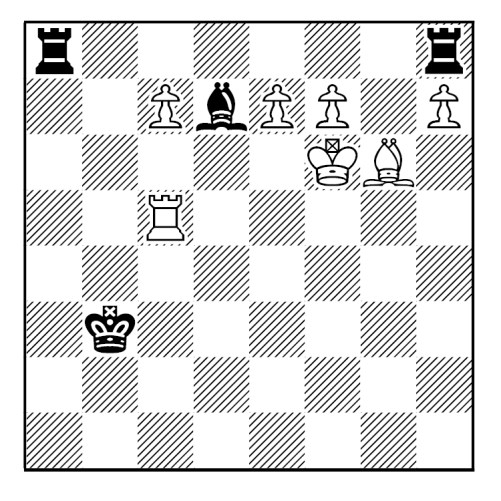
(An enviable position. Most players only dream about having three pawns on the seventh rank.) 98…Bd7 99.h6 (Shall we try for a fourth pawn on the seventh?) 99…Kb3 100.Rc5 Rh8 101.h7 (Got it!)
2019_04_18_D
101…Rac8 102.Be4 Kb4 103.Rc1 Ka5 104.Ke5 Bg4 105.Ra1+ Kb6 106.Rb1+ Ka5 107.Rb7 Rce8 108.c8=Q [White doesn’t want to give Black any counterplay (after …Rxe7+), even if it would cost him a queen or two. Still, it seems that 108.Kf6 is better.] 108…Rxc8 109.f8=Q Rcxf8 110.exf8=Q Rxf8 111.Rg7 Re8+ 112.Kf6 Bc8 113.Rg8 Re6+ 114.Kg5 Rxe4 115.h8=Q Rg4+ 116.Kh5 Rxg8 117.Qxg8 Ba6 118.Qb3 Bf1 119.Qa2+ Kb4 120.Qb1+ Ka3 121.Qxf1 Kb4 (White has a forced mate, was not in time trouble with the 2 second delay, and yet Black plays on.) 122.Kg4 Kc5 123.Qd3 Kb4 124.Kf5 Kc5 125.Ke5 Kc6 126.Qd5+ Kc7 127.Qb5 Kd8 128.Kd6 Kc8 129.Qb3 Kd8 130.Qb8mate 1-0

ODDS GAMES

Sometimes between players of unequal strengths, the stronger player offers advantages to the weaker player to make the game more even. These advantages include time odds (such as 5 minutes to 3 minutes in a speed game), draw odds (the weaker player is granted a win if the game was to end in a draw), or the choice of an opening. Even blindfold games and simuls can fall into this category.


But by far the most popular advantage utilized is the odds game. This is a game where the stronger player would take off a pawn, a piece, and even more, before the start of the game.


This advantage for the weaker player is hard to overcome if the game becomes closed. Which is why the stronger player goes for an open game, where tactics predominate, checkmates are sudden and quick, and there is a good chance for a brilliancy.


Enjoy the games below. They are all short, brilliant, and fun (as long as you are not on the losing side).


Remove all pieces inside the parenthesis before playing over the game.


~~~~~~~~~~~~~~~~~~~~~~~~~~


 McDonnell-Popert
England, 1830
(Nb1)
1.e4 e5 2.Nf3 Nc6 3.Bc4 Bc5 4.b4 [The Evans Gambit. Hard to defend with all the open lines even with all the pieces still on the board (an empty square means more movement for the bishops).] 4…Bxb4 5.c3 Bc5 6.O-O d6 7.d4 exd4 8.cxd4 Bb6 9.h3 h6 10.Bb2 Nf6 11.e5 dxe5 12.Ba3 e4 13.Qb3 Qd7 14.Ne5 Nxe5 15.dxe5 Nh5 16.Rad1 Qf5 17.Bxf7+ Qxf7 18.Rd8+ Kxd8 19.Qxf7 1-0


Smith-N.N.
London, 1852
(Nb1)
1.e4 e5 2.Nf3 d6 3.Bc4 c6 4.d4 Be6 5.Bg5 Qd7 6.Qe2 Bg4 7.dxe5 dxe5 8.Rd1 (One of the benefits of playing without the b1-Knight is that the a1-Rook can play to a center file a move earlier. As in this game. And the next two.)  8…Qc7

2019_04_11_A

9.Nxe5! Bxe2 10.Rd8+ Qxd8 11.Bxf7mate 1-0


Morphy-N.N.
New York, 1857
(Nb1)
1.e4 e5 2.Nf3 Nc6 3.d4 Nxd4 4.Nxe5 Ne6 5.Bc4 Nf6 6.Nxf7 Kxf7 7.Bxe6+ Kxe6 8.e5 Bc5 9.O-O Nd5 10.Qg4+ Kxe5 11.Bg5 Qf8 12.Rad1 Kd6 13.Qe4 Qf7 14.c4 Kc6 15.Rxd5 Kb6 16.Rxc5 c6 17.Qe5 Re8 1-0 (Black realizes he can’t stop the mate. After 18.Rb5+, he can only choose between being mated immediately with  18…cxb5 19.Qxb5#, or to prolong the agony with 18…Ka6 19.Ra5+ Kb6 20.Be3+! c5 21.Qxc5# )


 David Janowski-N.N.
Paris, 1895
(Nb1)
1.e4 e5 2.f4 exf4 3.Nf3 g5 4. Bc4 g4 5.O-O gxf3 6.Qxf3 Qf6 7.e5 Qxe5 8.d3 Bh6 9.Bd2 Ne7 10.Bc3 Qc5+ 11.Kh1 O-O 12.Rae1 d5 13.Qh5 f6 14.Rxe7 Qxe7 15.Bxd5+ Kg7 16.Re1 Qc5 17.Re5 Qf2 18.Rg5+ Bxg5 19.Qxg5+! Kh8 20.Qxf6+!! Rxf6 21.Bxf6mate 1-0


Morphy-N.N., 1850
(Ra1)
1.e4 e5 2.Nf3 Nc6 3.Bc4 Nf6 4.Ng5 d5 5.exd5 Nxd5 6.Nxf7 Kxf7 7.Qf3+ Ke6 8.Nc3 Nce7 9.O-O c6 10.d4 exd4 11.Re1+ Kd7 12.Nxd5 Nxd5 13.Bxd5 cxd5 14.Qxd5+ Kc7 15.Bf4+ Bd6 16.Qc5+ Kb8 17.Qxd6+ Qxd6 18.Bxd6mate 1-0


Morphy-N.N.
New Orleans 1858
(Ra1)
1.e4 e5 2.Nf3 Nc6 3.Bc4 Nf6 4.Ng5 d5 5.exd5 Nxd5 6.Nxf7 Kxf7 7.Qf3+ Ke6 8.Nc3 Nd4 9.Bxd5+ Kd6 10.Qf7 ($Ne4#) Be6 11.Bxe6 Nxe6 12.Ne4+ Kd5 13.c4+ Kxe4 14.Qxe6 Qd4 15.Qg4+ Kd3 16.Qe2+ Kc2 17.d3+ Kxc1 18.O-Omate! 1-0 (As far as it is known, this is the first time that a player has mated an opponent by castling. Note that this is the only move possible to mate.)


 Steinitz-N.N.
London, 1863
(Ra1)
1.e4 e5 2.Nc3 Nc6 3.f4 exf4 4.Nf3 Bb4 5.Nd5 Ba5 6.Nxf4 d6 7.c3 Bb6 8.d4 Bg4 9.Bb5 Kf8 10.O-O Ne5 11.Nxe5 Bxd1 12.Neg6+  1-0


Steinitz-N.N.
London, 1863
(Ra1)
1.e5 e5 2.Nf3 Nf6 3.d4 exd4 4.e5 Nd5 5.Qxd4 c6 6.Bc4 Qb6 7.Qe4 Bc5 8.O-O Ne7? 9.Ng5 g6 10.Nxf7 Rf8 11.Nd6+ Kd8 12.Qh4 Qc7

2019_04_11_B

13.Qxe7+! Kxe7 14.Bg5+ Rf6 15.exf6+ Kf8 16.Bh6mate 1-0


Tarrasch-Kelz
Nuremburg, 1890
(Ra1)
1.e4 e5 2.f4 exf4 3.Nf3 g5 4.Bc4 g4 5.O-O (Not satisfied at only being a Rook down, White sacrifices a Knight, This is known as the Muzio Gambit, usually played when White has a full set of pieces.) 5…gxf3 6.Qxf3 Qf6 7.Nc3 Qd4+ 8.Kh1 Qxc4 9.Qxf4 Ne7 10.Nd5 Nxd5 11.Qxf7+ Kd8 12.d3 Qc6 13.Bg5+ Be7 14.Qf8+ Rxf8 15.Rxf8mate 1-0


Morphy-T. Knight
New Orleans, 1856
(Ra1, Nb1)
1.e4 e5 2.f4 exf4 3.Nf3 g5 4.Bc4 Qe7 5.d4 d5 6.Bxd5 c6 7.Bxf7+ Qxf7 8.Ne5 Qf6 9.Qh5+ Ke7 10.h4 gxh4 11.O-O Bh6 12.b3 Nd7 13.Ba3+ c5

2019_04_11_C

14.Rd1! Nxe5 15.Bxc5+ Ke6 16.Qe8+ Ne7 17.d5mate 1-0 (Is this the first time that a Knight has been mated by a pawn?)


Barnes-N.N.
New York, 1877
(Ra1, Nb1)
1.e4 e5 2.d4 exd4 3.c3 dxc3 4.Bc4 Nc6 5.a3 Nce7 6.Nf3 a6 7.O-O b5 8.Ba2 c6 9.Ng5 Nh6 10.Qb3 Qa5 11.Re1 cxb2 12.Rd1 bxc1=Q (Black now has more pieces than at the beginning of the game.)

2019_04_11_D

13.Qxf7+ Nxf7 14.Bxf7+ Kd8 15.Ne6mate 1-0


Cochrane-N.N.
London, 1842
(Qd1)
1.e4 e5 2.f4 exf4 3.Bc4 Qh4+ 4.Kd1!? (This move is probably better than the usual 4.Kf1 in the Bishop’s Gambit. And it’s all possible due to White electing to play without his Queen in first place.)  4…Bc5 5.Nf3 Qd8 6.d4 Bb6 7.Bxf4 f6 8.e5 Ne7 9.exf6 gxf6 10.Nc3 Nbc6 11.Re1 Ba5 12.Ne4 Bxe1 13.Nxf6+ Kf8 14.Bh6mate 1-0


Zuckertort-N.N., 1860
(Qd1)
1.d4 d5 2.Bf4 Bf5 3.Nc3 Bxc2? (A move that only wastes time. Any developing move would have been better than the text.) 4.Rc1 Bg6 5.Nb5 Na6 6.Bxc7 Nxc7?? 7.Nxc7+ Kd7 8.e4 Rc8 9.Bb5+ Kd6 10.e5mate 1-0


Apscheneek-N.N.
Riga, 1934
(Qd1)
1.b3 e5 2.Bb2 d6 3.Nc3 Be7 4.O-O-O Nf6 5.f3 O-O 6.e3 c6 7.g4 h6 8.Nge2 Be6 9.Ng3 Nbd7 10.h4 Nh7 11.g5 hxg5 12.hxg5 Bxg5 13.Bd3 Bh6 14.Rdg1 d5 15.Nf5 Bxf5 16.Bxf5 Qf6 17.Bxd7 d4 18.exd4 exd4 19.Ne2 Qe7 20.Nxd4 Qxd7 21.Rxh6 Rad8 22.Rxg7+! (White is now a Rook and Queen down. But he’s not worried. The pieces may have been free, but he has a mate in three!) Kxg7 23.Nf5+ Kg8 24.Rg6+! fxg6 25.Nh6mate 1-0


E. Hearst-R.E.
Blitz Game, 1955
(Qd1, Ra1, Ng1)
1.b3 g6 2.Bb2 Nf6 3.e4 Bg7 4.h4 h5 5.g4 hxg4 6.h5

2019_04_11_E

6…Nxh5? 7.Bxg7 Nxg7? 8.Rxh8mate 1-0


The Daring Damiano

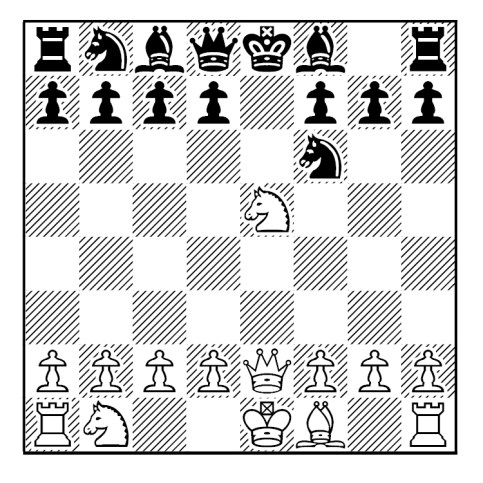
The Petrov (1.e4 e5 2.Nf3 Nf6) has a reputation for being drawish. But that doesn’t mean that there no pitfalls.


Let’s take a look at one of them, sometimes called “The Daring Damiano” (don’t ask me why).


The moves are 1.e4 e5 2.Nf3 Nf6 3.Nxe5 Nxe4. Although White has several moves available to choose from, he almost always chooses 4.Qe2. The main reason is that it activates his queen and he can quickly win the game if Black stumbles.


Let’s take a look at a common (at least among beginners) trap from this position and let’s call it “Ancient Chess Trap” (or ACT). The moves that make this (bad) variation are (in case you need review all the move so far) are : 1.e4 e5 2.Nf3 Nf6 3.Nxe5 Nxe4 4.Qe2, and now Black can lose quickly lose with 4…Nf6??

2019_03_28

5.Nc6+! +-


This trap is one worth remembering as it can come up in other openings and is a nice way to end a rated game early enough so you can enjoy playing blitz chess for the rest of the day.


After the better 4…Qe7, the game can continue with 5.Qxe4 d6 6.d4 dxe5 [Black almost has to take the pawn. After 6.d4 Nd7, White won nicely with 6.d4 Nd7 7.f4!? f6?! 8.Be2 fxe5 9.fxe5 dxe5 10.O-O exd4 11.Bh5+ Kd8 12.Bg5 Nf6 13.Rxf6 Qxe4 14.Rd6# 1-0 (Steinkuehler-Horwitz, Manchester 1961).] 7.Qxe5 Qxe5+ 8.dxe5 Bf5, giving Black a decent chance.

 
This was starting point for Hertan’s article in the February 1990 issue of Chess Life. By the way, his article was titled, “The Daring Damiano”. It may the first time anyone has used the term to describe this variation in the Petrov.


The big question here, is how should White continue? The answer is not clear.


9.Bb5+ doesn’t look so good after the obvious 9…c6. In addition, Sapfirov-Yaroslavsev, USSR 1971, continued with 9.Bb5+ Nd7!? 10.O-O Bxc2 11.Bf4 c6 12.Be2 Bf5 13.Nc3 Be7 = (ECO evaluation). So Black can at least equalize.

 
It turns out that 9.Bd3 is an error as Black can continue with 9.Bd3? Bxd3 10.cxd3 Nc6 and his development is no worse than White and Black may already have the advantage.


9.c3 has possibilities. After 9.c3 Nd7 10.f4 O-O-O 11.Be3 f6 (this move deserves either !? or ?!), Black won after 12.Be2 fxe5 13.O-O exf4 14.Rxf4 Re8 15.Rxf5 Rxe3 16.Bg4 h5 17.Kf2 Re4 18.Bh3 g6 19.Nd2 gxf5 0-1 (R. Oosting (1983)-FM S. Muehlenhaus (2199), HZ Open, Netherlands Aug. 6 2017).

 
Other games with 9.c3


Fridthjofsdottir-Canela
Thessaloniki Ol., 1984
1.e4 e5 2.Nf3 Nf6 3.Nxe5 Nxe4 4.Qe2 Qe7 5.Qxe4 d6 6.d4 dxe5 7.Qxe5 Qxe5+ 8.dxe5 Bf5 9.c3 Nd7 10.Bf4 O-O-O 11.Nd2 Bc5 12.Nb3 Bb6 13.Nd4 Bg6 14.O-O-O Rde8 15.Re1 Nc5 16.Bc4 Rhf8 17.Rd1 Re7 18.f3 Rfe8 19.Rhe1 Nd7 20.e6 fxe6 21.Bxe6 Kb8 22.Bxd7 Rxe1 23.Bxe8 Rxe8 24.Bg3 Kc8 25.Re1 Rxe1+ 26.Bxe1 Bxd4 27.cxd4 Kd7 28.Bg3 Bd3 29.Be5 Bf1 30.g3 Be2 31.Bxg7 Bxf3 32.Kd2 Ke6 33.Ke3 Bd5 34.a3 Kf5 35.Be5 c6 36.Bb8 a6 37.Kd3 Ke6 38.Kc3 Kd7 39.Kb4 b6 40.Kc3 Kc8 41.Be5 Kd7 42.Kd3 Ke6 43.Bc7 b5 44.Kc3 Kd7 45.Bb6 Be6 46.Kb4 Kd6 47.Ka5 Bc8 48.Bc5+ Kc7 49.Kb4 Bf5 50.Kc3 Kd7 51.Kd2 Ke6 52.Ke3 h5 53.Kf4 Kf6 54.Be7+ Kg6 55.Ke5 a5 56.Kd6 Be4 57.a4 bxa4 58.Bd8 Bd5 59.Bxa5 Kg5 60.h3 Kf5 61.g4+ 1/2-1/2


Herbrechtsmeier-Duerr
Badenweiler Open
Germany, 1988
1.e4 e5 2.Nf3 Nf6 3.Nxe5 Nxe4 4.Qe2 Qe7 5.Qxe4 d6 6.d4 dxe5 7.Qxe5 Qxe5+ 8.dxe5 Bf5 9.c3 Nd7 10.Bf4 O-O-O 11.Nd2 Re8 12.Nc4 f6 13.O-O-O fxe5 14.Bg3 g6 15.Bd3 Bg7 16.Bc2 h5 17.h4 Nc5 18.Rhe1 e4 19.Bf4 a6 20.Ne3 Rhf8 21.Bg3 Bh6 22.Kb1 Nd3 23.Nxf5 gxf5 24.Bxd3 exd3 25.Rxe8+ Rxe8 26.Rxd3 Re1+ 27.Kc2 Re2+ 28.Kd1 Rxb2 29.Rf3 Rd2+ 30.Ke1 Rxa2 31.Rxf5 Bd2+ 32.Kd1 Bxc3 33.Rf8+ Kd7 34.Rf7+ Ke6 35.Rxc7 Be5 36.Bxe5 Kxe5 1/2-1/2


Jolanta Zawadzka (243200-Ewa Harazinska (2310)
Polish Women’s Ch.
Poznan, Apr. 1 2016
1.e4 e5 2.Nf3 Nf6 3.Nxe5 Nxe4 4.Qe2 Qe7 5.Qxe4 d6 6.d4 dxe5 7.Qxe5 Qxe5+ 8.dxe5 Bf5 9.c3 Nd7 10.Bf4 O-O-O 11.Bc4 Nxe5 12.Bxe5 Re8 13.f4 f6 14.O-O fxe5 15.fxe5 Bc5+ 16.Kh1 Bxb1 17.Raxb1 Rxe5 18.Bd3 h6 19.b4 Be7 20.Bf5+ Kb8 21.Bg4 Bf6 22.Bf3 Re3 23.c4 Rd8 24.a4 c6 25.a5 Kc7 26.b5 cxb5 27.Rxb5 b6 28.c5 bxc5 29.Rxc5+ Kd6 30.Rc6+ Ke7 31.Rb1 Rd6 32.Rc7+ Rd7 33.Rc4 Rd4 34.Rcc1 Ra3 35.Rb7+ Rd7 36.Re1+ Kd8 37.Rb8+ Kc7 38.Rb7+ Kd8 39.Rb5 Bc3 40.Rb8+ Kc7 41.Rb7+ Kd8 42.Rb8+ Kc7 43.Rb7+ 1/2-1/2
White can offer a pawn with 9.Nc3. Black should not take it and play the most reasonable development move; 9…Nc6. The c-pawn is still vulnerable, and Black is free to castle queenside, giving his king safety and his activity to his rook.


Finally, White can sidestep this variation with 6.d4 dxe5 7.dxe5 Nc6. But that is for another post.

Swiss Gambit

Most players know of Froms’ Gambit [1.f4 e5 2.fxe5 d6 3.exd6 Bxd6 4.Nf3), with continuation of either 4…g5 (to drive away the knight) or 4…Nf6 (to defend and ready to redeploy the knight to g4 or e4)].


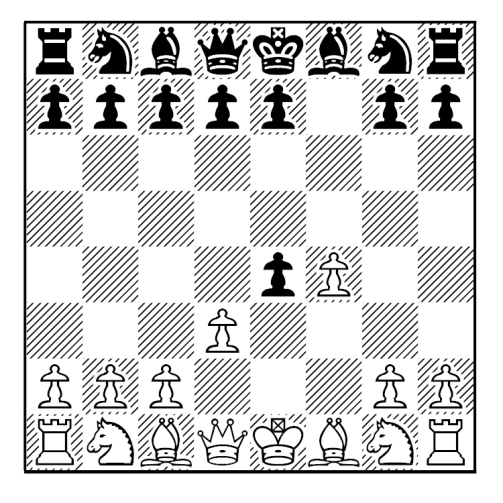
But White can also offer a similar gambit after 1.f4 f5 2.e4 fxe4 3.d3. This gambit is known as the Swiss Gambit. Because of its rarity, most players are not aware of it or it’s thematic ideas.


Let’s take a look the gambit after the opening moves (1.f4 f5 2.e4 fxe4 3.d3).

2019_03_14_a

If Black was to take the pawn, he would be a pawn up in the game. However, it would be hazardous to do so as both of White’s bishops (after 3…exd3 4.Bxd3) would be activated and his own kingside would be vulnerable. There are two things that slow down White’s attack. The first is the f-pawn, which unlike in the From’s Gambit (which does not have such an advanced pawn), blocks the bishop from going to f4 or g5. The second thing is that Black usually plays an early 4…Nf6, to stop the h5 checks.

 
Now, lets look at some games.


First, Black does not have to take the pawn. But such a plan can be risky as the d3-pawn can easily capture the e4-pawn and White has a nice center, without having to sacrifice a pawn.


Ranniku-Karakas
Briansk, 1965
1.f4 f5 2.e4 fxe4 3.d3 g6 4.dxe4 e5 5.Nf3 Nf6 6.Bc4 Qe7 7.Nc3 exf4 8.Qe2 d6 9.Bxf4 Be6 10.O-O-O Nc6 11.Bb5 Bd7 12.Bg5 Bg7 13.Nd5 Qd8 14.e5 dxe5 15.Nxe5 Nxe5 16.Qxe5+ Kf7 17.Nxf6 1-0


Priehoda (2404)-Cyprian
Kubin Open, 1978
1.f4 f5 2.e4 fxe4 3.d3 e3 4.Bxe3 Nf6 5.Nc3 d5 6.d4 Bf5 7.Bd3 e6 8.Nf3 c6 9.O-O Bb4 10.Ne2 Nbd7 11.Ng3 g6 12.Qe2 O-O 13.Bd2 Bxd2 14.Qxd2 Qc7 15.Rae1 Rae8 16.h3 b6 17.Nh1 Nh5 18.Ne5 Nxe5 19.fxe5 c5 20.Bb5 Rc8 21.g4 cxd4 22.gxf5 exf5 23.Qxd4 Rcd8 24.e6 Qe7 25.Bd7 Nf6 26.Qh4 Qc5+ 27.Nf2 Qe7 28.Nd3 Kg7 29.Qd4 Kh6 30.Ne5 Ne4 31.Qe3+ Kg7 32.Nc6 Qh4 33.Nxd8 f4 34.e7 Rf6 35.Qf3 Nd2 36.Qg4 1-0


Petran (2341)-Veselsky (2200)
Slovakia Ch.
Dolny Kubin, 1979
1.f4 f5 2.e4 fxe4 3.d3 Nf6 4.Nc3 e3 5.d4 e6 6.Bd3 Bb4 7.Bxe3 Bxc3+ 8.bxc3 O-O 9.Nf3 d6 10.O-O Nbd7 11.Bd2 Qe8 12.Qe2 Rf7 13.Rae1 Nf8 14.f5 h6 15.Nh4 Bd7 16.Qf3 Qc8 17.Qg3 Nh5 18.Qh3 Nf6 19.Ng6 N6h7 20.fxe6 Bxe6 21.Rxf7 Bxh3 22.Ree7 Nxg6 23.Rxg7+ Kf8 24.Ref7+ Ke8 25.Bxg6 1-0

 
If Black wants to decline the pawn offer, he must play an early …d5.


Heinola-Lehtivaara
Tampere Hervanta, 1987
1.f4 f5 2.e4 fxe4 3.d3 d5 4.dxe4 dxe4 5.Qxd8+ Kxd8 6.Nc3 Nf6 7.Be3 c6 8.Nge2 Bf5 9.O-O-O Nbd7 10.Bd4 Kc7 11.Ng3 e6 12.Be5+ Nxe5 13.fxe5 Ng4 14.Ncxe4 Nxe5 15.Be2 g6 16.h3 h5 17.Kb1 h4 18.Nxf5 gxf5 19.Ng5 Re8 20.Rhe1 Rh6 21.Rd2 Bc5 22.Bf1 Nd7 23.Bc4 e5 24.Red1 Nb6 25.Bb3 Be3 0-1


And he must play it accurately.


R. Oberlin-R. Berggren
US Open
Los Angeles, 1991
1.f4 f5 2.e4 fxe4 3.d3 d5 4.Nh3 Nf6 5.Nf2 exd3 6.Bxd3 Nc6 7.O-O b6? (This setup of the knight on c6 and the bishop going to b7 seems too slow and out of touch with a tactical opening such as this one. Black soon finds himself short of moves.) 8.Nd2 Bb7 9.Nf3 Qd7 10.Ng5 Nd8 11.Bxh7 e6 12.Bg6+ Ke7 13.Re1 Kd6 (Let the King Hunt begin!)

2019_03_14_b

4.f5 exf5 15.Nd3 Qa4 16.Bf4+ Kc6 17.Ne5+ Kc5 18.Qd2 d4 19.b4+! Kd5 20.c4+ 1-0


It is only after 1.f4 f5 2.e4 fxe4 3.d3 exd3 4.Bxd3 Nf6 that the real battle begins.

De Groot-Anderssen
Amsterdam, 1875
1.f4 f5 2.e4 fxe4 3.d3 exd3 4.Bxd3 Nf6 5.Nf3 e6 6.Nc3 Be7 7.Ne4 Nc6 8.c3 d6 9.Nfg5 Nxe4 10.Nxe4? (>Bxe4) 10…g6 11.Qe2 e5 12.O-O Bf5 13.Ng5 Bxd3 14.Qxd3 Bxg5 15.fxg5 Qe7 16.Qh3 Qd7 17.Be3 Qxh3 18.gxh3 0-1


After the moves 1.f4 f5 2.e4 fxe4 3.d3 exd3 4.Bxd3 Nf6 5.Nf3 e6, White has three excellent choices of 6.Ng5 (A brazen attempt at an attack, probably best for a blitz game), 6.Ne5 (a more cautious and shy approach to an attack), and 6.Be3 (a developing move that allows White to castle queenside if the need arises).


Bird+Dobell-Gelbfuhs
Vienna, 1873
1.f4 f5 2.e4 fxe4 3.d3 exd3 4.Bxd3 Nf6 5.Nf3 (a very good move as the knight usually finds itself involved in White’s attack.) 5…e6 (this move is the most common as it allows his bishop to develop and bolsters his defense of his weak point on f7.) 6.Ng5!? g6 (not 6…Bc5? because of 7.Bxh7 Kf8 8.Nxe6+, winning) 7.h4 Bh6 8.h5 Bxg5 9.fxg5 Nd5 10.hxg6 Qe7 11.Rxh7 Rxh7 12.gxh7 Qb4+ 13.Kf1 Qh4 14.Bg6+ Ke7 15.Qh5 1-0


Popp-Jørgensen
corres.
IECC, 2000
1.f4 f5 2.e4 fxe4 3.d3 exd3 4.Bxd3 Nf6 5.Nf3 d6 6.Ng5 c6 7.h4 Bg4 8.Be2 Bxe2 9.Qxe2 g6 10.Qe6 Qa5+ 11.Bd2 Qf5 12.Qf7+ Kd7 13.h5 gxh5 14.Rxh5 Qc5 15.Rh1 Qxc2 16.Ne6 Qe4+ 0-1


Christian Maltais (2134)-Daniel J. Freire (2047)
corres.
DE10A /pr 48
ICCF, 2016
1.f4 f5 2.e4 fxe4 3.d3 exd3 4.Bxd3 Nf6 5.Nf3 e6 6.Ng5 d5 7.Qe2 Bc5 8.Nd2 O-O 9.Ndf3 Qd6 10.h4 Nc6 11.c3 h6 12.Ne5 hxg5 13.hxg5 Ne4 14.Bxe4 dxe4 15.g6 Rf5 16.Nf7 Rxf7 17.Qh5 Qf8 18.Qh8mate 1-0


Ivar Jakobsson-Hakan Johansson
Stockholm, 1974
1.f4 f5 2.e4 fxe4 3.d3 exd3 4.Bxd3 Nf6 5.Nf3 e6 6.Ne5 d6 7.O-O b6 8.Ng4 Ba6 9.Nxf6+ Qxf6 10.Re1 Bxd3 11.Qxd3 Nc6 12.Qf3 Kd7 13.Nd2 d5 14.c4 Bc5+ 15.Kh1 Nd4 16.Qh3 Rae8 17.cxd5 Nc2 18.Ne4 Qh6 19.dxe6+ Kc8 20.Qf3 Kb8 21.Nxc5 bxc5 22.Qb3+ Nb4 23.a3 a5 24.axb4 cxb4 25.Rxa5 1-0


Schirmer-Schleipen, 1956
1.f4 f5 2.e4 fxe4 3.d3 exd3 4.Bxd3 Nf6 5.Nf3 e6 6.Be3 Be7 7.O-O O-O 8.Nbd2 Nd5 9.Ng5 Bxg5 10.fxg5 Rxf1+ 11.Nxf1 Nxe3 12.Bxh7+ Kf8 13.Nxe3 Qxg5 14.Qf3+ Qf6 15.Qh5 Ke7 16.Rf1 Qh6 17.Qf7+ Kd6 18.Rd1+ Kc6 19.Be4+ d5 20.Bxd5+ exd5 21.Qxd5+ Kb6 22.Nc4+ 1-0

A Remarkable Move in the Gruenfeld.

There is a remarkable opening move which looks like a White blunder in the Gruenfeld.


And it goes like this:


1.d4 Nf6 2.c4 g6 3.Nc3 d5 4.cxd5 Nxd5 5.Na4!?


Here’s a diagram.

2019_02_21_A

Bringing up the question, “What benefit(s) does White attain with his knight sitting idly and alone on a4?”


Well, for one, after White gets around with .e4, the Black’s knight has to move. His usual move of …Nxc3 is out of the question as White has no piece or pawn on c3. So where does Black’s knight then move? If …Nf6, then he invites .e5. And …Nb4 puts his knight out of play and is subject to .c3. So …Nb6 is practically forced, where it is partly out of play and but no pawn is threatening it.


The second benefit White has is that with the knight out of the way, his queenside is open for his other pieces, not to mention he can now play .c4 at some point. In fact, most of the action that originates from this bizarre knight move is of a queenside nature.


The earliest master game with this move can be found in the following game.


Ashot Nadanian (2325)-Varuzhan Akobian (2270)
Armenia, 1996
1.d4 Nf6 2.c4 g6 3.Nc3 d5 4.cxd5 Nxd5 5.Na4 e5 6.dxe5 Bb4+ 7.Bd2 Ne3 8.fxe3 Bxd2+ 9.Qxd2 Qh4+ 10.g3 Qxa4 11.Qd4 Qa5+ 12.b4 Qb6 13.Bg2 O-O 14.Rc1 Be6 15.a4 c6 16.Nf3 Rd8 17.Qf4 Na6 18.Rb1 c5 19.b5 Nb4 20.Qh6 Nc2+ 21.Kf2 c4 22.Rbc1 Bf5 23.Rxc2 Bxc2 24.Ng5 Qc7 25.Qxh7+ Kf8 26.Ne6+ 1-0


Here’s some later games showing White’s attacking possibilities.


Alexander Naumann (2385)-Alexander Lytchak (2390)
German U20 Ch.
Apolda, 1997
1.d4 Nf6 2.c4 g6 3.Nc3 d5 4.cxd5 Nxd5 5.Na4 Bg7 6.e4 Nb6 7.Be3 O-O 8.Rc1 f5 9.exf5 Bxf5 10.Nc5 Qd5 11.a4 Nc6 12.Ne2 Nc4 13.Nf4 Nxe3 14.fxe3 Qd6 15.Bc4+ Kh8 16.O-O e5 17.Nfe6 Bh6 18.Rc3 Bxe6 19.Nxe6 Rxf1+ 20.Qxf1 Qe7 21.Ba2 Rc8 22.d5 Nd8 23.d6 1-0


Stepan Lobanov-Leonid Sharikov
Novokuznetsk Open, 1998
1.d4 Nf6 2.c4 g6 3.Nc3 d5 4.cxd5 Nxd5 5.Na4 Bg7 6.e4 Nb6 7.Be3 O-O 8.Nf3 Nxa4 9.Qxa4 c5 10.Rd1 cxd4 11.Nxd4 Qe8 12.Qa3 a6 13.Nb5 Be5 14.Bh6  Bd7 15.Bxf8 Nc6 16.Nc7 Bxc7 17.Bh6 Bd6 18.Qd3 Nb4 19.Qc3 f6 20.Bc4+ +/- Kh8

2019_02_21_B

21.Rxd6! Nc2+ 22.Kd2! b5 23.Rxf6 1-0


Szabolcs Laza, (2173)-Anita Gara (2385)
Hungary Team Ch., Dec. 17 2017
1.d4 Nf6 2.c4 g6 3.Nc3 d5 4.cxd5 Nxd5 5.Na4 Bg7 6.e4 Nb6 7.Be3 O-O 8.Nf3 Bg4 9.Nc5 Nc6 10.Nxb7 Qb8 11.Ba6 e5 12.d5 Nb4 13.Nc5 N6xd5 14.Bb7 Nxe3 15.fxe3 Bxf3 16.gxf3 Rd8 17.Qb3 Bf8 18.Bxa8 Bxc5 19.Bd5 Nxd5 20.exd5 Qxb3 21.axb3 Bxe3 22.Ke2 Bd4 23.Rhd1 Rxd5 24.Rxa7 Rb5 25.Ra8+ Kg7 26.Rd3 c5?! (Black’s bishop is on an overwhelming square overlooking everything in front of it, and because it is supported by two black pawns means it is not forced off going to be driven off its awesome square. Unfortunately, it also means the Bishop can’t move backwards, which make a difference in this endgame.)

2019_02_21_C
27.Ra6 h5 28.h3 Rb7 29.Rc6 Kh6 30.h4 Kg7 31.Rc8 f6 32.Rc6 g5 33.hxg5 fxg5 34.Re6 h4 35.Kf1 Ra7 36.b4 cxb4 37.Rb3 h3 38.Rxb4 g4 39.fxg4 Ra1+ 40.Ke2 h2 41.Rb7+ Kf8 42.Rf6+ Ke8 43.Re6+ Kd8 44.Rg6 Re1+ 45.Kd2 Rd1+ 46.Kc2 Rc1+ 47.Kb3 Rc7 48.Rg8+ Kd7 49.Rxc7+ Kxc7 50.Rh8 Bg1 51.g5 e4 52.g6 e3 53.Kc2 e2 54.Kd2 Bd4 55.Rxh2 Bxb2 56.g7 1-0


However, the move 5.Na4 remained under the radar for years. Until it was played by a three-time challenger of the World Championship who played it a European Zonal Tournament.


GM Korchnoi (2625)-GM Emil Sutovsky (2575)
European Zonal
Dresden, Germany, 1998
1.d4 Nf6 2.c4 g6 3.Nc3 d5 4.cxd5 Nxd5 5.Na4!? Bg7 6.e4 Nb6 7.Be3 O-O 8.Nf3 Nxa4 9.Qxa4 c5 10.Rd1 Qb6 11.Rd2! (This TN is such a good move that it became part of theory.) 12…Bd7 12.Qa3 cxd4 13.Nxd4 Qc7 14.Be2 e5?! 15.Rc2 Qd8 16.Nb5 Nc6(16…Bc6 17.O-O Bxe4 18.Rd2!) 17.Nd6 Qb8 18.Bc4 Nd4 19.Bxd4 exd4 20.O-O Be6 (20…Be5? 21.Nxf7! and White’s attack comes first and fast.) 21.Bxe6 fxe6 22.Rfc1 Be5 23.Rc7 Bxd6 24.Qxd6 Rf7 25.Qxe6 1-0


And now everyone seemed to take notice.


GM T. Gareev (2614)-Ge. Antal (2519)
US Open
Irvine, CA, Aug. 2 2010
1.d4 Nf6 2.c4 g6 3.Nc3 d5 4.cxd5 Nxd5 5.Na4 Bg7 6.e4 Nb6 7.Be3 O-O 8.Nf3 Nxa4 9.Qxa4 c5 10.Rd1 Qb6 11.Rd2 Bd7 12.Qa3 cxd4 13.Nxd4 Qc7 14.Be2 Bc6 15.f3 Be5 16.g3 Bd6 17.Qc3 Rc8 18.Kf2 Na6 19.Nxc6 Qxc6 20.Qxc6 Rxc6 21.Bb5 Rc7 22.a3 Bc5 23.b4 Bxe3+ 24.Kxe3 Rac8 25.Rhd1 Nb8 26.Rd8+ Kg7 27.f4 f6 28.e5 fxe5 29.fxe5 a6 30.Ba4 a5 31.bxa5 Rc3+ 32.Kd2 Rxd8+ 33.Kxc3 Rc8+ 34.Kb4 Na6+ 35.Kb5 Rc6 36.Bb3 Nc7+ 37.Ka4 Rc5 38.Rd7 Kf8 39.Rd8+ Kg7 40.Rc8 g5 41.Bd5 Rxd5 42.Rxc7 Rxe5 43.Rxb7 Re4+ 44.Rb4 Re6 45.Kb5 Re3 46.a4 1-0


GM Hao Wang (2736)-GM F. Caruana (2779)
FIDE GP
Paris, Sept. 23 2013
1.d4 Nf6 2.c4 g6 3.Nc3 d5 4.Nf3 Bg7 5.cxd5 Nxd5 6.Na4 O-O 7.e4 Nb6 8.Be3 Nxa4 9.Qxa4 c5 10.Rd1 Qb6 11.Rd2 Bd7 12.Qa3 cxd4 13.Nxd4 Qc7 14.Be2 Bc6 15.O-O Bxe4 16.Nb5 Qc6 17.f3 Bd5 18.Qxe7 Re8 19.Qg5 Na6 20.Qxd5 Qxd5 21.Rxd5 Rxe3 22.Bc4 Re7 23.Rd2 Bh6 24.f4 Nc5 25.g3 a5 26.Rd5 Ne4 27.Rfd1 Bf8 28.Rd8 Rxd8 29.Rxd8 Kg7 30.Kg2 Nf6 31.Kf3 Rd7 32.Rxd7 Nxd7 33.Nc7 Bc5 34.Bb5 Nf6 35.Ne8+ Nxe8 36.Bxe8 Kf8 37.Bb5 Kg7 38.Be8 Kf8 39.Bb5 Kg7 40.Ke4 1/2-1/2


Saric (2425)-Bo Vujacic (2269)
Serbian Team Ch.
Palic, Sept. 4 2014
1.d4 Nf6 2.c4 g6 3.Nc3 d5 4.cxd5 Nxd5 5.Na4 Bg7 6.e4 Nb6 7.Be3 O-O 8.Nf3 Nxa4 9.Qxa4 c5 10.Rd1 Qb6 11.Rd2 Bd7 12.Qa3 cxd4 13.Nxd4 Qc7 14.Be2 Bc6 15.O-O e5 16.Nb5 Bxb5 17.Bxb5 Nc6 18.Rc1 Rfd8 19.Rdc2 Bf8 20.Qa4 Qd6 21.Bc5 Qf6 22.Bxc6 Bxc5 23.Rxc5 Rd2 24.Rf1 bxc6 25.Rxc6 Qg5 26.Rc2 Rd4 27.Qa5 Qf4 28.Re2 Rxe4 29.Rxe4 Qxe4 30.Re1 Qc4 31.b3 Qc2 32.Rxe5 Rc8 33.h3 Qb2 34.g3 h5 35.Re1 h4 36.g4 Qd4 37.Qe5 Qd2 38.Qe2 Qc3 39.Qe3 Qa5 40.Re2 Rc3 41.Qe8+ Kg7 42.Qe5+ Qxe5 43.Rxe5 Rxh3 44.Ra5 Rf3 45.Kg2 Rf4 46.g5 a6 47.Rxa6 Rg4+ 48.Kh3 Rxg5 49.Kxh4 Rg2 50.f3 f5 51.Kh3 Rg1 52.Kh2 Rb1 53.Kg3 g5 54.Kf2 f4 55.Ke2 Kf7 56.Rd6 Ke7 57.Rd1 Rb2+ 58.Rd2 Rb1 59.Rd1 Rb2+ 60.Rd2 Rb1 61.Kd3 Ke6 62.Ke4 Re1+ 63.Kd4 Rf1 64.Rd3 Kf5 65.a4 Ra1 66.Kc5 g4 67.fxg4+ Kxg4 68.Rd8 f3 69.Rf8 Kg3 70.Rg8+ Kh3 71.Kb5 f2 72.Rf8 Kg2 73.a5 f1=Q+ 74.Rxf1 Kxf1 75.a6 Ke2 76.b4 Kd3 77.Kb6 Kc4 78.b5 Ra2 1/2-1/2


It may be that Black can force a draw. But he has to work for it. Maybe you can find some improvements for White.


1 Q vs. 2 R

I like heavy endings, that is with queens and rooks. Not too many books deal with these types of endings, leaving the student with many questions unanswered.


Here is one type that interests me. It comes in form of a question.


Which is stronger in the endgame, a queen or two rooks? Here’s an introduction.


Let’s first look at four well-established guidelines for these types of endings.


(1) If the rooks are not connected, then the side with the single queen has the advantage.


(2) If the rooks are connected, then that side has the advantage.


(3) The advantage always lies with the player who has the initiative.


(4) Having the advantage that does not mean that side can win the game.


Here’s the first example.


Wilson-Thompson
Detroit, 1990
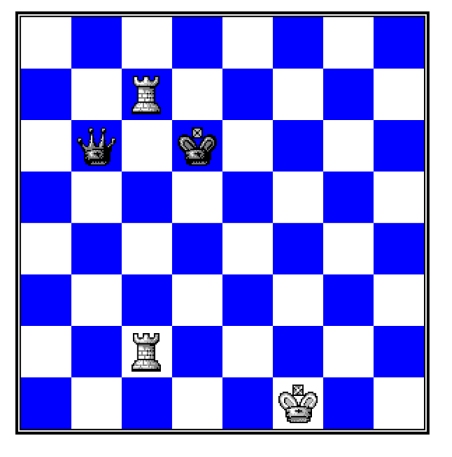
[White, with the single queen, is the one with the initiative but cannot break through the Black’s defence. Neither side is in real danger as Queen versus two connected Rooks endings, with nothing else on the board, are almost always drawn.]
1.e4 e5 2.Nf3 Nc6 3.Bc4 Nf6 4.Ng5 d5 5.exd5 Na5 6.Bb5+ c6 7.dxc6 bxc6 8.Qf3 Rb8 9.Bxc6+ Nxc6 10.Qxc6+ Nd7 11.d4 Be7 12.Nf3 Rb6 13.Qa4 exd4 14.O-O (Tempting is 14.Nxd4. But after 14… Rb4 15.Nc6 Rxa4 16.Nxd8 Bxd8, Black wins a piece. And after 14.Qxd4 O-O 15.O-O Bc5, White’s queen gets kicked around.) 14…O-O 15.a3 Bf6 16.b4 Ba6 17.Re1 Bc4 18.Qxa7 Qc8 19.Bf4 Rb7 20.Qa5 Bb5 21.Bg5 Bxg5 22.Nxg5 Nb8 23.Ne4 Nc6 24.Nd6 Qd7 25.Qxb5 [Surely better is 25.Nxb5 Ra7 (25…d3 26.cxd3 Rxb5 27.Qxb5 Qd4 28.Nd2) 26.Qb6 Rb8 27.Qc5 +-] 25…Rxb5 26.Nxb5 Nxb4 27.Nxd4 Qxd4 28.c3 Qf6 29.axb4 g6 30.Ra2 Rd8 31.Rc2 Qe6 32.Rec1 Qe4 33.Nd2 Qe2 34.Nf1 Qb5 35.Rb2 Qg5 36.Rbb1 f5 37.c4 f4 38.Rc3 Qf5 39.Rbc1 Rb8 40.Rb3 Qg5 41.Rcb1 Qf5 42.c5 g5 43.h3 h5 44.c6 Qb5 45.Rc3 Kf7 46.Rc5 Qd3 47.c7 Rc8 48.Rbc1 g4 49.R1c3 Qb1 50.hxg4 hxg4 51.R5c4 Qf5 52.g3 fxg3 53.Nxg3 Qd5 54.Rc5 Qd1+ 55.Kg2 Qa4 56.b5 Qa8+ 57.Kg1 Ke6 58.Rc6+ Kd7 59.Ne4 Qa1+ 60.Kg2 Qb1 61.Nf6+ Ke7 62.b6 Rh8 63.Rc1 (63.Nd5+ Kf7 64.Rf6+ Kg7) 63…Qf5 64.Ng8+ Rxg8 65.c8=Q Rxc8 66.Rxc8 Qf3+ 67.Kg1 g3 68.R8c7+ Kd6 69.R1c2 gxf2+ 70.Kf1 Qd3+ 71.Kxf2 Qd4+ 72.Kf1 Qxb6

 2019_02_07_A

 73.R7c3 (Simply 73.Rc6+ draws.) 73…Qb5+ 74.Ke1 Qe5+ 75.Kd1 Qh5+ 76.Re2 [76.Kc1 Qh1+ (76…Qg5+ 77.Kd1 Qg1+ 78.Kd2 Kd5 79.Rc5+ Kd4 80.R5c4+ Kd5 81.Rc5+) 77.Kb2 Qb7+ 78.Kc1]76…Qh1+ 77.Kc2 Qa1 78.Rd3+ Kc5 79.Rb3 Qa2+ 80.Rb2 Qa4+ 81.Kc1 Qa1+ 82.Kc2 Qa4+ 83.Kd2 Qd4+ 84.Kc1 Qf4+ 85.Kb1 Qf1+ 86.Ka2 Qf7+ 87.Rb3 Qa7+ 88.Kb2 Qg7+ 89.Rc3+ Kb4 90.Re4+ Kb5 91.Rc4 Qe5 92.Rc8 [Again, a simple draw can be found with a check (92.Rc5+ =)]92…Qe2+ 93.Rc2 Qe5+ 94.Kb1 Qe1+ 95.Kb2 Qe5+ 96.R2c3 Qe2+ 97.Ka3 Qe7+ 98.Ka2 Qe2+ 99.Rc2 (99.Rc5+ is yet another draw.) 99…Qe6+ 100.Kb1 Qe1+ 101.Kb2 Qe5+ 102.R2c3 Qe2+ 103.Kb1 Qe1+ 104.Ka2 Qe2+ 105.Rc2 Qe6+ 106.Kb1 Qe1+ 107.Rc1 Qe4+ 108.R8c2 (Passive, but still enough to draw. 108.R1c2 is better, as White still has a possible check if necessary.) 108…Kb4 109.Ka1 Qd4+ 110.Ka2 Qd5+ 111.Kb1 Qd3 112.Kb2 Qd4+ 113.Ka2 Qd5+ 114.Ka1 Qd4+ 115.Kb1 Qd3 116.Kb2 Qd4+ 117.Kb1 Qd3 118.Kb2 Qd4+ 119.Ka2 Qd5+ 120.Kb1 Qd3 1/2-1/2


Adding a single pawn to either side obviously increases the chances for that side. The plan should always try to push the pawn towards a promotion.


Adding two isolated pawns to the side with the Queen, the result is almost always a win, even without a promotion.


Lausch-Zajontz
corres., 1991
1.e4 e5 2.Nf3 Nc6 3.Bc4 Bc5 4.c3 Nf6 5.d4 exd4 6.cxd4 Bb4+ 7.Nc3 Nxe4 8.O-O Bxc3 9.d5 Bf6 10.Re1 Ne7 11.Rxe4 d6 12.Bg5 Bxg5 13.Nxg5 h6 14.Qe2 hxg5 15.Re1 Kf8 16.Rxe7 Be6 17.Rxe6 fxe6 18.dxe6 Qf6 19.e7+ Ke8 20.Qc2 c6 21.Ba6 bxa6 22.Qxc6+ Kf7 23.Qd5+ Kg6 24.Re6 Rae8 25.Qxd6 Kf7 26.Rxf6+ gxf6 27.Qxa6 Rxe7 28.g3 Rc7 29.Qd6 Rhc8 30.Qd4 Rc1+ 31.Kg2 R8c7 32.h4 gxh4 33.Qxh4 R1c2 34.g4 Kg7 35.g5 fxg5 36.Qxg5+ Kf8 37.Qd8+ Kf7 38.b4 Ke6 39.Qg8+ Kf6 40.Qd5 Rg7+ 41.Kf3 Rcc7 42.Kf4 Rge7 43.a4 Kg7 44.b5 Kf8 45.f3 Ke8 46.a5 Rf7+ 47.Kg3 Rg7+ 48.Kf2 Rc2+ 49.Ke3 Re7+ 50.Kd3 Rcc7 51.Qg8+ Kd7 52.b6 axb6 53.axb6 Rb7

  2019_02_07_B

54.Qd5+ Ke8 55.Qc6+ Rbd7+ 56.Kc4 Kf8 57.f4 Rf7 58.f5 Kg7 59.Qg6+ Kf8 60.f6 Rb7 61.Qh6+ Kg8 62.Qg5+ Kf8 63.Qe5 Kg8 64.Kc5 Rf8 65.Qd5+ Rff7 66.Qf3 Kh7 67.Qg2 Kh6 68.Kc6 Rh7 69.Kd5 Rhf7 70.Ke6 1-0


GM Jansa (2455)-GM A. Soklov (2570)
Gausdal, 1990
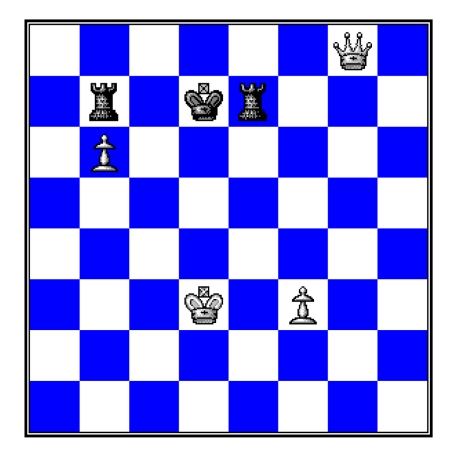
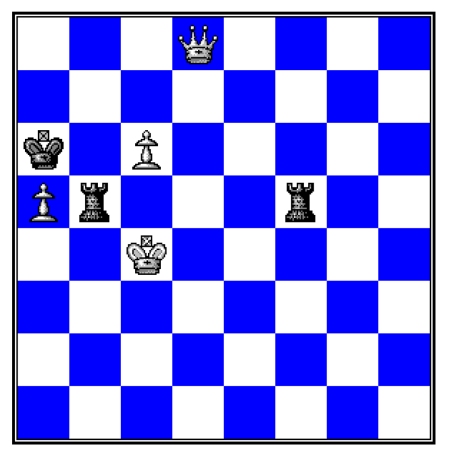
[It would be hard to expand on the notation. GM Jansa annotated this ending in I/50, Ending # 13.]


2019_02_07_C

1…Ka7! [1…Rfc5+ 2.Kd4 Rxa5 (2…Ka7 3.Qe7+ +-) 3.Qa8+ +- ; 1…Rf4+? 2.Kd3 +-] 2.a6!? [2.c7 Rfc5+ 3.Kd4 Rd5+! 4.Qxd5 Rxd5+ 5.Kxd5 Kb7 6.Kd6 Kc8= ; 2.Qe7+ Ka6 3.c7 Rfc5+ 4.Kd4 Rd5+ 5.Ke4 Re5+ 6.Qxe5 Rxe5+ 7.Kxe5 Kb7=] 2…Rfc5+ (2…Kxa6? 3.Qa8+ Kb6 4.Qb7+ +- ; 2…Rbc5+? 3.Kd4 Kxa6 4.Qa8+ Kb6 5.Qb7+ Ka5 6.c7 +-) 3.Kd4 Kxa6? [3…Rxc6? 4.Qd7+ Kb6 5.Qb7+ ; 3…Rc1? 4.Qe7+! Kxa6 (4…Ka8 5.c7 +-) 5.Qa3+ +- ; 3…Rc2! 4.Qe7+ (4.c7 Rbc5= ; 4.Qc8!? Rbb2!=) 4…Kxa6 5.c7 Rbc5 6.Qxc5 Rxc5 7.Kxc5 Kb7=] 4.Qa8+ Kb6 5.Qb7+ Ka5 6.Qa7+ Kb4 7.Qe7! (7…Ra5 8.c7) 1-0


With two isolated pawns with the two rooks, a win for that side is the most likely outcome. But examples are hard to find. We’ll cover more in a later post.

Najdorf Thematic, part 2

As mentioned before, I have entered into Najdorf Thematic Tournament at chess.com. I have advanced to the next round; it seems my Sozin variation is scoring some delightful wins for me.


Here’s one of them from the second round.


Escalante-“KINGLOU” (1546)
Thematic Tournament – Sicilian Najdorf, 2nd round
chess.com, 2018
[Escalante]
1.e4 c5 2.Nf3 d6 3.d4 cxd4 4.Nxd4 Nf6 5.Nc3 a6 6.Bc4 e5 [This move looks weak as it opens the diagonal for the bishop, but the nut is not so easy to crack. Black must be willing to have doubled pawns on the e-file (after …Be6) and suffer the difficulties of his pawn structure in coordinating his pieces.] 7.Nf3 (7…Nf5 eliminates much of Whites’s pressure  after 7…Bxf5. 7.Nde2 is the more positional approach. 7.Nf3 resembles a Two Knight’s Defence, something I more familiar with.) 7…Nc6 (7…Be7 is better as it would have allowed 8….O-O after 8.Ng5.} 8.Ng5 {This position is now very similar to the Two Knight’s Defence, where Black is forced to give to give up a pawn. However, in this game, White already has the greater mobility, coordination, and the initiative.) 8…d5 9.Nxd5 Nxd5 10.Bxd5 Be6 (White has a strong tactical response to Black’s lack of development.)

2019_01_31_a

11.Nxe6! fxe6 12.Bxc6+ bxc6 13.Qh5+ g6 14.Qxe5 Rg8 [Better is 14… Kf7 15.O-O (15.Bg5?! Be7 and Black’s king, despite not being able to castle, will be safe on the kingside) Bg7 16.Qf4+ Qf6 17.Qc7+ Qe7 18.Qxc6 Rhc8 19.Qa4 and White remains on top.] 15.Qxe6+ Qe7 16.Qxg8 Qxe4+ 17.Be3  O-O-O (Black’s best move; everything else loses faster.) 18.O-O Bd6 19.Qb3! (19.Qxh7? is a mistake due to 19…Be5 with the idea of …Rh8.) 19…Qe5 20.g3 h5 21.Qb6 Kd7 22.Qb7+ Bc7 23.Bf4 Qa5 (Better, but still losing is 23…Rb8 24.Rad1+ Ke7 25.Qxc6 Rb6 26.Qd7+ Kf6 27.Bxe5+ Bxe5 28.Qd8+) 24.Rad1+ Ke7 25.Bxc7!

2019_01_31_b

1-0

Thinking of Jimmy Quon

This morning I was thinking of Jimmy Quon. For those who don’t know was one of the nicest chess players you could ever meet and he achieved his Master title while he was in his late teens.


But I have to admit I didn’t like him when we first met. I thought him to be arrogant and more than slightly condescending.


It was when Jimmy found out that I was analyzing some sharp, tactically rich variations of the Two Knights Defence games that we became friends. He was impressed by some of the lines, and more importantly, how well I could come up with responses to some interesting problems of the variations.


You see, both Jimmy and I were interested in studying and playing tactical games. Which would greatly serve us in a tournament at Cal Tech.


Siamese chess is an extremely tactical variant of chess that be defined as “a variation with two boards, four players, and general mayhem”.

 
Jimmy and I studied for this tournament. And won it with a score of 19-1. The lone loss was due to one of the players telling my opponent a winning move in a complicated position.


He, the kibitzer, was immediately condemned by the organizer, the TD (amazing he even spoke up in front of them), the other players who were watching the game, and his own teammates.


He was not on good terms with most players before this event and was on bad terms after this event.


I remembered running into Jimmy on a Wednesday night, just before the American Open (held every Thanksgiving weekend). I had to smile when I saw him playing a TN in a Siamese game, a variation we had studied for the Cal Tech tournament.


I lost contact with him for a while. I found out he was teaching at San Diego and I was proud he did was doing something he liked. His subject, by the way, was teaching chess.


Jimmy suffered a ruptured brain aneurysm in 2010. It was one of those cases in which you had only hours to live. It happened so fast that a friend who wanted to see him, had to immediately drive from Orange County, CA to San Diego and didn’t know if he could do it in time. He made it.


You won’t find too many games from Jimmy Quon on the Internet as he played most of his in the pre-Internet era. And I know you won’t find this one.


J. Quon-Forte
Blitz Game
Labate’s Chess Center
Anaheim CA, 1986
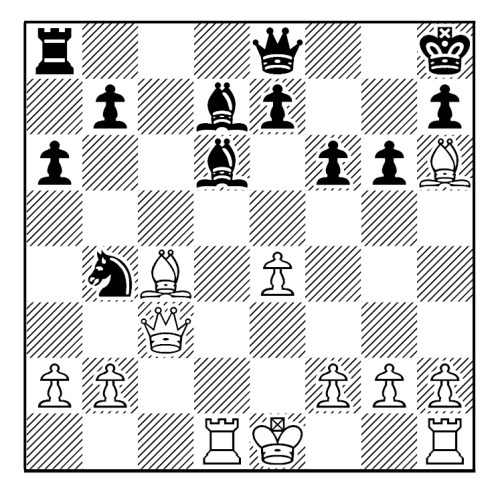
1.e4 e5 2.Nf3 Nf6 3.d4 exd4 4.Bc4 Nxe4 5.Qxd4 Nf6 6.Bg5 Be7 7.Nc3 Nc6 8.Qh4 d6 9.O-O-O O-O 10.Bd3 h6 11.Rhe1!?

[Estrin analyzed 11.Bxh6 gxh6 12.Qxh6 Ne5 (12…Nb4 13.Ng5 Nxd3+ 14.Rxd3 Bf5 15.Rg3 Bg6 16.Ne6! +/-) 13.Nxe5 dxe5 14.Qg5+ Kh8 15.Bf5 (with the idea of Rd3) +/-. But Jimmy’s idea has it’s own merits.]

11…hxg5 12.Nxg5 Re8 13.Kb1 Bd7?! 14.Nd5! Be6 15.Bh7+ Kf8

2018_12_20

16.Rxe6! +- Nxd5 17.Bg6 Nc3+ 18.bxc3 Kg8 19.Qh7+ Kf8 20.Qh8mate 1-0


In 2011 a Jimmy Quon Memorial was held in Los Angeles. Here are two games.


GM Mackenzie Molner (2458)-GM Mark Paragua (2521)
Jimmy Quon Memorial
California Market Center, Los Angeles, Jan. 19 2011
1.e4 c5 2.Nf3 d6 3.d4 cxd4 4.Nxd4 Nf6 5.Nc3 a6 6.Bg5 Nbd7 7.Bc4 Qb6 8.Bb3 e6 9.Qd2 Be7 10.O-O-O Nc5 11.Rhe1 O-O 12.f4 h6 13.h4 Qa5 14.Bxf6 Bxf6 15.g4 e5 16.fxe5 Bxe5 17.Rg1 Be6 18.Kb1 Rac8 19.g5 h5 20.g6 Nxb3 21.axb3 Bg4 22.Rxg4 hxg4 23.Nf5 Bf6 24.Nd5 Qxd2 25.Nxf6+ gxf6 26.Rxd2 fxg6 27.Ne7+ Kf7 28.Nxc8 Rxc8 29.Rxd6 f5 30.exf5 gxf5 31.Rd7+ Kf6 32.Kc1 g3 0-1


Alessandro Steinfl (2209)-GM Daniel Naroditsky (2419)
Jimmy Quon Memorial
California Market Center, Los Angeles, Jan. 23 2011
1.d4 Nf6 2.c4 g6 3.Nc3 Bg7 4.e4 d6 5.f4 (The Four Pawns variation of the King’s Indian – a rarity.)5…O-O 6.Nf3 Na6 7.Bd3 e5 8.fxe5 dxe5 9.d5 Qe7 10.O-O Nc5 11.Bc2 a5 12.Qe1 Nh5 13.Be3 b6 14.Rd1 Bg4 15.Nb5 f5 16.exf5 e4 17.d6 cxd6 18.Bxc5 dxc5 19.Qxe4 Qxe4 20.Bxe4 Rae8 21.Bd5+ Kh8 22.Nd6 Re7 23.fxg6 hxg6 24.Nf7+ Rexf7 25.Bxf7 Nf4 26.Bd5 Bxb2 27.Rb1 Bd4+ 28.Nxd4 cxd4 29.g3 Ne2+ 30.Kg2 Rd8 31.Rxb6 Bf5 32.Rd1 d3 33.Rd2 Nc3 34.Bf3 a4 35.g4 Be4 36.c5 Rd4 37.c6 Bd5 38.c7 1-0


A Najdorf Tournament

I am playing in a Najdorf Thematic tournament at chess.com.

 
The tournament is organized into several sections with the winners of each round advancing to the next.

 
I won my preliminary section with a perfect score of 8-0. I didn’t think I would so well, but here I am being advanced to the next round with the other winners of their sections.

 
Here are a couple of games from this tournament.


“Leatherneck”-Escalante
Sicilian Najdorf Invitational
chess.com, 2018
1.e4 c5 2.Nf3 d6 3.d4 cxd4 4.Nxd4 Nf6 5.Nc3 a6 (This position defines the Najdorf, the theme of this tournament.) 6.Bc4 e6 7.O-O Be7 8.Re1 O-O 9.Bg5!? (A move rarely seen in this variation.) 9…Qc7 10.Qe2 Qc5 11.Rad1? Qxg5 12.g3 Bd7 13.f4 Qg6 14.f5 Qg5 15.Qe3 Qxe3+ 16.Rxe3 e5 17.Nd5 Nxd5 18.Bxd5 Bc6 19.Ne6 fxe6 20.Bxe6+ Kh8 21.Bd5 Bxd5 22.exd5 Nd7 23.b4 Nb6 24.g4 Rac8 25.Rd2 Nc4 26.Rc3 Nxd2 0-1


Escalante-“MiddlegamerUmesh” (1531)
Sicilian Najdorf Invitational
chess.com, 2018
1.e4 c5 2.Nf3 d6 3.d4 cxd4 4.Nxd4 Nf6 5.Nc3 a6 6.Bc4 (The move constitutes the Sozin variation, a favorite of Fischer’s and the variation which I played exclusively in round one. Having a perfect score makes me want to try it again in round two. We’ll see.)  6…e6 7.Bb3 Qc7 8.Be3 Be7 9.g4 b5 (9…Nc6 10.g5, with the possibility of the same sacrifice.) 10.g5 Nfd7? 11.Bxe6! 1-0 (Black didn’t want to face 11…fxe6 12.Nxe6 Qa5 13.Nxg7+ Kf8, and White with three pieces for the piece, plus the attack, should win.)


Since I have not included any diagrams in my games, here is some artwork of Fischer, the (in)famous prodigy and world chess champion.


123_back_1

A previously unknown Fischer game.


The August July 2017 issue of Chess Life published a previously unknown Bobby Fischer game. Here is the game you can add to your collection.


Fischer (1726)-Franklin Saksena (1400)
US Jr. Ch.
Lincoln, Nebraska, 1955
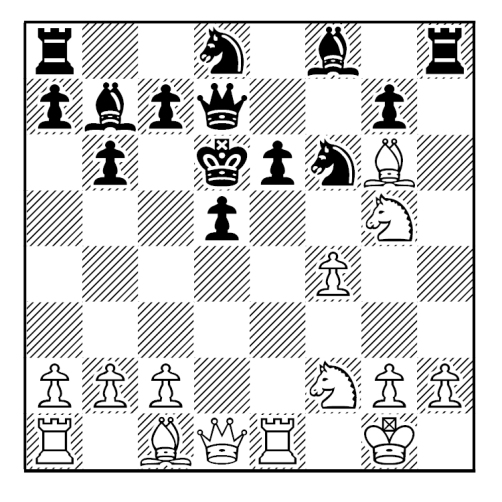
1.e4 e5 2.Nf3 Nc6 3.Bc4 Bc5 4.c3 f5?! (A rare, but not unknown variation. Paul Weaver-Dean Rommeo, G/15, Portland, OR, 1993, continued with 5.d4 exd4?! 6.cxd4 Bb4+ 7.Nc3 fxe4 8.Ne5 Nxe5 9.dxe5 Bxc3+?! 10.bxc3 Qe7 11.Bf4 b6 12.Bxg8 Rxg8 13.Qd5 Rf8 14.Qxa8 Kd8 15.Bg3 1-0) 5.d4 exd4 6.Nxd4 Bxd4 7.cxd4 Nf6 8.e5 Ne4 9.Nc3 Nxc3 10.bxc3 d5 11.exd6 Qxd6 12.O-O Na5? (12…Bd7 13.Bg5)

2018_11_29

13.Qa4+ Nc6 14.d5 O-O 15.dxc6+ +- Kh8 16.Ba3 Qf6 17.Bxf8 Qxf8 18.Qb4 Qxb4 19.cxb4 bxc6 20.Rfe1 Bb7 21.Re7 Rc8 22.Rae1 1-0