Self-Destruction or the Big “Z”

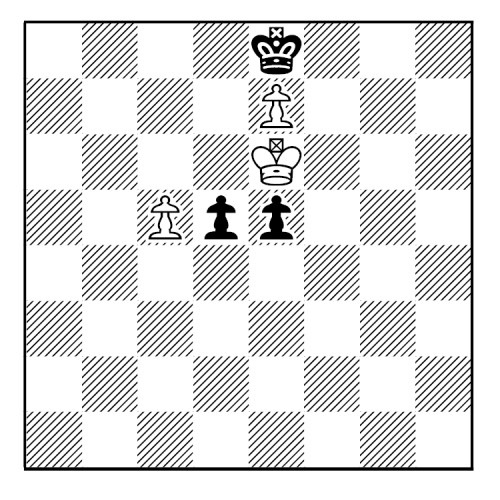
ZUGZWANG is the compulsion to move in chess, where any move would result in loss of position, material, or game.


A player who is forced into this type of position does not want to move as any move by that player only makes winning the game easier for his opponent. In other words, he is forced to self-destruct, literally move by move.

Here are a few (simple) examples.
“abdo10000”-Escalante
Blitz Game
chess.com, Feb. 4 2019
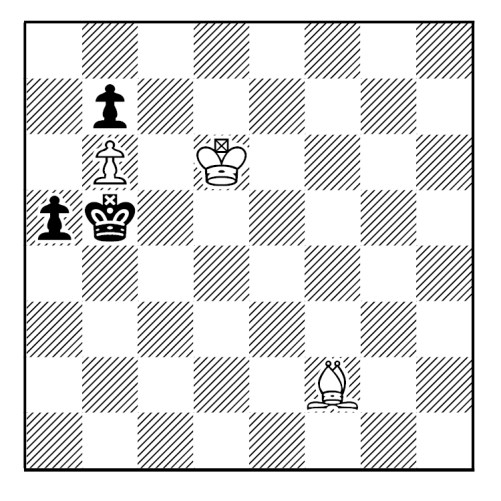
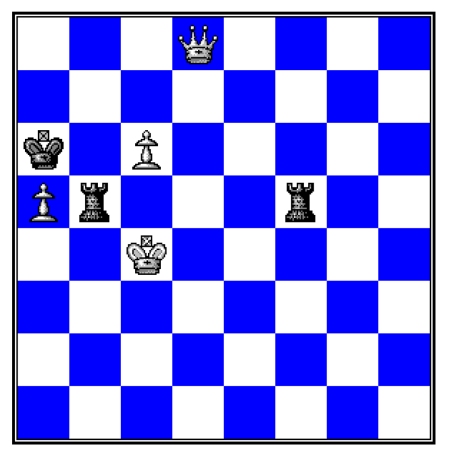
[White made a miscalculation in the middlegame enabling Black to win a bishop. White could resign, but chooses to play on.]

2019_02_14_A46.Kh1 (White puts his king in a stalemate position. Unfortunately for him, he still has pawns he can move.) 46…Kf3 (Black can achieve the same result by …Kg3 or …Kh3. The important thing is to keep the white king trapped in the corner, when he must move his pawns.) 47.a3 bxa3 48.c4 a2 49.c5 a1=Qmate 0-1


Here two more examples, slightly more sophisticated.


Jonny Hector (2465)-Sergei Tiviakov (2490)
Stockholm, 1990
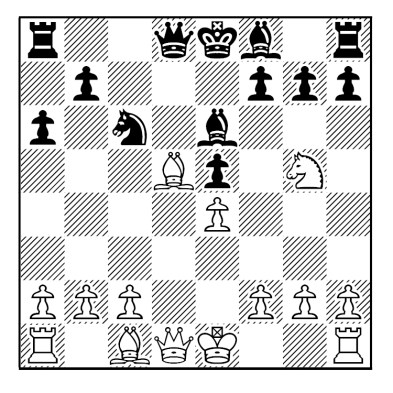
1.e4 c5 2.Nf3 d6 3.d4 cxd4 4.Nxd4 Nf6 5.Nc3 g6 6.Bc4 Bg7 7.h3 (A waiting move. More common is 7.Bb3.) 7…a6 8.O-O b5 9.Bb3 Bb7 10.Re1 O-O 11.Bg5 Nbd7 12.Nd5! (White usually does well if he can get this move in.) 12…Rc8 13.Qd2 Rc5 14.Nf3 Re8 15.c3 Qa8 16.Rad1 Nxd5 17.exd5 Nf6 18.Be3 Rxd5 19.Bxd5 Bxd5 20.Nh4 Bxa2 21.Bh6 Bh8 22.f4 Bb3 23.Ra1 Ne4 24.Qe3 Bd5 25.Qb6 Bb7 26.Re3 Bf6 27.Nf3 Ng3 28.Bg5 Nf5 29.Ree1 Bg7 30.Nh4 f6 31.Nxf5 gxf5 32.Bh4 Kf7 33.Re2 Bh6 34.Bg3 Qc8 35.Kh2 Qc4 36.Rf2 Qe4 37.Rf3 Qc6 38.Rxa6 Qxb6 39.Rxb6 Bxf3 40.gxf3 Ra8 41.Rxb5 Ra2 42.Kg1 Bf8 43.c4 Ra1+ 44.Kf2 Rc1 45.b3 Rc2+ 46.Kf1 h5 47.Rxf5 Rc3 48.Rb5 h4 49.Bf2 Bh6 50.f5 Rc1+ 51.Kg2 Rc2 52.f4 Bxf4 53.Kf3 Bg3 54.Be3 (White is still winning after 54.Bxg3 hxg3 55.Kxg3 Rc3+ 56.Kg4. The text move keeps the tension on the board.) 54…Be1 55.Rb8 Rh2 56.Bh6 e5 57.Rb7+ Ke8 58.Bg7 Rxh3+ 59.Ke4 Kd8 60.Bxf6+ Kc8 61.Rh7 Rxb3 62.Kd5 Rb7 63.Rh8+ Kd7 64.Bxh4! Bxh4 65.Rh7+ Be7 66.f6 Ke8 67.Ke6 d5 68.c5 Rc7 69.Rxe7+ Rxe7+ 70.fxe7
2019_02_14_B
1-0


Of course, such self-destruction is not limited to pawns only endgames.


GM Spassky-GM Fischer
World Ch.
Reykjavik, July 11 1972
Game 1
1.d4 Nf6 2.c4 e6 3.Nf3 d5 4.Nc3 Bb4 5.e3 O-O 6.Bd3 c5 7.O-O Nc6 8.a3 Ba5 9.Ne2 dxc4 10.Bxc4 Bb6 11.dxc5 Qxd1 12.Rxd1 Bxc5 13.b4 Be7 (This position is more or less drawish. Mariotti-Tatai, Match, Rome, 1972 continued with 14.Nfd4 Bd7 15.Bb2 Nxd4 16.Nxd4 Rac8 17.Rac1 Rfd8 18.Bb3 Kf8 19.Rxc8 Rxc8 20.Rc1 Rxc1+ 21.Bxc1 1/2-1/2. Spassky’s move is more dynamic.) 14.Bb2!? Bd7 15.Rac1 Rfd8 16.Ned4 Nxd4 17.Nxd4 Ba4 18.Bb3 Bxb3 19.Nxb3 Rxd1+ 20.Rxd1 Rc8 21.Kf1 Kf8 22.Ke2 Ne4 23.Rc1 Rxc1 24.Bxc1 f6 25.Na5 Nd6 26.Kd3 Bd8 27.Nc4 Bc7 28.Nxd6 Bxd6 29.b5 Bxh2?? (Black, who is the aspiring to be the next world champion, makes a horrible beginner’s move. Black never recovered in this game. And didn’t show up for the next one. Only two games into the match and Bobby was down 0-2. The fact that he won this match, and the world championship, is simply incredible.) 30.g3 h5 31.Ke2 h4 32.Kf3 Ke7 33.Kg2 hxg3 34.fxg3 Bxg3 35.Kxg3 Kd6 36.a4 Kd5 37.Ba3 Ke4 38.Bc5 a6 39.b6 f5 40.Kh4 f4 41.exf4 Kxf4 42.Kh5 Kf5 43.Be3 Ke4 44.Bf2 Kf5 45.Bh4 e5 46.Bg5! e4 47.Be3 Kf6 48.Kg4 Ke5 49.Kg5 Kd5 50.Kf5 a5 51.Bf2 g5 52.Kxg5 Kc4 53.Kf5 Kb4 54.Kxe4 Kxa4 55.Kd5 Kb5 56.Kd6

2019_02_14_C

(White can play Kc7 protecting his pawn while attacking Black’s. Black has no choice but to play 56..Ka6. White will reply with Bd4 and Black can either give up protecting his pawn. or run his pawn down the a-file, and wait for White to play an eventual Bxa1. And then Black has to give up the a6 square.)

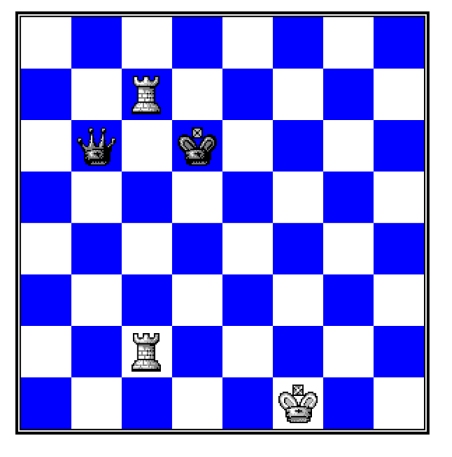
1 Q vs. 2 R

I like heavy endings, that is with queens and rooks. Not too many books deal with these types of endings, leaving the student with many questions unanswered.


Here is one type that interests me. It comes in form of a question.


Which is stronger in the endgame, a queen or two rooks? Here’s an introduction.


Let’s first look at four well-established guidelines for these types of endings.


(1) If the rooks are not connected, then the side with the single queen has the advantage.


(2) If the rooks are connected, then that side has the advantage.


(3) The advantage always lies with the player who has the initiative.


(4) Having the advantage that does not mean that side can win the game.


Here’s the first example.


Wilson-Thompson
Detroit, 1990
[White, with the single queen, is the one with the initiative but cannot break through the Black’s defence. Neither side is in real danger as Queen versus two connected Rooks endings, with nothing else on the board, are almost always drawn.]
1.e4 e5 2.Nf3 Nc6 3.Bc4 Nf6 4.Ng5 d5 5.exd5 Na5 6.Bb5+ c6 7.dxc6 bxc6 8.Qf3 Rb8 9.Bxc6+ Nxc6 10.Qxc6+ Nd7 11.d4 Be7 12.Nf3 Rb6 13.Qa4 exd4 14.O-O (Tempting is 14.Nxd4. But after 14… Rb4 15.Nc6 Rxa4 16.Nxd8 Bxd8, Black wins a piece. And after 14.Qxd4 O-O 15.O-O Bc5, White’s queen gets kicked around.) 14…O-O 15.a3 Bf6 16.b4 Ba6 17.Re1 Bc4 18.Qxa7 Qc8 19.Bf4 Rb7 20.Qa5 Bb5 21.Bg5 Bxg5 22.Nxg5 Nb8 23.Ne4 Nc6 24.Nd6 Qd7 25.Qxb5 [Surely better is 25.Nxb5 Ra7 (25…d3 26.cxd3 Rxb5 27.Qxb5 Qd4 28.Nd2) 26.Qb6 Rb8 27.Qc5 +-] 25…Rxb5 26.Nxb5 Nxb4 27.Nxd4 Qxd4 28.c3 Qf6 29.axb4 g6 30.Ra2 Rd8 31.Rc2 Qe6 32.Rec1 Qe4 33.Nd2 Qe2 34.Nf1 Qb5 35.Rb2 Qg5 36.Rbb1 f5 37.c4 f4 38.Rc3 Qf5 39.Rbc1 Rb8 40.Rb3 Qg5 41.Rcb1 Qf5 42.c5 g5 43.h3 h5 44.c6 Qb5 45.Rc3 Kf7 46.Rc5 Qd3 47.c7 Rc8 48.Rbc1 g4 49.R1c3 Qb1 50.hxg4 hxg4 51.R5c4 Qf5 52.g3 fxg3 53.Nxg3 Qd5 54.Rc5 Qd1+ 55.Kg2 Qa4 56.b5 Qa8+ 57.Kg1 Ke6 58.Rc6+ Kd7 59.Ne4 Qa1+ 60.Kg2 Qb1 61.Nf6+ Ke7 62.b6 Rh8 63.Rc1 (63.Nd5+ Kf7 64.Rf6+ Kg7) 63…Qf5 64.Ng8+ Rxg8 65.c8=Q Rxc8 66.Rxc8 Qf3+ 67.Kg1 g3 68.R8c7+ Kd6 69.R1c2 gxf2+ 70.Kf1 Qd3+ 71.Kxf2 Qd4+ 72.Kf1 Qxb6

 2019_02_07_A

 73.R7c3 (Simply 73.Rc6+ draws.) 73…Qb5+ 74.Ke1 Qe5+ 75.Kd1 Qh5+ 76.Re2 [76.Kc1 Qh1+ (76…Qg5+ 77.Kd1 Qg1+ 78.Kd2 Kd5 79.Rc5+ Kd4 80.R5c4+ Kd5 81.Rc5+) 77.Kb2 Qb7+ 78.Kc1]76…Qh1+ 77.Kc2 Qa1 78.Rd3+ Kc5 79.Rb3 Qa2+ 80.Rb2 Qa4+ 81.Kc1 Qa1+ 82.Kc2 Qa4+ 83.Kd2 Qd4+ 84.Kc1 Qf4+ 85.Kb1 Qf1+ 86.Ka2 Qf7+ 87.Rb3 Qa7+ 88.Kb2 Qg7+ 89.Rc3+ Kb4 90.Re4+ Kb5 91.Rc4 Qe5 92.Rc8 [Again, a simple draw can be found with a check (92.Rc5+ =)]92…Qe2+ 93.Rc2 Qe5+ 94.Kb1 Qe1+ 95.Kb2 Qe5+ 96.R2c3 Qe2+ 97.Ka3 Qe7+ 98.Ka2 Qe2+ 99.Rc2 (99.Rc5+ is yet another draw.) 99…Qe6+ 100.Kb1 Qe1+ 101.Kb2 Qe5+ 102.R2c3 Qe2+ 103.Kb1 Qe1+ 104.Ka2 Qe2+ 105.Rc2 Qe6+ 106.Kb1 Qe1+ 107.Rc1 Qe4+ 108.R8c2 (Passive, but still enough to draw. 108.R1c2 is better, as White still has a possible check if necessary.) 108…Kb4 109.Ka1 Qd4+ 110.Ka2 Qd5+ 111.Kb1 Qd3 112.Kb2 Qd4+ 113.Ka2 Qd5+ 114.Ka1 Qd4+ 115.Kb1 Qd3 116.Kb2 Qd4+ 117.Kb1 Qd3 118.Kb2 Qd4+ 119.Ka2 Qd5+ 120.Kb1 Qd3 1/2-1/2


Adding a single pawn to either side obviously increases the chances for that side. The plan should always try to push the pawn towards a promotion.


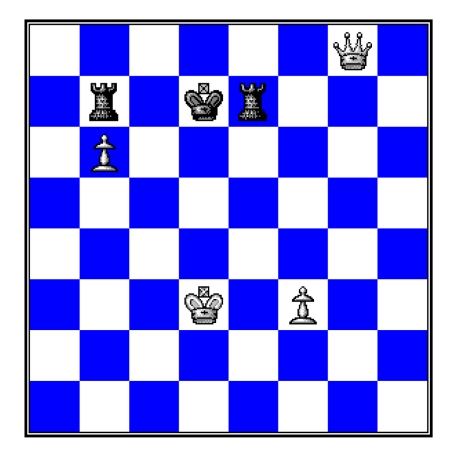
Adding two isolated pawns to the side with the Queen, the result is almost always a win, even without a promotion.


Lausch-Zajontz
corres., 1991
1.e4 e5 2.Nf3 Nc6 3.Bc4 Bc5 4.c3 Nf6 5.d4 exd4 6.cxd4 Bb4+ 7.Nc3 Nxe4 8.O-O Bxc3 9.d5 Bf6 10.Re1 Ne7 11.Rxe4 d6 12.Bg5 Bxg5 13.Nxg5 h6 14.Qe2 hxg5 15.Re1 Kf8 16.Rxe7 Be6 17.Rxe6 fxe6 18.dxe6 Qf6 19.e7+ Ke8 20.Qc2 c6 21.Ba6 bxa6 22.Qxc6+ Kf7 23.Qd5+ Kg6 24.Re6 Rae8 25.Qxd6 Kf7 26.Rxf6+ gxf6 27.Qxa6 Rxe7 28.g3 Rc7 29.Qd6 Rhc8 30.Qd4 Rc1+ 31.Kg2 R8c7 32.h4 gxh4 33.Qxh4 R1c2 34.g4 Kg7 35.g5 fxg5 36.Qxg5+ Kf8 37.Qd8+ Kf7 38.b4 Ke6 39.Qg8+ Kf6 40.Qd5 Rg7+ 41.Kf3 Rcc7 42.Kf4 Rge7 43.a4 Kg7 44.b5 Kf8 45.f3 Ke8 46.a5 Rf7+ 47.Kg3 Rg7+ 48.Kf2 Rc2+ 49.Ke3 Re7+ 50.Kd3 Rcc7 51.Qg8+ Kd7 52.b6 axb6 53.axb6 Rb7

  2019_02_07_B

54.Qd5+ Ke8 55.Qc6+ Rbd7+ 56.Kc4 Kf8 57.f4 Rf7 58.f5 Kg7 59.Qg6+ Kf8 60.f6 Rb7 61.Qh6+ Kg8 62.Qg5+ Kf8 63.Qe5 Kg8 64.Kc5 Rf8 65.Qd5+ Rff7 66.Qf3 Kh7 67.Qg2 Kh6 68.Kc6 Rh7 69.Kd5 Rhf7 70.Ke6 1-0


GM Jansa (2455)-GM A. Soklov (2570)
Gausdal, 1990
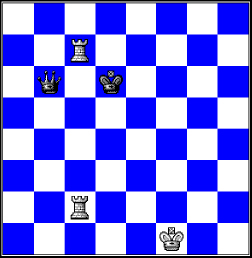
[It would be hard to expand on the notation. GM Jansa annotated this ending in I/50, Ending # 13.]


2019_02_07_C

1…Ka7! [1…Rfc5+ 2.Kd4 Rxa5 (2…Ka7 3.Qe7+ +-) 3.Qa8+ +- ; 1…Rf4+? 2.Kd3 +-] 2.a6!? [2.c7 Rfc5+ 3.Kd4 Rd5+! 4.Qxd5 Rxd5+ 5.Kxd5 Kb7 6.Kd6 Kc8= ; 2.Qe7+ Ka6 3.c7 Rfc5+ 4.Kd4 Rd5+ 5.Ke4 Re5+ 6.Qxe5 Rxe5+ 7.Kxe5 Kb7=] 2…Rfc5+ (2…Kxa6? 3.Qa8+ Kb6 4.Qb7+ +- ; 2…Rbc5+? 3.Kd4 Kxa6 4.Qa8+ Kb6 5.Qb7+ Ka5 6.c7 +-) 3.Kd4 Kxa6? [3…Rxc6? 4.Qd7+ Kb6 5.Qb7+ ; 3…Rc1? 4.Qe7+! Kxa6 (4…Ka8 5.c7 +-) 5.Qa3+ +- ; 3…Rc2! 4.Qe7+ (4.c7 Rbc5= ; 4.Qc8!? Rbb2!=) 4…Kxa6 5.c7 Rbc5 6.Qxc5 Rxc5 7.Kxc5 Kb7=] 4.Qa8+ Kb6 5.Qb7+ Ka5 6.Qa7+ Kb4 7.Qe7! (7…Ra5 8.c7) 1-0


With two isolated pawns with the two rooks, a win for that side is the most likely outcome. But examples are hard to find. We’ll cover more in a later post.

Najdorf Thematic, part 2

As mentioned before, I have entered into Najdorf Thematic Tournament at chess.com. I have advanced to the next round; it seems my Sozin variation is scoring some delightful wins for me.


Here’s one of them from the second round.


Escalante-“KINGLOU” (1546)
Thematic Tournament – Sicilian Najdorf, 2nd round
chess.com, 2018
[Escalante]
1.e4 c5 2.Nf3 d6 3.d4 cxd4 4.Nxd4 Nf6 5.Nc3 a6 6.Bc4 e5 [This move looks weak as it opens the diagonal for the bishop, but the nut is not so easy to crack. Black must be willing to have doubled pawns on the e-file (after …Be6) and suffer the difficulties of his pawn structure in coordinating his pieces.] 7.Nf3 (7…Nf5 eliminates much of Whites’s pressure  after 7…Bxf5. 7.Nde2 is the more positional approach. 7.Nf3 resembles a Two Knight’s Defence, something I more familiar with.) 7…Nc6 (7…Be7 is better as it would have allowed 8….O-O after 8.Ng5.} 8.Ng5 {This position is now very similar to the Two Knight’s Defence, where Black is forced to give to give up a pawn. However, in this game, White already has the greater mobility, coordination, and the initiative.) 8…d5 9.Nxd5 Nxd5 10.Bxd5 Be6 (White has a strong tactical response to Black’s lack of development.)

2019_01_31_a

11.Nxe6! fxe6 12.Bxc6+ bxc6 13.Qh5+ g6 14.Qxe5 Rg8 [Better is 14… Kf7 15.O-O (15.Bg5?! Be7 and Black’s king, despite not being able to castle, will be safe on the kingside) Bg7 16.Qf4+ Qf6 17.Qc7+ Qe7 18.Qxc6 Rhc8 19.Qa4 and White remains on top.] 15.Qxe6+ Qe7 16.Qxg8 Qxe4+ 17.Be3  O-O-O (Black’s best move; everything else loses faster.) 18.O-O Bd6 19.Qb3! (19.Qxh7? is a mistake due to 19…Be5 with the idea of …Rh8.) 19…Qe5 20.g3 h5 21.Qb6 Kd7 22.Qb7+ Bc7 23.Bf4 Qa5 (Better, but still losing is 23…Rb8 24.Rad1+ Ke7 25.Qxc6 Rb6 26.Qd7+ Kf6 27.Bxe5+ Bxe5 28.Qd8+) 24.Rad1+ Ke7 25.Bxc7!

2019_01_31_b

1-0

Trivia Questions

OK,


Here are some trivia questions guaranteed to win a few bets at a chess club.


(1) Which chess player(s) did NOT receive a GM title from FIDE?


Jose Capablanca


Anatoly Karpov


Camilla Baginskaite


Nona Gaprindashvili


Bobby Fischer


Answer : Jose Capablanca. He received his GM title by Czar Nicolas II at the St. Petersburg 1914 International Tournament. FIDE was organized in 1924 and started awarding titles in 1950.


(2) How many moves can a Rook make in a single turn?


Answer : Just one move, like all the other pieces. He can, however, move to many different squares.


(3) Can a player win a game without moving a single pawn?


Answer : Yes. An opponent fails to show up for the game. In the case of which a player must play a move to start the clock, he may play 1.Nf3.


(4) Can a player move two of his pieces in a single turn?


Answer : Yes. It’s called castling.


(5) Can a player take two of his opponent’s pieces in a single turn?


Answer : No. It’s not possible.


(6) We know all about a discovered check and a double check. Can a player ever triple check his opponent?


Answer : Actually, that is impossible. It’s not even possible in Siamese chess. Try it!


(7) Which of these openings have a variation known as the “Wing Gambit”?


Sicilian

French

King’s Indian Defence

Bird’s Opening


Answer : Interesting enough, Bird’s Opening does not have a Wing Gambit variation. And while the KID does not have a Wing Gambit, it does have a Bayonet variation with b4.


Try them out and let me know how it goes! =)

Smothered with Love

A smothered mate occurs when a Knight is checking the enemy king and that king is blocked by his own pieces so he cannot escape. These mates can roughly be broken down to three types.


The first, which can be called the “oops” variation of the smothered mate, occurs when a player entombs his own  pieces and forgets about a wandering Knight. This type almost always happens in the opening.


Griffith-N.N., 1888
1.e4 e5 2.Nf3 Nc6 3.Bb5 Nf6 4.d3 Ne7 5.Nxe5 c6 6.Nc4 cxb5 7.Nd6mate 1-0
McGrouther-McCann
Dundee, 1893
1.e4 c5 2.Nf3 Nc6 3.d4 cxd4 4.Nxd4 e5 5.Nb5 Nge7 6.Nd6mate 1-0
Reshevsky-Margolit
Simul
Israel, 1958
1.d4 Nf6 2.c4 e6 3.Nc3 Bb4 4.e3 c5 5.Nge2 Nc6 6.a3 Qa5 7.Bd2 e5 8.axb4 Nxb4 9.Rxa5 Nd3mate 0-1


The second type occurs when a piece of the same color as the mating Knight give supports to the Knight by pinning one or more of the other side’s pieces. For the naming conscious person, we’ll call this the “Pinning and Winning” variation.
Muhlock-Kostics
Cologne, 1912
1.e4 e5 2.Nf3 Nc6 3.Bc4 Nd4 4.Nxe5 Qg5 5.Nxf7 Qxg2 6.Rf1 Qxe4+ 7.Be2 Nf3mate 0-1
Arnold-Bohm
Munich, 1923
1.e4 c6 2.d4 d5 3.Nc3 dxe4 4.Nxe4 Nd7 5.Qe2 Ngf6 6.Nd6mate 1-0
Godai-Kieninger
Vienna, 1925
1.d4 Nf6 2.c4 e5 3.dxe5 Ng4 4.Bf4 Nc6 5.Nf3 Bb4+ 6.Nbd2 Qe7 7.a3 Ngxe5 8.axb4 Nd3mate 0-1


Sereda-Gambarashvilli
Tiflis, 1934
1.d4 Nf6 2.Nf3 e6 3.e3 c5 4.Bd3 b6 5.Nbd2 Nc6 6.b3 cxd4 7.exd4 Bb7 8.O-O Nd5 9.c4 Nf4 10.Bb1 Nxd4 11.Bb2 (11.Nxd4 Qg5 12.g3 Nh3#) 11…Nde2+ 12.Kh1 Qg5 13.Rg1 (13.Nxg5 Bxg2#) 13…Qg4 14.h3 Qh4 15.Be4 Bxe4 16.Nxe4 Nxh3 17.Nh2 Nxf2+ 18.Nxf2 Ng3mate 0-1


Denker-Shayne
Simul
Rochester, 1945
[Chernev, 1001 Best Short Games, # 442]
1.e4 e5 2.Bc4 Bc5 3.b4 Bxb4 4.c3 Bc5 5.d4 exd4 6.Nf3 Nf6 7.e5 Ne4 8.O-O Nxc3 9.Nxc3 dxc3 10.Bg5 Be7 11.Qd5 Rf8? (Naturally castling is the better move.) 12.Bf6 gxf6 13.exf6 Bxf6 14.Rfe1+ Be7 15.Ne5 c6 16.Nxf7! cxd5? (16…Qc7, to make room for the king to run, still loses to 17.Rxe7+ Kxe7 18.Re1+ Kf6 19.Qg5+. The text move, however, loses even faster.) 17.Nd6mate 1-0


Edward Lasker-I.A. Horowitz
New York, 1946
1.d4 Nf6 2.Nf3 d5 3.e3 c5 4.c4 cxd4 5.Nxd4 e5 6.Nf3 Nc6 7.Nc3 d4 8.exd4 exd4 9.Nb5 Bb4+ 10.Bd2 O-O 11.Bxb4 Nxb4 12.Nbxd4 Qa5 13.Nd2 Qe5+ 14.Ne2 Nd3mate 0-1

Dudkin-Skitin
USSR, 1967
1.d4 d5 2.c4 e5 3.dxe5 d4 4.Nf3 Nc6 5.Nbd2 Qe7 6.a3 Nxe5 7.Nxd4 Nd3mate 0-1


The last type of the smothered mate is preceded by a piece (usually a Queen) sacrifice that either removes a defending piece or forces a defending piece to capture the sacrificed piece on a square next to the king and thereby remove the last flight square for the king.


N.N-Canal
Simul, 1935
1.e4 e5 2.Ne2 d5 (This powerful retort is one reason why Alapin’s opening is not played during these modern times.) 3.exd5 Qxd5 4.Nbc3 Qa5 5.d4 Nc6 6.d5 Nb4 7.Bd2 Bf5 8.Rc1 Bxc2 9.Rxc2 Nd3mate 0-1


Morphy-N.N.
New Orleans, 1856
1.e4 e5 2.f4 exf4 3.Bc4 Qh4+ 4.Kf1 g5 5.Nc3 Bg7 6.d4 Nc6 7.Nf3 Qh5 8.Nd5 Kd8 9.c3 Nf6 10.Nxf6 Bxf6 11.e5 Bg7 12.h4 f6 13.Kg1 g4 14.Nh2 fxe5 15.Nxg4 exd4 16.Bxf4 Rf8 17.Bg5+ Ne7 18.Qe2 Re8 19.Ne5 Qxe2 20.Nf7mate 1-0


Schlemminger-Sternbach
Bochum, 1936
1.d4 Nf6 2.c4 g6 3.b3 Bg7 4.Bb2 c5 5.e3 O-O 6.Nd2 Qa5 7.Bd3 cxd4 8.exd4 Nc6 9.Ngf3 d6 10.a3 Nh5 11.O-O Nf4 12.Bc2 Qh5 13.Ne4 Bh3 14.Ng3 Qg4 15.gxh3 Qxh3 16.Ne1 h5 17.Ne4 Bxd4 18.Bxd4 Nxd4 19.Bd3 f5 20.Ng3 h4 21.Nh1 Qg2+ 22.Nxg2 Nh3mate 0-1


When the Queen sacrifices herself on the back rank, this variation is known as Philidor’s Legacy. However, Philidor was not the first; this idea has been around since Greco.


N.N.-Greco
Rome, 1620?
1.e4 e5 2.Nf3 Nc6 3.Bc4 Bc5 4.O-O Nf6 5.Re1 O-O 6.c3 Qe7 7.d4 exd4 8.e5 Ng4 9.cxd4 Nxd4 10.Nxd4 Qh4 11.Nf3 Qxf2+ 12.Kh1 Qg1+ 13.Nxg1 Nf2mate 0-1


N.N.-Greco
Rome, 1620?
1.e4 e5 2.f4 f5 3.exf5 Qh4+ 4.g3 Qe7 5.Qh5+ Kd8 6.fxe5 Qxe5+ 7.Be2 Nf6 8.Qf3 d5 9.g4 h5 10.h3 hxg4 11.hxg4 Rxh1 12.Qxh1 Qg3+ 13.Kd1 Nxg4 14.Qxd5+ Bd7 15.Nf3 Nf2+ 16.Ke1 Nd3+ 17.Kd1 Qe1+ 18.Nxe1 Nf2mate 0-1


Mcconnell-Morphy
New Orleans, 1849
1.e4 e5 2.f4 exf4 3.Nf3 g5 4.Bc4 Bg7 5.d3 h6 6.O-O Nf6 7.c3 b5 8.Bxb5 c6 9.Bc4 d5 10.exd5 cxd5 11.Qe2+ Be6 12.Bb3 O-O 13.d4 Ne4 14.Bc2 f5 15.Nbd2 Nc6 16.c4 Bxd4+ 17.Nxd4 Nxd4 18.Qd3 Qb6 19.Kh1 Nxc2 20.Qxc2 Nf2+ 21.Kg1 Nh3+ 22.Kh1 Qg1+ 23.Rxg1 Nf2mate 0-1


Morphy-N.N.
Paris, 1859
1.e4 e5 2.Nf3 Nc6 3.Bc4 Nf6 4.d4 exd4 5.O-O Nxe4 6.Re1 d5 7.Bxd5 Qxd5 8.Nc3 Qh5 9.Nxe4 Be6 10.Neg5 Bb4 11.Rxe6+ fxe6 12.Nxe6 Qf7 13.Nfg5 Qe7 14.Qe2 Bd6 15.Nxg7+ Kd7 16.Qg4+ Kd8 17.Nf7+ Qxf7 18.Bg5+ Be7 19.Ne6+ Kc8 20.Nc5+ Kb8 21.Nd7+ Kc8 22.Nb6+ Kb8 23.Qc8+ Rxc8 24.Nd7mate 1-0


Bird-N.N.
London, 1886
1.e4 e5 2.f4 exf4 3.Nf3 g5 4.Nc3 g4 5.Ne5 Qh4+ 6.g3 fxg3 7.Qxg4 g2 8.Qxh4 gxh1=Q 9.Qh5 Be7 10.Nxf7 Nf6 11.Nd6+ Kd8 12.Qe8+ Rxe8 13.Nf7mate 1-0


Young – Dore’
Boston, 1892
1.e4 e5 2.d4 exd4 3.c3 dxc3 4.Bc4 Nf6 5.Nf3 Nxe4 6.O-O Nd6 7.Nxc3 Nxc4 8.Re1+ Be7 9.Nd5 Nc6 10.Bg5 f6 11.Rc1 b5 12.Rxc4 bxc4 13.Ne5 fxg5 14.Qh5+ g6 15.Nf6+ Bxf6 16.Nxg6+ Qe7 17.Rxe7+ Bxe7 18.Ne5+ Kd8 19.Nf7+ Ke8 20.Nd6+ Kd8 21.Qe8+ Rxe8 22.Nf7mate 1-0


Chodera-Pechmann
Prague, 1910
1.e4 e5 2.Nc3 Bc5 3.g3 Nf6 4.Bg2 d6 5.Nge2 Nc6 6.d3 Be6 7.Na4 Qe7 8.Nxc5 dxc5 9.O-O O-O-O 10.f4 c4 11.f5 cxd3 12.fxe6 dxe2 13.Qxe2 Nd4 14.Qf2 Ng4 15.Qxf7 Qc5 16.e7 Nf3+ (16…Ne2+ would have worked just as well.) 17.Kh1 Qg1+ 18.Rxg1 Nf2mate 0-1


Howell-Brunnemer
New York, 1915
1.e4 e5 2.Nf3 Nc6 3.d4 exd4 4.Bc4 Bc5 5.c3 Qf6 6.O-O d6 7.Bg5 Qg6 8.cxd4 Nxd4 9.Nxd4 Qxg5 10.Kh1 Qe5 11.Nb5 Bb6 12.N1c3 a6 13.f4 Qc5 14.Na3 Nf6 15.e5 Ng4 16.Ne4 Qe3 17.Qc2 Bf5 18.Nxd6+ cxd6 19.Qxf5? Qg1+ 20.Rxg1 Nf2mate 0-1


Capablanca-Mattison
Carlsbad, 1929
[Escalante]
1.d4 Nf6 2.c4 e6 3.Nc3 Bb4 4.Qc2 (The Classical Variation of the Nimzo-Indian is considered stronger now than 20-30 years ago. Maybe Capablanca was on to something.) 4…c5 5.dxc5 Nc6 6.Nf3 Bxc5 7.Bf4 d5 8.e3 Qa5 9.Be2 Bb4 10.O-O Bxc3 11.bxc3 O-O 12.Rab1 Qa3 13.Rfd1 b6 14.cxd5 Nxd5 15.Ng5 f5 16.Bf3 Qc5 17.c4 Ndb4 18.Qb3 e5 19.a3 Nc6 20.Bxc6 [Mattison reads the handwriting on the wall and resigns instead of 20…Qxc6 21.c5+ Kh8 22.Nf7+ Kh8 (22…Rxf7 23.Rd8+) 23.Nh6+, well, you know the rest.] 1-0


Fox-Hodges
New York, 1937
[Remove Nb1]
1.e4 d5 2.d4 Nf6 3.e5 Nfd7 4.e6 fxe6 5.Bd3 Nf6 6.Nf3 Qd6 7.Ne5 Nbd7 8.Bf4 Qb4+ 9.c3 Qxb2 10.Qc2 Qxa1+ 11.Ke2 Qxh1 12.Bg6+ hxg6 13.Qxg6+ Kd8 14.Nf7+ Ke8 15.Nd6+ Kd8 16.Qe8+ Nxe8 17.Nf7mate 1-0


C. Bloodgood-B. Evans
Norfolk USO, 1961
1.g4 (The Grob, as played by its most dedicated and infamous adherent.) 1…d5 2.Bg2 c6 3.g5 e5 4.h4 Bd6 5.d3 Be6 6.e4 Ne7 7.Nd2 O-O 8.Bh3 Bxh3 9.Nxh3 f5 10.gxf6 Rxf6 11.exd5 Nxd5 12.Ne4 Rf7 13.Bg5 Be7 14.Qg4 Qa5+ 15.c3 Bxg5 16.Nhxg5 Rf8 17.Qe6+ Kh8 18.Nf7+ Kg8 19.Nh6+ Kh8 20.Qg8+ Rxg8 21.Nf7mate 1-0


Grischuk (2606)-Ponomariov (2630)
Torshavn, 2000
1.e4 Nf6 2.e5 Nd5 3.d4 d6 4.Nf3 g6 5.Bc4 Nb6 6.Bb3 Bg7 7.a4 a5 8.Ng5 e6 9.f4 dxe5 10.fxe5 c5 11.c3 cxd4 12.O-O O-O 13.cxd4 Nc6 14.Nf3 f6 15.Nc3 fxe5 16.Bg5 Qd7 17.dxe5 Nxe5 18.Nxe5 Rxf1+ 19.Qxf1 Qd4+ 20.Kh1 Qxe5 21.Bd8 Qc5 22.Ne4! +/- Qb4 23.Ng5! Kh8 (Obviously not 23…Qxb3 24.Qf7+ Kh8 25.Qe8+ Bf8 26.Qxf8#. But Black is quite lost without looking for free pieces.) 24.Qf7 +- Bd7 25.Bxe6 Rxd8 26.Qg8+ Rxg8 27.Nf7mate 1-0


Bischoff (2561)-Ka Mueller (2517)
German Ch., 2004
1.c4 c6 2.Nf3 d5 3.e3 Nf6 4.Nc3 e6 5.d4 Nbd7 6.Qc2 Bd6 7.b3 e5 8.Bb2 e4 9.Nd2 a6 10.Be2 Qe7 11.O-O-O b5 12.f3 exf3 13.Bxf3 bxc4 14.bxc4 Ba3 15.c5 Bxb2+ 16.Kxb2 O-O 17.Rhe1 Qd8 18.e4 dxe4 19.Ndxe4 Nd5 20.Nxd5 cxd5 21.Nd6 Nf6 22.h3 Be6 23.Qc3 Qc7 24.Ka1 Rfb8 25.Rb1 Qc6 26.Rb3 Qa4 27.Bd1 Rxb3 28.Bxb3 Qa3 29.Re3 Rd8 30.Qe1 Rb8 31.Rxe6 fxe6 32.Qxe6+ Kh8 33.Nf7+ Kg8 34.Nh6+ Kh8 35.Qg8+ Nxg8 36.Nf7mate 1-0

A First

My friend, A., started a writing class. Her first assignment was to make a list 10 things of her “firsts”, and then write about them.


Intrigued by this idea, I decided to write about one of my “firsts”.


~~~~~~~~~~~~~~~~~~~~~~~~~~~~~~~~~~


MY FIRST TIME I WON A GAME AT CHESS.


I was in grade school in the early 1970’s and in the fourth grade.


I played a simple Scholar’s Mate [For those who don’t know the moves, they are 1.e4 e5 2.Bc4 Nc6 3.Qf3 Nd4? (played to attack White’ queen and threaten …Nxc2+, but actually loses) 4.Qxf7mate].

scholars_mate

I was joyful. Happy. My dad played it against me and I thought it was the best way to win and why did people need chess books?


Then doubt.


Was this it? Was this the best one could achieve in chess? To win a game in four moves? Was this the only, or at least the best, way to win? Why did Grandmasters Fischer and Spassky take so long to move in their match?


Spassky Fischer


Didn’t they know about Scholar’s Mate?


It was only later I discovered that the game of chess is incredibly complex.


And what I have learned in the last 40+ years of studying this game is;


(1) Black does not have to respond 1…e5 to White’s first move.


(2) There are opening variations that go past the 10th, the 20th moves.


(3) There is usually a middle game.


(4) There are endings to learn.


(5) Books exist to help the beginner, the novice, the merely good player, the experienced player, the expert and the master.


(6) And Grandmasters know Scholar’s Mate.

Dutch Treats

The Dutch is an aggressive response to 1.d4. It is also extremely risky.

Here are some miniatures showing how White (and Black!) can win quickly.


Sorensen-Mortensen
Copenhagen, 1994
1.d4 f5 2.Qd3!? d5 3.g4! (White does well if he can get this move in.) 3…fxg4 4.h3 g3 5.fxg3 Nf6 6.Nc3 c6 7.e4 dxe4 8.Nxe4 Nxe4 9.Qxe4 Qa5+ 10.Bd2 Qd5 11.Bg2 Be6 12.Qe2 Qc4 13.Qe3 Bd5 14.Bxd5 Qxd5 15.Nf3 Nd7 16.b3 O-O-O 17.c4 Qd6 18.Ng5 e5 19.Nf7 Qxd4 20.Qxd4 exd4 21.Nxh8 Ne5 22.O-O 1-0

 
GM W. Browne-GM R. Byrne
US Ch.
Mentor, 1977
1.d4 f5 2.Nc3 Nf6 3.Bg5 (One purpose of this bishop move is to cripple Black’s kingside pawn structure. As in this game.) 3…d5 4.Bxf6 exf6 5.e3 Be6 6.Bd3 g6 7.Qf3 c6 8.Nge2 Nd7 9.h3 Qb6 10.g4 Qxb2 11.Rb1 Qa3 12.gxf5 Bf7 13.Rxb7 Bb4 14.O-O O-O-O 15.Rxb4 Qxb4 16.Ba6+ Kc7 17.Rb1 Qd6 18.Rb7+ Kc8 19.Rb3+ Kc7 20.Rb7+ Kc8 21.e4 Nb8 22.Nb5 cxb5 23.Qc3+ Nc6 24.e5 Qc7 25.e6 1-0


Pomar Salamanca-GM Bent Larsen
Spain, 1975
[GM Larsen was noted for doing well in off-beat openings.]
1.d4 f5 2.Nc3 d5 3.f3 c5 4.e4 e5 5.Bb5+ Bd7 6.Bxd7+ Nxd7 7.Nxd5 cxd4 8.Ne2 fxe4 9.fxe4 Ngf6 10.Bg5 Qa5+ 11.Bd2 Qc5 12.Nxf6+ Nxf6 13.Ng3 h5 14.Qf3 h4 15.Ne2 Qxc2 16.Qf5 Qxe4 17.Qe6+ Be7 18.Bb4 Nd5 19.Bxe7 Nf4 20.Qc4 Kxe7 0-1


Sakaev-Kobalija
Chigorin Memorial
Saint Petersburg, Russia, 1994
1.d4 f5 2.Nc3 d5 3.Bf4 c6 4.e3 Nf6 5.Bd3 g6 6.h4 Be6 7.Nf3 Bg7 8.h5 Nbd7 9.Ng5 Bg8 10.h6 Bf8 11.Qd2 e6 12.O-O-O Qe7 13.f3 e5 14.dxe5 Nxe5 15.Be2 Ned7 16.e4 fxe4 17.fxe4 O-O-O 18.exd5 Bxd5 19.Nxd5 Nxd5 20.Bg4 Qf6 21.Ne6 Ba3 22.Qd4 Qe7 23.bxa3 Qxa3+ 24.Qb2 Qa4 25.Rd4 1-0


Hamilton-J. Scheider
Georgia Ch., 1981
1.d4 f5 2.Nc3 e6 3.e4 fxe4 4.Nxe4 Nf6 5.Bd3 Nc6 6.Nf3 Be7 7.Ne5 O-O 8.Nxf6+! Bxf6 9.Qh5 Nxe5 10.Bxh7+ Kh8 11.Bg6+ 1-0

 
Kupka-Kohout
USSR, 1975
1.d4 f5 2.Nf3 Nf6 3.g3 d6 4.Bg2 c6 5.O-O Qc7 6.Nbd2 e5 7.dxe5 dxe5 8.e4 fxe4 9.Ng5 e3 10.Nde4 Nxe4 11.Bxe4 exf2+ 12.Rxf2 Bc5 13.Qh5+ Ke7 14.Nxh7 Bxf2+ 15.Kxf2 Qa5 16.Bg5+ Kd6 17.Qg6+ Kc5 18.Be3+ Kc4 19.Bd3+ Kd5 20.c4mate 1-0

 
IM Heinz Wirthensohn-IM Lin Ta
Novi Sad. Ol.
Yugoslavia, 1990
1.Nf3 f5 2.g3 Nf6 3.Bg2 d6 4.d4 g6 5.b3 Bg7 6.Bb2 O-O 7.O-O c6 8.Nbd2 Kh8 9.c4 Ne4 10.Qc2 d5 11.Ne5 Nxd2 12.Qxd2 Be6 13.Qb4 b6 14.Rfd1 a5 15.Qd2 Ra7 16.Rac1 dxc4 17.d5 cxd5 18.Nxg6+! 1-0


Hjorth (2502)-A. Wang (2206)
US Open, 1995
1.d4 e6 2.Nf3 f5 3.g3 Nf6 4.Bg2 Be7 5.c4 d5 6.O-O O-O 7.b3 c6 8.Bb2 Ne4 9.Nbd2 Nd7 10.Ne1 Qa5 11.Nxe4 fxe4 12.f3 exf3 13.Nxf3 dxc4 14.bxc4 e5 15.e3 exd4 16.exd4 Nb6 17.c5 Nc4 18.Qe2 Nxb2 19.Qxe7 Rf7 20.Qe2 Qc3 21.Rac1 Qa3 22.Ng5 Rxf1+ 23.Rxf1 Bd7 24.Qe7 h6 25.Qf7+ 1-0


Monacell (2473)-Elburg (2306)
corres.
ICCF, 2002
1.d4 f5 2.g3 Nf6 3.Bg2 g6 4.Nh3 Bg7 5.Nf4 Nc6 6.Nc3 O-O 7.h4 d6 8.d5 Ne5 9.h5 Bd7 10.e4 fxe4 11.Nxe4 Nxh5 12.Ng5 Nxf4 13.gxf4 Nf7 14.Nxh7 Re8 15.Be3 Bxb2 16.Be4 c6 17.Rg1 Bc3+ 18.Bd2 Bg7 19.Rxg6 e5 20.Qh5 exf4 21.O-O-O Re5 22.Rxg7+ 1-0


Krasnov (1955)-Manvelyan (2293) X25
Mechanics’ Summer Tournament
Mechanics’ Institute, San Francisco, June 4 2013
1.d4 g6 2.Nf3 Bg7 3.g3 f5 4.c4 Nf6 5.Nc3 O-O 6.Bg2 d6 7.O-O Qe8 8.e4 fxe4 9.Ng5 Bg4 10.Qb3 Nc6 11.Be3 h6 12.Ngxe4 Nxe4 13.Nxe4? (>13.Bxe4 Bf5 14.Bxf5 Rxf5 15.Nd5) 13…Nxd4 14.Qxb7 Nf3+ 15.Kh1 c5 16.h3 Bd7 17.Nxd6 $4 exd6 18.Bxf3 Rxf3 19.Qxf3 Bc6 0-1


Katt-Emminger
1.d4 f5 2.c4 Nf6 3.Nc3 e5 4.dxe5 Ng4 5.Nf3 Bb4 6.Bd2 Qe7 7.Nd5 Bxd2+ 8.Qxd2 Qc5 9.e3 O-O 10.b4 1-0


Greber (1740)-Curdo (2405)
US Open
Concord, 1995
1.d4 f5 2.c4 Nf6 3.Nc3 g6 4.Nf3 Bg7 5.g3 O-O 6.Bg2 d6 7.O-O c6 8.Re1 Nh5 9.e4 f4 10.Ne2 fxg3 11.fxg3 Na6 12.a3 Bg4 13.Qd3 e5 14.d5 Nc5 15.Qe3 cxd5 16.cxd5 Qb6 17.Nd2 Bh6!
2019_01_02
18.Qxh6 Nd3+ 0-1


Thinking of Jimmy Quon

This morning I was thinking of Jimmy Quon. For those who don’t know was one of the nicest chess players you could ever meet and he achieved his Master title while he was in his late teens.


But I have to admit I didn’t like him when we first met. I thought him to be arrogant and more than slightly condescending.


It was when Jimmy found out that I was analyzing some sharp, tactically rich variations of the Two Knights Defence games that we became friends. He was impressed by some of the lines, and more importantly, how well I could come up with responses to some interesting problems of the variations.


You see, both Jimmy and I were interested in studying and playing tactical games. Which would greatly serve us in a tournament at Cal Tech.


Siamese chess is an extremely tactical variant of chess that be defined as “a variation with two boards, four players, and general mayhem”.

 
Jimmy and I studied for this tournament. And won it with a score of 19-1. The lone loss was due to one of the players telling my opponent a winning move in a complicated position.


He, the kibitzer, was immediately condemned by the organizer, the TD (amazing he even spoke up in front of them), the other players who were watching the game, and his own teammates.


He was not on good terms with most players before this event and was on bad terms after this event.


I remembered running into Jimmy on a Wednesday night, just before the American Open (held every Thanksgiving weekend). I had to smile when I saw him playing a TN in a Siamese game, a variation we had studied for the Cal Tech tournament.


I lost contact with him for a while. I found out he was teaching at San Diego and I was proud he did was doing something he liked. His subject, by the way, was teaching chess.


Jimmy suffered a ruptured brain aneurysm in 2010. It was one of those cases in which you had only hours to live. It happened so fast that a friend who wanted to see him, had to immediately drive from Orange County, CA to San Diego and didn’t know if he could do it in time. He made it.


You won’t find too many games from Jimmy Quon on the Internet as he played most of his in the pre-Internet era. And I know you won’t find this one.


J. Quon-Forte
Blitz Game
Labate’s Chess Center
Anaheim CA, 1986
1.e4 e5 2.Nf3 Nf6 3.d4 exd4 4.Bc4 Nxe4 5.Qxd4 Nf6 6.Bg5 Be7 7.Nc3 Nc6 8.Qh4 d6 9.O-O-O O-O 10.Bd3 h6 11.Rhe1!?

[Estrin analyzed 11.Bxh6 gxh6 12.Qxh6 Ne5 (12…Nb4 13.Ng5 Nxd3+ 14.Rxd3 Bf5 15.Rg3 Bg6 16.Ne6! +/-) 13.Nxe5 dxe5 14.Qg5+ Kh8 15.Bf5 (with the idea of Rd3) +/-. But Jimmy’s idea has it’s own merits.]

11…hxg5 12.Nxg5 Re8 13.Kb1 Bd7?! 14.Nd5! Be6 15.Bh7+ Kf8

2018_12_20

16.Rxe6! +- Nxd5 17.Bg6 Nc3+ 18.bxc3 Kg8 19.Qh7+ Kf8 20.Qh8mate 1-0


In 2011 a Jimmy Quon Memorial was held in Los Angeles. Here are two games.


GM Mackenzie Molner (2458)-GM Mark Paragua (2521)
Jimmy Quon Memorial
California Market Center, Los Angeles, Jan. 19 2011
1.e4 c5 2.Nf3 d6 3.d4 cxd4 4.Nxd4 Nf6 5.Nc3 a6 6.Bg5 Nbd7 7.Bc4 Qb6 8.Bb3 e6 9.Qd2 Be7 10.O-O-O Nc5 11.Rhe1 O-O 12.f4 h6 13.h4 Qa5 14.Bxf6 Bxf6 15.g4 e5 16.fxe5 Bxe5 17.Rg1 Be6 18.Kb1 Rac8 19.g5 h5 20.g6 Nxb3 21.axb3 Bg4 22.Rxg4 hxg4 23.Nf5 Bf6 24.Nd5 Qxd2 25.Nxf6+ gxf6 26.Rxd2 fxg6 27.Ne7+ Kf7 28.Nxc8 Rxc8 29.Rxd6 f5 30.exf5 gxf5 31.Rd7+ Kf6 32.Kc1 g3 0-1


Alessandro Steinfl (2209)-GM Daniel Naroditsky (2419)
Jimmy Quon Memorial
California Market Center, Los Angeles, Jan. 23 2011
1.d4 Nf6 2.c4 g6 3.Nc3 Bg7 4.e4 d6 5.f4 (The Four Pawns variation of the King’s Indian – a rarity.)5…O-O 6.Nf3 Na6 7.Bd3 e5 8.fxe5 dxe5 9.d5 Qe7 10.O-O Nc5 11.Bc2 a5 12.Qe1 Nh5 13.Be3 b6 14.Rd1 Bg4 15.Nb5 f5 16.exf5 e4 17.d6 cxd6 18.Bxc5 dxc5 19.Qxe4 Qxe4 20.Bxe4 Rae8 21.Bd5+ Kh8 22.Nd6 Re7 23.fxg6 hxg6 24.Nf7+ Rexf7 25.Bxf7 Nf4 26.Bd5 Bxb2 27.Rb1 Bd4+ 28.Nxd4 cxd4 29.g3 Ne2+ 30.Kg2 Rd8 31.Rxb6 Bf5 32.Rd1 d3 33.Rd2 Nc3 34.Bf3 a4 35.g4 Be4 36.c5 Rd4 37.c6 Bd5 38.c7 1-0


An Interesting Game.

Wilson-Thompson
Detroit, 1990
Two connected rooks are slightly better than a single queen. The advantage lies with the player who has the initiative.

In this game, the White, with the single queen, is the one with the initiative but cannot break through the Black’s defence. White declines a few forced draws along the game, but is never in real danger.

1.e4 e5 2.Nf3 Nc6 3.Bc4 Nf6 4.Ng5 d5 5.exd5 Na5 6.Bb5+ c6 7.dxc6 bxc6 8.Qf3!? (The Bogolyubov continuation of the Two Knights Defence.) 8…Rb8 9.Bxc6+ Nxc6 10.Qxc6+ Nd7 11.d4 Be7 12.Nf3 (One interesting try is 12.Ne4!? But this lead to a Black victory in Leimkuhler-Heidsiek, corres., 1977/9. The game continued with 12.Ne4 Rb6 13.Qa4 O-O 14.O-O f5 15.Nc5 f4 16.Nxd7 Bxd7 17.Qxa7 Bb5 18.Re1 Bh4 19.c3 Bxf2+ 0-1.) 12…Rb6 13.Qa4 exd4 14.O-O (Tempting is 14.Nxd4. But after 14… Rb4 15.Nc6 Rxa4 16.Nxd8 Bxd8, Black wins a piece. And after 14.Qxd4 O-O 15.O-O Bc5, White’s queen gets kicked around.) 14…O-O 15.a3 Bf6 16.b4 Ba6 17.Re1 Bc4 18.Qxa7 Qc8 19.Bf4 Rb7 20.Qa5 Bb5 21.Bg5 Bxg5 22.Nxg5 Nb8 23.Ne4 Nc6 24.Nd6 Qd7 25.Qxb5 [Surely better is 25.Nxb5 Ra7 (25…d3 26.cxd3 Rxb5 27.Qxb5 Qd4 28.Nd2) 26.Qb6 Rb8 27.Qc5 +-] 25…Rxb5 26.Nxb5 Nxb4 27.Nxd4 Qxd4 28.c3 Qf6 29.axb4 g6 30.Ra2 Rd8 31.Rc2 Qe6 32.Rec1 Qe4 33.Nd2 Qe2 34.Nf1 Qb5 35.Rb2 Qg5 36.Rbb1 f5 37.c4 f4 38.Rc3 Qf5 39.Rbc1 Rb8 40.Rb3 Qg5 41.Rcb1 Qf5 42.c5 g5 43.h3 h5 44.c6 Qb5 45.Rc3 Kf7 46.Rc5 Qd3 47.c7 Rc8 48.Rbc1 g4 49.R1c3 Qb1 50.hxg4 hxg4 51.R5c4 Qf5 52.g3 fxg3 53.Nxg3 Qd5 54.Rc5 Qd1+ 55.Kg2 Qa4 56.b5 Qa8+ 57.Kg1 Ke6 58.Rc6+ Kd7 59.Ne4 Qa1+ 60.Kg2 Qb1 61.Nf6+ Ke7 62.b6 Rh8 63.Rc1 (63.Nd5+ Kf7 64.Rf6+ Kg7) 63…Qf5 64.Ng8+ Rxg8 65.c8=Q Rxc8 66.Rxc8 Qf3+ 67.Kg1 g3 68.R8c7+ Kd6 69.R1c2 gxf2+ 70.Kf1 Qd3+ 71.Kxf2 Qd4+ 72.Kf1 Qxb6

2018_12_12

73.R7c3 (Simply 73.Rc6+ draws.) 73…Qb5+ 74.Ke1 Qe5+ 75.Kd1 Qh5+ 76.Re2 [76.Kc1 Qh1+ (76…Qg5+ 77.Kd1 Qg1+ 78.Kd2 Kd5 79.Rc5+ Kd4 80.R5c4+ Kd5 81.Rc5+) 77.Kb2 Qb7+ 78.Kc1] 76…Qh1+ 77.Kc2 Qa1 78.Rd3+ Kc5 79.Rb3 Qa2+ 80.Rb2 Qa4+ 81.Kc1 Qa1+ 82.Kc2 Qa4+ 83.Kd2 Qd4+ 84.Kc1 Qf4+ 85.Kb1 Qf1+ 86.Ka2 Qf7+ 87.Rb3 Qa7+ 88.Kb2 Qg7+ 89.Rc3+ Kb4 90.Re4+ Kb5 91.Rc4 Qe5 92.Rc8 [Again, a simple draw can be found with a check (92.Rc5+ =)] 92…Qe2+ 93.Rc2 Qe5+ 94.Kb1 Qe1+ 95.Kb2 Qe5+ 96.R2c3 Qe2+ 97.Ka3 Qe7+ 98.Ka2 Qe2+ 99.Rc2 (99.Rc5+ is yet another draw.) 99…Qe6+ 100.Kb1 Qe1+ 101.Kb2 Qe5+ 102.R2c3 Qe2+ 103.Kb1 Qe1+ 104.Ka2 Qe2+ 105.Rc2 Qe6+ 106.Kb1 Qe1+ 107.Rc1 Qe4+ 108.R8c2 (Passive, but still enough to draw. 108.R1c2 is better, as White still has a possible check if necessary.) 108…Kb4 109.Ka1 Qd4+ 110.Ka2 Qd5+ 111.Kb1 Qd3 112.Kb2 Qd4+ 113.Ka2 Qd5+ 114.Ka1 Qd4+ 115.Kb1 Qd3 116.Kb2 Qd4+ 117.Kb1 Qd3 118.Kb2 Qd4+ 119.Ka2 Qd5+ 120.Kb1 Qd3 1/2-1/2

A Najdorf Tournament

I am playing in a Najdorf Thematic tournament at chess.com.

 
The tournament is organized into several sections with the winners of each round advancing to the next.

 
I won my preliminary section with a perfect score of 8-0. I didn’t think I would so well, but here I am being advanced to the next round with the other winners of their sections.

 
Here are a couple of games from this tournament.


“Leatherneck”-Escalante
Sicilian Najdorf Invitational
chess.com, 2018
1.e4 c5 2.Nf3 d6 3.d4 cxd4 4.Nxd4 Nf6 5.Nc3 a6 (This position defines the Najdorf, the theme of this tournament.) 6.Bc4 e6 7.O-O Be7 8.Re1 O-O 9.Bg5!? (A move rarely seen in this variation.) 9…Qc7 10.Qe2 Qc5 11.Rad1? Qxg5 12.g3 Bd7 13.f4 Qg6 14.f5 Qg5 15.Qe3 Qxe3+ 16.Rxe3 e5 17.Nd5 Nxd5 18.Bxd5 Bc6 19.Ne6 fxe6 20.Bxe6+ Kh8 21.Bd5 Bxd5 22.exd5 Nd7 23.b4 Nb6 24.g4 Rac8 25.Rd2 Nc4 26.Rc3 Nxd2 0-1


Escalante-“MiddlegamerUmesh” (1531)
Sicilian Najdorf Invitational
chess.com, 2018
1.e4 c5 2.Nf3 d6 3.d4 cxd4 4.Nxd4 Nf6 5.Nc3 a6 6.Bc4 (The move constitutes the Sozin variation, a favorite of Fischer’s and the variation which I played exclusively in round one. Having a perfect score makes me want to try it again in round two. We’ll see.)  6…e6 7.Bb3 Qc7 8.Be3 Be7 9.g4 b5 (9…Nc6 10.g5, with the possibility of the same sacrifice.) 10.g5 Nfd7? 11.Bxe6! 1-0 (Black didn’t want to face 11…fxe6 12.Nxe6 Qa5 13.Nxg7+ Kf8, and White with three pieces for the piece, plus the attack, should win.)


Since I have not included any diagrams in my games, here is some artwork of Fischer, the (in)famous prodigy and world chess champion.


123_back_1