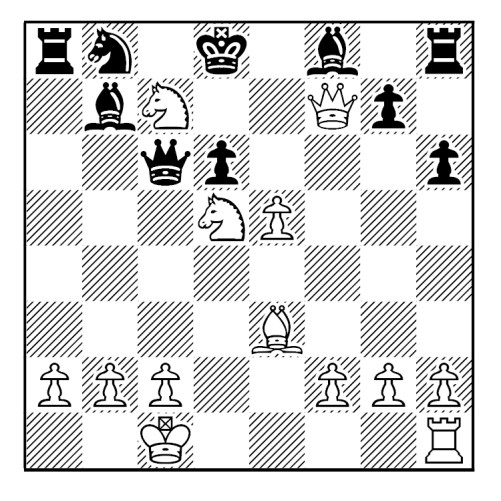
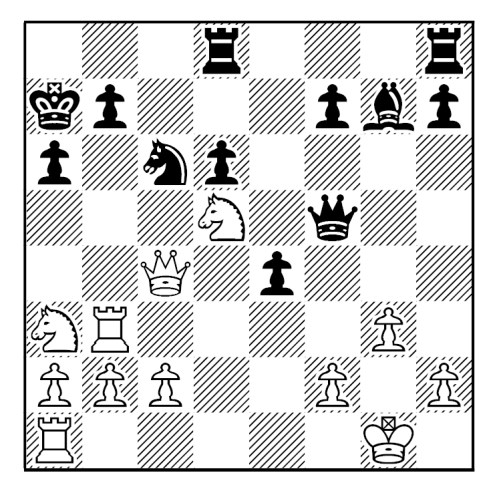
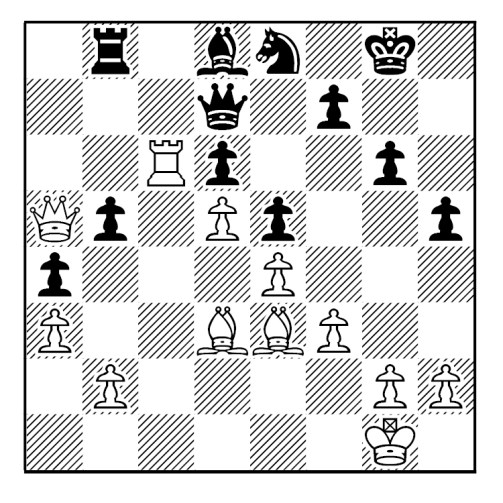
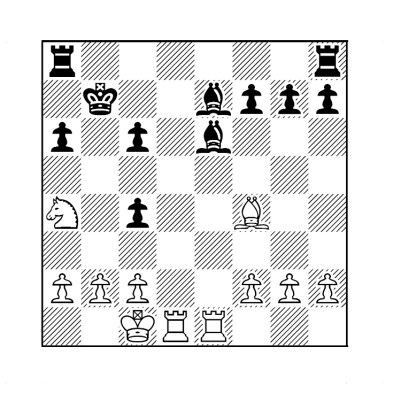
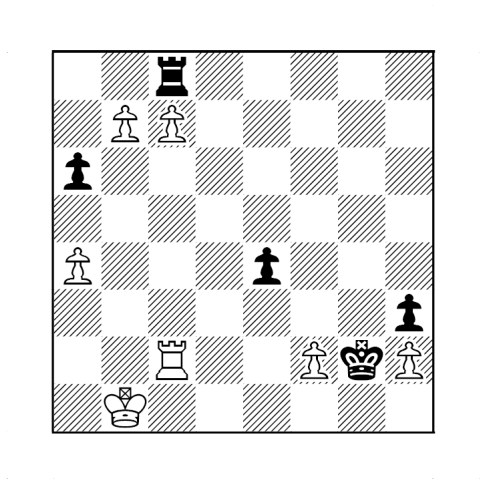
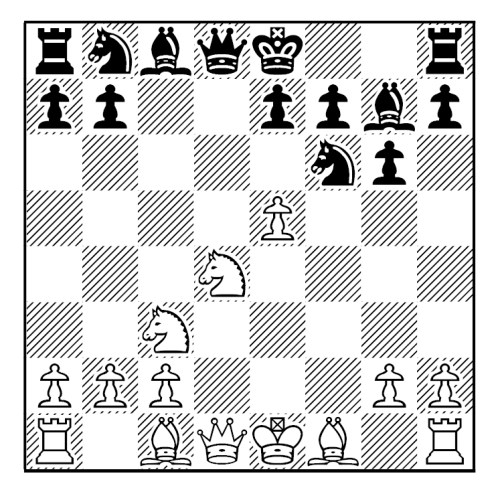
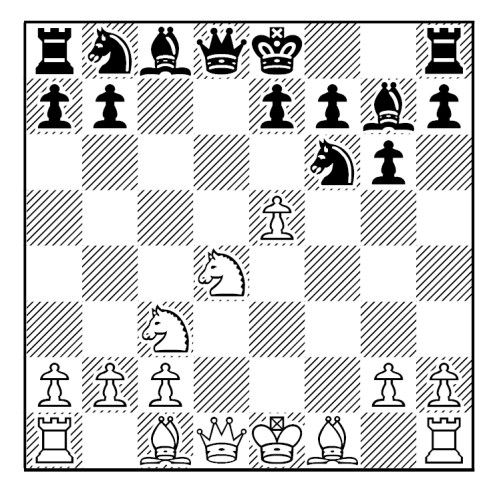
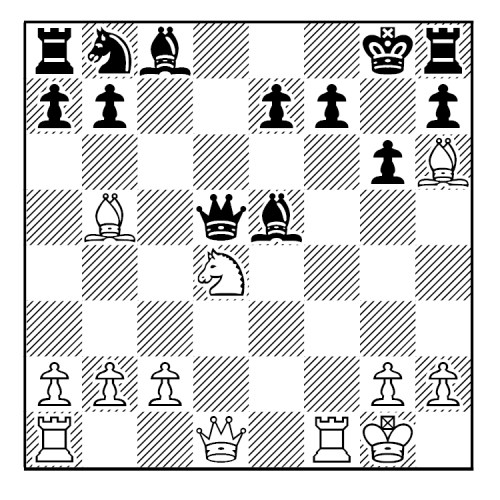
Micros?

If a miniature is 25 moves or less, then what is a game that is 10 moves or less? This was a vexing question a young teen wanted to answer back in the 1980s.

 
He wanted to collect these games for both study and fun. But how would he do it?

 
There was no Internet, no ECOs, and no PGN files. And while libraries did exist, there were only slim sections dedicated to the subject of chess. He asked his friends, at least the ones who played chess. But they didn’t know either.

 
So, he decided to create his own lexicon and organization for these games.

 
He first started off by asking himself, when is smaller than a “mini”. Why “micro” of course! And he loved the idea of micros being 10 moves or less as 10 is an easy number remember. And he knew he could memorize games at least 10 moves long. And of course, he didn’t have a word processor so he would have to copy these games by hand. And he was lazy.

 
So, he set up the following conditions. One, they all had to be 10 moves or less. Two, they would be organized by mates (i.e., winning a king), wining of a queen, winning of a piece, and “others”. Three, the listing of the games needed be flexible to incorporate additional games.


Here is his work.

(P.S.: I added some ECO codes, notes, and additional games  to his original manuscript – RME).


~~~~~~~~~~~~~~~~~~~~~~~~~~~~~~~~~~~~~~


MATING

 
Fool’s Mate
1.f3 e5 2.g4 Qh4mate 0-1


Scholar’s Mate
1.e4 e5 2.Bc4 Nc6 3.Qf3 Nd4? (> Nf6!) 4.Qxf7mate 1-0


Greco-N.N.,
Rome 1620?
1.e4 b6 2.d4 Bb7 3.Bd3 f5 4.exf5 (White is willing to give up his rook to get the king.) Bxg2 5.Qh5+ g6 6.fxg6 Nf6 (This is a huge error. Black has to play 6…Bg7 7.gxh7+ Kf8 8.hxg8=Q+ Kxg8 and while White’s rook may fall, Black has to worry about his very exposed king. Amusing by the way, is 6.fxg6 e5? 7.g7+ Ke7 8.Qxe5+ Kf7 9.gxh8=N#) 7.gxh7+ [White is now willing to give up his queen for the forced mate. King safety is more important than safety for the rook or queen, and even both. Note: While 7.g7+ Nxh5 8.gxh8=Q Bxh1 9.Qxh7 would eventually win, the text move is faster, and fast attacks are always better for winning the game (less mistakes possible) and for one’s own ego.] 7…Nxh5 8.Bg6mate 1-0

 
De Legal-Saint Brie
France, 1750
1.e4 e5 2.Nf3 d6 3.Bc4 Bg4 4.Nc3 Nc6

2020_01_30_A
5.Nxe5! Bxd1 6.Bxf7+ Ke7 7.Nd5mate 1-0

 
Arnold-Bohm
Munich, 1932
[B17]
1.e4 c6 2.d4 d5 3.Nc3 dxe4 4.Nxe4 Nd7 5.Qe2 Ngf6?? (If Black insists on moving one of his knights, then 5…Ndf6 is the only way to go.) 6.Nd6mate 1-0 (This game has been repeated dozens of times. Obviously, something to remember.)

 
Godai-Kieninger
Vienna, 1925
1.d4 Nf6 2.c4 e5 3.dxe5 Ng4 4.Bf4 Nc6 5.Nf3 Bb4+ 6.Nbd2 Qe7 7.a3 Ngxe5 8.axb4 Nd3mate 0-1 (Another game that has been repeated dozens of time.)

 
N.N.-Canal
Blindfold Game
New York, 1935
[C20]
1.e4 e5 2.Ne2 d5 3.exd5 Qxd5 4.Nbc3 Qa5 5.d4 Nc6 6.d5 Nb4 7.Bd2 Bf5 8.Rc1 Bxc2 9.Rxc2 Nd3mate 0-1


Holmberg-Hongset
corres.
Finland, 1962
1.e4 e5 2.Nf3 f6 3.Nxe5 Nc6 4.Qh5+ Ke7 5.Qf7+ Kd6 6.Nc4+ Kc5 7.Qd5+ Kb4 8.a3+ Ka4 9.b3mate 1-0


Teed-Delmar
New York, 1896
1.d4 f5 2.Bg5 h6 3.Bh4 g5 4.Bg3 f4 5.e3 h5 6.Bd3 Rh6 7.Qxh5+! Rxh5 8.Bg6mate 1-0


Hamlich-N.N.
Vienna, 1902
1.e4 d6 2.d4 Nd7 3.Bc4 g6 4.Nf3 Bg7 5.Bxf7+ Kxf7 6.Ng5+ Kf6 (6…Ke8 7.Ne6 wins the queen.) 7.Qf3mate 1-0


Rotman-Bornarel
Bern, 1992
1.e4 e5 2.Nf3 d6 3.d4 Bg4 4.dxe5 Bxf3 5.Qxf3 dxe5 6.Bc4 f6? 7.Qb3 Qd4?? 8.Bf7+ Ke7 [Stronger is 8…Kd8 9.Bxg8 (not 9.Qxb7 Qb4+ and Black cuts his losses to a single pawn..) 9…Qxe4+ 10.Be3 with the idea of Bd5 +-. An interesting and fun line for White is 10…Rxg8? 11.Qxg8 Qxg2 12.Qxf8+ Kd7 13.Qf7+ Kc6 (not 13…Kc8 14.Qe8#) 14.Nc3!! +- and while Black can restore material equality after 14.Qxh1+ 15.Ke2! Qxa1, he is mated by 15.Qd5#.] 9.Qe6+ Kd8 10.Qe8mate 1-0


WINNING THE QUEEN


Gibaud-Lazard
Paris 1924
[Note: There is considerable doubt about the authenticity of this game. But it is a nice miniature.]
1.d4 Nf6 2.Nd2 e5 3.dxe5 Ng4 4.h3? [4.Ngf3 Bc5 5.e3 Bxe3 6.fxe3 Nxe3 7.Qe2 Nxc2+ 8.Kd1 Nxa1 9.b3 (9.Ne4!? O-O!? 10.Bg5!? Qe8) d5 10.Bb2 (10.exd6!? Qxd6 11.Bb2) Nxb3 11.axb3 Be6 (11…Bg4 12.e6! Bxe6 13.Bxg7) 12.Qb5+! And with White’s active pieces, the position is suddenly unclear!] 4…Ne3! 0-1

 
Warren-Sellman
corres., 1930
1.d4 Nf6 2.c4 e5 3.dxe5 Ne4 4.a3 d6 5.exd6 Bxd6 6.g3?? Nxf2 (7.Kxf2 Bxg3+ wins White’s queen.) 0-1


Hernandez Hugo-Clara Melendez Romeo
Sao Paulo, Brazil, 1977
1.e4 d5 2.exd5 Qxd5 3.Nf3 Bg4 4.Be2 Nc6 5.d4 Bxf3? 6.Bxf3 Qxd4?? 7.Bxc6+ 1-0 (But it is almost certain it was played before. If so, who first played it?)


Sherlukov-Averichin
Moscow, 1979
1.e4 e6 2.d4 f5!?! (The Kingston Defence. It would be more popular, but Black keeps losing.) 3.exf5 exf5 4.Bd3 d6 5.Ne2 Qf6 6.O-O Ne7 7.Re1 Bd7 8.Nf4 Qxd4 9.c3 Qb6 10.Nd5 Qa5 11.Bb5! (11…Bxb5 12.b4 catches the queen.) 1-0


Krejcik-Baumgartner
Troppau, 1914
[C40]
1.e4 e5 2.Nf3 Bc5 3.Nxe5 Bxf2+ 4.Kxf2 Qh4+ 5.g3 Qxe4 6.Qe2! Qxh1 7.Bg2 1-0

 
Kolisch-Geake
Cambridge, 1860
1.e4 e5 2.Nf3 d6 3.d4 Bg4 4.dxe5 Bxf3 5.Qxf3 dxe5 6.Bc4 Nf6 7.Qb3 Qd7 8.Qxb7 Qc6? 9.Bb5 1-0


Blatny-Dasek
Chocen, 1950
[B57]
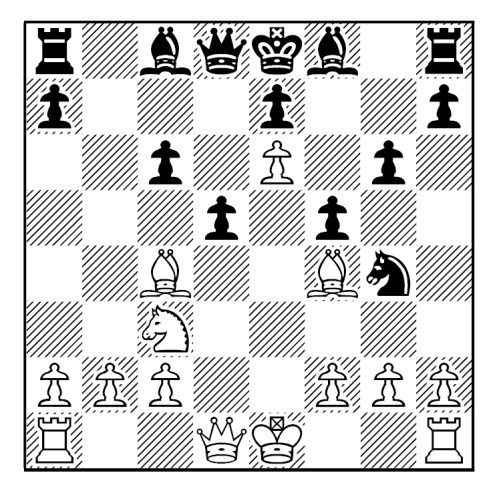
1.e4 c5 2.Nf3 Nc6 3.d4 cxd4 4.Nxd4 Nf6 5.Nc3 d6 6.Bc4 g6 7.Nxc6 bxc6 8.e5 Ng4 (8…dxe5?? 9.Bxf7+ wins the queen, which as occurred many, many times before. Black has blocked this threat but White finds another way!) 9.e6 f5 10.Bf4 d5
2020_01_30_B
11.Nxd5! cxd5 12.Bb5+ (A tactic worth remembering.) 1-0

 
Escalante-N.N.
Blitz Game
Pasadena, 1990
1.e4 e5 2.Nf3 Qf6 3.Nc3 Bc5 4.d4 exd4 (Bxd4) 5.Nd5 Qc6 (Qd8) 6.Ne5! Qa4 7.Bb5 Qa5+ (7…Qxb5? 8.Nxc7+ +-) 8.Bd2 Bb4 9.Bxb4 +- 1-0


Arnold-Hanauer
Philadelphia, 1936
1.d4 Nf6 2.c4 e5 3.d5 Bc5 4.Bg5 Ne4 5.Bxd8 Bxf2 0-1

 
Donovan-Bisguier
US Open, 1950
1.d4 Nf6 2.c4 e5 3.dxe5 Ng4 4.Nf3 Nc6 5.a3 d6 6.e3 Bf5 7.exd6 Bxd6 8.Be2 Qf6 9.Nd4 Nxf2! 10.Kxf2 Bc2+ 0-1


Kusin-Warfalamejew
Rjasan, 1973
1.e3 e5 2.d4 d5 3.Qf3 e4 4.Qf4 Bd6 0-1


WINNING A PIECE


Greco-N.N.
Italy, circa 1620
1.e4 e5 2.Nf3 d6 3.Bc4 Bg4 4.h3 Bxf3 5.Qxf3 Nf6 6.Qb3 Nxe4 7.Bxf7+ Kd7 8.Qxb7 Ng5 9.Bd5 Na6 10.Qc6+ Ke7 11.Qxa8 1-0


Simons-Loewe
London, 1849
1.e4 c5 2.Bc4 e6 3.Nc3 Ne7 4.f4 d5 5.Bb5+ Nbc6 6.d3 d4 7.Nce2 Qa5+ 0-1


IM Shirazi-IM Peters X25
US Ch.
Berkeley, CA, 1984
1.e4 c5 2.b4 cxb4 3.a3 d5 4.exd5 Qxd5 5.axb4? Qe5+ (Winning a rook.) 0-1 (This game remains the shortest game played in the US Championships.)

 
Szigethy-Deak
Zalakaros, 1988
1.e4 e5 2.Nf3 d6 3.d4 Bg4 4.dxe5 Nd7 5.exd6 Bxd6 6.Be2 Ngf6 7.Bg5 Qe7 8.Nc3 O-O-O 9.O-O Bxf3 10.Bxf3 Qe5 0-1

 
Escalante (1820)-Howell (1917)
November Budget Special
Westminster C.C., Nov. 19 1994?
1.e4 e5 2.Nf3 d6 3.Bc4 f5 4.d4 exd4 5.O-O fxe4 6.Bxg8 Rxg8 7.Ng5 Bf5 8.Qxd4 Qf6 9.Qd5 c6 10.Qxg8 h6 11.Nh7 1-0


OTHER REASONS

 
Korody-Bologh, 1933
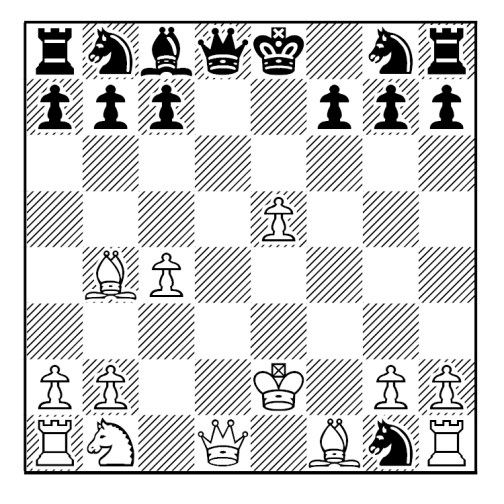
1.d4 d5 2.c4 e5 3.dxe5 d4 4.e3 Bb4+ 5.Bd2 dxe3 6.Bxb4 exf2 7.Ke2 fxg1=N+[The (in)famous “Lasker Trap”. White loses no matter what he does. And don’t ask me why it’s called the “Lasker Trap” – Bologh played it first!] 
2020_01_30_C
8.Rxg1? Bg4+ 0-1

 
E. Schiller-ACCULAB
corres., 1991
1.e4 e5 2.Nf3 Qf6 3.Nc3 Nc6 4.Nd5 Qd6 5.d4 Nxd4 6.Nxd4 exd4 7.Bf4 Qc6 8.Nxc7+ Ke7 9.Nxa8 Qxe4+ 10.Be2 1-0 (Black is completely busted.)

 
P. Lang-H. Multhopp
World Open, 1995
[A02]
1.f4 e5 2.fxe5 d6 3.exd6 Bxd6 4.Nf3 Nf6 5.Nc3 O-O 6.e4 Re8 7.d3 Ng4 8.Be2 Nxh2! 9.Nxh2 Bg3+ 10.Kf1 Qd4 0-1

 
An interesting draw at the end provides food for thought.

 
Palatnik (2445)-Balashov (2550)
Voronezh, Russia, 1987
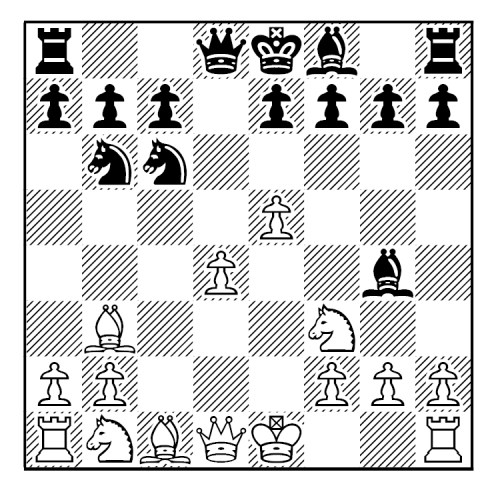
1.d4 d5 2.c4 dxc4 3.e4 Nf6 4.e5 Nd5 5.Bxc4 Nb6 6.Bb3 Nc6 7.Nf3 Bg4
2020_01_30_D
8.Ng5 Bxd1 9.Bxf7+ Kd7 1/2-1/2


So why didn’t this young man continue his work?

 
Well, he did. But now he uses a laptop with a word processor.

Reviewing A Classic

What makes a “classic”? It is something that keeps its value or interest for years or decades.


One book that fits this definition is “100 Soviet Miniatures”.


Beginning in April 1962 issue of the British Chess Magazine (BCM), P.H. Clark wrote a series of articles under the heading of “Soviet Miniatures”. The articles were collected and published together as “100 Soviet Miniatures” in 1963.


The games are short (after all, this is a miniatures book!) and enjoyable. The notes are concise, clear, and revealing. Finally, The book is written for the club player (which includes most of us).


And he is correct in his analysis. The progress of chess theory, even with the constant use of engines, do not overturn his notes. The book appears to be out of print, but you can find a used one on Amazon (which has everything).


The only drawback for some players is that the games and notes are in Descriptive Notation (DN) rather than Algebraic Notation (AN).
I’ve copied two of the 100 games, translated them into AN, and added my notes when necessary. See if you can’t agree, this book is a classic.


~~~~~~~~~~~~~~~~~~~~~~~~~~~~~~

~~~~~~~~~~~~~~~~~~~~~~~~~~~~~~

M. Yudovitch Jr.-Strom
Team Ch. Of the “Spartak” Club
Moscow, 1961
[B40]
[P.H. Clark, “Soviet Miniatures”, BCM, Sept. 1962, pg. 266]
1.e4 c5 2.Nf3 e6 3.d4 cxd4 4.Nxd4 Nf6 5.Nc3 Bb4 6.e5 Ne4 7.Qg4 Qa5 8.Qxe4 Bxc3+ 9.bxc3 Qxc3+ 10.Kd1 Qxa1 11.Nb5! d5!


[Black played the weaker 11…Kd8 in Tamas Ruck (2310)-Zsolt Korpics (2355), Koszeg, Hungary, 1996 and got promptly punished after 12.c3! Qxa2 13.Bg5+ f6 14.exf6! +- Qa1+ 15.Kd2 Qb2+ 16.Qc2 Qxc2+ 17.Kxc2

2020_01_23_A
1-0 (White threatens 18.f7#. On other moves Black loses the rook, and the game, to 18.fxg7+.) – RME]

12.exd6 Na6 13.d7+ Kxd7?


[As Koifman demonstrated, the correct policy was to sacrifice a piece by 13…Bxd7 14.Qxb7 O-O! In the centre the black King is far more exposed that White’s, which soon finds a safe post at e2.

We assume Clark meant Ilya Koifman, the Russian master.

Alexander Kuzovkin-Ilya Koifman
Moscow Burevestnik- Ch., 1974
(B79)
1.e4 c5 2.Nf3 d6 3.d4 cxd4 4.Nxd4 Nf6 5.Nc3 g6 6.Be3 Bg7 7.Bc4 O-O 8.Bb3 Nc6 9.f3 Bd7 10.Qd2 Qa5 11.O-O-O Rfc8 12.Rhe1 Ne5 13.Bg5 h6 14.Bxh6 Bxh6 15.Qxh6 Rxc3 16.bxc3 Qa3+ 17.Kb1 a5 18.Qc1 Qc5 19.a3 a4 20.Ba2 Ra6 21.Re3 Rb6+ 22.Ka1 Nc4 23.Bxc4 Qxc4 24.Qd2 e5 25.Ne2 Be6 26.Nc1 d5 27.exd5 Nxd5 28.Rde1 Bf5 29.Rxe5 Qb5 30.Nd3 Bxd3 31.cxd3 Qc5 32.Qc1 Rb3 33.Rxd5 Rxa3+ 34.Kb2 Qb6+ 35.Kc2 Qb3+ 36.Kd2 Ra2+ 37.Ke3 Qxd5 38.d4 Rxg2 0-1.]


14.Bc4 Rd8 15.Ke2 Ke8 16.Re1 (Threatening 17.Bg5. White is now fully developed and is ready for the attack.) 16…Qf6 17.Qxh7 b6 (In order to be able to block the enemy c4-Bishop by …Nc5 after 18.Qh8+ Ke7 19.Ba3+.) 18.Ba3 Bb7 (Now he has the square c1 for his King, White therefore decides to recover the exchange.) 19.Nd6+ Rxd6 20.Bxd6 Qg5 (Defending against 21.Bb5+ Kd8 Qh8#. White replies by renewing the threat of the Bishop check, and this time it cannot be stopped.) 21.Qd3 Nc5 22.Bb5+ Nd7 23.c4 (Since the immediate 23.Bxd7+ Kxd7 24.Bf4+ would be met by 24…Qd5. Now 23…Qd8 permits the white Queen to return to h7 and force the win, so Black is reduced to desperation.) 23…Qxg2 24.Bc7 Bc6 (24…Bc8 was useless because of 25.Rd1 Qg4+ 26.Kf1 e5 27.Bc6, etc. The text move gives White the chance to bring off a more striking finish on the same lines.) 25.Rg1!

2020_01_23_B

(If the Rook is captured then 24.Bxc6 wins; while 25…Qe4+ 26.Qxe4 Bxe4 loses to 27.Rd1. So -) 1-0


Remeniuk-Stein
Ukraine Ch.
Kharkhov, 1959
[B80]
[P.H. Clarke, “100 Soviet Chess Miniatures”, Game # 45]
(While there was a certain air of the rustic about the last two games, the next is more elegant and thereby a finer illustration of the virtues of the modern approach. Black selects a variation very much in vogue at present, and his opponent evidently decides that the second player ought not to be allowed to get away with such transgressions of the natural laws. Accordingly, he sacrifices first a piece and then the exchange and pursues the whole attack with great vigour to the end. When it is over one is left with the impression that whatever the final word is as to the correctness of the initial offer, White really had created something.) 1.e4 c5 2.Nf3 d6 3.d4 cxd4 4.Nxd4 Nf6 5.Nc3 e6 6.Bg5 (The value of this move is not so clear here because Black, having already moved his e-pawn, can immediately drive off the Bishop without having his pawn structure affected.) 6…h6 7.Be3 (After 7.Bxf6 Qxf6 8.Ndb5 Qd8 White makes no progress and the absence of his important black-squared Bishop may be felt in the long run. – Clark is entirely right – RME) 7…a6 8.Qf3 (Concentrating on rapid development – the opposite to Black.) 8…Qc7 9.O-O-O b5 (Safer is 9…Nc6 to be followed by …Bd7 and …0-0-0. White is so indignant at the sight of the text move, which disdains the principle he himself has been so careful to keep, that he there and then determines to punish the offender.) 10.Bxb5+!? axb5 11.Ndxb5 Qc6? (In spite of appearances to the contrary 11…Qd7 is a better defence; the intention is to answer 12.e5 with 12…Bb7 and thus gain a valuable tempo. Indications are that Black should be able to hold the position, but with all the possibilities at White’s disposal it would be a very difficult task in practice. Here are some variations: 11…Qd7 12.e5 Bb7 13.Qg3 Ne4 14.Nxe4 Qxb5 15.Nxd6+ Bxd6 16.exd6 Rxa2 17.Qxg7 Ra1+ 18.Kd2 Qd5+ 19.Bd4 Rxd1+ 20.Rxd1 Rf8 and still the outcome is unclear ; 11…Qd7 12.Nxd6+ Bxd6 13.e5 Bb7 14.Qg3 Bxe5 15.Qxg7 Rg8 16.Rxd7 Rxg7 17.Rxb7 with a complicated ending ; 11…Qd7 12.Rd2 Bb7 13.Rhd1 Nxe4 14.Nxe4 Qxb5 15.Rxd6 Nc6 with chances for both sides.) 12.e5! (The point now is that after the exchange of Queens there is Nc7+, and this disorganizes Black completely.) 12…Nd5 (Holding everything…until the next crashing blow.) 13.Rxd5! exd5 14.Nxd5 Bb7 (Although he has an extra Rook, Black is without resource against all White’s threats, e.g. 14…Be6 15.Ndc7+ Kd8 16.Qxc6 and Nxa8 ; 14…Bd7 15.Nbc7+ Kd8 16.Qxf7 dxe5 17.Nxa8 Qxa8 18.Rd1 with a winning attack ; 14…Rxa2 15.Kb1 Ra5 16.Nbc7+ Kd8 17.Qxf7 dxe5 (otherwise e5-e6 comes.) 18.Rd1 and again White should win. In every case Black pays the penalty for not having brought his men out earlier.) 15.Nbc7+ Kd8 16.Qxf7

2020_01_23_C
16…Na6 (White threatened to mate beautifully by 17.Ne6+ Kc8 18.Qe8+! Qxe8 19.Nb6#. The text move permits another delightful finish, in which the White Knights leap and prance around the Black King.) 17.Ne6+ Kc8 18.Nb6+ Kb8 19.Nd7+ 1-0

STOP BRAGGING!

There must be something between large egos and chess players. They, the players, are known for bragging and boasting for the prowess in the game, sometimes even justified. But really, do we need all this boasting, bragging, arrogance, crowing, cockiness, after every game?? What ever happened to just being a gentleman? Isn’t that what tutors and teachers of the game (try to) install into their students?

 
But such attitudes go at least far back as the 19th century. Morphy faced some pretty big egos and when he traveled to Europe and some American players were apparently doing the same in the states.

 
Maybe it’s now just part of the game.


It was back in the 1980’s when I was first started to study and learn chess, as opposed to just playing the game. Labate’s Chess Centre held a blitz tournament every Friday night and I took part in many of these tournaments.


During this particular Friday night there was an expert chess player. He was slightly tall, and slightly skinny lad in his 20s. He had dark hair and walked around the room with an air of arrogance. He was also my first-round opponent.

 
We walked to the table and even before we shook hands he said he was better than me and was going to beat me. I remembered replying, “Shall I resign now?”


He didn’t expect that. But we still had a game to play.

1.e4 c5 2.f4 (The Grand Prix attack. It was very popular in the latter part of the 1980s. Black has a number of ways to combat this King’s Gambit version of the Sicilian, including 2…d5. Which is the main reason I gave up on this Sicilian sideline.) 2…d6 3.Nf3 Bg4?! (This is not the best as the game now mirrors the Kings’ Gambit more closely; a opening I knew- and still know – very well.) 4.Bc4 Nc6 5.e5!? (I am guessing my opponent would have difficulty with this move as he was playing very, very fast, trying to be beat me on time as well as position. All is fair in a 5 minute game.) 5…dxe5 (My opponent actually laughed at this point. He whispered to me, “I’ve won a pawn.” Then he looked at me before continuing, “Now what?”) 6.Nxe5 (I remember thinking, and maybe I did respond to him with, “But I’ve won a piece”. He looked at the free queen and smiled and smiled and excitedly asked me, “How are going to win without your queen?” He grabbed it quickly.) 6…Bxd1 (I just sat there for a little while as my opponent basked in his glory and gluttony. Have to admit it, but I did enjoy savoring the moment before playing my move.) 7.Bxf7# 1-0


And my opponent stood up and walked away without saying a word or shaking my hand. What did all his boasting do for him? Nothing but a source of a amusement for his opponent.


It was in 1991 that the US Open was last held in Los Angeles, CA. I played in that tournament and remembered playing chess morning, noon, and night. I know I shipped at least a few meals during that tournament.
Anyway…


One of my opponent was slightly drunk when he and I sat down to play in the Open. Unfortunately, he slightly squiffy. He walked with a off-balance gait, spoke in a slurred speech and I smelled alcohol on his breath when he sat down. Yup, he was drunk.


Gomez Baillo-Escalante
US Open
Los Angeles, Aug. 6 1991
1.e4 e5 2.Nf3 Nc6 3.Bb5 a6 4.Ba4 Nf6 5.O-O Be7 6.Re1 b5 7.Bb3 O-O 8.c3 d5 (We’ve reached the Marshall Attack. This Black defence was more popular in the early 1990s and I was keen to try it out in this Open.) 9.exd5 Nxd5 10.d4 (More common is 10.Nxe5 Nxe5 11.Rxe5.) 10…exd4 11.Nxd4 Nxd4 12.cxd4 (12.Qxd4 is better.) 12…Be6 13.Nc3 c6 14.Qh5 Qd7 15.Nxd5 cxd5 16.Bc2 g6 17.Qe5 Bd6 18.Qg5 Be7 19.Qh6 Bf6 20.Bg5 Bg7 21.Qh4 Bf5 22.Rac1 Rac8 23.Bxf5? Rxc1! 24.Rxc1 Qxf5 25.g4? Qe4 26.Be3 Bxd4 -+ 27.Bh6 Re8 28.Bg5 Bxb2 29.Qh6 Bxc1 30.Bxc1 Qxg4+ 31.Kf1 Qe2+ (with the idea of Re4) 0-1


Now, it was good game. But I didn’t feel right about getting it published. After all, I beat someone who was clearly not at his best. I wanted to be humble.


Well, two years later, a CD collection of chess games titled, Déjà vu, had this game in it. To this day, I don’t know how it ended up in there.


So much for being humble. I didn’t brag, but still, somehow, it got published.

 
But does such a thing as misplaced bragging happen in Master chess? I found this game in Chernev’s excellent “The Fireside Book of Chess”.]

 
Frank Marshall – Duz-Hotimirsky
Carlsbad, 1911
[D30]
[Chernev spelled “Carlsbad” as “Karlsbad”, a more popular form of spelling the city name in the 1940’s. All other notes by Chernev.]
1.d4 d5 2.c4 e6 3.Nf3 dxc4 4.e3 a6 5.Ne5 Nd7 6.Nxd7 Bxd7 7.Bxc4 Bc6 8.O-O Bd6 9.Nc3 Qh4 10.f4 Nf6 11.Bd2 Ng4 12.h3 Qg3

2020_01_16

(Black threats are 13…Qh2# and 13…Qxg2#. Dus had already run into the next room, exclaiming excitedly in his broken German, “Poor Marshall dead! Must be mate!” …) 13.Qxg4 (… One minute later he returned with “I am dead”.) 1-0

WGM Anna Akhsharumova

WGM Anna Akhsharumova was born in the Soviet Union in 1957. She earned her WIM title in 1978 and her WGM title in 1989.


She won the USSR Women’s Championships in 1976 and 1984. And in 1987, she won the U.S. Women’s Chess Championship with a perfect score. She thus, in a dramatic fashion, became the only woman to win both the USSR Championship and the US Championships.


And today is her birthday!


Congratulations Anna!


Below are a few of my favorite games of WGM Anna Akhsharumova.


Anna Akhsharumova-Natalia Titorenko
Moscow Women’s Ch., 1974
1.e4 c5 2.Nf3 Nc6 3.d4 cxd4 4.Nxd4 Nf6 5.Nc3 e5 6.Ndb5 d6 7.Bg5 a6 8.Bxf6 gxf6 9.Na3 f5 10.Bd3 (Alternate moves are 10.Bc4 and 10.Qh5.) 10…Qg5 11.g3 Be6 12.exf5 Bxf5 13.Nd5 O-O-O 14.Bxf5+ Qxf5 15.Qd3 e4 16.Qc4 Qf3 17.O-O Kb8 18.Rfe1 Bg7 19.Re3 Qf5 20.Rb3 Ka7

2020_01_09_A

21.Nb5+! axb5 22.Qxb5 Rd7 23.Ra3+ Kb8 24.Ra8+ Kxa8 25.Nb6+ Kb8 26.Qxf5 Re7 27.Nd5 Nd4 28.Qg4 f5 29.Qd1 Ree8 30.c3 Nf3+ 31.Kg2 Re6 32.a4 Be5 33.a5 Rh6 34.h4 Rg8 35.a6 bxa6 36.Qb3+ Kc8 37.Ne7+ 1-0


WIM Anna Akhsharumova (2290)-Catherine Dodson (2000)
US Women’s Ch.
Estes Park, 1987
1.d4 Nf6 2.c4 g6 3.Nc3 Bg7 4.e4 d6 5.f3 O-O 6.Nge2 e5 (7…c5 is probably better. The text move often leads to Black’s defeat, sometimes in spectacular ways.) 7.Bg5! (The standard response.) 7…h6

[Bogdanovski (2449)-Masterson (2000), European Club Ch., Crete, 2003, continued instead with 7…c6 8.Qd2 Nbd7 9.d5 Qc7 10.Ng3 a6 11.Bh6 cxd5 12.cxd5 b5 13.h4 Bxh6 14.Qxh6 b4 15.Nd1 Nc5 16.Qd2 a5 17.h5 Ba6 18.Bxa6 Rxa6 19.Ne3 Raa8 20.Nef5 Rac8 21.Qg5 Qd8 22.hxg6 fxg6 23.Rxh7 1-0]

8.Be3 c6 9.Qd2 h5 10.d5 cxd5 11.cxd5 Bd7 12.Nc1 Na6 13.Be2 Nc5 14.O-O a5 15.Nd3 Nxd3 16.Bxd3 a4 17.a3 Qa5 18.Qf2 b5 19.Na2 Rab8 20.Nb4 Rfc8 21.Rac1 Qd8 22.Qe2 Ne8 23.Rxc8 Qxc8 24.Rc1 Nc7 25.Nc6 Bxc6 26.Rxc6 Qd7 27.Qc2 Ne8 28.Qd2 Bf6 29.Qa5 Bd8

2020_01_09_B
30.Qa7! Qxa7 31.Bxa7 Rb7 32.Rc8 Rxa7 33.Rxd8 Kf8 34.Bxb5 Re7 35.Bxa4 f5 36.Rxe8+ (White wins by pushing her two extra queenside pawns.) 1-0


WIM Anna Akhsharumova (2385)-IM Igor Ivanov (2505)
St. John Open, 1988
1.d4 Nf6 2.c4 d6 3.Nc3 g6 4.e4 Bg7 5.f3 O-O 6.Nge2 c5 7.d5 a6 8.a4 e5 9.Bg5 h6 10.Be3 Nh7 11.h4 f5 12.h5

[M. Admiraal (2479)-V. Blom (2269), Andorra Open, Escaldes, July 23 2018 instead went 12.Qd2 f4 13.Bf2 Nf6 14.g4 Bd7 15.a5 b5 16.axb6 Qxb6 17.Nc1 Ra7 18.Na4 Bxa4 19.Rxa4 a5 20.Be2 Na6 21.Rxa5 Nb4 22.Rxa7 Qxa7 23.Qxb4 Rb8 24.Qa3 1-0 The interesting thing is that neither this game or the main game, did White castle. Did they find a way to press the attack that was so overwhelming that they didn’t need to worry about king safety?]

12…Qe8 13.hxg6 Qxg6 14.Qc2 Ng5 15.Bf2 fxe4 16.Ng3 Nd7 17.Ncxe4 Nf6 18.Nxf6+ Qxf6 19.Nh5 Qf7 20.Nxg7 Kxg7 21.Bd3 Bf5 22.Be3 Qg6 23.Bxf5 Rxf5 24.a5 e4 25.f4 Nh7 26.g4 Rf6 27.f5 Qe8 28.Qd2 Qe5 29.Bxh6+ Kh8 30.Ra3 Rg8 31.Rah3 Rxg4 32.Bf4 Qxf5 33.Rxh7+ Qxh7 34.Rxh7+ Kxh7 35.Qh2+ Kg6 36.Bxd6 (White again wins with two extra pawns.) 1-0


Alison Coull (2005)-WIM Anna Akhsharumova (2385)
Thessaloniki Women’s Ol.
Greece, 1988
1.e4 e6 2.d4 d5 3.e5 c5 4.Nf3 Nc6 5.Bd3 cxd4 6.O-O (The Ruisdonk Gambit in the Advance French. It should be more popular.) 6…Nge7 7.Bf4 (White has two reasonable moves here, the text move and 7.Re1. It’s not possible to decide which is the better move at this time.) 7…h6 8.h4 Qb6 9.Qc1 Bd7 10.a3 Na5 11.b4 Nc4 12.Nbd2 Rc8 13.Nb3 Nc6 14.Qd1 Nb2 15.Qd2 Nxd3 16.cxd3 Be7 17.Bg3 O-O 18.Rab1 a6 19.h5 f5 20.Qe2 Be8 21.Nfd2 f4 22.Bh2 Rf5 23.g4 fxg3 24.Bxg3 Bxh5 25.f3 Rcf8

2020_01_09_C

0-1 [White’s pawns on e5, f3, and d4 (after …Qb5) are weak and Black is about to break through. One plausible plan is …Bg5, with the idea of …Be3. If White plays to Bf2 to nullify Black’s bishop, then …Nxe5 brings new problems for White.]


Ingrid Dahl (2100)-WGM Anna Akhsharumova (2395)
Women’s Izt.
Kuala Lumpur, 1990
1.e4 e6 2.d4 d5 3.Nc3 Bb4 4.a3 Bxc3+ 5.bxc3 dxe4 6.Qg4 Nf6 7.Qxg7 Rg8 8.Qh6 Rg6 9.Qe3 Nc6 10.Bb2 Ne7 11.Nh3 Bd7 12.c4 Nf5 13.Qe2 c5 14.dxc5 Qa5+ 15.Qd2 Qxc5 16.Qb4 Qc7 17.O-O-O Bc6 18.Qd2 Ng4 19.Qc3 Rg8 20.Be2 h5 21.f3 Nge3 22.Rd2 Rd8 23.fxe4?! (Winning a pawn while her house is burning down. Better is 23.Rxd8+ to relieve some of the pressure.)

2020_01_09_D
23…Rxd2! 24.Qxd2 Bxe4 25.Bd3 Rxg2 26.Qc3 Bxd3 27.Qxd3 Rxc2+ 28.Kb1 Qb6 0-1


Erlingur Thorsteinsson-WGM Anna Akhsharumova (2385)
Reykjavik Open
Iceland, 1996
1.e4 e6 2.d4 d5 3.Nc3 Bb4 4.Nge2 dxe4 5.a3 Be7 6.Nxe4 Nf6 7.N2c3 O-O (The problem is where does White develop his light-squared bishop?) 8.Bc4?! (As it turns out the bishop is misplaced here. Perhaps 8.Bd3 is a better choice.) 8…Nc6 9.Be3 Nxe4 10.Nxe4 f5 11.Nc5 f4 12.Nxe6 Bxe6 13.Bxe6+ Kh8 14.Bc1 Nxd4 15.Bc4 Bc5 16.O-O Qh4 17.Re1 Rad8 18.Bd3 Nb3 19.Qf3 Nxa1 20.Re5 Rxd3 21.cxd3 Nb3 22.h3 Qxf2+ 23.Qxf2 Bxf2+ 24.Kxf2 Nxc1 25.Re7 Nxd3+ 26.Ke2 Nxb2 27.Rxc7 Rb8 28.Kd2 h6 29.Kc2 Na4 30.Rc4 b5 31.Rxf4 a5 32.Rf7 Rc8+ 0-1

Sibling Rivalry?

What do you do if you are an IM and you have to play a GM? One who is a sibling, and knows all about you?

 
For some ideas, please play over the game below.

 
IM Sofia Polgar-GM Judit Polgar (2696)
Match des Championnes Rapid
France, May 14 2013
1.e4 c5 2.Nf3 d6 3.d4 cxd4 4.Nxd4 Nf6 5.Nc3 a6 6.Bc4 Nc6 7.Nxc6

[By far, the most common move. Black, however, has the interesting. 7…Qc7!? which warrants further study.

Henryk Gaida (2195)-Kamal Hussain
corres.
ICCF WT/M/GT307, 1992
7…Qc7 8.Bxf7+!? Kxf7 9.Nd4 e6 10.O-O b5 11.a3 Bb7 12.f3 d5 13.exd5 Nxd5 14.Ne4 Be7 15.Kh1 h6 16.Re1 e5 17.Nf5 Rhe8 18.Nxe7 Rxe7 19.Ng3 Nf6 20.Nf5 Rd7 21.Qe2 e4 22.fxe4 Bxe4 23.Ne3 Rad8 24.a4 Qb7 25.axb5 axb5 26.Kg1 Kg8 27.Ng4 Bxg2 28.Bxh6 Nxg4 1/2-1/2.]

 
7…bxc6 8.e5 d5


[Now if you are an GM, then you won’t fall for any of the following;

Reinhold Soelter (2164)-E. Heuer
OWL Ch.
Borgholzhausen, Germany, 1968
8…Ng8 9.Qf3 d5 10.Nxd5 Bb7 11.Nc7+ Qxc7 12.Qxf7+ 1-0

Moutousis (2422)-Skoularikis (2224)
Athens, 1988
8…Nd7 9.e6 fxe6 10.Bxe6 Nc5 11.Bxc8 Rxc8 12.O-O g6 13.Be3 Nd7 14.Ne4 Qa5 15.Re1 Kd8 16.Bd2 Qd5 17.c4 Qxc4 18.Ba5+ Ke8 19.Nxd6mate 1-0]


8…d5 9.exf6 dxc4 10.Qxd8+ Kxd8 11.fxe7+ Bxe7


[And you would also be aware of this game and ideally would have found an improvement over Black’s strategy.

Lewis-Bekerman
South Africa, 1956
11.fxe7+ Bxe7 12.Bf4 Bf5 13.O-O+ Kc8? 14.Na4 Kb7 15.Rhe1 Be6?
2019_12_26_A
16.Rxe6! fxe6 17.Rd7+ Kc8 18.Nb6mate 1-0. But your IM sibling changes the move. So now you are on your own.]


12.Be3 Be6 13.O-O-O+ (This move is still a good one as it safeguards the white king, develops a piece, and coordinates White’s active pieces.) 13…Kc8 14.Na4 Rb8 15.Bc5 Bg5+ 16.Kb1 Rb5 17.Bd4 Be7 18.Rhe1 Rd8 19.g3 g5? 20.Nb6+ Kb7 21.Nxc4 +- Rbd5 22.c3 c5 23.Ne3 cxd4 24.Nxd5 Rxd5 25.Rxd4 Rf5 26.Rxe6 fxe6 27.Rd7+ Kc6 28.Rxe7 Kd5 29.Rd7+ Ke4 30.Rd2 Kf3 31.b4 e5 32.c4 e4 33.c5 Rf6 34.Rc2 Rf8 35.c6 h5 (Black’s moves are merely fluff. White is easily winning on the queenside.) 36.c7 Rc8 37.a4 h4 38.gxh4 gxh4 39.b5 h3 40.b6 Kg2 41.b7
2019_12_26_B
41…Rxc7 42.Rxc7 Kxh2 43.b8=Q (Winning in the same number of moves is 43.Rg7 e3 44.b8=Q+ Kh1 45.Qg3.) 43…Kg2 44.Rg7+ Kh1 45.Qg3 h2 46.Qg2mate 1-0

A Dragon Trap

Curious-Blue-Dragon-and-Drake-Studying-Giant-Book-of-Magic-Statue-19-in.

You may know it already. Or maybe you just heard about it.


But there is a trap in the Sicilian Dragon which catches many players each year. Including Masters.


And if you can defeat a Master within a few moves of the game; well, it’s probably something worth memorizing.


First some background information.


The Sicilian Dragon is a large complex of moves and variation that all feature a fianchettoed bishop on g7.


This trap is to be found in the Levenfish Variation and is defined as 1.e4 c5 2.Nf3 d6 3.d4 cxd4 4.Nxd4 Nf6 5.Nc3 g6 6.f4 (B71, if you are familiar with ECO).

The reasoning behind 6.f4 is to support a large center for White and to support a well-timed e5.


The first reason is easy to see. The second is not so easy as one has to visualize such a move (e5) and determine if it is a threat after each and every move.


In fact, many players do not suspect that .e5 may be coming so soon in the game and confidently, and yet innocently, play 6…Bg7?, which gives White a huge, almost winning, advantage.


The moves are 1.e4 c5 2.Nf3 d6 3.d4 cxd4 4.Nxd4 Nf6 5.Nc3 g6 6.f4 Bg7. And now White plays 7.e5, which attacks the knight with White having a strong center and better mobility for his pieces.


Even not reaching the main trap of the line, Black can lose very, very fast.


FM Perelshteyn-Shivaji (2230)
Pan Am Intercollegiate, 1998
1.e4 c5 2.Nf3 d6 3.d4 cxd4 4.Nxd4 Nf6 5.Nc3 g6 6.f4 Bg7 7.e5 dxe5 8.fxe5
2019_12_19_A8…Nfd7 (8…Nd5 9.Bb5+ ; 8…Ng4 9.Bb5+ Nc6 10.Nxc6 Qxd1+ 11.Nxd1 Bd7 12.Nd4 Bxe5 13.Bxd7+ Kxd7 14.Nf3) 9.e6 Ne5 10.exf7+ Kxf7 11.Be2 Nbc6 12.O-O+ Bf6 13.Nxc6 bxc6 14.Bf4 Kg7 15.Qc1 h6 16.Kh1 Qb6 17.Ne4 Be6 18.Be3 Qc7 19.Nc5 Bf7 20.Bf4 Qb6 21.Qe3 Nc4 22.Ne6+ Bxe6 23.Qxe6 Na5 24.Be5 Qb7 25.Ba6 1-0


Hugo Spangenberg-Sergio Medina
Buenos Aires, 1999
1.e4 c5 2.Nf3 d6 3.d4 cxd4 4.Nxd4 Nf6 5.Nc3 g6 6.f4 Bg7 7.e5 Nfd7 8.e6 Nf6 9.Bb5+ Kf8 10.exf7 Kxf7 11.Qf3 e6 12.Be3 d5 13.O-O-O Rf8 14.h4 Nc6 15.h5 Ne7 16.g4 Kg8 17.hxg6 hxg6 18.g5 Ng4 19.Qxg4 Bxd4 20.Bxd4 1-0


L. Zsiltzova Lisenko (2284)-P. Berggren (1913)
World Blind Ch.
Goa, India, Oct.9 2006
1.e4 c5 2.Nf3 d6 3.d4 cxd4 4.Nxd4 Nf6 5.Nc3 g6 6.f4 Bg7 7.e5 Ng4 8.Bb5+ Bd7 9.Qxg4 dxe5 10.fxe5 Bxe5 11.Bxd7+ Nxd7 12.Nf3 Bg7 13.O-O O-O 14.Kh1 Rc8 15.Qh4 Bxc3 16.bxc3 Rxc3 17.Bh6 Rxc2 (If 17…Re8, then 18.Qd4 still wins.) 18.Bxf8 Nxf8 19.Qa4 Qc7 20.Qxa7 e5 21.Qe3 Nd7 22.Rac1 e4 23.Ng5 Qc5 24.Qxc5 Rxc5 25.Rxc5 1-0


D. Tahiri (2099)-F. Niehaus (2204)
Lichtenberger Sommer
Berlin, Aug.24 2006
1.e4 c5 2.Nf3 d6 3.d4 cxd4 4.Nxd4 Nf6 5.Nc3 g6 6.f4 Bg7 7.e5 Nh5 8.Bb5+ Bd7 9.e6 fxe6 10.Nxe6 Bxc3+ 11.bxc3 Qc8 12.Bxd7+ Nxd7 13.O-O Nc5 14.Qd4 Nf6 15.Ng5 Qf5 16.Re1 Kd7

2019_12_19_B
17.Re5! 1-0


The prevalent thought among most Black players at this point to first remove the attacking pawn from e5 and then worry about the knight. This idea, while valid in many positions in chess, actually places Black in worse position, due to the now-opened lines White has his disposal.


Let’s review the moves once again.


1.e4 c5 2.Nf3 d6 3.d4 cxd4 4.Nxd4 Nf6 5.Nc3 g6 6.f4 Bg7 7.e5 dxe5 8.fxe5


Black still has his knight under attack and he has to do something. Meanwhile, White has increased his attacking possibilities. White’s win is more certain.


V. Ortiz-J. Romagosa
corres., 1946
1.e4 c5 2.Nf3 d6 3.d4 cxd4 4.Nxd4 Nf6 5.Nc3 g6 6.f4 Bg7 7.e5 dxe5 8.fxe5 Bg4 9.Bb5+ Nbd7 10.Qd3 Ng8 11.Qe4 Bxe5 12.Qxe5 Nf6 13.Bh6 Qb8 14.Qxb8+ Rxb8 15.Bg7 Rg8 16.Bxf6 exf6 17.O-O 1-0


Bubenyik-Mayer
corres., 1967
1.e4 c5 2.Nf3 d6 3.d4 cxd4 4.Nxd4 Nf6 5.Nc3 g6 6.f4 Bg7 7.e5 dxe5 8.fxe5 Ng8 9.Bb5+ Bd7 10.e6 Bxb5 11.Ncxb5 Nf6 12.Qf3 Qb6 13.exf7+ Kxf7 14.Qb3+ e6 15.Nc7 Qxc7 16.Qxe6+ Kf8 17.Qxf6+ Bxf6 18.Ne6+ Kf7 19.Nxc7 1-0


D. Berezjuk-P. Carlsson
European Youth Ch.
Rimavska Sobota, 1992
1.e4 c5 2.Nf3 d6 3.d4 cxd4 4.Nxd4 Nf6 5.Nc3 g6 6.f4 Bg7 7.e5 dxe5 8.fxe5 Nh5 9.Bb5+ Bd7 10.e6 Bxb5 11.exf7+ Kxf7 12.Qf3+ Nf6 13.Ndxb5 Qd7 14.O-O Qc6 15.Qg3 Nd7 16.Be3 Rhf8 17.Nxa7 Qc4 18.Rad1 Kg8 19.Qf4 Qxf4 20.Rxf4 Bh6 21.Rf3 Bxe3+ 22.Rxe3 Rxa7 23.Rxe7 Rf7 24.Re3 Ra5 25.a3 Rf5 26.Ne4 Nxe4 27.Rxe4 Rf2 28.Rc4 Nf8 29.h3 Ne6 30.b3 Re2 31.Rf1 Rd7 32.Rf2 Rd1+ 33.Rf1 Rdd2 34.Rg4 Rxc2 35.Rg3 Nd4 36.Rf6 Nf5 37.Rxf5 Rxg2+ 38.Rxg2 Rxg2+ 39.Kxg2 gxf5 40.Kf3 Kf7 41.Kf4 Ke6 42.h4 Kf6 43.h5 Ke6 44.h6 Kf6 45.a4 Kg6 46.a5 Kxh6 47.b4 Kg6 48.b5 h5 49.a6 1-0


Mueller-Hoffmann
St. Ingbert Open
Germany, 1995
1.e4 c5 2.Nf3 d6 3.d4 cxd4 4.Nxd4 Nf6 5.Nc3 g6 6.f4 Bg7 7.e5 dxe5 8.fxe5 Bg4 9.Bb5+ Kf8 10.Ne6+ 1-0


FM Perelshteyn-Shivaji (2230)
Pan Am Intercollegiate, 1998
1.e4 c5 2.Nf3 d6 3.d4 cxd4 4.Nxd4 Nf6 5.Nc3 g6 6.f4 Bg7 7.e5 dxe5 8.fxe5

2019_12_19_C

8…Nfd7 (8…Nd5 9.Bb5+ ; 8…Ng4 9.Bb5+ Nc6 10.Nxc6 Qxd1+ 11.Nxd1 Bd7 12.Nd4 Bxe5 13.Bxd7+ Kxd7 14.Nf3) 9.e6 Ne5 10.exf7+ Kxf7 11.Be2 Nbc6 12.O-O+ Bf6 13.Nxc6 bxc6 14.Bf4 Kg7 15.Qc1 h6 16.Kh1 Qb6 17.Ne4 Be6 18.Be3 Qc7 19.Nc5 Bf7 20.Bf4 Qb6 21.Qe3 Nc4 22.Ne6+ Bxe6 23.Qxe6 Na5 24.Be5 Qb7 25.Ba6 1-0


Incredibly, White’s attacking chances increase even more if Black’s knight was to move to g4 or d5.


8.fxe5 Ng4


Aguilera-Lopez
Madrid, 1946
[This game has been repeated many times. Memorize it!]
1.e4 c5 2.Nf3 d6 3.d4 cxd4 4.Nxd4 Nf6 5.Nc3 g6 6.f4 Bg7 7.e5 dxe5 8.fxe5 Ng4? (>Nfd7)

2019_12_19_D

9.Bb5+ Kf8? (After 9….Bd7, White plays 10.Qxg4 as Black’s bishop is pinned. Nevertheless, this move is the lesser evil.) 10.Ne6+ 1-0


Pilnik-Kashdan, 1948
1.e4 c5 2.Nf3 d6 3.d4 cxd4 4.Nxd4 Nf6 5.Nc3 g6 6.f4 Bg7 7.e5 dxe5 8.fxe5 Ng4 9.Bb5+ Nc6 10.Nxc6 Qxd1+ 11.Nxd1 a6 12.Ba4 Bd7 13.h3 Nh6 14.Nxe7 Bxa4 15.Nd5 Rd8 16.c4 Nf5 17.Bg5 Rd7 18.N1c3 Bc6 19.O-O-O h5 20.Nc7+ Kf8 21.Rxd7 Bxd7 22.Rd1 Bxe5 23.Rxd7 h4 24.Ne4 Nd4 25.Rd8+ Kg7 26.Ne8+ Kh7 27.N4f6+ Bxf6 28.Nxf6+ 1-0


Glenn Cornwell-Jerry Gray
Southern Amateur
Tennessee, 1972
1.e4 c5 2.Nf3 d6 3.d4 cxd4 4.Nxd4 Nf6 5.Nc3 g6 6.f4 Bg7 7.e5 dxe5 8.fxe5 Ng4? (8…Nd7 9.e6!) 9.Bb5+ Kf8 10.Ne6+ fxe6 11.Qxd8+ Kf7 12.O-O+ Nf6 13.Rxf6+ Bxf6 14.Qd4 Bg7 15.Bg5 Nc6 16.Bxc6 bxc6 17.Rf1+ Kg8 18.Qc5 1-0


Crotto-Hindle
Haifa Ol., 1976
1.e4 c5 2.Nf3 d6 3.d4 cxd4 4.Nxd4 Nf6 5.Nc3 g6 6.f4 Bg7 7.e5 dxe5 8.fxe5 Ng4 9.Bb5+ Bd7 10.Qxg4 Bxb5 11.Ndxb5 Bxe5 12.Bh6 a6 13.Rd1 Qb6 14.Qc8+ 1-0


B.Probola-A.Plicner
Polish U16 Ch.
Zakopane, Jan. 21 2001
1.e4 c5 2.Nf3 d6 3.d4 cxd4 4.Nxd4 Nf6 5.Nc3 g6 6.f4 Bg7 7.e5 dxe5 8.fxe5 Ng4 9.Bb5+ Kf8 10.Ne6+ fxe6 11.Qxd8+ Kf7 12.O-O+ Bf6 13.Rxf6+ Nxf6 14.Qxh8 a6 15.exf6 exf6 16.Bh6 1-0

8.fxe5 Nd5


Watts-Pierce
corres., 1946
1.e4 c5 2.Ne2 d6 3.d4 cxd4 4.Nxd4 Nf6 5.Nc3 g6 6.f4 Bg7 7.e5 dxe5 8.fxe5 Nd5 9.Bb5+ Kf8 10.Rf1 Bxe5 11.Qf3 Nf6 12.Bh6+ Kg8 13.Nde2 Nc6 14.Rd1 Bxc3+ 15.Qxc3 Bd7 16.Rxf6 exf6 17.Rxd7 Qa5 18.Bxc6 Qxc3+ 19.Nxc3 bxc6 20.Ne4 1-0


R. Nezhmetdinov-P. Ermolin
Kazan Ch., 1946
1.e4 c5 2.Ne2 d6 3.d4 cxd4 4.Nxd4 Nf6 5.Nc3 g6 6.f4 Bg7 7.e5 dxe5 8.fxe5 Nd5 9.Bb5+ Kf8 10.O-O Bxe5 (10…e6 11.Qf3) 11.Bh6+ Kg8 (11…Bg7 12.Bxg7+ Kxg7 13.Nxd5 Qxd5 14.Nf5+) 12.Nxd5 Qxd5 13.Nf5 Qc5+ 14.Be3 Qc7 15.Nh6+ 1-0


Crisovan-Rey
Switzerland, 1951
1.e4 c5 2.Nf3 d6 3.d4 cxd4 4.Nxd4 Nf6 5.Nc3 g6 6.f4 Bg7 7.e5 dxe5 8.fxe5 Nd5 9.Bb5+ Kf8 10.O-O Bxe5 11.Bh6+ Kg8 12.Nxd5! Qxd5
2019_12_19_E

13.Nf5! Qc5+ (Not 13…Qxb5 due to 14.Nxe7#. The text move also loses. But Black is lost as White also threatens Qd8+.) 14.Be3 Qc7 15.Nh6+ Kg7 16.Rxf7mate 1-0


N.N.-Karlin
Pan Am Intercollegiate, 1998
1.e4 c5 2.Nf3 d6 3.d4 cxd4 4.Nxd4 Nf6 5.Nc3 g6 6.f4 Bg7 7.e5 dxe5 8.fxe5 Nd5 9.Bb5+ Kf8 10.O-O e6 11.Qf3 Qe7 12.Bg5 1-0


Nicolaisen-Skovgaard
Politiken Cup
Copenhagen, 2001
1.e4 c5 2.Nf3 d6 3.d4 cxd4 4.Nxd4 Nf6 5.Nc3 g6 6.f4 Bg7 7.e5 dxe5 8.fxe5 Nd5 9.Bb5+ Kf8 10.Nxd5 Qxd5 11.O-O Bxe5 12.Bh6+ Kg8 13.Nf5 Qc5+ 14.Be3 Qc7 15.Nh6+ Kg7 16.Rxf7mate 1-0


How does Black get out of such mess if White was to play the Levenfish?


8.f4 Nc6!? is useful to Black as the Nc6 protects the Queen on d8.


Evans-Reshevsky
New Orleans, 1955
1.e4 c5 2.Nf3 d6 3.d4 cxd4 4.Nxd4 Nf6 5.Nc3 g6 6.f4 Nc6 7.Nf3 Bg4 8.h3 Bxf3 9.Qxf3 Bg7 10.Be3 O-O 11.Rd1 Qa5 12.a3 Rac8 13.Be2 Nd7 14.e5 Nb6 15.O-O dxe5 16.Nb5 Nd4 17.Bxd4 exd4 18.Qxb7 Nc4 19.Bxc4 Rxc4 20.Nxa7 d3 21.Kh2 dxc2 22.Rc1 Qd2 23.Nc6 Kh8 24.Qb5 Re4 25.Nb4 Rxf4 26.Qg5 Rf2 27.Qxd2 Rxd2 28.Rxc2 Rxc2 29.Nxc2 Bxb2 30.Rf3 Rc8 31.Ne3 Kg7 32.Nd5 e6 33.Nb4 e5 34.Rb3 Bd4 35.Nd5 Rc5 36.Nb6 e4 37.Kg3 f5 38.a4 Ra5 39.Kf4 Kf6 0-1


Djuric-Mencinger
Ljubljana, 1981
1.e4 c5 2.Nf3 d6 3.d4 cxd4 4.Nxd4 Nf6 5.Nc3 g6 6.f4 Nc6 7.Nf3 Bg7 8.Bd3 a6 9.O-O O-O 10.Kh1 b5 11.a4 b4 12.Nd5 Bb7 13.f5 Nxd5 14.exd5 Ne5 15.Be4 Nd7 16.Ng5 Qa5 17.Bd2 h6 18.fxg6 hxg5 19.c4 fxg6 20.Qg4 Nf6
2019_12_19_F
21.Qe6+ Kh7 22.Qh3+ Kg8 23.Qe6+ Kh7 24.Qh3+ Kg8 25.Qe6+ 1/2-1/2

Perhaps even better for White is 6.Be3, a favorite of Tal.


James Drasher-Brian Polka
US Amateur Team, East
Parsippany NJ, Feb. 13 1999
1.e4 c5 2.Nf3 d6 3.d4 cxd4 4.Nxd4 Nf6 5.Nc3 g6 6.f4 Nc6 7.Be3 Bg7 8.Be2 O-O 9.Qd2 Ng4 10.Bg1 Bd7 11.h3 Nf6 12.O-O-O Rc8 13.g4 Nxd4 14.Bxd4 Bc6 15.Bd3 Qc7 16.g5 Nd7 17.Bxg7 Kxg7 18.h4 Nc5 19.h5 f5 20.hxg6 hxg6 21.Rh6 Rg8 22.Bc4 Nxe4 23.Rh7+! Kf8 (23…Kxh7 24.Qh2+ Kg7 25.Qh6#) 24.Qd4! Nxc3

2019_12_19_G

25.Qg7+! 1-0


But Black can improve by NOT moving his Bishop so early. He can play after 6.f4, 6…Nbd7. This prevents any checks and the knight lays siege on e5, which also prevents .e5. The variation is known as Flohr Variation.


U. Andersson- Raimundo Garcia
Skopje-Krusevo-Ohrid, 1972
1.Nf3 g6 2.e4 c5 3.d4 cxd4 4.Nxd4 Nf6 5.Nc3 d6 6.f4 Nbd7 7.Nf3 Qc7 8.Bd3 Bg7 9.O-O O-O 10.Qe1 a6 11.Kh1 b5 12.e5 dxe5 13.fxe5 Ng4 14.e6 Nc5 15.Qh4 Nxd3 16.cxd3 Bxe6 17.Ng5 h5 18.Nxe6 fxe6 19.Bg5 Rxf1+ 20.Rxf1 Rf8 21.Rxf8+ Kxf8 22.Ne4 Bxb2 23.Bd2 Bf6 24.Qh3 Qe5 25.Qg3 Qxg3 26.Nxg3 Nf2+ 27.Kg1 Nxd3 28.Kf1 Kf7 29.Ne4 e5 30.g3 Nb2 31.Nc5 Nc4 32.Bc1 a5 33.Ke2 Nd6 34.Bd2 b4 35.Kd3 e4 36.Nxe4 Nxe4 37.Kxe4 Ke6 0-1


F. Vreugdenhil (2150)-A. Summerscale (2423)
Coulsden International
England, Sept. 5 1999
1.e4 c5 2.Nf3 d6 3.d4 cxd4 4.Nxd4 Nf6 5.Nc3 g6 6.f4 Nbd7 7.Nf3 Qc7 8.Be3 Bg7 9.Bd3 a6 10.h3 b5 11.a3 Bb7 12.O-O Nc5 13.Bd4 O-O 14.g4 e5 15.fxe5 Nfxe4 16.Nxe4 Nxe4 17.Qe1 dxe5 18.Bxe4 Bxe4 19.Qxe4 exd4 20.Nxd4 Qg3+ 21.Kh1 Qxh3+ 22.Kg1 Rae8 0-1


And Black, now playing this newer variation, can survive. At in least the opening.

Three Pawns for a Piece

This blog was going to feature the Dragon. But one of my correspondence games ended today (12-11-2019), and it inspired the following article.

Enjoy!


~~~~~~~~~~~~~~~~~~~~~~~


Most players know a piece is equal to three pawns. Materially, this is even. The advantage, however, is to the side that is attacking.


In a line of the Najdorf Sozin, White sacrifices a piece for those three pawns. Despite some technical problems to solve, he usually does well.


The sacrifice begins with the moves 1.e4 c5 2.Nf3 d6 3.d4 cxd4 4.Nxd4 Nf6 5.Nc3 a6 6.Bc4 e6 7.Bb3 b5 8.O-O Be7 9.Qf3 Bb7?! 10.Bxe6! fxe6 11.Nxe6.


This is White doing well.

 
Stark-Geisel
corres.
E. Germany, 1989
1.e4 c5 2.Nf3 d6 3.d4 cxd4 4.Nxd4 Nf6 5.Nc3 a6 6.Bc4 e6 7.Bb3 b5 8.O-O Be7 9.Qf3 Bb7 10.Bxe6 fxe6 11.Nxe6 Qc8 12.Nxg7+ Kd8 13.Nf5 Rf8 14.Bh6 Rf7 15.Qg3 Qe6 16.Rad1 Nh5 17.Qe3 Nd7 18.Bg5 Nhf6 19.Qg3 Ne5 20.f4 Ned7 21.Nxe7 1-0


Wallner (2075)-Pfaffel (1970)
Graz Ch., 1994
1.e4 c5 2.Nf3 d6 3.d4 cxd4 4.Nxd4 Nf6 5.Nc3 a6 6.Bc4 e6 7.Bb3 b5 8.O-O Be7 9.Qf3 Bb7 10.Bxe6 fxe6 11.Nxe6 Qd7? [This is an error. Better is the more common 11.Qc8. You’ll find this same error (11…Qd7?) in some of the following games.] 12.Nxg7+ Kf7 13.Nf5 Nc6 14.Nd5 Ne5 15.Qg3 Bxd5 16.Qg7+ Ke8 17.Qxh8+ Bg8 18.Qg7 Nxe4 19.Qxg8+ 1-0


Guerrero Rodriguez (2130)-Frias Careaga (1399)
Mexico Ch.
Hermosillo, Mar. 29 2002
1.e4 c5 2.Nf3 d6 3.d4 cxd4 4.Nxd4 Nf6 5.Nc3 a6 6.Bc4 e6 7.Bb3 b5 8.Qf3 Bb7 9.O-O Be7 10.Bxe6 fxe6 11.Nxe6 Qc8 12.Nxg7+ Kf7 13.Nf5 Nbd7

[13…b4?! doesn’t offer Black too much.

13…b4 14.Bg5 Rg8 15.Bxf6 Bxf6 16.Nxd6 Qxd6 17.Rad1 Bd4 18.Ne2 Nc6 19.Nxd4 Nxd4 20.Qe3 Kc8 21.Rxd4 Qg6 22.g3 a5 23.c3 Ra6 24.cxb4 axb4 25.Rc1+ Kb8 26.Rxb4 h5 27.a4 Re6 28.Qf4+ Ka8 29.Rc5 Rd8 30.Rxb7 Rd1+ 31.Kg2 Qxe4+ 32.Qxe4 Rxe4 33.Rh7 1-0 (N. Aliavdin (2377)-I. Lada (2130), Karkonosze Open A, Karpacz, Poland, Feb. 22 2011.]

14.Bg5 Qf8 15.Bh6 Qd8 16.Nd5 Bxd5 17.exd5 Nf8 18.Bg7 Ng6 19.Bxh8 Qxh8 20.Rae1 Ra7 21.Qe3 Rb7? (22.Qe5+ K~ 23.Qc8+ ~ 24.Qxb7) 1-0


Langerak-Smits
Hengelo U10 Open, Aug. 4 2003
1.e4 c5 2.Nf3 d6 3.d4 cxd4 4.Nxd4 Nf6 5.Nc3 a6 6.Bc4 b5 7.Bb3 e6 8.O-O Be7 9.Qf3 Bb7 10.Bxe6 fxe6 11.Nxe6 Qd7 12.Nxg7+ Kd8 13.Nf5 Rf8 14.Bg5 Qe8 15.Rad1 Kc7 16.Qd3 Qd7 17.e5 dxe5 18.Qxd7+ Nfxd7 19.Nxe7 Nc6 20.Ncd5+ Kb8 21.Nxc6+ Bxc6 22.Nb4 1-0


Atousa Pourkashiyan (2241)-Irine Kharisma Sukandar (2303)
Rapid Game
Women’s WMSG
Beijing, Oct. 6 2008
1.e4 c5 2.Nf3 d6 3.d4 cxd4 4.Nxd4 Nf6 5.Nc3 a6 6.Bc4 e6 7.Bb3 Be7 8.O-O b5 9.Qf3 Bb7 10.Bxe6 fxe6 11.Nxe6 Qd7 12.Nxg7+ Kf7 13.Nf5 Qe6 14.Qh3 Bf8 15.Bh6 Rg8 16.Bxf8 Kxf8 17.Qh6+ Kf7 18.Qf4 Rd8 19.Rad1 Bc6 20.Nxd6+ Kg6 21.Rd3 h6 22.Nf5!

2019_12_12_A

1-0 (White’s threat is aimed at h6. If 22…Rh8, then 23.Qg3+ does the trick.)


A. Danin (2570)-Gera Richter (2101)
Schloss Open
Werther, Germany, Mar. 24 2013
1.e4 c5 2.Nf3 d6 3.d4 cxd4 4.Nxd4 Nf6 5.Nc3 a6 6.Bc4 e6 7.Bb3 b5 8.O-O Be7 9.Qf3 Bb7 10.Bxe6 fxe6 11.Nxe6 Qc8 12.Nxg7+ Kf7 13.Nf5 Nbd7 14.Qg3 Bf8 15.Nxd6+ Bxd6 16.Qxd6 Nxe4 17.Nxe4 Bxe4 18.Bg5 Qc6 19.Qe7+ Kg6 20.Rad1 Bd5 21.Bc1 Nf6 22.Rd3 Ne4 23.f4 Rhf8 24.g4 Bf7 25.Rh3 Kg7 26.Be3 Rae8 27.Qh4 h5 28.f5 Rg8 29.g5 Kf8 30.g6 Re5 31.Qf4 Qd5 32.Rxh5 Ke8 33.Rh4 Kd7 34.Rh7 Re7 35.Qf3 Ke8 36.Kh1 Nf2+ 37.Rxf2 Qxf3+ 38.Rxf3 Bd5 39.Rxe7+ Kxe7 40.Kg2 Kf6 41.Bd4+ Kg5 42.Kf2 Bxf3 43.Kxf3 Kxf5 44.g7 Re8 45.c3 Kg6 46.Kf4 Kh7 47.Be5 Rd8 48.Ke3 Rd5 49.Ke4 Rd2 50.c4 bxc4 51.Bd4 a5 52.a4 Rd1 53.Kd5 c3 54.bxc3 Rd2 55.c4 Rxh2 56.c5 Rh5+ 57.Kc4 Rh1 58.c6 Rh6 59.Kb5 Kg8 60.c7 1-0

 
Now Black does not have to take the offered bishop. He can simply decline the material. But he is still a pawn down and White has a budding attack.


This is White doing very well.


Beukenhorst-Roellig
Germany U20 Ch.
Hamburg, 1993
1.e4 c5 2.Nf3 d6 3.d4 cxd4 4.Nxd4 Nf6 5.Nc3 a6 6.Bc4 e6 7.Bb3 b5 8.O-O Be7 9.Qf3 Bb7 10.Bxe6 Qb6? (Black is lost. White can just play 11.Be3 and gain a tempo in every line.) 11.Be3 fxe6 12.Nxe6 Qc6 13.Nd5 Nbd7 14.Nxg7+ Kf7 15.Nf5 Bf8 16.Bd4 Ne5 17.Nh6+ 1-0


Escalante-“kennethvenken”
Najdorf Thematic
http://www.chess.com, 2019
1.e4 c5 2.Nf3 d6 3.d4 cxd4 4.Nxd4 Nf6 5.Nc3 a6 6.Bc4 e6 7.Bb3 b5 8.O-O Be7 9.Qf3 Bb7 10.Bxe6 Qb6? 11.Be3 fxe6 12.Nxe6 Qc6 13.Nxg7+ Kf8 14.Nf5 Nbd7 15.Nd5 Bd8 16.Bh6+ Kf7 17.Rfe1 Ne5 18.Qb3 [The chess.com computer suggests 18.Qa3! (hitting the d6 pawn) Nxd5 19.Nxd6+ Qxd6 20.Qxd6 Bc7 21.Qa3 Nf6 22.Qb3+ Kg6. But there is nothing wrong with the text move which is more direct.]

2019_12_12_B

18…Nxd5

[Not 18…Qc5? due to 19.Nxf6+ Kxf6 20.Bg7+ Kg5 (20…Kg6? 21.Qe6+ Bf6 22.Qxf6+ Kh5 23.Qh6+ Kg4 24.h3#) 21.Qe6 and Black can’t fight off mate; 21…Qxf2+ 22.Kxf2 Ng4+ 23.Kg3 Bf6 24.Nxd6 Be5+ 25.Bxe5 Nxe5 26.h4+ Kh5 27.Qxe5+ Kg6 28.Qg5#, 21…Nf3+ 22.gxf3 Qxf2+ 23.Kxf2 Bb6+ 24.Ke2 h6 25.Bxh6+ Rxh6 26.Qxh6#, 21…Kf4 22.Bh6+ Bg5 23.Bxg5+ Kxg5 24.Qh6+ Kg4 25.h3#, 21…Bf6 22.Qxf6+ Kh5 23.Qh6+ Kg4 24.h3#, 21…Kg5 22.Qh6+ Kg4 23.h3#, 21…Kh5 22.Qh6+ Kg4 23.h3#.]

19.Rad1 Qd7 20.Rxd5 Bxd5 21.Qxd5+ 1-0 [Black resigned. He’s facing lines such as 21…Qe6 22.Nxd6+ (22…Kf6 23.Bg7+! +-) 22…Ke7 23.Nf5+ Kf6 24.Qxa8 Rg8 25.Bg7+ Rxg7 26.Nxg7 Kxg7 27.Qb7+ Kf6 28.Qxh7 Bb6 29.Qh6+ Ng6 30.e5+ Kf5 31.Qh5+.]


An Introduction to Chess Poetry

Book_Chess_Poems


Many poems and the like have been written about chess. They range from the simple to the epic, from the silly to the serious, and can include the profound and philosophical.


We’ll start with the simple, and sometimes, silly limerick.


~~~~~~~~~~~~~~~~~~~~~~~~~~~~~~~~~~~~~~~~~~~


The first two are from NM Bill Wall.


(1)

There once was a player from Maine,
Who played chess on a fast train.
He took a move back
And was thrown off the track,
And he never played chess again.


(2)

Postal chess is still played today
And no reason why I shouldn’t play.
It is nice and slow,
And I can use my ECO,
It’s the postage I can’t afford to pay.


With the Internet now, you don’t have to pay postage.


~~~~~~~~~~~~~~~~~~~~~~~~~~~~~~~~~~~~~~~~~~~

 
Here’s an old classic, first appearing in Chess Potpourri by Alfred C. Klahre (Middletown, 1931). It’s titled, “The Solver’s Plight


There was a man from Vancouver
Who tried to solve a two-mover;
But the boob, he said, ‘“Gee”,
I can’t find the “Kee”,
No matter HOW I manouvre.’

 
Like most people, I also prefer original material, always searching for something new.

 
A short poem that perfectly illustrates the frustrations of that search.
Some Editors – pretend to edit –
Use scissors and paste and give no credit.

(Columbia Chess Chronicle, 20 August 1887, page 66.)


Another short one. This one is slightly whimsical and yet, very accurate.


Chess is such a noble game,
How it does the soul inflame!
Ever brilliant, ever new,
Surely chess has not its due;
Sad to say, ’tis known to few!


Poem written by W. Harris and printed in the book, “A Complete Guide to the Game of Chess”(1882).


By The Way (or BTW in Internet lingo), the poem is also an acrostic. We’ll let you figure it out! =)


~~~~~~~~~~~~~~~~~~~~~~~~~~~~~~~~~~~~~~~~~~~

 
For another poem that is simply a delight, here is one by Alan Hall and printed in CHESS POST, Volume 33, No. 3 (or the June 1995 issue).


The Game of Chess


A poem about chess? Well, there’s an idea.
Hopefully this one will be one to hear.
What of the pieces? I’ll take them in turn.
And try to tell how each it’s living does earn.
The pawns can move straight or diagonally
Depending on whether it’s taking, you see.
Next comes the bishop – it moves across,
Of diagonals it is the boss.
Then there is the knight – some call it a horse
From its siblings it pursues a quite different
course.
One square diagonally, then one straight.
It’s so crafty, you start to hate
It when you’ve lost to its smothered mate.
Stronger still than all these is rook.
If you’ve got two of them, you’re in luck.
The you may even beat the might queen.
A rook and bishop combined, she reigns
supreme.

 
Last, but not least, is the humble king.
When you’ve mated him, you can sing.
Well, that’s all the pieces that make this game
of chess.


The playing of which can bring happiness.


~~~~~~~~~~~~~~~~~~~~~~~~~~~~~~~~~~~~~~~~~~~


We’ll end here with an appropriate form of poetry; the epitaph.


Surprisingly, chess epitaphs are more common than you might believe. Here is the best on I could find. It was written by Lord Dunsany (who was a chess player among many other inspired pursuits) and it was for Capablanca, first published in the June 1942 issue of CHESS (pg. 131).


Now rests a mind as keen,
A vision bright and clear
As any that has been
And who is it lies here?
One that, erstwhile, no less
Than Hindenburg could plan,
But played his game of chess
And did no harm to man.


If we could only aspire to be so talented and noble.


~~~~~~~~~~~~~~~~~~~~~~~~~~~~~~~~~~~~~~~~~~~

 
Here’s two games related to the poems, or rather the poets that created them.


Jim Murray (1876)-Alan Hall (1746)
Isle of Man Open – Major
Chess.com, Sept. 26 2017
[A52]
1.d4 Nf6 2.c4 e5!? (The Budapest is a surprising response for Mr. Hall, who regularly employs more solid and safe openings such as the London System. Nevertheless, he makes a fair attempt at winning the game.) 3.dxe5 Ng4 4.Nf3 Nc6 5.e3 Ngxe5 6.Be2 Bb4+ 7.Bd2 Bxd2+ 8.Qxd2 d6?! (Black usually plays either 8…O-O or 8…Nxf3+. The text move allows White to simplify with 9.Nxe5!? dxe5 10.Qxd8+.) 9.O-O Be6 10.b3 O-O 11.Nc3 h6 12.Rad1 Qd7 13.Nxe5 Nxe5 14.f4 Ng6 15.e4 f5 16.e5 Rfd8 17.Qe3 Qe7 18.Bh5 Nh8 19.Nd5 Bxd5 20.cxd5 g6 21.Be2 a6 22.g4 Rf8 23.Kh1 Rae8 24.e6 c6 25.gxf5 Rxf5 26.dxc6 bxc6 27.Bg4 Rf6 28.Qd3 Ref8 29.Qxd6 Qxd6 30.Rxd6 g5 31.Rd7 Ng6 32.f5 Ne5 33.Rd4 Nxg4 34.Rxg4 Rxf5 35.Rxf5 Rxf5 36.Rc4 c5 37.Ra4 Kf8 38.Rxa6 Ke7 39.Kg2 h5 40.a4 Re5 41.Kf2 g4 42.Rc6 h4 43.a5 Rf5+ 44.Kg2 Rd5 45.a6 Rd2+ 46.Kg1 Rd1+ 47.Kf2 Rd2+ 48.Kg1 1/2-1/2


Capablanca-Lord Dunsany
Simul
Selfridges, London, Apr. 12 1929
[C70]
1.e4 e5 2.Nf3 Nc6 3.Bb5 a6 4.Ba4 b5 5.Bb3 Nf6 6.Ng5 d5 7.exd5

[After 7…Nxd5 8.Nxf7 Kxf7 9.Qf3+ Ke6 10.Nc3 Nce7 11.d4, we reach a position very similar to the Fried Liver Attack. Capablanca decided not to play into it. Apparently he remembered this game:

Capablanca-Pagliano & Elias
Consultation Game
Buenos Aires, June 1911
7.exd5 Nxd5 8.Nxf7 Kxf7 9.Qf3+ Ke6 10.Nc3 Nce7 11.d4 Bb7 12.Bg5 c6 13.O-O-O h6 14.Ne4 Qc7 15.Nc5+ Kd6 16.dxe5+ Kxc5 17.Be3+ Kb4 18.Bd2+ Kc5 19.Bxd5 Nxd5 20.Be3+ Kb4 21.Bd2+ Kc5 22.Be3+ Kb4 23.a3+ Ka4 24.b3+ Kxa3 25.Bd2 Bb4 26.c3 Qxe5 27.Kc2 Bxc3 28.Bxc3 Nxc3 29.Rhe1 Qc5 30.Qxc3 Qxf2+ 31.Rd2 Qf5+ 32.Kc1 Qf6 33.Qa5+ Kxb3 34.Re3+ Kc4 35.Rc2+ Kd5 36.Qd2+ Qd4 37.Rd3 c5 38.Rxd4+ cxd4 39.Qd3 Rab8 40.Qf5+ Kd6 41.Qc5+ Ke6 42.Re2+ Kf7 43.Re7+ Kg8 44.Rxb7 Rxb7 45.Qd5+ Kh7 46.Qe4+ Kg8 47.Qxb7 Kh7 48.Qe4+ Kg8 49.Qxd4 Kh7 50.Qe4+ Kg8 51.Qa8+ 1-0.]

7…Ne7 8.d6 Ned5 9.dxc7 Qxc7 10.Nc3 Bb7 11.a4 b4 12.Nxd5 Bxd5 13.Bxd5 Nxd5 14.O-O Be7 15.d4 O-O 16.dxe5 Qxe5 17.Re1 Qd6 18.Ne4 Qc6 19.Bg5 Bxg5 20.Nxg5 Rac8 21.Qf3 Nf6 22.Re2 h6 23.Qxc6 Rxc6 24.Nf3 a5 25.Nd4 Rc5 26.Nb3 Rd5 27.Rae1 Nd7 28.Re4 Nb6 29.Re5 Rfd8 30.Rxd5 Rxd5 31.Kf1 Nxa4 1/2-1/2


Lesser GM?

Like most chess players I am a fan of some of the greats; namely Fischer, Alekhine, and Tal.


But I also enjoy the lesser known greats, those IMs and GMs who occasionally can take an original route in the opening, explore what is there to find, and promote original theory.


One of those is the Finnish GM, Jouni Yrjola. He won his country’s championship in 1985 and 1988. And his flair for unexplored openings didn’t prevent him from earning the IM title (1984) or the GM title (1990).


More importantly, at least to this blogger, is that today is his birthday.


Happy Birthday Jouni!

~~~~~~~~~~~~~~~~~~~~~~~~~


Here is Yrjola, playing against a former World Champion.


IM Jouni Yrjola-GM Mikhail Tal
TV exhibition game, 1986
[D44]
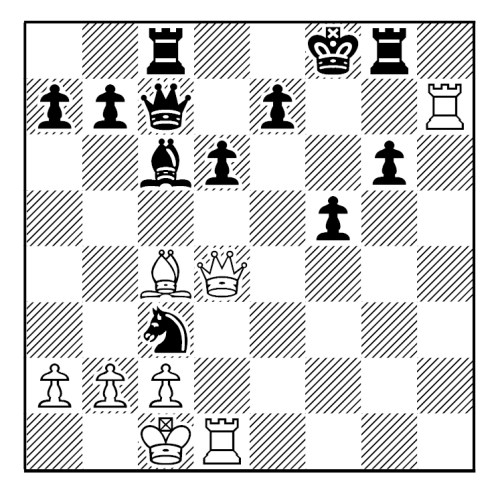
1.d4 e6 2.c4 Nf6 3.Nf3 d5 4.Nc3 c6 5.Bg5 dxc4 6.e4 b5 7.e5 h6 8.Bh4 g5 9.Nxg5 hxg5 10.Bxg5 Nbd7 11.g3!? (Unusual. More common is 11.exf6. Perhaps Yrjola didn’t want to get into a tactical tussle with a Tal.) 11…Rg8 12.h4 Rxg5 13.hxg5 Nd5 14.Qh5 Nxc3 15.bxc3 Qa5 16.Rc1 Ba3 17.Rc2 Qa4 18.Kd1! (Effectively closing off the White’s queenside. Now Black must worry about his kingside.)
2019_10_24_A
18…Nf8 19.Qf3 Bb7 20.Rh8 Be7 (Black wants to castle queenside but first he needs to shore up his defenses on the kingside.) 21.Bh3 Bxg5? 22.Bxe6! 1-0


IM Julian Hodgson (2480)-IM Jouni Yrjola (2425)
Tallinn, Estonia, Apr. 8 1987
[B21]
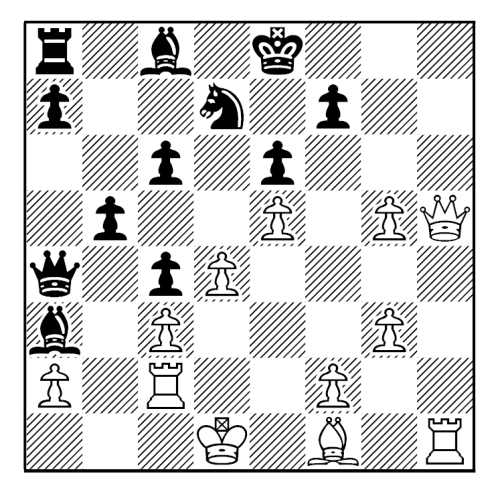
1.e4 c5 2.f4!? (The Grand Prix Attack, a very popular way of meeting the Sicilian around this time.) 3…d5 (A strong defence, and one that almost put the Grand Prix out of business.) 3.exd5 Nf6 4.Bb5+ Nbd7 5.c4 a6 6.Ba4 b5 7.cxb5 Nxd5 8.Nf3 g6!? (The fianchetto on Black’s kingside usually leads to unbalanced games, perfect for both Hodgson and Yrjola.) 9.Nc3 N5b6


[This game, heading rapidly into more craziness, now forms theory.


Vladislav Zernyshkin (2319)-Yuri Yakovich (2539), Lev Polugaevsky Memorial, Samara, Russia, July 9 2011, continued with 10.d4 Bg7 11.Bc2 cxd4 12.Nxd4 O-O 13.O-O axb5 14.Ndxb5 Ba6 15.Bd3 Nc5 16.Be2 Nba4 17.Qc2 Nxc3 18.Nxc3 Qd4+ 19.Kh1 Nd3 20.h3 Rfd8 21.a4 Bc4 22.Ra3 Nb4 23.Qb1 Bd3 24.Bxd3 Nxd3 25.Qc2 e6 26.Nb5 Qe4 27.Nc3 Qc4 28.Qe2 Qb4 29.Na2 Nxc1 30.Nxc1 Bxb2 31.Rb3 Qd2 32.Rxb2 Qxe2 33.Nxe2 Rxa4 34.Rc1 Rd7 35.Kg1 e5 36.fxe5 Re4 37.Rc5 Re7 38.Kf2 R4xe5 39.Rxe5 Rxe5 40.Ng1 h5 41.Nf3 Re7 42.Ng1 Kg7 43.Kf3 Ra7 44.Rb3 Ra5 45.h4 Ra4 46.g3 Ra7 47.Nh3 Re7 48.Ng5 Kg8 49.Re3 Ra7 50.Ke4 Kg7 51.Kd5 Kf6 52.Kc6 Kf5 53.Kd6 f6 54.Ne4 g5 1/2-1/2]


10.d4 Nxa4 11.Qxa4 Bg7 12.Be3 Nb6 13.Qa5 O-O 14.O-O-O axb5 15.Qxb5 Ba6 16.Qxc5 Nc4! (Black has penetrated White’s position and his knight will prove to be impossible to dislodge.) 17.Rhe1 Qb8! (Forcing the next move.) 18.b3 Rc8! (White’s queen is trapped. Hodgson grabs the best deal he can make for his queen …) 19.Qxc8+ Bxc8 (…and then promptly resigns.) 0-1


GM Jonny Hector (2535)-GM Jouni Yrjola (2460)
Nordic Ch.
Ostersund, Sweden, Aug. 1992
[B76]
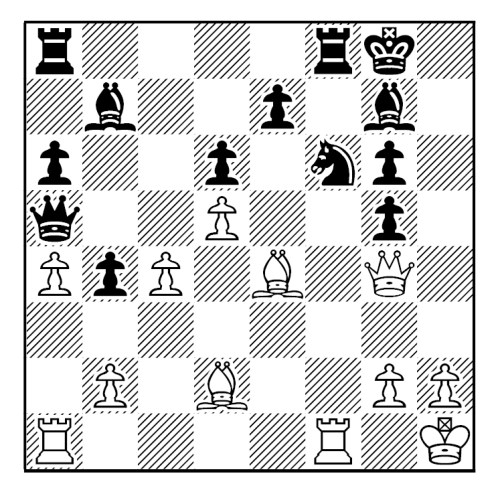
1.e4 c5 2.Nf3 d6 3.d4 cxd4 4.Nxd4 Nf6 5.Nc3 g6 6.Be3 Bg7 7.f3 Nc6 8.Bc4 O-O 9.Qe2 Bd7 10.O-O-O Na5 11.Bd3 (11.Bb3!?) 11…Rc8 12.h4 Rxc3 13.bxc3 Qc7 14.Qe1 d5 15.e5 Qxe5 16.Nb3 Nc6 17.g4 h5 18.g5 Ne8 19.Bd4 Nxd4 20.cxd4 Qd6 (Black could, of course, play 20…Qxd1 21.Rhd1, but that kills his play and he has to respond with 22…e6, which further limits his play. On 20…Qd6, his queen can at least travel to a3 and say “Boo!” Forgive this jest- it’s close to Halloween.) 21.Qc3 b6 22.Rhe1 Nc7 23.Rxe7 Ne6 24.Rxe6 Bxe6 25.Qd2 Rc8 26.c3 a5 27.Kb1 a4 28.Nc1 b5 29.Ne2 Rb8 30.Qf4 Bf8 31.Qxd6 Bxd6 32.Kc2 b4 33.cxb4 Rxb4 34.Rb1 Rxb1 35.Kxb1 Kg7 36.Kc2 f6 37.gxf6+ Kxf6 38.Kd2 g5 39.hxg5+ Kxg5 40.Ke3 h4 41.Nc3 h3 42.Bf1 Kh4 43.Kf2 a3 44.Nb5 Be7 45.Bd3 Bf6 46.Be2 Bd7 47.f4 Bg7 48.Bd3 Kg4 49.f5 Kf4 50.Kg1 Kg3 51.Kh1 Be8 52.Be2 Bd7 53.Bd3 Bf6 54.Nc3 Bc6 55.Ne2+ Kf3 56.Kh2 Ke3 57.Ba6 Bd7 58.Kxh3 Bxf5+ 59.Kg2 Be4+ 60.Kf1 Bxd4 61.Nxd4 Kxd4
2019_10_24_B
(Here, Black’s king is more centralized than White’s and he has an extra pawn. But it’s a draw as White can block the queening of the center pawn and Black’s other pawn is on a rook’s file, Right? Wrong!) 62.Ke1 Bb1 63.Kd2 Bxa2 64.Kc2 Kc5 65.Bb7 d4 66.Be4 Kb4 67.Bf5 Bb3+ 68.Kb1 Kc3 69.Ka1 Bc2 70.Bg4 d3 71.Ka2 Kb4
2019_10_24_C
0-1 [Incredibly Black wins after 72.Bh5 Bb3+ 73.Ka1 d2 74.Kb1 Kc3 75.Ka1 Kd3 76.Bf3 Ke3 77.Bg4 Kf2 78.Kb1 Ke1 79.Bh5 Bc4 80.Kc2 (with the idea of Be2) -+ , or 72.Ka1 d2 73.Ka2 Bb3+ 74.Kb1 Kc3 75.Be2 Kd4 76.Bf3 Ke3 77.Bh5 Kf2 78.Bg4 Ke1 79.Bh5 Bc4 80.Kc2 -+, or 72.Bf3 Bb3+ 73.Kb1 d2 74.Bh5 Kc3 75.Ka1 Kd3 76.Bf3 Ke3 77.Bg4 Kf2 78.Kb1 Ke1 79.Bh5 Bc4 80.Kc2 -+. Now, I had to run the position through a chess engine just to make sure my main ideas had some validity. It’s astonishing what a GM can figure out over the chessboard!]

AN INTRODUCTION TO THE UNDERPROMOTION, Part 1

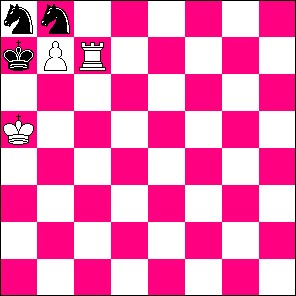
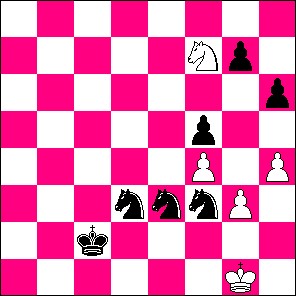
There seems to be some confusion about underpromotions. Some players believe the rule for underpromotion goes something like this: “a pawn, upon reaching the eighth rank can be promoted to any piece”. This definition can produce some rather interesting problems. For example, it is White to move and mate in the following two problems.


Zuckertort?
White to Mate in 1

2019_09_04_A


Unknown
White to Mate in 1

2019_09_04_B


White’s first move in both problems is, of course, an underpromotion. Just not to his own color. In the first diagram, White checkmates with 1.g8=black Knight, while in the second, he mates with 1.bxa8=Black Rook.


The exact rule for underpromotion is that a player may promote to a Queen, Rook, Bishop or Knight of his own color.


There is at least one more misunderstood area of underpromotion. Some players insist that you may not legally promote to a piece that did not come with the original set. That means you could not promote a pawn if you still had your original seven pieces (Not counting the King; if you need to promote to a King it probably means that you’ve already lost the game). And you certainly could not have three Knights on the board at the same time. The pawn then must remain immobile after reaching the 8th rank.


However, the rule clearly states that you may have three (or more!) Knights. You can promote to a dark colored Bishop, even if your original one is still on the board. You may also have as many as nine Queens at the same time (eight promoted pawns plus the original Queen). In fact, the biggest obstacle to having nine Queens at the same time may be your opponent, who may not want to defend against the armada!


This may seem simple enough, but there is still confusion out there in the tournament arena.


The following is a game played by the author;


Ko-Escalante
Southern California Open, 1996

2019_09_04_C


47.Nd3+ Kb1 48.Ke1 [48.Nc1? and Black can either play 48…Nf3+ or 48…Nf6 (with the idea of Ne4), winning in either case. Now back to the underpromotion theme. If Black promotes to a Queen, White would be forced to take the Queen with 49.Nxc1 Kxc1. The two Knights versus none are overwhelming, but if Black underpromotes then White could conceivably ignore the new piece. In any case, Black loses nothing by underpromoting.] 48…c1=N [Now White went off to the Tournament Director (TD), complaining that Black could not have three Knights on the board at the same time. And I should promote to a Queen. What did he expect to win by that argument!? The TD told him my move was legal and sent him back to the game. Where he promptly erred.] 49.Ne5? (Now three Knights versus one are better odds for White’s survival than two Knights versus none. But when White starts moving his Knight away, it becomes three knights versus none. And the White King is soon overwhelmed.) 49…Kc2 50.Kf1 Nd3 51.Nf7 Ne3+ 52.Kg1 Nf3+


2019_09_04_D

0-1 And mate next move.