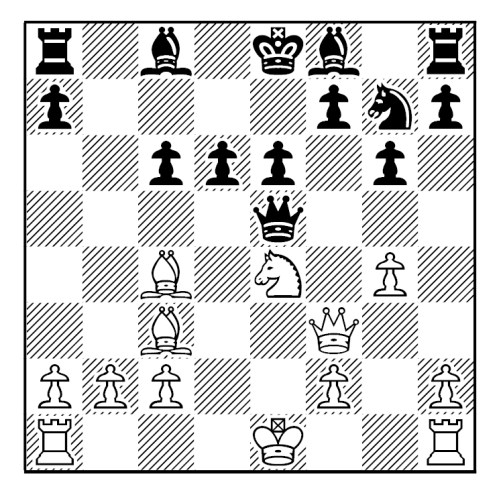
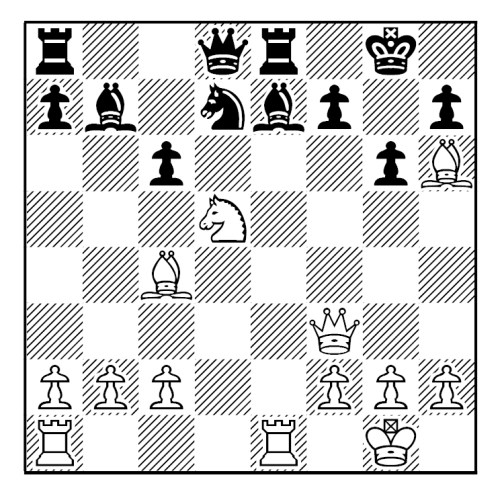
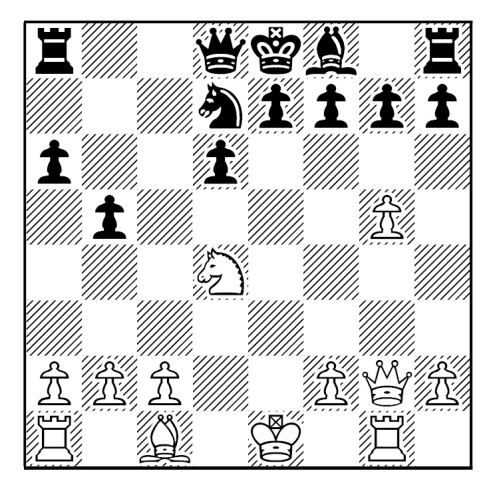
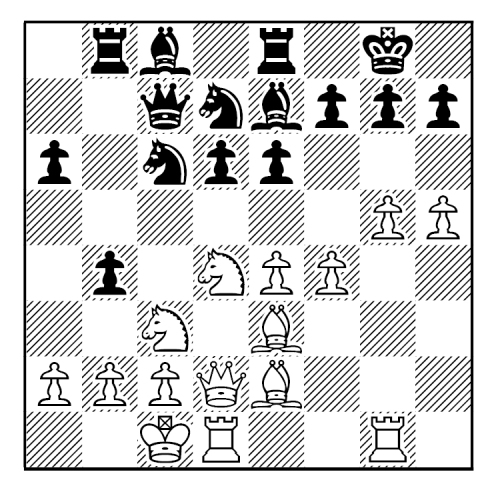
Chess Computers in 1977

Before we start, I capitalize the name of chess playing computers to clarify who (or what?) is playing White or Black. Now let’s get to the main event.


~~~~~~~~~~~~~~~~~~~~~~~~~~~~~~~~~~~~~~~~~~~


computerchess1


Chess computers, of course, had been in development for a couple of decades before 1977. But in that year, several notable events brought the chess computer to the public’s attention.


But let’s first mention that the International Computer Chess Association was established, which is important to this article, even if the public was not aware of it.


More worthy for public interest was the first microcomputer chess playing machines, CHESS CHALLENGER and BORIS, were created and sold to the general public. You could now buy a computer to play chess. Even better was the fact they were not too strong and existed more of a novelty than a challenge, making them easy prey to most players. Nevertheless, I heard many people brag how they “beat the computer”, or they were “better than a computer”. What they sometimes forget to mention they played the same opening repeatedly, until they got the result they wanted. Not exactly cheating, but not entirely honest either! (I must pause and smile here, as I the only reason I didn’t do such things was that I couldn’t afford these machines).


Also, in 1977, CHESS 4.6, a stronger machine than either CHESS CHALLENGER or BORIS, became the first chess computer to win a major chess tournament. That occurred at 84th Minnesota Open in February of 1977. It achieved an Expert USCF rating.


In August, SNEAKY PETE played in the U.S. Open. It was the first machine to do so, was promoted and gathered much attention, but its results were not impressive.

The December 1977 issue of Chess Life and Review had this to say;


“Computers were everywhere during the U.S. Open. A major attraction for the entire tournament was SNEAKY PETE. The poor machine had to stick it out on Board 69 for the entire two weeks and was constantly surrounded and scrutinized by Class As and Experts. SNEAKY rated 1209, was so nervous he lost seven games in a row. And every back-rank mate was immortalized in the daily games bulletins.”


In 1977, Michael Stean, who earlier in the year earned the GM title, became the first Grandmaster to lose a computer program.


CHESS 4.6-GM Michael Stean
Blitz Game
London, 1977
1.e4 b6 2.d4 Bb7 3.Nc3 c5 4.dxc5 (This does not seem best. 4.d5!? is probably better.) 4…bxc5 5.Be3 d6 6.Bb5+ Nd7 7.Nf3 e6 8.O-O a6 9.Bxd7+ Qxd7 10.Qd3 Ne7 11.Rad1 Rd8 12.Qc4 Ng6 13.Rfe1 Be7 14.Qb3 Qc6 15.Kh1 O-O 16.Bg5 Ba8 17.Bxe7 Nxe7 18.a4 Rb8 19.Qa2 Rb4 20.b3 f5 21.Ng5 fxe4 22.Ncxe4 Rxf2 23.Rxd6 Qxd6 24.Nxd6 Rxg2 25.Nge4 Rg4 26.c4 Nf5 27.h3 Ng3+ 28.Kh2 Rxe4 29.Qf2 h6 30.Nxe4 Nxe4 31.Qf3 Rb8 32.Rxe4 Rf8 33.Qg4 Bxe4 34.Qxe6+ Kh8 35.Qxe4 Rf6 36.Qe5 Rb6 37.Qxc5 Rxb3 38.Qc8+ Kh7 39.Qxa6 1-0

 
But this was a blitz game. Chess computers still could not compete against World Champions, either current or past, in blitz games, or under tournament conditions.


Fischer (yes, that one!) play three games against a chess computer. The first one is the most well-known and perhaps his best effort.


Greenblatt was the name of the programmer. I do not know the name of his computer, or if it even had one, so I’ll just use his name.


Here are the three games Fischer was known to have played after his 1972 World Championship win.


GM Fischer-GREENBLATT
Cambridge, 1977
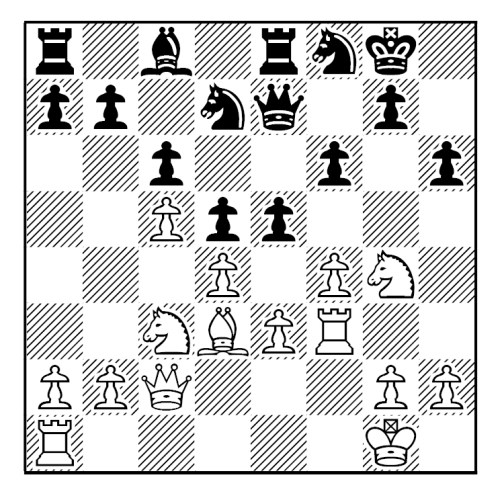
1.e4 e5 2.f4 exf4 3.Bc4 d5 4.Bxd5 Nf6 5.Nc3 Bb4 6.Nf3 O-O 7.O-O [Fischer liked to experiment with the Bishop’s Gambit, probably as a result of publishing an article titled, The King’s Gambit is Busted, where he showed how Black should win after 1.e4 e5 2.f4 exf4 3.Nf3 d6. Here’s a game from his simul tour of 1964: GM Fischer-Nyman, Simul, Cicero, May 20 1964, 7.O-O Bxc3 8.dxc3 c6 9.Bc4 Qb6+ 10.Kh1 Nxe4 11.Qe1 Re8 12.Bxf4 Nd6 13.Bxd6 Rxe1 14.Raxe1 Bd7 15.Ng5 Na6 16.Rxf7 1-0.] 7…Nxd5 8.Nxd5 Bd6 9.d4 g5 10.Nxg5 Qxg5 11.e5 Bh3 12.Rf2 Bxe5 13.dxe5 c6

2019_08_22_A
14.Bxf4 +- Qg7 15.Nf6+ Kh8 16.Qh5 Rd8 17.Qxh3 Na6 18.Rf3 Qg6 19.Rc1 Kg7 20.Rg3 Rh8 21.Qh6mate 1-0


GREENBLATT-GM Fischer
Cambridge, 1977
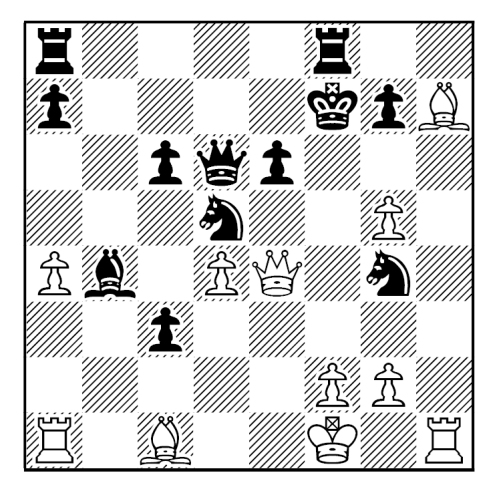
1.e4 c5 2.Nf3 g6 3.d4 Bg7 4.Nc3 cxd4 [Black tried the original 4…b6 in GM Božidar Ivanović-Grigic, Vinkovic, 1982 and lost after the spectacular 5.dxc5! bxc5 6.Qd5 Bxc3+ 7.bxc3 Qa5 8.Qxa8 Qxc3+ 9.Kd1! 1-0.] 5.Nxd4 Nc6 6.Be3 Nf6 7.Nxc6 bxc6 8.e5 Ng8 9.f4 f6 10.exf6 Nxf6 11.Bc4 d5 12.Be2 Rb8 13.b3 Ng4 14.Bd4 e5 15.fxe5 O-O 16.Bxg4 Qh4+ 17.g3 Qxg4 18.Qxg4 Bxg4 19.Rf1 Rxf1+ 20.Kxf1 c5 21.Bf2 Bxe5 22.Be1 Rf8+ 23.Kg2 Rf3 24.h3 Rxc3 25.Bxc3 Bxc3 26.Rf1 Bf5 27.Rf2 h5 28.Re2 Kf7 29.Re3 Bd4 30.Rf3 Ke6 31.c3 Be5 32.Re3 d4 33.cxd4 cxd4 34.Re1 d3 35.h4 d2 36.Rd1 Bc3 37.Kf2 Bg4 38.Rh1 Bd4+ 39.Kg2 [Any player would automatically see that promoting the pawn would force White to part with his rook for bishop (winning the exchange and eventually win the game). Fischer, however, wants the rook for free.]
2019_08_22_B
39…Kd5! 40.a3 Ke4 41.Rf1 Kd3 42.Kh2 Ke2 43.Kg2 Bh3+ 44.Kxh3 Kxf1 45.b4 d1=Q 46.Kh2 Qe2+ 47.Kh3 Qg2mate 0-1


GREENBLATT-GM Fischer
Cambridge, 1977
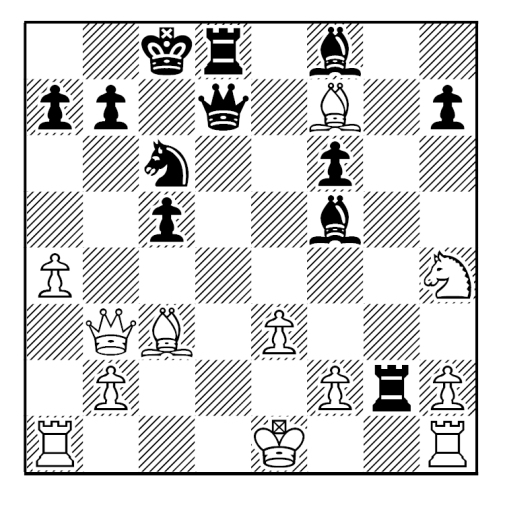
1.e4 c5 2.Nf3 d6 3.d4 cxd4 4.Nxd4 Nf6 5.Nc3 a6 6.Be2 e5 7.Nb3 Be7 8.Be3 O-O 9.Qd3 Be6 10.O-O Nbd7 11.Nd5 Rc8 12.Nxe7+ Qxe7 13.f3 d5 14.Nd2 Qb4 15.Nb3 dxe4 16.Qd1 Nd5 17.Ba7 b6 18.c3 Qe7 19.fxe4 Ne3 20.Qd3 Nxf1 21.Qxa6 Ne3 22.Bxb6 Qg5 23.g3 Ra8 24.Ba7 h5 25.Qb7 h4 26.Kf2 hxg3+ 27.hxg3 f5 28.exf5 Rxf5+ 29.Ke1 Raf8 30.Kd2 Nc4+ 31.Kc2 Qg6 32.Qe4 Nd6 33.Qc6 Rf2+ 34.Kd1 Bg4 35.Bxf2 Qd3+ 36.Kc1 Bxe2 37.Nd2 Rxf2 38.Qxd7 Rf1+ 39.Nxf1 Qd1mate 0-1


It would take another two decades for chess computers to score a win against World Champion.

An Introduction to the Magnus Smith Trap.

An early …Nc6 in the Sozin Dragon (1.e4 c5 2.Nf3 d6 3.Nc3 Nf6 4.d4 cxd4 5.Nxd4 g6 6.Bc4 Nc6?!) is not particularly useful, or even safe, for Black. White has a forceful reply with after 7.Nxc6 bxc6 8.e5. It’s now more commonly known as the Magnus Smith trap.


The trap was well known before the 20th century. A 19th century example is given below.


Blackburne-Paulsen
Vienna, 1882
1.e4 c5 2.Nf3 Nc6 3.Nc3 Nf6 4.d4 cxd4 5.Nxd4 d6 6.Bc4 g6 7.Nxc6 bxc6 8.e5 Ng4 9.exd6 Qxd6 10.Qe2 Bg7 11.Ne4 Qc7 12.h3 Ne5 13.Bf4 Nd3+ 14.cxd3 Qxf4 15.O-O O-O 16.Rac1 Rb8 17.Rc2 Rb6 18.a3 Be5 19.g3 Qf5 20.g4 Qf4 21.Ng3 Qd4 22.Qf3 Rxb2 23.Ne2 Qb6 24.Rxb2 Qxb2 25.d4 Bd6 26.a4 Bb7 27.Qd3 Qb6 28.Rb1 Qc7 29.h4 Qd7 30.Qf3 Bc8 31.g5 Qh3 32.Qxh3 Bxh3 33.Rb3 Bc8 34.Nc3 Kg7 35.Ne4 Bc7 36.d5 cxd5 37.Bxd5 Rd8 38.Bc6 Bb6 39.Kg2 f5 40.gxf6+ exf6 41.h5 f5 42.Ng5 Rd2 43.Nh3 Rd6 44.Bf3 Rd2 45.hxg6 hxg6 46.Bc6 Kh6 47.Kg3 g5 48.Rc3 g4 49.Be8 Bb7 50.Bc6 Ba6 51.Bg2 gxh3 52.Rc6+ Kg7 53.Bxh3 Bb7 54.Re6 Bxf2+ 55.Kh2 Bh4+ 56.Kg1 Bd5 57.Rd6 Bf2+ 0-1

 
So why is this trap known as the Magnus Smith trap, and not the Blackburne trap?


For at least two reasons. One is that Blackburne didn’t play the best moves and lost the game, so most players did not notice how powerful White’s attack could be.


Secondly, the first known player to properly analyze the trap and have it published was the Canadian player, Magnus Smith (1869–1934). A player of master strength, he played this now well-known trap against Kreymborg in the sixth round of the 1911 New York Masters Open and won in 49 moves.


This game, plus a related article by Smith, was published in the March 1911 issue of the American Chess Bulletin. The game can be found on page 59 and the article on pages 62-63.


Magnus Smith-Alfred Kreymborg
New York Masters Open, 1911
1.e4 c5 2.Nf3 Nc6 3.d4 cxd4 4.Nxd4 Nf6 5.Nc3 d6 6.Bc4 g6 7.Nxc6 bxc6 8.e5 Ng4 (Of course not, 8…dxe5?? because of 9.Bxf7+, winning the queen. A trap not easy to see, but only if you have seen it played before. Many beginners have been on the wrong side of it.) 9.Bf4 (This is perhaps White’s best move.) 9…d5 (The text move, along with 9…Qb6 10.Qf3, are the two main responses to 9.Bf4.) 10.Nxd5 cxd5 11.Bxd5 Be6 12.Bc6+ Bd7 13.Bxa8 Qxa8 14.O-O Bg7 15.Re1 h5 16.Qd2 Bc6 17.Rad1 Nh6 18.c4 Nf5 19.f3 O-O 20.Qc2 e6 21.b4 a6 22.a4 Qa7+ 23.Kh1 Rc8 24.b5 Be8 25.Qe4 Bf8 26.Re2 Be7 27.g4 hxg4 28.fxg4 Ng7 29.Be3 Qa8 30.Qxa8 Rxa8 31.Rc1 axb5 32.axb5 Rc8 33.Kg2 Kf8 34.Kf3 Bd7 35.Rd1 Be8 36.Rc1 Bd7 37.Ra2 Bd8 38.Rd2 Be8 39.Rb2 Rb8 40.Ke2 Bc7 41.Bd4 Bd7 42.Rcb1 Ne8 43.c5 f6 44.c6 fxe5 45.Be3 Bc8 46.b6 Bd6 47.b7 e4 48.Ba7 Be5 49.Bxb8 1-0


The Magnus Smith trap has been named after him for his game, commentary, and publication of this now well-known trap.

 
Let’s look at some other games with this trap.


After 8.e5 Black has 8…Nh5, but this is not recommended as White has 9.Qf3!, which is almost winning.


GM Fischer-N.N.
Simul
New York, 1963
1.e4 c5 2.Nf3 Nc6 3.d4 cxd4 4.Nxd4 Nf6 5.Nc3 d6 6.Bc4 g6 7.Nxc6 bxc6 8.e5 Nh5 9.Qf3 e6 (9…d5? 10.Nxd5! cxd5 11.Bxd5) 10.g4 Ng7 11.Ne4 Qa5+ (11…d5? 12.Nf6+ Ke7 13.Qa3+ Qd6 14.Qxd6#) 12.Bd2 Qxe5 13.Bc3 (trapping the Queen.)
2019_08_15_A
1-0


Bilek-Bachtiar
Beverwijk, 1966
1.e4 c5 2.Nf3 Nc6 3.d4 cxd4 4.Nxd4 Nf6 5.Nc3 d6 6.Bc4 g6 7.Nxc6 bxc6 8.e5 Nh5 9.Qf3 e6 10.exd6 Qxd6 11.O-O Bb7 12.Rd1 Qc5 13.Qd3 (with the threat of 14.Qd7#) 13…Qe7 (13…Nf6 14.Ne4!) 14.Bg5! f6 15.Be3 Kf7 16.Qd7 (threatening 17.Bxe6 Qg7 18.Qxe7+ Bxe7 19.Rd7 ; 16…Ng7 17.Bc5) 1-0


Sarapu-Cornford
New Zealand Ch.
Christchurch, 1967
1.e4 c5 2.Nf3 Nc6 3.d4 cxd4 4.Nxd4 Nf6 5.Nc3 d6 6.Bc4 g6 7.Nxc6 bxc6 8.e5 Nh5 9.Qf3 e6 10.exd6 Qxd6 11.g4 Ng7 12.Bf4 e5 13.Bxf7+ Kd7 14.Rd1 exf4 15.O-O Ba6 16.Ne4 Bxf1 17.Nxd6 Bxd6 18.Qxf4 1-0

 
Black also has the better 8…Nd7, but White again gets the advantage.


GM Fischer-Wilkerson
Clock Simul
Davis, Apr. 16 1964
1.e4 c5 2.Nf3 Nc6 3.d4 cxd4 4.Nxd4 Nf6 5.Nc3 d6 6.Bc4 g6 7.Nxc6 bxc6 8.e5 Nd7 9.exd6 exd6 10.O-O d5 11.Nxd5 +/- Nc5 (11…cxd5 12.Qxd5! +-) 12.Qd4 cxd5 13.Bb5+ Bd7 14.Bxd7+ Qxd7 15.Qxh8 f5 16.Re1+ Ne6 17.Qf6 1-0


Imannuel Guthi-E. O’Hare
Tel Aviv Ol.
Israel, 1964
1.e4 c5 2.Nf3 Nc6 3.d4 cxd4 4.Nxd4 Nf6 5.Nc3 d6 6.Bc4 g6 7.Nxc6 bxc6 8.e5 Nd7 9.exd6 exd6 10.O-O d5 11.Nxd5 Nc5 12.Qf3 (with the idea of Nf6+) 12…f5 (better is 12…Bg7) 13.Re1+ Kd7 (13…Ne4 14.Rxe4+ fxe4 15.Qxe4+ +-; 13…Kf7 14.Nc7+ and Ne8+ +-) 14.Bf4 Ne4 15.Rad1 Nd6 16.Nb4 Qb6 17.Qc3 Bb7 18.Be6+ (18.Rxd6+ Bxd6 19.Qe7+ +-) 18…Kc7 19.Nd5+ 1-0


Rhee-Hinrichsen
El Segundo, CA, 1969
1.e4 c5 2.Nf3 Nc6 3.d4 cxd4 4.Nxd4 d6 5.Nc3 Nf6 6.Bc4 g6 7.Nxc6 bxc6 8.e5 Nd7 9.exd6 exd6 10.O-O Be7 11.Re1 O-O 12.Bh6 Re8 13.Qf3 d5 14.Nxd5 Bb7

2019_08_15_B
15.Qxf7+!! Kxf7 16.Ne3+ Kf6 17.Ng4+ Kf5 18.Be6mate 1-0


Silva-Sosonko
Lucerne Ol., 1982
1.e4 c5 2.Nf3 Nc6 3.d4 cxd4 4.Nxd4 Nf6 5.Nc3 d6 6.Bc4 g6 7.Nxc6 bxc6 8.e5 Nd7 9.exd6 Qxd6 10.Qxd6 exd6 11.Bf4 Be6 12.Bb3 d5 13.h3 Nf6 14.Be5 Be7 15.O-O O-O 16.Rhe1 Nd7 17.Bf4 Nc5 18.Ne2 a5 19.Nd4 Rfc8 20.c3 Bf6 21.Bc2 Bd7 22.Be5 Kg7 23.Bxf6+ Kxf6 24.Re3 Re8 25.Rde1 Rxe3 26.Rxe3 Ne6 27.Ba4 Rc8 28.Nf3 Ra8 29.Nd4 Ra6 30.Nf3 Ke7 31.c4 Rb6 1/2-1/2


Ladic (2195)-Mutapcic
Croatia U20 Team Ch.
Medulin, 1997
1.e4 c5 2.Nf3 d6 3.d4 cxd4 4.Nxd4 Nf6 5.Nc3 Nc6 6.Bc4 g6 7.Nxc6 bxc6 8.e5 Nd7 9.exd6 e5?! 10.Qf3 Nf6 11.Bg5 Bg7 12.Ne4 Bf5 13.Nxf6+ Bxf6 14.Bxf6 e4 15.Qc3 Qxd6 16.Bxh8 O-O-O 17.Ba6+ 1-0


Which brings us back to 9…Ng4, which as mentioned before, is Black’s best move as he has some counterplay. But it’s not an easy thing to discover, especially with the clock ticking in a rated OTB game.


White has two good responses here; 9.e6 and 9.Bf4.


Let’s see games from both.


Schlechter-Lasker
World Ch.
Berlin, 1910
1.e4 c5 2.Nf3 Nc6 3.d4 cxd4 4.Nxd4 Nf6 5.Nc3 d6 6.Bc4 g6 7.Nxc6 bxc6 8.e5 Ng4 9.e6 f5 10.O-O Bg7 11.Bf4 (It seems White has the advantage and should win. But Lasker was at his best when facing an uphill battle.) 11…Qb6 12.Bb3 Ba6 13.Na4 Qd4 14.Qxd4 Bxd4 15.c4 O-O 16.Rad1 Bf6 17.Rfe1 g5 18.Bxd6 exd6 19.Rxd6 Be5 20.c5 Rfe8 21.g3 Bf6 22.Rxc6 Bb7 23.Rc7 Be4 24.Nc3 Bxc3 25.bxc3 Ne5 26.Rd1 Nf3+ 27.Kf1 Nxh2+ 28.Ke1 Nf3+ 29.Ke2 Ne5 30.Rdd7 f4 31.Rg7+ Kh8 32.Rxg5 Bd3+ 33.Kd1 fxg3 34.fxg3 Ng6 35.Rd5 Be4 36.Rd6 Bf5 37.Bd5 Rab8 38.c6 Nf8 39.Rb7 Rbc8 40.e7 Ng6 41.Bf7 Rxe7 42.Bxg6 Bg4+ 43.Kc1 Re1+ 44.Kb2 hxg6 45.Rxg6 Bf5 46.Rf6 Be4 47.Rxa7 Rb1+ 48.Ka3 Bxc6 1/2-1/2


Blatny-Dasek
Chocen, 1950
1.e4 c5 2.Nf3 Nc6 3.d4 cxd4 4.Nxd4 Nf6 5.Nc3 d6 6.Bc4 g6 7.Nxc6 bxc6 8.e5 Ng4 9.e6 f5 10.Bf4 d5
2019_08_15_C
11.Nxd5 cxd5 12.Bb5+ (A tactic worth remembering.) 1-0


M. Costa-Saltzberg
US Open, 1972
1.e4 c5 2.Nf3 Nc6 3.d4 cxd4 4.Nxd4 Nf6 5.Nc3 d6 6.Bc4 g6 7.Nxc6 bxc6 8.e5 Ng4 9.e6 f5 10.Qe2 Bg7 11.h3 Nf6 12.h4 d5 13.Ba6 Bxa6 14.Qxa6 Qd6 15.Qe2 O-O 16.Bd2 Rab8 17.O-O Rxb2 18.Kxb2 Ne4 19.Rb1 Qb4+ 20.Kc1 Qa3+ 21.Kd1 Bxc3 22.Rb3 Qxa2 23.Bxc3 Qxb3 24.Qxe4 Qxc3 25.Qa4 Rb8 26.Ke2 Rb4 27.Qxa7 Qxc2+ 28.Ke3 f4+ 29.Kf3 Qe4+ 0-1


Reijnen-Marino
corres.
IECG 1995
1.e4 c5 2.Nf3 Nc6 3.d4 cxd4 4.Nxd4 Nf6 5.Nc3 d6 6.Bc4 g6 7.Nxc6 bxc6 8.e5 Ng4 9.e6 f5 10.Bb3 Bg7 11.O-O Ba6 12.Re1 Be5 13.h3?
2019_08_15_D
13…Bh2+ (14.Kh1 Nxf2+) 0-1


And now for 9.Bf4, which is best approach as it activates a piece and keeps pressure on some key squares. Here’s another reason to think it’s the best move. Any move that is preferred in correspondence chess is usually the best, as correspondence players have days, and even longer, to decide on their next move.


Flykt-Johansson
corres., 1947
1.e4 c5 2.Nf3 Nc6 3.d4 cxd4 4.Nxd4 Nf6 5.Nc3 d6 6.Bc4 g6 7.Nxc6 bxc6 8.e5 Ng4 9.Bf4 Qb6 10.Qf3 e6 11.exd6 Bg7 12.O-O-O Ne5 13.Bxe5 Bxe5 14.d7+ Bxd7 15.Rxd7 1-0


Beach-Graham
corres.
Great Britain, 1975
1.e4 c5 2.Nf3 Nc6 3.d4 cxd4 4.Nxd4 Nf6 5.Nc3 d6 6.Bc4 g6 7.Nxc6 bxc6 8.e5 Ng4 9.Bf4 Qb6 10.Qf3 Bf5 11.exd6 e5 12.d7+ Kxd7 13.Rd1+ Bd6 14.Bc1 Rhf8 15.h3 Nf6 16.g4 Qb4 17.Bb3 Be4 18.Qxf6 Bxh1 19.a3 Qb7 20.Bg5 Bd5 21.Nxd5 cxd5 22.Bxd5 Qxb2 23.Bxa8 1-0


Kapic-Movre
corres.
Yugoslavia Ch., 1978
1.e4 c5 2.Nf3 Nc6 3.d4 cxd4 4.Nxd4 Nf6 5.Nc3 d6 6.Bc4 g6 7.Nxc6 bxc6 8.e5 Ng4 9.Bf4 Qb6 10.Qf3 dxe5 11.Bxf7+ Kd8 12.Bg3 Bg7 13.O-O Kc7 14.Qe2 Rf8 15.h3 Ne3 16.Bb3 Nxd1 17.Bxe5+ Bxe5 18.Qxe5+ Kd8 19.Rxd1+ Ke8 20.Re1 Qb4 21.Re4 Qb7 22.Nd5 1-0

Markotic-Tomkowicz
corres., 1980
1.e4 c5 2.Nf3 Nc6 3.d4 cxd4 4.Nxd4 Nf6 5.Nc3 d6 6.Bc4 g6 7.Nxc6 bxc6 8.e5 Ng4 9.Bf4 Bh6 10.e6 Bxf4 11.Qxg4 Be5 12.exf7+ Kf8 13.Qf3 d5 14.Bb3 Kg7 15.O-O e6 16.h4 Rf8 17.Ne2 Qf6 18.Qxf6+ Bxf6 19.f4 Rxf7 20.c3 a5 21.Ba4 c5 22.g3 Rb8 23.Rhe1 Rfb7 24.Rd2 Rb6 25.Ng1 Bxc3 0-1


Hentzgen-Melzer
corres.
E. Germany, 1988
1.e4 c5 2.Nf3 Nc6 3.d4 cxd4 4.Nxd4 Nf6 5.Nc3 d6 6.Bc4 g6 7.Nxc6 bxc6 8.e5 Ng4 9.Bf4 d5 10.Nxd5 Bg7 11.e6 cxd5 12.exf7+ Kf8 13.Qxd5 Bf5 14.h3 Nf6 15.Qxd8+ Rxd8 16.c3 h5 17.Ke2 e6 18.Be3 a5 19.f3 Kxf7 20.Rhd1 Nd5 21.Bxd5 exd5 22.Kf2 Rb8 23.Rd2 Be6 24.Re1 Rhe8 25.Bf4 Rb7 26.g4 hxg4 27.hxg4 Bf6 28.g5 Bxg5 29.Bxg5 Reb8 30.Ree2 Rb5 31.Kg3 Rh8 32.Rd4 Rh5 33.Bf4 Rh1 34.Bd6 g5 35.a4 Rb3 36.Bc7 Rb1 37.Rdd2 Ra1 38.Bxa5 Rxa4 39.Bb4 Ra2 40.f4 gxf4+ 41.Kxf4 d4 42.Rf2 dxc3 43.Ke5+ Kg6 44.Bxc3 Ra4 45.Kxe6 1-0


Vayrynen-Ullrich
corres., 1990
1.e4 c5 2.Nf3 Nc6 3.d4 cxd4 4.Nxd4 Nf6 5.Nc3 d6 6.Bc4 g6 7.Nxc6 bxc6 8.e5 Ng4 9.Bf4 d5 10.Nxd5 cxd5 11.Bxd5 Bf5 12.f3 Nh6 13.Bxa8 Qxa8 14.Qd2 Ng8 15.O-O h5 16.Be3 Bg7 17.Qa5 Nh6 18.Qa4+ 1-0


Rezan-Kuraja
Croatian Cup
Pula, 1996
1.e4 c5 2.Nf3 Nc6 3.d4 cxd4 4.Nxd4 d6 5.Nc3 Nf6 6.Bc4 g6 7.Nxc6 bxc6 8.e5 Ng4 9.Bf4 d5 10.Nxd5 cxd5 11.Qxd5 Qxd5 12.Bxd5 Rb8 13.h3 Nh6 14.Bc6+ Kd8 15.e6 Rb6
2019_08_15_E
16.O-O-O+ Bd7 17.Rxd7+ Kc8 1-0


So the main line of the Magnus Smith is 1.e4 c5 2.Nf3 Nc6 3.d4 cxd4 4.Nxd4 Nf6 5.Nc3 d6 6.Bc4 g6 7.Nxc6 bxc6 8.e5 Ng4 9.Bf4. There are many alternate moves to the games above. And I’ll let you explore them on your own.

Najdorf Miniatures

I’ve entered another Najdorf thematic tournament. This is a good way to (really) learn an opening.


There are many approaches to learning an opening. One can consult an expert in the variation (but illegal once the games begin). Another approach is to gather up the books, a board, pens, paper, and some highlighters.


My favorite approach to play over some miniatures and learn some tactics and ways to take down an opponent quickly. It saves time on studying. Extra time to take down other opponents. Plus, it’s fun!

 
Here are some Najdorf miniatures.


They are breathtaking in their elegance, clarity, and forcefulness. And they all begin with the moves 1.e4 c5 2.Nf3 d6 3.d4 cxd4 4.Nxd4 Nf6 5.Nc3 a6.

 
To warm up the tactic monster in you we’ll start with some games that are not exactly main line.


Markus Loeffler (2426)-J. Ramseier
Ticino Open
Mendrisio, Oct. 30 1999
1.e4 c5 2.Nf3 d6 3.d4 cxd4 4.Nxd4 Nf6 5.Nc3 a6 6.Qf3!? (Not exactly book, but White is trying to lay claim to some key squares.) 6…Qc7 7.Bg5 Nbd7 8.O-O-O b5 9.Nd5 Qa5 10.Nc6 1-0


GM Onischuk (2581)-IM Bajarani (2417)
Voronezh Master Open
Russia, June 14 2013
1.e4 c5 2.Nf3 d6 3.d4 cxd4 4.Nxd4 Nf6 5.Nc3 a6 6.Nb3!? g6 7.Be2 Bg7 8.O-O O-O 9.Re1 Nbd7 10.a4 b6 11.Be3 Bb7 12.f3 Qc7 13.Qd2 Rfe8 14.Red1 Rac8 15.Bf1 Nc5 16.Qf2 Nfd7 17.Nd4 Qb8 18.Rd2 Ne5 1-0


GM David Anton Guijarro (2631)-GM Hao Wang (2729)
FIDE World Blitz Ch.
Dubai, June 19 2014
1.e4 c5 2.Nf3 d6 3.d4 cxd4 4.Nxd4 Nf6 5.Nc3 a6 6.Qd3!? Nbd7 7.Be2 Nc5 8.Qe3 e6 9.Bd2 Be7 10.g4 d5 11.exd5 exd5? 12.O-O-O O-O 13.f3 Bd7 14.g5 Nh5? 15.f4 g6 16.Bxh5 gxh5 17.Nxd5 Re8 18.Bc3 Bg4 19.Nf5! Bxf5 20.Qe5 f6 21.Qxf5 Qc8 22.Nxf6+ 1-0

 
6.Rg1 is relatively unexplored and rare in OTB tournaments. Just perfect for correspondence play!


M. Mahjoob (2510)-R. Kalugampitiya (2135)
Tata Steel Team Ch.
Kolkata, India, Dec. 27 2009
1.e4 c5 2.Nf3 d6 3.d4 cxd4 4.Nxd4 Nf6 5.Nc3 a6 6.Rg1!? (White takes command of the g-file, important in many variations of the Najdorf.) 6…b5 7.g4 Bb7 8.g5 Nxe4 9.Nxe4 Bxe4 10.Qg4 Bb7 11.Bg2 Bxg2 12.Qxg2 Nd7

2019_08_01_A
13.g6! e6 (Black can’t take the pawn due to 13…hxg6 14.Ne6! fxe6 15.Qxg6#. If instead Black moves his queen, then White wins material. I’ll you figure it out.) 14.gxf7+ Kxf7 15.Bg5 Qc8 16.O-O-O Ra7 17.Nxe6 1-0

 
Here are two more games with the interesting 6.Rg1!?.


Luis Esquivel (2212)-Neuris Delgado (2254)
G. Garcia Memorial
Santa Clara, Cuba, June 2 2004
1.e4 c5 2.Nf3 d6 3.d4 cxd4 4.Nxd4 Nf6 5.Nc3 a6 6.Rg1 e5 (A common reply to 6.Rg1.) 7.Nb3 h5 8.Bg5 Be6 9.Qd2 Nbd7 10.O-O-O Rc8 11.f4 Be7 12.f5 Bc4 13.Bxc4 Rxc4 14.Qd3 b5 15.Rge1 Qc8 16.Bxf6 Nxf6 17.Re2 Qc7 18.Nd5 Nxd5 19.Qxd5 O-O 20.f6 Bxf6 21.Qxd6 Bg5+ (22.Kb1 Rd8 23.Qxc7 Rxd1+ 24.Nc1 Rxc1#.) 0-1


Wojciech Moranda (2451)-Roman Nechepurenko (2431)
European Jr. Ch.
Herceg Novi, Sept. 2005
1.e4 c5 2.Nf3 d6 3.d4 cxd4 4.Nxd4 Nf6 5.Nc3 a6 6.Rg1 e5 7.Nb3 b5 8.g4 Bb7 9.Bg2 b4 10.Nd5 Nxd5 11.exd5 Be7 12.a3 bxa3 13.Rxa3 a5 14.Ra4 Nd7 15.Bd2 Nb6 16.Bxa5 Qc8 17.Ra2 O-O 18.Nc1 Nc4 19.Bc3 Rxa2 20.Nxa2 Qc5 21.Be4 Bh4 22.Qe2 Ra8 23.b3 Rxa2 24.bxc4 Ra3 (White faces the embarrassing 25.Bb2 Re3! -+) 0-1

 
The move 6.a4 leads to a slower game. But one can lose the game just as quickly.


Karasov-Korsunsky
Sevastopol, 1978
1.e4 c5 2.Nf3 d6 3.d4 cxd4 4.Nxd4 Nf6 5.Nc3 a6 6.a4 e6 7.a5 b5 8.axb6 Qxb6 9.Be3 Ng4 10.Qxg4 Qxb2 11.Bb5 Nd7 12.Kd2 axb5 13.Rxa8 Ne5 14.Qe2 Nc4 15.Qxc4 bxc4 16.Rxc8 Kd7 17.Ra8 1-0


Balashov-Sunye Neto
Wijk aan Zee, 1982
1.e4 c5 2.Nf3 d6 3.d4 cxd4 4.Nxd4 Nf6 5.Nc3 a6 6.a4 e5 7.Nf3 h6 8.Bc4 Qc7 9.Bb3 Be6 10.O-O Nbd7 11.Nh4 g5 12.Nf5 Nc5 13.Ne3 Nxb3 14.cxb3 Rd8 15.Bd2 Bg7 16.Rc1 Qb8 17.Ncd5 Nxd5 18.exd5 Bd7 19.h4 Bf6 20.Qf3 Ke7 21.Bb4 b5 22.Rc6 1-0

 
The move 6.Be3 is an interesting combination of tactics and strategy. It’s played by many Grandmasters. Let’s take a close look.


Perenyi-Lengyel, 1983
1.e4 c5 2.Nf3 d6 3.d4 cxd4 4.Nxd4 Nf6 5.Nc3 a6 6.Be3 b5 7.a4 bxa4 8.Rxa4 e6 9.Bb5+ Nfd7 10.O-O Bb7 11.Bc4 Nc5 12.Rb4 Qc8 13.f4 Be7 14.f5 e5 15.f6 exd4 16.fxg7 Rg8 17.Bxf7+ Kd7 18.Rxb7+! 1-0


Nicolau (2290)-Nowarra
Subotica, Yugoslavia, 1967
1.e4 c5 2.Nf3 d6 3.d4 cxd4 4.Nxd4 Nf6 5.Nc3 a6 6.Be3 e6 7.Qf3 Nbd7 8.O-O-O Qc7 9.Be2 Ne5 10.Qg3 b5 11.f4 Nc4 12.e5 dxe5 13.fxe5 Nxe3 14.Qxe3 Nd7 15.Rhf1 Nxe5 16.Ncxb5 axb5 17.Bxb5+ Bd7 18.Bxd7+ Nxd7 19.Qf3 Nb6 20.Nb5 1-0


IM J. Peters (2572)-O. Maldonado (2275)
American Open
Los Angeles, Nov. 1995
1.e4 c5 2.Nf3 Nc6 3.d4 cxd4 4.Nxd4 Nf6 5.Nc3 d6 6.Be2 e6 7.Be3 Be7 8.Qd2 a6 9.O-O-O Qc7 10.f4 O-O 11.Rhg1 Re8 12.g4 Nd7 (Jack Peters suggested 12…Nxd4 13.Bxd4 e5.) 13.g5 Rb8 14.h4 b5 15.h5 b4

2019_08_01_B
16.g6! (Again, the move g6. Maybe there is something to attacking with one’s own g-pawn.) 16…Nc5 17.gxf7+ Kxf7 18.Nf5! exf5 19.Bc4+ Kf8 20.Bxc5 Na5 21.Qd5 1-0

 
White can try to include a Keres Attack (an early g4) plan with Be3. But that idea seems risky.


GM Shirov (2746)-GM Van Wely (2643)
Istanbul Ol
Turkey, 2000
1.e4 c5 2.Nf3 d6 3.d4 cxd4 4.Nxd4 Nf6 5.Nc3 a6 6.Be3 e6 7.g4 e5 8.Nf5 g6 9.g5 gxf5 10.exf5 d5 11.Qf3 d4 12.O-O-O Nbd7 13.Bd2 Qc7 14.gxf6 dxc3 15.Bxc3 Qc6 16.Qg3 Qxh1 17.Bg2 Bh6+ 18.Bd2 Bxd2+ 19.Kxd2 Qxg2 20.Qxg2 a5 21.f4 exf4 22.Qg7 Rf8 23.Re1+ Kd8 24.Re7 Kc7 25.Qxf8 1-0


GM Alexander Onischuk (2660)-GM Bologan (2668)
Poikovskii International
Russia, 2001
1.e4 c5 2.Nf3 d6 3.d4 cxd4 4.Nxd4 Nf6 5.Nc3 a6 6.Be3 e6 7.g4 e5 8.Nf5 g6 9.g5 gxf5 10.exf5 d5 11.Qf3 d4 12.O-O-O Nbd7 13.Bd2 Bd6 14.Bc4 Qc7 15.Bb3 dxc3 16.Bxc3 e4 17.Rhe1 Be5 18.Rxe4 Nxe4 19.Qxe4 O-O 20.Rxd7 Bf4+ 0-1


Shapiro (2251)-Mirabile (2202)
National Chess Congress
Philadelphia, Nov. 27 2005
1.e4 c5 2.Nf3 d6 3.d4 cxd4 4.Nxd4 Nf6 5.Nc3 a6 6.Be3 e6 7.g4 e5 8.Nf5 g6 9.g5 gxf5 10.exf5 d5 11.Qf3 d4 12.O-O-O Nbd7 13.Bd2 dxc3 14.Bxc3 Qc7 15.gxf6 Nxf6 16.Bd3 Bh6+ 17.Kb1 Bf4 18.Rde1 Qe7 19.Qxf4 1-0

 
I do not know what is the best response to the Keres. But I do know that …h6 is perhaps not the best response.


Horvath (2350)-Schinzel (2385)
Baden, 1980
1.e4 c5 2.Nf3 d6 3.d4 cxd4 4.Nxd4 Nf6 5.Nc3 a6 6.Be3 e6 7.g4 h6 8.Qf3 Nc6 9.Rg1 Ne5 10.Qh3 Nexg4 11.Rxg4 e5 12.Nf5 g6 13.Rh4 gxf5 14.exf5 d5 15.O-O-O d4 16.f4 Qa5 17.fxe5 dxc3 18.exf6 Qxa2 19.Re4+ Be6 20.Rxe6+ 1-0


GM Svidler-GM Topalov
Elista, 1998
1.e4 c5 2.Nf3 d6 3.d4 cxd4 4.Nxd4 Nf6 5.Nc3 a6 6.Be3 e6 7.g4 h6 8.f4 e5 9.Nf5 h5 10.Nd5 Nxd5 11.Qxd5 g6 12.O-O-O gxf5 13.exf5 Nc6 14.Bc4 Qf6 15.fxe5 Nxe5 16.g5 Qxf5 17.Bb3 Qf3 18.Qd2 Qc6 19.Rhf1 Be6 20.Bxe6 fxe6 21.Rf6 O-O-O 22.Rxe6 Bg7 1-0


R. Sullivan-D. Dimit
corres., prison game, 2003
1.e4 c5 2.Nf3 d6 3.d4 cxd4 4.Nxd4 Nf6 5.Nc3 a6 6.Be3 e6 7.g4 h6 8.f4 b5 9.Bg2 Bb7 10.g5 hxg5 11.fxg5 b4 12.Na4 Nxe4 13.Qg4 d5 14.Bxe4 dxe4 15.O-O-O Bd5 16.Nxe6 TN fxe6 17.Nb6 Nd7 18.Nxd5 exd5 19.Qe6+ Be7?! 20.Qg6+ +- Kf8 21.Rhf1+ 1-0

 
Let’s jump a little ahead.


The most common response to the Najdorf is 6.Bg5. It leads to fascinating combinations with many ideas. I know I will face it at least once in the tournament.


Book-Naegili
Munich Ol., 1936
1.e4 c5 2.Nf3 d6 3.d4 cxd4 4.Nxd4 Nf6 5.Nc3 a6 6.Bg5 e6 7.Qd2 Be7 8.O-O-O Qc7 9.f4 b5 10.e5 dxe5 11.Bxb5+ axb5 12.Ndxb5 Qb6 13.fxe5 Rxa2 14.Kb1

2019_08_01_C
14…Ne4! 15.Nxe4 Rxb2+! 16.Kxb2 Qxb5+ 0-1


Matov-GM Fischer
Vinkovci, 1968
1.e4 c5 2.Nf3 d6 3.d4 cxd4 4.Nxd4 Nf6 5.Nc3 a6 6.Bg5 e6 7.f4 Be7 8.Be2 Qb6 9.Qd2 Qxb2 10.Rb1 Qa3 11.O-O Nbd7 12.f5 Ne5 13.Kh1 O-O 14.Rb3 Qc5 15.Bxf6 Bxf6 16.Na4 Nc4 17.Qf4 Qxd4 18.Rd3 Qe5 19.Qg4 exf5 20.exf5 Ne3 0-1


Svensson (2386)-J. Zimmermann (2327)
Spiltan Fonder IM
Gothenburg, Sweden, Aug. 15 2007
1.e4 c5 2.Nf3 d6 3.d4 cxd4 4.Nxd4 Nf6 5.Nc3 a6 6.Bg5 e6 7.f4 Qb6 8.Qd2 Be7 9.e5 Ng8 10.exd6 Qxd6 11.Bxe7 Qxe7 12.O-O-O Bd7 13.g3 Nc6 14.Bg2 O-O-O 15.Bxc6 bxc6 16.Rhe1 Nh6 17.Qd3 Kb7 18.Qc4 c5 19.Nb3 Ka7 20.Re5 Nf5 21.Rxc5 Rc8 22.g4 1-0


Vitolins-Anetbayev
USSR, 1975
1.e4 c5 2.Nf3 d6 3.d4 cxd4 4.Nxd4 Nf6 5.Nc3 a6 6.Bg5 e6 7.f4 Be7 8.Qf3 Qc7 9.O-O-O Nbd7 10.Qg3 b5 11.Bxb5 axb5 12.Ndxb5 Qb8 13.e5 dxe5 14.fxe5 Nxe5 15.Rhe1 Nc4 16.Qc7! +- Nd5 17.Rxd5 O-O 18.Bxe7 1-0


Wedberg-Bernard
Sweden, 1983
1.e4 c5 2.Nf3 d6 3.d4 cxd4 4.Nxd4 Nf6 5.Nc3 a6 6.Bg5 e6 7.f4 Be7 8.Qf3 h6 9.Bh4 Qc7 10.O-O-O Nbd7 11.Be2 Rb8 12.Qg3 O-O 13.Rhf1 Nb6?! (This move seems too slow.) 14.Kb1 Bd7 15.Qe1 Na4 16.Nxa4 Bxa4 17.Bd3 Bd7 18.g4 Nxg4 19.Rg1 Nf6 20.e5 dxe5 21.fxe5 Nd5 22.Qg3 g5 23.Bxg5! Bxg5

2019_08_01_D
24.Qxg5+!! 1-0 [Because of 24…hxg5 (forced) 25.Rxg5+ Kh8 26.Rh5+ Kg7 27.Rg1#]

 
New ideas can come from relatively unknown sources. This one is from a 1973 issue of Tennessee Chess News.


Robert Coveyou-Ed Porter
Tennessee, 1973
1.e4 c5 2.Nf3 d6 3.d4 cxd4 4.Nxd4 Nf6 5.Nc3 a6 6.Bg5 e6 7.f4 Be7 8.Qf3 Qc7 9.O-O-O Nbd7 10.Bd3 b5 11.Rhe1 Bb7 12.Qg3 b4 13.Nd5! exd5 14.exd5 Nc5 15.Nf5 O-O 16.Rxe7 Qb6 17.Bxf6 Nxd3+ 18.Kb1 1-0

 
New ideas can come also come from correspondence games. Here are two of them.


Rott-Daneker
corres., 1971/3
1.e4 c5 2.Nf3 d6 3.d4 cxd4 4.Nxd4 Nf6 5.Nc3 a6 6.Bg5 e6 7.f4 b5 8.e5 dxe5 9.fxe5 Qc7 10.Qe2 Nfd7 11.O-O-O Bb7 12.Qg4 h5 13.Nxe6! Qc6 14.Qe4 Qxe6 15.Qxb7 Qc6 16.Rxd7 1-0


Schuler-Kammel
corres., 1967
1.e4 c5 2.Nf3 d6 3.d4 cxd4 4.Nxd4 Nf6 5.Nc3 a6 6.Bg5 e6 7.f4 b5 8.e5 dxe5 9.fxe5 Qc7 10.Nf3 b4 11.Nb5 axb5 12.exf6 Nd7 13.Bxb5 Ra5 14.Qe2 gxf6 15.Bxf6 Rg8 16.Nd4 Qb6 17.Bxd7+ Bxd7 18.O-O-O Rxa2 19.Kb1? (>19.Nb3) 19…Ra8 20.Nb3 (And now it’s too late!) 20..Qa7 (21.Kc1 Bh6+ 22.Rd2 Qa1+ 23.Nxa1 Rxa1#) 0-1

 
We’ll stop here and allow you to catch your breath.


Until next time.

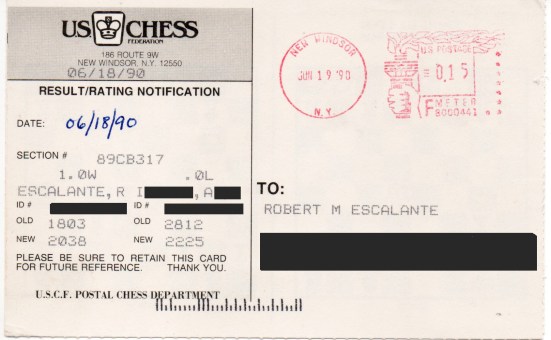
I Beat A 2812!

Yes, this is true.


And this is the story.


In order to gain an established rating, you must play events obviously. During the time you start playing tournament games and your rating more or stabilizes, you are issued a provisional rating. This rating can wildly swing as you win and lose games.


In 1988 my correspondence rating was settling into a stable one. My opponent’s rating was still in wild flux before he and I started our game.


And this is the game.


A.I.-Escalante
corres. 1990
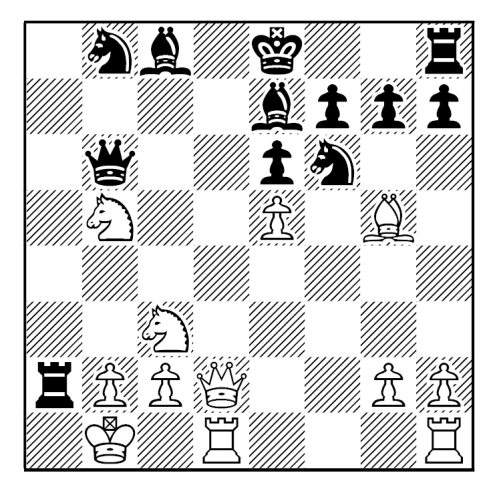
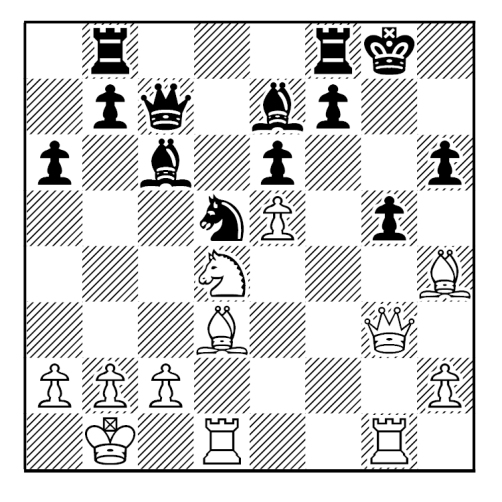
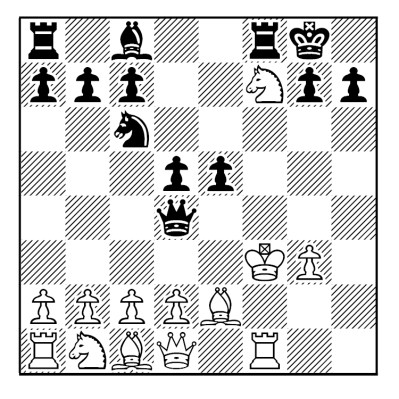
1.e4 e5 2.Nf3 Nc6 3.Bc4 Nf6 4.Ng5 Bc5 (This is the Wilkes-Barre Variation, an extremely tactical and popular opening in the 1980s.  It was my favorite opening at this time as well. And it also seems to have been a favorite of my opponent as he made book move almost to the end of the game. Kenneth Williams’s pamphlet, The Real American Wilkes-Barre, published in 1979, was probably the reason for its popularity.) 5.Nxf7 (An alternate move is 5.Bxf7+. But if tactical is your M.O., then you can’t beat 5.Nxf7 for the pins, forks, checks, and sacrifices.) 5…Bxf2+ 6.Kxf2 Nxe4+ 7.Ke3!? [7.Kg1 is another move. But boldly (or maybe even recklessly) moving one’s king to the center in this variation is stronger than it appears (IMHO) as Black doesn’t have too many pieces developed and White is ahead materially.]

7…Qh4

[Black has the choice of the text move and 7…Qe7. I chose 7…Qh4 as I felt the queen was more active on this square.

Remember I mentioned this was popular opening back in the 1980s? Here two very strong players trying out 7…Qe7!? Notes are from NIC Yearbook #4.

Van de Loo-Hesslin
Netherlands, 1985
1.e4 e5 2.Nf3 Nc6 3.Bc4 Nf6 4.Ng5 Bc5 5.Nxf7 Bxf2+ 6.Kxf2 Nxe4+ 7.Ke3 Qe7 8.c3 Nd4 9.Kxe4 Qh4+ 10.Ke3 Qf4+ 11.Kd3 d5 12.Bxd5 Bf5+ 13.Kc4 b5+ 14.Kc5 Qh4 15.Nxe5 O-O-O 16.c4 Rxd5+ 17.cxd5 Rd8 18.Nc3 Nc6 19.Qa4!! Qe7+ (19…bxa4 20.Nc6 -/+) 20.Kxb5 Qxe5 21.Qc4?! (21.Qa6+!? Kb8 22.Qc6 Bd7) 21…Nd4+ 22.Ka4 Bd7+ 23.Ka5?! (Ka3!?) 23…Nc6+ 24.Ka6? (Ka4) 24…Nb8+ 25.Kxa7 (unclear) c6? (Qd6! -+) 26.Nb5! (with the idea of Kb6, Na7#) 26…Bf5 27.d4 Rd7+ 28.Ka8 (Kb6!) 27…Qe7 29.dxc6 Be4 30.d5 Bxd5 31.Qxd5 Rxd5 32.Na7+ Kd8 33.Kxb8?! (33.Bf4 with the idea of c7) 33…Qc7+? [33…Qe5 34.Kb7 (34.Ka8? Kc6!) Rb5 35.Nxb5 Qxb5=] 34.Ka8 Ra5 (Ke8!?) 35.Bg5+!! Rxg5 (35…Ke8 36.Rae1 Kf7 37.Re7+ -+) 36.Rad1+ Ke8 37.Rhe1+ Kf8 38.Rd7 Qxh2 39.Ree7 Qxg2 40.Rb7 Rc5 41.c7 Qg4 42.Rf7+! Ke8 43.b4 Rc2 44.a4 h5 45.a5 h4 46.b5 h3 47.Nc6! h2 48.Rxg7!! 1-0 Back to the game!]

8.g3 Nxg3 9.hxg3 Qd4+ 10.Kf3 d5!

[Black has the option of 10…O-O, letting his rook into play. However, again IMHO, the text move is stronger as it allows Black’s c8-bishop to come into play AND lay claim to the center.

Oleksenko-Malksirits, corres., 1984, continued with 11.Rh4!? e2+ 12.Kg2 d5 13.Rf4 dxc4 14.Qf1 Rxf7 15.Rxf7 Bg4 16.Nc3 Ne5 17.Qf2! Bf3+ 18.Rxf3 exf3+ 19.Kg1 Qd7 20.d4 cxd3 21.Bf4 Ng6 22.Qxf3 dxc2 23.Rc1 Nxf4 24.Qxf4 Rf8 25.Qc4+ Kh8 26.Rxc2 c6 27.Qc5 Rf5 28.Rf2+ 1-0]

11.Be2

[All this studying for correspondence can pay off. Here is another game by the author.

Escalante-Tym Belanger, US Amateur Team Ch., Feb., 20 2006, 11.Rh4 e4+ 12.Kg2 Rf8 13.Bxd5 Qxd5 14.Qh5 Qxh5 15.Rxh5 Rxf7 16.Rxh7 Nd4 17.Na3 Bg4 -/+ 18.Rh8+ Rf8 19.Rxf8+ Kxf8 20.c3 Bf3+ 21.Kf2 Nf5 22.d3 Rd8 23.dxe4 Bxe4 24.Bg5? (>24.Bf4 c6 25.Nc4) 24…Rd3 25.Bf4 Rf3+ 26.Ke2 Nxg3+ 27.Bxg3 Rxg3 28.Rf1+ Ke7 29.Kd2 Rd3+?! (>29…Rg2+ 30.Ke3 Bc6 31.Nc4? Bb5) 30.Ke2 Rg3 31.Kd2 g5 32.Re1 Kf6 33.Rxe4 Kf5 34.Re2 Kf4 35.Nb5 Kf3 36.Nd4+ Kg4 37.Rf2 Kh3 38.Ke2 Rg4 39.a4 Re4+ 40.Kd3 Re1 41.Rf3+ Kg2 42.Rf7! +- (White wins with a windmill.) 42…g4 43.Rxc7 Kf2 44.Rf7+ Kg1 45.Rxb7 Rf1 46.Rg7 g3 47.Rxg3+ Kh1 48.Rg7 Rb1 49.b4 Rd1+ 50.Kc2 Rf1 51.Rxa7 Rf2+ 52.Kd3 Rf8 53.Rg7 Rf3+ 54.Kc4 (Of course not Nxf3, stalemate!) 54…Rf8 55.b5 Rc8+ 56.Kb4 Rf8 57.a5 Rf3 (Another attempt at stalemate.) 58.a6 Rf2 59.c4 Rf1 60.a7 Ra1 61.b6 Rb1+ 62.Kc5 Ra1 63.b7 Rxa7 64.b8=Q Rc7+ (Yet another try at stalemate; the third of the game. 65.Qxc7 is a draw, so…) 65.Rxc7 1-0]

11…O-O (11…Bxe2 Bg4 12.Kg2 Qe4 13.Bf3! +-) 12.Rf1? (Kg2! – K. Williams)

2019_07_25

12…Bh3!! 0-1 (This is stronger than 12…Qe4+ 13.Kf2 Rxf7+ and either 14.Ke1 or 14.Kg1 and the White king lives. But after 12…Bh3!!, White has a choice between …Rxf7# or losing a massive amount of material with 13.Bd3 Rxf7+ 14.Ke2 Bg4+ 15.Ke1 Rxf1+ 16.Kxf1 Bxd1.)


correspondence_AI_1

The Thematic Pawn Move – Pushing the “e” Pawn

Generally, in an Indian Defence, if White can get his king pawn to e4, he gains the advantage. Preventing that should be one of Black’s chief concerns.

 
We’ll start with the Nimzo-Indian to illustrate some ideas with short games.

 
In the Classical Variation of the Nimzo-Indian (1.d4 Nf6 2.c4 e6 3.Nc3 Bb4 4.Qc2) Black sometimes plays …b6. This move allows Black to play …Bb7, preventing White’s pawn from moving to e4. Unfortunately, he is a move too slow.

 
Rubinstein-Chwojnik
Lodz, 1927
1.d4 Nf6 2.c4 e6 3.Nc3 Bb4 4.Qc2 b6 5.e4 Bxc3+ 6.bxc3 d6 7.f4 Bb7 8.e5 Ne4 9.Nf3 f5 10.exf6 Nxf6 11.Ng5 Qe7 12.Bd3 Nbd7 13.O-O O-O-O 14.Re1 e5 15.Bf5 Kb8 16.Ba3 g6 17.dxe5 gxf5 18.exd6 Qxe1+ 19.Rxe1 cxd6 20.Bxd6+ Ka8 21.Qxf5 1-0


Euwe-Colle
Amsterdam, 1928
1.d4 Nf6 2.c4 e6 3.Nc3 Bb4 4.Qc2 b6 5.e4 Bb7 6.Bd3 (White’s bishop is on a great diagonal and is supported by the Queen on c2. Black should be wary of castling kingside as the h7 pawn is vulnerable.) 6…Bxc3+?! 7.bxc3 d6 8.Ne2 h6 9.O-O O-O 10.f4 Nbd7 11.e5 Ne8 12.Ng3 c5 13.Qe2 Qh4 14.f5 cxd4 15.Rf4 Qd8 16.cxd4 dxe5 17.dxe5 Nc7 18.Rg4 Qe7 19.Rxg7+ 1-0


Noteboom-Flohr, 1930
[ECO, E32]
1.d4 Nf6 2.c4 e6 3.Nc3 Bb4 4.Qc2 b6 5.e4 Bxc3+ 6.bxc3 d6 7.f4 e5 8.Bd3 Qe7 9.Nf3 Nc6 10.O-O Bb7 11.Re1 +/- (Of course White wants the “e” file to be opened soon.)


Dunne (2183)-R. Hughes (2046)
corres.
Golden Knights, 1996
1.d4 Nf6 2.c4 e6 3.Nc3 Bb4 4.Qc2 b6 5.e4 Bb7 6.Bd3 O-O 7.e5 Bxg2 8.exf6 Bxh1 9.Bxh7+ (Of course, this is the main reason White plays .Bd3 in the first place!) 9…Kh8 10.Be4 Bxe4 11.Qxe4 Bxc3+ 12.bxc3 Nc6 13.Bg5 Kg8 14.Qh4 Re8 15.fxg7 f6 16.Bxf6 1-0


We’ll now take a look at the Queen’s Gambit Declined.


Eugenio Torre (2520)-Yukio Miyasaki (2200)
Malta Ol., Nov. 1980
[D61]
1.c4 Nf6 2.Nc3 e6 3.Nf3 d5 4.d4 Be7 5.Bg5 O-O 6.e3 (Black is doing quite well here in stopping .e4.) 6…Nbd7 7.Qc2 c6 8.Bd3 h6 9.Bh4 Re8 10.O-O Nf8 11.Rad1

[11.Ne5 also worked well in Belen Miguel Fernandez-Esteban Ignacio Gonzalez de Cima, Asturias Ch. Primera B, Norena, Apr. 7 2001: 11…N6d7 12.Bxe7 Qxe7 13.f4 f6 14.Ng4 Nb6 15. c5 Nbd7 16.Rf3 e5 (On deciding on a candidate move or threat, a player should also ask if his proposed move has depth (long-term gain), a follow up plan, or if such a move also provides defense as well as attacking possibilities. Black’s threat of 17…e4 is obvious, but this move has no depth, does not provide any type of defense, and as far as we know, Black had no follow up plan.)

2019_07_18_A

17.Rg3! e4 (Black’s idea of getting HIS pawn to e4, should make equal sense as White getting his to e4. But chess is not that simple.) 18.Nxh6+! +- Kh7 19.Nf5 Qe6 20.Nxg7 Qe7 21.Nxe8 (And now White can play 22.Nxe4 and more tactics will follow.) 1-0]


11…Nh5 12.Bxe7 Qxe7 13.e4 (Didn’t we tell Black not to allow this move a few games back?) 13…Nf4 14.Rfe1 Nxd3 15.Qxd3 dxc4 (Just about forced as …exd5 opens lines in White’s favor.) 16.Qxc4 Bd7 17.e5 (Now if e4 is a good move for White, then e5 is even stronger.) 17…Red8 18.Nd2 b5 19.Qe2 c5 20.d5 exd5 21.Nxd5 Qh4 22.Ne4 (We’ve going to give the position a +/-, but White’s advantage is probably stronger than that evaluation.) 22…c4 23.Nd6 Ng6 24.Nxf7! Bg4?

2019_07_18_B

25.Qxg4!! (Black is lost. The game could have continued with 25…Qxg4 26.Nxh6+ gxh6 27.Nf6, but you probably figured it out.) 1-0


Interesting enough, in the Queen’s Gambit Accepted, White can also get the advantage with .e3 instead of .e4. An old trap goes like this: 1.d4 d5 2.c4 dxc4 3.e3 b5 4.a4 (White could also play 4.Qf3 c6 5.a4, and merely get his pawn back with the advantage.) 4…c6 (or 4…a6 5.axb5!) 5.axb5 cxb5 6.Qf3!, winning.

This trap will catch beginners and even computers.

GM Kasparov-ELITE A/S EXPERIMENTAL
Simul
Hamburg, 1985
1.d4 d5 2.c4 dxc4 3.e3 b5 4.a4 Ba6 5.axb5 Bxb5 6.Nc3 c6 7.b3 e6 8.bxc4 Ba6 9.Nf3 Nf6 10.Bd3 Bd6 11.O-O O-O 12.e4 Bb4 13.Qc2 Nh5 14.e5 f5 15.exf6 Nxf6 16.Re1 Bc8 17.Bb2 a5 18.Rad1 Ra7 19.Ne5 a4 20.Re3 a3 21.Ba1 Bb7 22.Ne2 Nbd7 23.Nf4 Re8 24.Rh3 Nf8 25.g4 h6 26.g5 hxg5 27.Nfg6 N8h7 28.Nh8 g6 29.Bxg6 Nf8 30.Nhf7 Qe7 31.d5 cxd5 32.Nh6+ Kg7 33.Bxe8 Qxe8 34.Neg4 Be7 35.Ng8 Kxg8 36.Bxf6 Ng6 37.Bxe7 1-0

Black, even with a better third move, still lost in this game:

Tarrasch-Kurschner
Nuremburg, 1889
1.d4 d5 2.c4 dxc4 3.e3 Bf5!? 4.Bxc4 e6 5.Qb3 Be4 6.f3 Bc6 7.Ne2 Nf6 8.e4 Be7 9.Nbc3 Qc8 10.d5 exd5 11.exd5 Bd7 12.d6 Bxd6 13.Bxf7+ Kd8 14.Bg5 Nc6 15.Ne4 Be7 16.Bxf6 gxf6 17.O-O-O Ne5 18.Nf4 Qb8 19.Qe6 Rf8 20.Nxf6 Bd6 21.Nxd7 Nxd7 22.Rhe1 1-0


Maybe someone will get the bright idea, of when playing Black against a known 1.d4 player, to glue the e4 pawn to the board before the start of the game, so White can’t play his king pawn to e3, e4, e5, or any other square!

A TD Story

To become a Tournament Director (TD) in chess, it is advisable first become an Assistant Tournament Director (ATD). I’ve been both. And while I found the experience to be both interesting and enjoyable, I also knew that I didn’t have time to pursue everything in chess, so I had to concentrate more on writing (which is a BIG reason for this blog).


Here is a story from that experience.


I was working as an Assistant Tournament Director (ATD) at a National JHS Championship. My job was to walk around the tournament hall and solving small problems on the games as necessary. The players were instructed to raise their hand if they needed some help.


young_girl


Sure enough, about half-hour after they games had started, I saw a hand go up. I jogged to the board where two kids were playing. To be more accurate, there was only one kid playing; he was ahead a queen, a rook, a bishop, and several pawns. His opponent had his head on the table, and not really doing anything else other than breathing.


The kid who was winning said, “My opponent is asleep. Can you help?”. The rules, by the way, forbid anyone disturbing any of the players while the game is still going on. That rule appears to cover players who are awake, asleep, or in deep meditation. And I wasn’t even sure if his opponent was asleep or not (my gut feeling told me he wasn’t).


Now, one thing almost all kids in common is impatience. It didn’t seem fair to have the winning player have to sit there until his opponent’s clock run out (the clock indicated it would be at least another hour – they apparently started the game late).

clock_s-l1000

So, the onus was on me to solve the problem.


I came up with a unique solution. I spoke to the kid who was winning, and loud enough so his opponent could hear me. I told him (both of them!), “If your opponent does not wake up in the next 10 seconds, I will award the game to you.” And I started counting: “10”, “9”, “8”, and then suddenly, and miraculously, his opponent “woke up”.


The kid who was winning had a beaming smile while his opponent feigned waking up.


I told them to keep playing and wished them both good luck in their continuing game.

A Four Queen Opening.

Many players dream of playing with four queens on the board. They admire the complications and the overall tactical possibilities.


Most of the know that endgames produce the most four-queen games. And yet, it is still not that common and the tactically-gifted usually don’t have their dreams transformed into reality.

 
But is there an opening that will let the players have the four queens.


The opening is from a Semi-Slav and the Encyclopedia of Chess Openings (ECO) classifies it as D47.


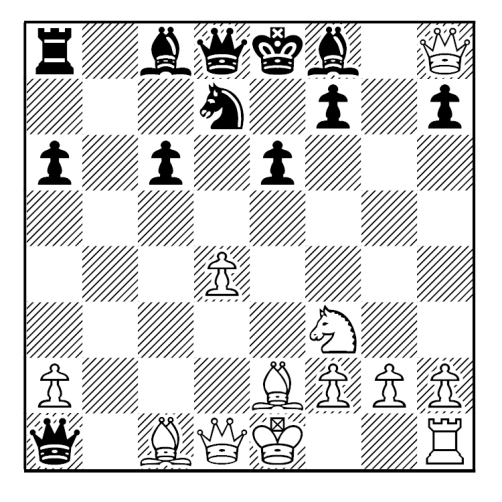
The opening moves to this multi-queen game are 1.d4 d5 2.c4 e6 3.Nc3 Nf6 4.Nf3 c6 (In case you are interested, these moves define the Semi-Slav), 5.e3 Nbd7 6.Bd3 dxc4 7.Bxc4 b5. Now White’s bishop is under attack, so he moves to e2. Now after 8.Be2 a6 9.e4 b4 10.e5! bxc3 11.exf6 cxb2 12.fxg7 bxa1=Q 13.gxh8=Q, we have four queens, with two of them on their original squares and the other two are far off on corner squares.


Here are all the moves and a diagram to help you.

 
1.d4 d5 2.c4 e6 3.Nc3 Nf6 4.Nf3 c6 5.e3 Nbd7 6.Bd3 dxc4 7.Bxc4 b5 8.Be2 a6 9.e4 b4 10.e5! bxc3 11.exf6 cxb2 12.fxg7 bxa1=Q 13.gxh8=Q.
 

2019_06_05_A


Now let’s get to some games and analysis.


~~~~~~~~~~~~~~~~~~~~~~~~~~~~~

 
Black best response, after 13.gxh8=Q is to activate his second queen with 13…Qa5+. Anything else puts his game into jeopardy.


J. Kjeldsen-T. Christensen
Arhus, 1995
1.d4 d5 2.c4 e6 3.Nc3 Nf6 4.Nf3 c6 5.e3 Nbd7 6.Bd3 dxc4 7.Bxc4 b5 8.Be2 a6 9.e4 b4 10.e5 bxc3 11.exf6 cxb2 12.fxg7 bxa1=Q 13.gxh8=Q c5?! 14.O-O Bb7 15.Qxh7 Qxa2 16.Ng5 Qf6 17.Nxf7 Qg7 18.Qxg7 1-0


CM Asmund Hammerstad (2205)-Pavol Sedlacek (2233)
European Club Cup
Rogaska Slatina, Slovenia, Sept. 28 2011
1.d4 Nf6 2.Nf3 d5 3.c4 c6 4.Nc3 e6 5.e3 Nbd7 6.Bd3 dxc4 7.Bxc4 b5 8.Be2 a6 9.e4 b4 10.e5 bxc3 11.exf6 cxb2 12.fxg7 bxa1=Q 13.gxh8=Q Qxa2 (A little more active than 13…c5, but not by much.) 14.O-O Qf6 15.Qxh7 Qg7 16.Qhc2 Qd5 17.Ng5 Bb7 18.Bf3 Qb5 19.Bh5 O-O-O 20.Be2 Qa5 21.Bd2 Qa3 22.Bf3 Nb8 23.Be3 Be7 24.Ne4 f5 25.Nd2 Qb4 26.Qe2 Qb5 27.Nc4 a5 28.Rb1 Bb4 29.Nd6+ Rxd6 30.Qxb5 Qd7 31.Qe5 Qe8 32.Rxb4 1-0


After Black’s 13…Qa5+, White must block the check and he has two main ways to do so. One is 14.Bd2, the other 14.Nd2. The move 14.Bd2 would seem to be the best, but only superficially. 14.Nd2 allows for more freedom for White’s pieces. That’s why White wants to enter these complications – to use his tactical abilities.


Here are a few games with 14.Bd2.


Benko-Pytel
Hastings, 1973
[ECO]
1.d4 d5 2.c4 e6 3.Nc3 Nf6 4.Nf3 c6 5.e3 Nbd7 6.Bd3 dxc4 7.Bxc4 b5 8.Be2 a6 9.e4 b4 10.e5 bxc3 11.exf6 cxb2 12.fxg7 bxa1=Q? 13.gxh8=Q Qa5+ 14.Bd2 Qxd1+ 15.Bxd1 Qf5 (15…Qb5 16.Qxh7 +/-) 16.O-O Bb7 17.d5 Qxd5 18.Qxh7 c5 19.Ba4 O-O-O 20.Bg5 Ne5 21.Ne1 c4 22.Bxd8 Qxd8 23.Qh8 f6 24.Qg8 Qd6 25.Nc2 Kc7 26.Ne3 Be7 27.Rd1 Qb6 28.Qe8 Bc5 29.Qd8mate 1-0


Lauber (2380)-Mosquera
World U20 Ch.
Medellin, 1996
1.d4 d5 2.c4 e6 3.Nc3 Nf6 4.Nf3 c6 5.e3 Nbd7 6.Bd3 dxc4 7.Bxc4 b5 8.Be2 a6 9.e4 b4 10.e5 bxc3 11.exf6 cxb2 12.fxg7 bxa1=Q 13.gxh8=Q Qa5+ 14.Bd2 Qxd1+ 15.Bxd1 Qxa2 16.O-O c5 17.dxc5 Bb7 18.Bg5 h6 19.Bxh6 O-O-O 20.c6 Bxc6 21.Bxf8 Qa5 22.Be2 Rxf8 23.Qb2 Bb5 24.Rc1+ Kd8 25.Ne5 Nxe5 26.Qxe5 Qb4 27.Qc7+ Ke8 28.Qb7 Qd6 29.Rc8+ Qd8 30.Rxd8+ Kxd8 31.Bxb5 axb5 32.Qxb5 1-0


Fletcher Baragar (2305)-Daniel Fernandez (2057)
Financial Concept Open
North Bay, Canada, Aug. 7 1999
1.d4 d5 2.c4 e6 3.Nc3 Nf6 4.Nf3 c6 5.e3 Nbd7 6.Bd3 dxc4 7.Bxc4 b5 8.Be2 a6 9.e4 b4 10.e5 bxc3 11.exf6 cxb2 12.fxg7 bxa1=Q 13.gxh8=Q Qa5+ 14.Bd2 Q5xa2 15.O-O Qxd1 16.Rxd1 h6 17.Ne5 Nxe5 18.dxe5 Bd7 19.Qf6 Be7 20.Qh8+ Bf8 21.Qf6 Be7 22.Qxh6 O-O-O 23.Qe3 c5 24.Qf3 Kb8 25.Be3 Bb5 26.Rxd8+ Bxd8 27.Bxb5 axb5 28.g3 b4 29.Qc6 b3 30.Bxc5 b2 31.Bd6+ Ka7 32.Bc5+ Kb8 1/2-1/2


Kamil Klim (2108)-Krzysztof Bulski (2396)
Lasker Memorial
Barlinek, June 2 2007
1.d4 d5 2.c4 c6 3.Nf3 Nf6 4.Nc3 e6 5.e3 Nbd7 6.Bd3 dxc4 7.Bxc4 b5 8.Be2 a6 9.e4 b4 10.e5 bxc3 11.exf6 cxb2 12.fxg7 bxa1=Q 13.gxh8=Q Qa5+ 14.Bd2 Qxd1+ 15.Bxd1 Qf5 16.O-O Bb7 17.d5 Qxd5 18.Qxh7 c5 19.Ba5 Bc6 20.Nh4 Qe4 21.Qxe4 Bxe4 22.Re1 Bd3 23.Nf3 Bg7 24.Ng5 Bf6 25.Ne4 Bd4 26.Bc7 Nf6 27.Ba4+ Bb5 28.Bc2 Kd7 29.Bb6 Nxe4 30.Bxe4 Bc6 31.Rd1 Bd5 32.Bc2 Rb8 33.Ba4+ Kd6 34.Ba5 Rb2 35.Rd2 Rb1+ 36.Rd1 Bxa2 37.h4 Rxd1+ 38.Bxd1 c4 0-1

 
Now for the stronger, and more fluid, 14.Nd2.


Krogius-Kamyshov
USSR, 1949
[ECO]
1.d4 d5 2.c4 e6 3.Nc3 Nf6 4.Nf3 c6 5.e3 Nbd7 6.Bd3 dxc4 7.Bxc4 b5 8.Be2 a6 9.e4 b4 10.e5 bxc3 11.exf6 cxb2 12.fxg7 bxa1=Q? 13.gxh8=Q Qa5+ 14.Nd2 Qf5 15.O-O Bb7 16.Qb3 Nc5 17.Ba3 Nxb3 18.Qxf8+ Kd7 19.Qe7+ Kc8 20.Nxb3 +- Qxf1+ 21.Bxf1 Qd5 22.Bd6 1-0


Krogius-Shvedchikov
Calimanesti, 1993
1.d4 d5 2.c4 e6 3.Nc3 Nf6 4.Nf3 c6 5.e3 Nbd7 6.Bd3 dxc4 7.Bxc4 b5 8.Be2 a6 9.e4 b4 10.e5 bxc3 11.exf6 cxb2 12.fxg7 bxa1=Q 13.gxh8=Q Qa5+ 14.Nd2 Bb7 15.O-O Q1xa2 16.Nc4 Qd5 17.Bh6 O-O-O 18.Bxf8 c5 19.Nd6+ Qxd6 20.Bxd6 Rxh8 21.dxc5 Qd5 22.Qxd5 exd5 23.Rc1 1-0


De Guzman (2407)-Bhat (2410)
Michael Franett Memorial
San Francisco, 2005
1.d4 d5 2.c4 e6 3.Nf3 c6 4.e3 Nf6 5.Nc3 Nbd7 6.Bd3 dxc4 7.Bxc4 b5 8.Be2 Bb7 9.e4 b4 10.e5 bxc3 11.exf6 cxb2 12.fxg7 bxa1=Q 13.gxh8=Q Qa5+ 14.Nd2 Qf5 15.O-O O-O-O 16.Qb3 Nc5 17.Qb4 Nd7 18.Qb3 Nc5 19.Qb4 Be7 20.Qg7 Bf8 21.Qh8 Be7 1/2-1/2


Emil Klemanic (2257)-Peter Palecek (2254)
Slovakia Team Ch.
Košice, Jan. 16 2011
1.d4 d5 2.Nf3 Nf6 3.c4 c6 4.e3 e6 5.Nc3 Nbd7 6.Bd3 dxc4 7.Bxc4 b5 8.Be2 a6 9.e4 b4 10.e5 bxc3 11.exf6 cxb2 12.fxg7 bxa1=Q 13.gxh8=Q Qa5+ 14.Nd2 c5 15.O-O Qxd4 16.Qxh7 Qxa2 17.Bc4 Nf6 18.Qh8 Qa5 19.Qf3 Nd5 20.Qhh5 Qc7 21.Re1 Nf4 22.Qh7 Bb7 23.Ne4 Qa5 24.Rd1 O-O-O 25.Rxd4 Qe1+ 26.Bf1 Rxd4 27.Qxf4 Bxe4 28.Qhxf7 Bd6 29.Q4f6 Bc7 30.Q6xe6+ Kb7 31.Qxa6+ Kb8 32.Qe8+ Rd8 33.Qeb5+ 1-0

 
If 14.Nd2 Q5xa2?!, then White gets an advantage after the simple 15.O-O.


Shumiakina-Mihai
Timisoara, 1994
1.d4 d5 2.c4 e6 3.Nc3 Nf6 4.Nf3 c6 5.e3 Nbd7 6.Bd3 dxc4 7.Bxc4 b5 8.Be2 a6 9.e4 b4 10.e5 bxc3 11.exf6 cxb2 12.fxg7 bxa1=Q 13.gxh8=Q Qa5+ 14.Nd2 Q5xa2 15.O-O Bb7 16.Bc4 Qa4 17.Nb3 Qc3 18.Bxe6 fxe6 19.Bg5 Nf6 20.Qxf6 1-0


Fernando Peralta (2315)-Carlos Gonzalez
Villa Ballester Open, 1996
1.d4 d5 2.c4 e6 3.Nc3 Nf6 4.Nf3 c6 5.e3 Nbd7 6.Bd3 dxc4 7.Bxc4 b5 8.Be2 a6 9.e4 b4 10.e5 bxc3 11.exf6 cxb2 12.fxg7 bxa1=Q 13.gxh8=Q Qa5+ 14.Nd2 Q5xa2 15.O-O Qa4 16.Ne4 Qb4 17.Bd2 Qaxd4 18.Nf6+ Qxf6 19.Qxf6 Nxf6 20.Bxb4 Bxb4 21.Qa4 1-0

 
~~~~~~~~~~~~~~~~~~~~~~~~~~~~~

 
There is a sister variation with 8…Bb7 instead of 8…a6. And although there are similarities between the two variations, Black is more active and scores better in this variation.

 
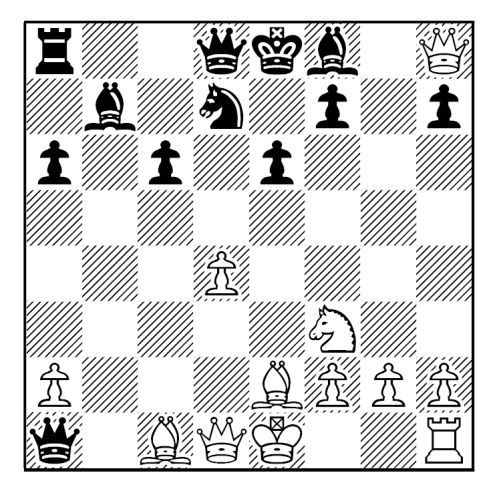
Again, here are the opening moves and a diagram to help.

 
1.d4 d5 2.c4 e6 3.Nc3 Nf6 4.Nf3 c6 8.Be2 Bb7 9.e4 b4 10.e5! bxc3 11.exf6 cxb2 12.fxg7 bxa1=Q 13.gxh8=Q.
2019_06_05_B

 
And again, Black does best to activate his second queen with 13…Qa5+. Two games in which he does not and loses the game.


Z. Polgar-V. Dimitrov
Bulgaria, 1984
1.d4 d5 2.c4 e6 3.Nc3 Nf6 4.Nf3 c6 5.e3 Nbd7 6.Bd3 dxc4 7.Bxc4 b5 8.Be2 Bb7 9.e4 b4 10.e5 bxc3 11.exf6 cxb2 12.fxg7 bxa1=Q 13.gxh8=Q Qb1 14.O-O (White’s best.) 14…Qf6 15.Qxf6 Nxf6 16.Ne5 Qxa2 17.Bc4 Qa5 18.Qf3 Be7 19.Bg5 Qd8 20.Bxe6! fxe6 21.Bxf6 +- Qxd4 22.Qh5+ 1-0


Rassmussen-Domosud, 1984
[I am not sure who annotated this game. If the reader knows, please email me with the information. Thanks!]
1.d4 d5 2.c4 e6 3.Nc3 Nf6 4.Nf3 c6 5.e3 Nbd7 6.Bd3 dxc4 7.Bxc4 b5 8.Be2 Bb7 9.e4 b4 10.e5 bxc3 11.exf6 cxb2 12.fxg7 bxa1=Q 13.gxh8=Q Qb1 14.O-O Qf6 15.Qxf6 Nxf6 16.Ne5 Qxa2 17.Bc4 (17.Bh5 Qd5 18.Bxf7+ Kd8 19.Bh5) 17…Qa5 (Qb1) 18.Qf3 Be7 19.Bg5 [19.Nxc6 Qb6 20.d5 exd5 21.Nxe7 dxc4 (21…Kxe7 22.Re1+ Kd7 23.Qf5+ Kd8 24.Bg5)] 19…Qd8 20.Bxe6 [20.Nxc6 Qb6 21.d5 Bxc6 (21…Nxd5 22.Bxd5 <22.Nxe7 Nxe7 23.Qf6 Ng6> 22…Bxg5 23.Ne5) 22.dxc6 Nd5 23.Bxd5 Bxg5] 20…fxe6 21.Bxf6 Qxd4 (21…Qc8 22.Rb1 Bxf6 23.Qxf6 Qc7 24.Qh8+ Ke7 25.Qxh7+ Kd6 26.Nc4+ Kd5 27.Qxc7 Kxc4 28.Qe5 Kc3 29.Qc5+ Kd2 30.Rc1 Kd3 31.Rd1+ Ke4 32.Qe5#) 22.Qh5+ (22…Kd8 23.Nf7+ Kc8 24.Bxd4) 1-0

 
And here is the 14.Bd2 block. Not as good as 14.Nd2, but you probably already knew that already.


Chekover-Suetin
Leningrad, 1951
[ECO]
1.d4 d5 2.c4 e6 3.Nc3 Nf6 4.Nf3 c6 5.e3 Nbd7 6.Bd3 dxc4 7.Bxc4 b5 8.Be2 Bb7 9.e4 b4 10.e5 bxc3 11.exf6 cxb2 12.fxg7 bxa1=Q 13.gxh8=Q Qa5+ 14.Bd2 Qxd1+ 15.Bxd1 Qf5 16.O-O O-O-O 17.Qg8 Be7 18.Qg7 Qg6 19.Qxg6 hxg6=


Pliester-Dreev
New York Open, 1989
1.d4 d5 2.c4 e6 3.Nc3 Nf6 4.Nf3 c6 5.e3 Nbd7 6.Bd3 dxc4 7.Bxc4 b5 8.Be2 Bb7 9.e4 b4 10.e5 bxc3 11.exf6 cxb2 12.fxg7 bxa1=Q 13.gxh8=Q Qa5+ 14.Bd2 Qxd1+ 15.Bxd1 Qf5 16.O-O O-O-O 17.d5 Bd6 18.Qd4 c5 19.Qa4 Qxd5 20.Be2 Rg8 21.Rd1 Qe4 22.Qxe4 Bxe4 23.Ng5 Bd5 24.f3 f5 25.Nxh7 Be7 26.Ba6+ Kc7 27.Bf4+ Kd8 28.h4 Bxh4 29.g3 Bxg3 30.Bg5+ Kc7 31.Kg2 Bf4 0-1

 
After 13.gxh8=Q Qa5+ 14.Nd2, Black has three reasonable tries. Here are some minor ones just to lay some ground work.


Barshauskas-Kholmov
Latvian Ch., 1955
1.d4 d5 2.c4 e6 3.Nc3 Nf6 4.Nf3 c6 5.e3 Nbd7 6.Bd3 dxc4 7.Bxc4 b5 8.Be2 Bb7 9.e4 b4 10.e5 bxc3 11.exf6 cxb2 12.fxg7 bxa1=Q 13.gxh8=Q Qa5+ 14.Nd2 Q5xa2 15.O-O Ba6 (unclear – ECO) 16.Bxa6 Qxa6 17.Nb3 Qb1 18.Nc5 Qab5 19.Bh6 Qxd1 20.Rxd1 O-O-O 21.Nxd7 Bxh6 22.Qxh7 Qh5 23.Rb1 Kxd7 24.Rb7+ Kc8 25.Qb1 Bf4 26.g3 Rxd4 (with the idea of Rd1+) 0-1


Blackstock-Crouch
London, 1980
1.d4 d5 2.c4 e6 3.Nc3 Nf6 4.Nf3 c6 5.e3 Nbd7 6.Bd3 dxc4 7.Bxc4 b5 8.Be2 Bb7 9.e4 b4 10.e5 bxc3 11.exf6 cxb2 12.fxg7 bxa1=Q 13.gxh8=Q Qa5+ 14.Nd2 Qd5 15.O-O Qaxd4 16.Qxh7 Nf6 17.Qb1 Qb6 18.Bb2 Be7 19.Nc4 Qc7 20.Be5 Qcd7 21.Bxf6 Bxf6 22.Bf3 Qd4 23.Qa4 (+- ECO ; 23…Qf4!?)


Hansen-Muir
Aarus, 1990
1.d4 d5 2.c4 e6 3.Nc3 Nf6 4.Nf3 c6 5.e3 Nbd7 6.Bd3 dxc4 7.Bxc4 b5 8.Be2 Bb7 9.e4 b4 10.e5 bxc3 11.exf6 cxb2 12.fxg7 bxa1=Q 13.gxh8=Q Qa5+ 14.Nd2 Ba6 15.O-O Bxe2 16.Qxe2 Q5xa2 17.Qxh7 Qxd4 18.Qeh5 O-O-O 19.Q5xf7 Bc5 20.Qe4 Rf8 21.Qxd4 Bxd4 22.Qh7 Qd5 23.Nf3 Rxf3 24.gxf3 Ne5 25.Qg8+ Kb7 26.Qg7+ Kb6 27.Qg2 Nxf3+ 28.Kh1 a5 29.Be3 c5 30.Rb1+ Kc6 31.Rc1 a4 32.Bxd4 Nxd4 33.Qxd5+ exd5 34.h4 c4 35.h5 Nf5 36.Kg2 Kc5 37.Kf3 d4 38.Kf4 Nd6 39.h6 c3 40.h7 Nf7 41.Ra1 Kc4 0-1


Sadler-Neverov
Hastings, 1991
1.d4 d5 2.c4 e6 3.Nc3 Nf6 4.Nf3 c6 5.e3 Nbd7 6.Bd3 dxc4 7.Bxc4 b5 8.Be2 Bb7 9.e4 b4 10.e5 bxc3 11.exf6 cxb2 12.fxg7 bxa1=Q 13.gxh8=Q Qa5+ 14.Nd2 O-O-O 15.O-O Qf5 16.Qb3 Nc5 17.Qb4 Nd7 18.Qb3 1-0


Now for the main lines.


Black’s main choices here;


(1) 13.gxh8=Q Qa5+ 14.Nd2 Q5c3


(2) 13.gxh8=Q Qa5+ 14.Nd2 c5 15.O-O Qxd4


The next two originate from 14.Nd2 Qf5, one with 15.O-O O-O-O 16.Qb3, the other without all these moves.


(3) 13.gxh8=Q Qa5+ 14.Nd2 Qf5


(4) 13.gxh8=Q Qa5+ 14.Nd2 Qf5 15.O-O O-O-O 16.Qb3

 
~~~~~~~~~~~~~~~~~~~~~~~~~~~~~

 
(1) 13.gxh8=Q Qa5+ 14.Nd2 Q5c3


Lazarev-Goldstein
USSR Ch., 1962
1.d4 d5 2.c4 e6 3.Nc3 Nf6 4.Nf3 c6 5.e3 Nbd7 6.Bd3 dxc4 7.Bxc4 b5 8.Be2 Bb7 9.e4 b4 10.e5 bxc3 11.exf6 cxb2 12.fxg7 bxa1=Q 13.gxh8=Q Qa5+ 14.Nd2 Q5c3 15.O-O Qxd4 16.Qxh7 Qxa2 17.Bc4 Qa5 18.Bxe6 O-O-O 19.Qxf7 Qg7 20.Qxg7 Bxg7 21.Nc4 Qc7 22.Qg4 Be5 23.Bxd7+ Rxd7 24.Qg8+ Rd8 25.Qe6+ 1-0


Bikov-Filipenko
Moscow, 1983
1.d4 d5 2.c4 e6 3.Nc3 Nf6 4.Nf3 c6 5.e3 Nbd7 6.Bd3 dxc4 7.Bxc4 b5 8.Be2 Bb7 9.e4 b4 10.e5 bxc3 11.exf6 cxb2 12.fxg7 bxa1=Q 13.gxh8=Q Qa5+ 14.Nd2 Q5c3 15.Bc2 Ba6 16.h4 Qxd4 17.Qxd4 Qxd4 18.Rh3 O-O-O 19.Qf3 Ne5 20.Qc3 Bb4 21.Qxd4 Rxd4 22.h5 Nd3+ 23.Bxd3 Bxd3 24.h6 c5 25.a3 Ba5 26.Rh5 Rd5 27.Rxd5 exd5 28.Kd1 Bg6 29.Nb3 Bb6 30.a4 c4 31.a5 Bxf2 32.Ke2 Bg1 33.Kf1 Bh2 34.Nd4 Kd7 35.Bb2 Bf4 36.Bc3 a6 37.Ke2 Bxh6 0-1

 
(2) 13.gxh8=Q Qa5+ 14.Nd2 c5 15.O-O Qxd4


Lukov-Conquest
Tbilisi, 1988
1.d4 d5 2.c4 e6 3.Nc3 Nf6 4.Nf3 c6 5.e3 Nbd7 6.Bd3 dxc4 7.Bxc4 b5 8.Be2 Bb7 9.e4 b4 10.e5 bxc3 11.exf6 cxb2 12.fxg7 bxa1=Q 13.gxh8=Q Qa5+14.Nd2 c5 15.O-O Qxd4 16.Qxh7 Qc7 17.Bf3 Nf6 18.Qh3 Nd5 19.Ne4 Qxd1 20.Rxd1 O-O-O 21.Bg5 Be7 22.Bxe7 Qxe7 23.Qh6 Kb8 24.Rc1 Rc8 25.Qg7 e5 26.Bg4 f5 27.Qxe7 Nxe7 28.Nd6 fxg4 29.Nxc8 Bxc8 30.Rxc5 Ng6 31.f3 gxf3 32.gxf3 Be6 33.a3 Kb7 34.Kf2 Kb6 35.Rc3 Bf5 36.Kg3 e4 37.Re3 exf3 38.Rxf3 Ne7 39.Kf4 Bc8 40.Kg5 Kc5 41.h4 Bb7 42.Rf7 Kd6 43.Kf6 Nd5+ 44.Kg7 Nc7 45.h5 Be4 46.h6 a5 47.Rf1 Ke5 48.Rc1 Ne6+ 49.Kg8 Kd4 50.Rg1 Nc5 51.Kf7 Bc2 52.Kf6 Nd7+ 53.Kg7 Nc5 54.Kf7 Bh7 55.Ke7 Bf5 56.Rg5 Bc2 57.Rh5 Bh7 58.Kd6 Nb3 59.Kc6 Kc3 60.Kb5 Bd3+ 61.Ka4 1-0


Sadler-Payen
Hastings, 1990
1.d4 d5 2.c4 e6 3.Nc3 Nf6 4.Nf3 c6 5.e3 Nbd7 6.Bd3 dxc4 7.Bxc4 b5 8.Be2 Bb7 9.e4 b4 10.e5 bxc3 11.exf6 cxb2 12.fxg7 bxa1=Q 13.gxh8=Q Qa5+14.Nd2 c5 15.O-O Qxd4 16.Qxh7 Qxa2 17.Bc4 Qaa1 18.Bxe6 O-O-O 19.Qxf7 Bd6 20.Nc4 Bc7 21.Bd5 Ba6 22.Qxd4 Qxd4 23.Bb2 Qd3 24.Qe6 Bb5 25.Re1 Kb8 26.Ne3 Qd2 27.Rb1 Nb6 28.Be5 Qd3 29.Be4 Qe2 30.Bxc7+ Kxc7 31.Qe5+ Kc8 1-0


Chatalbashev-Sveshnikov
USSR, 1991
1.d4 d5 2.c4 e6 3.Nc3 Nf6 4.Nf3 c6 5.e3 Nbd7 6.Bd3 dxc4 7.Bxc4 b5 8.Be2 Bb7 9.e4 b4 10.e5 bxc3 11.exf6 cxb2 12.fxg7 bxa1=Q 13.gxh8=Q Qa5+14.Nd2 c5 15.O-O Qxd4 16.Nb3 Qxh8 (16…Qxd1 17.Rxd1 Qa4 18.Qxh7) 17.Nxa5 Bd5 18.Qc2 (18.Bf3!? Qd4 19.Qxd4 cxd4 20.Bxd5 exd5 21.Re1+ Kd8 22.Nc6+) 18…Qe5 19.Bd3 Bg7 20.Nc4 Qc3 21.Qe2 Ne5 22.Nxe5 Qxe5 23.Be3 Rc8 24.Ba6 Rc7 25.Qb5+ Ke7 26.Bxc5+ Kf6 27.Qb4 Qg5 28.f3 Kg6 29.Bd3+ f5 30.a3 Be5 31.Bd4 a5 32.Qb6 Rb7 33.Qc5 Qe7 34.Bf2 Qxc5 35.Bxc5 Rc7 36.Rc1 Rxc5 0-1

 
(3) 13.gxh8=Q Qa5+ 14.Nd2 Qf5


Pliester-Nikolic
Purmerend, 1993
1.d4 d5 2.c4 e6 3.Nc3 Nf6 4.Nf3 c6 5.e3 Nbd7 6.Bd3 dxc4 7.Bxc4 b5 8.Be2 Bb7 9.e4 b4 10.e5 bxc3 11.exf6 cxb2 12.fxg7 bxa1=Q 13.gxh8=Q Qa5+ 14.Nd2 Qf5 15.Nc4 O-O-O 16.O-O Qxa2 17.Bd3 Qd5 18.Ne3 Qg5 19.Qxh7 Qg7 20.Qdh5 Qxh7 21.Qxh7 e5 22.Bc4 Qa5 23.Qxf7 exd4 24.Nf5 Bc5 25.Bg5 Rf8 26.Qe6 Qc7 27.g3 Qe5 28.Qxe5 Nxe5 29.Be6+ Nd7 30.Rb1 Ba6 31.Rc1 Re8 32.Ng7 Rxe6 33.Nxe6 Bb6 34.h4 Kb7 35.h5 c5 36.Be7 d3 37.h6 c4 38.h7 d2 39.Ra1 c3 40.h8=Q c2 41.Qh1+ Kc8 42.Qc6+ 1-0


Carnic-Vlatkovic, 1995
1.d4 d5 2.c4 e6 3.Nc3 Nf6 4.Nf3 c6 5.e3 Nbd7 6.Bd3 dxc4 7.Bxc4 b5 8.Be2 Bb7 9.e4 b4 10.e5 bxc3 11.exf6 cxb2 12.fxg7 bxa1=Q 13.gxh8=Q Qa5+ 14.Nd2 Qf5 15.O-O O-O-O 16.Nc4 Be7 17.Qg7 Qxa2 18.Bd3 Qf6 19.Qg3 Nb6 20.Nxb6+ axb6 21.Be3 Qd5 22.Qc2 Bd6 23.Qh3 c5 24.f3 Bf4 25.Bf2 Qd6 26.Rd1 Kb8 27.dxc5 bxc5 28.Bxc5 Qc7 29.Qh5 Rd5 30.Qxd5 exd5 31.g3 0-1


Shumiakina-Zakurdjaeva
Moscow, 1999
1.d4 d5 2.c4 e6 3.Nc3 Nf6 4.Nf3 c6 5.e3 Nbd7 6.Bd3 dxc4 7.Bxc4 b5 8.Be2 Bb7 9.e4 b4 10.e5 bxc3 11.exf6 cxb2 12.fxg7 bxa1=Q 13.gxh8=Q Qa5+ 14.Nd2 Qf5 15.O-O O-O-O 16.Nc4 Qxa2 17.Bd3 Qf6 18.Qxh7 Nb6 19.Nxb6+ axb6 20.Be3 Bd6 21.Qdh5 Rd7 22.Be4 Qd8 23.Q7h6 Qa4 24.Bf3 Kc7 25.Qh8 Qxh8 26.Qxh8 Qa5 27.Qf6 Qa8 28.Rb1 b5 29.Rc1 Qd8 30.Qh6 Qf8 31.Qh5 f5 32.Bd2 b4 33.Qg6 Qh8 34.g3 Qxd4 35.Be3 Qe5 36.Rd1 Rg7 37.Qh6 Rd7 38.Bd4 Qb5 39.Qxe6 f4 40.Be2 Qg5 41.Bb6+ Kxb6 42.Qxd7 Bc7 43.Bf3 fxg3 44.hxg3 Qc5 45.Kg2 Qc3 46.Rh1 b3 47.Rh7 Qe5 48.Re7 Qd6 49.Qxd6 Bxd6 50.Re3 Kb5 51.Rxb3+ Bb4 52.Rb1 Kc4 53.Be4 1-0

 
(4) 13.gxh8=Q Qa5+ 14.Nd2 Qf5 15.O-O O-O-O 16.Qb3


Koziak-Vidoniak
Russia, 1991
1.d4 d5 2.c4 e6 3.Nc3 Nf6 4.Nf3 c6 5.e3 Nbd7 6.Bd3 dxc4 7.Bxc4 b5 8.Be2 Bb7 9.e4 b4 10.e5 bxc3 11.exf6 cxb2 12.fxg7 bxa1=Q 13.gxh8=Q Qa5+ 14.Nd2 Qf5 15.O-O O-O-O 16.Qb3 Bd6 17.Nc4 Be7 18.Qg7 Nc5 19.Qb4 Bh4 20.Be3 Qxa2 21.dxc5 Qxe2 22.Nd6+ Rxd6 23.cxd6 Qxf1+ 24.Kxf1 Qd3+ 25.Ke1 Qxe3+ 26.Kd1 Qd3+ 27.Kc1 Qf1+ 28.Kb2 Qxf2+ 29.Ka3 Qe3+ 30.Ka4 Qd3 31.Qxh4 Qd1+ 32.Ka3 Qd3+ 33.Ka2 Qa6+ 34.Kb3 1-0


Sadler-Kaidanov
Andorra, 1991
1.d4 d5 2.c4 e6 3.Nc3 Nf6 4.Nf3 c6 5.e3 Nbd7 6.Bd3 dxc4 7.Bxc4 b5 8.Be2 Bb7 9.e4 b4 10.e5 bxc3 11.exf6 cxb2 12.fxg7 bxa1=Q 13.gxh8=Q Qa5+ 14.Nd2 Qf5 15.O-O O-O-O 16.Qb3 Nc5 17.Qb4 Qc2 18.Qf6 Qcc3 19.Qxc3 Qxc3 20.Nf3 Ne4 21.Qxf7 c5 22.Bf4 Bd6 23.Qxe6+ Kb8 24.Bxd6+ Nxd6 25.Qe7 Qa5 26.dxc5 Nc8 27.Qe5+ Qc7 28.Qxc7+ Kxc7 29.Rd1 Re8 30.Bb5 Rg8 31.Rd7+ Kb8 32.c6 Ba8 33.Ne5 a5 34.Rxh7 1-0


Gil Capape-San Segundo
Saragossa, 1992
1.d4 d5 2.c4 e6 3.Nc3 Nf6 4.Nf3 c6 5.e3 Nbd7 6.Bd3 dxc4 7.Bxc4 b5 8.Be2 Bb7 9.e4 b4 10.e5 bxc3 11.exf6 cxb2 12.fxg7 bxa1=Q 13.gxh8=Q Qa5+ 14.Nd2 Qf5 15.O-O O-O-O 16.Qb3 Nc5 17.Qa3 Qxd4 18.Qxd4 Rxd4 19.Nc4 Qc2 20.Qf3 Nd7 21.Be3 c5 22.Qxf7 Qxe2 23.Bxd4 Qe4 24.Qxf8+ 1-0


~~~~~~~~~~~~~~~~~~~~~~~~~~~~~~~


And now you, the extremely tactically inclined player, can analyze these preceding games, and perhaps even use the ideas you can find, for your future games.

A Neglected Move

The Velimirović Attack, an opening system in the Open Sicilian, has been studied for decades. It is a system full of tactics, suspense, missed opportunities, and White wins more often than not.


To begin, let’s first define what opening moves make up the Velimirović Attack:


1.e4 c5 2.Nf3 Nc6 3.d4 cxd4 4.Nxd4 Nf6 5.Nc3 d6 6.Bc4 e6 7.Be3 Be7 8.Qe2 O-O 9.O-O-O a6 10.Bb3 Qc7, and now either 11.Rhg1 or 11.g4.


Both main lines require memorization in the opening and preparations for the middle game.


But there exists a third option, one that is relatively unexplored. This move, the neglected one, is 11.Kb1.


Why should this move be studied?


First of all, it forces Black to start thinking on his own, as his hours of research and development of the two main lines probably did not include this sub-variation. Also, in many of the main lines, Black plays Nc6-a5-Nxb3, exchanging his knight for White’s bishop. White usually recaptures with axb3, as cxb3 is almost suicide as it opens a file straight to White king. And after axb3, Black can move his queen from d8 to a5 and give an unwelcomed check on a1. With the king on b1, this threat is nullified.

 
So, let’s see a game.

 
Manfred Scherfke-Uwe Kunsztowicz (2234)
corres.
BRD Ch., 1976
1.e4 c5 2.Nf3 d6 3.d4 cxd4 4.Nxd4 Nf6 5.Nc3 Nc6 6.Bc4 e6 7.Be3 Be7 8.Qe2 O-O 9.O-O-O Qc7 10.Bb3 a6 11.Kb1 b5 12.Nxc6


[Probably even better is 12.g4!? as in IM A. Suarez Uriel (2391)-FM Adrian Galiana Fernandez (2291), Spanish Ch., Linares, Aug. 24 2018. The game continued with 12.g4!? b4 13.Na4 Bb7 14.Nxe6! fxe6 15.Bxe6+ Kh8 16.g5 Nxe4 17.Bb6 Qb8 18.Qxe4 Ne5 19.Bd5 Bxd5 20.Qxd5 Bxg5 21.Rhg1 Bf4 22.Qg2 Ng6 23.Bd4 Be5 24.Bxe5 dxe5 25.Nc5 Qc7 26.Ne6 Qa7 27.Nxf8 Rxf8 28.Qh3 1-0 (Black could try 28…Nf4. But after 29.Qg4, with the idea of Rd7, it’s all over.]


12…Qxc6 13.Bd4


[Not 13.f3?!, as Black is able to get in …Rb8! with impunity. Gregory Pitl (2243)-Stefan Bromberger (2399), Kecskemet, Hungary, 2001 went 13.f3?! Rb8! 14.a4 Nd7 15.axb5 axb5 16.Na2 Qa8 17.Nb4 d5 18.exd5 Bxb4 19.dxe6 fxe6 20.Bxe6+ Rf7 21.Bf4 Rb6 22.Bd5 Qxd5 23.Rxd5 Rxf4 24.Rhd1 Nf8 25.Qe3 Rbf6 26.c3 Ba5 27.Rxb5 Bc7 28.b4 Re6 29.Qa7 Rf7 30.Qa8 Re8 31.Qa2 Be6 32.c4 Rf4 33.Rc1 Rd4 34.Qa7 Rd7 35.Qa2 Bf7 36.Qf2 Bf4 0-1.]


13…Bb7 14.Rhe1 Qc7


[14…Rfe8 is more defensive than aggressive.


(1) Fernand Gobet (2415)-Fabio Bruno (2409), Banco di Roma, Rome, Italy, 1983: 14.Rhe1 Rfe8 15.f4 Rad8 16.a3 h6 17.g4 e5 18.fxe5 dxe5 19.Bxe5 Nxe4 20.Nd5 Bd6 21.Qxe4 Rxe5 22.Qxe5 Bxe5 23.Ne7+ Kf8 24.Nxc6 Rxd1+ 25.Rxd1 Bxc6 26.h4 Ke7 27.Bd5 Bd7 28.Bf3 Be6 29.h5 Bc7 30.c3 f5 31.Re1 Kf6 32.gxf5 Bxf5+ 33.Be4 Bg4 34.Bg6 Bd6 35.b4 Kg5 36.Rg1 Be5 37.Kb2 Kf4 38.Re1 Bf6 39.Kc2 Kg5 40.Rg1 Kf4 41.Kd3 Be6 1-0.]


(2) Joachim Walther-G. Hammerling, corres., East Germany, 1977: 14.Rhe1 Rfe8 15.a3 Qc7 16.f4 Bc6 17.g4 Nd7 18.g5 g6 19.h4 Nc5 20.Ba2 Rad8 21.h5 d5 22.hxg6 fxg6 23.Rh1 Bf8 24.Bf6 Qb7 25.Bxd8 Rxd8 26.exd5 exd5 27.Nxd5 Bxd5 28.Rxd5 Rxd5 29.Rd1 Qe7 30.Qxe7 Bxe7 31.Rxd5 Kf8 32.f5 gxf5 33.Rxf5+ Ke8 34.Rf7 Bxg5 35.Rxh7 Nd7 36.b4 1-0]

 
15.a3 Bc6


[GM Velimirović-GM Csom, IBM I, Amsterdam, 1974 continued instead with 15…Rac8 16.f4! e5 17.fxe5 dxe5 18.Nd5 Bxd5 +- 19.exd5 exd4 20.Qxe7 Qxh2 21.d6 Rce8

2019_05_29_A
22.Bxf7+ Rxf7 23.Qxe8+ Nxe8 24.Rxe8+ Rf8 25.d7 Qd6 26.Rf1 1-0]


16.f4 Qb8 17.f5 e5 18.Bf2 a5 19.Nd5 Bxd5 20.Rxd5 Nxd5 21.Bxd5 b4 22.a4 Bd8 23.Qh5 b3 24.cxb3 Ra6 25.Re3

2019_05_29_B


[Black now has a number of ways to lose.

Here are two sample lines.

25.Re3 g6 26.Qh6 Bf6 (26…Re8 also loses to 27.fxg6 hxg6 28.Qxg6+ +-) 27.Rh3 +-

25.Re3 h6 26.Rg3 Kh7 (26…Bg5 seems good, but after 27.Rxg5! hxg5 28.Qxg5, with the idea of f6, Black is losing big time.) 27.Be3 wins.

So Black takes the honorable way to end the game – he resigns.]


1-0

A Fun Story and Ending.

A few decades ago, before the invention of laptops and chess engines, I used to study chess on a large tournament-sized set.

 
During the warm summer nights California is known for, I would set up a playing board, along with notes and books, in the backyard.

 
This particular night I had just set up the board when I noticed a bright light zigzagging in the night. My eyes followed it and for some strange reason it noticed me. And it sped towards my backyard.


UFO_1


I wasn’t frightened, more curious than anything else. It’s not every day a strange, bright, flying, object settles in my backyard.


It was small thing and when the door opened a tiny being emerged. It (it could have been a male, female, or animal, or robot) began to talk with me. Now since I’m not a polyglot, nor do I know any extra-terrestrial languages, I didn’t understand everything this otherly-world being was trying to say.


But with some hand movements I got a general idea what this entity wanted to know. It (again, I’m sure what gender this being was or if it had a gender) wanted to know what I was doing with the tablecloth (the chessboard), and the little figurines (the pieces).

 
As I am happy to share the game with others, with adults, children, pets, and now aliens, I started to teach the game to it.

 
But this visitor, like so many other beginners, was impatient, and soon fell behind in material, key squares, position, and was on the wrong end of possible checkmates.

 
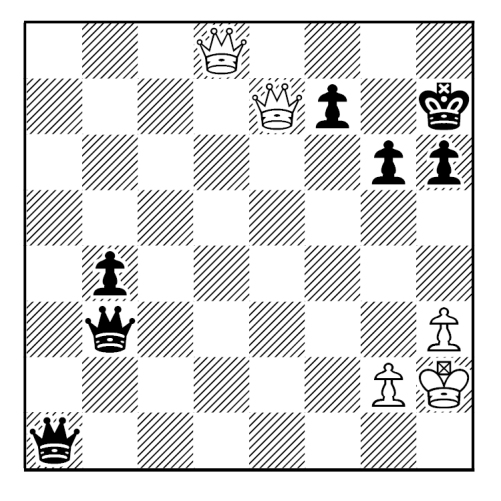
So here is the diagram which we eventually reached.

2019_05_15

1.Qa1+ Kxa1 (Obviously not 1…Ka3 due to 2.Qc3+ Ka4 3.Bb5+! Kxb5 4.Qc5+ Ka4 5.a8=Q+. My space-traveling friend, being a quick learner, figured this out and avoided it. Besides, there was another point to his move.)


2.Kc2 (with the idea of Bd4#) 2…h1=K!

(Whoa! I started to tell him that was an illegal move. To which he replied, “Didn’t you tell me that a pawn reaching the last rank, could become any piece? And I want another king”.

I had to admit he was right. What to do now? If I leave both kings on the board, it would seem likely I would stalemate one of them, and possibly both. I looked at his smug expression. It knew the problems I faced. But then I had moment of inspiration.)

 
3.a8=K! (Now he had at least one move that didn’t result in stalemate.) 3…Kb8 (forced.)

 
4.h7 Ka8 (again forced.)

5.h8=Q mate, mate, mate!

Boring Queen’s Gambit? Try the Slav!

Many players, especially beginners, dislike the Queen’s Gambit. They call it boring, positional, and not fun to play, from either side! Some even wonder why this opening is not banned (due it being boing, etc.).


Maybe they should try the Slav. It’s tactical, full of tension and a single misstep can be fatal.


Here is a list of miniatures to play when you are feeling sluggish.


And a final game, which is not a miniature, but belongs here. You’ll see why at the end.


Meanwhile …  enjoy!


~~~~~~~~~~~~~~~~~~~~~~~~~~~~~~~~~~~~~


Jensen (1873)-Fries (2038)
US Open
Los Angeles, 1991
1.d4 d5 2.c4 c6 3.Nc3 dxc4 4.e4 b5 5.a4 e5 6.Nge2 b4 7.Nb1 Nf6 8.Bg5 h6 9.Bxf6 Qxf6 10.d5 Bb7 11.Ng3 Bc5 12.Nf5 cxd5 13.Ne3 Bxe3 14.fxe3 Qh4+ 15.g3 Qxe4 16.Rg1 Qxe3+ 17.Qe2 Qxg1 18.Qxe5+ Kd8 0-1


GM Agdestein (2600)-Zsuzsa Polgar (2565)
Active Chess
Exhibition Match
Oslo, 1996
1.d4 d5 2.c4 e6 3.Nc3 c6 4.e3 Nf6 5.b3 Nbd7 6.Bb2 Bd6 7.Qc2 O-O 8.O-O-O?! (Premature. Better is 8.Nf3 and try to castle kingside.)  8…a5 9.Nf3 a4 10.Nxa4 dxc4 11.bxc4 b5! (Using her queenside pawns Zsuzsa opens up the queenside with her pawns.) 12.cxb5 cxb5 13.Bxb5 Ba6 14.Bxa6 Rxa6 15.Nd2 Qa8 16.Nc3 Rc8 17.Ndb1 Rxa2 18.Rd3 Nd5 19.Qb3 Nb4 20.Rd2 Qxg2 21.Rhd1 Qb7! 0-1 (Black threatens 22…Nd3+.)


Riedel-Zurek
Berlin, 1987
1.d4 d5 2.c4 c6 3.Nf3 Nf6 4.Nc3 Bf5 5.cxd5 Nxd5 6.Qb3 Qb6 7.Nxd5 Qxb3 8.Nc7+ Kd8 9.axb3 Kxc7 10.Bf4+ Kc8 11.Ne5 f6 12.Nc4 Nd7 13.f3 Bc2 14.e4 Bxb3 15.Na5 Bf7 16.Nxc6 e5 17.Nxa7+ Kb8 18.dxe5 fxe5 19.Be3 Bc5 20.Rd1 Bxe3 21.Rxd7 Be8 22.Rd3 Bd4 0-1


Jelena Popovic-Elena Stotskaja
Rimavska Sobota, 1992
[D15]
1.d4 d5 2.c4 c6 3.Nf3 Nf6 4.Nc3 Bf5 5.Bg5 e6 6.e3 Be7 7.Ne5 h6 8.Bh4 g5 9.Bg3 Nbd7 10.Bd3 Bxd3 11.Qxd3 Nh5 12.cxd5 exd5 13.Qf5 f6 14.Qg6+ Kf8 15.Qf7mate 1-0


Dias (2295)-Gillford
World Jr. Ch.
Calcutta, 1998
1.d4 d5 2.c4 c6 3.Nc3 Nf6 4.Nf3 Bf5 5.Qb3 Qb6 6.Bf4 Nbd7 7.e3 e6 8.Qxb6 axb6 9.Nh4 Bg4 10.f3 Bh5 11.Bd3 Bg6 12.Nxg6 hxg6 13.O-O Nh5 14.Bg5 Bd6 15.Rfb1? Bxh2+! 16.Kxh2 Nf4+ 17.Kg3 Nxd3 18.cxd5 exd5 19.e4 f6 20.Bd2 dxe4 21.Nxe4 f5 22.Ng5 Nf6 23.b4 f4+ 0-1


Kuzubov (2535)-Wademark (2182)
Port Erin Open
Isle Of Man, Sept. 24 2005
1.d4 d5 2.c4 c6 3.Nf3 Nf6 4.Nc3 Na6 5.cxd5 cxd5 6.Bf4 Qa5 7.e3 e6 8.a3 Bd7 9.Bd3 Be7 10.Ne5 Nb8 11.O-O O-O 12.Bg5 Qd8 13.f4 Nc6 14.Rf3 Nxe5 15.fxe5 Ng4 16.Bxh7+ Kxh7 17.Rh3+ Nh6 18.Qd3+ Kg8 19.Bxh6 f5 20.exf6 Bxf6 21.Bxg7 Kxg7 22.Qh7mate 1-0


 Technically, the next three games constitute the Tolush-Geller Gambit (1.d4 d5 2.c4 c6 3.Nf3 Nf6 4.Nc3 dxc4 5.e4).


Hoshino-Hori
corres.
JCCA Webchess Open
ICCF, 2007
1.d4 d5 2.c4 c6 3.Nf3 Nf6 4.Nc3 dxc4 5.e4 b5 6.Be2 e6 7.O-O Be7 8.a4 b4 9.e5 Nd5 10.Ne4 c3 11.bxc3 Nxc3 12.Nxc3 bxc3 13.Ba3 c5 14.Qc2 Ba6 15.Bb5+ Bxb5 16.axb5 O-O 17.dxc5 Qa5 18.Rfb1 Nd7 19.c6 Bxa3 20.cxd7 1-0


Bosboom (2471)-Stellwagen (2621)
Netherlands Ch.
Hilversum, Apr. 4 2008
1.d4 d5 2.Nf3 Nf6 3.c4 c6 4.Nc3 dxc4 5.e4 b5 6.Qc2 e6 7.g4 Bb7 8.g5 Nfd7 9.h4 Na6 10.a3 Be7 11.Be3 Qa5 12.Nd2 c5 13.d5 Ne5 14.Ra2 exd5 15.exd5 O-O 16.Qf5 Bd6 17.h5 Rae8 18.h6 g6 19.Qb1 Ng4 20.Nde4 Bxd5 21.Bd2 Bf4 22.Kd1 Bxe4 23.Nxe4 Nxf2+ 0-1


GM Gaprindashvili-Z. Polgar
FIDE Women’s Candidates Tournament
Shanghai, 1992
1.d4 d5 2.c4 dxc4 3.Nf3 Nf6 4.Nc3 c6 5.e4 b5 6.e5 Nd5 7.a4 Bf5 8.Be2 b4 9.Nh4 bxc3 10.Nxf5 e6 11.Ng3 cxb2 12.Bxb2 Bb4+ 13.Kf1 c3 14.Bc1 O-O 15.Ne4 Nd7 16.Bd3 f5 17.exf6 N7xf6 18.Ng5 Qd6 19.Qc2 h6 20.h4 hxg5 21.hxg5 Ng4 22.Bh7+ Kf7 23.Qe4

2019_05_08_A

23…Nxf2 24.Kxf2 Ke7+ 25.Ke2 Qg3 0-1


Sulava (2531)-Abolianin (2385)
Imperia Open
Italy, 2001
1.d4 d5 2.Nf3 c6 3.c4 Nf6 4.Nc3 a6 5.a4 g6 6.e3 Bg7 7.Bd3 O-O 8.O-O c5 9.Nxd5 Nxd5 10.cxd5 cxd4 11.e4 e6 12.dxe6 Bxe6 13.Ng5 Bc8 14.f4 Nc6 15.Bd2 h6 16.Nf3 Be6 17.Qe1 Re8 18.Qg3 Qd6 19.h4 Kh8 20.Rae1 Rad8 21.h5 g5 22.e5 gxf4 23.Qxg7+ 1-0


Krueger-Seepe
German Northwest League, 1988
1.d4 d5 2.c4 c6 3.Nf3 Nf6 4.Nc3 a6 5.e3 e6 6.Bd3 dxc4 7.Bxc4 b5 8.Bd3 c5 9.e4 cxd4 10.Nxd4 Bd6 11.Be3 O-O 12.e5 Bxe5 13.Qf3 Bxd4 14.Qxa8 Bxc3+ 15.bxc3 Qxd3 16.Qxb8 e5 17.Qa7 Qxc3+ 18.Ke2 Be6 19.f3 Qb2+ 20.Bd2 Bc4+ 0-1


Miller (2180)-Stephen Jones (2359)
Southern California Open, 1995
[I first annotated this game in Rank and File.]
1.d4 d5 2.c4 c6 3.Nf3 Nf6 4.Nc3 a6 5.e3 b5!? 6.cxd5 cxd5 7.Bd3 Bb7?! (Unless Black gets a Knight on e4 to exchange off and open the diagonal, the Bishop will merely be an onlooker to the proceedings.) 8.O-O Nbd7 9.Ne5 e6 10.f4 Be7 11.Qf3 O-O 12.g4! b4 (Black has little counterplay, and cannot come up with a good play to organize his forces.) 13.Ne2 Ne4 14.Ng3 Nd6 15.Bd2 (To connect both Rooks.) 15…Nb6 (The Black Knights are still trying to find good squares. Meanwhile White continues to build his attack.) 16.g5 a5 17.Qh5 Ne4 18.Rf3 Qe8 19.Nxe4 dxe4 20.Rh3 (White’s Bishop is, of course, immune from capture.) 20…h6 21.Ng4 (D Nxh6+) 1-0


Fang (2355)-Nichols (2046)
New Hampshire Open, 1997
1.d4 d5 2.Nf3 Nf6 3.c4 c6 4.Nc3 a6 5.c5 g6 6.Bf4 Bg7 7.h3 Nbd7 8.e3 O-O 9.Be2 Re8 10.O-O Ne4 11.Nxe4 dxe4 12.Nd2 e5 13.dxe5 Nxc5 14.Rc1 Nd3 15.Bxd3 exd3 16.Nc4 Re6 17.Rc3 Re8 18.Rxd3 Qh4 19.Nb6 Ra7 20.Nxc8 Rxc8 21.Rd7 g5 22.Rd8+ Rxd8 23.Qxd8+ Bf8 24.Bxg5 1-0


GM Kamsky-GM Kramnik
Candidate’s Match, 1994
1.d4 d5 2.c4 c6 3.Nc3 Nf6 4.Nf3 e6 5.Bg5 dxc4 6.e4 b5 7.e5 h6 8.Bh4 g5 9.Nxg5 hxg5 10.Bxg5 Nbd7 11.exf6 Bb7 12.g3 c5 13.d5 Qb6 14.Bg2 O-O-O 15.O-O b4 16.Na4 Qb5 17.a3 Ne5 18.axb4 cxb4 19.Qd4 Nc6 20.dxc6 Rxd4 21.cxb7+ Kc7 22.Be3 e5 23.Nc3 bxc3 24.bxc3 Bc5 25.cxd4 1-0


R. Hungaski (2366)-A. Nasri (2227)
World Jr. Ch.
Yerevan, 2006
1.Nf3 d5 2.d4 e6 3.c4 c6 4.Nc3 Nf6 5.Bg5 h6 6.Bh4 dxc4 7.e4 g5 8.Bg3 b5 9.Be2 Bb7 10.h4 g4 11.Ne5 h5 12.O-O Nbd7 13.Qc2 a6 14.Rad1 Be7 15.f3 Rg8 16.fxg4 hxg4 17.Nxf7 Kxf7 18.e5 c5 19.d5 Qb6 20.exf6 Bxf6 21.Ne4 1-0


GM Loek Van Wely-GM Alexander Morozevich
Wijk aan Zee, 2001
[D16]
1.d4 d5 2.c4 c6 3.Nf3 Nf6 4.Nc3 dxc4 5.a4 c5 6.d5 Bf5 7.e3 e6 8.Bxc4 exd5 9.Nxd5 Nc6 10.Qb3 Qd7 11.Nxf6+ gxf6 12.Bd2 Rg8 13.Bc3!?  O-O-O 14.Bxf7 Rxg2! 15.Nh4

2019_05_08_B
15…Ne5! 16.Nxf5 Nd3+ 17.Kf1 Rxf2+ 18.Kg1 Kb8 19.Qe6?! Rxf5 20.h4 Bd6 21.Rf1? Rg8+ 0-1 (In view of …Qg7#)


Ikonnikov (2560)-Vitoux (2264)
Port Erin Open
Isle Of Man, Sept. 24 005
1.d4 d5 2.Nf3 Nf6 3.c4 c6 4.Nc3 dxc4 5.a4 c5 6.d5 Bf5 7.e4 Nxe4 8.Nxe4 Bxe4 9.Bxc4 Qd6 10.O-O Nd7 11.Re1 Nf6 12.Bb5+ Kd8 13.Bc4 h6 14.Bd2 a6 15.Bc3 Qf4 16.Ne5 Kc8 17.f3 Bg6 18.g3 Qg5 19.f4 Qh5 20.Be2 1-0


Alan Fichaud-Robert Jacobs (2415)
corres.
ATB 2, 1998
1.c4 c6 2.d4 d5 3.Nf3 Nf6 4.Nc3 dxc4 5.a4 Na6 6.e4 Be6 7.Ne5 Qa5 8.f3 Rd8 9.Be3 Qb4 10.Qe2 g6 11.Nxc4 Bg7 12.a5 O-O 13.Ne5 Rxd4 14.Nxc6 bxc6 15.Bxd4 Qxd4 16.Qxa6 Rb8 17.Qe2 Nd7 18.Nd1 Nc5 19.Qc2 Nb3 20.Ra3 Qb4+ 21.Nc3 Nd4 22.Qc1 Qxb2 23.Qxb2 Rxb2 24.Bd3 Rxg2 0-1


Eduardo Ortiz-Matthew Ho
Pacific Southwest Open
Los Angeles 2003
1.d4 d5 2.c4 c6 3.Nf3 Nf6 4.Nc3 dxc4 5.a4 Na6 6.e4 Bg4 7.Bxc4 Bxf3 8.gxf3 e6 9.Be3 Be7 10.Rg1 O-O 11.f4 Qa5 12.Kf1 Qb4 cxd4 15.Bxd4 Nc5 16.Rg5! h6 17.Rxc5! Bxc5 18.Bxf6 Be7 (18…gxf6 19.Ra4 snares the Queen.) 19.Be5 Bf6 20.Bxf6 gxf6 21.f5 Qd6 22.Qg4+ Kh8 23.fxe6 fxe6 24.Rd1 Qe7 25.Bxe6 1-0


GM Polugaevsky (2585)-Drasko (2465)
Sarajevo, 1987
1.d4 d5 2.c4 c6 3.Nf3 Nf6 4.Nc3 dxc4 5.a4 Bf5 6.e3 e6 7.Bxc4 Bb4 8.O-O O-O 9.Nh4 Nbd7 10.f3 Bg6 11.Nxg6 hxg6 12.Qc2 Rc8 13.Rd1 Qb6 14.Kh1 c5 15.d5 Ne5 16.Be2 Rfe8 17.dxe6 Qxe6 18.Nb5 Nc6 19.Bc4 Qf5 20.Bxf7+ 1-0


Vandenburg (1979)-Blechar (2237)
corres.
CCLA Team Ch., 1999
1.d4 d5 2.c4 c6 3.Nf3 Nf6 4.Nc3 dxc4 5.a4 Bf5 6.Ne5 e6 7.Bg5 Bb4 8.Nxc4 Qd5 9.Bxf6 Qxc4 10.Qd2 Qb3 11.Bxg7 Rg8 12.Be5 c5 13.Bxb8 cxd4 14.Be5 O-O-O 15.Bxd4 Rxd4! (16.Qxd4 Qxb2) 0-1


Waxman-Wes White
Jay Chemical, 1981?
1.d4 Nf6 2.Nf3 d5 3.c4 c6 4.Qc2 Ne4 5.Bf4 Bf5 6.Qb3 Qa5+ 7.Nbd2 e5 8.dxe5 Bc5 9.e3 Bb4 10.Rd1 Nc5 0-1


C. Gabriel (2531)-GM Huebner (2636)
Bundesliga
Germany, Jan. 28 2006
1.d4 d5 2.c4 c6 3.Nf3 Nf6 4.Qb3 dxc4 5.Qxc4 Bf5 6.g3 e6 7.Bg2 Be7 8.O-O O-O 9.Qb3 Qb6 10.Nbd2 Rd8 11.Nc4 Qxb3 12.axb3 Rd5?? (13.Nb6 axb6 14.Rxa8 +-) 1-0


 GM Gelfand (2733)-GM Van Wely (2683)
Blindfold Game
Melody Amber
Monaco, 2007
1.d4 d5 2.c4 c6 3.Nf3 Nf6 4.Qb3 e6 5.Bg5 h6 6.Bh4 Nbd7 7.e3 Be7 8.Nc3 O-O 9.Bd3 b6 10.cxd5 cxd5 11.O-O Bb7 12.Rfc1 a6 13.Na4 b5 14.Nc5 Nxc5 15.dxc5 Ne4 16.Bxe7 Qxe7 17.c6 Bc8 18.a4 bxa4 19.Rxa4 Nd6 20.Qa3 Qc7 21.b4 Qb6 22.b5 Nxb5 23.Bxb5 Qxb5 24.Rb4 Qe2 25.Rb2 1-0


And the last game, as promised. It’s a game full of Queens, and appropriately quite tactical.


Zawadski-Peyrat
Metz-Chess1, 1991
1.d4 d5 2.c4 c6 3.Nf3 Nf6 4.Nc3 e6 5.e3 Nbd7 6.Bd3 dxc4 7.Bxc4 b5 8.Be2 Bb7 9.O-O b4 10.Na4 Be7 11.Qc2 Rc8 12.Rd1 O-O 13.Bd2 a5 14.Be1 c5 15.dxc5 Qc7 16.Rac1 Nxc5 17.Rd4 Qb8 18.Nb6 Rcd8 19.Nc4 Be4 20.Qd2 Qa7 21.Nce5 h6 22.h3 Ba8 23.Bc4 Nfe4 24.Qe2 Qb8 25.Rcd1 Bf6 26.Nd7 Nxd7 27.Rxd7 Rxd7 28.Rxd7 Bc6 29.Rd1 Rd8 30.Nd4 Ba8 31.f3 Nc5 32.Rc1 Qb6 33.Bf2 g6 34.Nb3 Nxb3 35.Bxb3 Bb7 36.Rd1 Rxd1+ 37.Bxd1 Ba6 38.Qd2 Be7 39.Bb3 Bc5 40.Bd1 Kg7 41.e4 e5 42.Bxc5 Qxc5+ 43.Kh2 Bb5 44.Bb3 Bc6 45.Qd8 a4 46.Bd5 Qd4 47.b3 a3 48.Qd6 Bb7 49.Qd7 Bxd5 50.exd5 Qf4+ 51.Kh1 Qc1+ 52.Kh2 Qf4+ 53.Kh1 e4 54.fxe4 Qf1+ 55.Kh2 Qf4+ 56.Kh1 Qf1+ 57.Kh2 Qf4+ 58.Kh1 Qxe4 59.d6 Qe1+ -/+ 60.Kh2 Qe5+ 61.Kh1 Qa1+ 62.Kh2 Qxa2 63.Qe7 Qd2 64.Qe5+ Kh7 65.Qf6 Qd5 66.Qe7 a2 67.d7 a1=Q 68.d8=Q Qxb3

2019_05_08_C
69.Qdf8 (69.Qef8? Qe5+ -+) 69…Qg7! -+ 70.Qb8 h5 71.Qbxb4 Qd5 72.Qbe4 Qb3 73.Q7e5 Qxe5+ 74.Qxe5 Qe6 75.Qc7 g5 76.Qc2+ Kh6 77.Qc3 f6 78.Qb4 Qe5+ 79.Kg1 Qe3+ 80.Kf1 Qf4+ 81.Qxf4 gxf4 82.Ke2 Kg5 83.Kd3 Kh4 84.Ke4 Kg3 85.Kf5 h4 86.Ke4 Kxg2 87.Kxf4 Kxh3 88.Kf3 f5 0-1