I played in a Women’s Team Championship.

Just in case you couldn’t figure it out, I’m a male.


So how did I play in Women’s Team Championship? This is the story.


Back in 1989, the Southern California Chess Federation had a very active women’s group with their own league and some very good players. It was this year they had a  Women’s Team Championship.


But let me step back for a moment. It was in 1988 that I started to play correspondence chess. I only mention this because my opponent I was due to play was also a correspondence player. And being a fairly strong one at that (she was a Master in correspondence).


Back to the story.


I had several female friends that were playing in this match, so I decided to drive down and watch (and hopefully get a chance to cheer).


It soon became apparent to all the players that one of the participants had car trouble and couldn’t make to the event. How she made the phone call, I don’t know – this was in the days before cell phones. But news like  this travels fast and soon they were looking for another player.


After half-heartily looking for another female player (as most of them were already playing in the event), they decided to ask me. I think it was due because of my rating, and the fact that most of the other players personally knew me.  The two games I and my opponent were to play were to be rated but not counting towards the overall score in the match.


I agreed and my opponent, Dr. Christine Rosenfield drew White for the first game.


Now I knew she was a good correspondence player – but I didn’t know how good and I didn’t know a thing about her 1.d4 openings. Remember this is before cell phones, the Internet, and chess web sites.  I played loosely with my response, a little loosely as it turned out. She had a strong d-pawn in the middlegame and I couldn’t do anything about it. I lost the game. Badly.


So we take a lunch break. And we both chatted about game, as well as other games that were played in the first round.


After the meal and the chatting, we started the second game. I didn’t know anything about Christine’s openings, and I felt sure she didn’t know too much about mine either. I began with my favorite opening and played 1.e4.


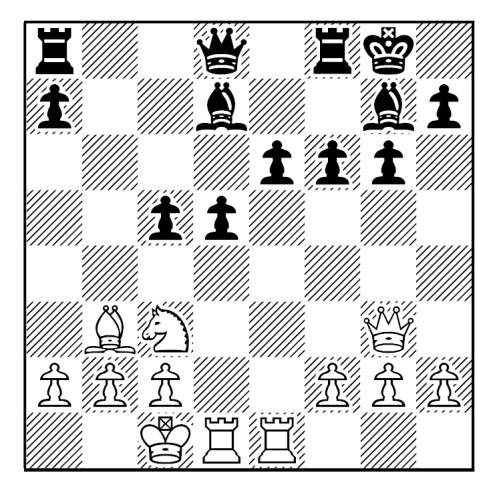
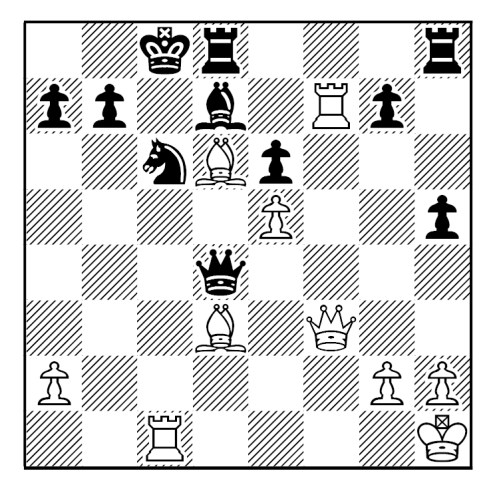
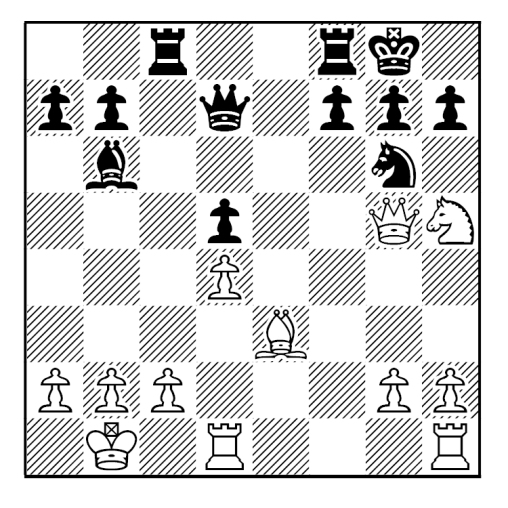
 Now I was in my territory.  I have always been good with tactics and this game featured  open lines, control of queenside and two pawns that couldn’t be stopped


So we tied with one victory each. A good way to start off any friendship. But, if I remember correctly, she had to move to another state the very next year.


 I enjoyed my experience and my games. I enjoyed my company and I got another view into chess. Dr. Christine Rosenfield has my respect. I’ve studied her correspondence games and learned how sometimes it is necessary grind away to victory. And how to use a very strong d-pawn.


Oh, that was an experience! 


~~~~~~~~~~~~~~~~~~~~~~~~~~~~~


Here are some correspondence games from the Christine Rosenfield.


Christine Rosenfield (2205)-Norbert Molzahn (2350)
corres.
ICCF, WT/M/GT/264, 1989
1.d4 Nf6 2.c4 c5 3.d5 d6 (I should mention here that Christine likes strong, advanced queen pawns, so this setup is perfect for her. I should also mention that correspondence players are noted, and notorious, for slowly eroding away any advantage that their opponent might have.) 4.Nc3 g6 5.e4 Bg7 6.Bd3 O-O 7.Nf3 Bg4 8.h3 Bxf3 9.Qxf3 Nbd7 (The game is about even here.) 10.O-O Ne5 11.Qe2 e6 12.Bc2

(Alternate moves include 12.Qd1 and 12.f4. Bibisara Assaubayeva (2287)-Rahneda Fiadosenka (2059), World Youth Girls U18 Ch., Khanty-Mansiysk, Russia, Oct. 3 2016, continued with 12.f4 Nxd3 13.Qxd3 exd5 14.exd5 Re8 15.f5 Nd7 16.Bf4 Bd4+ 17.Kh1 Ne5 18.Bxe5 Rxe5 19.Ne4 Qh4 20.Rae1 Rae8 21.fxg6 f5 22.Nxd6 Rxe1 23.Nxe8 Qf2 24.Nf6+ Bxf6 25.gxh7+ Kxh7 26.Qxf5+ Qxf5 27.Rxe1 0-1 The text move seems the best.)

12…exd5 13.cxd5 Qe7 14.Bg5 h6 15.Bh4 g5 16.Bg3 a6 17.f4 gxf4 18.Rxf4 b5 19.Rc1 Rae8 20.Rf5 Ng6 21.Re1 Nd7 22.a4 b4 23.Nd1 a5 24.Kh2 Nde5 25.b3 Qc7 26.Ne3 Rc8 27.Rf2 Ne7 28. Ref1 Kh7 29.Kg1 N7g6 30.h4 f6 31.Ng4 Nxg4 32.Qxg4 Ne5 33.Qf5+ Kh8 34.Bd1 c4 35.Rc2 c3 36.Bh5 Nd3 37.Bf2 Nc5 38.Bg4 Qf7 39.Bxc5 dxc5 40.Rcf2 c4 41. e5 cxb3 42.e6 Qg8 43.e7 Rfe8 44.d6 c2 45.Qxc8 Rxc8 46.Bxc8 Qxc8 47.Re2 c1=Q 48.e8=Q+

2019_07_11

(A game with three queens – a rarity in correspondence. This setup does not last long, as Black’s extra queen disappears almost as fast as she first appears.) 48…Kh7 49.Rxc1 Qxc1+ 50.Kh2 Qf4+ 51.g3 Qxd6 52.Qe4+ f5 53. Qxf5+ Qg6 54.Qd7 h5 55.Rb2 Qe4 56.Rd2 Kg6 57.Qb5 Bf6 58.Rd6 Qc2+ 59.Kg1 1/2-1/2


Christine’s forte was playing against the Dutch.


Christine Rosenfield-J. Orlowski
corres.
USCCC – 15 prem., 2000
1.d4 e6 2.c4 f5 3.Bf4 Nf6 4.e3 b6 5.Nc3 Bb7 6.Nf3 Bb4 7.Bd3 Bxc3+ 8.bxc3 d6 9.O-O O-O 10.Re1 Ne4 11.Nd2 Nd7 12.f3 Nxd2 13.Qxd2 e5 14.Bg3 Qf6 15.Bc2 Rad8 16.Rab1 Ba6 17.Bb3 c5 18.Rbd1 f4 19.dxe5 dxe5 20.exf4 exf4 21.Qd5+ Kh8 22.Re6 Qf7 23.Bh4 Bb7 24.Qd6 Bc8 25.Bxd8 Rxd8 26.Re7 Qg6 27.Qxf4 Rg8 28.Rexd7 1-0


Christine Rosenfield-James L. Chessing
corres.
14th US CC Ch., P07, 1998
1.d4 e6 2.c4 f5 3.Nc3 Nf6 4.Bg5 Be7 5.e3 b6 6.Bd3 Bb7 7.f3 Nc6 8.Nge2 O-O 9.O-O Nh5 10.Bxe7 Qxe7 11.a3 d6 12.d5 Ne5 13.Nd4 Nxd3 14.Qxd3 e5 15.Nxf5 Qg5 16.g4 g6 17.Ne4 Qd8 18.Nfxd6 cxd6 19.gxh5 g5 20.f4 exf4 21.exf4 g4 22.Ng5 1-0


FIREWORKS

Fireworks-pastel-colors-jpg


Fourth of July in the US is considered our Independence Day. A day we love to celebrate with parades, hot dogs, ball games, barbeques, and fireworks.


We can’t provide the parades, ball games, barbeques, and our hot dogs are reserved. But we can give you fireworks. Check out these games.


Keres-Siitam
Estonia Jr. Ch.
Parnu, 1933
1.e4 e5 2.f4 exf4 3.Nc3 (This opening is known as the Mason or Keres Gambit. By either name, it leads to many tactical games.) 3…Nc6 4.d4 Bb4!? 5.Bxf4 Qh4+ 6.g3 Bxc3+ 7.bxc3 Qe7 8.Bg2 d6 9.Nf3 Qxe4+ 10.Kf2 Bf5 11.Re1 Qxe1+ 12.Qxe1+ Nge7 13.d5 O-O 14.dxc6 Bxc2 15.Qxe7 Rae8 16.Qxc7 Re4 17.cxb7 Rfe8 18.b8=Q Re2+ 19.Kg1 Rxg2+ 20.Kxg2 Rxb8 21.Qxb8mate 1-0


Here are is another Keres/Mason Game. Black has the advantage after 6.…Ba6+. Now try to find Black’s best moves from this point.


N.N.-Chadwick
corres.
PCCA Gambit Tournament, 1911
1.e4 e5 2.f4 exf4 3.Nc3 Nc6 4.d4 Qh4+ 5.Ke2 b6! 6.Nf3 Ba6+ 7.Kd2 Qf2+ 8.Ne2 Nb4 9.a3 Nf6 10.Qe1 d5 11.Kc3 Nxe4+ 12.Kb3 Bc4+ 13.Ka4

2019_07_04_A

13…b5+ (Alex Dunne, writing in the Dec. 2000 issue of Chess Life, notes that 13…a5 14.Nc3 Qxc2+ 15.b3 Qxb3# wins faster. Would you have found that idea?) 14.Ka5 Nc6+ 15.Ka6 b4+ 16.Kb7 Rb8+ 17.Kxc6 Rb6+ 18.Kxc7 Bd6+ 19.Kc8 Ke7mate 0-1


Victor Knox (2320)-Krzysztof Pytel (2381)
Manchester, 1981
1.e4 e6 2.d4 d5 3.Nc3 Bb4 4.e5 c5 5.Bd2 Ne7 6.Nb5 O-O 7.c3 (7.Bxb4 doesn’t seem to fare too well. Vasiliev (1703)-Lysakov (2032) Petr Izmailov Memorial, Tomsk, Russia, June 13 2013, continued with 7…cxb4 8.Nd6 Nbc6 9.Nf3 f6 10.Bd3 fxe5 11.dxe5 Nxe5 12.Nxc8 Nxd3+ 13.Qxd3 Rxc8 14.O-O-O Ng6 15.h4 Nf4 16.Qe3 Qf6 17.Qxa7 Ra8 18.Qd4 Ne2+ 0-1) 7…Ba5 8.dxc5 Bc7 (> 8…Ng6) 9.f4 Nd7 10.b4 b6 11.cxb6 Nxb6 12.Nf3 Bb7 (Black is coming close to equality, or at least an unclear position. However, he needs to either active his kingside or defend it. He does neither.) 13.Bd3 Nc4? (Now comes the thematic Bxh7+ and subsequent king walk.)

2019_07_04_B

14.Bxh7+! Kxh7 15.Ng5+ Kg6 16.Qg4 f5 17.Qg3 Qd7 (17…Qc8 18.Nc7) 18.Nxe6+ Kf7 19.Qxg7+ Kxe6 20.Nd4mate 1-0


Escalante-“Me4ok” (1846)
corres.
http://www.chess.com, 2019
[B57]
1.e4 c5 2.Nf3 Nc6 3.d4 cxd4 4.Nxd4 d6 5.Bc4 Nf6 6.Nc3 g6 7.Nxc6 bxc6 8.e5 Nh5 9.e6?


(This is what sometimes happens when I analyze a game in my head. Most of the time, this is not problem. But this time I thought he had played 8…Ng4, and 9.e6 works well in that variation.


By the way, after 8…Nh5, 9.Qf3 is considered the best move here. A few games illustrate the possibilities.


GM Fischer-N.N.
Simul
New York, 1963
1.e4 c5 2.Nf3 Nc6 3.d4 cxd4 4.Nxd4 Nf6 5.Nc3 d6 6.Bc4 g6 7.Nxc6 bxc6 8.e5 Nh5 9.Qf3 e6 (9…d5? 10.Nxd5! cxd5 11.Bxd5) 10.g4 Ng7 11.Ne4 Qa5+ (11…d5? 12.Nf6+ Ke7 13.Qa3+ Qd6 14.Qxd6#) 12.Bd2 Qxe5 13.Bc3 (The black queen is trapped.)
2019_07_04_C
1-0


Sarapu-Cornford
New Zealand Ch.
Christchurch, 1967
1.e4 c5 2.Nf3 Nc6 3.d4 cxd4 4.Nxd4 Nf6 5.Nc3 d6 6.Bc4 g6 7.Nxc6 bxc6 8.e5 Nh5 9.Qf3 e6 10.exd6 Qxd6 11.g4 Ng7 12.Bf4 e5 13.Bxf7+ Kd7 14.Rd1 exf4 15.O-O Ba6 16.Ne4 Bxf1 17.Nxd6 Bxd6 18.Qxf4 1-0


Mayerhofer (2203)-Klimes (2365)
IPCA World Cup
Czech Republic, 2003
1.e4 c5 2.Nf3 Nc6 3.d4 cxd4 4.Nxd4 Nf6 5.Nc3 d6 6.Bc4 g6 7.Nxc6 bxc6 8.e5 Nh5 9.Qf3 d5 10.Nxd5 e6 11.Nc3 Bb7 12.O-O Be7 13.Bh6 Bg5 14.Rad1 Qe7 15.Bxg5 Qxg5 16.Ne4 Qe7 17.Nd6+ Kf8 18.Nxf7 Qxf7 19.Qxf7+ Kxf7 20.Rd7+ Kf8 21.Rxb7 Ng7 22.Rd1 a5 23.Rdd7 Nf5 24.Bxe6 1-0


De Haas (2171)-Bakker
Nova Open
Haarlem, July 2 2004
1.e4 c5 2.Nf3 Nc6 3.d4 cxd4 4.Nxd4 Nf6 5.Nc3 d6 6.Bc4 g6 7.Nxc6 bxc6 8.e5 Nh5 9.Qf3 d5 10.Nxd5 cxd5 11.Bxd5 Rb8
2019_07_04_D

12.Bxf7+ Kd7 13.Qd5+ Kc7 14.Qc5+ Kb7 15.Bd5+ Ka6 16.Qc6+ 1-0


Now let’s get back to the original game.)


9…fxe6! (Oops! Black definitely has the advantage.) 10.Qf3 (Trying to keep Black from castling.) 10…d5! (Another good move. This bolsters his pawn structure.) 11.Bb3 (Forced. White wants to keep the bishop on the diagonal.) 11…Bg7 12.Bg5 Nf6? (Black could have tried 12.Rf8, and forgo castling to use the open “f” file.) 13.O-O-O O-O!? [Seems safe. But White’s bishop is still on the diagonal. If Black’s plan is king safety (always important), then he probably should hide his king on h8.] 14.Qg3 c5? (Again, …Kh8 is called for. All this move does is loosen his pawn structure. Perhaps he wanted to push …c4, getting rid of the bishop. But this approach is too slow.) 15.Rhe1 (White’s development is now superior, for the cost of a pawn. His bishop is about to become very active.) 16…Bd7? 16.Bxf6! (The start of a combination to open lines against the enemy king.) 16…exf6
2019_07_04_E
17.Nxd5! Kh8 [Now he moves his king to safer square. But he loses a critical tempo in the process. By the way, taking the knight leads to immediate disaster. I’ll let the reader figure it out the moves (it’s more fun that way!)] 18.Nc7 +- Qe7 19.Nxa8 Rxa8 20.Qc7 Rd8 21.Rxe6 Bh6+ 22.Kb1 Bxe6 23.Rxd8+ 1-0


GM Fabiano Caruna (2652)-GM Konstantin Landa (2664)
Torneo di Capodanno
Reggio Emilia, Italy, June 1 2010
[C42]
1.e4 e5 2.Nf3 Nf6 3.Nxe5 d6 4.Nf3 Nxe4 5.Nc3 Nxc3 6.dxc3 Be7 7.Be3 Nc6 8.Qd2 Be6 9.O-O-O Qd7 10.Kb1 Bf6 11.h4 h6 12.Nd4 Nxd4 13.Bxd4 Bxd4 14.Qxd4 O-O (So far, we are still in “book”.) 15.Rg1 [White played 15.Be2 in GM R. Ponomariov (2751)-GM Hao Wang (27433), Kings Tournament, Bucharest, Oct. 11 2013, with the continuation of 15…Rae8 16.Bf3 b6 17.g4 Qb5 18.g5 Qc4 19.gxh6 Qxd4 20.Rxd4 gxh6 21.Bc6 Rd8 22.Ra4 a5 23.b4 axb4 24.cxb4 Bd7 25.Bxd7 Rxd7 26.Re1 Kg7 27.Kb2 Kg6 28.Ra3 Kh5 29.Rg3 f5 30.Re6 b5 31.Kb3 f4 32.Rgg6 Rh7 33.f3 Rf5 34.c4 bxc4+ 35.Kxc4 Re5 36.Ref6 Kxh4 37.Rxf4+ Kh3 38.Rfg4 h5 39.Rg3+ Kh2 40.Rg2+ Kh1 41.Rg1+ Kh2 42.R6g2+ Kh3 43.Rg7 Rxg7 44.Rxg7 Re3 45.a4 Ra3 46.Kb5 c5 47.bxc5 1/2-1/2. Caruna’s move seems clearer and stronger.] 15…Rae8 16.g4 Qc6 17.Bg2 Qa6 18.b3 Bd7 19.g5 h5 20.g6 Re7 21.Bd5 Be6 22.Rde1 c5 23.Qd1 Rfe8 24.Qxh5! +- fxg6
2019_07_04_F
25.Rxe6! (Black resigned as he gets checkmated after 25…Rxe6 26.Qxg6. Or he could play on by taking the queen first, and then still get mated after 25…gxh5 26.Rxe7+ Kh7 27.Be4+ Kg8 28.Rgxg7+ Kh8 29.Rh7+ Kg8 30.Rxe8# .) 1-0


“jovialdick” (2178)-“blueemu” (2297)
Match
Team Malaysia vs The Canadian Team
chess.com, Aug. 2018
[This game can be found in a forum titled, “A Heroic Defense in the Sicilian Najdorf – Kids, don’t try this at home!” on chess.com. Notes in green are by Escalante, those in red by “blueemu”. I hesitate to include any diagrams, since virtually every move after White 10th would necessitate a diagram.]
1.e4 c5 2.Nf3 d6 3.d4 cxd4 4.Nxd4 Nf6 5.Nc3 a6 6.Bc4 e6 7.Bb3 b5 8.O-O Be7 9.f4 (Another common move here is 9.Qf3, with the idea of activating pieces over using the kingside pawns to cramp and attack Black’s position.) 9…Bb7 (Black’s only good idea with his white bishop is to fianchetto it. He has play it soon anyway.) 10.e5 (This move is the direct result of White’s previous move. The attack, however, is double-edged as White’s king is not exactly safe if his attack should fail.) 10…dxe5 11.fxe5 Bc5 12.Be3 Nc6 13.exf6 Bxd4 14.fxg7 [Another crazy possibility (pointed out by one of the Master-strength players who was drawn by the carnage) was 14 Nd5!? instead of the piece sacrifice 14. fxg7 that White actually played.] 14…Bxe3+ 15.Kh1 Rg8 16.Bxe6 Rxg7 17.Bxf7+ Rxf7 18.Qh5 Ne5 [Florian, writing in Informant 19, game 453, gives this move “!!” and a -+. The game, Cervenka (2190)-A. Schneider (2266), Czechoslovakia, 1974, continued after 18…Ne5!! -+, with 19.Qxe5+ (19.Rae1 Qg5! -+ ; 19.Rf5 Qd2, are again Florian’s notes to the game.) 19…Qe7 20.Qh8+ Kd7 21.Rad1+ (or 21.Rxf7 Qxf7 22.Qe5 Bxg2+ 23.Kxg2 Rg8+ 24.Kh3 Qf3+ 0-1, as in Kaleb-Sostra, corres., Keres Memorial, 1982) 21… Ke6 0-1. Back to original game. ; Black is indeed winning after 18. … Ne5!! but I messed up on move 20 with 20. … Rd8?! allowing White to head into a very drawish position by swapping everything off on f7 after 21. Rae1 Kf8 and White takes on f7 then recovers his piece on e3.] 19.Qxe5+ Qe7 20.Qh5 Rd8 [20…b4?! is too slow. Miranda Rodriguez (2167)-Ruiz Sanchez (2392), Capablanca Memorial, Havana, May 11 2010 continued with 21.Rae1 bxc3 22.Rxf7 Qxf7 23.Rxe3+ Kf8 24.Qc5+ Kg7 25.Rg3+ Kf6 26.Qd4+ Kf5 27.Qf2+ 1-0 ; Black had a much better 20th move, playing 20. … Kf8! (instead of playing it one move later, as I actually did) 21. Rae1 Re8! and White is lost because he cannot recover his piece, while the Black King is now safe (for a given value of “safe”).] 21.Rae1 Kf8 22.Qxh7 Bd4 23.h3 Rd7 24.Qg6 Qh4 25.Re8+ Kxe8 26.Qg8+ Ke7 27.Rxf7+ Kd6 28.Qb8+ Kc5 29.Rf5+ Kb6 30.Kh2 Qe1 31.Nd5+ Rxd5 32.Rxd5 Bg1+ 0-1

BODEN’S MATE

Boden’s Mate, also known as a Criss-Cross Mate, occurs when the two bishops mate the enemy king, with each bishop coming from an opposite diagonal from the other. What makes this sacrifice even more delightful is that is frequently preceded by a queen sacrifice.

 
The name Boden is used as he is the first player of master strength to have used this mating pattern. Or at the first to have it well-known.


Schulder-Samuel Standidge Boden
London, 1860
1.e4 e5 2.Nf3 d6 3.c3 f5 4.Bc4 Nf6 5.d4 fxe4 6.dxe5 exf3 7.exf6 Qxf6 8.gxf3 Nc6 9.f4 Bd7 10.Be3 O-O-O 11.Nd2 Re8 12.Qf3 Bf5 13.O-O-O d5 14.Bxd5 Qxc3+! (There’s the queen sacrifice.) 15.bxc3 Ba3mate

2019_06_26_A

 
But he is not the first. Both Morphy and Horwitz predate him.


Paul Morphy-James Thompson
New York, 1859
1.e4 e5 2.Nf3 Nc6 3.Bc4 Bc5 4.b4 Bxb4 5.c3 Ba5 6.O-O Bb6 7.d4 d6 8.dxe5 Nxe5 9.Nxe5 dxe5 10.Bxf7+ Ke7 11.Qb3 Nf6 12.Ba3+ c5 13.Rad1 Qc7 14.f4 Rf8 15.Bc4 Rd8 16.Rde1 Bd7 17.Bc1 Rf8 18.fxe5 Qxe5 19.Bf4 Qh5 20.Rd1 Kd8 21.e5 Ne8 22.Qa4 Qg4 23.e6 Nf6 24.Rxd7+ Kc8 25.Qc6+! bxc6 26.Ba6mate 1-0


And now the ending of one of Horwitz’s games.


cn7364_chess3_A


It has proven fruitless to discover the complete score of Horwitz’s game. Can someone find the moves leading up to the mate?


~~~~~~~~~~~~~~~~~~~~~~~~~~

 
A Center Counter victory by Canal is perhaps the best well-known game of Boden’s Mate.


Canal-N.N.
Simul
Budapest, 1934
1.e4 d5 2.exd5 Qxd5 3.Nc3 Qa5 4.d4 c6 5.Nf3 Bg4 6.Bf4 e6 7.h3 Bxf3 8.Qxf3 Bb4 9.Be2 Nd7 10.a3 O-O-O

2019_06_26_B
11.axb4! Qxa1+ 12.Kd2 Qxh1 13.Qxc6+! bxc6 14.Ba6mate 1-0


Other famous games include the following:


Alekhine–Vasic
Banja Luka, 1931
1.e4 e6 2.d4 d5 3.Nc3 Bb4 4.Bd3 Bxc3+? 5.bxc3 h6? 6.Ba3 Nd7 7.Qe2 dxe4 8.Bxe4 Ngf6 9.Bd3 b6?? 10.Qxe6+! fxe6 11.Bg6mate 1-0


Elyashov–N.N.
Paris, 1948
1.f4 e5 (From’s Gambit – a good opening to discover many miniatures.) 2.fxe5 d6 3.exd6 Bxd6 4.Nf3 g5 5.d4 g4 6.Ng5?! f5 7.e4 Be7? 8.Nh3! gxh3 9.Qh5+ Kf8 10.Bc4 Qe8 11.Qh6+! Nxh6 12.Bxh6mate 1-0

 
This one should be better known. White sacrifices his queen AND his rook.


Philip Corbin-Othneil Harewood
Friendly Game
Barbados, 1979
1.e4 c5 2.d4 cxd4 3.c3 (The Smith-Morra, another good opening to find miniatures.) 3…dxc3 4.Nxc3 Nc6 5.Nf3 e6 6.Bc4 Bb4!? (A relatively new move. Black doesn’t seem to get much from this move. More common are 6…a6, 6…e6 and 6..Nf6.) 7.O-O Bxc3 8.bxc3 Na5 9.Bd3 Qc7 10.Qe2 Nc6 11.Ba3 Ne5 12.Nxe5 Qxe5 13.f4 Qc7 14.e5 Qxc3 15.Bd6 Ne7 16.Rac1 Qd4+ 17.Kh1 Nc6 18.f5 h5 19.fxe6 dxe6 20.Rxf7! Bd7 21.Qf3 O-O-O

2019_06_26_C
22.Qxc6+! Bxc6 23.Rxc6+ 1-0


~~~~~~~~~~~~~~~~~~~~

 
But as you might have expected, a queen sacrifice is not needed to effect the mate.


Zukertort–Anderssen
Breslau, 1865
1.e4 e5 2.Nf3 Nc6 3.Bb5 Nge7 4.c3 d6 5.d4 Bd7 6.0-0 Ng6 7.Ng5 h6 8.Nxf7 Kxf7 9.Bc4+ Ke7 10.Qh5 Qe8 11.Qg5+! (11.Bg5+ hxg5 12.Qxg5# would work just as well.) 11…hxg5 12.Bxg5mate 1-0


Reshevsky-Duncan
Simul
Nugent’s Dept. Store, St Louis, Aug. 25 1921
[C40]
1.e4 e5 2.Nf3 d5 3.exd5 e4 4.Qe2 Nf6 5.Nc3 Bc5 6.Nxe4 O-O 7.Nxf6+ Qxf6 8.c3 Bd7 9.d4 Bd6 10.Be3 Bf5 11.Nd2 Nd7 12.g3 Rfe8 13.Bg2 Qg6 14.O-O-O c5 15.dxc6 bxc6 16.Bxc6 Rac8 17.Bxd7 Rxc3+ (Only the rook is given up.) 0-1


And on rare occasions, no sacrifice is needed.


Pandolfini – N.N., 1970
1.e4 e5 2.Nf3 Nc6 3.Bb5 a6 4.Ba4 Nf6 5.0-0 Nxe4 6.d4 exd4 7.Re1 d5 8.Nxd4 Bd6 9.Nxc6 Bxh2+ 10.Kh1 Qh4 11.Rxe4+ dxe4 12.Qd8+ Qxd8 13.Nxd8+ Kxd8 14.Kxh2 f5?? 15.Bg5mate 1–0

Chess in Another Game

Not only do I enjoy chess, but most board games in general (but to a lesser extent, of course).


One of these games is Dixit, a party game in which players try to guess which your card by is using a clue that you provided. Similar to Apples to Apples or Card Against Humanity (an adult version of Apples to Apples).


You can’t make your clue too easy, else everyone will solve it and you get no points. And if you make your clue too difficult and no one solves it, then again you get no points. Best strategy is having one or two people solve it and you earn three points.


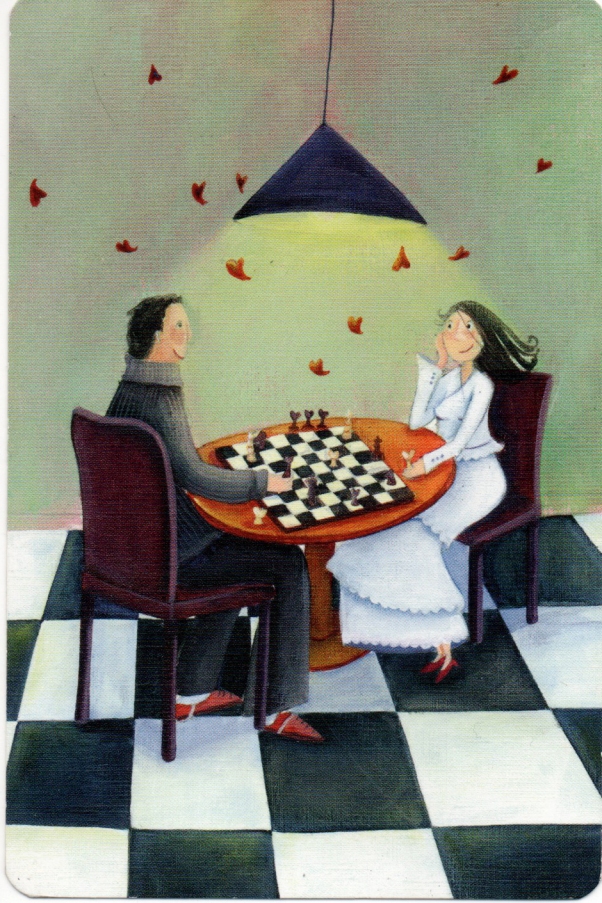
So, what does this have to do with chess? Glad you asked! Two of the cards have chess themes in their image. See below.

Dixit_1_A

Dixit_2_A


Let’s take the first image. I’ve played this card before, in fact twice. The first time I gave the clue, it was “Berlin, Italian, French, Swiss”. All of these are chess openings, of which one person got it. I’m proud of that clue!


Another time I used the clue, “Peace”, as it referred to the dove. But since the clue was spoken, it also referred to “Piece”, as something one would expect to be on a chessboard. I didn’t do as well on that image.


The second image is harder to find a clue that doesn’t give it immediately away. Maybe “Bobby and Lisa”, a reference to strongest female and male American players of the 1960’s. Or perhaps, “What does Alice in Wonderland and One Night in Bangkok have in common?” (they both feature chess).


Here I digress. If the reader wishes to use chess themes found in a movie, he (or she!) may want to watch this YouTube video, https://video.search.yahoo.com/search/video?fr=mcafee&p=chess+movie#id=2&vid=998433ab7997d2e286c6412590eef4e3&action=click


A few pet peeves here. One is the five-minute game of Sherlock Holmes.  Players at that time did not play five- minute games; the chess clocks could not handle the rapid oscillations of fast moving players. Players would instead use a set time of 5 seconds per move, called out by an independent arbitrator. In “Searching for Bobby Fischer”, the clocks are set for five minutes, not two minutes. The chess sets used in the movies tend not to be the sets preferred by most players – too hard to determine pieces and/or the pieces are too fragile to grab and gather them, esp. in speed chess. And finally, most of the movies use Descriptive Notation (DN), such as “Queen takes Knight”, instead of more common, and easier to use, Algebraic Notation (AN). Only Harry Potter gets it right!  


But back to the original post!


Readers! Do you have any suggestions for these two cards? Would love to hear your opinion!

A TD Story

To become a Tournament Director (TD) in chess, it is advisable first become an Assistant Tournament Director (ATD). I’ve been both. And while I found the experience to be both interesting and enjoyable, I also knew that I didn’t have time to pursue everything in chess, so I had to concentrate more on writing (which is a BIG reason for this blog).


Here is a story from that experience.


I was working as an Assistant Tournament Director (ATD) at a National JHS Championship. My job was to walk around the tournament hall and solving small problems on the games as necessary. The players were instructed to raise their hand if they needed some help.


young_girl


Sure enough, about half-hour after they games had started, I saw a hand go up. I jogged to the board where two kids were playing. To be more accurate, there was only one kid playing; he was ahead a queen, a rook, a bishop, and several pawns. His opponent had his head on the table, and not really doing anything else other than breathing.


The kid who was winning said, “My opponent is asleep. Can you help?”. The rules, by the way, forbid anyone disturbing any of the players while the game is still going on. That rule appears to cover players who are awake, asleep, or in deep meditation. And I wasn’t even sure if his opponent was asleep or not (my gut feeling told me he wasn’t).


Now, one thing almost all kids in common is impatience. It didn’t seem fair to have the winning player have to sit there until his opponent’s clock run out (the clock indicated it would be at least another hour – they apparently started the game late).

clock_s-l1000

So, the onus was on me to solve the problem.


I came up with a unique solution. I spoke to the kid who was winning, and loud enough so his opponent could hear me. I told him (both of them!), “If your opponent does not wake up in the next 10 seconds, I will award the game to you.” And I started counting: “10”, “9”, “8”, and then suddenly, and miraculously, his opponent “woke up”.


The kid who was winning had a beaming smile while his opponent feigned waking up.


I told them to keep playing and wished them both good luck in their continuing game.

A Four Queen Opening.

Many players dream of playing with four queens on the board. They admire the complications and the overall tactical possibilities.


Most of the know that endgames produce the most four-queen games. And yet, it is still not that common and the tactically-gifted usually don’t have their dreams transformed into reality.

 
But is there an opening that will let the players have the four queens.


The opening is from a Semi-Slav and the Encyclopedia of Chess Openings (ECO) classifies it as D47.


The opening moves to this multi-queen game are 1.d4 d5 2.c4 e6 3.Nc3 Nf6 4.Nf3 c6 (In case you are interested, these moves define the Semi-Slav), 5.e3 Nbd7 6.Bd3 dxc4 7.Bxc4 b5. Now White’s bishop is under attack, so he moves to e2. Now after 8.Be2 a6 9.e4 b4 10.e5! bxc3 11.exf6 cxb2 12.fxg7 bxa1=Q 13.gxh8=Q, we have four queens, with two of them on their original squares and the other two are far off on corner squares.


Here are all the moves and a diagram to help you.

 
1.d4 d5 2.c4 e6 3.Nc3 Nf6 4.Nf3 c6 5.e3 Nbd7 6.Bd3 dxc4 7.Bxc4 b5 8.Be2 a6 9.e4 b4 10.e5! bxc3 11.exf6 cxb2 12.fxg7 bxa1=Q 13.gxh8=Q.
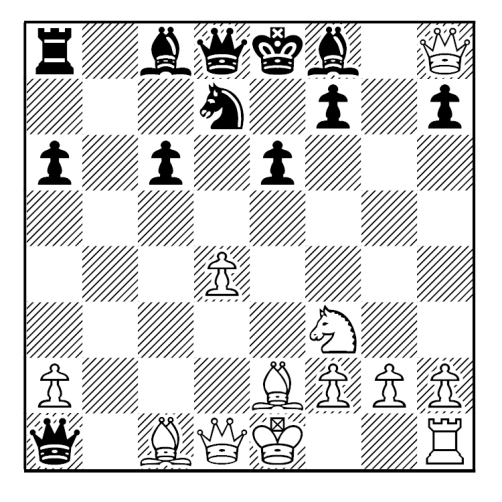
 

2019_06_05_A


Now let’s get to some games and analysis.


~~~~~~~~~~~~~~~~~~~~~~~~~~~~~

 
Black best response, after 13.gxh8=Q is to activate his second queen with 13…Qa5+. Anything else puts his game into jeopardy.


J. Kjeldsen-T. Christensen
Arhus, 1995
1.d4 d5 2.c4 e6 3.Nc3 Nf6 4.Nf3 c6 5.e3 Nbd7 6.Bd3 dxc4 7.Bxc4 b5 8.Be2 a6 9.e4 b4 10.e5 bxc3 11.exf6 cxb2 12.fxg7 bxa1=Q 13.gxh8=Q c5?! 14.O-O Bb7 15.Qxh7 Qxa2 16.Ng5 Qf6 17.Nxf7 Qg7 18.Qxg7 1-0


CM Asmund Hammerstad (2205)-Pavol Sedlacek (2233)
European Club Cup
Rogaska Slatina, Slovenia, Sept. 28 2011
1.d4 Nf6 2.Nf3 d5 3.c4 c6 4.Nc3 e6 5.e3 Nbd7 6.Bd3 dxc4 7.Bxc4 b5 8.Be2 a6 9.e4 b4 10.e5 bxc3 11.exf6 cxb2 12.fxg7 bxa1=Q 13.gxh8=Q Qxa2 (A little more active than 13…c5, but not by much.) 14.O-O Qf6 15.Qxh7 Qg7 16.Qhc2 Qd5 17.Ng5 Bb7 18.Bf3 Qb5 19.Bh5 O-O-O 20.Be2 Qa5 21.Bd2 Qa3 22.Bf3 Nb8 23.Be3 Be7 24.Ne4 f5 25.Nd2 Qb4 26.Qe2 Qb5 27.Nc4 a5 28.Rb1 Bb4 29.Nd6+ Rxd6 30.Qxb5 Qd7 31.Qe5 Qe8 32.Rxb4 1-0


After Black’s 13…Qa5+, White must block the check and he has two main ways to do so. One is 14.Bd2, the other 14.Nd2. The move 14.Bd2 would seem to be the best, but only superficially. 14.Nd2 allows for more freedom for White’s pieces. That’s why White wants to enter these complications – to use his tactical abilities.


Here are a few games with 14.Bd2.


Benko-Pytel
Hastings, 1973
[ECO]
1.d4 d5 2.c4 e6 3.Nc3 Nf6 4.Nf3 c6 5.e3 Nbd7 6.Bd3 dxc4 7.Bxc4 b5 8.Be2 a6 9.e4 b4 10.e5 bxc3 11.exf6 cxb2 12.fxg7 bxa1=Q? 13.gxh8=Q Qa5+ 14.Bd2 Qxd1+ 15.Bxd1 Qf5 (15…Qb5 16.Qxh7 +/-) 16.O-O Bb7 17.d5 Qxd5 18.Qxh7 c5 19.Ba4 O-O-O 20.Bg5 Ne5 21.Ne1 c4 22.Bxd8 Qxd8 23.Qh8 f6 24.Qg8 Qd6 25.Nc2 Kc7 26.Ne3 Be7 27.Rd1 Qb6 28.Qe8 Bc5 29.Qd8mate 1-0


Lauber (2380)-Mosquera
World U20 Ch.
Medellin, 1996
1.d4 d5 2.c4 e6 3.Nc3 Nf6 4.Nf3 c6 5.e3 Nbd7 6.Bd3 dxc4 7.Bxc4 b5 8.Be2 a6 9.e4 b4 10.e5 bxc3 11.exf6 cxb2 12.fxg7 bxa1=Q 13.gxh8=Q Qa5+ 14.Bd2 Qxd1+ 15.Bxd1 Qxa2 16.O-O c5 17.dxc5 Bb7 18.Bg5 h6 19.Bxh6 O-O-O 20.c6 Bxc6 21.Bxf8 Qa5 22.Be2 Rxf8 23.Qb2 Bb5 24.Rc1+ Kd8 25.Ne5 Nxe5 26.Qxe5 Qb4 27.Qc7+ Ke8 28.Qb7 Qd6 29.Rc8+ Qd8 30.Rxd8+ Kxd8 31.Bxb5 axb5 32.Qxb5 1-0


Fletcher Baragar (2305)-Daniel Fernandez (2057)
Financial Concept Open
North Bay, Canada, Aug. 7 1999
1.d4 d5 2.c4 e6 3.Nc3 Nf6 4.Nf3 c6 5.e3 Nbd7 6.Bd3 dxc4 7.Bxc4 b5 8.Be2 a6 9.e4 b4 10.e5 bxc3 11.exf6 cxb2 12.fxg7 bxa1=Q 13.gxh8=Q Qa5+ 14.Bd2 Q5xa2 15.O-O Qxd1 16.Rxd1 h6 17.Ne5 Nxe5 18.dxe5 Bd7 19.Qf6 Be7 20.Qh8+ Bf8 21.Qf6 Be7 22.Qxh6 O-O-O 23.Qe3 c5 24.Qf3 Kb8 25.Be3 Bb5 26.Rxd8+ Bxd8 27.Bxb5 axb5 28.g3 b4 29.Qc6 b3 30.Bxc5 b2 31.Bd6+ Ka7 32.Bc5+ Kb8 1/2-1/2


Kamil Klim (2108)-Krzysztof Bulski (2396)
Lasker Memorial
Barlinek, June 2 2007
1.d4 d5 2.c4 c6 3.Nf3 Nf6 4.Nc3 e6 5.e3 Nbd7 6.Bd3 dxc4 7.Bxc4 b5 8.Be2 a6 9.e4 b4 10.e5 bxc3 11.exf6 cxb2 12.fxg7 bxa1=Q 13.gxh8=Q Qa5+ 14.Bd2 Qxd1+ 15.Bxd1 Qf5 16.O-O Bb7 17.d5 Qxd5 18.Qxh7 c5 19.Ba5 Bc6 20.Nh4 Qe4 21.Qxe4 Bxe4 22.Re1 Bd3 23.Nf3 Bg7 24.Ng5 Bf6 25.Ne4 Bd4 26.Bc7 Nf6 27.Ba4+ Bb5 28.Bc2 Kd7 29.Bb6 Nxe4 30.Bxe4 Bc6 31.Rd1 Bd5 32.Bc2 Rb8 33.Ba4+ Kd6 34.Ba5 Rb2 35.Rd2 Rb1+ 36.Rd1 Bxa2 37.h4 Rxd1+ 38.Bxd1 c4 0-1

 
Now for the stronger, and more fluid, 14.Nd2.


Krogius-Kamyshov
USSR, 1949
[ECO]
1.d4 d5 2.c4 e6 3.Nc3 Nf6 4.Nf3 c6 5.e3 Nbd7 6.Bd3 dxc4 7.Bxc4 b5 8.Be2 a6 9.e4 b4 10.e5 bxc3 11.exf6 cxb2 12.fxg7 bxa1=Q? 13.gxh8=Q Qa5+ 14.Nd2 Qf5 15.O-O Bb7 16.Qb3 Nc5 17.Ba3 Nxb3 18.Qxf8+ Kd7 19.Qe7+ Kc8 20.Nxb3 +- Qxf1+ 21.Bxf1 Qd5 22.Bd6 1-0


Krogius-Shvedchikov
Calimanesti, 1993
1.d4 d5 2.c4 e6 3.Nc3 Nf6 4.Nf3 c6 5.e3 Nbd7 6.Bd3 dxc4 7.Bxc4 b5 8.Be2 a6 9.e4 b4 10.e5 bxc3 11.exf6 cxb2 12.fxg7 bxa1=Q 13.gxh8=Q Qa5+ 14.Nd2 Bb7 15.O-O Q1xa2 16.Nc4 Qd5 17.Bh6 O-O-O 18.Bxf8 c5 19.Nd6+ Qxd6 20.Bxd6 Rxh8 21.dxc5 Qd5 22.Qxd5 exd5 23.Rc1 1-0


De Guzman (2407)-Bhat (2410)
Michael Franett Memorial
San Francisco, 2005
1.d4 d5 2.c4 e6 3.Nf3 c6 4.e3 Nf6 5.Nc3 Nbd7 6.Bd3 dxc4 7.Bxc4 b5 8.Be2 Bb7 9.e4 b4 10.e5 bxc3 11.exf6 cxb2 12.fxg7 bxa1=Q 13.gxh8=Q Qa5+ 14.Nd2 Qf5 15.O-O O-O-O 16.Qb3 Nc5 17.Qb4 Nd7 18.Qb3 Nc5 19.Qb4 Be7 20.Qg7 Bf8 21.Qh8 Be7 1/2-1/2


Emil Klemanic (2257)-Peter Palecek (2254)
Slovakia Team Ch.
Košice, Jan. 16 2011
1.d4 d5 2.Nf3 Nf6 3.c4 c6 4.e3 e6 5.Nc3 Nbd7 6.Bd3 dxc4 7.Bxc4 b5 8.Be2 a6 9.e4 b4 10.e5 bxc3 11.exf6 cxb2 12.fxg7 bxa1=Q 13.gxh8=Q Qa5+ 14.Nd2 c5 15.O-O Qxd4 16.Qxh7 Qxa2 17.Bc4 Nf6 18.Qh8 Qa5 19.Qf3 Nd5 20.Qhh5 Qc7 21.Re1 Nf4 22.Qh7 Bb7 23.Ne4 Qa5 24.Rd1 O-O-O 25.Rxd4 Qe1+ 26.Bf1 Rxd4 27.Qxf4 Bxe4 28.Qhxf7 Bd6 29.Q4f6 Bc7 30.Q6xe6+ Kb7 31.Qxa6+ Kb8 32.Qe8+ Rd8 33.Qeb5+ 1-0

 
If 14.Nd2 Q5xa2?!, then White gets an advantage after the simple 15.O-O.


Shumiakina-Mihai
Timisoara, 1994
1.d4 d5 2.c4 e6 3.Nc3 Nf6 4.Nf3 c6 5.e3 Nbd7 6.Bd3 dxc4 7.Bxc4 b5 8.Be2 a6 9.e4 b4 10.e5 bxc3 11.exf6 cxb2 12.fxg7 bxa1=Q 13.gxh8=Q Qa5+ 14.Nd2 Q5xa2 15.O-O Bb7 16.Bc4 Qa4 17.Nb3 Qc3 18.Bxe6 fxe6 19.Bg5 Nf6 20.Qxf6 1-0


Fernando Peralta (2315)-Carlos Gonzalez
Villa Ballester Open, 1996
1.d4 d5 2.c4 e6 3.Nc3 Nf6 4.Nf3 c6 5.e3 Nbd7 6.Bd3 dxc4 7.Bxc4 b5 8.Be2 a6 9.e4 b4 10.e5 bxc3 11.exf6 cxb2 12.fxg7 bxa1=Q 13.gxh8=Q Qa5+ 14.Nd2 Q5xa2 15.O-O Qa4 16.Ne4 Qb4 17.Bd2 Qaxd4 18.Nf6+ Qxf6 19.Qxf6 Nxf6 20.Bxb4 Bxb4 21.Qa4 1-0

 
~~~~~~~~~~~~~~~~~~~~~~~~~~~~~

 
There is a sister variation with 8…Bb7 instead of 8…a6. And although there are similarities between the two variations, Black is more active and scores better in this variation.

 
Again, here are the opening moves and a diagram to help.

 
1.d4 d5 2.c4 e6 3.Nc3 Nf6 4.Nf3 c6 8.Be2 Bb7 9.e4 b4 10.e5! bxc3 11.exf6 cxb2 12.fxg7 bxa1=Q 13.gxh8=Q.
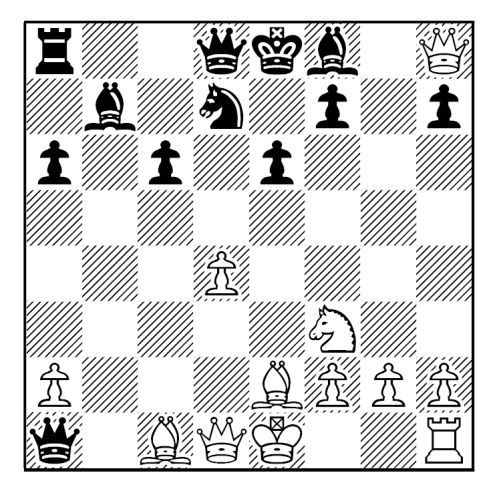
2019_06_05_B

 
And again, Black does best to activate his second queen with 13…Qa5+. Two games in which he does not and loses the game.


Z. Polgar-V. Dimitrov
Bulgaria, 1984
1.d4 d5 2.c4 e6 3.Nc3 Nf6 4.Nf3 c6 5.e3 Nbd7 6.Bd3 dxc4 7.Bxc4 b5 8.Be2 Bb7 9.e4 b4 10.e5 bxc3 11.exf6 cxb2 12.fxg7 bxa1=Q 13.gxh8=Q Qb1 14.O-O (White’s best.) 14…Qf6 15.Qxf6 Nxf6 16.Ne5 Qxa2 17.Bc4 Qa5 18.Qf3 Be7 19.Bg5 Qd8 20.Bxe6! fxe6 21.Bxf6 +- Qxd4 22.Qh5+ 1-0


Rassmussen-Domosud, 1984
[I am not sure who annotated this game. If the reader knows, please email me with the information. Thanks!]
1.d4 d5 2.c4 e6 3.Nc3 Nf6 4.Nf3 c6 5.e3 Nbd7 6.Bd3 dxc4 7.Bxc4 b5 8.Be2 Bb7 9.e4 b4 10.e5 bxc3 11.exf6 cxb2 12.fxg7 bxa1=Q 13.gxh8=Q Qb1 14.O-O Qf6 15.Qxf6 Nxf6 16.Ne5 Qxa2 17.Bc4 (17.Bh5 Qd5 18.Bxf7+ Kd8 19.Bh5) 17…Qa5 (Qb1) 18.Qf3 Be7 19.Bg5 [19.Nxc6 Qb6 20.d5 exd5 21.Nxe7 dxc4 (21…Kxe7 22.Re1+ Kd7 23.Qf5+ Kd8 24.Bg5)] 19…Qd8 20.Bxe6 [20.Nxc6 Qb6 21.d5 Bxc6 (21…Nxd5 22.Bxd5 <22.Nxe7 Nxe7 23.Qf6 Ng6> 22…Bxg5 23.Ne5) 22.dxc6 Nd5 23.Bxd5 Bxg5] 20…fxe6 21.Bxf6 Qxd4 (21…Qc8 22.Rb1 Bxf6 23.Qxf6 Qc7 24.Qh8+ Ke7 25.Qxh7+ Kd6 26.Nc4+ Kd5 27.Qxc7 Kxc4 28.Qe5 Kc3 29.Qc5+ Kd2 30.Rc1 Kd3 31.Rd1+ Ke4 32.Qe5#) 22.Qh5+ (22…Kd8 23.Nf7+ Kc8 24.Bxd4) 1-0

 
And here is the 14.Bd2 block. Not as good as 14.Nd2, but you probably already knew that already.


Chekover-Suetin
Leningrad, 1951
[ECO]
1.d4 d5 2.c4 e6 3.Nc3 Nf6 4.Nf3 c6 5.e3 Nbd7 6.Bd3 dxc4 7.Bxc4 b5 8.Be2 Bb7 9.e4 b4 10.e5 bxc3 11.exf6 cxb2 12.fxg7 bxa1=Q 13.gxh8=Q Qa5+ 14.Bd2 Qxd1+ 15.Bxd1 Qf5 16.O-O O-O-O 17.Qg8 Be7 18.Qg7 Qg6 19.Qxg6 hxg6=


Pliester-Dreev
New York Open, 1989
1.d4 d5 2.c4 e6 3.Nc3 Nf6 4.Nf3 c6 5.e3 Nbd7 6.Bd3 dxc4 7.Bxc4 b5 8.Be2 Bb7 9.e4 b4 10.e5 bxc3 11.exf6 cxb2 12.fxg7 bxa1=Q 13.gxh8=Q Qa5+ 14.Bd2 Qxd1+ 15.Bxd1 Qf5 16.O-O O-O-O 17.d5 Bd6 18.Qd4 c5 19.Qa4 Qxd5 20.Be2 Rg8 21.Rd1 Qe4 22.Qxe4 Bxe4 23.Ng5 Bd5 24.f3 f5 25.Nxh7 Be7 26.Ba6+ Kc7 27.Bf4+ Kd8 28.h4 Bxh4 29.g3 Bxg3 30.Bg5+ Kc7 31.Kg2 Bf4 0-1

 
After 13.gxh8=Q Qa5+ 14.Nd2, Black has three reasonable tries. Here are some minor ones just to lay some ground work.


Barshauskas-Kholmov
Latvian Ch., 1955
1.d4 d5 2.c4 e6 3.Nc3 Nf6 4.Nf3 c6 5.e3 Nbd7 6.Bd3 dxc4 7.Bxc4 b5 8.Be2 Bb7 9.e4 b4 10.e5 bxc3 11.exf6 cxb2 12.fxg7 bxa1=Q 13.gxh8=Q Qa5+ 14.Nd2 Q5xa2 15.O-O Ba6 (unclear – ECO) 16.Bxa6 Qxa6 17.Nb3 Qb1 18.Nc5 Qab5 19.Bh6 Qxd1 20.Rxd1 O-O-O 21.Nxd7 Bxh6 22.Qxh7 Qh5 23.Rb1 Kxd7 24.Rb7+ Kc8 25.Qb1 Bf4 26.g3 Rxd4 (with the idea of Rd1+) 0-1


Blackstock-Crouch
London, 1980
1.d4 d5 2.c4 e6 3.Nc3 Nf6 4.Nf3 c6 5.e3 Nbd7 6.Bd3 dxc4 7.Bxc4 b5 8.Be2 Bb7 9.e4 b4 10.e5 bxc3 11.exf6 cxb2 12.fxg7 bxa1=Q 13.gxh8=Q Qa5+ 14.Nd2 Qd5 15.O-O Qaxd4 16.Qxh7 Nf6 17.Qb1 Qb6 18.Bb2 Be7 19.Nc4 Qc7 20.Be5 Qcd7 21.Bxf6 Bxf6 22.Bf3 Qd4 23.Qa4 (+- ECO ; 23…Qf4!?)


Hansen-Muir
Aarus, 1990
1.d4 d5 2.c4 e6 3.Nc3 Nf6 4.Nf3 c6 5.e3 Nbd7 6.Bd3 dxc4 7.Bxc4 b5 8.Be2 Bb7 9.e4 b4 10.e5 bxc3 11.exf6 cxb2 12.fxg7 bxa1=Q 13.gxh8=Q Qa5+ 14.Nd2 Ba6 15.O-O Bxe2 16.Qxe2 Q5xa2 17.Qxh7 Qxd4 18.Qeh5 O-O-O 19.Q5xf7 Bc5 20.Qe4 Rf8 21.Qxd4 Bxd4 22.Qh7 Qd5 23.Nf3 Rxf3 24.gxf3 Ne5 25.Qg8+ Kb7 26.Qg7+ Kb6 27.Qg2 Nxf3+ 28.Kh1 a5 29.Be3 c5 30.Rb1+ Kc6 31.Rc1 a4 32.Bxd4 Nxd4 33.Qxd5+ exd5 34.h4 c4 35.h5 Nf5 36.Kg2 Kc5 37.Kf3 d4 38.Kf4 Nd6 39.h6 c3 40.h7 Nf7 41.Ra1 Kc4 0-1


Sadler-Neverov
Hastings, 1991
1.d4 d5 2.c4 e6 3.Nc3 Nf6 4.Nf3 c6 5.e3 Nbd7 6.Bd3 dxc4 7.Bxc4 b5 8.Be2 Bb7 9.e4 b4 10.e5 bxc3 11.exf6 cxb2 12.fxg7 bxa1=Q 13.gxh8=Q Qa5+ 14.Nd2 O-O-O 15.O-O Qf5 16.Qb3 Nc5 17.Qb4 Nd7 18.Qb3 1-0


Now for the main lines.


Black’s main choices here;


(1) 13.gxh8=Q Qa5+ 14.Nd2 Q5c3


(2) 13.gxh8=Q Qa5+ 14.Nd2 c5 15.O-O Qxd4


The next two originate from 14.Nd2 Qf5, one with 15.O-O O-O-O 16.Qb3, the other without all these moves.


(3) 13.gxh8=Q Qa5+ 14.Nd2 Qf5


(4) 13.gxh8=Q Qa5+ 14.Nd2 Qf5 15.O-O O-O-O 16.Qb3

 
~~~~~~~~~~~~~~~~~~~~~~~~~~~~~

 
(1) 13.gxh8=Q Qa5+ 14.Nd2 Q5c3


Lazarev-Goldstein
USSR Ch., 1962
1.d4 d5 2.c4 e6 3.Nc3 Nf6 4.Nf3 c6 5.e3 Nbd7 6.Bd3 dxc4 7.Bxc4 b5 8.Be2 Bb7 9.e4 b4 10.e5 bxc3 11.exf6 cxb2 12.fxg7 bxa1=Q 13.gxh8=Q Qa5+ 14.Nd2 Q5c3 15.O-O Qxd4 16.Qxh7 Qxa2 17.Bc4 Qa5 18.Bxe6 O-O-O 19.Qxf7 Qg7 20.Qxg7 Bxg7 21.Nc4 Qc7 22.Qg4 Be5 23.Bxd7+ Rxd7 24.Qg8+ Rd8 25.Qe6+ 1-0


Bikov-Filipenko
Moscow, 1983
1.d4 d5 2.c4 e6 3.Nc3 Nf6 4.Nf3 c6 5.e3 Nbd7 6.Bd3 dxc4 7.Bxc4 b5 8.Be2 Bb7 9.e4 b4 10.e5 bxc3 11.exf6 cxb2 12.fxg7 bxa1=Q 13.gxh8=Q Qa5+ 14.Nd2 Q5c3 15.Bc2 Ba6 16.h4 Qxd4 17.Qxd4 Qxd4 18.Rh3 O-O-O 19.Qf3 Ne5 20.Qc3 Bb4 21.Qxd4 Rxd4 22.h5 Nd3+ 23.Bxd3 Bxd3 24.h6 c5 25.a3 Ba5 26.Rh5 Rd5 27.Rxd5 exd5 28.Kd1 Bg6 29.Nb3 Bb6 30.a4 c4 31.a5 Bxf2 32.Ke2 Bg1 33.Kf1 Bh2 34.Nd4 Kd7 35.Bb2 Bf4 36.Bc3 a6 37.Ke2 Bxh6 0-1

 
(2) 13.gxh8=Q Qa5+ 14.Nd2 c5 15.O-O Qxd4


Lukov-Conquest
Tbilisi, 1988
1.d4 d5 2.c4 e6 3.Nc3 Nf6 4.Nf3 c6 5.e3 Nbd7 6.Bd3 dxc4 7.Bxc4 b5 8.Be2 Bb7 9.e4 b4 10.e5 bxc3 11.exf6 cxb2 12.fxg7 bxa1=Q 13.gxh8=Q Qa5+14.Nd2 c5 15.O-O Qxd4 16.Qxh7 Qc7 17.Bf3 Nf6 18.Qh3 Nd5 19.Ne4 Qxd1 20.Rxd1 O-O-O 21.Bg5 Be7 22.Bxe7 Qxe7 23.Qh6 Kb8 24.Rc1 Rc8 25.Qg7 e5 26.Bg4 f5 27.Qxe7 Nxe7 28.Nd6 fxg4 29.Nxc8 Bxc8 30.Rxc5 Ng6 31.f3 gxf3 32.gxf3 Be6 33.a3 Kb7 34.Kf2 Kb6 35.Rc3 Bf5 36.Kg3 e4 37.Re3 exf3 38.Rxf3 Ne7 39.Kf4 Bc8 40.Kg5 Kc5 41.h4 Bb7 42.Rf7 Kd6 43.Kf6 Nd5+ 44.Kg7 Nc7 45.h5 Be4 46.h6 a5 47.Rf1 Ke5 48.Rc1 Ne6+ 49.Kg8 Kd4 50.Rg1 Nc5 51.Kf7 Bc2 52.Kf6 Nd7+ 53.Kg7 Nc5 54.Kf7 Bh7 55.Ke7 Bf5 56.Rg5 Bc2 57.Rh5 Bh7 58.Kd6 Nb3 59.Kc6 Kc3 60.Kb5 Bd3+ 61.Ka4 1-0


Sadler-Payen
Hastings, 1990
1.d4 d5 2.c4 e6 3.Nc3 Nf6 4.Nf3 c6 5.e3 Nbd7 6.Bd3 dxc4 7.Bxc4 b5 8.Be2 Bb7 9.e4 b4 10.e5 bxc3 11.exf6 cxb2 12.fxg7 bxa1=Q 13.gxh8=Q Qa5+14.Nd2 c5 15.O-O Qxd4 16.Qxh7 Qxa2 17.Bc4 Qaa1 18.Bxe6 O-O-O 19.Qxf7 Bd6 20.Nc4 Bc7 21.Bd5 Ba6 22.Qxd4 Qxd4 23.Bb2 Qd3 24.Qe6 Bb5 25.Re1 Kb8 26.Ne3 Qd2 27.Rb1 Nb6 28.Be5 Qd3 29.Be4 Qe2 30.Bxc7+ Kxc7 31.Qe5+ Kc8 1-0


Chatalbashev-Sveshnikov
USSR, 1991
1.d4 d5 2.c4 e6 3.Nc3 Nf6 4.Nf3 c6 5.e3 Nbd7 6.Bd3 dxc4 7.Bxc4 b5 8.Be2 Bb7 9.e4 b4 10.e5 bxc3 11.exf6 cxb2 12.fxg7 bxa1=Q 13.gxh8=Q Qa5+14.Nd2 c5 15.O-O Qxd4 16.Nb3 Qxh8 (16…Qxd1 17.Rxd1 Qa4 18.Qxh7) 17.Nxa5 Bd5 18.Qc2 (18.Bf3!? Qd4 19.Qxd4 cxd4 20.Bxd5 exd5 21.Re1+ Kd8 22.Nc6+) 18…Qe5 19.Bd3 Bg7 20.Nc4 Qc3 21.Qe2 Ne5 22.Nxe5 Qxe5 23.Be3 Rc8 24.Ba6 Rc7 25.Qb5+ Ke7 26.Bxc5+ Kf6 27.Qb4 Qg5 28.f3 Kg6 29.Bd3+ f5 30.a3 Be5 31.Bd4 a5 32.Qb6 Rb7 33.Qc5 Qe7 34.Bf2 Qxc5 35.Bxc5 Rc7 36.Rc1 Rxc5 0-1

 
(3) 13.gxh8=Q Qa5+ 14.Nd2 Qf5


Pliester-Nikolic
Purmerend, 1993
1.d4 d5 2.c4 e6 3.Nc3 Nf6 4.Nf3 c6 5.e3 Nbd7 6.Bd3 dxc4 7.Bxc4 b5 8.Be2 Bb7 9.e4 b4 10.e5 bxc3 11.exf6 cxb2 12.fxg7 bxa1=Q 13.gxh8=Q Qa5+ 14.Nd2 Qf5 15.Nc4 O-O-O 16.O-O Qxa2 17.Bd3 Qd5 18.Ne3 Qg5 19.Qxh7 Qg7 20.Qdh5 Qxh7 21.Qxh7 e5 22.Bc4 Qa5 23.Qxf7 exd4 24.Nf5 Bc5 25.Bg5 Rf8 26.Qe6 Qc7 27.g3 Qe5 28.Qxe5 Nxe5 29.Be6+ Nd7 30.Rb1 Ba6 31.Rc1 Re8 32.Ng7 Rxe6 33.Nxe6 Bb6 34.h4 Kb7 35.h5 c5 36.Be7 d3 37.h6 c4 38.h7 d2 39.Ra1 c3 40.h8=Q c2 41.Qh1+ Kc8 42.Qc6+ 1-0


Carnic-Vlatkovic, 1995
1.d4 d5 2.c4 e6 3.Nc3 Nf6 4.Nf3 c6 5.e3 Nbd7 6.Bd3 dxc4 7.Bxc4 b5 8.Be2 Bb7 9.e4 b4 10.e5 bxc3 11.exf6 cxb2 12.fxg7 bxa1=Q 13.gxh8=Q Qa5+ 14.Nd2 Qf5 15.O-O O-O-O 16.Nc4 Be7 17.Qg7 Qxa2 18.Bd3 Qf6 19.Qg3 Nb6 20.Nxb6+ axb6 21.Be3 Qd5 22.Qc2 Bd6 23.Qh3 c5 24.f3 Bf4 25.Bf2 Qd6 26.Rd1 Kb8 27.dxc5 bxc5 28.Bxc5 Qc7 29.Qh5 Rd5 30.Qxd5 exd5 31.g3 0-1


Shumiakina-Zakurdjaeva
Moscow, 1999
1.d4 d5 2.c4 e6 3.Nc3 Nf6 4.Nf3 c6 5.e3 Nbd7 6.Bd3 dxc4 7.Bxc4 b5 8.Be2 Bb7 9.e4 b4 10.e5 bxc3 11.exf6 cxb2 12.fxg7 bxa1=Q 13.gxh8=Q Qa5+ 14.Nd2 Qf5 15.O-O O-O-O 16.Nc4 Qxa2 17.Bd3 Qf6 18.Qxh7 Nb6 19.Nxb6+ axb6 20.Be3 Bd6 21.Qdh5 Rd7 22.Be4 Qd8 23.Q7h6 Qa4 24.Bf3 Kc7 25.Qh8 Qxh8 26.Qxh8 Qa5 27.Qf6 Qa8 28.Rb1 b5 29.Rc1 Qd8 30.Qh6 Qf8 31.Qh5 f5 32.Bd2 b4 33.Qg6 Qh8 34.g3 Qxd4 35.Be3 Qe5 36.Rd1 Rg7 37.Qh6 Rd7 38.Bd4 Qb5 39.Qxe6 f4 40.Be2 Qg5 41.Bb6+ Kxb6 42.Qxd7 Bc7 43.Bf3 fxg3 44.hxg3 Qc5 45.Kg2 Qc3 46.Rh1 b3 47.Rh7 Qe5 48.Re7 Qd6 49.Qxd6 Bxd6 50.Re3 Kb5 51.Rxb3+ Bb4 52.Rb1 Kc4 53.Be4 1-0

 
(4) 13.gxh8=Q Qa5+ 14.Nd2 Qf5 15.O-O O-O-O 16.Qb3


Koziak-Vidoniak
Russia, 1991
1.d4 d5 2.c4 e6 3.Nc3 Nf6 4.Nf3 c6 5.e3 Nbd7 6.Bd3 dxc4 7.Bxc4 b5 8.Be2 Bb7 9.e4 b4 10.e5 bxc3 11.exf6 cxb2 12.fxg7 bxa1=Q 13.gxh8=Q Qa5+ 14.Nd2 Qf5 15.O-O O-O-O 16.Qb3 Bd6 17.Nc4 Be7 18.Qg7 Nc5 19.Qb4 Bh4 20.Be3 Qxa2 21.dxc5 Qxe2 22.Nd6+ Rxd6 23.cxd6 Qxf1+ 24.Kxf1 Qd3+ 25.Ke1 Qxe3+ 26.Kd1 Qd3+ 27.Kc1 Qf1+ 28.Kb2 Qxf2+ 29.Ka3 Qe3+ 30.Ka4 Qd3 31.Qxh4 Qd1+ 32.Ka3 Qd3+ 33.Ka2 Qa6+ 34.Kb3 1-0


Sadler-Kaidanov
Andorra, 1991
1.d4 d5 2.c4 e6 3.Nc3 Nf6 4.Nf3 c6 5.e3 Nbd7 6.Bd3 dxc4 7.Bxc4 b5 8.Be2 Bb7 9.e4 b4 10.e5 bxc3 11.exf6 cxb2 12.fxg7 bxa1=Q 13.gxh8=Q Qa5+ 14.Nd2 Qf5 15.O-O O-O-O 16.Qb3 Nc5 17.Qb4 Qc2 18.Qf6 Qcc3 19.Qxc3 Qxc3 20.Nf3 Ne4 21.Qxf7 c5 22.Bf4 Bd6 23.Qxe6+ Kb8 24.Bxd6+ Nxd6 25.Qe7 Qa5 26.dxc5 Nc8 27.Qe5+ Qc7 28.Qxc7+ Kxc7 29.Rd1 Re8 30.Bb5 Rg8 31.Rd7+ Kb8 32.c6 Ba8 33.Ne5 a5 34.Rxh7 1-0


Gil Capape-San Segundo
Saragossa, 1992
1.d4 d5 2.c4 e6 3.Nc3 Nf6 4.Nf3 c6 5.e3 Nbd7 6.Bd3 dxc4 7.Bxc4 b5 8.Be2 Bb7 9.e4 b4 10.e5 bxc3 11.exf6 cxb2 12.fxg7 bxa1=Q 13.gxh8=Q Qa5+ 14.Nd2 Qf5 15.O-O O-O-O 16.Qb3 Nc5 17.Qa3 Qxd4 18.Qxd4 Rxd4 19.Nc4 Qc2 20.Qf3 Nd7 21.Be3 c5 22.Qxf7 Qxe2 23.Bxd4 Qe4 24.Qxf8+ 1-0


~~~~~~~~~~~~~~~~~~~~~~~~~~~~~~~


And now you, the extremely tactically inclined player, can analyze these preceding games, and perhaps even use the ideas you can find, for your future games.

A Neglected Move

The Velimirović Attack, an opening system in the Open Sicilian, has been studied for decades. It is a system full of tactics, suspense, missed opportunities, and White wins more often than not.


To begin, let’s first define what opening moves make up the Velimirović Attack:


1.e4 c5 2.Nf3 Nc6 3.d4 cxd4 4.Nxd4 Nf6 5.Nc3 d6 6.Bc4 e6 7.Be3 Be7 8.Qe2 O-O 9.O-O-O a6 10.Bb3 Qc7, and now either 11.Rhg1 or 11.g4.


Both main lines require memorization in the opening and preparations for the middle game.


But there exists a third option, one that is relatively unexplored. This move, the neglected one, is 11.Kb1.


Why should this move be studied?


First of all, it forces Black to start thinking on his own, as his hours of research and development of the two main lines probably did not include this sub-variation. Also, in many of the main lines, Black plays Nc6-a5-Nxb3, exchanging his knight for White’s bishop. White usually recaptures with axb3, as cxb3 is almost suicide as it opens a file straight to White king. And after axb3, Black can move his queen from d8 to a5 and give an unwelcomed check on a1. With the king on b1, this threat is nullified.

 
So, let’s see a game.

 
Manfred Scherfke-Uwe Kunsztowicz (2234)
corres.
BRD Ch., 1976
1.e4 c5 2.Nf3 d6 3.d4 cxd4 4.Nxd4 Nf6 5.Nc3 Nc6 6.Bc4 e6 7.Be3 Be7 8.Qe2 O-O 9.O-O-O Qc7 10.Bb3 a6 11.Kb1 b5 12.Nxc6


[Probably even better is 12.g4!? as in IM A. Suarez Uriel (2391)-FM Adrian Galiana Fernandez (2291), Spanish Ch., Linares, Aug. 24 2018. The game continued with 12.g4!? b4 13.Na4 Bb7 14.Nxe6! fxe6 15.Bxe6+ Kh8 16.g5 Nxe4 17.Bb6 Qb8 18.Qxe4 Ne5 19.Bd5 Bxd5 20.Qxd5 Bxg5 21.Rhg1 Bf4 22.Qg2 Ng6 23.Bd4 Be5 24.Bxe5 dxe5 25.Nc5 Qc7 26.Ne6 Qa7 27.Nxf8 Rxf8 28.Qh3 1-0 (Black could try 28…Nf4. But after 29.Qg4, with the idea of Rd7, it’s all over.]


12…Qxc6 13.Bd4


[Not 13.f3?!, as Black is able to get in …Rb8! with impunity. Gregory Pitl (2243)-Stefan Bromberger (2399), Kecskemet, Hungary, 2001 went 13.f3?! Rb8! 14.a4 Nd7 15.axb5 axb5 16.Na2 Qa8 17.Nb4 d5 18.exd5 Bxb4 19.dxe6 fxe6 20.Bxe6+ Rf7 21.Bf4 Rb6 22.Bd5 Qxd5 23.Rxd5 Rxf4 24.Rhd1 Nf8 25.Qe3 Rbf6 26.c3 Ba5 27.Rxb5 Bc7 28.b4 Re6 29.Qa7 Rf7 30.Qa8 Re8 31.Qa2 Be6 32.c4 Rf4 33.Rc1 Rd4 34.Qa7 Rd7 35.Qa2 Bf7 36.Qf2 Bf4 0-1.]


13…Bb7 14.Rhe1 Qc7


[14…Rfe8 is more defensive than aggressive.


(1) Fernand Gobet (2415)-Fabio Bruno (2409), Banco di Roma, Rome, Italy, 1983: 14.Rhe1 Rfe8 15.f4 Rad8 16.a3 h6 17.g4 e5 18.fxe5 dxe5 19.Bxe5 Nxe4 20.Nd5 Bd6 21.Qxe4 Rxe5 22.Qxe5 Bxe5 23.Ne7+ Kf8 24.Nxc6 Rxd1+ 25.Rxd1 Bxc6 26.h4 Ke7 27.Bd5 Bd7 28.Bf3 Be6 29.h5 Bc7 30.c3 f5 31.Re1 Kf6 32.gxf5 Bxf5+ 33.Be4 Bg4 34.Bg6 Bd6 35.b4 Kg5 36.Rg1 Be5 37.Kb2 Kf4 38.Re1 Bf6 39.Kc2 Kg5 40.Rg1 Kf4 41.Kd3 Be6 1-0.]


(2) Joachim Walther-G. Hammerling, corres., East Germany, 1977: 14.Rhe1 Rfe8 15.a3 Qc7 16.f4 Bc6 17.g4 Nd7 18.g5 g6 19.h4 Nc5 20.Ba2 Rad8 21.h5 d5 22.hxg6 fxg6 23.Rh1 Bf8 24.Bf6 Qb7 25.Bxd8 Rxd8 26.exd5 exd5 27.Nxd5 Bxd5 28.Rxd5 Rxd5 29.Rd1 Qe7 30.Qxe7 Bxe7 31.Rxd5 Kf8 32.f5 gxf5 33.Rxf5+ Ke8 34.Rf7 Bxg5 35.Rxh7 Nd7 36.b4 1-0]

 
15.a3 Bc6


[GM Velimirović-GM Csom, IBM I, Amsterdam, 1974 continued instead with 15…Rac8 16.f4! e5 17.fxe5 dxe5 18.Nd5 Bxd5 +- 19.exd5 exd4 20.Qxe7 Qxh2 21.d6 Rce8

2019_05_29_A
22.Bxf7+ Rxf7 23.Qxe8+ Nxe8 24.Rxe8+ Rf8 25.d7 Qd6 26.Rf1 1-0]


16.f4 Qb8 17.f5 e5 18.Bf2 a5 19.Nd5 Bxd5 20.Rxd5 Nxd5 21.Bxd5 b4 22.a4 Bd8 23.Qh5 b3 24.cxb3 Ra6 25.Re3

2019_05_29_B


[Black now has a number of ways to lose.

Here are two sample lines.

25.Re3 g6 26.Qh6 Bf6 (26…Re8 also loses to 27.fxg6 hxg6 28.Qxg6+ +-) 27.Rh3 +-

25.Re3 h6 26.Rg3 Kh7 (26…Bg5 seems good, but after 27.Rxg5! hxg5 28.Qxg5, with the idea of f6, Black is losing big time.) 27.Be3 wins.

So Black takes the honorable way to end the game – he resigns.]


1-0

A Rarely Used Opening

The moves defining Alapin’s Opening are 1.e4 e5 2.Ne2. It is an opening not regularly seen in tournament play. In fact, I have seen only one book that covers this exclusively cover this opening, Alapin’s Opening by Denis Druash, published in 1984.


This rarity of this opening is due to its several shortcomings. One is the inability of the King’s Knight to threaten, or even take a pawn or piece, on e5. Whites’ King Bishop also cannot immediately travel to e2, d3, c4, or b5 Instead White must lose a tempo (usually Ng3), in order to free his bishop. Finally, a personal observation. This move, for an artist, of which I do part-time work, looks atheistically unpleasing, and lacking in both tension and drama. You don’t want to use this diagram if you wish to promote chess with awe-inspiring images.

Let’s get back to the opening.
Black has at least two reasonable (and good) responses to 2.Ne2.


One is the simple 2…d5, a move that both occupies and threatens the center. After all, the reasoning goes, if White doesn’t want to control the center, then perhaps Black should do it.


Black could also try 2…Nf6, which often gives Black the advantage. But Black still has to be careful; White seems to do very well with a very weird King’s Gambit after 1.e4 e5 2.Ne2 Nf6 3.f4.


We’ll take a brief look at other Black responses before proceeding with 2…d5 and 2…Nf6 just to whet your appetite.


ALAPIN
1.e4 e5 2.Ne2

 
1) 2.Ne2
2) 2.Ne2 d5
3) 2.Ne2 Nf6
4) 2.Ne2 Nf6 3.f4


~~~~~~~~~~~~~~~~~~~~~~~~~~~~~~~~~~~~~~~~~~~~

Alapin – 1
2.Ne2


Mieses-Janowski
Match
Paris, 1895
1.e4 e5 2.Ne2 Bc5 3.d4 exd4 4.Nxd4 Nf6 5.Nc3 O-O 6.Be3 Re8 7.Bc4 Bb4 8.f3 d5 9.Bd3 c5 10.O-O cxd4 11.Bxd4 dxe4 12.Bxf6 Qxf6 13.fxe4 Qh6 14.e5 Nc6 15.Nd5 Bc5+ 16.Kh1 Rxe5 17.Nc7 Rb8 18.Bc4 Bf5 19.Qf3 Bd6 20.Rae1 Rxe1 21.Rxe1 Qxh2mate 0-1


Alapin-Albin
Berlin International
Germany, 1897
1.e4 e5 2.Ne2 Qh4 3.Nbc3 Bc5 4.g3 Qf6 5.d4 exd4 6.Nd5 Qe5 7.Bg2 Na6 8.Bf4 Qh5 9.Nxd4 Qxd1+ 10.Rxd1 Bxd4 11.Rxd4 d6 12.Bf1 Ne7 13.Bxa6 Nxd5 14.Bb5+ c6 15.Rxd5 cxb5 16.Rxb5 O-O 17.O-O b6 18.Rd1 Bg4 19.Rd2 Bf3 20.Bxd6 Rfe8 21.e5 g5 22.h3 h5 23.Rb3 g4 24.Rxf3 gxf3 25.Rd3 f6 26.Rxf3 fxe5 27.Rf5 e4 28.Rg5+ Kf7 29.Rxh5 e3 30.fxe3 Rxe3 31.Kf2 Rae8 32.Rh7+ Kg6 33.Rxa7 Re2+ 34.Kf3 Rxc2 35.b3 Kf5 36.Rc7 Rd2 37.Bf4 Rd3+ 38.Kf2 Ra8 39.Ke2 Rd5 40.Rc2 Rh8 41.h4 Kg4 42.Rd2 Re8+ 43.Kd1 Rc5 44.Rd6 b5 45.Rd4 Kf3 46.b4 Rc3 47.Kd2 Rc6 48.Rd3+ Kg4 49.Rd5 Kf3 50.Rc5 Ra6 51.Rxb5 Ra3 52.Re5 Rd8+ 53.Kc2 Rxa2+ 54.Kb3 Rh2 55.h5 1-0


City of London C.C.-Anthenaeum
corres., 1897
1.e4 e5 2.Ne2 Nc6 3.Nbc3 Bc5 4.Ng3 d6 5.d3 Nf6 6.Bg5 Be6 7.Nh5 O-O 8.Nd5 Nxe4 9.Bxd8 Bxf2+ 10.Ke2 Bg4mate 0-1


Manko-Jankovic
Germany, 1900
1.e4 e5 2.Ne2 Bc5 3.f4 Qf6 4.c3 Nc6 5.g3 Nh6 6.Bg2 Ng4 7.Rf1 Nxh2 8.fxe5 Qxf1+ 9.Bxf1 Nf3mate 0-1


Hannes Reinup-D. Ross (2291)
NATO Ch.
Rynia, Poland, Aug. 16 2013
1.e4 e5 2.Ne2 Nc6 3.Nbc3 Nf6 4.g3 Bc5 5.f3 a6 6.a4 d6 7.b3 Be6 8.Ba3 Ba7 9.h3 h5 10.f4 exf4 11.Nxf4 Nd4 12.d3 Qd7 13.Bg2 O-O-O 14.Bb2 h4 15.g4 Rde8 16.Nce2 Nxe2 17.Qxe2 Nd5 18.Nxd5 Bxd5 19.O-O-O f6 20.Rhf1 Rhf8 21.Rf5! Bc6 22.Qf3 Qe6 (One big problem in Black’s position are his bishops. They are on ineffective diagonals. Better for him, for his bishop placement and other problems, is 22…Qe7 with the idea of Bd7 and advancing his queen-side pawns as he has enabled his c7-pawn to also move forward and his queen can invade White’s castled position in the future.) 23.g5 Re7 24.gxf6 gxf6 25.Qh5 Be3+ 26.Kb1 Bg5 27.Rg1 Be8 28.Qf3 Bc6 29.c4 b5?! 30.Bc1 bxa4? 31.Bxg5 axb3 32.Rxf6 1-0


M. Alihodzic (2074)-A. Hadzovic (2212)
Sarajevo, June 19 2013
1.e4 e5 2.g3 Nc6 3.Bg2 Bc5 4.Ne2 d6 5.h3 f5 6.d3 Nf6 7.Nbc3 O-O 8.O-O Qe8 9.exf5 Bxf5 10.Be3 Qh5 11.Bxc5 dxc5 12.Nc1 Qg6 13.g4 Bxg4 14.hxg4 Nxg4 15.f3 Ne3 16.Qe2 Nxf1 17.Kxf1 Nd4 18.Qe4 Qh5 19.N3e2 Nxf3 20.Ng3 Nd4+ 21.Kg1 Qd1+ 22.Kh2 Nxc2 23.Rb1 Rf2 24.Nge2 Ne1 25.Nc3 Qh5+ 0-1


Jens Ove Fries Nielsen (2359)-Adrien Demuth (2551)
GRENKE Chess Open
Karlsruhe, Germany, Mar. 31 2018
1.e4 e5 2.Ne2 d6 3.f4 Nc6 4.d4 Nf6 5.Nbc3 exd4 6.Nxd4 Nxe4 7.Nxe4 Qe7 8.Bb5 Qxe4+ 9.Kf2 Bg4 10.Qxg4 Qxd4+ 11.Be3 Qxb2 12.Rab1 Qxc2+ 13.Be2 f5 14.Qf3 O-O-O 15.Rhc1 Qe4 16.Qxe4 fxe4 17.Bg4+ Rd7 18.a4 a5 19.Rb5 Be7 20.Rcb1 b6 21.Bxb6 Rf8 22.Ba7 Bh4+ 23.g3 Kd8 24.Rb8+ Ke7 25.Rxf8 1-0


Alapin – 2
2.Ne2 d5

Gratzsch,Tanicaud, Schellenberg – Hennenberg, Scholl
Dresden Chess Club, 1893
1.e4 e5 2.Ne2 Bc5 3.c3 Nf6 4.d4 exd4 5.cxd4 Bb4+ 6.Bd2 Qe7 7.e5 Ne4 8.Nbc3 Nxd2 9.Qxd2 O-O 10.a3 Bxc3 11.bxc3 d6 12.exd6 Qxd6 13.Ng3 Nd7 14.Be2 Nf6 15.O-O c5 16.Bd3 Be6 17.Be4 Rab8 18.f4 Rfd8 19.f5 Bd5 20.Bc2 Qc6 21.Rae1 Rbc8 22.Rf2 cxd4 23.cxd4 Qa6 24.a4 Bc6 25.Qd1 Rd7 26.Rd2 Rcd8 27.Qa1 Qc4 28.Red1 Nd5 29.Be4 Qxa4 30.Ra2 Qb4 31.Rxa7 Nc3 32.Bxc6 Nxd1 33.Qxd1 (33.Bxd7 Qe1+ 34.Nf1 Qf2+) 33…Rxd4 0-1


Alapin-Caro
Berlin, 1895
1.e4 e5 2.Ne2 Bc5 3.f4 d6 4.c3 Bg4 5.d4 exd4 6.cxd4 Bb6 7.Nbc3 Nf6 8.h3 Bxe2 9.Bxe2 d5 10.exd5 (10.e5 Ne4) 10…Nxd5 11.Nxd5 Qxd5 12.Bf3 Qb5 13.a4 Qb4+ 14.Bd2 Qxd4 15.Qe2+ Kd8 16.O-O-O Nd7 17.Rhe1 c6 18.Qe7+ Kc7 19.Bc3! Qxf4+ 20.Kb1 Qf5+ 21.Be4 Qe6 22.Bc2! Qxe7 23.Rxe7 Rad8 24.Bf5 1-0


N.N.-Canal
Blindfold Game
New York, 1935
1.e4 e5 2.Ne2 d5 3.exd5 Qxd5 4.Nbc3 Qa5 5.d4 Nc6 6.d5 Nb4 7.Bd2 Bf5 8.Rc1 Bxc2 9.Rxc2 Nd3mate 0-1


J. Phillips-S.P. Johnston
Chicago, n.d.
1.e4 e5 2.Ne2 d5 3.exd5 Nf6 4.c4 c6 5.dxc6 Nxc6 6.a3 Bc5 7.b4 Bd4 8.Nxd4 Nxd4 9.Be2 Bf5 10.d3 O-O 11.O-O Nxe2+ 12.Qxe2 Bxd3 13.Qxe5 Re8 (14.Qc3 Bxf1 15.Kxf1 Qd1+) 0-1


Bo Jacobsen (2269)-IM Ljubomir Ljubojevic (2565)
Groningen
Netherlands, 1970
1.g3 e5 2.Bg2 Nc6 3.e4 Bc5 4.Ne2 (A roundabout way of reaching the Alapin.) 4…Nf6 5.c3?! d5 6.b4 Bb6 7.exd5 Nxd5 8.Ba3 Bg4 9.O-O Nf4! 10.gxf4 Qd3! 11.Re1 O-O-O! 12.b5 Na5 13.Bb4 Nc4 14.a4 exf4 15.a5 Bxf2+ 16.Kxf2 Ne3 17.Na3 Nxd1+ 18.Raxd1 f3 19.Nc1 Qf5 20.Bh1 Qf4 0-1


Robert G. Hartoch-Gert Ligterink
IBM II
Amsterdam, July 19 1975
1.g3 e5 2.Bg2 Nf6 3.e4 Bc5 4.Ne2 Nc6 5.c3 d5 6.exd5 Nxd5 7.d4 exd4 8.cxd4 Bb6 9.Nbc3 Be6 =/+ 10.O-O O-O 11.Na4 Re8 12.h3 Qf6 13.Nxb6 axb6 14.b3 Ndb4 15.Bb2 Bd5 16.Nf4 Bxg2 17.Kxg2 Rad8 18.Qf3 Nc2 19.Rad1 N2xd4 20.Bxd4 Rxd4 21.Rxd4 Qxd4 22.Rd1 Qf6 23.Nd5 Qxf3+ 24.Kxf3 Rd8 25.Ke2 Rc8 26.Ne3 Kf8 27.f4 b5 28.Nd5 Re8+ 29.Kd3 Rd8 30.Kc3 Ne7 31.Ne3 Rxd1 32.Nxd1 Nc6 33.Ne3 Ke7 34.g4 Ke6 35.Nf5 g6 36.Ne3 Ne7 37.Kd4 b6 38.b4 f5 39.a3 c5+ 40.bxc5 Nc6+ 41.Kd3 bxc5 42.gxf5+ gxf5 43.a4 Nb4+ 44.Kc3 bxa4 45.Kc4 a3 46.Kb3 a2 47.Kb2 Nd3+ 48.Kxa2 Nxf4 49.h4 0-1


Jason S. Davies (2048)-Shaun R. Willenberg
Commonwealth and South African Open
South Africa, June 25 2011
1.e4 e5 2.g3 Nc6 3.Bg2 Nf6 4.Ne2 Bc5 5.O-O d6 6.c3 Bg4 7.d3 Qd7 8.a4 a5 9.Na3 Bh3 10.Nc4 h5 11.Bg5 Nh7 12.Be3 h4 13.f4 Bxe3+ 14.Nxe3 hxg3 15.hxg3 Nf6 16.f5 Ng4 17.Nxg4 Bxg4 18.Qd2 f6 19.Rad1 Qf7 20.Kf2 Qb3 21.Rh1 O-O-O 22.Ra1 Qb6+ 23.Qe3 Qxb2 24.Bf3 Bxf3 25.Qxf3 Rxh1 26.Rxh1 Qa2 27.Qg4 Qf7 28.Rh7 Rg8 29.Ke3 Ne7 30.d4 c6 31.Kd3 b5 32.axb5 cxb5 33.d5 Kb7 34.Kc2 Nc8 35.Nc1 Nb6 36.Qe2 Ka6 37.g4 0-1


GM V. Ivanchuk (2738)-GM M. Carlsen (2832)
Blitz Game, July 2 2017
GCT Blitz YourNextMove
Leuven, Belgium, July 2 2017
1.e4 e5 2.Ne2 d5 3.exd5 Nf6 4.d4 exd4 5.Qxd4 Qxd5 6.Nbc3 Qxd4 7.Nxd4 Bc5 8.Ndb5 Na6 9.Bf4 O-O 10.f3 Re8+ 11.Be2 Be6 12.O-O-O Bxa2 13.Rhe1 Nh5 14.Bd2 Be6 15.Ne4 Be7 16.Nd4 Bd7 17.Bxa6 bxa6 18.Bg5 Bxg5+ 19.Nxg5 Nf6 20.Nb3 h6 21.Ne4 Nxe4 22.Rxd7 Nf6 23.Rdd1 Kf8 24.Nc5 Rxe1 25.Rxe1 Re8 26.Rxe8+ Kxe8 27.Nxa6 Kd7 28.Nc5+ Kd6 29.Nd3 c5 30.Kd2 c4 31.Nf4 Kc5 32.h4 a5 33.g4 Nd5 34.Ne2 g6 35.c3 Kd6 36.f4 h5 37.g5 a4 38.Ke1 Ne3 39.Ng3 Ng2+ 0-1 (And yes, Black is the current World Champion.)


Alapin – 3
2.Ne2 Nf6

Taubenhaus-Hanham
New York, 1893
1.e4 e5 2.Ne2 Nf6 3.Ng3 Bc5 4.Bc4 d6 5.c3 Qe7 6.O-O Nc6 7.d3O-O 8.Nd2 Bb6 9.Nf3 Nd8 10.Nh4 g6 11.Bg5 Ne6 12.Qd2 Nxg5 13.Qxg5 Nd5 14.Qh6 Nf4 15.Ngf5 gxf5 16.exf5 Rd8 17.Rae1 Rd7 18.Ng6 Qd8 19.Nxf4 Qf8 20.Qxf8+ Kxf8 21.Nd5 Rd8 22.g4 c6 23.Nxb6 axb6 24.Bb3 Kg7 25.d4 exd4 26.cxd4 Kf6 27.Kg2 Rg8 28.Kf3 Bd7 29.Kf4 h6 30.Re3 Rae8 31.Rfe1 Rxe3 32.fxe3 d5 33.e4 dxe4 34.Rxe4 b5 35.h4 b6 36.Re1 Rg7 37.d5 c5 38.d6 c4 39.Bc2 Rg8 40.Re7 Bc6 41.g5+ hxg5+ 42.hxg5+ Rxg5 43.Rxf7+ Kxf7 44.Kxg5 b4 45.Bd1 b5 46.Bh5+ Kf8 47.Kf4 Bd5 48.Bd1 c3 49.bxc3 bxc3 50.a3 Ke8 51.Bc2 Kd7 52.Ke5 1/2-1/2


H.G. Daniel-John Levi Clark
New York State Chess Association
Rochester, Aug. 24 1910
1.e4 e5 2.Ne2 Nc6 3.Ng3 Nf6 4.Nc3 d5 5.exd5 Nxd5 6.Be2 Nxc3 7.bxc3 Be7 8.O-O O-O 9.Bb2 Be6 10.d4 f5 11.f4 exf4 12.Rxf4 Bg5 13.Rf3 Na5 14.Qf1 Qd5 15.c4 Nxc4 16.Bxc4 Qxc4 17.Qxc4 Bxc4 18.Rxf5 Rxf5 19.Nxf5 Re8 20.h4 Bf6 21.g4 Re4 22.g5 Bd8 23.d5 g6 24.Nh6+ Kf8 25.Kh2 Rxh4+ 26.Kg3 Re4 27.Kf3 Bxd5 28.Kg3 Bxg5 29.Rf1+ Ke8 30.Ng4 Ke7 31.Bf6+ Bxf6 32.Nxf6 Re5 33.Nxh7 Bxa2 34.Nf8 Bf7 35.Nh7 Rf5 36.Re1+ Be6 37.Re4 Rh5 38.Nf8 Kxf8 39.Rxe6 Kf7 40.Re4 Rc5 0-1


U. Nicolas-Pomar Salamanca (2345)
Madrid, 1943
1.e4 e5 2.Ne2 Nf6 3.Nbc3 Bc5 4.d4 exd4 5.Na4 Bb4+ 6.c3 dxc3 7.bxc3 Be7 8.Ng3 d6 9.Bd3 Nc6 10.O-O O-O 11.f4 Re8 12.Bb2 Bf8 13.Qd2 Ng4 14.Rf3 Bd7 15.c4 Ne7 16.Nc3 Ng6 17.Nd5 c6 18.h3 cxd5 19.hxg4 Bxg4 20.cxd5 Bxf3 21.gxf3 Qh4 22.Ne2 Qh3 23.Rf1 Be7 24.Nd4 Qg3+ 25.Kh1 Qh4+ 26.Kg1 Nxf4 27.Nf5 Qg5+ 28.Kh1 g6 29.Qh2 Qh5 30.Nh6+ Kf8 31.Qxh5 Nxh5 32.f4 Ng3+ 33.Kg2 Nxf1 34.Bxf1 f6 35.Kf2 Kg7 36.Ng4 h5 37.Ne3 Rac8 38.Kf3 Kh6 39.e5 fxe5 40.fxe5 dxe5 41.Bxe5 Bg5 42.Bd4 Bxe3 43.Bxe3+ g5 44.Bb5 Rxe3+ 45.Kxe3 Rc5 46.d6 Rxb5 47.Kd4 Rb1 0-1


Bakonyi-Benko
Budapest, 1948
1.e4 e5 2.Ne2 Nf6 3.Nbc3 d5 4.exd5 Nxd5 5.Nxd5 Qxd5 6.Nc3 Qd8 7.Bc4 Be7 8.O-O O-O 9.d3 Nc6 10.f4 exf4 11.Bxf4 Nd4 12.Nd5 Bd6 13.c3 Nf5 14.Qf3 Be6 15.Rae1 c6 16.Ne3 Nxe3 17.Qxe3 Re8 18.Bxd6 Qxd6 19.d4 Qd7 20.Bxe6 Rxe6 21.Qh3 Rae8 22.Rxe6 Qxe6 23.Qxe6 Rxe6 24.Kf2 f5 25.Re1 Rxe1 26.Kxe1 g5 27.Ke2 Kf7 28.Ke3 Ke6 29.c4 Kd6 30.Kd3 h6 31.Ke3 1/2-1/2


Alapin – 4
2.Ne2 Nf6 3.f4

Charousek-Englander
Kaschau, Apr. 1894
1.e4 e5 2.Ne2 Nf6 3.f4 d6 4.Nbc3 Bg4 5.h3 Bxe2 6.Bxe2 Nc6 7.O-O Be7 8.Bc4 Nd4 9.d3 c6 10.Be3 Ne6 11.Ne2 a6 12.Ng3 exf4 13.Bxf4 d5 14.exd5 Nxd5 15.Be5 O-O 16.Qh5 Bc5+ 17.Kh2 g6 18.Qg4 Ne3 19.Qxe6 Nxf1+ 20.Rxf1 fxe6 21.Bxe6+ Rf7 22.Rxf7 Qe8 23.Rf6+ Kg7 24.Rf4+ Kh6 25.Rh4+ Kg5 26.Rg4+ Kh6 27.Nf5+ gxf5 28.Bf4+ Kh5 29.Rg5+ Kh6 30.Rg8+ Kh5 31.g4+ fxg4 32.Bxg4+ Kh4 33.Bg5mate 1-0


Alapin-Chigorin
Vienna International
Austria, 1898
1.e4 e5 2.Ne2 Nf6 3.Nbc3 Nc6 4.f4 exf4 5.d4 Bb4 6.d5 Nxe4 7.Bxf4 Bxc3+ 8.bxc3 Ne7 9.Qd4 Nf6 10.c4 d6 11.Ng3 Nf5 12.Nxf5 Bxf5 13.Be2 O-O 14.O-O Qd7 15.Bd3 Bxd3 16.cxd3 Rfe8 17.h3 Nh5 18.g4 Nxf4 19.Rxf4 Re2 20.Rf2 Qe7 21.Raf1 f6 22.Rxe2 Qxe2 23.Rf2 Qe5 24.Qxe5 fxe5 25.Rb2 b6 26.Kf2 Rf8+ 27.Ke2 Rf4 28.Rb1 Kf7 29.Rg1 Kf6 30.Rg3 Kg5 31.a3 h6 32.Re3 Kh4 33.Kd2 Rf2+ 34.Kc3 Kg5 35.Kb3 Kf4 36.Re4+ Kf3 37.c5 bxc5 38.Ra4 Ke2 39.Rxa7 Kxd3 40.Rxc7 e4 41.a4 e3 42.a5 e2 43.Re7 Rf1 0-1


Alapin-Leonhardt
Ostend International
Belgium, 1905
1.e4 e5 2.Ne2 Nf6 3.f4 d5 4.fxe5 Nxe4 5.d3 Nc5 6.d4 Ne4 7.Nd2 f5 8.Nxe4 fxe4 9.Nf4 Bf5 10.c3 c6 11.Be2 Be7 12.Bg4 Qc8 13.Bxf5 Qxf5 14.Qb3 g5 15.Nh5 O-O 16.Be3 b5 17.a4 b4 18.Ng3 Qg4 19.c4 dxc4 20.Qxc4+ Kh8 21.Qc2 b3 22.Qe2 Bb4+ 23.Kd1 Qe6 24.Nxe4 c5 25.Nxg5 Qg6 26.h4 cxd4 27.h5 Qc2+ 28.Qxc2 bxc2+ 29.Kxc2 dxe3 30.Kd3 Nc6 31.Kxe3 Nxe5 32.Rh4 Be7 0-1


Alapin-Leonhardt
Vienna International
Austria, 1908
1.e4 e5 2.Ne2 Nc6 3.Nbc3 Nf6 4.f4 d5 5.exd5 Nxd5 6.fxe5 Nxe5 7.Nxd5 Qxd5 8.d4 Nc6 9.c3 Bd6 10.Nf4 Qg5 11.Qe2+ Ne7 12.Qb5+ Qxb5 13.Bxb5+ Bd7 14.Bxd7+ Kxd7 15.O-O g6 16.Nd3 f5 17.Bf4 Bxf4 18.Nxf4 Rae8 19.Rfe1 Nc8 20.Nd5 Rxe1+ 21.Rxe1 Rf8 22.Kf1 c6 23.Nf4 Nd6 24.Ne6 Rf7 25.Ng5 Rg7 26.Re3 Nc4 27.Re2 Re7 28.g3 Rxe2 29.Kxe2 Nxb2 30.Nxh7 Ke7 31.Ng5 Nc4 32.Nf3 Ke6 33.Kd3 b5 34.Ng5+ Kf6 35.Nf3 a6 36.Ke2 Ke6 37.Kd3 a5 38.Ng5+ Kf6 39.Nf3 a4 40.Ke2 Ke7 41.Kd3 Ke6 42.Ng5+ Kf6 43.Nf3 g5 44.Ke2 g4 45.Nh4 Nd6 46.Kd3 Ne4 47.Ng2 Ng5 48.Ne1 Ke6 49.c4 Nf3 50.Nxf3 gxf3 51.h4 bxc4+ 0-1


Alapin-Suechting
Vienna International
Austria, 1908
1.e4 e5 2.Ne2 Nf6 3.f4 d5 4.fxe5 Nxe4 5.d3 Nc5 6.d4 Ne4 7.Nd2 Bf5 8.Nxe4 Bxe4 9.Ng3 Qh4 10.Be3 Nc6 11.Qd2 Nb4 12.Bb5+ c6 13.Ba4 Bg6 14.O-O Qg4 15.c3 Na6 16.Bd1 Qd7 17.Nh5 Nc7 18.h3 Ne6 19.Bg4 O-O-O 20.Rf2 Bxh5 21.Bxh5 g6 22.Be2 h5 23.Raf1 Rh7 24.b4 Re8 25.Bd3 Qe7 26.Rf6 Nd8 27.Bg5 Ne6 28.Rxf7 Qxg5 29.Qxg5 Nxg5 30.Rxf8 1-0


Kurt Pahl-Friedrich Saemisch (2200)
Swinemunde, Poland, 1930
1.e4 e5 2.Ne2 Nf6 3.f4 d5 4.fxe5 Nxe4 5.d3 Nc5 6.d4 Ne4 7.Nd2 Ng5 8.Nf4 Nc6 9.c3 Ne6 10.Nf3 Be7 11.Bd3 Nxf4 12.Bxf4 Be6 13.Qb3 Na5 14.Qa4+ c6 15.Qc2 h6 16.Nd2 Qd7 17.a4 Bh4+ 18.g3 Be7 19.h4 O-O-O 20.h5 Nc4 21.Nf1 f6 22.a5 fxe5 23.dxe5 Qc7 24.b3 Nxe5 25.Bf5 Qd7 26.Ne3 Bd6 27.O-O Rhf8 28.Qf2 Bxf5 29.Nxf5 Rxf5 30.Qxa7 Bb8 31.Qd4 Rxh5 32.a6 Qh3 33.a7 Qh2mate 0-1


Jose Fernando Cubas (2438)-Helgi Ass Gretarsson (2514)
Bled Ol.
Slovenia, 2002
1.e4 e5 2.Ne2 Nf6 3.f4 Nxe4 4.d3 Nc5 5.fxe5 d5 6.d4 Ne6 7.Nf4 c6 8.Nc3 Be7 9.Be3 Nxf4 10.Bxf4 Bf5 11.Bd3 Bxd3 12.Qxd3 Nd7 13.O-O Nf8 14.Rf3 Qd7 15.Raf1 Ng6 16.Nd1 O-O 17.Ne3 f6 18.Qf5 Qe8 19.Qe6+ Rf7 20.Bg3 Kh8 21.h4 Nf8 22.Qg4 Bd8 23.h5 h6 24.Bh4 Nh7 25.e6 Rc7 26.Bg3 Ng5 27.Bxc7 Bxc7 28.Rxf6 gxf6 29.Rxf6 Qg8 30.Rxh6+ Nh7 31.Rg6 Qf8 32.Nf5 Qb4 33.Qe2 Qxb2 34.g3 Re8 35.Kg2 Qb5 36.Qe3 Qc4 37.Nh6 Qxc2+ 38.Kh3 Qxg6 39.hxg6 Rxe6 40.Nf7+ 1-0


Jose Fernando Cubas (2197)-Martin Herrera (2425)
Argentina Open
Mar del Plata, Apr. 14 2006
1.e4 e5 2.Ne2 Nf6 3.f4 Bc5 4.fxe5 Nxe4 5.d4 Bb6 6.Be3 Nc6 7.Nd2 Nxd2 8.Qxd2 d6 9.exd6 cxd6 10.O-O-O O-O 11.Nf4 Bf5 12.Bd3 Bxd3 13.Qxd3 d5 14.Qf5 Ne7 15.Qg5 Rc8 16.Kb1 Qd7 17.Nh5 Ng6
2019_05_22_A
18.Qf6! 1-0 (White is threatening mate. If 18… gxf6, then 19.Nxf6+ Kg7 20.Nxd7 Rfe8 21.Nxb6 Rxe3 22.Nxd5 and White, with two extra pawns, has a won game.)


Jo Cubas (2486)-Man Latorre (2308)
Paraguay Ch.
Asuncion, Nov. 25 2013
1.e4 e5 2.Ne2 Nf6 3.f4 Nxe4 4.d3 Nc5 5.fxe5 d5 6.d4 Ne4 7.Nbc3 Bb4 8.Be3 O-O 9.a3 Bxc3+ 10.Nxc3 Nxc3 11.bxc3 f6 12.exf6 Qxf6 13.Bd3 Bf5 14.O-O Qe6 15.Qf3 Re8 16.Bxf5 Qxe3+ 17.Qxe3 Rxe3
2019_05_22_B
18.Bc8! 1-0


J. Ask (2209)-O. Von Bahr (2298)
Rilton Cup
Stockholm, Dec. 30 2013
1.e4 e5 2.Ne2 Nf6 3.f4 Nxe4 4.d3 Nc5 5.fxe5 d6 6.d4 Ne4 7.Qd3 Bf5 8.Qf3 Bg6 9.Nf4 d5 10.Bd3 c5 11.O-O Qd7 12.Nc3 Nxc3 13.e6 Qc6 14.Nxg6 fxg6 15.Qf7+ Kd8 16.Bg5+ Kc8 17.bxc3 Bd6 18.Qxg7 Qe8 19.dxc5 Bxc5+ 20.Kh1 Nc6 21.Rf7 Bd6 22.Rxb7 Be5 23.Ba6 1-0

A Fun Story and Ending.

A few decades ago, before the invention of laptops and chess engines, I used to study chess on a large tournament-sized set.

 
During the warm summer nights California is known for, I would set up a playing board, along with notes and books, in the backyard.

 
This particular night I had just set up the board when I noticed a bright light zigzagging in the night. My eyes followed it and for some strange reason it noticed me. And it sped towards my backyard.


UFO_1


I wasn’t frightened, more curious than anything else. It’s not every day a strange, bright, flying, object settles in my backyard.


It was small thing and when the door opened a tiny being emerged. It (it could have been a male, female, or animal, or robot) began to talk with me. Now since I’m not a polyglot, nor do I know any extra-terrestrial languages, I didn’t understand everything this otherly-world being was trying to say.


But with some hand movements I got a general idea what this entity wanted to know. It (again, I’m sure what gender this being was or if it had a gender) wanted to know what I was doing with the tablecloth (the chessboard), and the little figurines (the pieces).

 
As I am happy to share the game with others, with adults, children, pets, and now aliens, I started to teach the game to it.

 
But this visitor, like so many other beginners, was impatient, and soon fell behind in material, key squares, position, and was on the wrong end of possible checkmates.

 
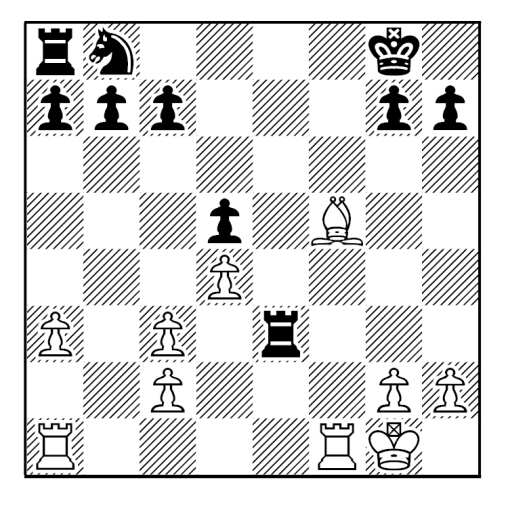
So here is the diagram which we eventually reached.

2019_05_15

1.Qa1+ Kxa1 (Obviously not 1…Ka3 due to 2.Qc3+ Ka4 3.Bb5+! Kxb5 4.Qc5+ Ka4 5.a8=Q+. My space-traveling friend, being a quick learner, figured this out and avoided it. Besides, there was another point to his move.)


2.Kc2 (with the idea of Bd4#) 2…h1=K!

(Whoa! I started to tell him that was an illegal move. To which he replied, “Didn’t you tell me that a pawn reaching the last rank, could become any piece? And I want another king”.

I had to admit he was right. What to do now? If I leave both kings on the board, it would seem likely I would stalemate one of them, and possibly both. I looked at his smug expression. It knew the problems I faced. But then I had moment of inspiration.)

 
3.a8=K! (Now he had at least one move that didn’t result in stalemate.) 3…Kb8 (forced.)

 
4.h7 Ka8 (again forced.)

5.h8=Q mate, mate, mate!

First Official U.S. Women’s Chess Champion?

I play chess on chess.com. And I’ve read many articles by the members. Some are good, some are bad, and most of them are either interesting, funny, or informative.


And some are incredibly researched.


“Batgirl”, who is the probably the best in research, gave me permission to repost this article.


Originally posted in chess.com on Nov. 28 2016


~~~~~~~~~~~~~~~~~~~~


If you look on Wikipedia, or for that matter on almost any website that mentions it, including the official USCF website and the site of the US Chess Trust,  You will notice that all these places honor Adele Rivero as the first official U.S. Women’s Chess Champion for having won the first tournament organized for that purpose in 1937.


Inconceivably, perhaps, all these places are perhaps completely wrong.


Contemporary sources indicate that the first official U.S. Women’s Chess Champion was Mona May Karff who won the first tournament designed to establish such a title in 1938.  Adele Rivero would not become an official U.S. Women’s Champion until 1940.


2019_04_30_A

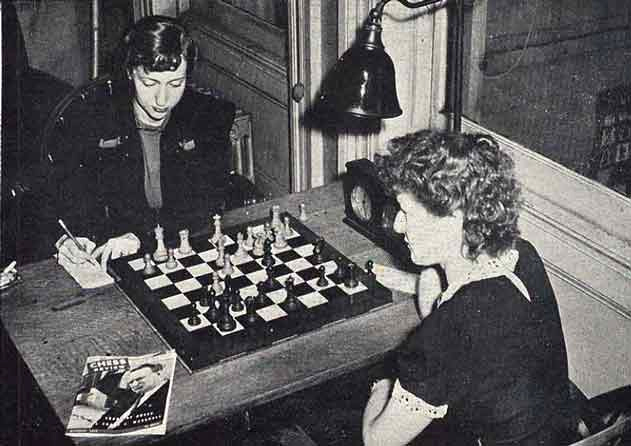
Adele Rivero playing Mona May Karff (a.k.a. N. May Karff) in 1942


In 1904 and Carrie Kraus received an unexpected Christmas present. She met the man of her dreams. The New Year brought her a new name – Mrs. Frank James Marshall when, on January 5th, she married the man who a year later would be the premier chess player of the United States. It was perfect union. Caroline or Carrie as she was usually called, was pragmatic; Frank was a dreamer.  In 1915 Frank Marshall founded the Marshall Chess Divan which seven years later would be incorporated as the Marshall Chess Club. The Club found itself in various sites over the years but in 1931 it reached its permanent home in a magnificent old brownstone located at 23 West 10th Street, N.Y. By this time, Marshall had retired from international chess and was close to hanging up his U. S. chess champion crown which he had worn since 1909.


The American chess scene itself was in a state of flux and confusion. FIDE had established itself tenuously as the worldwide governing body of chess in 1924. Unlike the Soviet Union, the United States recognized FIDE, but America itself had no single, unified chess federation. Both the American Chess Federation (ACF), which could trace its roots back to 1900, and the National Chess Federation (NCF), established in 1927, claimed to speak for the American chess players. While much of the problem would be solved when they unified as the United States Chess Federation (USCF) in 1939, the intervening years would be marked by the contention between these two bodies.  


The Western Chess Association had held tournaments, called the Western  Championships, each year since 1900. Then in 1934, it changed its name to the ACF. The Western Championships evolved into what today is called the U. S. Open. The “Chess Review” magazine, founded by Israel Albert (Al) Horowitz and Isaac Kashdan in 1933, was the “Official Organ of the American Chess Federation.”  When Frank Marshall retired from U.S. chess competition in 1936, he organized an invitational tournament specifically to determine the next U. S. chess champion. This tournament was sponsored by the NCF with the Marshall Club providing the trophy.


The Marshall Club, whose members were the wealthy, the influential and the elite, was, like most chess venues, a Men’s Club. But fortunately Caroline Marshall took an active interest in the club. One of her agendas was the establishment, not just of organized women’s chess, but of a women’s championship.  Starting in 1934 with the first women’s tournament of this period held in the Marshall Club, the goal of a U. S. Women’s championship was reached in 1938.


The first tournament, held in 1934, was won by Marjorie Seaman who breezed through with a perfect 11-0 score. Adele Rivero came in second with a 9-2 score. The 1935 tournament planned in the Fall had to be  postponed until Spring of the following year.   Adele Rivero won that 1936 tournament with a 5-0 score.


The first two tournaments were sponsored solely by the Marshall Chess Club, but the 1937 tournament was to be held under the auspices of the National Chess Federation itself with the intention of legitimizing it as a national championship.


In 1936 the plans for the 1937 Marshall Club women’s tournament included hopes that the winner would be the officially recognized leading woman player in the U. S. and that, as such, would be sent to participate as America’s representative  to the International Ladies Tournament in Stockholm, basically the women’s world championship, that summer.  Those dreams were only partially realized.


According to the preeminent women’s chess chronicler of that time, Edith Weart, after Adele won the 1937 tournament,  “As the tournament this year was sponsored by the National Chess Federation, Mrs. Rivero now holds the title of woman champion of that organization.” You may notice there is absolutely no mention of “U.S.  Women’s Chess Champion.”   In fact, the following year, Edith Weart wrote:  “Feminine chess takes a step forward with the announcement by the National Chess Federation that a tournament will be held in connection with the regular U. S. Championship tournament to determine the U. S. Woman Chess Champion.” This clearly indicated that the 1938 tournament, which was eventually won by Mona May Karff, was the first “title tournament.”


Also, Adele Rivero, the winner of the 1937 tournament didn’t go to Stockholm.  Mary Bain, who came in second, went in her place. The event was, of course, won by Vera Menchik.


The preliminaries for the 1938 tournament were to be held in March. In the February 1938 issue of “Chess Review”, Ms. Weart wrote: “Added interest is attached to the preliminaries, because they serve as a qualifying tourney not only for the Marshall C. C. Tournament, but, as well for the U. S. Women’s Championship.” Again, this makes obvious the fact that 1938 was to be the first year the tournament would be played for the national title.


The question remains about what happened to the plan to make the winner of the 1937 tournament the U.S. Women’s Chess Champion.  It seems that the right of the National Chess Federation’s right to determine the U.S. Women’s Chess Champion wasn’t fully accepted and, for that reason, the winner of the 1937 ACF title was invited to participate.


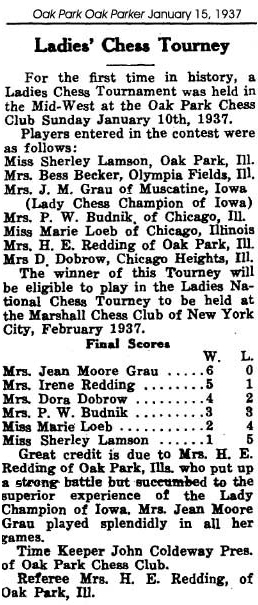
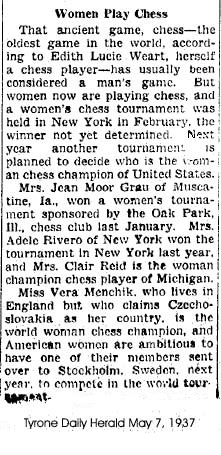
The winner of the 1937 ACF tournament was Jean Moore Grau of Muscatine, Ohio. Mrs. Grau had the unusual distinction of having drawn against Alekhine in a blindfold simul when she was 17.   Grau proved unable or unwilling to make the arduous journey east  but proposed that she would like to meet the NCF winner someplace midway for a match to determine the best female player in the U.S.  This was agreeable especially since then the title would be the result of a consolidated effort. This match, however, never materialized and the invitation, even unaccepted, to participate in the 1938 tournament seemed to satisfy both organizations enough to declare that the winner of that tournament would be the U.S. Women’s Chess Champion.


2019_04_30_B 2019_04_30_C